-
-
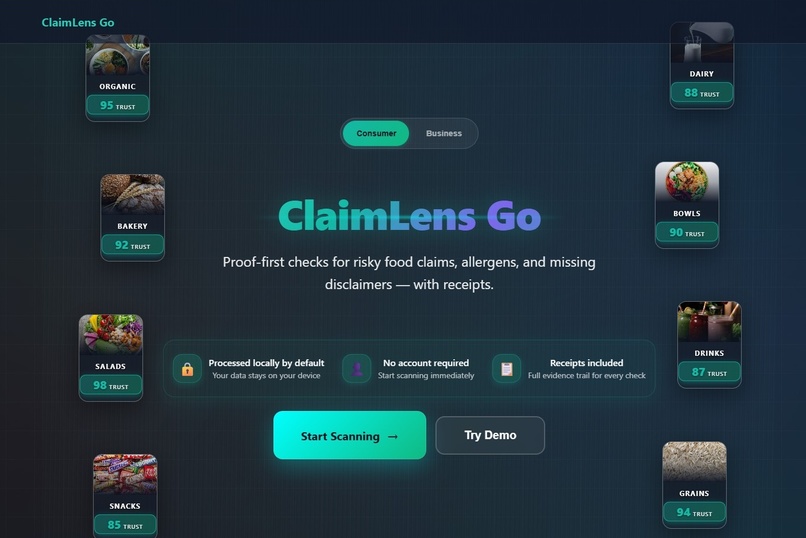
ClaimLens - Proof First Checker for Food Claims
-
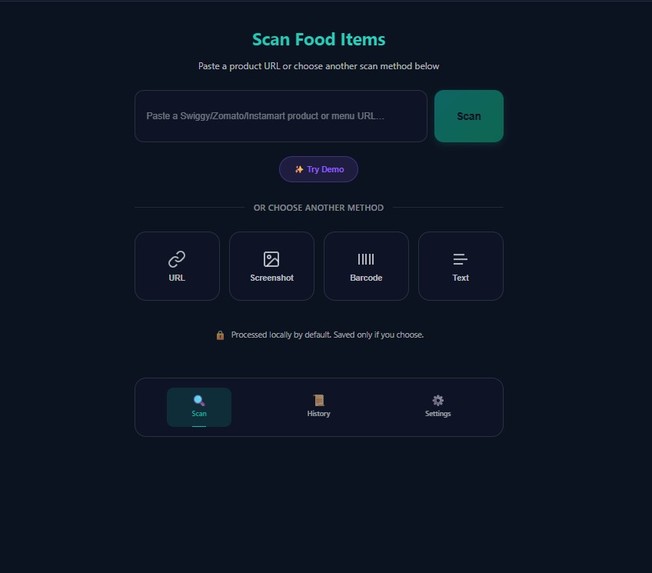
Multiple Scan Modes
-
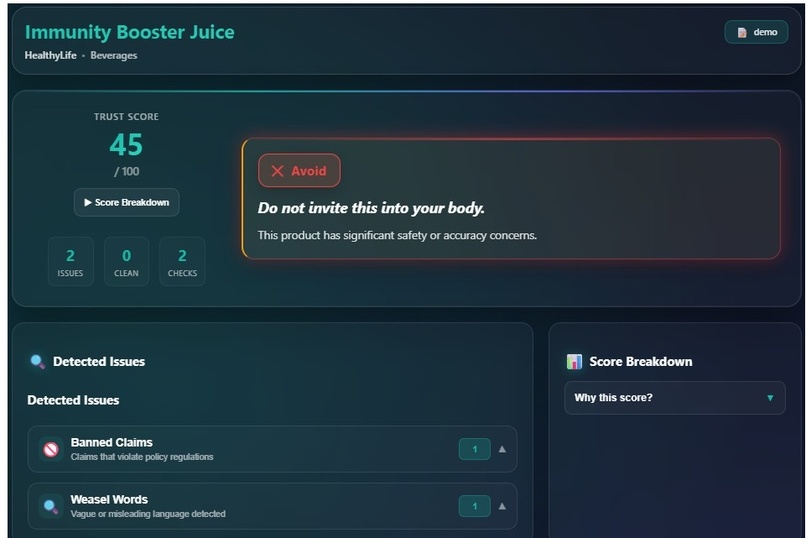
Actionable Results
-
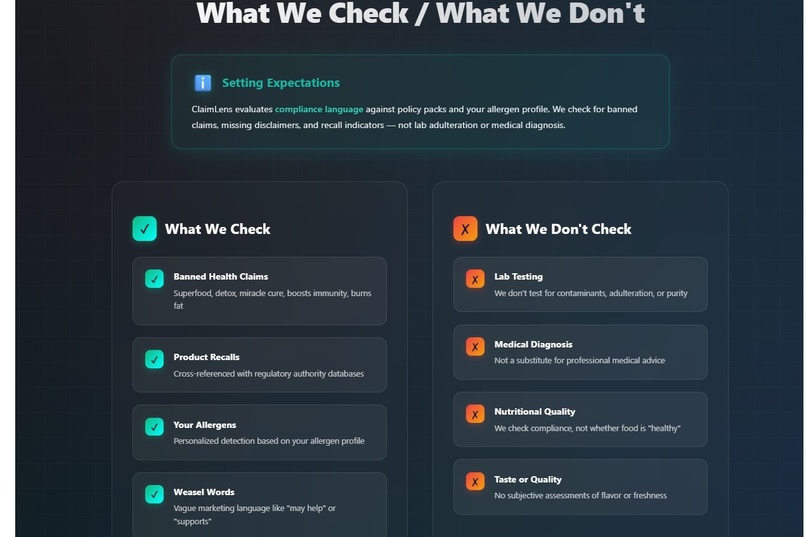
We promise only what we do - No false Claims
-
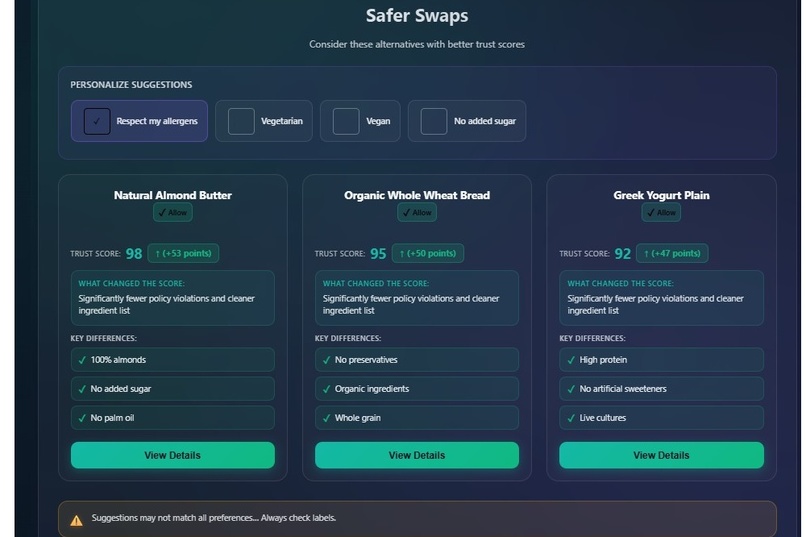
Safer Swaps - Better Food - Better Health
-
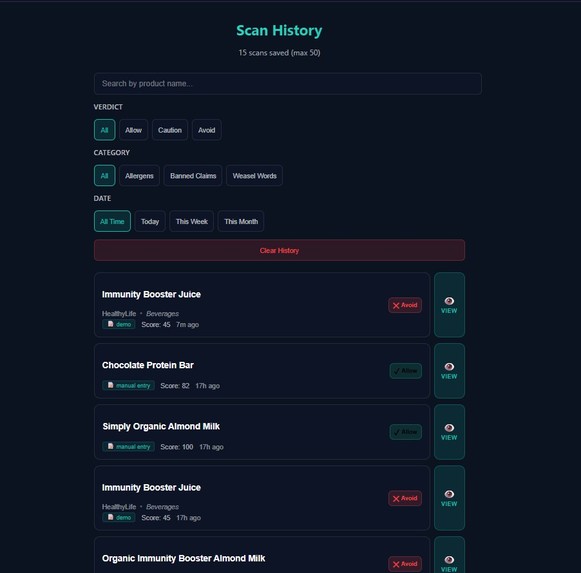
Scan History- Don-t loose track
-
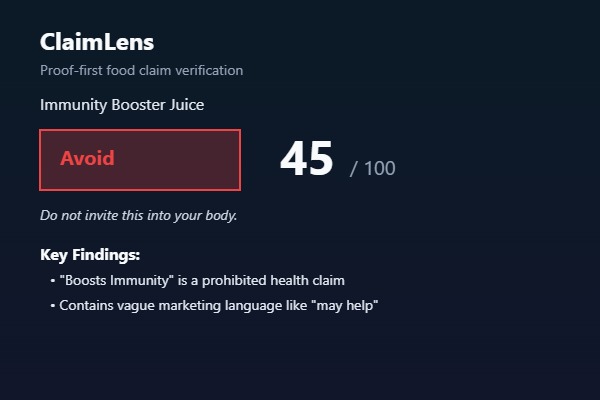
Downloadable Proof Card


Inspiration
Food marketing is haunted. “Detox.” “Miracle.” “Boosts immunity.” And the scariest part? The risk isn’t just misinformation but it can become harm, especially when allergens or shady claims are involved. We wanted to build the thing we wish existed: a proof-first food claim detective for consumers, and a pre-publish compliance gate for businesses — so unsafe or misleading claims don’t ship in the first place.
Think of it like this: you shouldn’t need a law degree to read a menu.
What it does
ClaimLens is a food label + menu claim verification system with receipts for every decision.
It has two modes:
1) ClaimLens Go (B2C Consumer, mobile-first PWA) Scan food claims using Text / URL / Screenshot / Barcode Generates a Trust Score + verdict: Allow / Caution / Avoid Highlights detected issues (banned claims, vague “weasel” language, missing disclaimers, allergen risks) Shows Receipts: a transparent evidence trail of what was flagged and why Stores scan history locally (privacy-first) PWA install + offline-friendly experience
2) ClaimLens MenuShield (B2B Admin) A “decision cockpit” for compliance teams to review audits Action queue for items needing review Audit trail with transform chain + evidence receipts Shows MCP service health and degraded-mode resilience
How we built it
- Frontend: React + TypeScript + Vite (Admin + Consumer apps)
- Policy + transforms: modular pipeline (PII redaction, weasel-word detection, disclaimer rewrite, trust scoring)
- Rule packs: region-aware packs (allergens, banned claims, disclaimers)
- MCP services (mock servers): OCR, units, recalls, alternatives — with degraded mode behavior
- Quality gates: Vitest + Playwright + fixtures + schema validation + performance/latency budgets
- Kiro workflow: spec-driven development using Specs + Steering + Hooks to keep design, tone, and governance consistent
Key Frankenstein talking points to emphasize:
"Chimera of technologies" — OCR + Barcode + NLP + PWA + MCP "Seemingly incompatible" — Image processing + text analysis + offline + microservices "Unexpectedly powerful" — Works for B2B compliance AND B2C consumers Kiro as the "mad scientist" that stitched it all together
Challenges we ran into
- Spooky vs trustworthy: Kiroween wanted vibes; compliance needs clarity. We went “haunted-but-professional.”
- Making MCP visible: integrations are useless if judges can’t see them. We added health indicators + degraded-mode behavior users can observe.
- Avoiding black-box outputs: every verdict needed receipts, not “because AI said so.”
- Scope discipline: building both B2C and B2B without turning it into a half-finished monster.
Accomplishments that we're proud of
- A consumer experience that stays fast and clean while being evidence-driven
- A B2B audit trail that reads like a forensic report, not a spreadsheet
- Strong governance gates so new rules/transforms don’t silently break trust
- A cohesive product narrative across SKUs (Go + MenuShield + Packs)
What we learned
- “Cool UI” doesn’t win alone — clarity, proof, and demo flow win.
- Kiro works best when treated like a disciplined teammate: specs, small tasks, and verification loops.
- Resilience (degraded mode + health) makes a hackathon project feel real, not toy-grade.
- The product needs an opinion: we chose proof-first over “AI magic.”
What's next for ClaimLens: Proof-First Food Claim Detective for Consumers
- Real recall/alerts integrations (beyond mock MCP)
- Better product-name extraction + scan history dedupe/search
- More regional packs (claims/disclaimers per locale)
- Shareable “Proof Cards” for transparency + accountability
- Enterprise workflow: approvals, policy versioning, roles, and audit exports
Built With
- css
- docker
- html
- javascript
- json
- kiro
- mcp
- netlify
- node.js
- playwright
- react
- typescript
- vite
- vitest
- yaml

Log in or sign up for Devpost to join the conversation.