-
-

ClarityAI- logo
-
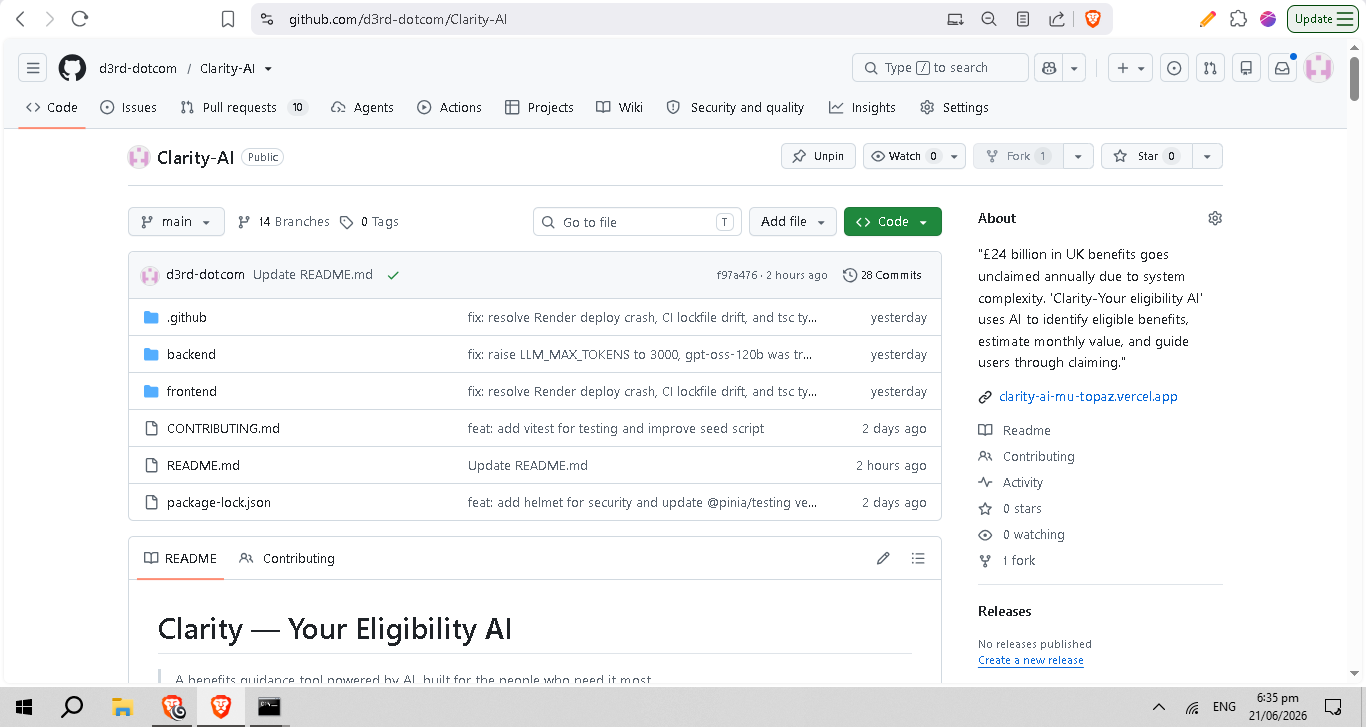
github repo
-
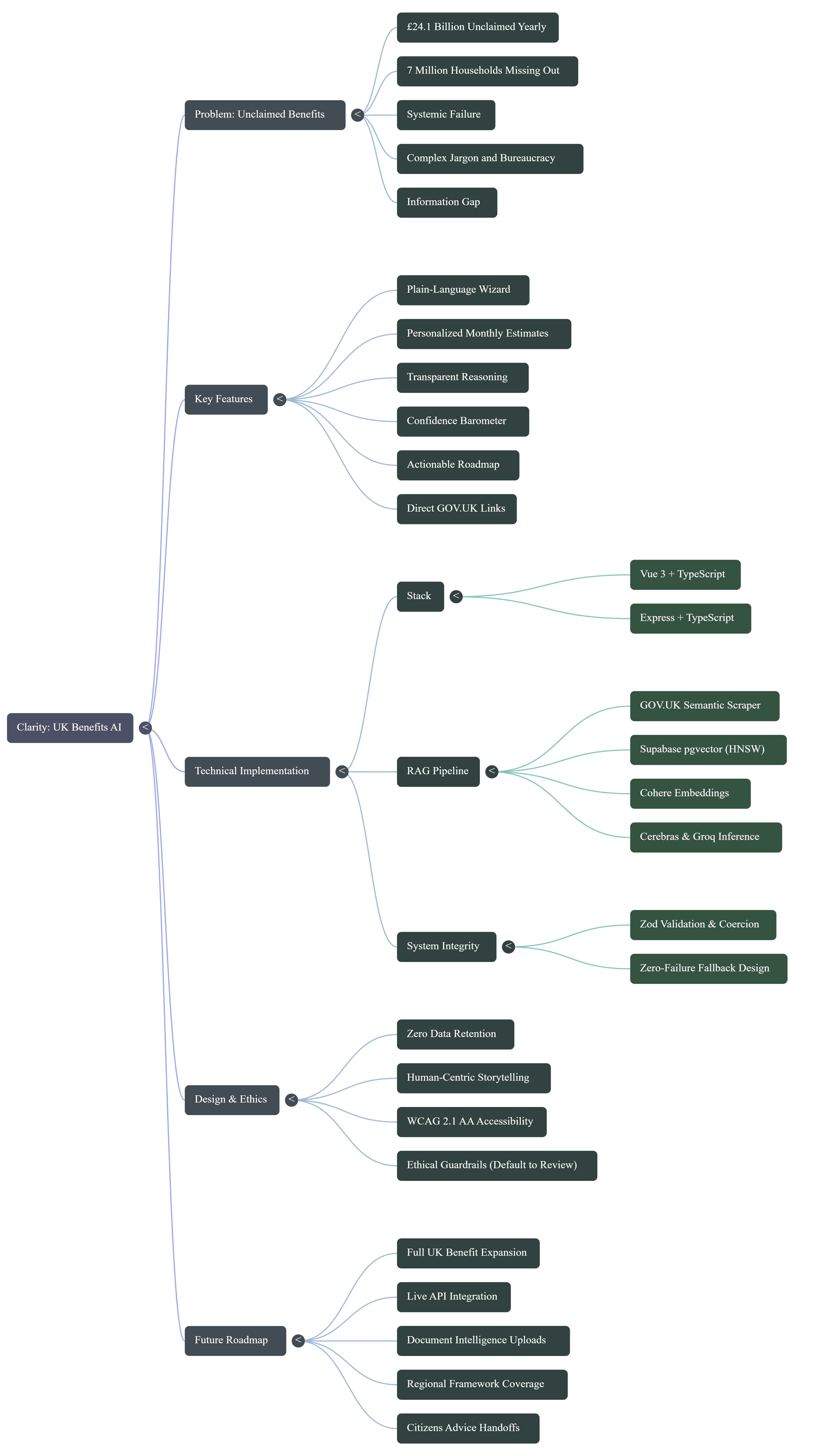
ClarityAI- mindmap
-
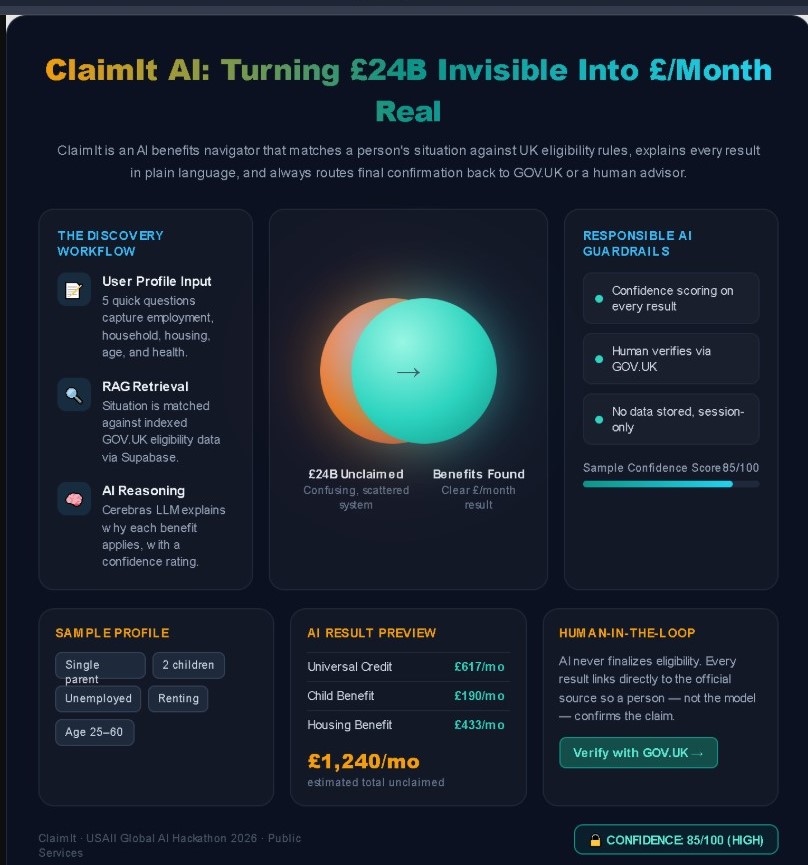
infographic
-
1
-
2
-
3
-
4
-
6
-
5
-
7
-
8
-
10
-
9
-
11
-
12
-
13
-
14

Inspiration
We didn't set out to build an AI product. We set out to find a problem worth solving, and the one we found made us angry.
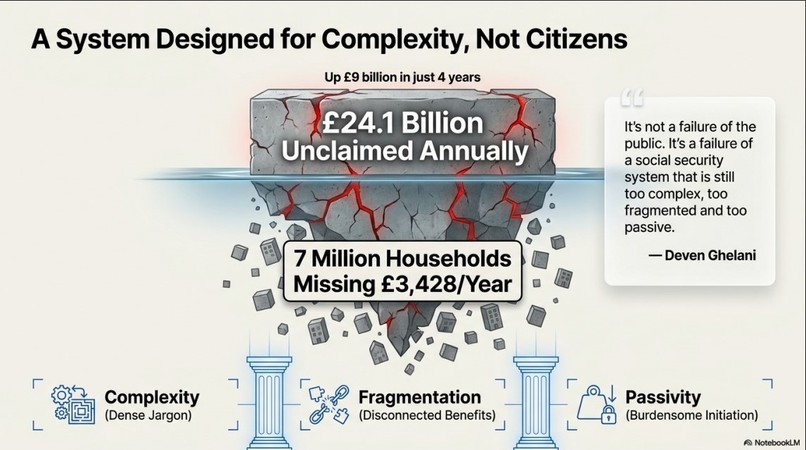
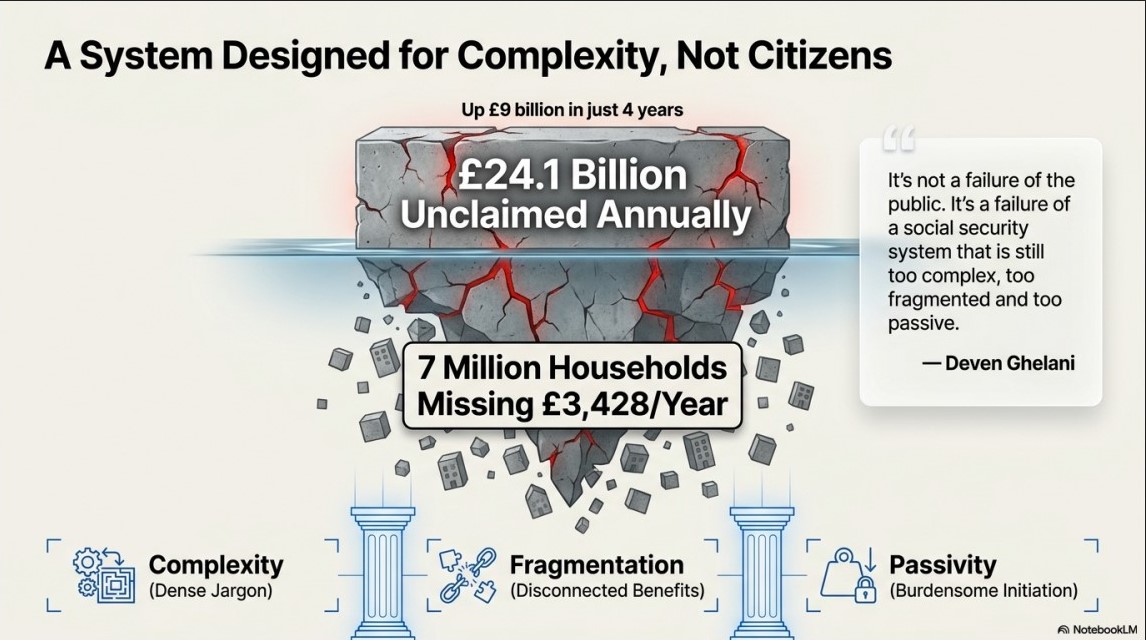
Every year, £24.1 billion in UK benefits goes unclaimed. That is not a typo and not a one-off — it is the latest figure from Policy in Practice's 2025 "Missing Out" report, and it has grown by nearly £9 billion in just four years. Over 7 million households are eligible for support they never receive, missing an average of £3,428 a year each.
The most striking part wasn't the number. It was the explanation. Deven Ghelani, the report's author, put it simply: "It's not a failure of the public. It's a failure of a social security system that is still too complex, too fragmented and too passive."
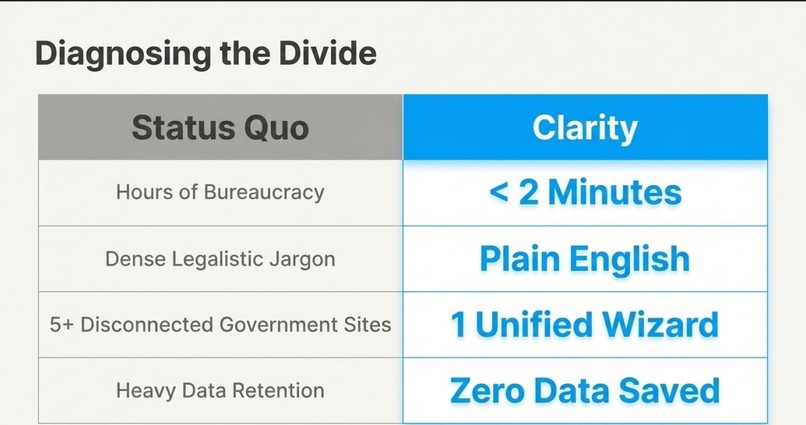
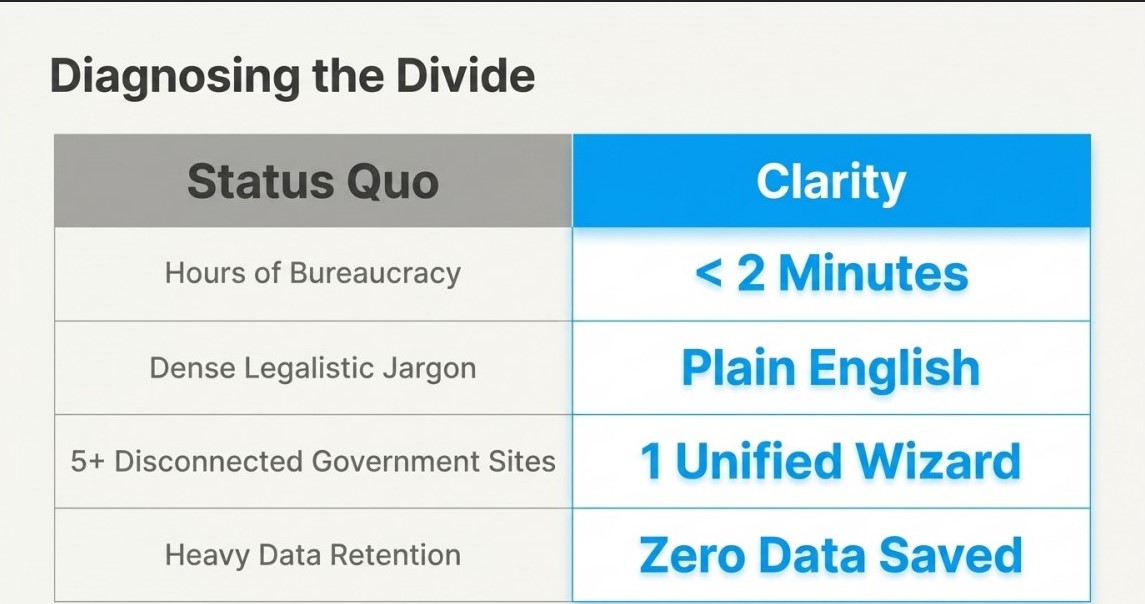
That sentence reframed the whole problem for us. This isn't about people not wanting help. It's about a system that was never designed to be understood by the people who need it most — single parents, carers, people managing a health condition while also managing five different government websites written in legal language.
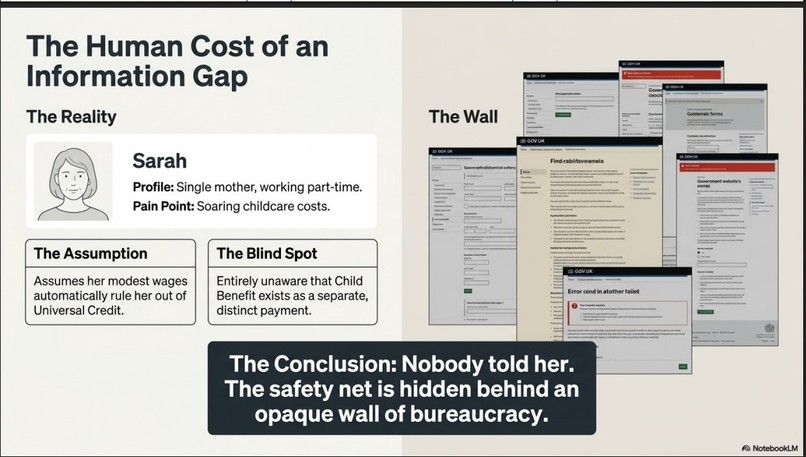
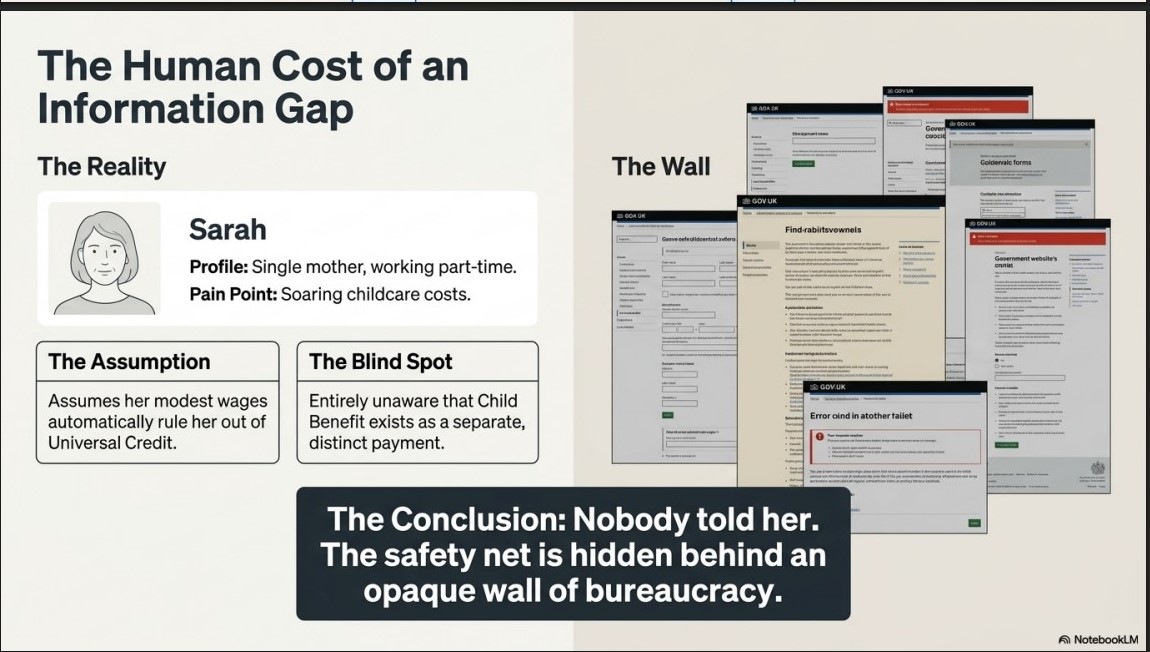
We thought about Sarah. Not a real person, but a composite of exactly who this £24 billion is sitting in front of: a single parent working part-time because childcare costs make full-time work pointless, who has heard of Universal Credit but assumed she earns too much, and has never heard that Child Benefit is a separate payment entirely. Nobody told her. That's the gap Clarity exists to close.
What it does
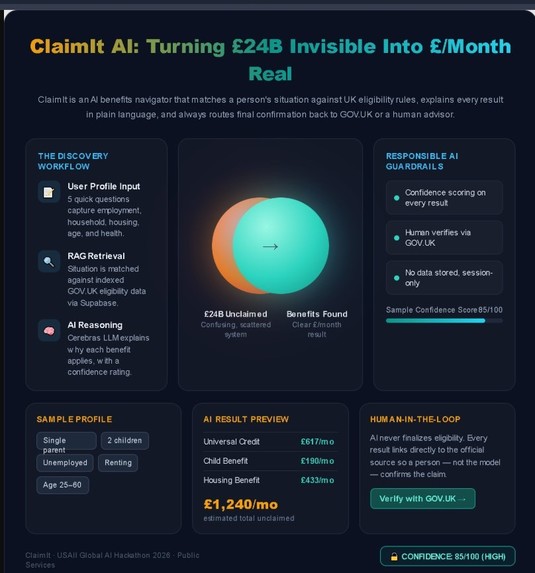
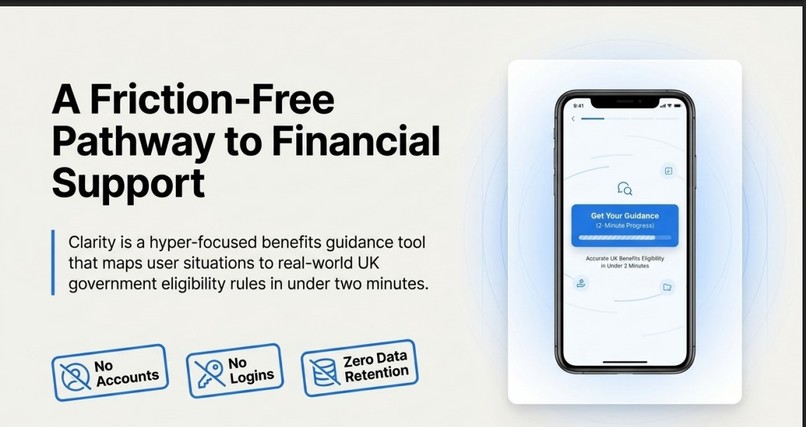
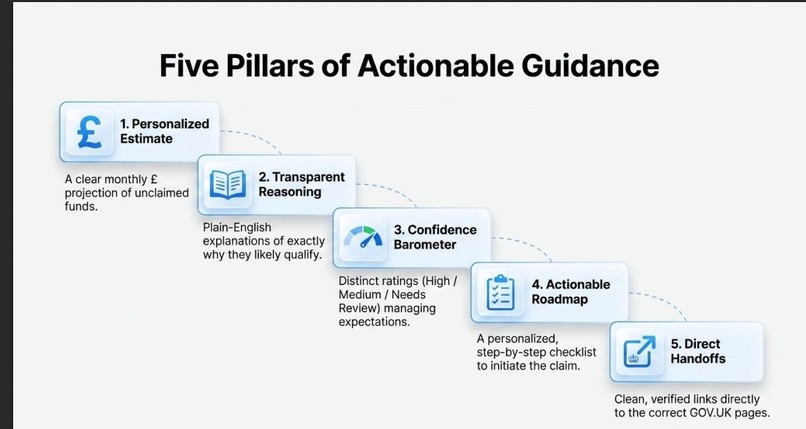
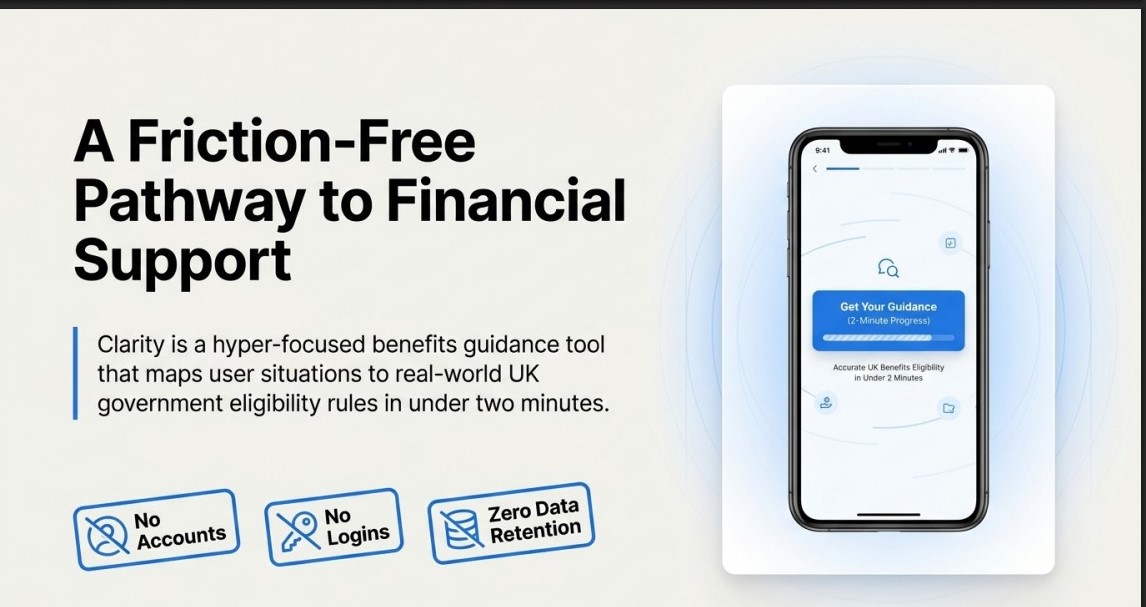
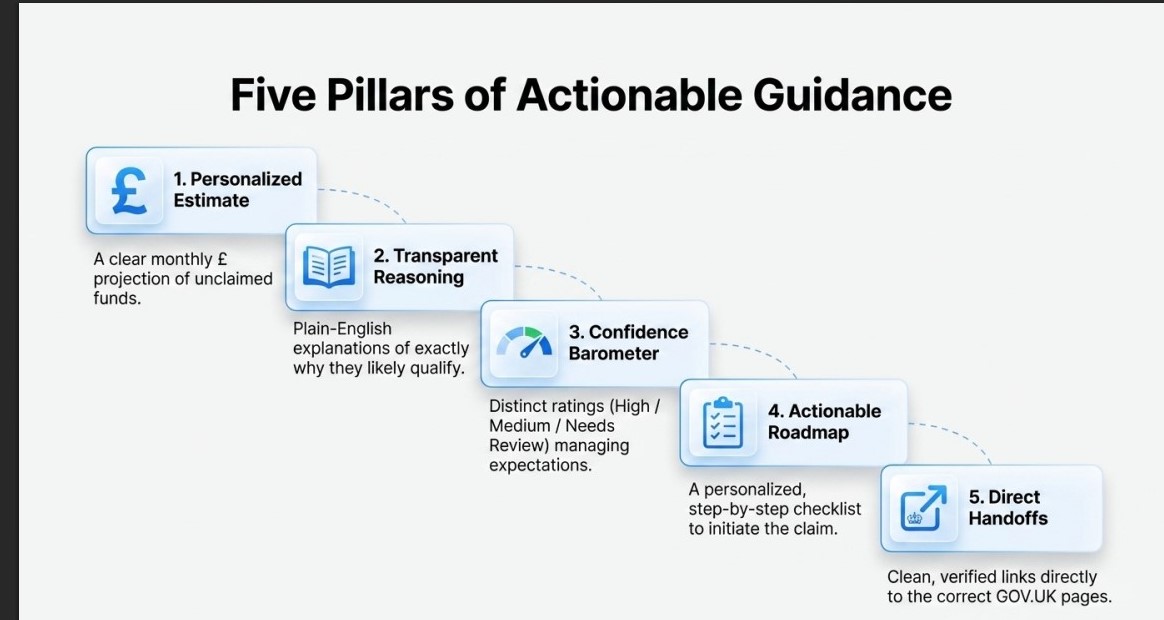
Clarity is a benefits guidance tool. A user answers a short set of plain-language questions about their employment, household, housing, age, and health situation. Clarity's AI matches their situation against real UK government (GOV.UK) eligibility rules for seven of the most commonly unclaimed benefits, and returns:
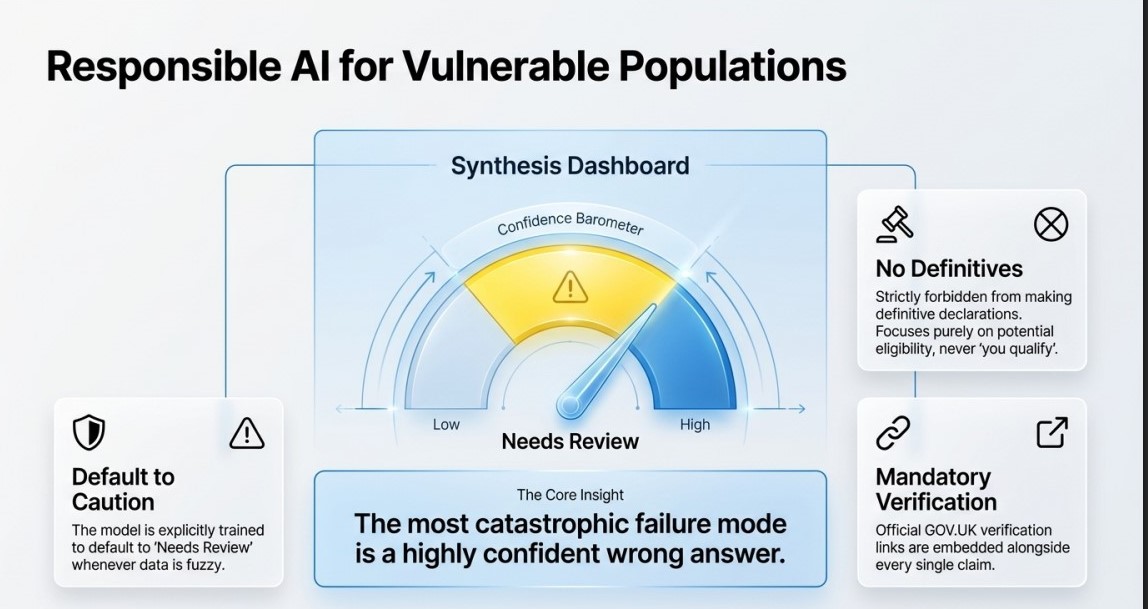
A personalized estimate of how much money per month they may be leaving unclaimed A plain-English explanation of why they likely qualify for each benefit A confidence rating per benefit (High / Medium / Needs Review) A step-by-step claim checklist A direct link to verify and claim on the official GOV.UK page
The entire flow takes under two minutes. No account, no login, nothing saved.
How we built it
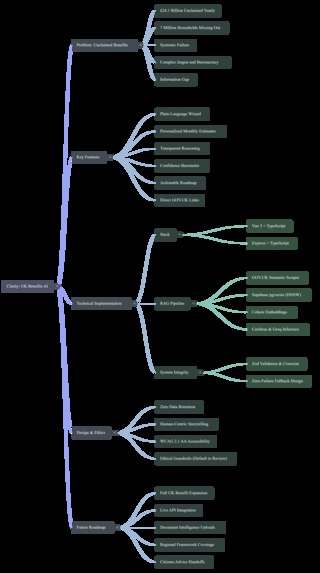
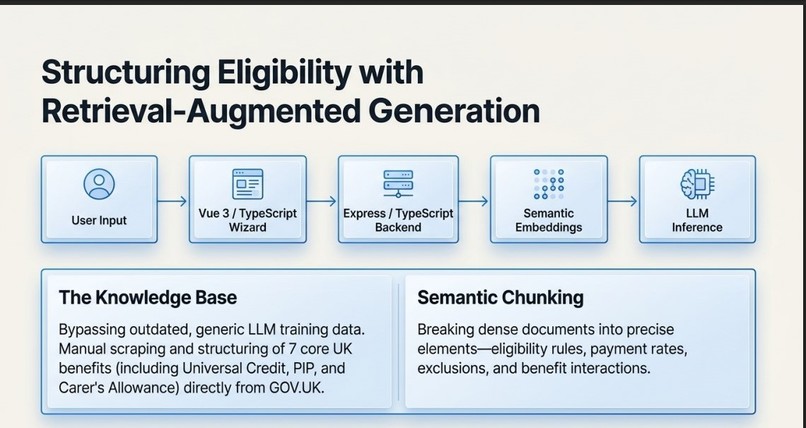
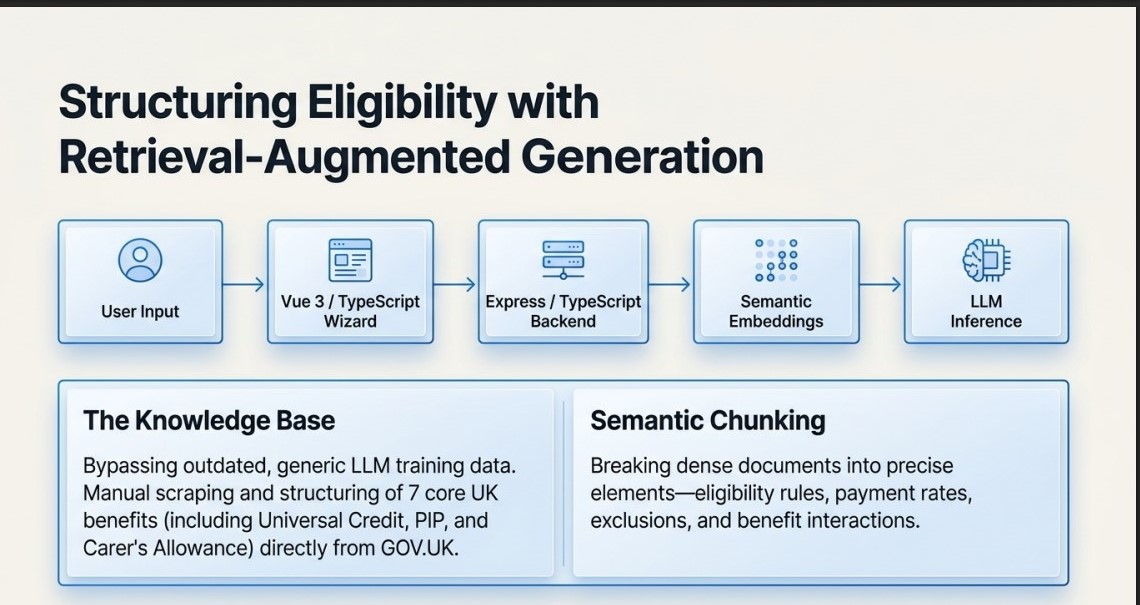
Clarity is a two-part system: a Vue 3 + TypeScript frontend wizard and an Express + TypeScript backend running a RAG (Retrieval-Augmented Generation) pipeline.
We manually structured eligibility data for seven UK benefits — Universal Credit, Child Benefit, Housing Benefit, Child Tax Credit, Free School Meals, Personal Independence Payment, and Carer's Allowance — directly from GOV.UK's published eligibility pages, splitting each into chunks (eligibility rules, payment amounts, claim steps, who doesn't qualify, benefit interactions).
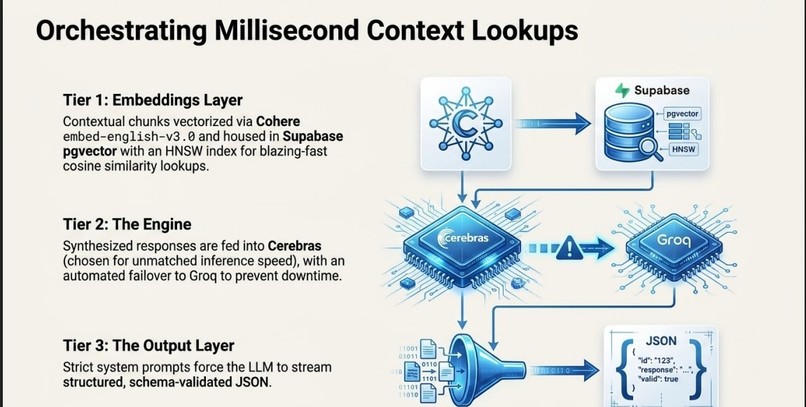
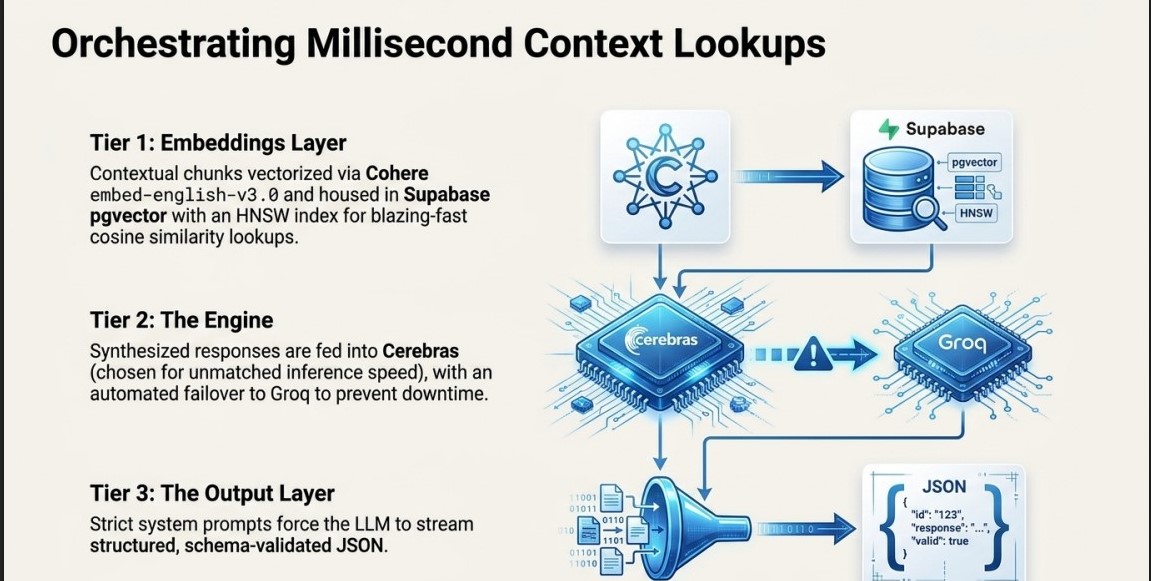
Those chunks are embedded using Cohere's embed-english-v3.0 model and stored in Supabase using pgvector with an HNSW index for fast cosine similarity search.
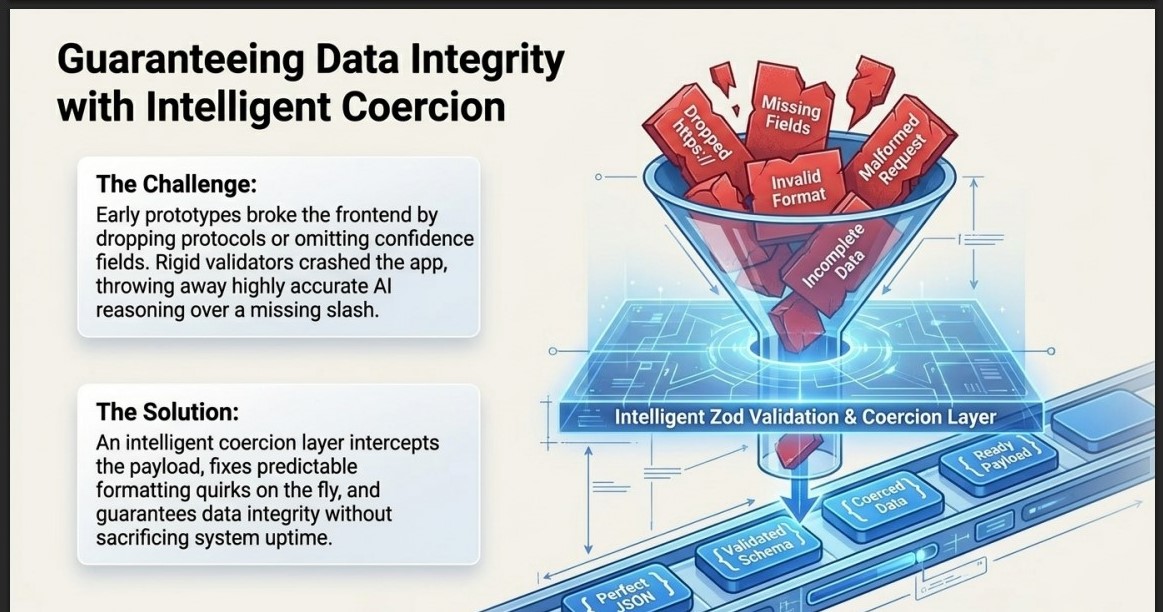
When a user submits their answers, we convert their five-to-six answers into a natural-language situation summary, embed that query with the same Cohere model, retrieve the most relevant eligibility chunks from Supabase, and pass both to an LLM — Cerebras as our primary provider for speed, with Groq as an automatic fallback if Cerebras is unavailable. The LLM is instructed never to claim final eligibility, to assign a confidence level to every result, and to return strict, schema-validated JSON (we use Zod to validate every field before it ever reaches the user).
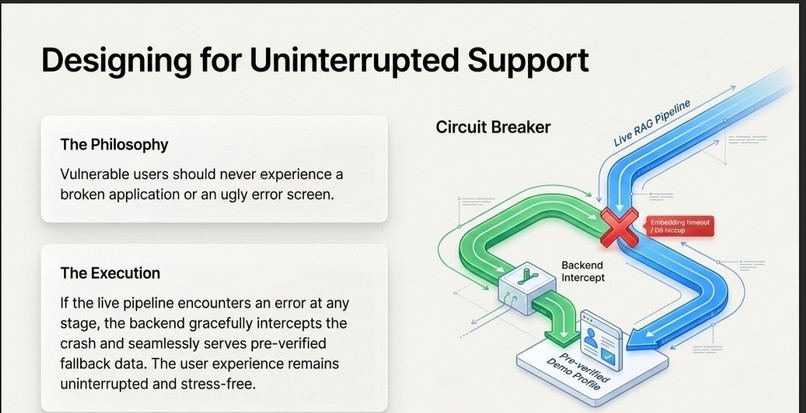
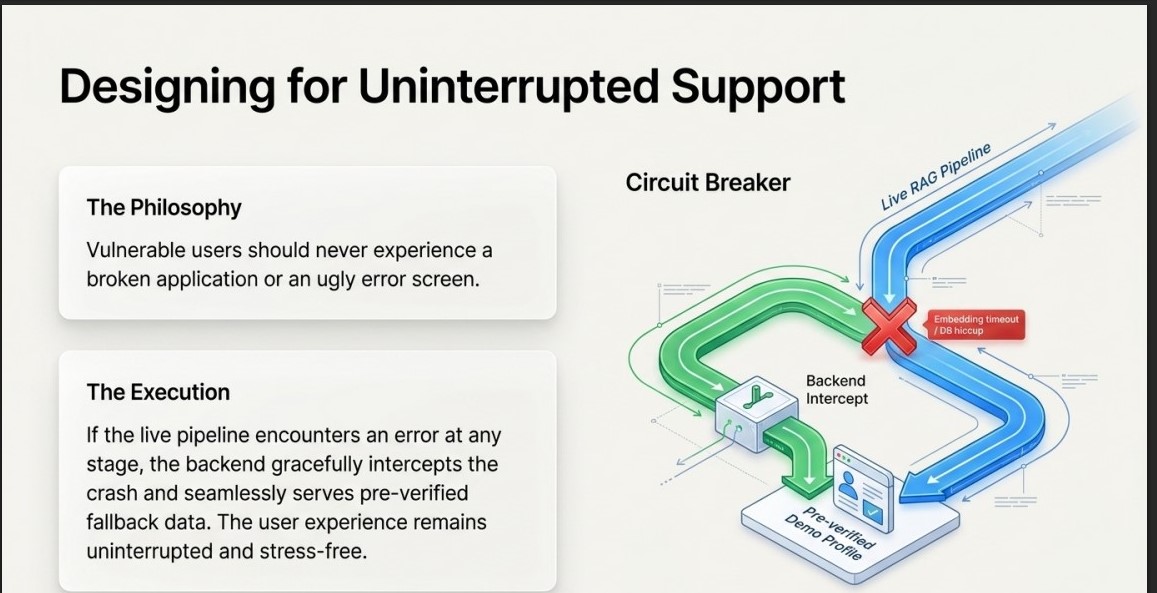
If the live pipeline fails at any point — embedding, retrieval, or generation — the backend automatically serves one of three pre-verified demo profiles instead of an error. The user never sees a failure state.
Challenges we ran into
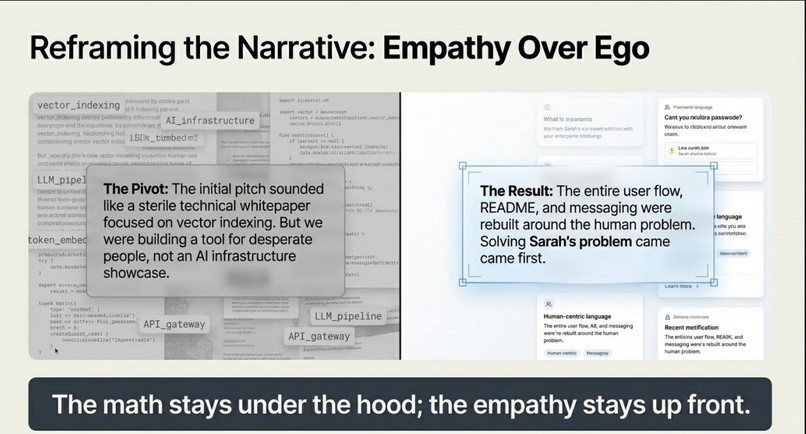
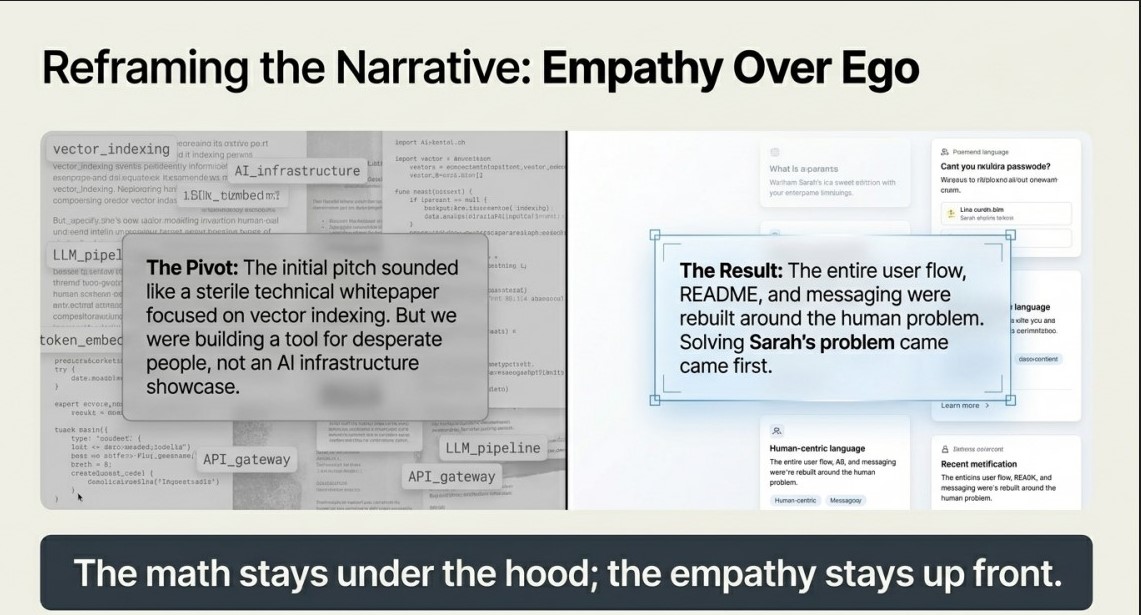
The hardest problem wasn't the AI — it was trust. Early versions of our pitch sounded like a technical RAG demo: "we use embeddings, vector search, an LLM." A mentor pointed out that this completely buried the actual product, which is a benefits guidance tool for a person in a stressful situation, not an AI infrastructure showcase. We rebuilt the entire framing — and the README, and the demo script — around the user first, with the technology explained only after the human problem was fully understood.
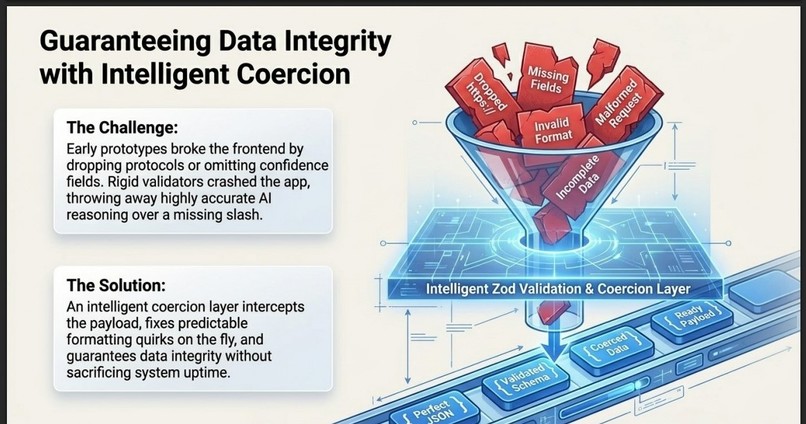
On the technical side, getting the LLM to return consistently well-formed JSON was harder than expected. Early prompts occasionally returned malformed URLs (missing the https:// scheme) or omitted a confidence field entirely. We solved this with a Zod validation layer that coerces fixable issues (like a bare gov.uk URL) rather than discarding the entire response over one malformed field — a strict all-or-nothing validator was actually throwing away good data over trivial formatting issues.
Accomplishments that we're proud of
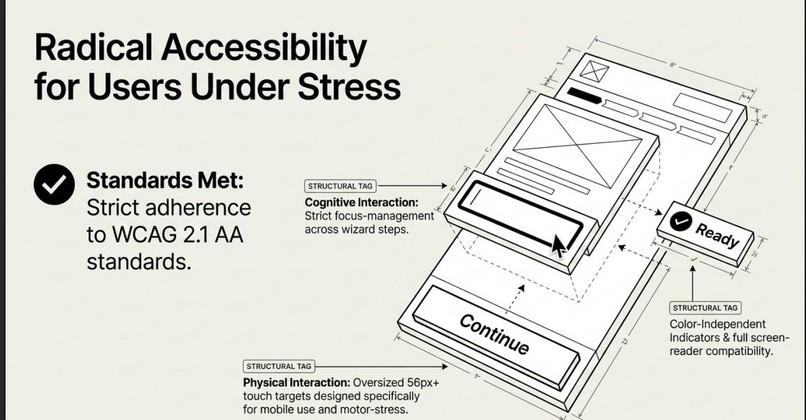
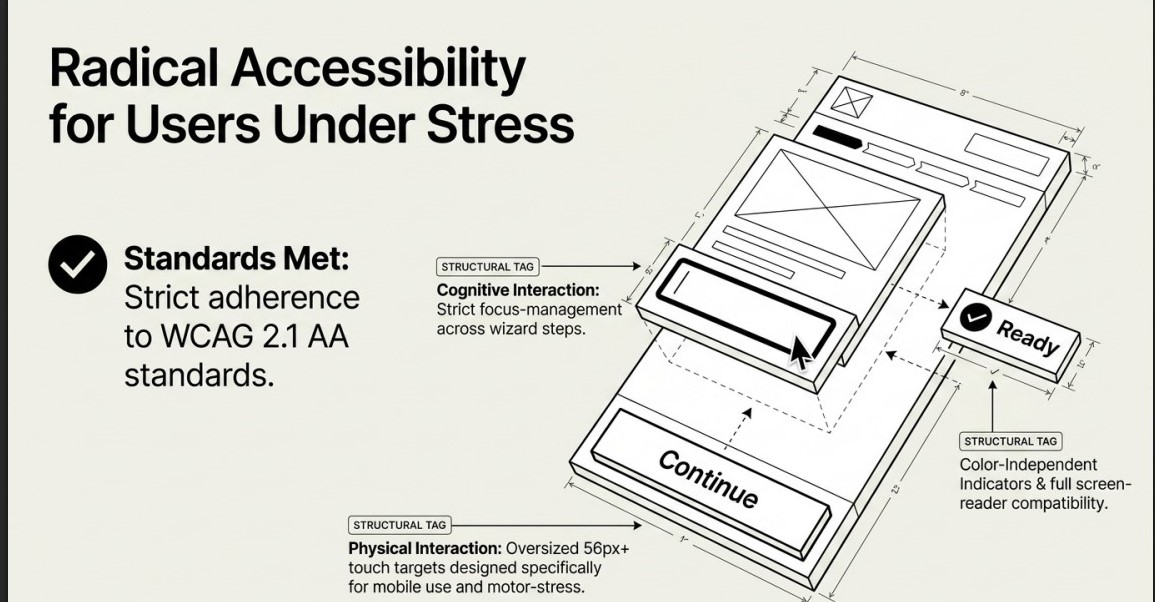
A live, working RAG pipeline — not a mockup — that returns real, source-cited eligibility reasoning in seconds Full test coverage on the two most fragile parts of the system: the situation-builder (what gets sent to the AI) and the LLM JSON parser (what comes back from it) A responsible-AI design that isn't a disclaimer slide bolted on at the end — the confidence meter, the "Needs Review" flag, and the "Verify with GOV.UK" button are core UI elements on every single result A frontend built for the actual user: 56px+ touch targets, full screen-reader support, focus management on every step, and colour-plus-text confidence indicators (never colour alone) to meet WCAG 2.1 AA
What we learned
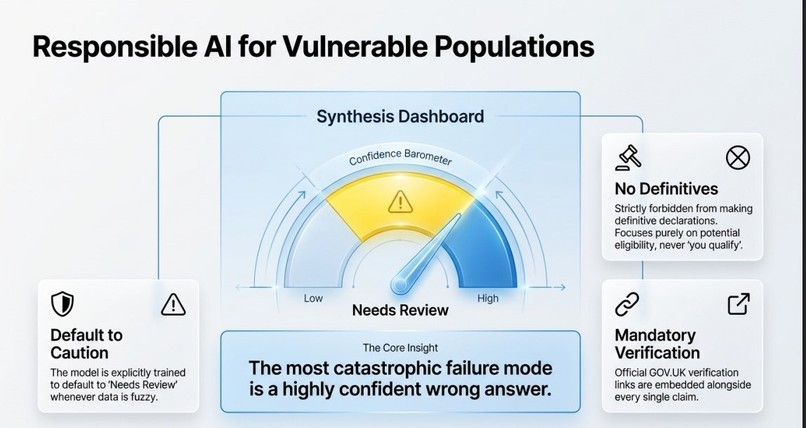
We learned that the most dangerous failure mode for an AI product helping vulnerable people isn't a wrong answer — it's a confident wrong answer. That shaped almost every design decision: defaulting to "Needs Review" rather than guessing, never saying a user "qualifies" only that they "may qualify," and putting the GOV.UK verification link on every single result, not just a footer.
We also learned, the hard way, that a good idea presented as a tech demo loses to the same idea presented as a human story. The product didn't change. The order we explained it in did.
What's next for Clarity-Your Eligibility AI
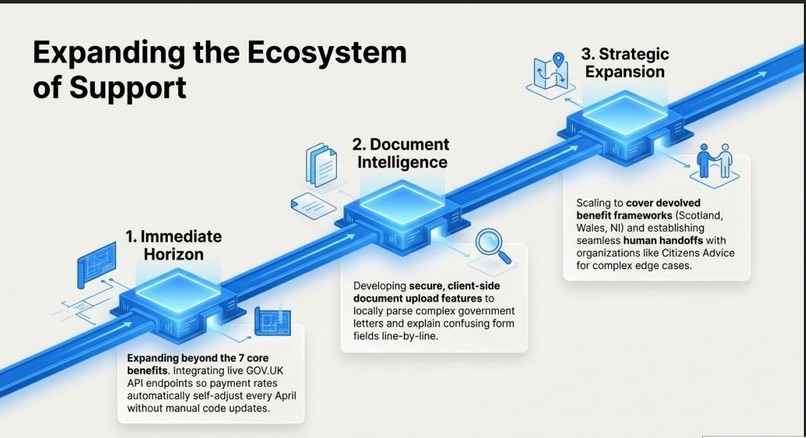
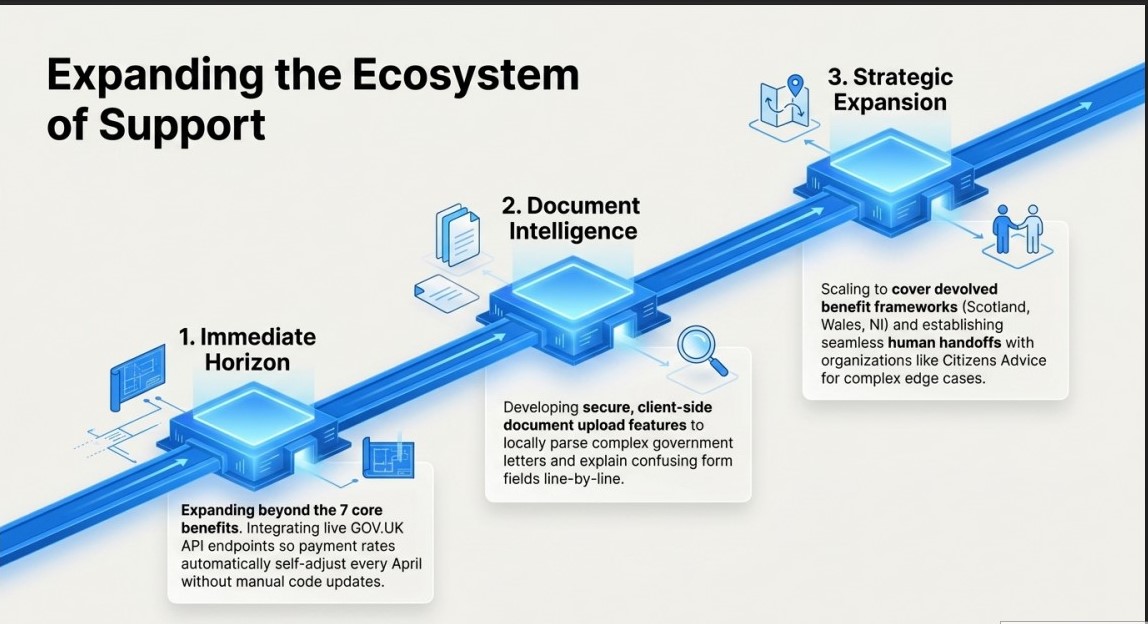
Near-term: expanding from 7 to the full range of UK benefits, adding live GOV.UK API integration so amounts update automatically each April instead of requiring a manual data refresh, and a document-upload feature where Clarity explains a benefits form field by field.
Longer-term: coverage for Scotland, Wales, and Northern Ireland's devolved benefit variations, and partnerships with organisations like Citizens Advice to provide a real human handoff point for the "Needs Review" cases our AI is honest enough to flag rather than guess at
Built With
- cerebras
- cohere
- express-rate-limit
- express.js
- groq
- helmet
- node.js
- pgvector
- pinia
- supabase
- tailwindcss
- typescript
- vercel
- vite
- vitest
- vue
- zod


Log in or sign up for Devpost to join the conversation.