
Inspiration
Insurance should provide peace of mind, but for many people, filing a claim is anything but reassuring. Claims often involve long waiting times, repetitive paperwork, manual reviews, inconsistent decisions, and little transparency. Customers are left wondering where their claim is, while insurers struggle with fraud detection, rising operational costs, and overwhelming claim volumes.
I wanted to answer a simple question:
What if an insurance claim could be processed as intelligently and seamlessly as a conversation?
That question became the foundation of ClaimFlow-an AI-powered claims orchestration platform that combines autonomous AI agents with secure payment infrastructure to make insurance claims faster, smarter, and more transparent.
What it does
ClaimFlow transforms the traditional insurance claims workflow into an intelligent, multi-agent system.
Instead of routing every claim through lengthy manual processes, specialized AI agents collaborate to:
• Receive and validate claim submissions.
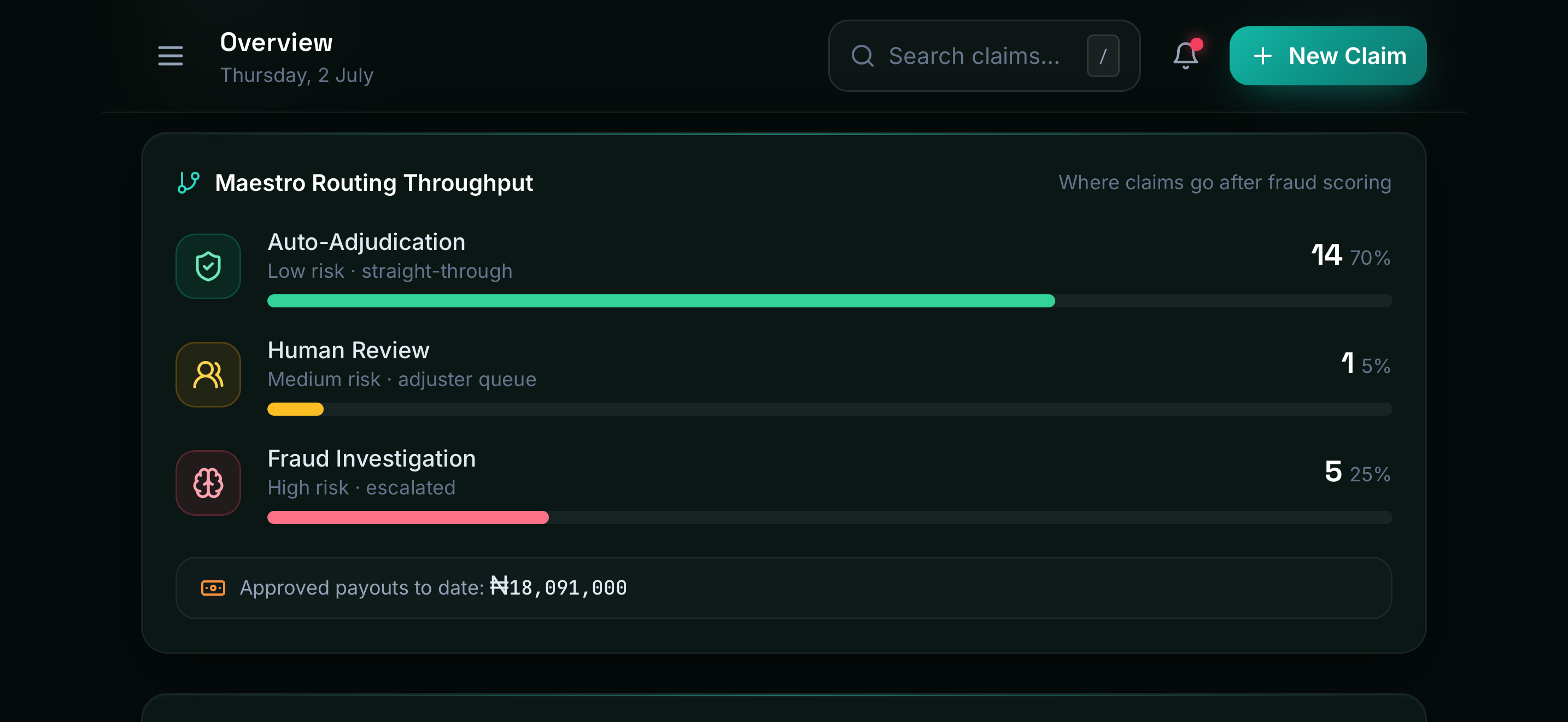
• Detect potential fraud using AI-powered risk analysis.
• Assess claim severity and determine the appropriate processing path.
• Automatically approve straightforward claims.
• Escalate suspicious or complex cases to human reviewers.
• Trigger secure claim payouts after approval.
• Keep customers informed throughout the entire process.
The result is a platform that reduces processing time from days to minutes while improving accuracy and customer trust.
How I built it
I built ClaimFlow using a modern technology stack that combines an intuitive frontend with powerful workflow automation.
Frontend
• React
• TypeScript
• Vite
• Tailwind CSS
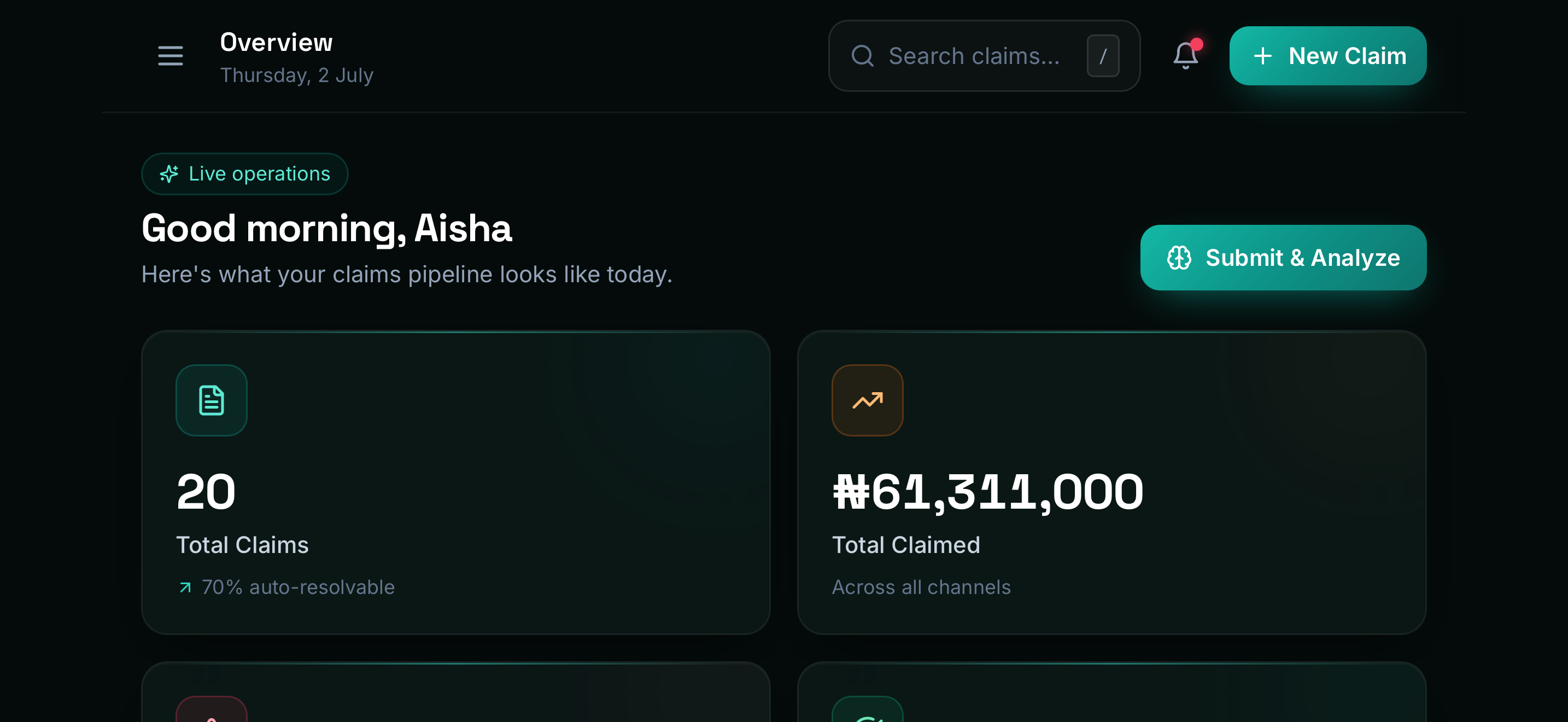
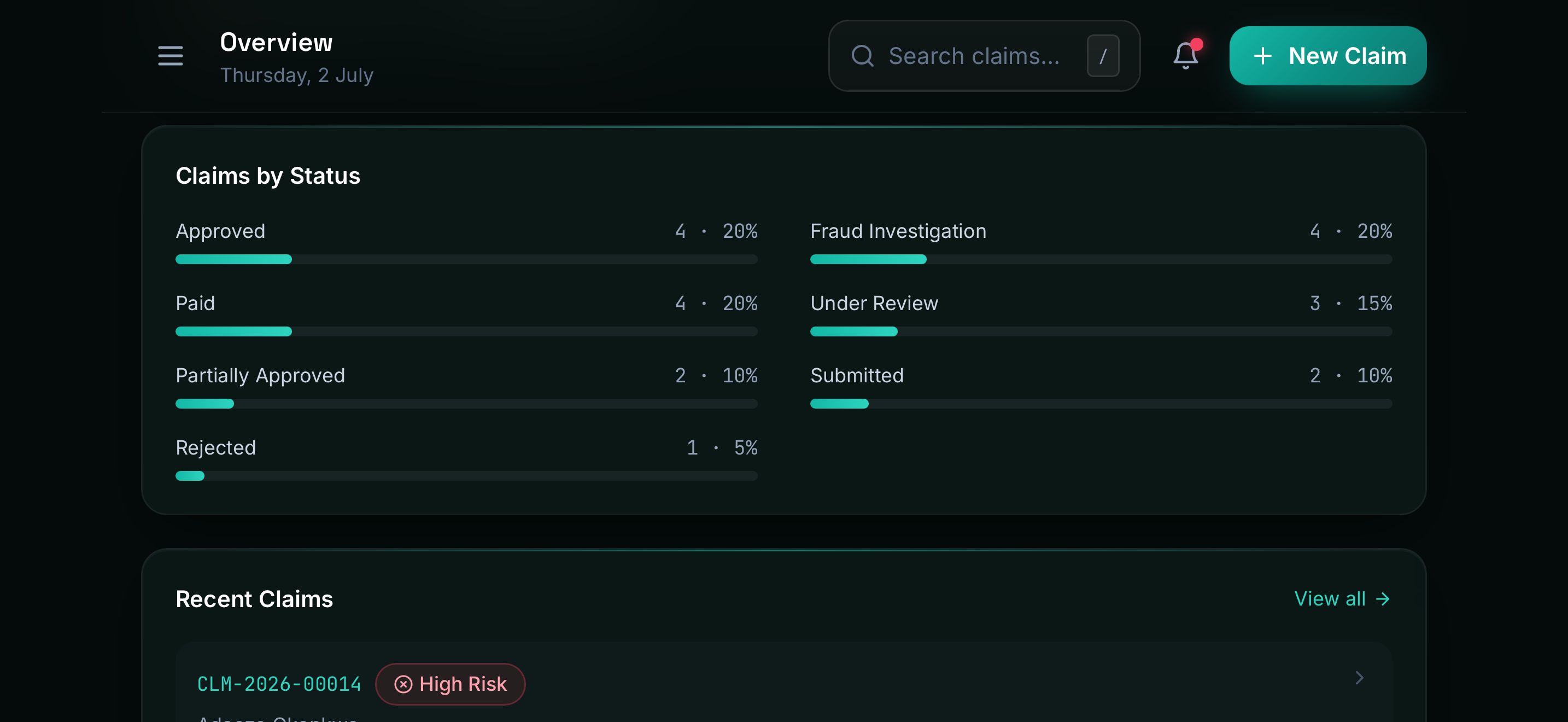
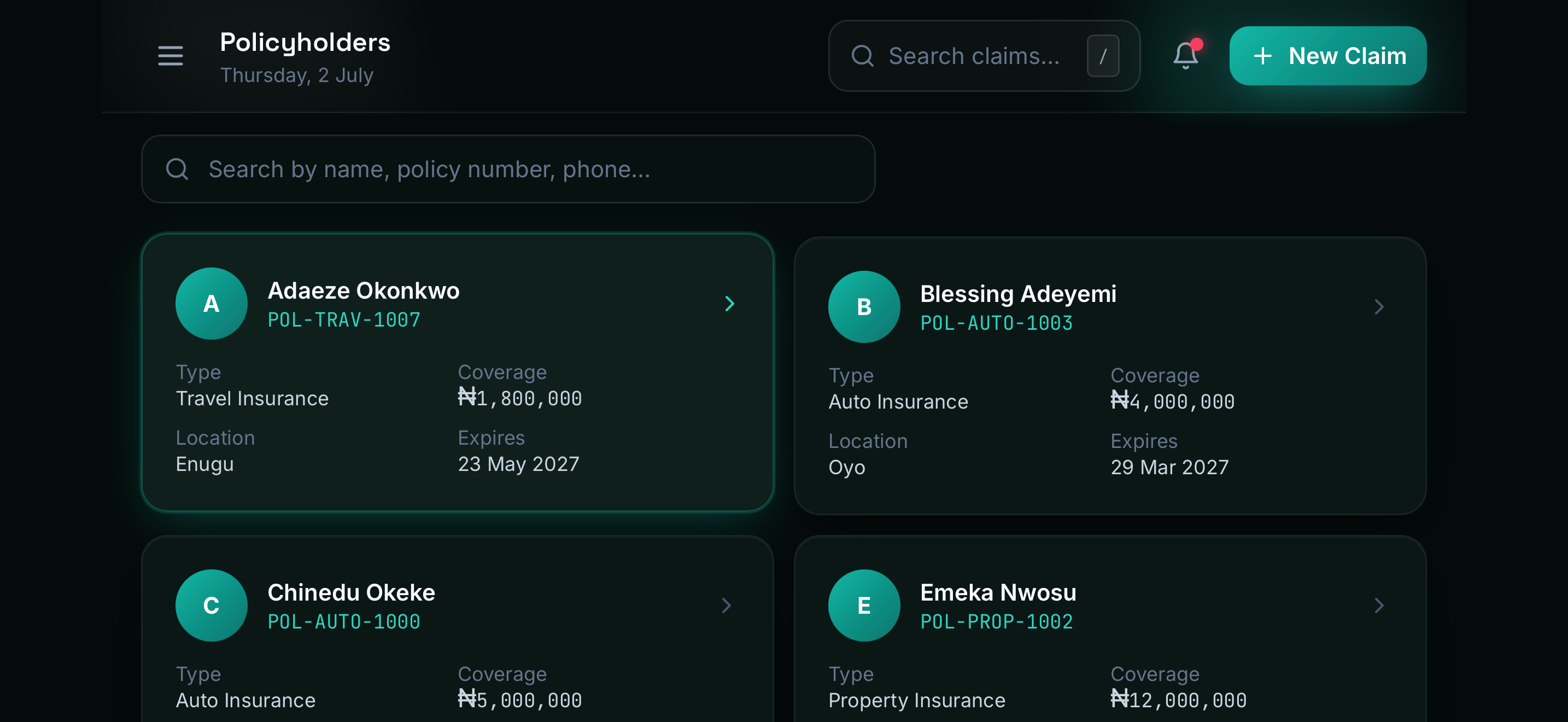
The frontend provides a clean interface where users can submit claims, upload supporting information, and monitor the progress of their claims in real time.
Backend Automation
My backend is powered by UiPath, which orchestrates the entire claims workflow. UiPath automates repetitive business processes, coordinates claim routing, integrates with external services, and ensures each claim follows the appropriate processing path based on AI-driven decisions.
AI Layer
AI is used to:
• Analyze submitted claim data.
• Detect potential fraud indicators.
• Assess claim risk.
• Recommend the next best action within the workflow.
Together, AI and UiPath create an intelligent system that minimizes manual intervention while ensuring complex cases still receive human oversight.
Challenges I ran into
One of my biggest challenges was designing a workflow that balanced automation with trust. While many claims can be processed automatically, insurers still need confidence that high-risk cases receive the attention they deserve.
Another challenge was mapping real-world insurance processes into automated workflows. I had to carefully design how claims move between validation, risk assessment, automated decisions, and human review while keeping the experience simple for end users.
I also learned the importance of making AI decisions transparent so users understand how and why a claim reaches a particular stage.
Accomplishments that I’m proud of
One of my biggest accomplishments was successfully designing an end-to-end intelligent claims workflow that combines AI-powered decision-making with UiPath automation. Instead of building isolated features, we created a system where claim intake, fraud detection, risk assessment, automated approvals, and human review work together seamlessly.
I am also proud of turning a traditionally slow and manual insurance process into an intelligent, transparent experience that can significantly reduce processing time while keeping humans involved where their expertise matters most. Beyond the technical implementation, i’m proud that ClaimFlow demonstrates how AI and automation can solve a real-world problem with meaningful impact for both insurers and policyholders.
What i learned
Building ClaimFlow gave me hands-on experience in:
• Designing AI-assisted business workflows.
• Using UiPath to automate enterprise processes.
• Building responsive interfaces with React and TypeScript.
• Structuring scalable workflow orchestration.
• Creating systems where AI supports-not replaces-human decision-making.
Most importantly, i learned that automation creates the greatest impact when it eliminates repetitive work while empowering people to focus on complex decisions.
What's next for ClaimFlow Ai
Our roadmap for ClaimFlow includes:
• OCR for extracting data from uploaded claim documents.
• AI-powered damage assessment from images.
• Real-time notifications and claim tracking.
• Analytics dashboards for insurers.
• Integration with additional insurance systems and third-party services.
• More advanced AI models for fraud detection and decision support.
My vision is to make insurance claims faster, smarter, and more transparent through the power of AI and intelligent automation.


Log in or sign up for Devpost to join the conversation.