-
-
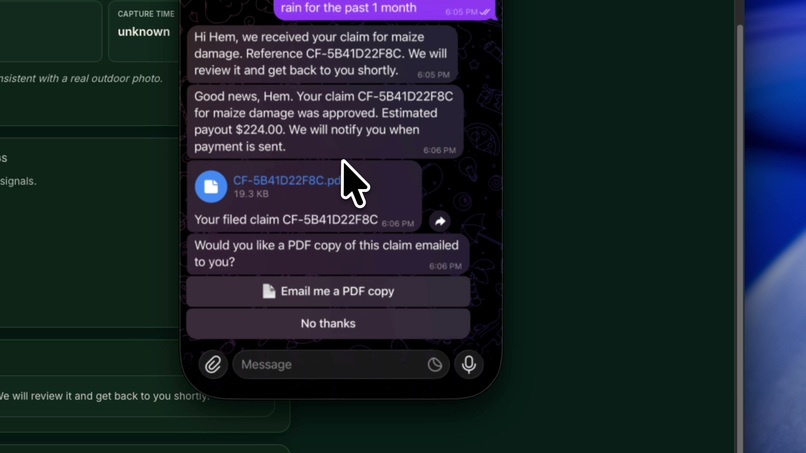
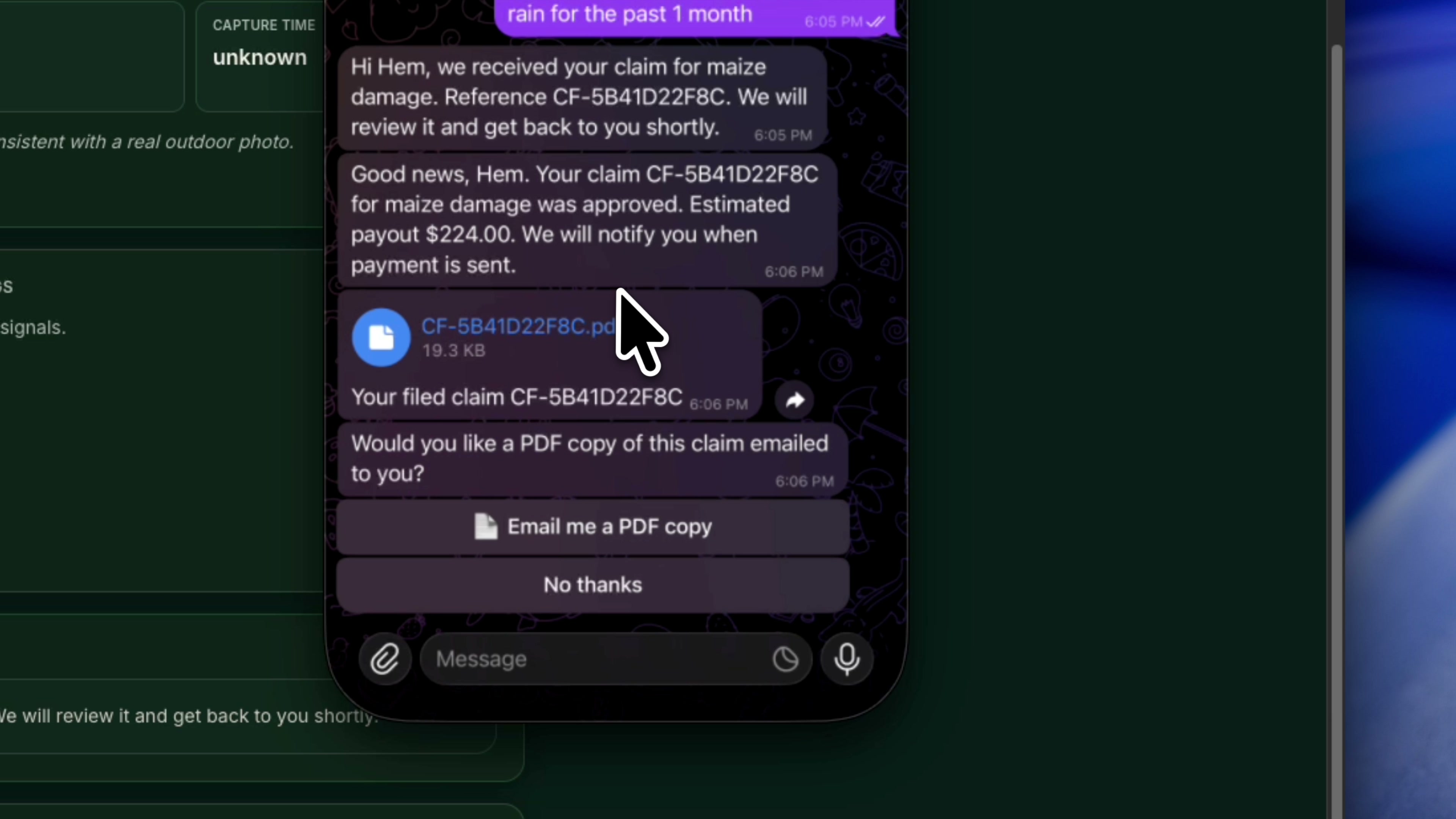
The farmer hears back in seconds: approved with payout, the filed claim in chat, and a one-tap PDF copy by email
-
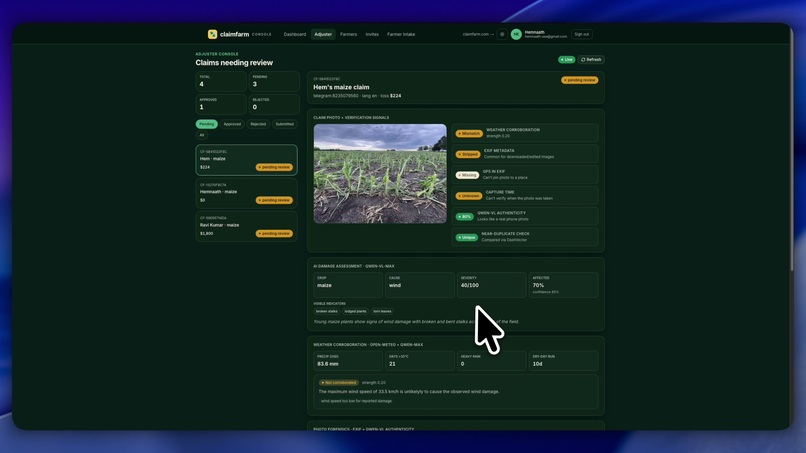
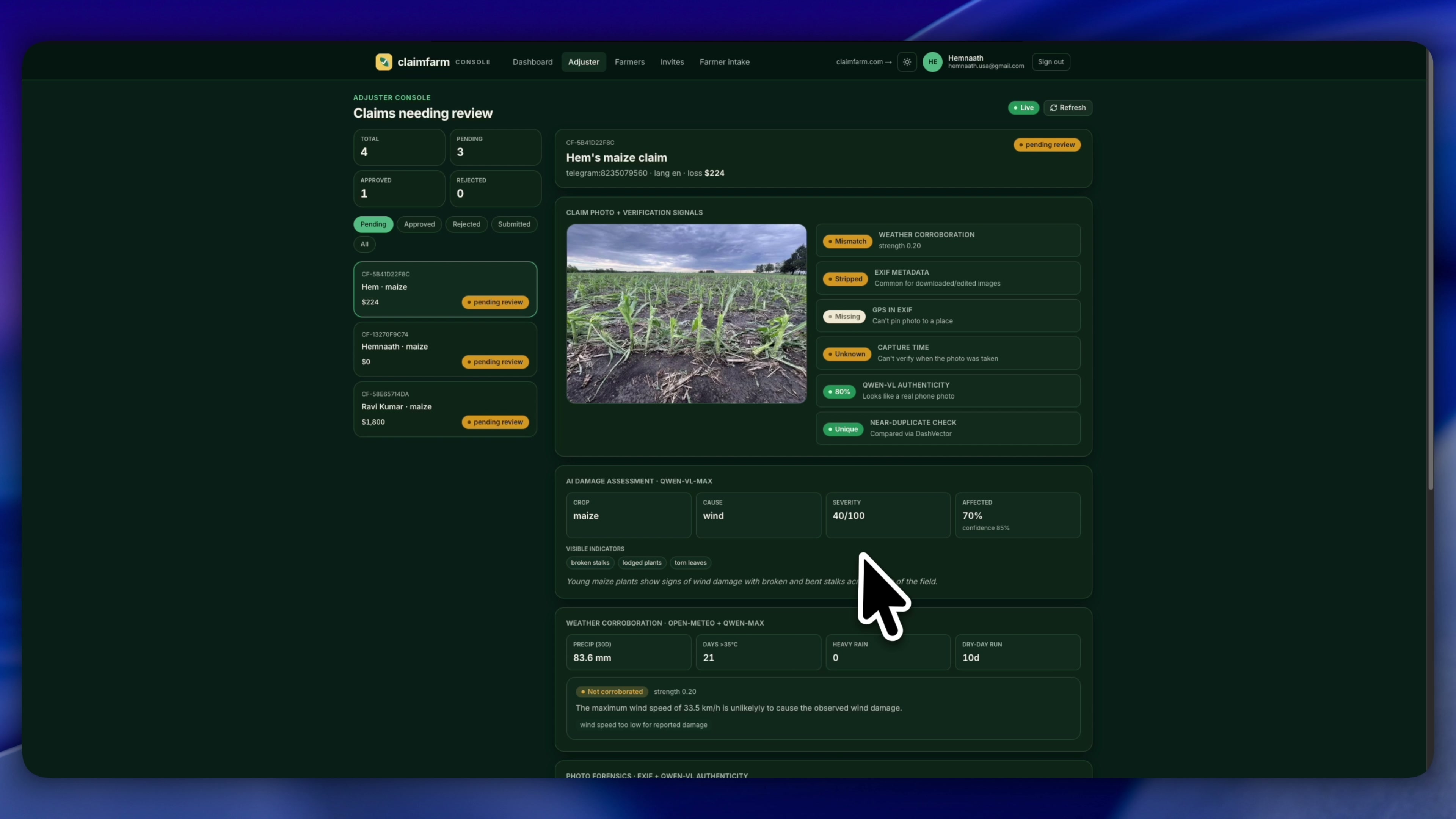
Adjuster console: photo evidence, AI damage assessment, weather corroboration, forensics and fraud signals on one screen
-
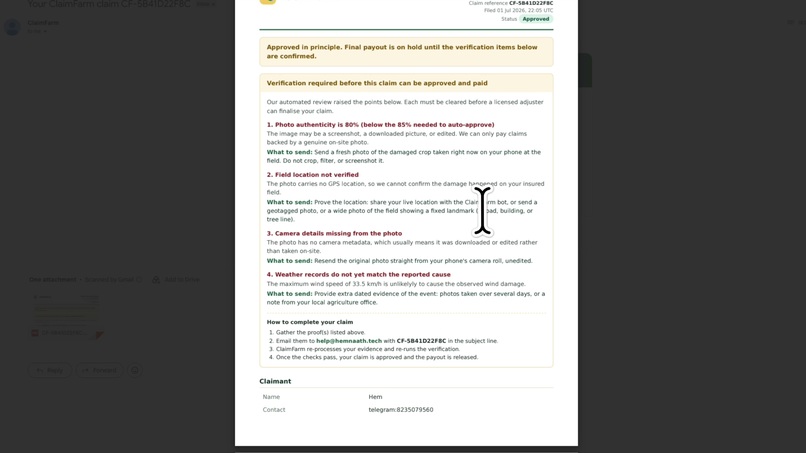
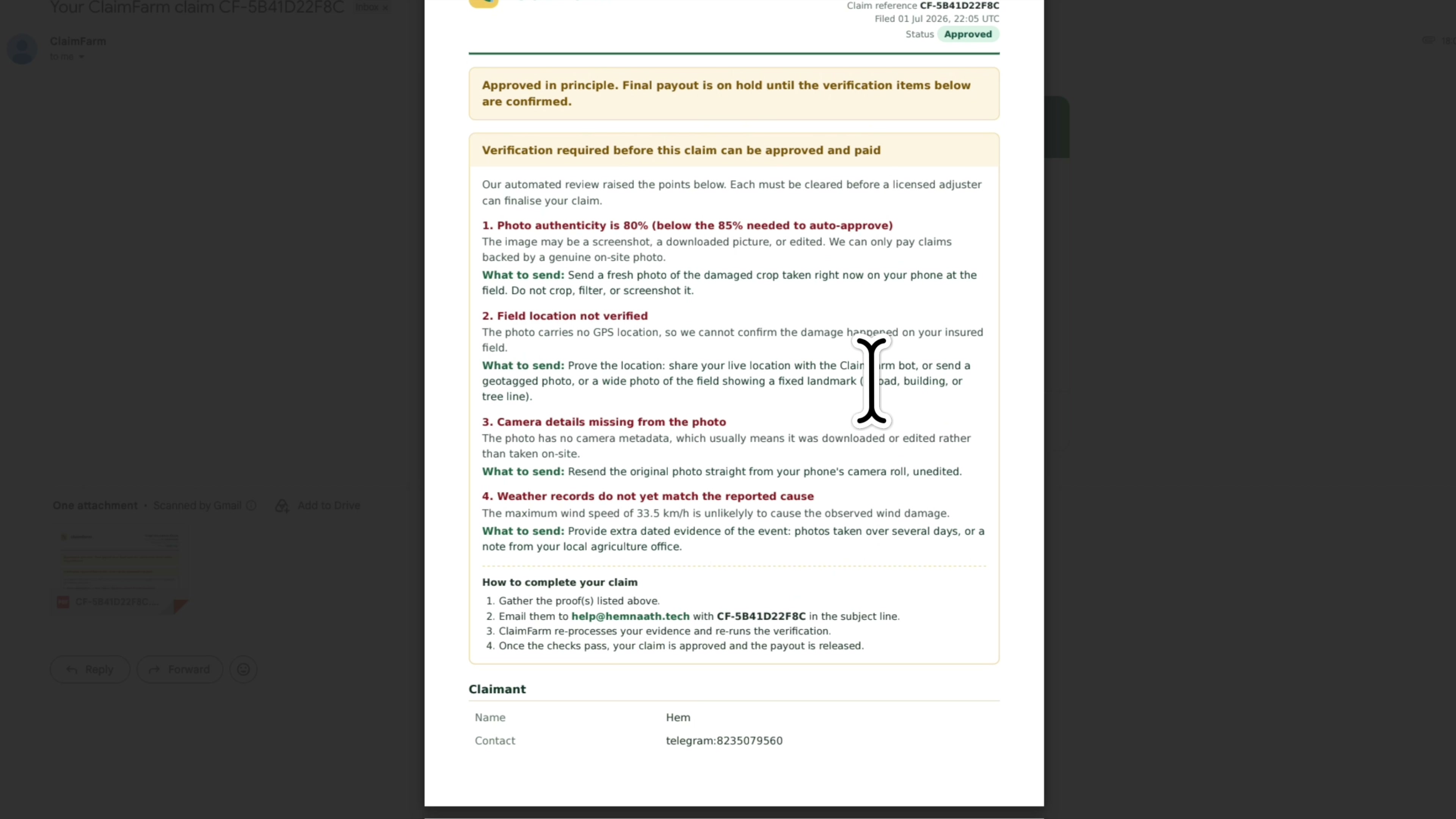
The claim PDF with the verification loop: every red flag listed with the exact proof to email back before payout is released
-
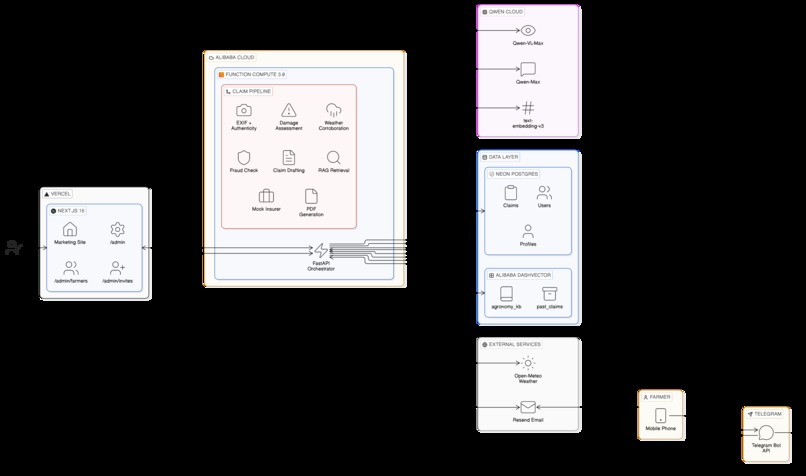
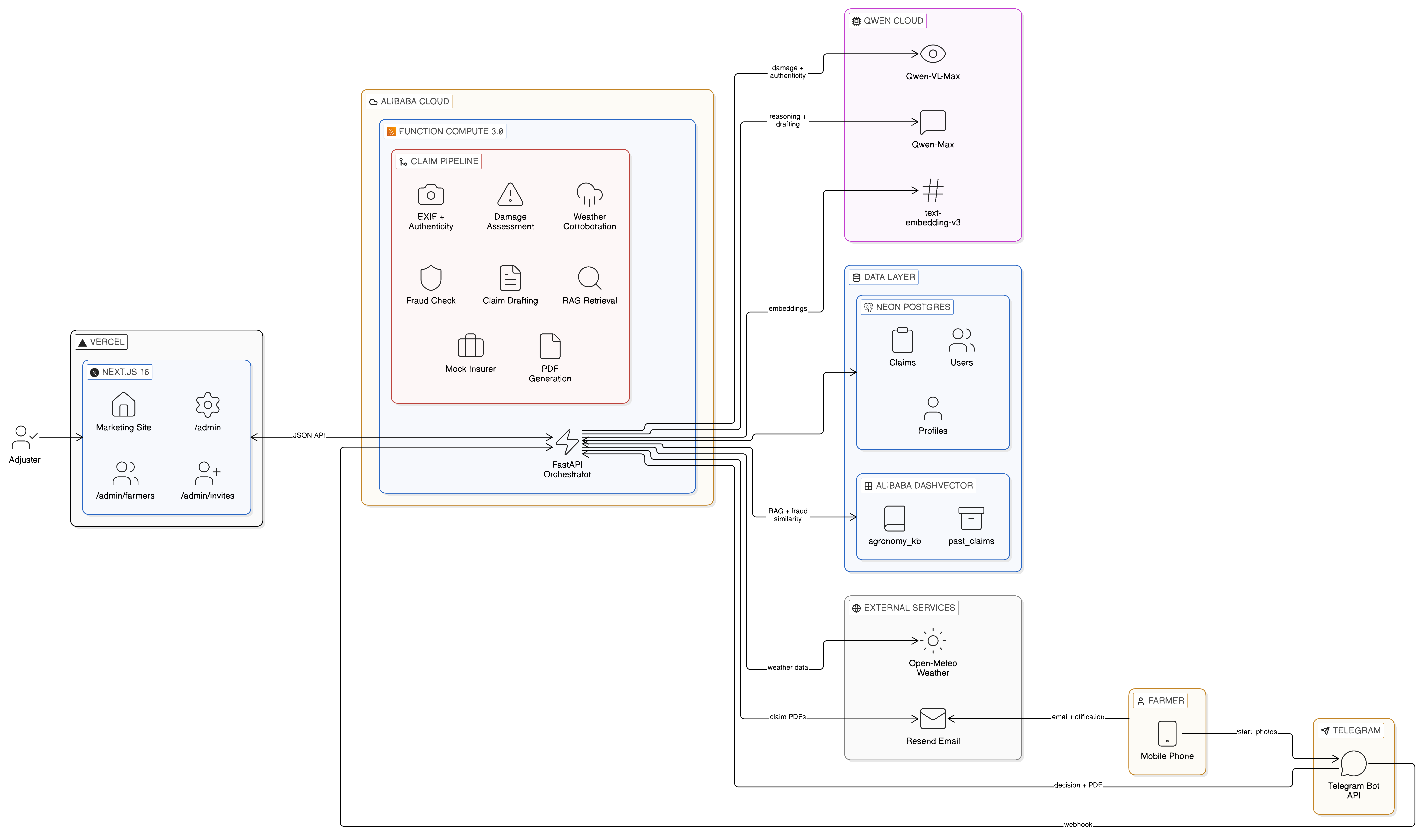
Telegram farmers → FastAPI on Alibaba Function Compute → Qwen-VL-Max/Qwen-Max via DashScope, DashVector, Neon Postgres → Next.js console
Inspiration
Around 500 million smallholder farmers grow much of the world's food, yet fewer than one in five ever files a crop insurance claim. The forms are in the wrong language, they demand evidence a farmer can't easily produce, and the nearest office can be a day's travel away. Insurance that can't be claimed isn't insurance. I wanted the entire claims process to fit inside the one tool every farmer already has: a chat app and a camera.
What it does
A farmer messages the ClaimFarm bot on Telegram. The first time, it registers them right in the chat, in their own language: name, language, farm location, village, crops, farm size, optional email. Then they send one photo of the damaged crop with a caption in their own words.
Within about a minute, ClaimFarm:
- grades the damage with Qwen-VL-Max (crop, cause, severity, affected area, visible indicators)
- runs photo forensics: EXIF capture time and GPS, edit-software flags, a Qwen-VL authenticity score, and perceptual-hash dedupe against the farmer's past claims
- pulls 30 days of real weather for the farm location and asks Qwen-Max whether the data corroborates the claimed cause
- retrieves similar past claims and agronomy references from Alibaba DashVector for fraud and context
- drafts the claim with an estimated payout and generates a proper insurance PDF
The claim lands in the insurer's adjuster console with everything on one screen. One click approves it; the farmer is notified instantly in their language and can get the claim PDF emailed with one tap.
The part I'm proudest of is the verification loop. A claim with red flags (no GPS on the photo, low authenticity score, weather that doesn't match the story) isn't auto-rejected. The PDF lists every flag and the exact proof to email back; ClaimFarm re-verifies the evidence and releases the payout. Weak claims become verified claims instead of instant rejections.
Access is production-grade: staff accounts are invite-only (owner-issued invites, Argon2id, RBAC), farmers never need a web login, and everything persists in Postgres.
How I built it
FastAPI orchestrator in a custom container on Alibaba Cloud Function Compute 3.0 (Singapore), calling Qwen-VL-Max, Qwen-Max, and text-embedding-v3 through DashScope's OpenAI-compatible API. DashVector holds the past-claims and agronomy collections. Neon Postgres (same region) stores users, invites, farmer profiles, claims, and even photo bytes. The adjuster console and marketing site are Next.js 16 on Vercel. Weather comes from Open-Meteo, transactional email from Resend on a DKIM-verified domain, and GitHub Actions builds, tests, and deploys the container to FC on every push.
Challenges I ran into
- Serverless containers have opinions. FC pins the image digest, so deploying by
:latestserved stale code; I switched CI to immutable per-commit tags. Warm instances also keep serving old code until they idle out, which made "why is prod old" a recurring mystery. - The default
fcapp.rundomain forces file downloads and blocks external redirects, which broke email verification links and browser testing. I moved link handling into the frontend and returned client-side redirect pages instead. - Ephemeral storage ate my photos. FC wipes local disk between instances, so evidence photos vanished. I moved photo bytes into Postgres so claims survive any instance roll.
- Email deliverability from a brand-new domain meant DKIM/SPF/DMARC setup, an inline-embedded logo (remote images get blocked), and a real reply-to address.
- Cross-origin auth between Vercel and FC needed SameSite=None cookies and careful CORS with credentialed requests.
What I learned
Multimodal models are genuinely good enough to gate real money when you surround them with corroboration: weather data, forensics, retrieval, and a human adjuster. Designing for the rejection path (ask for proof, re-verify) matters more than the happy path. And most of "AI product" work is production plumbing: webhooks, signatures, storage, cold starts, deliverability.
What's next
A real insurer integration to replace the mock carrier, WhatsApp via a business provider alongside Telegram, payout rails, OSS archival for long-term evidence retention, and a pilot with an NGO or micro-insurer in one region.
Built With
- alibaba-cloud
- dashscope
- dashvector
- docker
- fastapi
- function-compute
- github-actions
- neon
- next.js
- open-meteo
- postgresql
- python
- qwen
- resend
- tailwindcss
- telegram-bot-api
- typescript
- vercel
- weasyprint

Log in or sign up for Devpost to join the conversation.