-
-
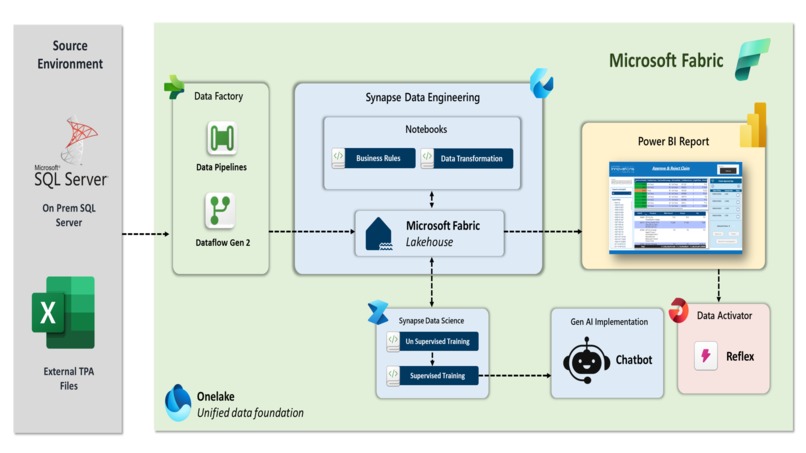
Architecture
-
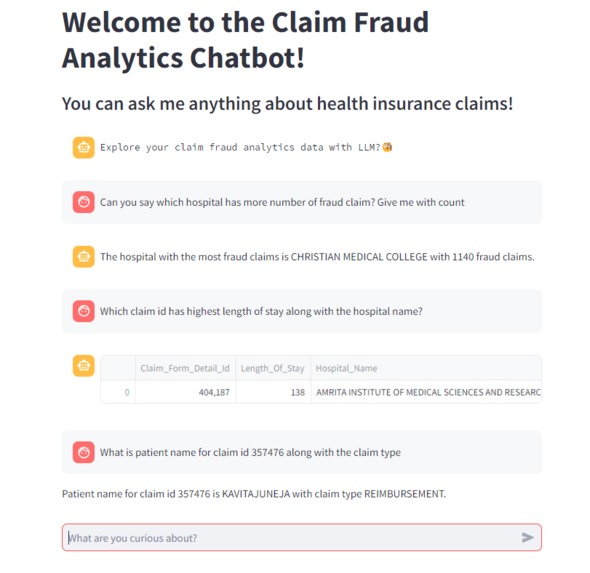
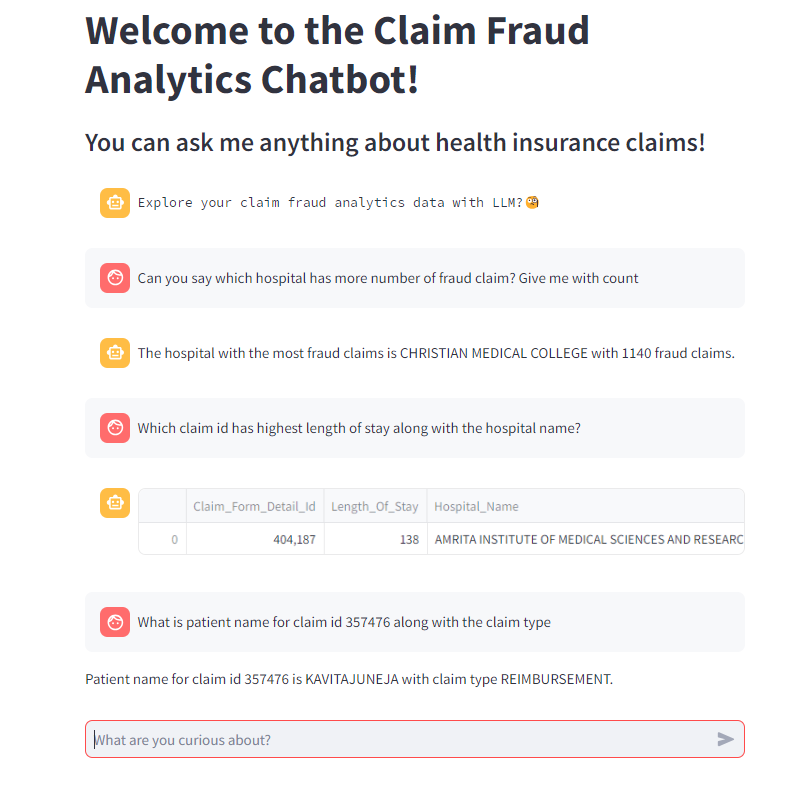
Gen AI implementation to chat with own data
-

Pipeline Design
-
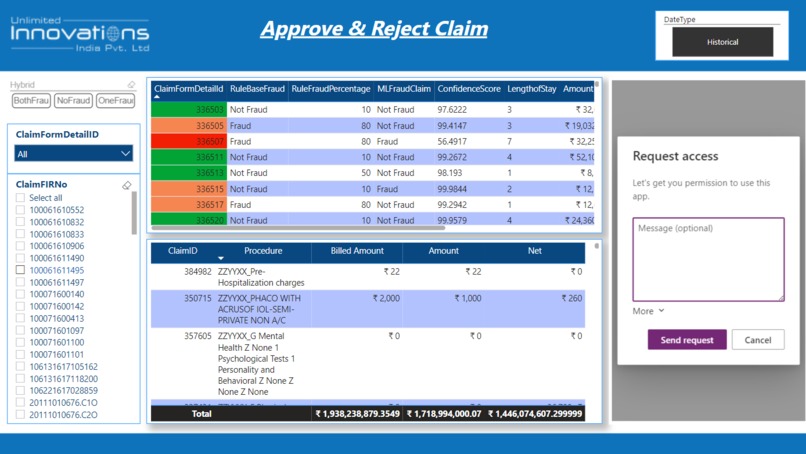
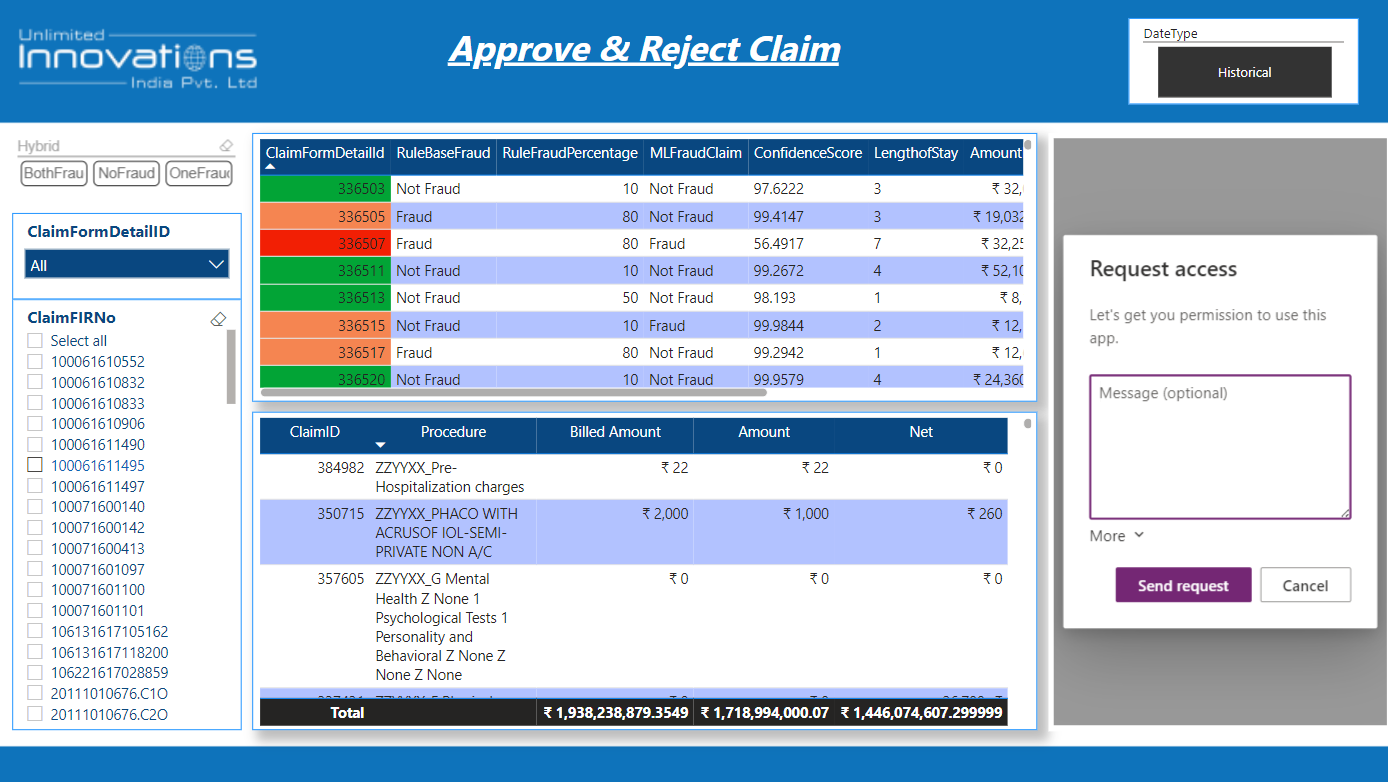
Power BI Dashboard

Inspiration
In an era where insurance fraud is on the rise, the need for robust fraud detection mechanisms has never been more critical. Our inspiration stemmed from the growing challenges faced by health insurance providers in identifying fraudulent claims that not only lead to significant financial losses but also undermine the integrity of the insurance system. We envisioned a solution that would empower insurance companies to combat fraud effectively, ensuring that resources are allocated to legitimate claims while protecting the interests of honest policyholders.
What it does
The Claim Fraud Analytics project is designed to detect and prevent fraudulent claims within the insurance sector. By harnessing advanced analytics and machine learning techniques, our solution identifies patterns and anomalies in claim data that may indicate fraudulent activities. It enhances fraud detection capabilities, reduces financial losses, and improves overall operational efficiency. By providing health insurance users—such as Data Architects, Data Scientists, Data Analysts, and Business users—with a comprehensive toolset, we enable them to score and prioritize potential fraud cases effectively.
How we built it
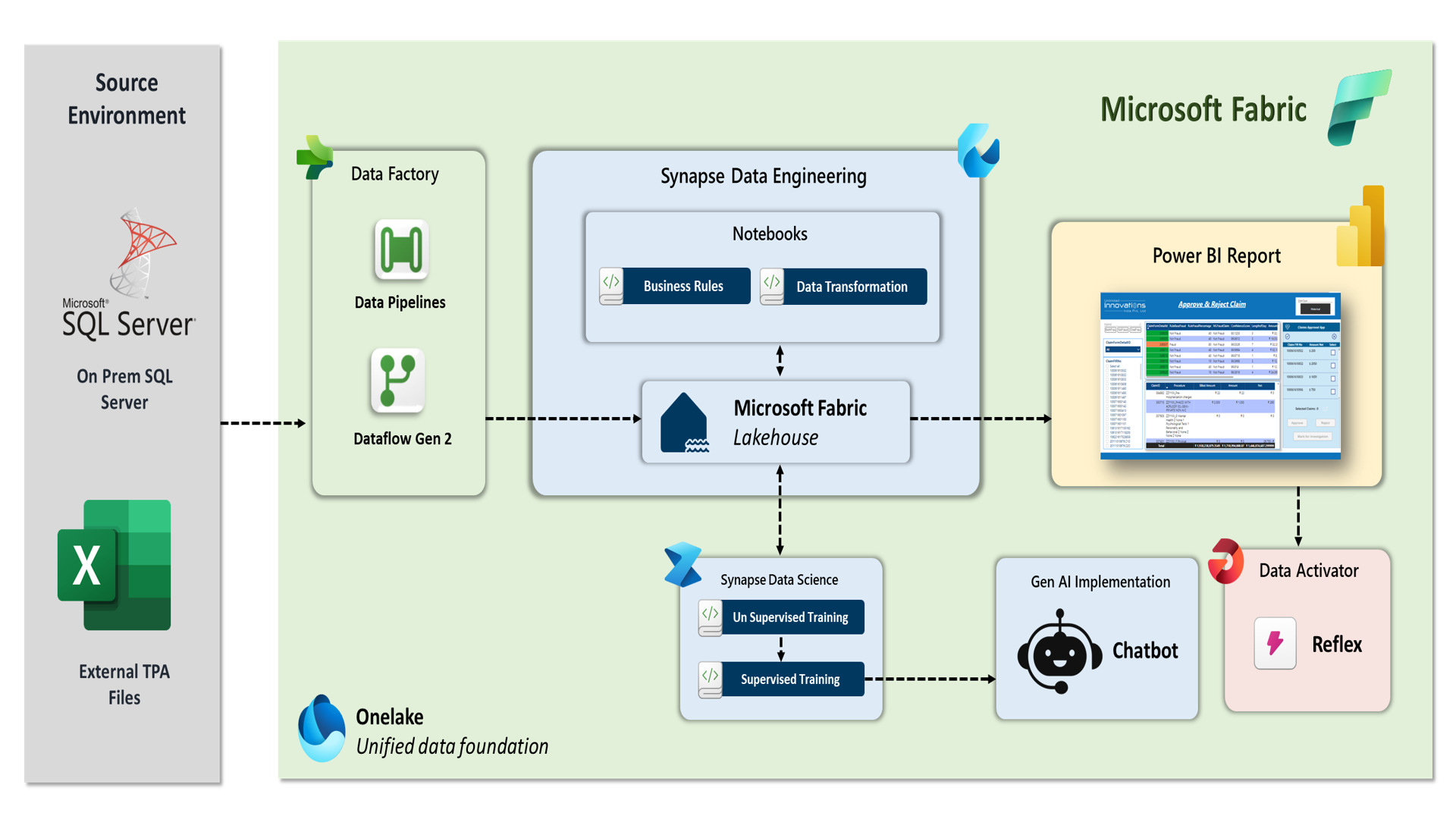
We developed the Claim Fraud Analytics Solution using the Microsoft Fabric unified platform, which seamlessly integrates various aspects of data management, including data ingestion, big data analytics, and data warehousing. Our approach involved utilizing descriptive and predictive modeling alongside industry-standard business rules to identify and assess potential fraud cases. This robust framework allows for dynamic updates, enabling extensive fraud rules to be added as new patterns emerge, ensuring the system remains responsive to evolving fraud tactics.
Challenges we ran into
Throughout the development process, we faced several challenges, including the complexity of integrating diverse data sources and ensuring data quality for accurate analytics. Additionally, fine-tuning the machine learning algorithms to minimize false positives while maximizing detection rates proved to be a significant hurdle. We also encountered resistance from stakeholders who were initially skeptical about the effectiveness of AI-driven solutions in fraud detection.
Accomplishments that we're proud of
We are proud to have successfully reduced the fraud detection convergence time from days to mere minutes, significantly enhancing operational efficiency for our users. Our solution has demonstrated the ability to identify and build profiles of suspected fraudulent claims, paving the way for proactive measures against future fraud attempts. Furthermore, the dynamic addition of extensive fraud rules has empowered users to stay ahead of emerging fraud trends.
What we learned
The journey of developing the Claim Fraud Analytics Solution taught us the importance of collaboration between data scientists, business analysts, and domain experts. We learned that continuous feedback from users is crucial in refining algorithms and ensuring the solution meets real-world needs. Additionally, we recognized the value of flexibility in our framework to adapt to new fraud patterns and regulatory changes.
What's next for Claim Fraud Analytics - Fabric Solution
Looking ahead, we plan to enhance our solution by incorporating more advanced AI techniques, such as deep learning, to improve detection accuracy further. We aim to expand our analytics capabilities to include real-time monitoring and alerts for suspicious activities. Additionally, we envision developing a user-friendly interface that allows business users to interact with the analytics easily, enabling them to make informed decisions quickly. Our ultimate goal is to create a comprehensive ecosystem that not only detects fraud but also educates users on best practices to mitigate risks in the future.

Log in or sign up for Devpost to join the conversation.