Inspiration
We learned that cardiovascular disease, kidney disease, type 2 diabetes, and obesity aren't actually separate conditions, they're one connected pathway called CKM syndrome, and nearly 90% of U.S. adults already have some stage of it. Kidney damage from diabetes is especially dangerous because it's silent for years, often not caught until it's already too late to reverse. Despite this, every existing health app treats these conditions separately, a diabetes app, a heart app, a weight tracker, with nothing connecting the dots. That gap is what led us to build CKM Compass.
What it does
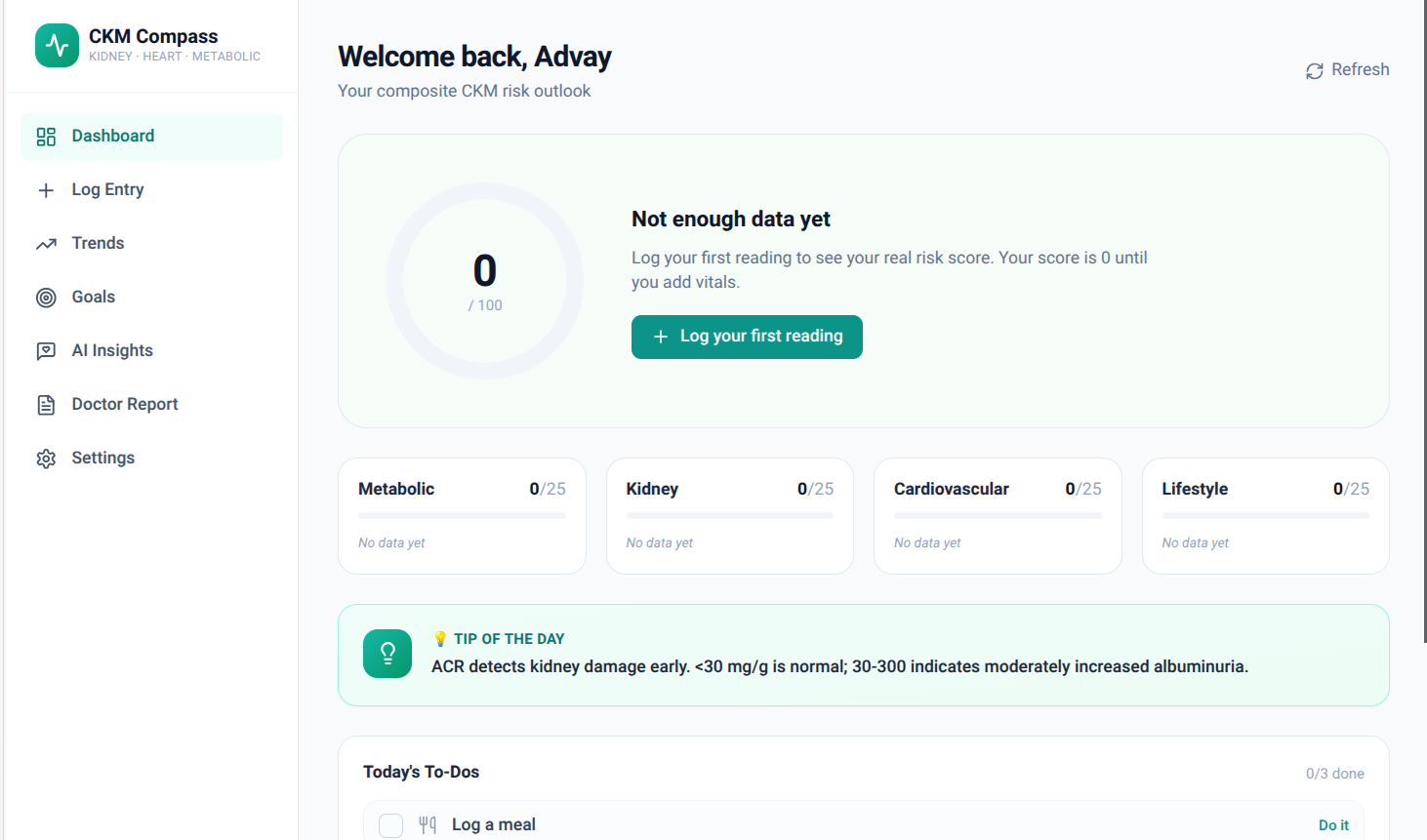
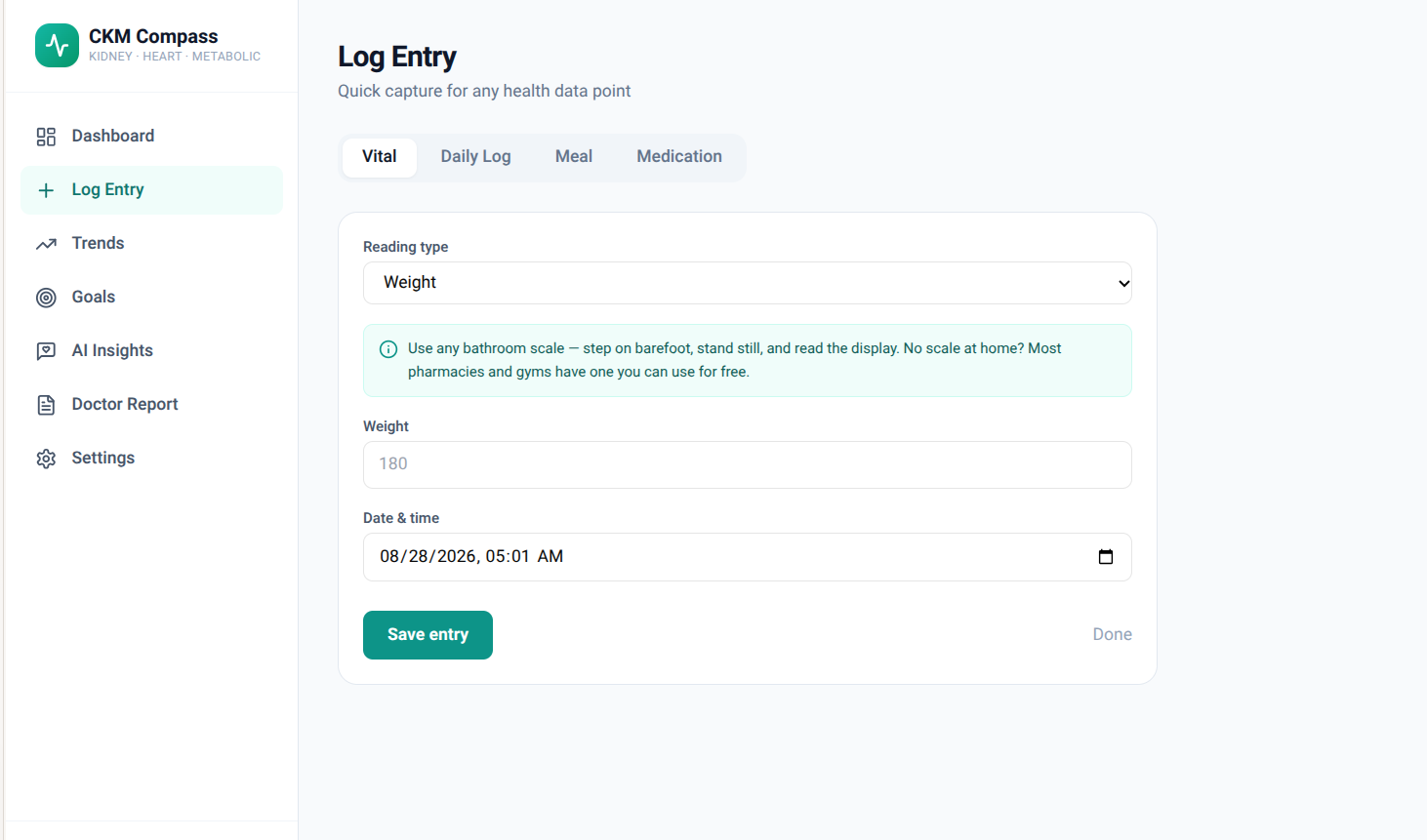
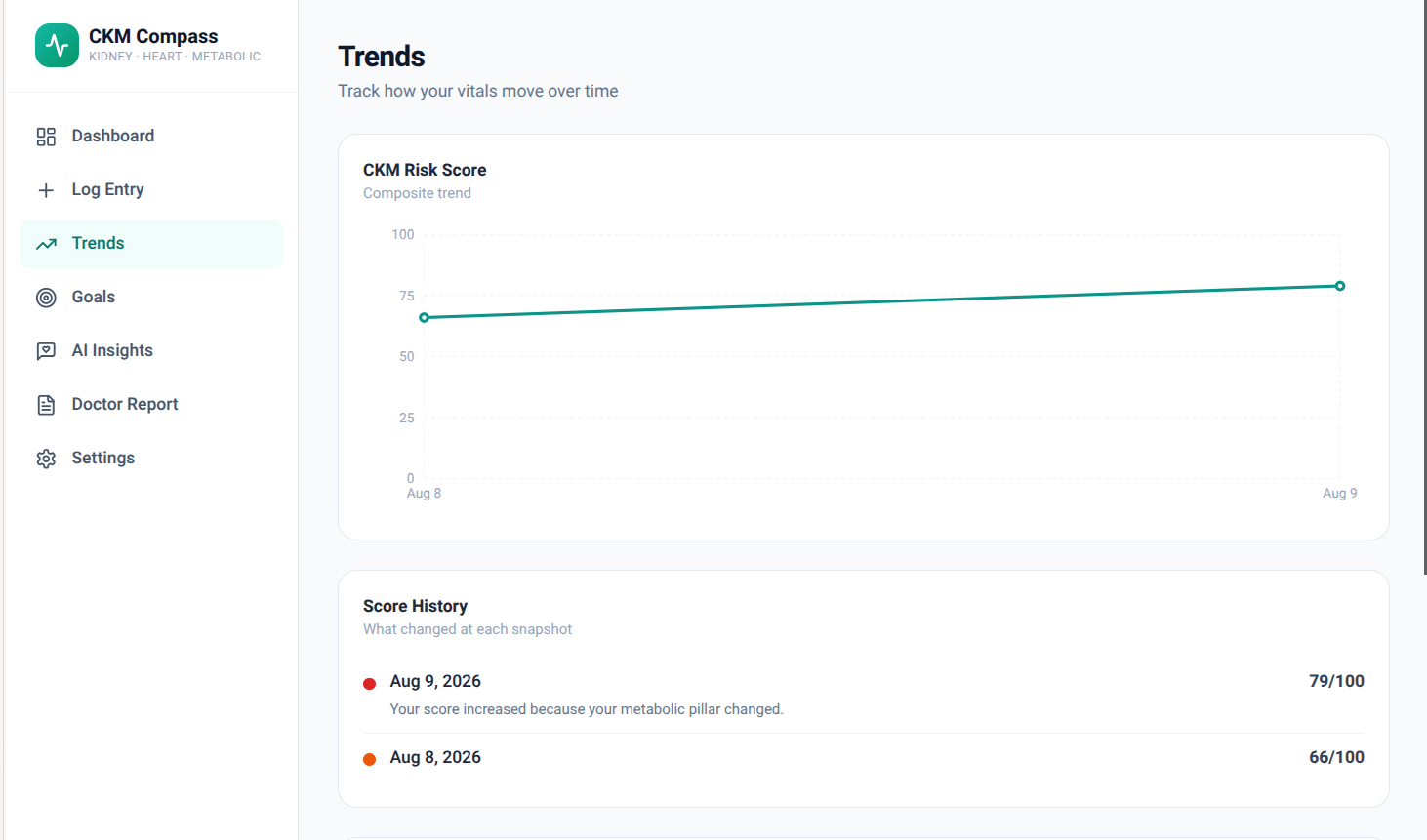
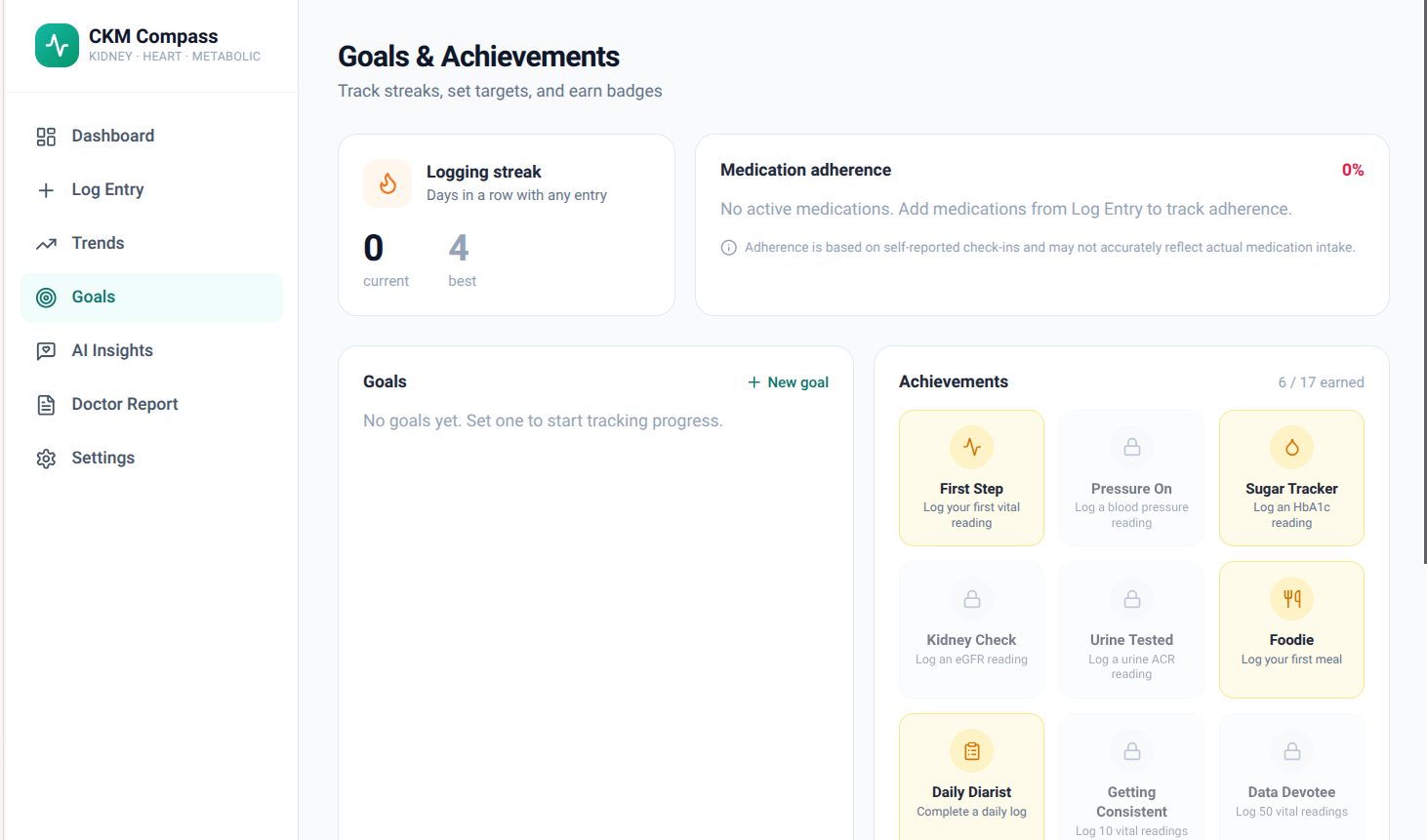
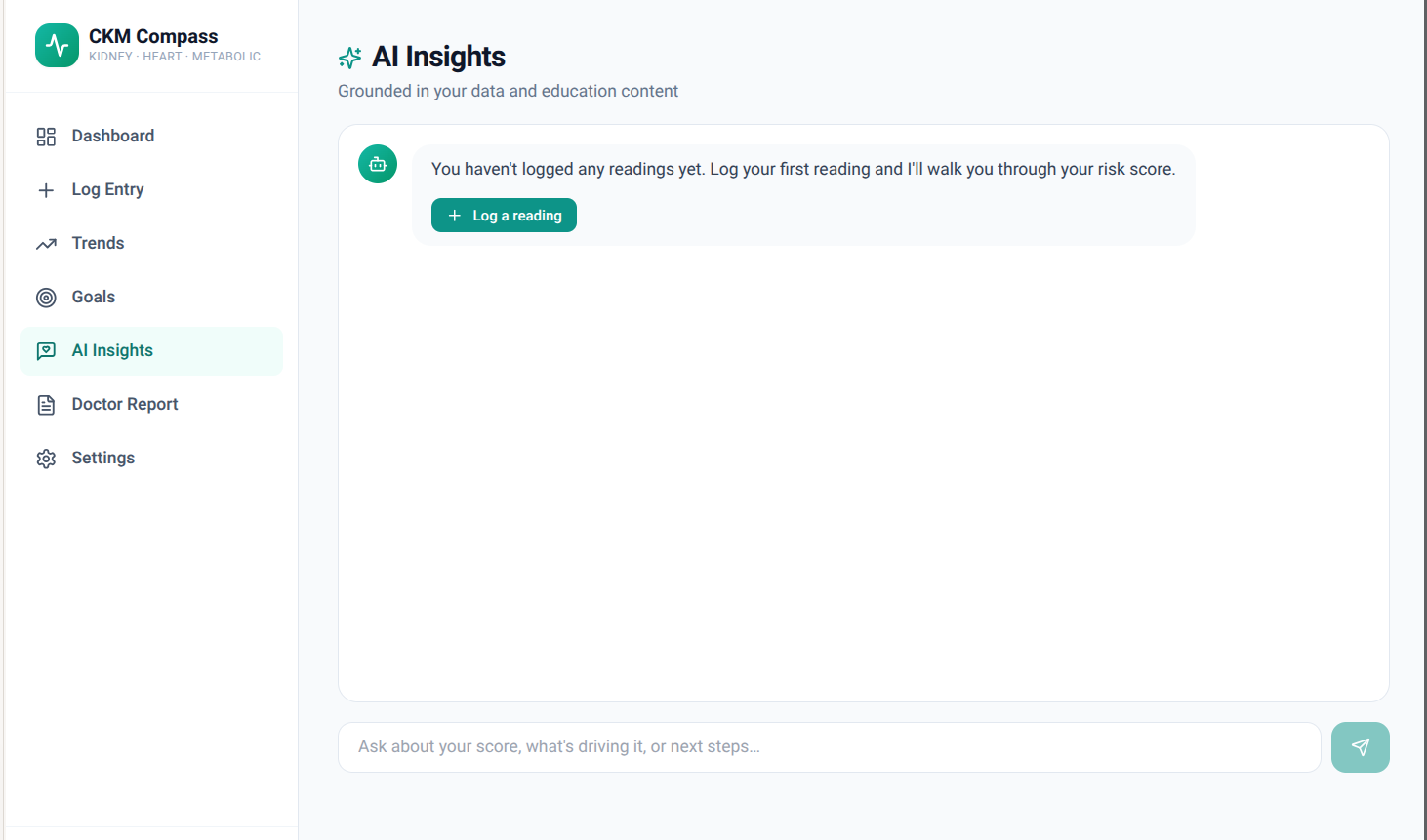
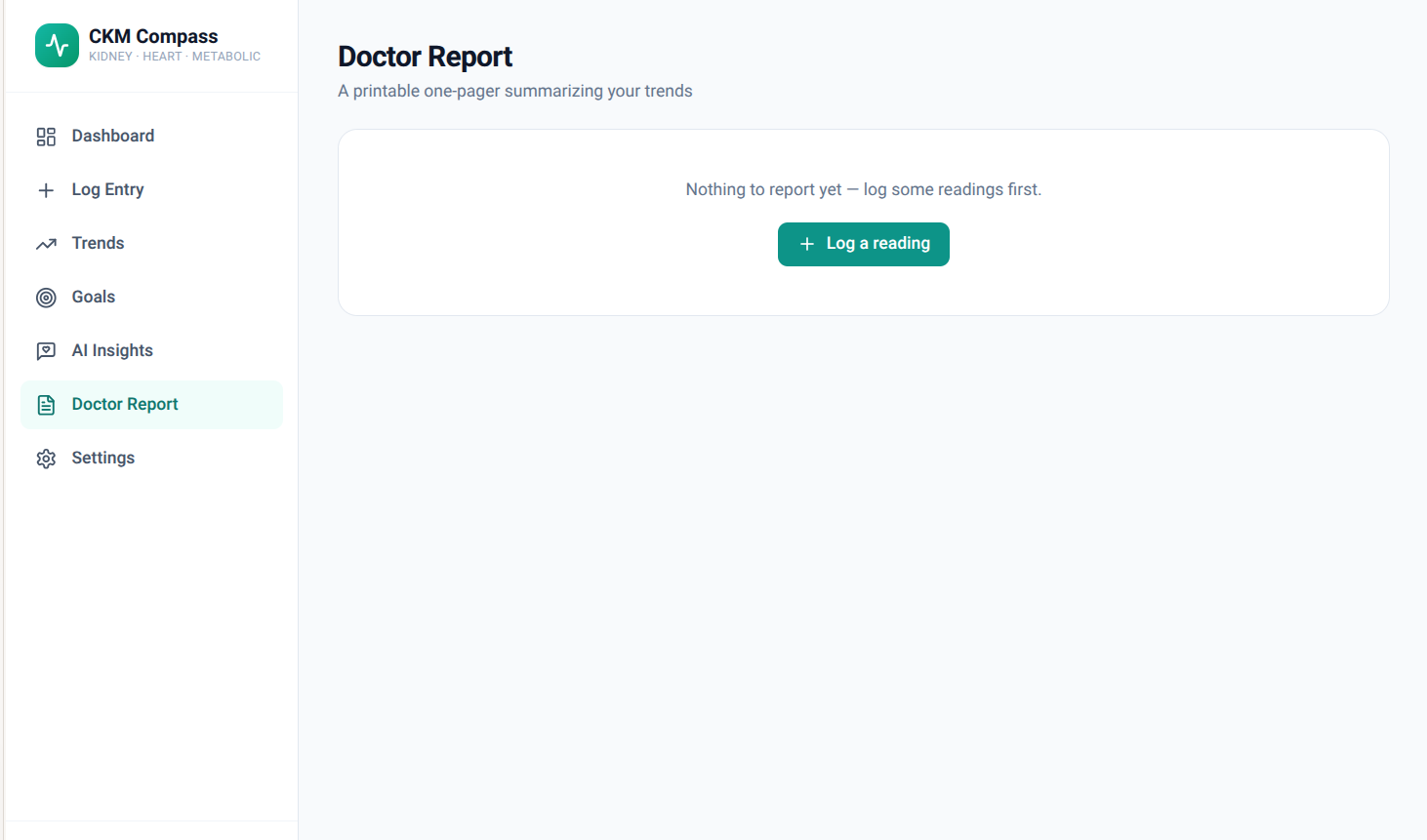
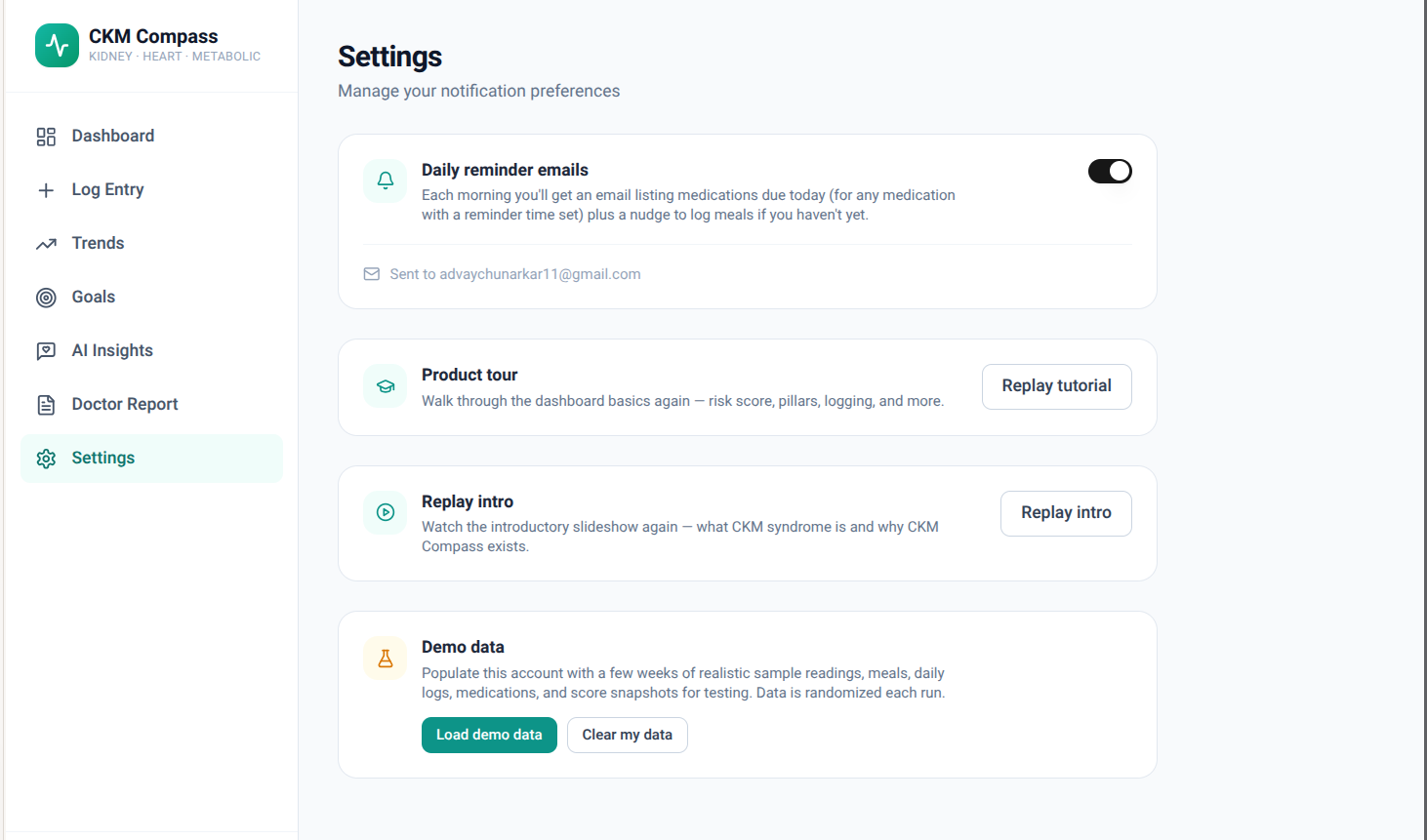
CKM Compass gives people one composite risk score that combines their metabolic, kidney, cardiovascular, and lifestyle data instead of tracking each separately. Users log vitals like blood pressure, glucose, HbA1c, eGFR, and urine albumin, and the app calculates a transparent, rules-based risk score broken into four pillars. A Trends page lets users overlay two metrics on one chart to see how they actually move together, an AI Insights chat explains the score and medical terms in plain language grounded in the user's real data, and a Doctor Report page generates a summary they can bring to an actual appointment. The app also includes medication and meal reminders, a goals and adherence tracker, and a "find a doctor" tool that suggests a relevant specialist based on the user's highest-risk area.
How we built it
We built CKM Compass entirely on Base44, using its AI-driven prompt-to-app workflow to generate the frontend, database schema, and backend logic from natural language instructions. The data model runs on Base44's built-in entities, with its automation layer powering risk-score recalculation and reminder emails, and its authentication and row-level security rules keeping each user's health data private. The AI Insights chat uses Base44's integrated LLM grounded in the user's actual data, while the core risk score itself is calculated with a rules-based system, not the LLM, so it stays clinically explainable. We used Claude throughout the process to research CKM syndrome, design the risk model, and write our build prompts, and we ran two independent ArgosX audits to catch accessibility, security, and SEO issues before final submission.
Challenges we ran into
The hardest part was learning to distrust "it's fixed" and verify everything ourselves. Base44 reported several features as complete when they weren't fully working, including a medication reminder email that silently failed until we traced it with debug output, and a tutorial spotlight that looked fixed in description but was still visibly misaligned until we pushed for the actual root cause. The most serious moment was a permissions scan revealing that all of our health data entities were publicly readable with no security rules, which we caught and fixed before it became a real exposure. Shortly after, we caught a related bug causing every new user to see a false 100% risk score by default, a genuinely dangerous thing for a health app to get wrong.
Accomplishments that we're proud of
We're most proud of catching and fixing the data security gap before it became a real problem, since a health app with unrestricted access to user data would have undermined the entire project. We're also proud of how our debugging approach evolved, learning to ask for the actual mechanism behind a bug instead of accepting a surface-level fix, which meant every feature we shipped was something we personally verified working. On the product side, we're proud that CKM Compass ended up being genuinely useful rather than just a demo, addressing a real, under-recognized gap in how health apps handle interconnected conditions.
What we learned
We came away with a much deeper understanding of CKM syndrome itself and how under-recognized it is as a public health issue. On the technical side, we learned how to design a proper data model, wire up automations, and configure real security rules for an app handling sensitive health data. The biggest lesson was around verification: AI coding assistants can confidently describe a fix that isn't fully applied, so we learned to always test claimed fixes against a real, fresh account rather than trusting a summary, and to ask why something broke instead of just accepting that it was fixed.
What's next for CKM Compass
With more time, we'd want the risk-scoring model reviewed or validated against real clinical data rather than our current rules-based framework. We'd build out a coach dashboard so community health workers could monitor multiple patients, add wearable device syncing so vitals could flow in automatically, and expand our doctor-finder tool into a fuller in-app directory. We'd also want more rigorous testing beyond manual verification, a deeper accessibility audit, and real feedback from patients or clinicians on whether our plain-language explanations actually land the way we intend. Finally, we'd add multi-language support, since CKM syndrome disproportionately affects communities where language can already be a barrier to care.
Built With
- base44


Log in or sign up for Devpost to join the conversation.