-
-
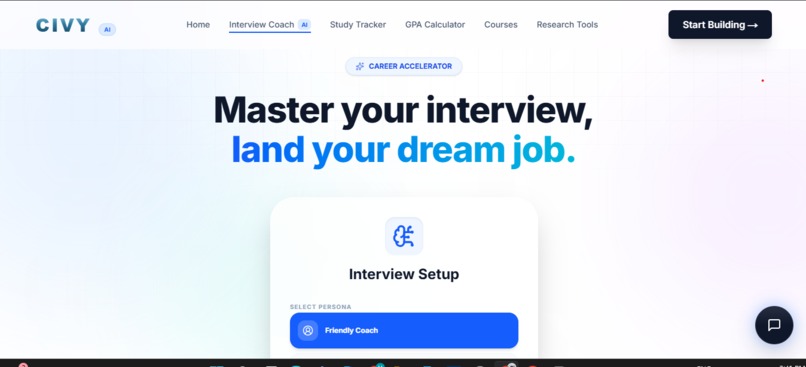
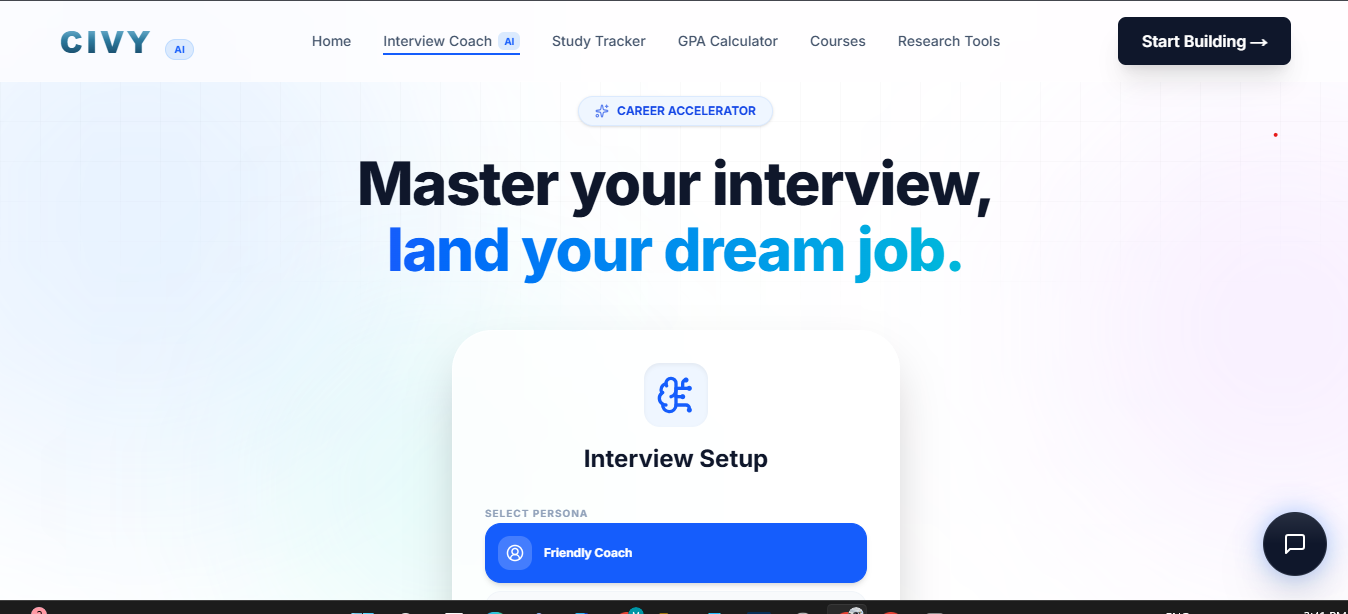
Civy AI Interview Interface
Inspiration
As an IT undergraduate at SLIIT, I’ve seen many talented peers struggle during job interviews—not due to a lack of technical knowledge, but because of interview anxiety and a lack of practice. Professional coaching is often expensive or inaccessible. I built Civy AI to democratize career coaching, giving every student a personal, 24/7 mentor. With the power of Google Gemini 3, I realized I could simulate a lifelike interviewer that provides the same level of feedback as a human recruiter.
What it does
Civy AI is a comprehensive career ecosystem designed to transform how students prepare for the professional world. Key features include:
- Interactive Interview Simulation: Gemini 3 acts as a hiring manager, conducting role-specific interviews and asking dynamic follow-up questions based on user responses.
- Live Performance Scoring: As the user interacts, a lively scoring system monitors and displays real-time metrics for Confidence, Technical Knowledge, Communication, and Accuracy. These scores adapt dynamically based on the user's situation and answers.
- Comprehensive Post-Interview Analysis: After the session, the AI generates a detailed Interview Report. This includes a breakdown of specific mistakes made, suggested professional insights, and actionable steps to improve for the next session.
- Civy Proficiency Certificate: Upon completion, users can download a digitally verified certificate featuring a Skill Matrix and Behavioral Insights (like Eye Contact and Vocal Pace). Each certificate is secured with a unique Authentication ID.
- One-Click Achievement Sharing: Users can instantly publish their accomplishments to LinkedIn, showcasing their interview readiness to potential recruiters with a single click.
- AI-Powered Resume Audit: Users can upload their CVs to receive instant feedback on formatting, keywords, and content.
How we built it
I developed Civy AI using a modern full-stack architecture:
- Frontend: Built with React.js and Tailwind CSS for a professional and responsive user experience.
- Backend: Powered by Node.js and Express to handle real-time data processing and PDF generation.
- AI Integration: The core intelligence is driven by the Google Gemini 3 API, utilizing advanced system instructions to maintain a consistent "Interviewer" persona.
- Design: Prototyped in Figma with a focus on student-centric UI/UX.
Challenges we ran into
- Context Retention: Keeping the AI focused on the specific interview thread required intensive prompt engineering.
- Real-time Feedback Loop: Engineering the backend to process user answers and update the "lively score" metrics instantly without significant latency.
- Tone Calibration: Ensuring the AI provided "tough but fair" feedback—mimicking a real-world recruiter without being discouraging.
- API Quota Management: As a Solo Developer, I had to optimize state management to minimize unnecessary API calls.
Accomplishments that we're proud of
- Successfully building and deploying a functional AI career platform independently.
- Developing a verified certification engine that provides students with tangible proof of their growth.
- Achieving a Natural Conversation Flow where the AI’s responses feel contextual and human-like.
What we learned
- Prompt Engineering Mastery: How to structure complex prompts to get structured JSON responses for the scoring engine.
- Multimodal Data Analysis: Learning how AI can analyze vocal pace and accuracy to provide behavioral insights.
- User-Centric Design: Realizing that visual indicators like live scores significantly reduce user anxiety by providing immediate feedback.
What's next for Civy AI - The Future of Interview Coaching
- Voice-to-Voice Interaction: Implementing real-time audio so users can speak their answers instead of typing.
- Multimodal Feedback: Fully utilizing Gemini’s vision capabilities to analyze body language and eye contact via webcam.
- Industry-Specific Experts: Adding specialized AI personas for fields like Medicine, Finance, and Law.
Built With
- gemini
- javascript
- next.js
- node.js
- react.js
- tailwind


Log in or sign up for Devpost to join the conversation.