-
-
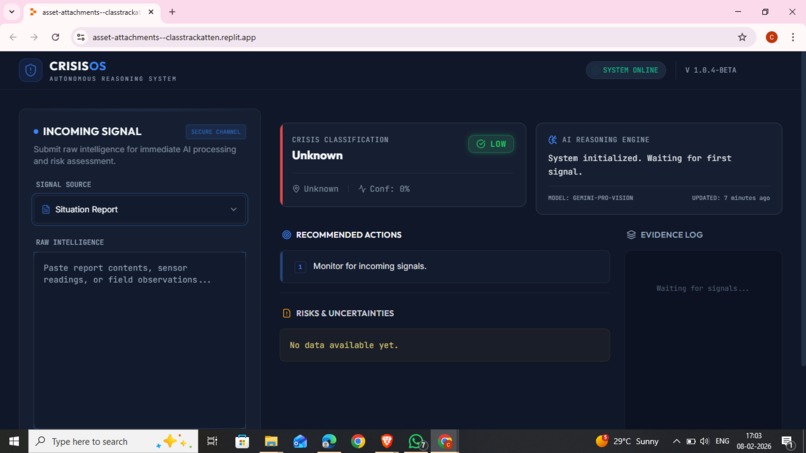
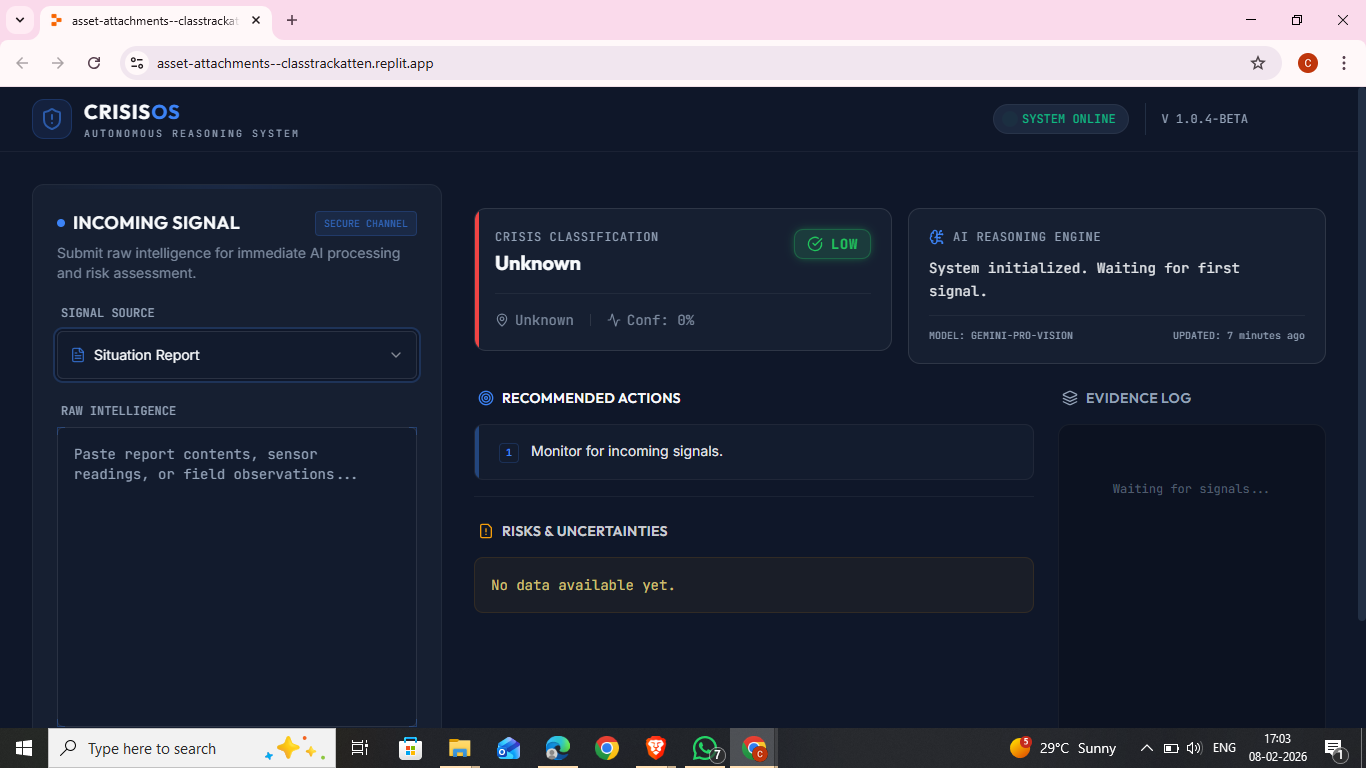
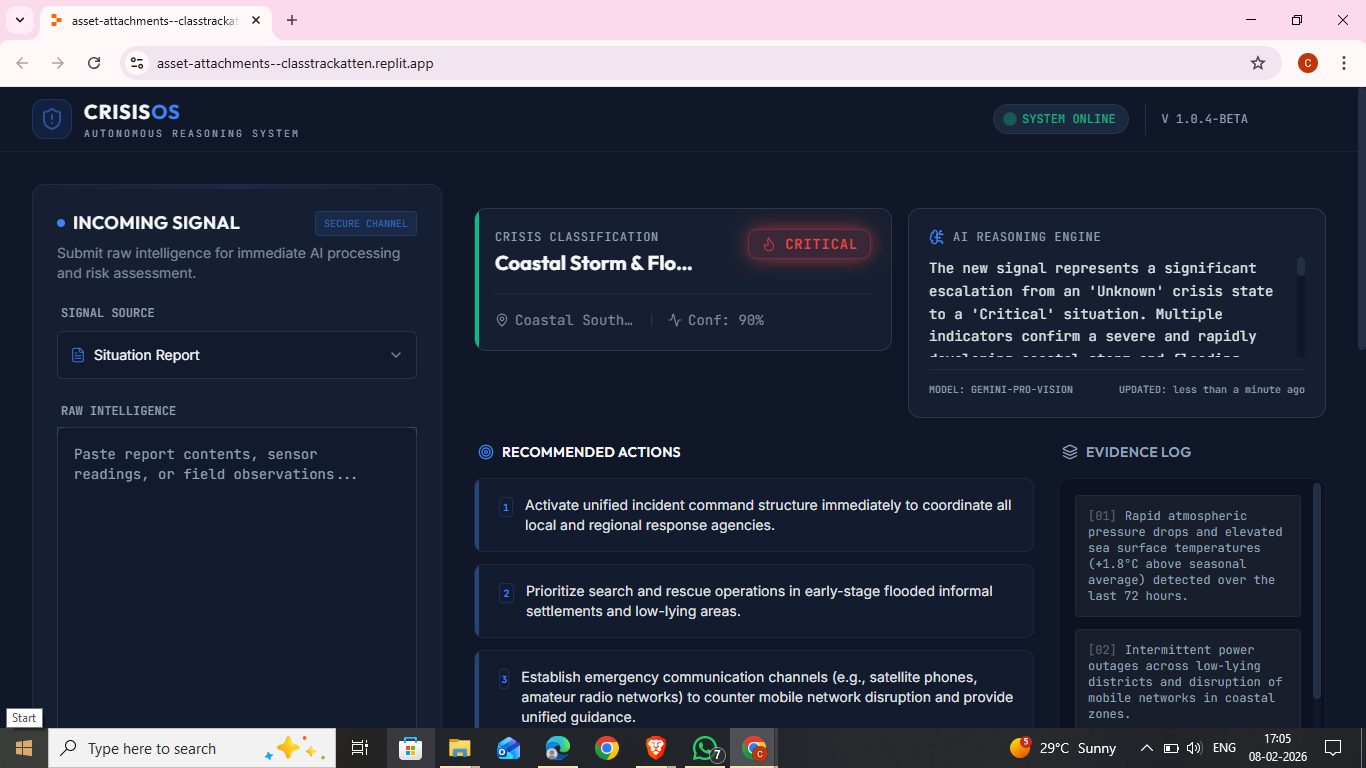
CRISISOS – AI-Powered Crisis Dashboard Real-time situational awareness with automated crisis scoring, and system health status.
-
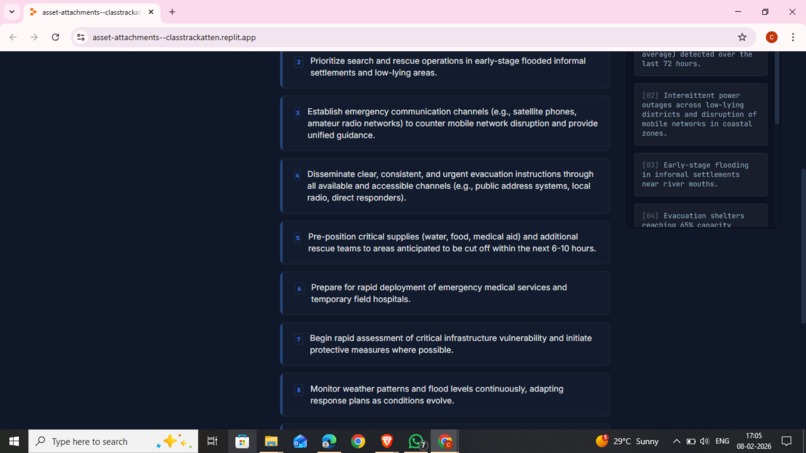
Incoming Signal & Situation Report Intake Authorities submit raw intelligence, field ,data for immediate AI analysis and risk assessment.
-
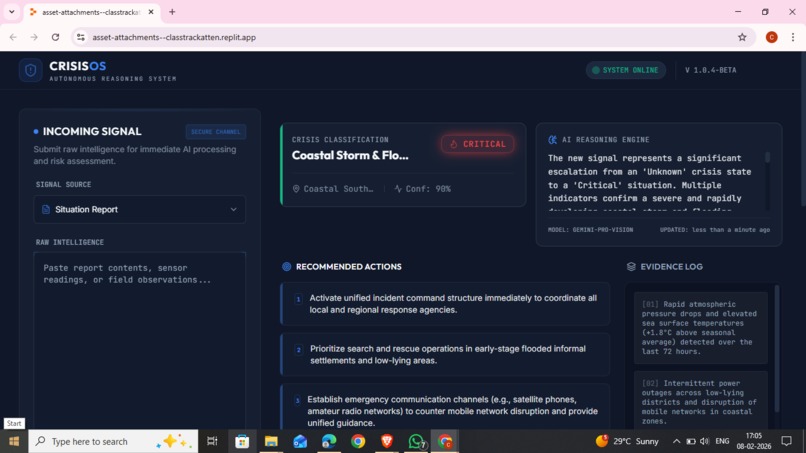
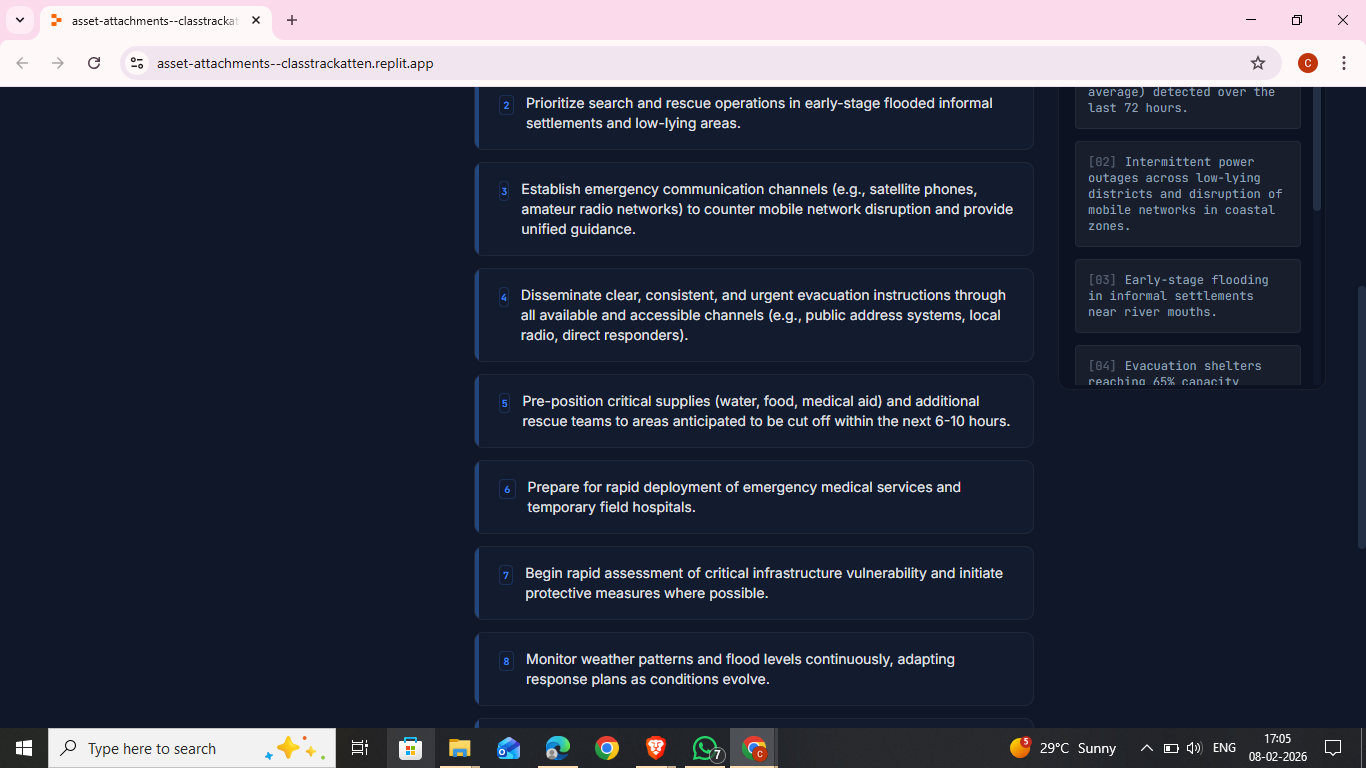
Autonomous AI Reasoning & Action Planning The system analyzes evolving crisis signals and generates prioritized, actionable response .
-
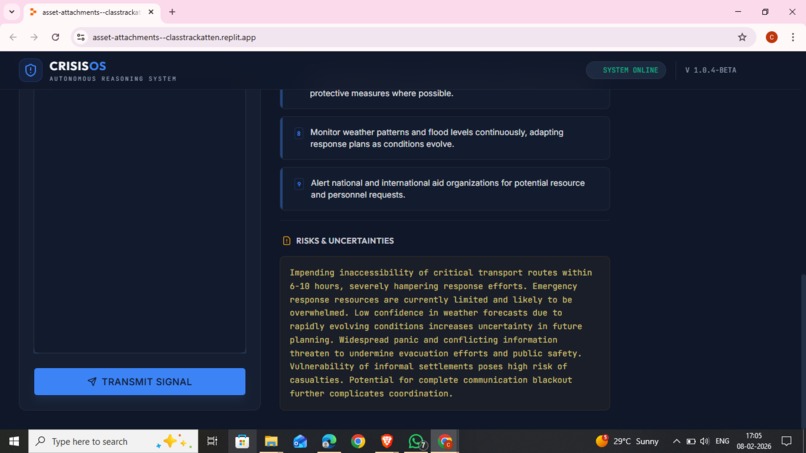
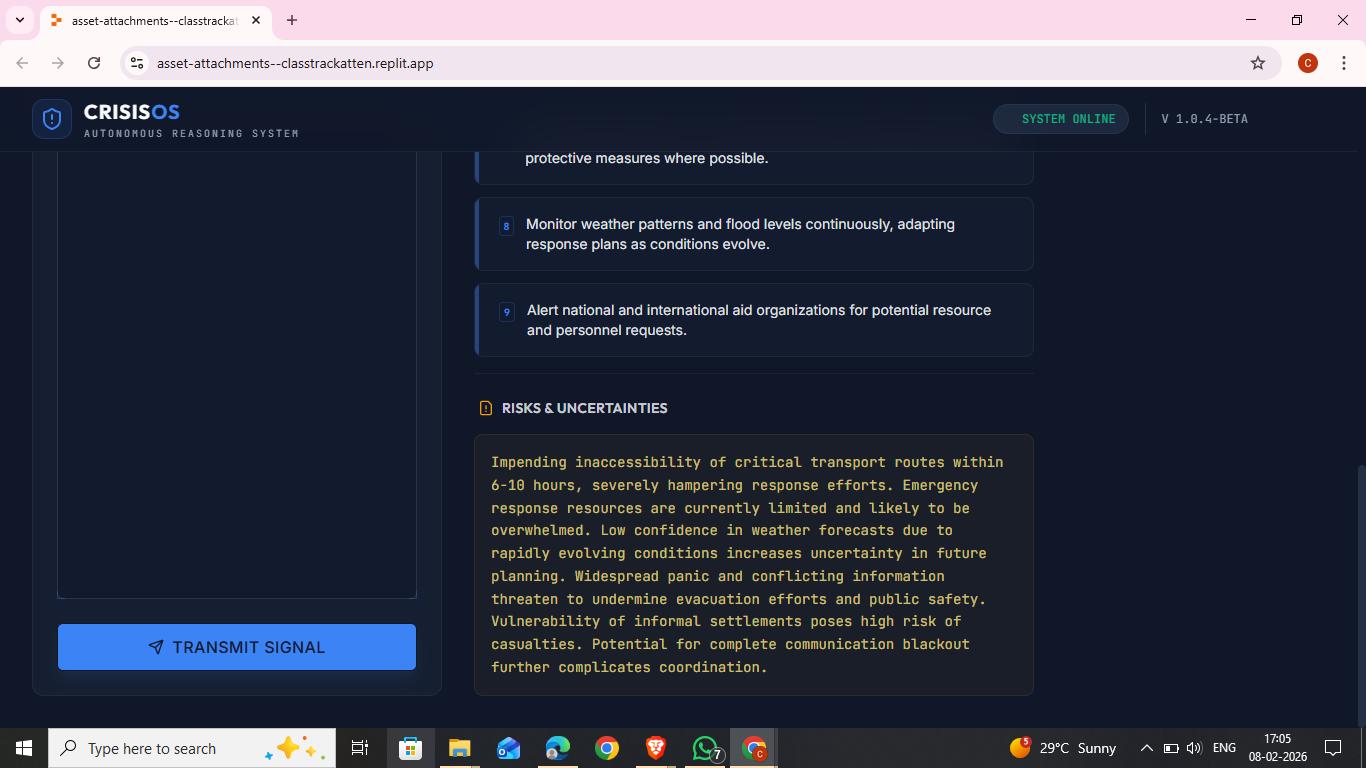
Risk, Uncertainty & Impact Assessment Identifies operational risks, infrastructure vulnerabilities, and informed emergency decisions
Inspiration
Global crises such as floods, cyclones, wildfires, and infrastructure failures often escalate faster than human decision-making systems can respond. While alerts and dashboards exist, they mostly show data — they do not reason about what should be done next.
We were inspired by the gap between raw crisis information and actionable decision-making. During emergencies, responders need clarity, prioritization, and confidence — not just notifications. CrisisOS was born from the idea that AI should actively reason over crisis situations and assist humans in making life-saving decisions under pressure.
What it Does
CrisisOS is an autonomous AI-powered crisis reasoning system.
It ingests raw crisis signals such as situation reports, environmental indicators, and field intelligence, then:
- Classifies the type and severity of the crisis
- Assesses risks, uncertainties, and escalation potential
- Generates prioritized, actionable response recommendations
- Continuously adapts guidance as new information arrives
Instead of acting like a chatbot, CrisisOS functions as a digital crisis strategist, producing structured intelligence that supports real-world emergency response.
How We Built It
CrisisOS was built as a full-stack web application powered by the Gemini API.
- The frontend allows users to submit crisis signals and view structured AI-generated response plans.
- The backend processes inputs and leverages Gemini’s reasoning capabilities to generate crisis classifications, confidence levels, evidence-based actions, and risk analysis.
- We designed the output to be transparent and structured, ensuring humans can understand why specific actions are recommended.
- The system is optimized for real-time reasoning, clarity, and scalability.
The architecture was intentionally kept modular so CrisisOS can be integrated with emergency systems, dashboards, or communication platforms in the future.
Challenges We Faced
One of the biggest challenges was ensuring the AI produced actionable and trustworthy outputs, not generic summaries. Crisis response requires precision, clarity, and accountability.
Another challenge was structuring AI reasoning in a way that preserves human oversight. We focused heavily on explainability — making sure every recommendation is backed by clear reasoning and evidence.
Finally, designing for high-stakes, time-sensitive scenarios required careful prompt engineering and testing to ensure consistency and reliability across different crisis types.
What We Learned
This project taught us how powerful AI reasoning can be when applied to real-world, high-impact problems. We learned the importance of explainability, human-AI collaboration, and designing systems that assist — not replace — human judgment.
CrisisOS represents our belief that AI’s greatest value lies not just in answering questions, but in helping humanity respond intelligently when it matters most.


Log in or sign up for Devpost to join the conversation.