-
-
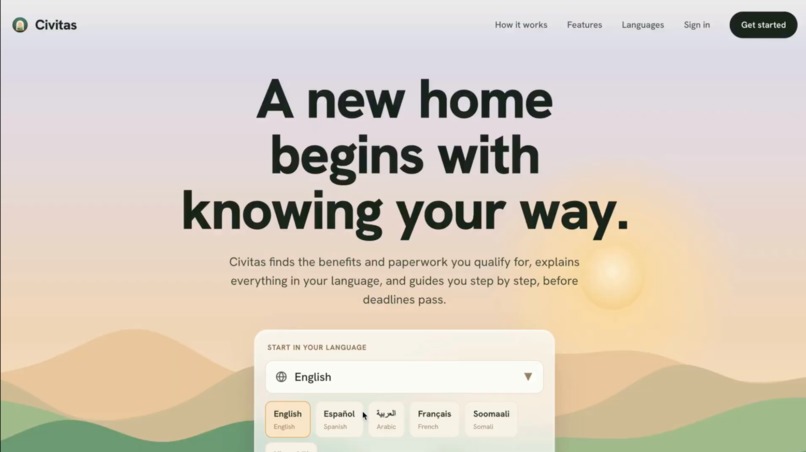
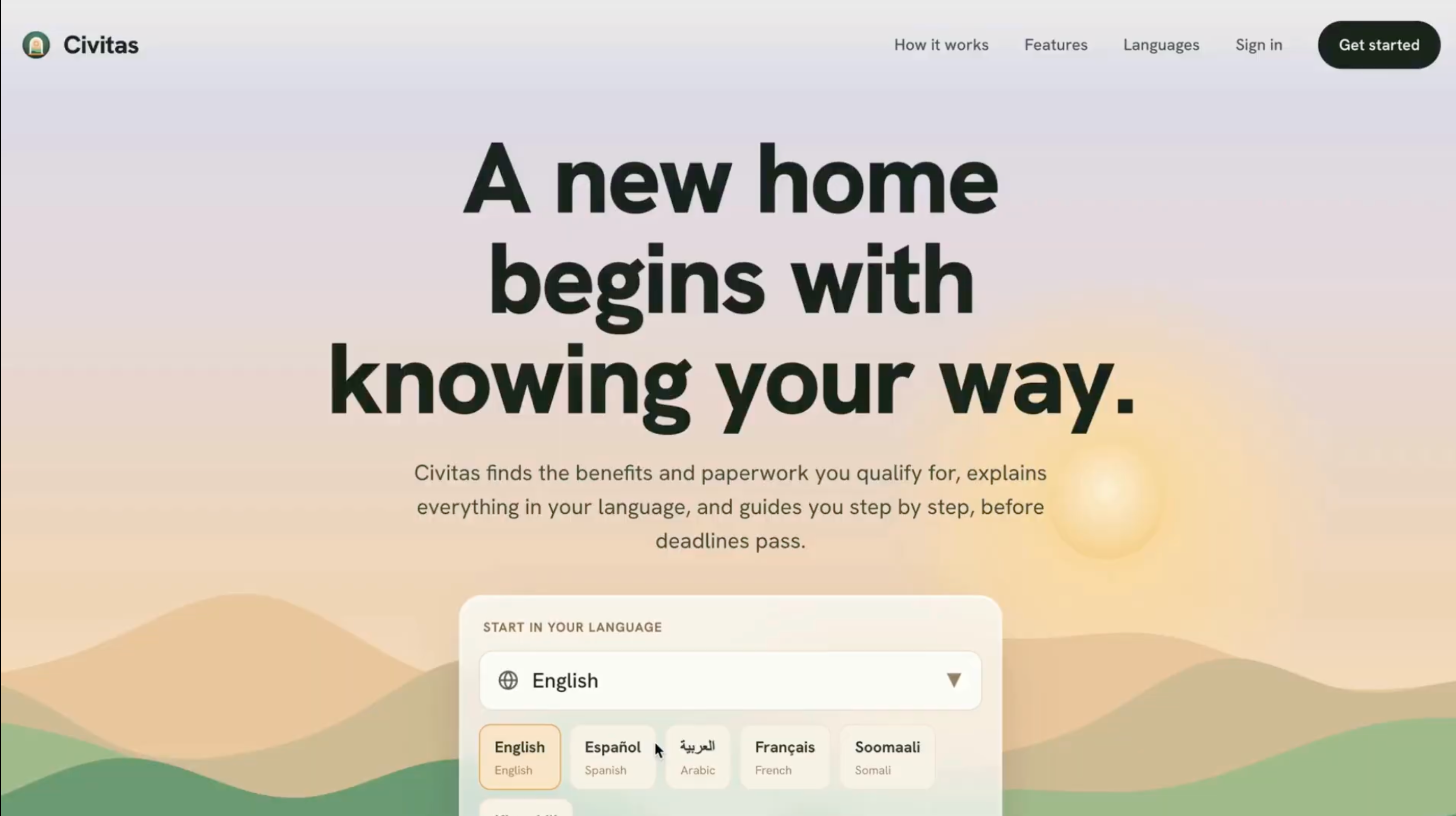
Landing Page
-
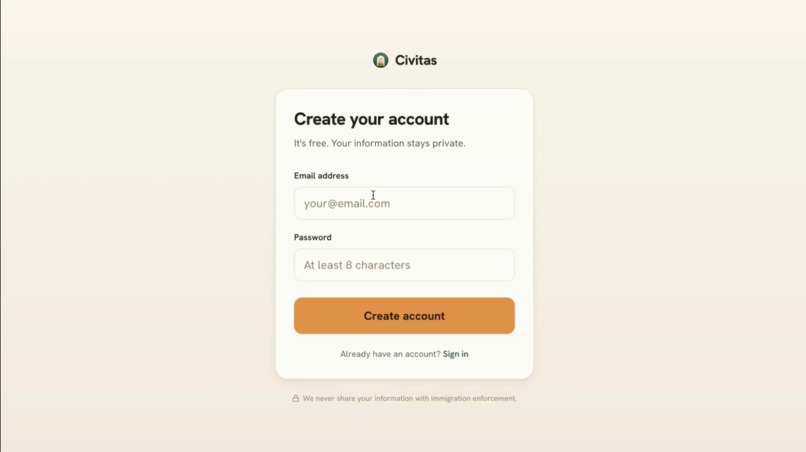
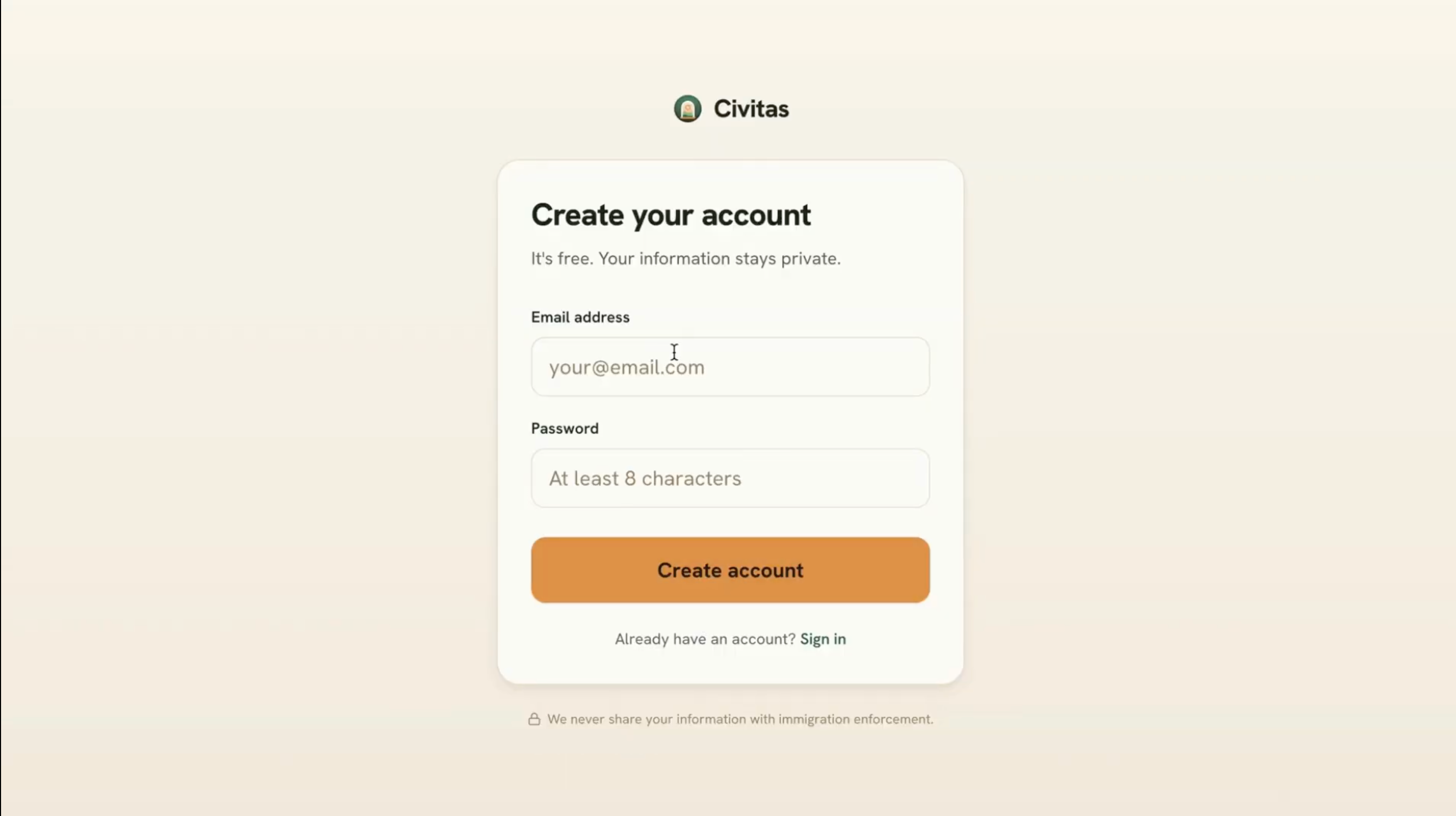
Create Account
-
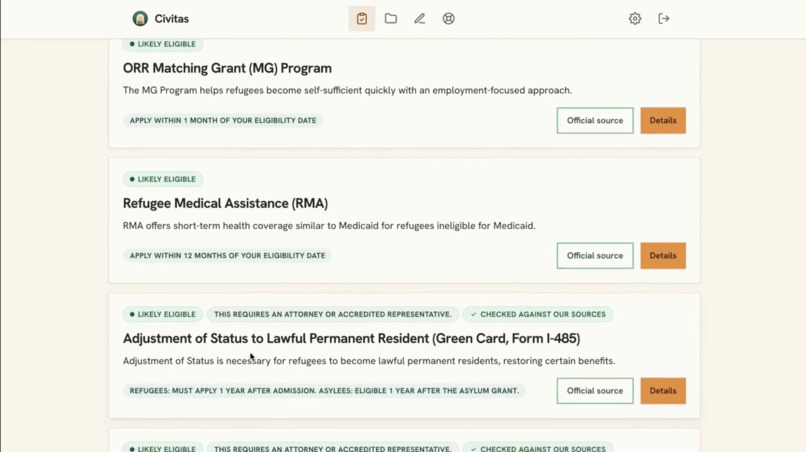
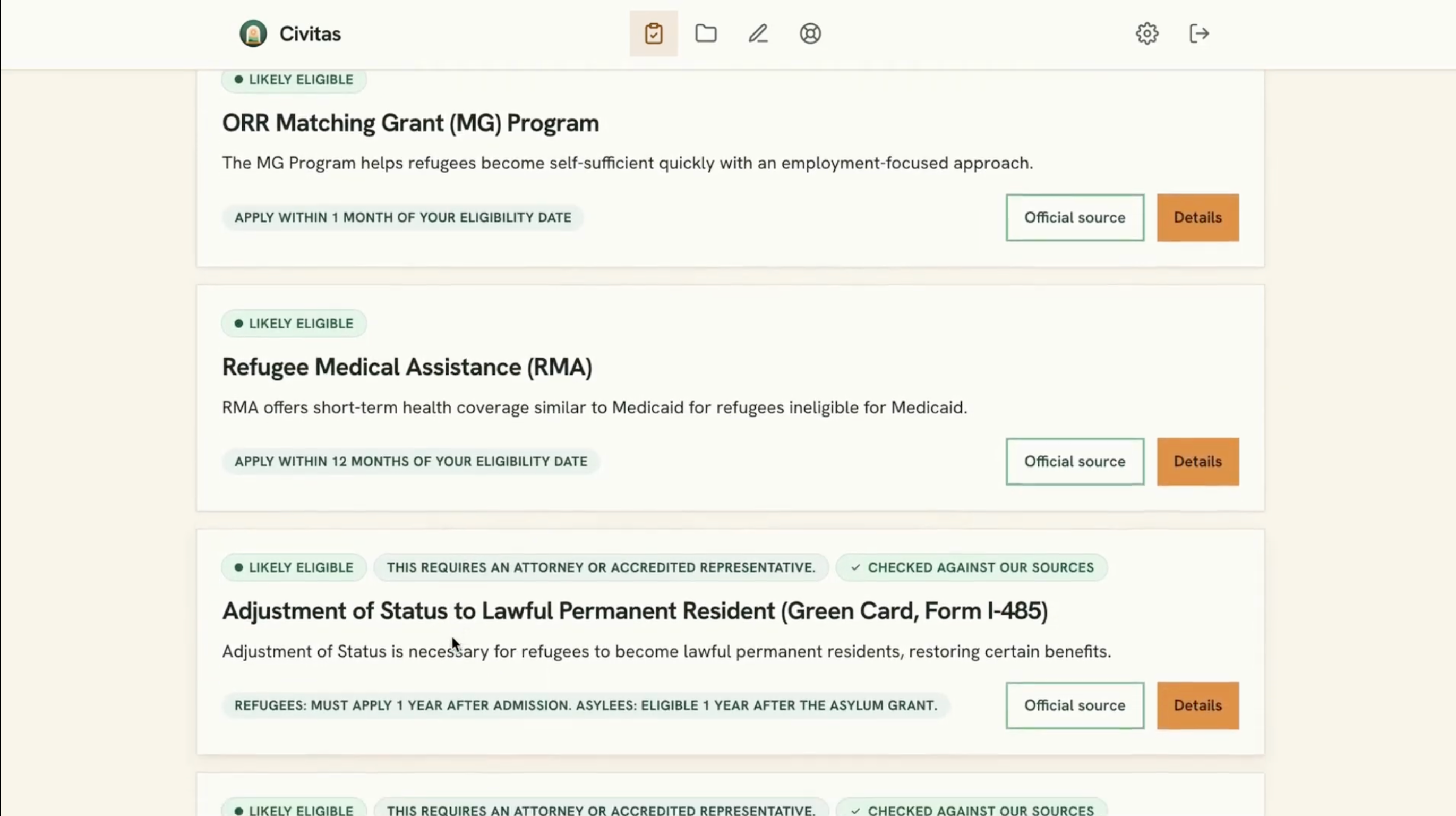
Action Plan
-
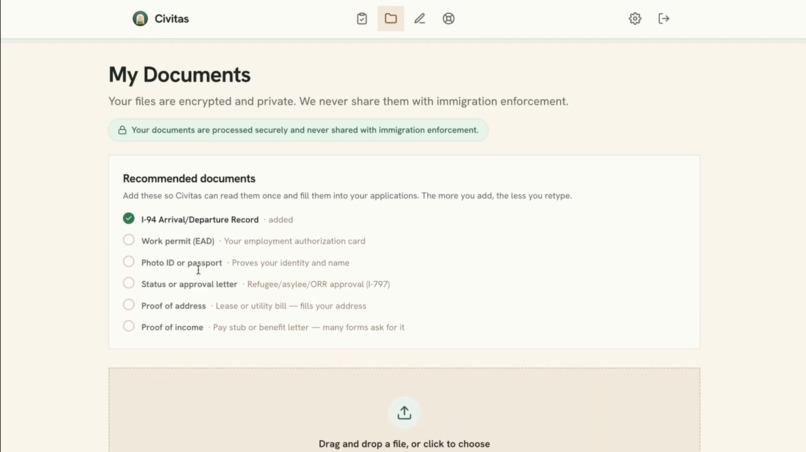
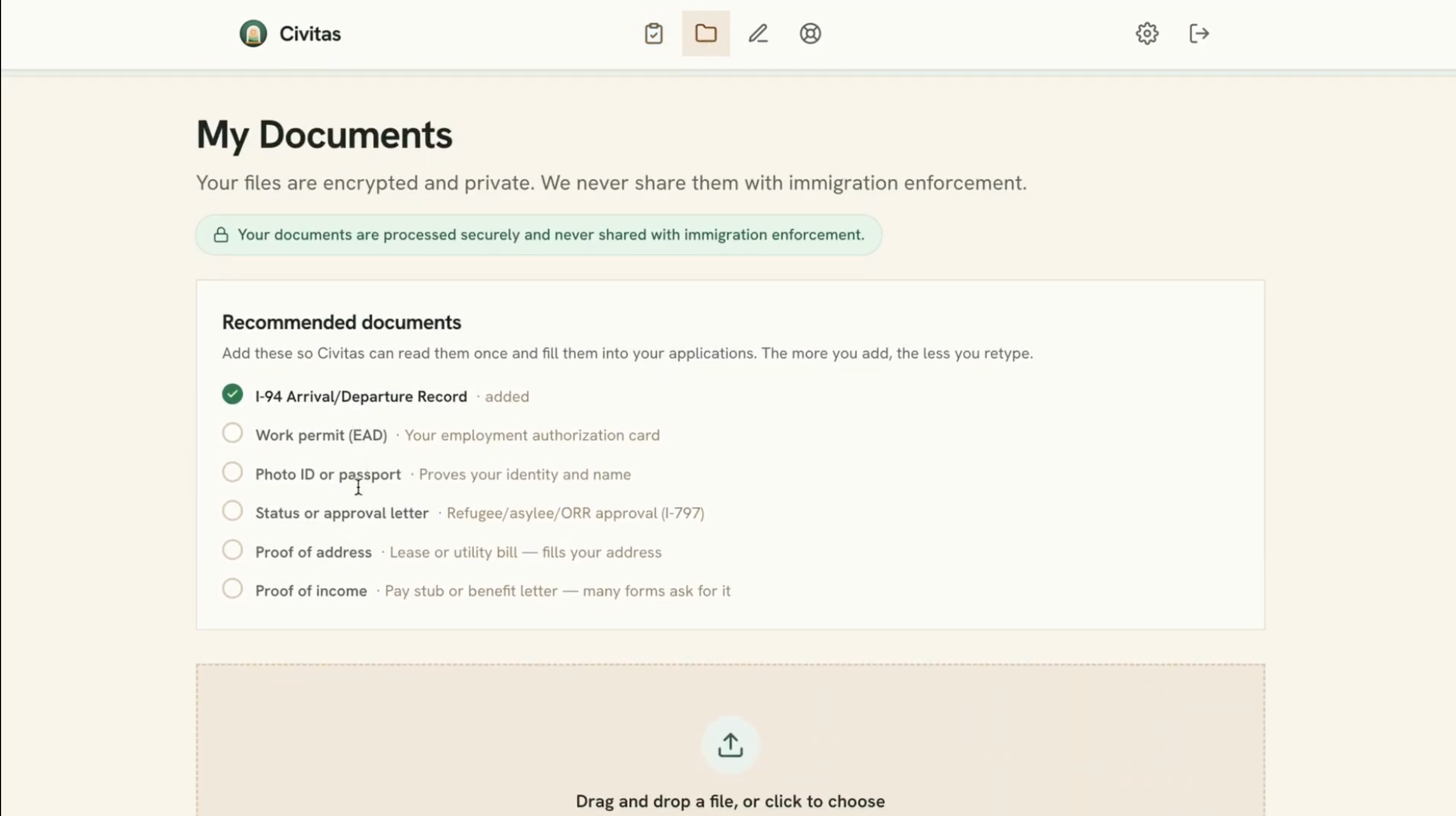
Fill out for with AI
Inspiration
Every year, thousands of refugees arrive in the United States hoping to rebuild their lives. After just 90 days of formal resettlement support, many are left to navigate a confusing network of government benefits entirely on their own.
Programs for healthcare, food assistance, cash support, employment services, and housing already exist. Yet many eligible families never receive them because of language barriers, overwhelming paperwork, and a severe shortage of caseworkers.
The U.S. Department of Health and Human Services has documented that many eligible immigrants never enroll in programs they qualify for, not because they do not need them, but because they cannot understand the process or simply have no one left to guide them.
We built Civitas because the gap between being eligible for help and actually receiving it should not exist. Our goal is simple: make opportunity as accessible as the programs themselves.
What It Does
Civitas is an AI-powered personal caseworker that transforms a complicated government benefits system into one simple conversation.
A user answers a short onboarding questionnaire covering their immigration status, arrival date, household size, and income. Civitas then instantly provides:
- Which of 27 federal assistance programs they likely qualify for
- Application deadlines ranked by urgency
- Required documents for every application
- Personalized next steps in their native language
When it is time to apply, Civitas automatically fills non-sensitive information using details the user has already provided, eliminating repetitive paperwork across multiple applications.
Sensitive information such as Social Security numbers is never autofilled. Nothing is ever submitted on the user's behalf. Every application must be reviewed by the user before continuing to the official government website, and legal cases are referred to qualified legal aid when appropriate.
Instead of replacing caseworkers, Civitas gives every refugee access to guidance whenever they need it.
How We Built It
We built Civitas on a verified database of 27 federal assistance programs, compiling eligibility rules, filing deadlines, required documents, and policy guidance directly from publicly available government sources, including USCIS, ORR, HHS, and federal statutes.
Every program is manually reviewed for accuracy and includes source citations alongside a last-verified date.
A deterministic eligibility engine evaluates every user's profile against this database and surfaces matched programs ranked by deadline urgency, ensuring the most time-sensitive opportunities are never buried.
AI is used to simplify government policies, provide multilingual guidance, and personalize recommendations. Eligibility decisions themselves remain deterministic, transparent, and fully explainable.
Responsible AI shaped every engineering decision we made. Sensitive fields are permanently blocklisted from autofill, users must review every application before continuing, and benefits requiring legal expertise automatically disable autofill and instead route users to legal aid through hardcoded rules.
Crucially, we did not build Civitas in isolation. We conducted a pilot with five refugee volunteers, and their feedback reshaped the platform from the ground up.
They told us our original onboarding process asked too much at once, so we simplified every question and reduced the amount of information required upfront. They showed us that presenting a long list of eligible benefits felt overwhelming, which inspired our urgency-based ranking system so users immediately know what they should do first.
Most importantly, they shared one concern we heard repeatedly:
"What happens if I get something wrong?"
That question fundamentally changed how we approached responsible AI.
The people we built Civitas for did not just test the platform. They helped shape it.
Challenges We Ran Into
Federal benefits policy is incredibly complex. Rules change frequently, information is scattered across dozens of agencies, and official guidance does not always present eligibility requirements consistently.
Building a database we could trust required reading primary government sources, interpreting policy documents, structuring eligibility logic, and attaching source citations to every individual program.
The harder challenge was deciding where AI should stop.
Immigration and public benefits carry real legal consequences. A single incorrect field can delay assistance or affect someone's status for years.
Instead of relying on prompts to make AI behave responsibly, we built safety directly into the architecture.
- Sensitive fields are permanently blocklisted.
- Users must review every application before continuing.
- Legal cases automatically route to attorneys through hardcoded rules.
Rather than trusting AI to avoid the worst-case outcome, we designed the system so it simply cannot cause it.
Watching real people interact with Civitas reinforced that philosophy. The difference between helpful automation and dangerous automation became much clearer once we saw how much trust users placed in every recommendation.
Accomplishments That We're Proud Of
Our proudest accomplishment is not building an AI application.
It's building something people told us they would actually use.
Through our pilot program, five refugee volunteers helped transform Civitas into a platform that better reflects how people actually navigate government systems. Their feedback simplified onboarding, improved accessibility, and inspired features that became central to the product.
We're equally proud of our responsible AI architecture.
Safety was never an afterthought. It became part of the foundation.
Sensitive fields are blocklisted in code. Every application requires manual review. Legal decisions stay with qualified professionals instead of language models.
We designed a system that is structurally incapable of causing the outcome we were most worried about, and that intentionality is the accomplishment we are proudest of.
What We Learned
This project fundamentally changed how we think about AI.
We learned that responsible AI is not defined by what a model can do. It is defined by what a system intentionally prevents it from doing.
The most important engineering decisions we made had nothing to do with prompt engineering. They came from designing clear boundaries that keep humans in control whenever the stakes are high.
We also learned how much is lost in the gap between policy and practice.
The programs exist. The funding exists. The eligibility exists.
For someone arriving in a new country who does not speak English, none of those things matter without someone to help them navigate the system.
Working directly with refugee volunteers reminded us that the best technology is built with the people it serves, not simply for them.
What's Next for Civitas
Our biggest priority is expanding beyond federal benefits to support state and local assistance programs, allowing Civitas to provide personalized guidance no matter where someone settles.
We're also building a voice-first experience that allows users to complete onboarding, understand recommendations, and navigate benefits entirely through natural conversation in their native language.
For someone who struggles to read lengthy government forms, simply being able to speak could be the difference between receiving life-changing support and giving up.
Our long-term vision extends far beyond paperwork.
We want Civitas to become a trusted digital guide that helps refugees access the opportunities they already deserve, regardless of language, literacy, or location.
Because opportunity should never be limited by bureaucracy. It should only be limited by eligibility.
Built With
- chrome
- css
- esbuild
- eslint
- javascript
- jose
- next.js
- pdf-lib
- pdf.js
- pdfjs-dist
- postgresql
- react
- react-dropzone
- sharp
- sql
- supabase
- tailwind-css
- typescript
- vercel


Log in or sign up for Devpost to join the conversation.