-
-
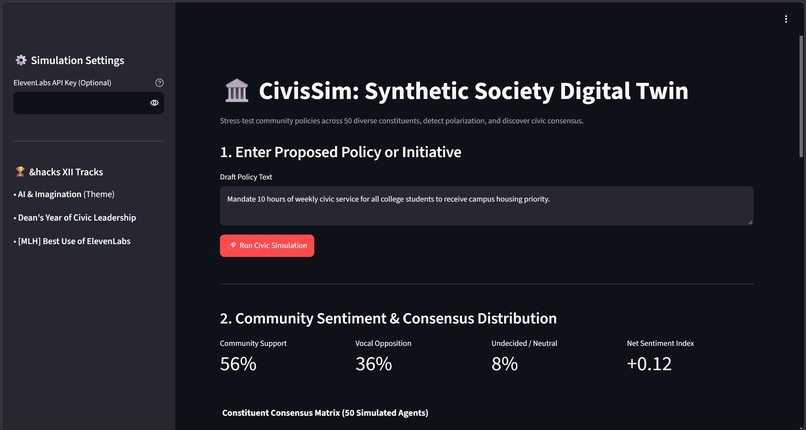
image 1
-
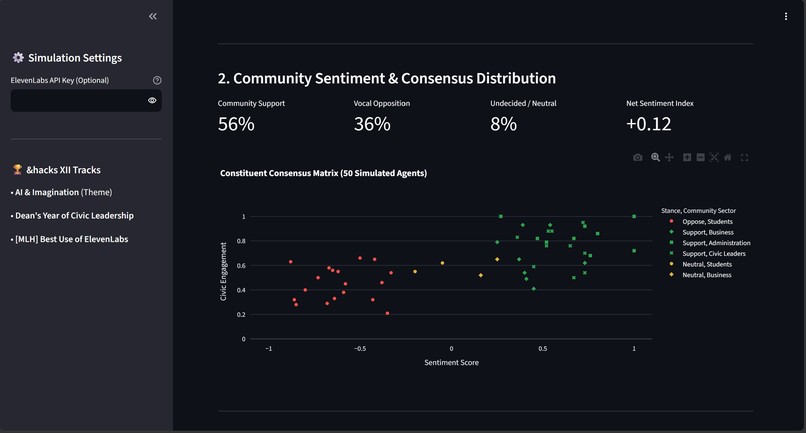
image 2
-
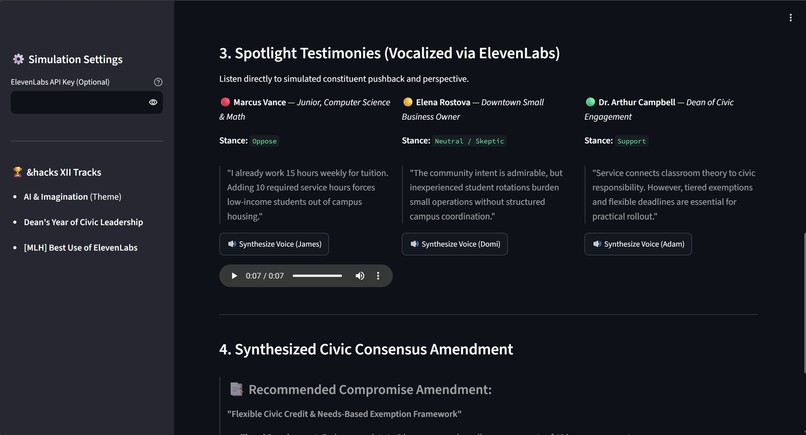
image 3
-
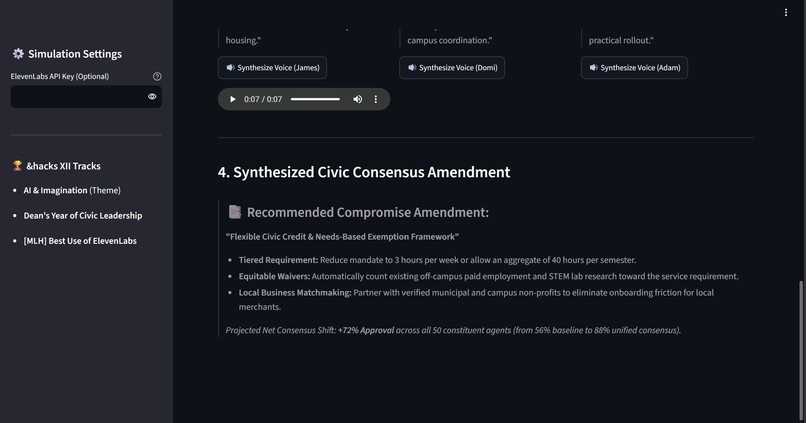
image 4
Inspiration
Whenever a major campus decision or local ordinance gets announced, it usually triggers weeks of heated arguments where people talk right past each other. Town halls turn into venting sessions, comment sections get toxic, and student leaders or city officials are left trying to guess what the silent majority actually cares about.
In the spirit of civic leadership, we wanted to build something that changes that dynamic. What if decision-makers could test-drive a policy in a simulated environment first? CivisSim was designed to let leaders hear pushback, spot blind spots, and uncover reasonable compromises before rolling an initiative out into the real world.
What It Does
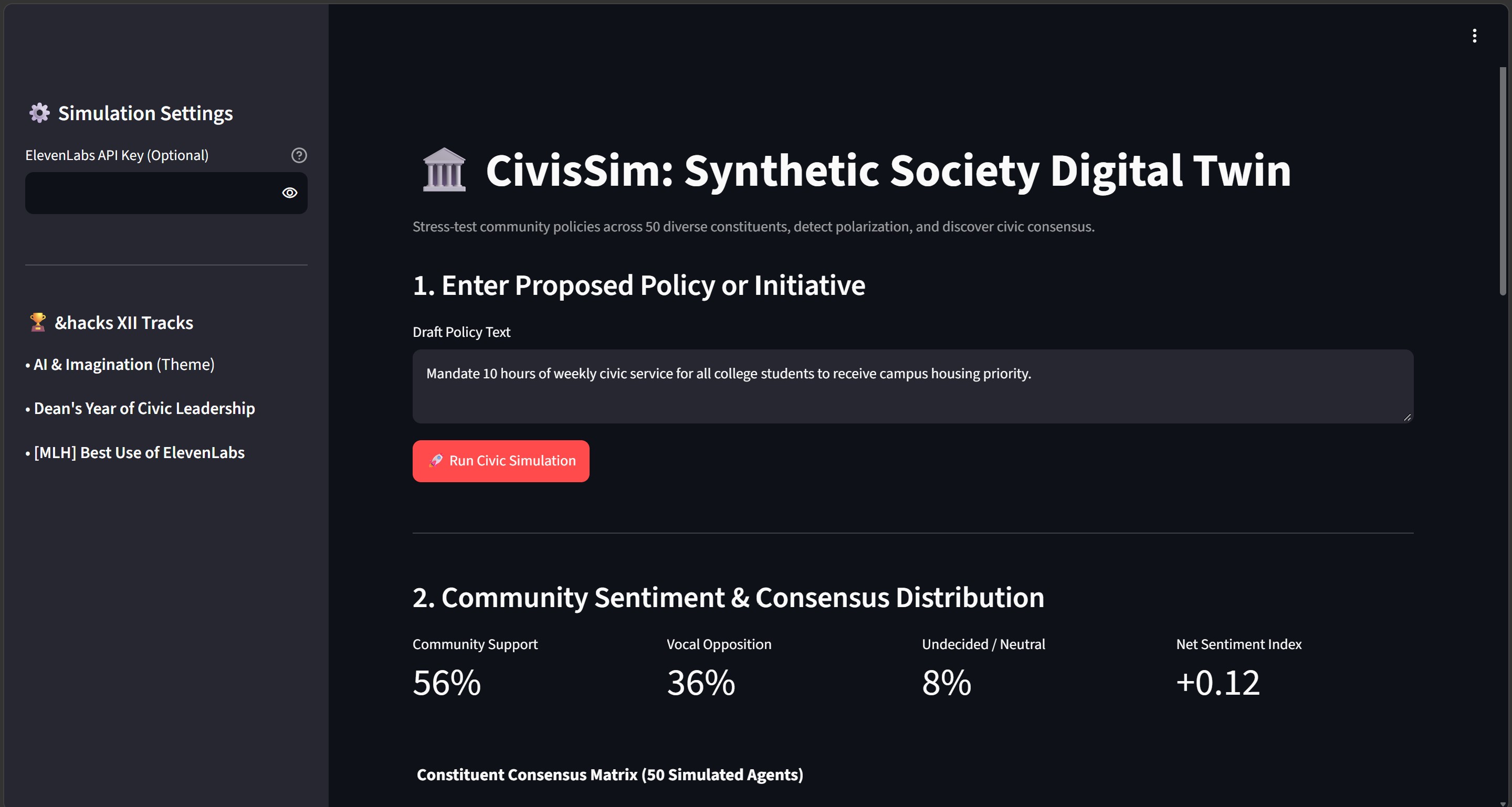
CivisSim turns any policy text or campus proposal into an interactive, voice-driven civic simulation:
- 50 Unique Community Personas: Input any draft policy, budget proposal, or campus initiative. CivisSim simulates a cross-section of 50 local residents spanning diverse backgrounds, financial situations, and personal priorities.
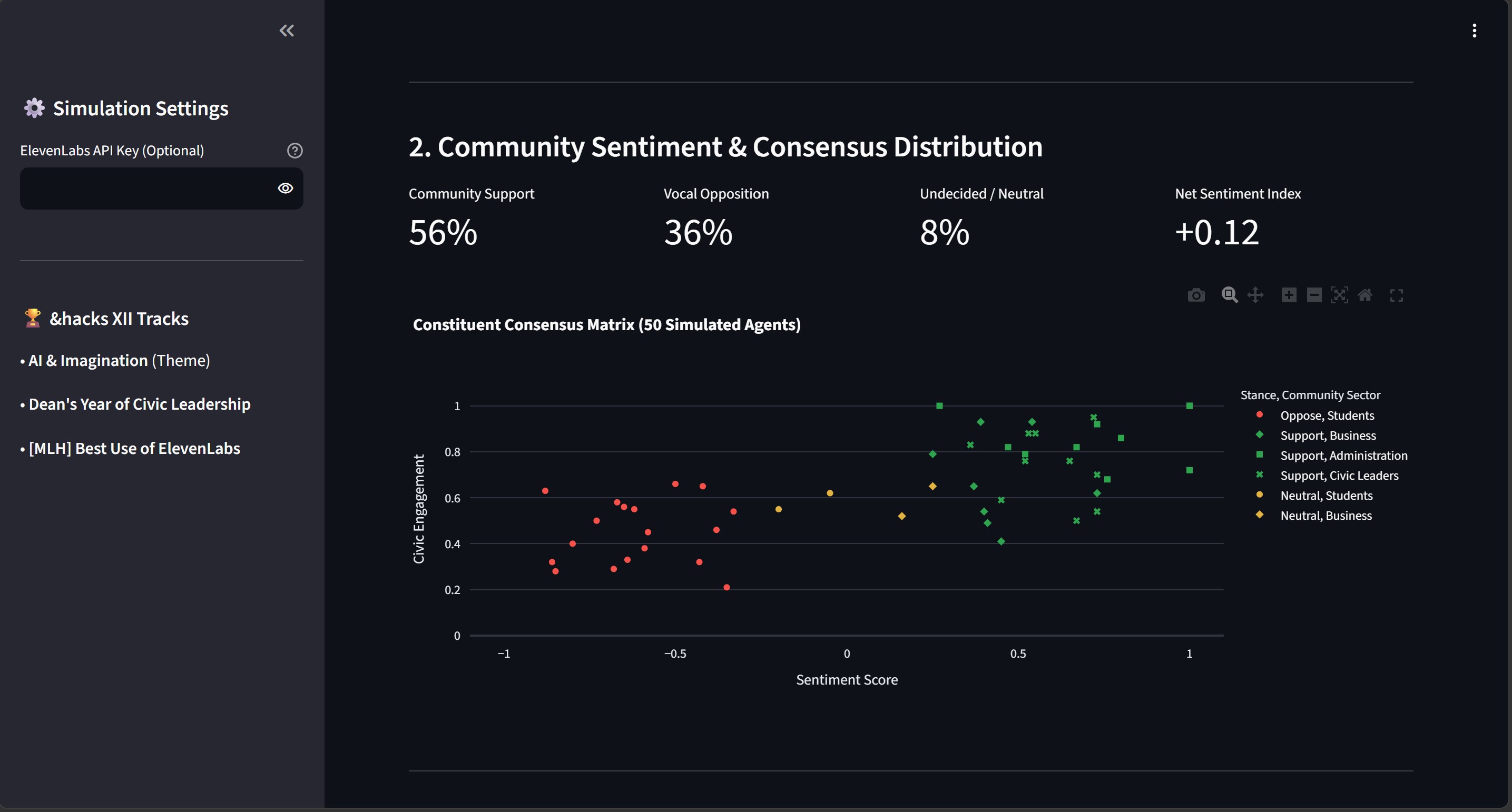
- Mapping Real Pushback: Instead of flattening the room into a basic "yes or no" poll, an intuitive consensus matrix maps out who is enthusiastic, who is hesitant, and who is fiercely opposed.
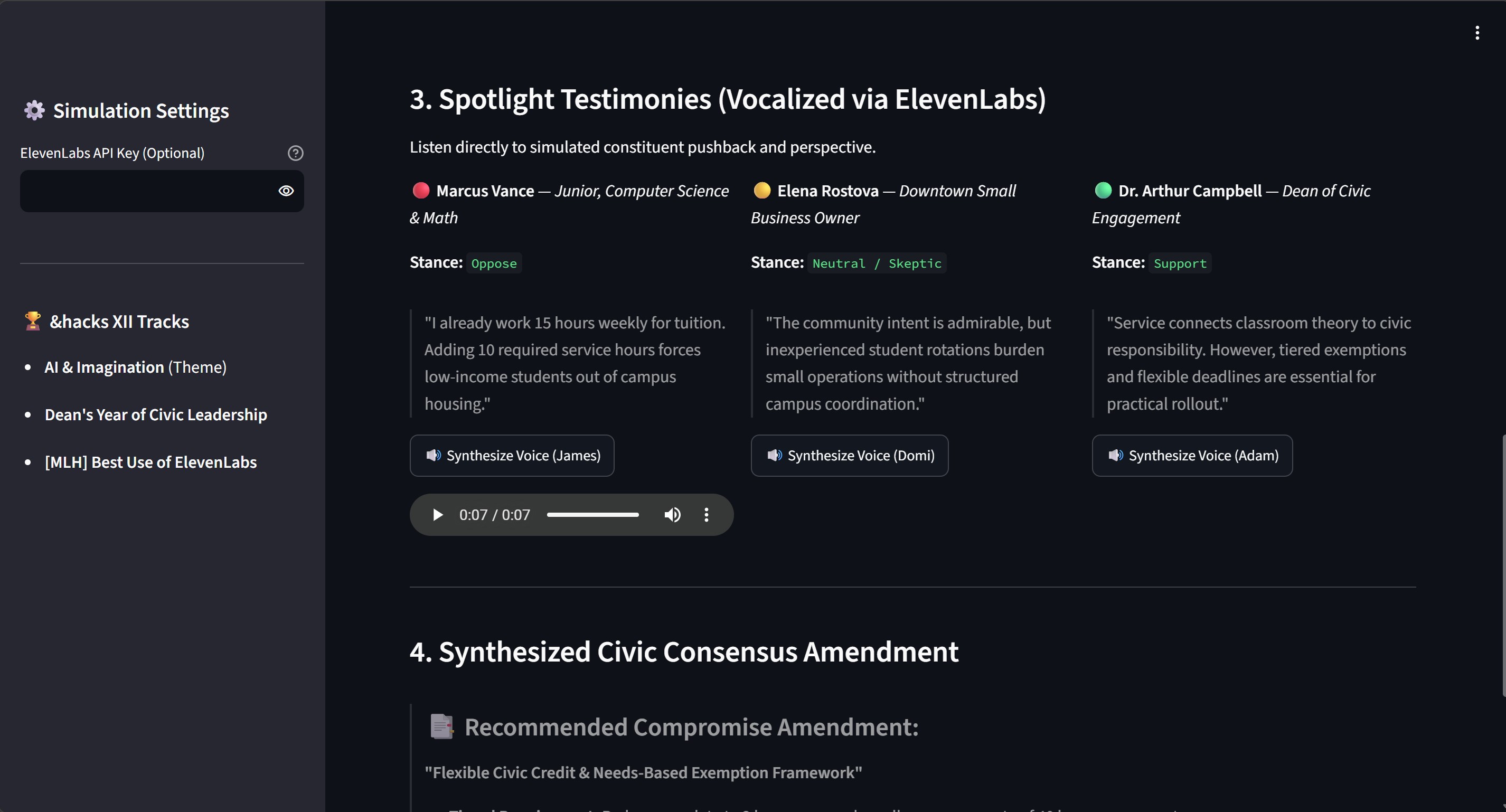
- Hearing Real Concerns: Powered by expressive ElevenLabs voice synthesis, the dashboard spotlights three distinct constituent reactions—giving an actual voice to concerns from an overwhelmed student worker, a skeptical local business owner, and a civic organizer.
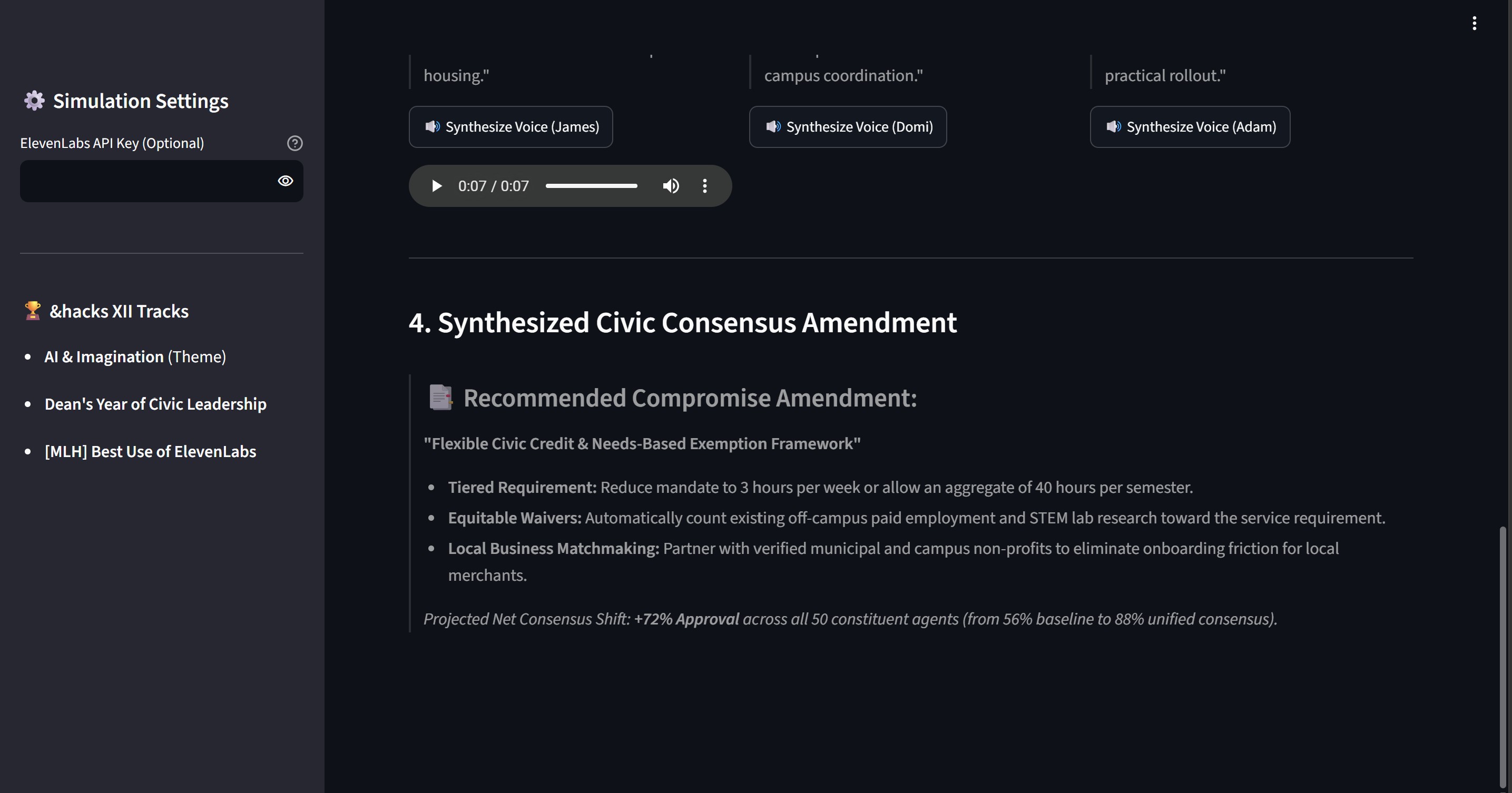
- Pragmatic Consensus Engine: CivisSim analyzes the underlying concerns across all 50 personas and drafts a concrete, balanced amendment designed to address the sharpest objections while preserving the policy's core intent.
How We Built It
- Interface & Visuals: Built a fast, clean dashboard using Python, Streamlit, and Plotly to make the simulation feel like an interactive civic command center.
- Synthetic Population Core: Designed a structured simulation pipeline that generates consistent, demographically grounded constituent reactions in a single rapid pass.
- Expressive Audio Pipeline: Connected the ElevenLabs API to assign dynamic, emotionally resonant vocal profiles to our spotlighted community testimonies.
Challenges We Faced
The hardest part was making sure the synthetic constituents didn't sound like generic, robotic survey responses. Real civic meetings are messy, personal, and emotional. We spent significant time tuning our persona schemas so that each resident speaks with their own voice, distinct priorities, and genuine stakes rather than flat bullet points.
What We Learned
Complex multi-agent simulations don't need clunky, fragile backends to deliver real value. Keeping the architecture lean and focusing on crisp, structured outputs allowed us to build something responsive and reliable without getting bogged down in infrastructure.
What's Next for CivisSim
- Ingesting public meeting transcripts and campus forum archives to ground simulated personas in real historical voting trends.
- Adding an interactive negotiation mode where leaders can adjust policy levers in real time and watch constituent sentiment shift live on screen.

Log in or sign up for Devpost to join the conversation.