-
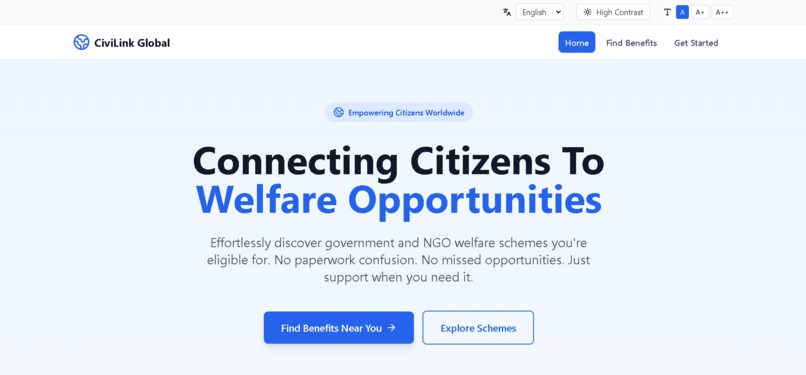
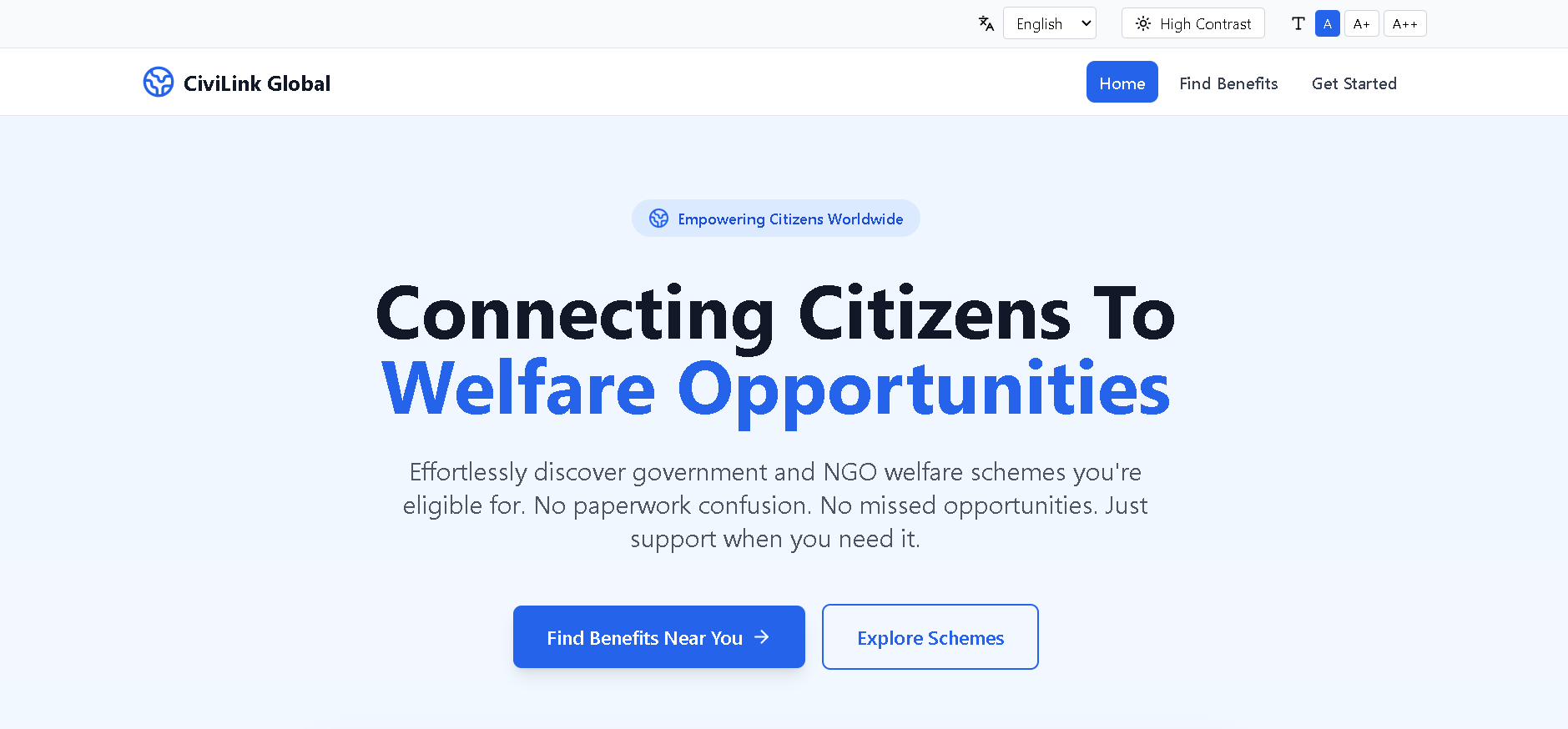
Home Page
-
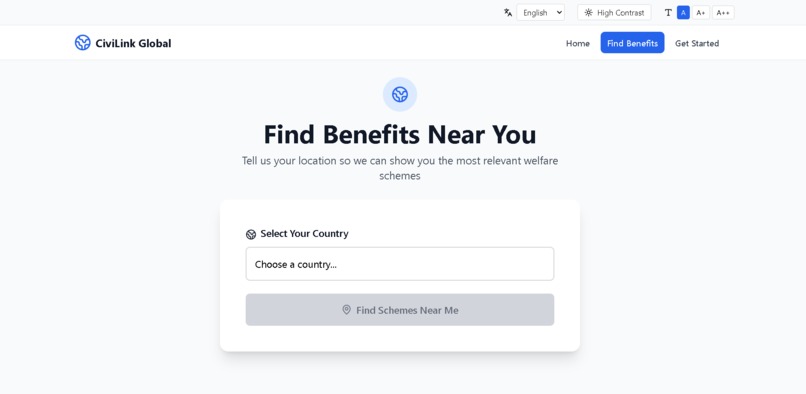
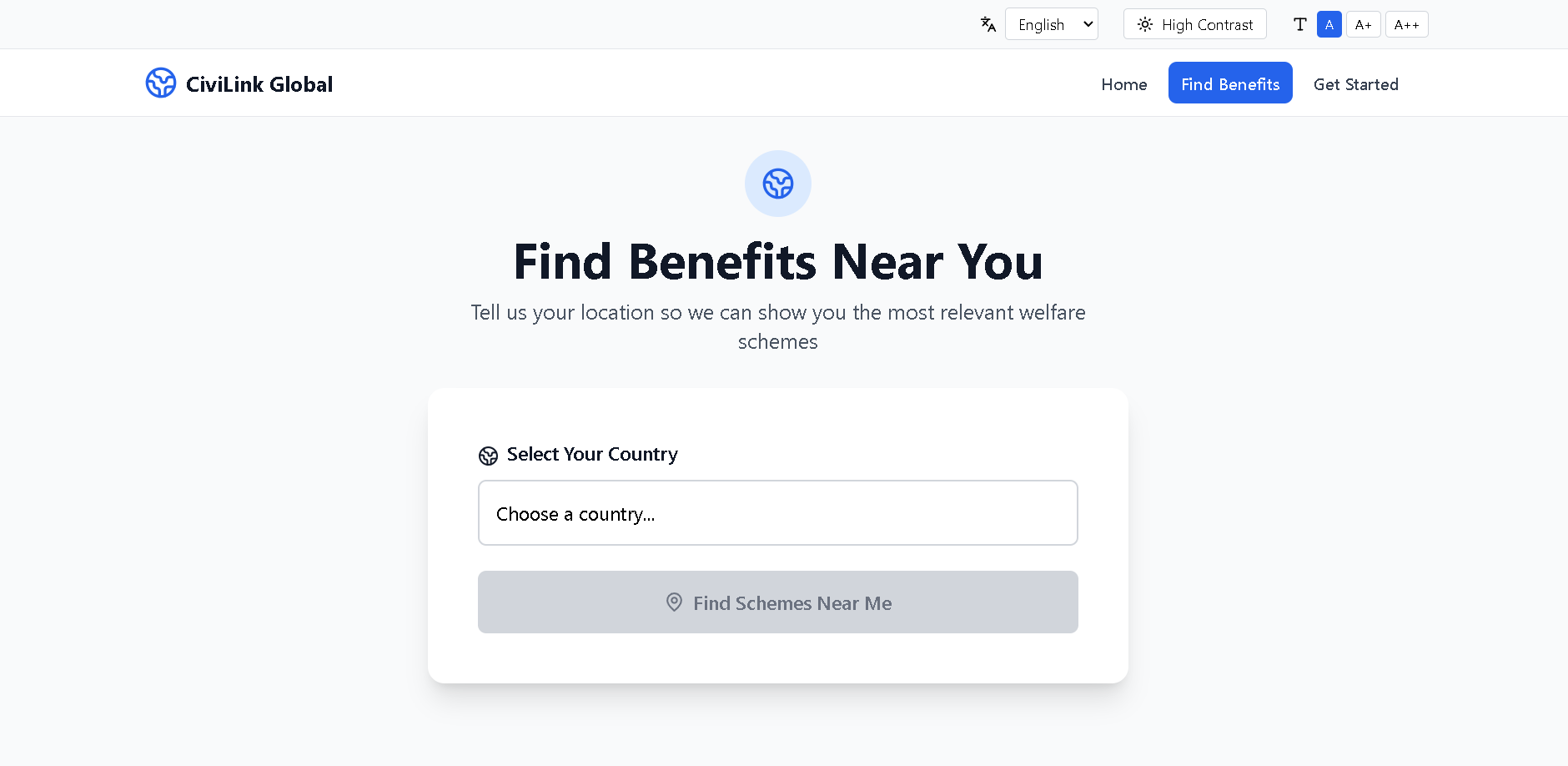
Find Benefits Page
-
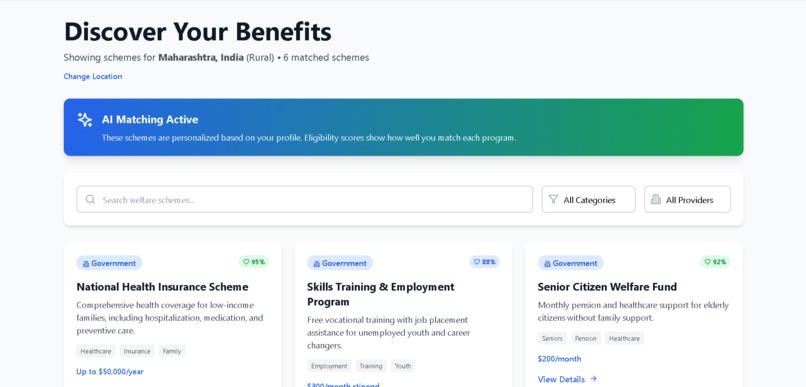
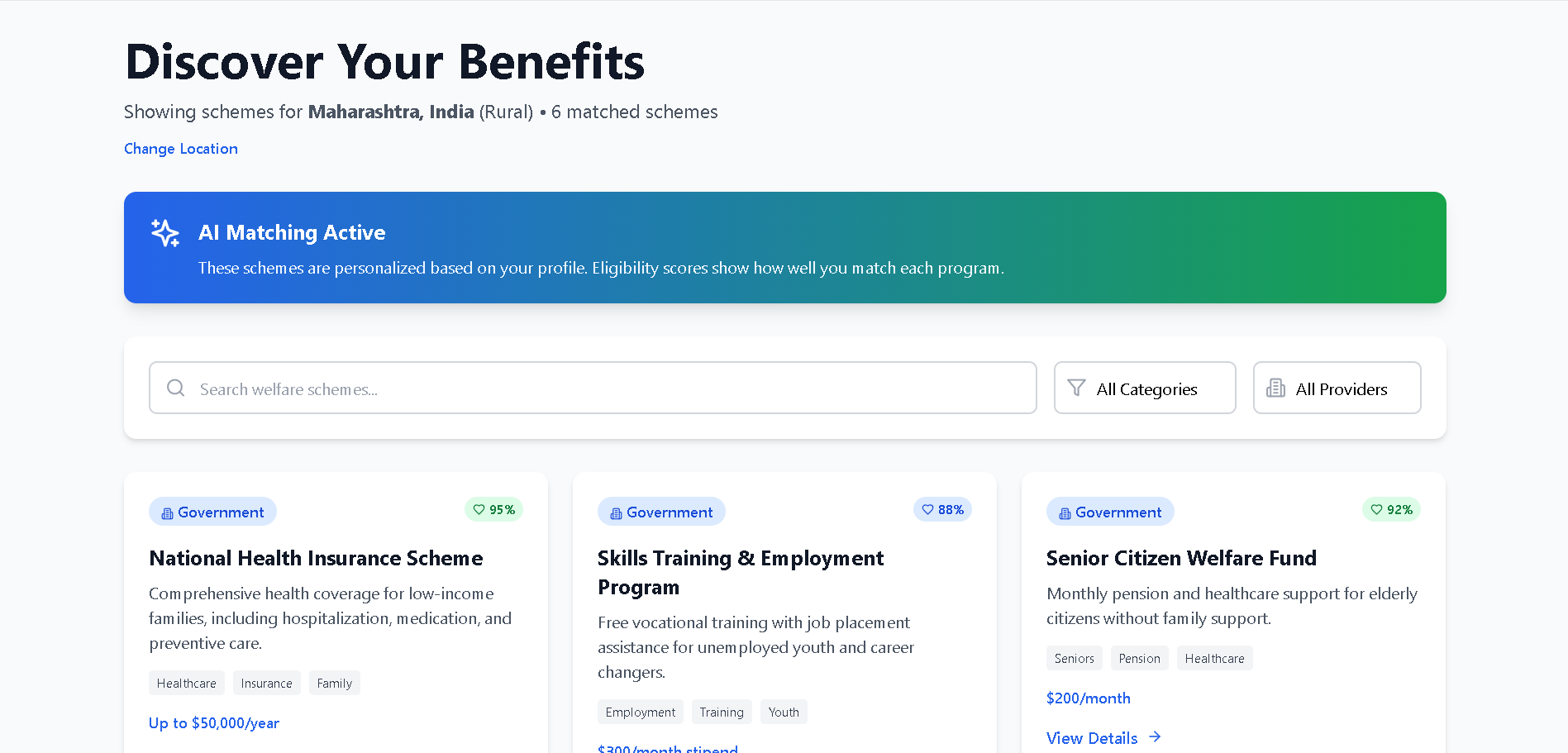
Discover Eligible Schemes Page
-
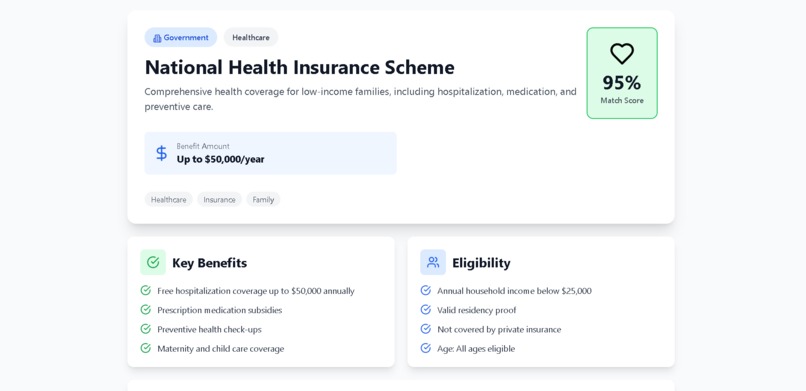
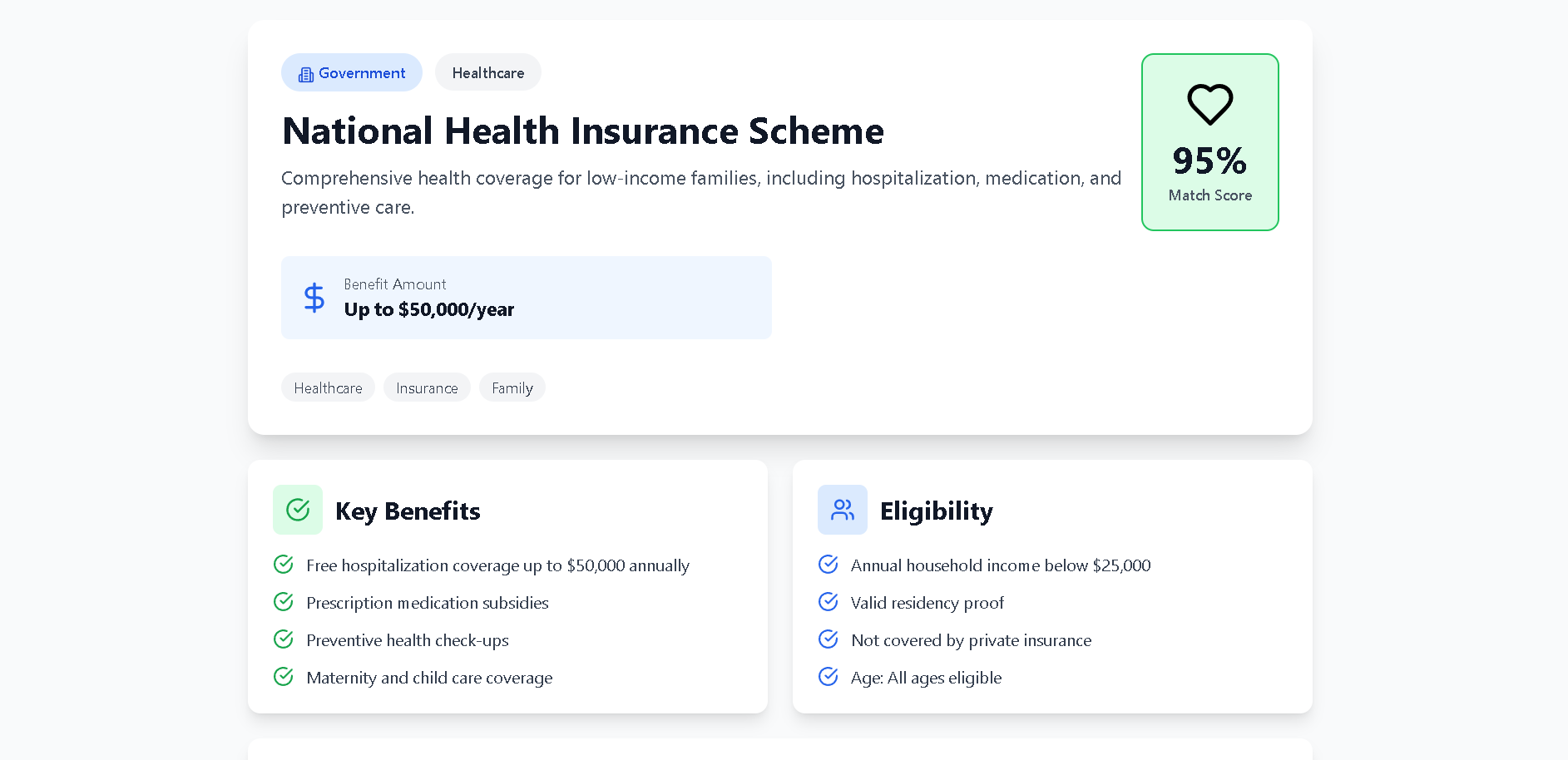
Apply For Scheme Page
Inspiration
Millions of people across the world are eligible for welfare schemes but never receive them. The reasons are rarely about need, they are about awareness, accessibility, and complexity. Welfare information is fragmented across government portals and NGOs, often locked behind language barriers and complicated eligibility rules.
We were inspired by this persistent gap between available support and actual access. CiviLink Global was born from a simple question:
What if finding welfare benefits was as easy as answering a few questions?
Our goal was to design a solution that connects citizens to welfare opportunities effortlessly and inclusively, regardless of geography or literacy level.
What It Does
CiviLink Global is an AI-powered welfare discovery platform that acts as a single gateway to global welfare schemes.
Users provide basic information such as location, age group, employment status, and special needs. Based on this profile, the platform recommends relevant welfare schemes from governments and NGOs, along with clear explanations of eligibility.
Key Features Include:
- Personalized welfare recommendations
- Multilingual and accessibility-first UI
- Unified presentation of fragmented welfare data
- Clear, human-friendly explanations of eligibility
How We Built It
We focused on UI/UX, storytelling, and demo impact, keeping backend logic mocked for the hackathon.
Tech Stack:
- Frontend: React + Tailwind CSS
- Design & Prototyping: Figma
- AI & Ideation Support: ChatGPT
The architecture follows a clean, component-based approach:
- Landing page for impact storytelling
- Step-by-step onboarding flow
- Personalized results dashboard
- Detailed scheme information pages
- Built-in accessibility controls (contrast, text size, icons)
All data and AI explanations are currently mocked to demonstrate the concept clearly during live demos.
Challenges We Ran Into
Designing for a global audience came with unique challenges:
- Representing welfare systems across different countries without relying on region-specific data
- Creating a UI that works for low-literacy users and differently-abled individuals
- Balancing visual appeal with simplicity and clarity
- Showing meaningful impact without a real backend or datasets
One of the hardest parts was ensuring the platform felt trustworthy, not overwhelming, while still conveying complex eligibility information.
Accomplishments That We're Proud Of
- Designing a production-quality, inclusive UI within hackathon constraints
- Creating a clear problem → solution → impact narrative
- Building an onboarding flow that feels simple yet powerful
- Prioritizing accessibility as a core feature, not an afterthought
- Delivering a demo-ready product with strong social relevance
What We Learned
This project taught us that good civic tech is as much about design as it is about technology.
We Learned:
- How to design for accessibility and inclusivity at scale
- How to translate complex social systems into simple user experiences
- The importance of storytelling in hackathon submissions
- How AI concepts can be communicated clearly without overengineering
We also learned how much impact thoughtful UI/UX can have in bridging real-world gaps.
What's Next For CiviLink Global
Post-hackathon, we plan to:
- Integrate real-time welfare datasets from governments and NGOs
- Implement true AI-driven eligibility matching
- Expand multilingual support across more regions
- Add assisted voice-based navigation for low-literacy users
- Partner with civic organizations to pilot real-world deployment
Our long-term vision is to make welfare access universal, transparent, and human-centered.
Built With
- react
- tailwindcss
- typescript
- vite


Log in or sign up for Devpost to join the conversation.