-
-
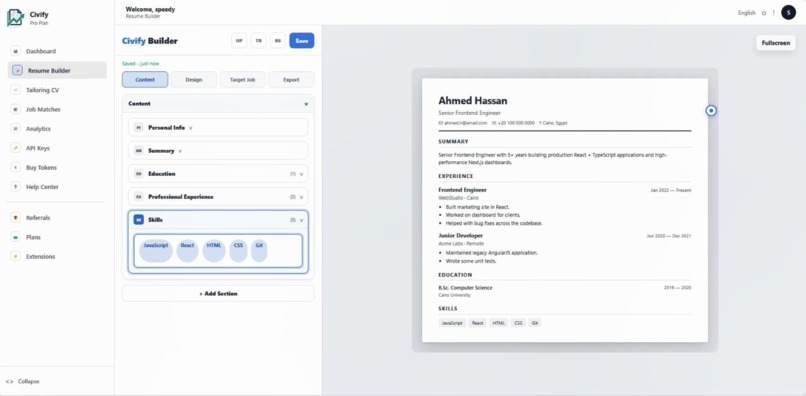
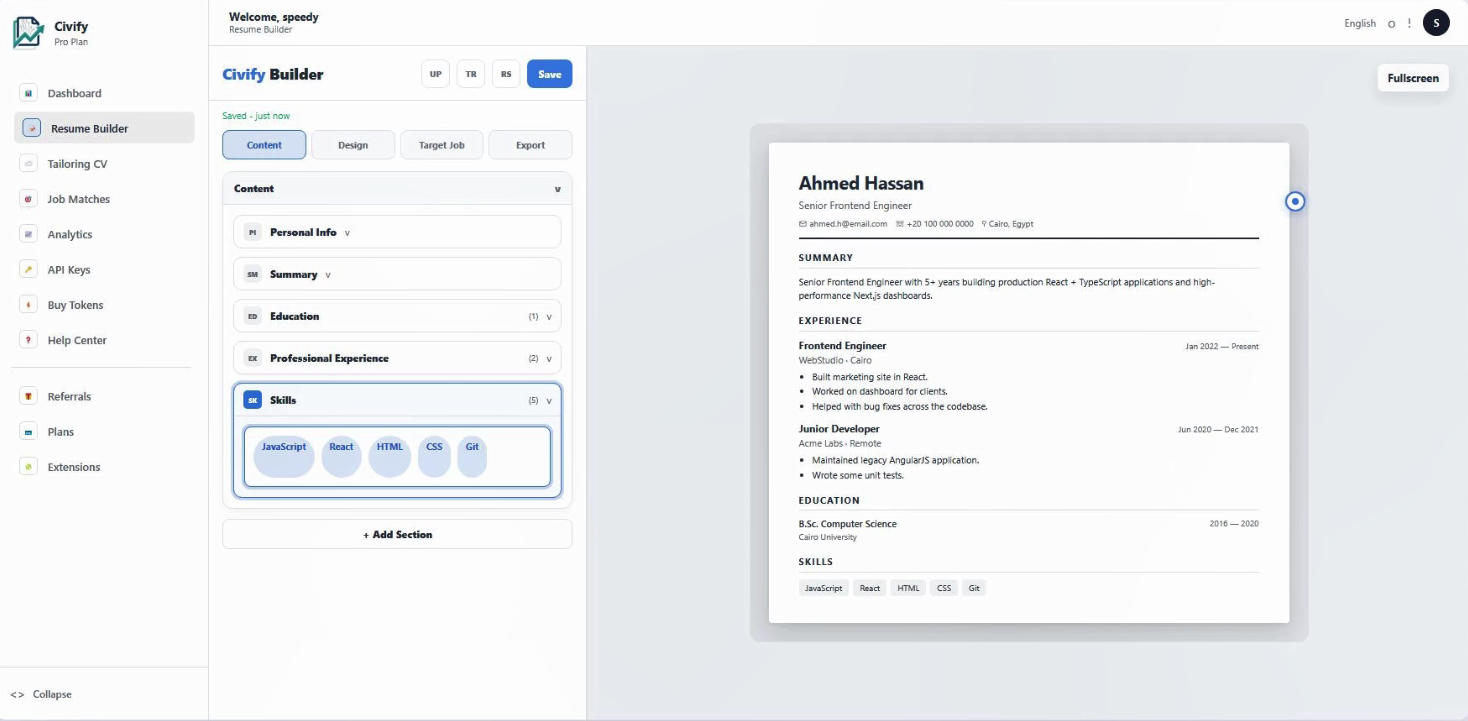
Civify Resume Builder
-
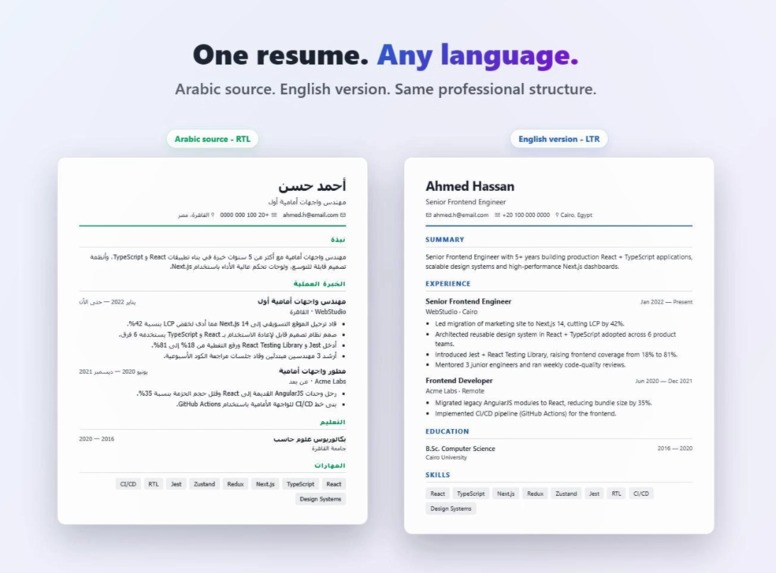
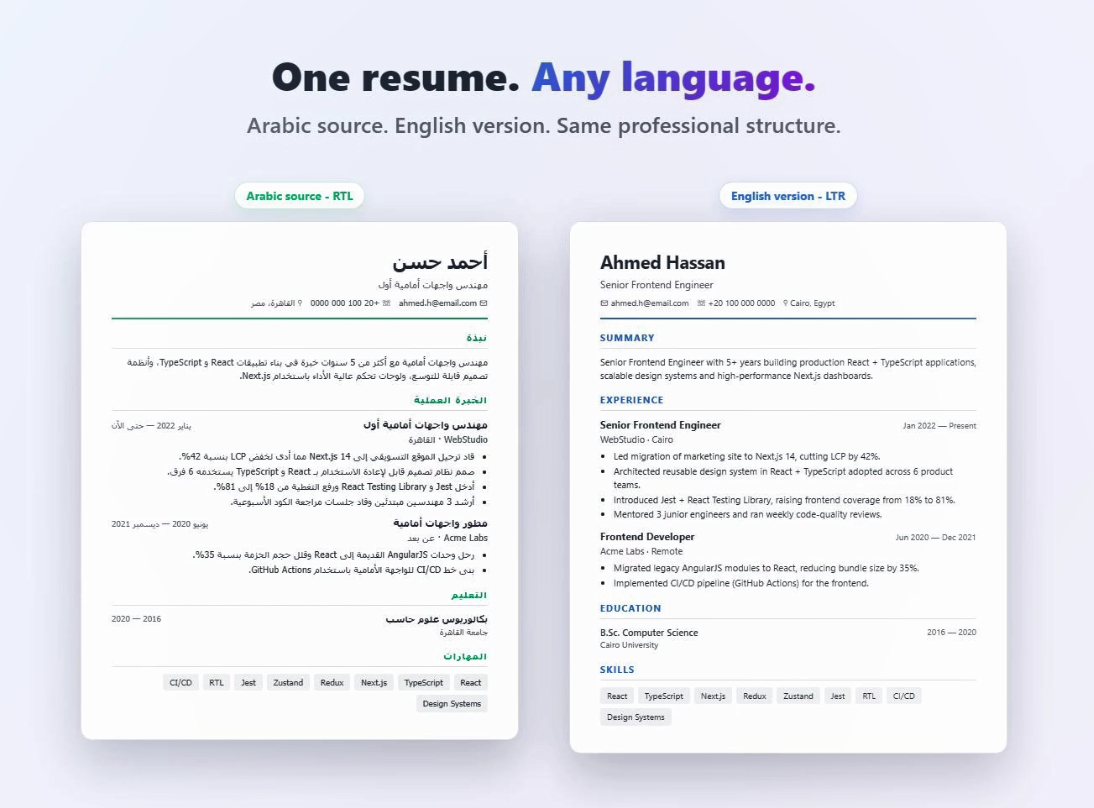
Easy Translate resumes with one click
-
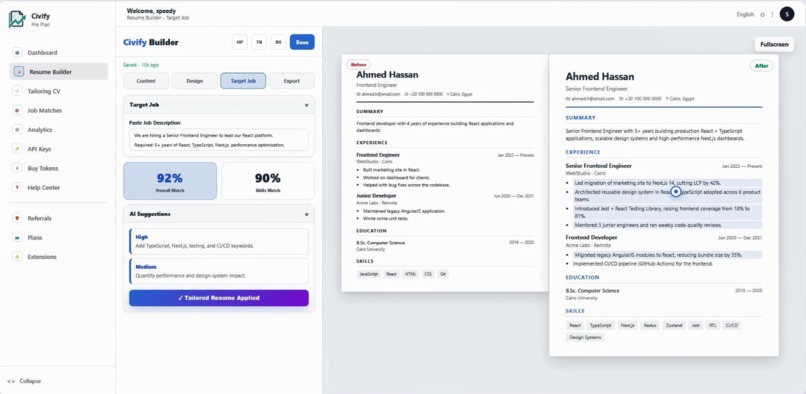
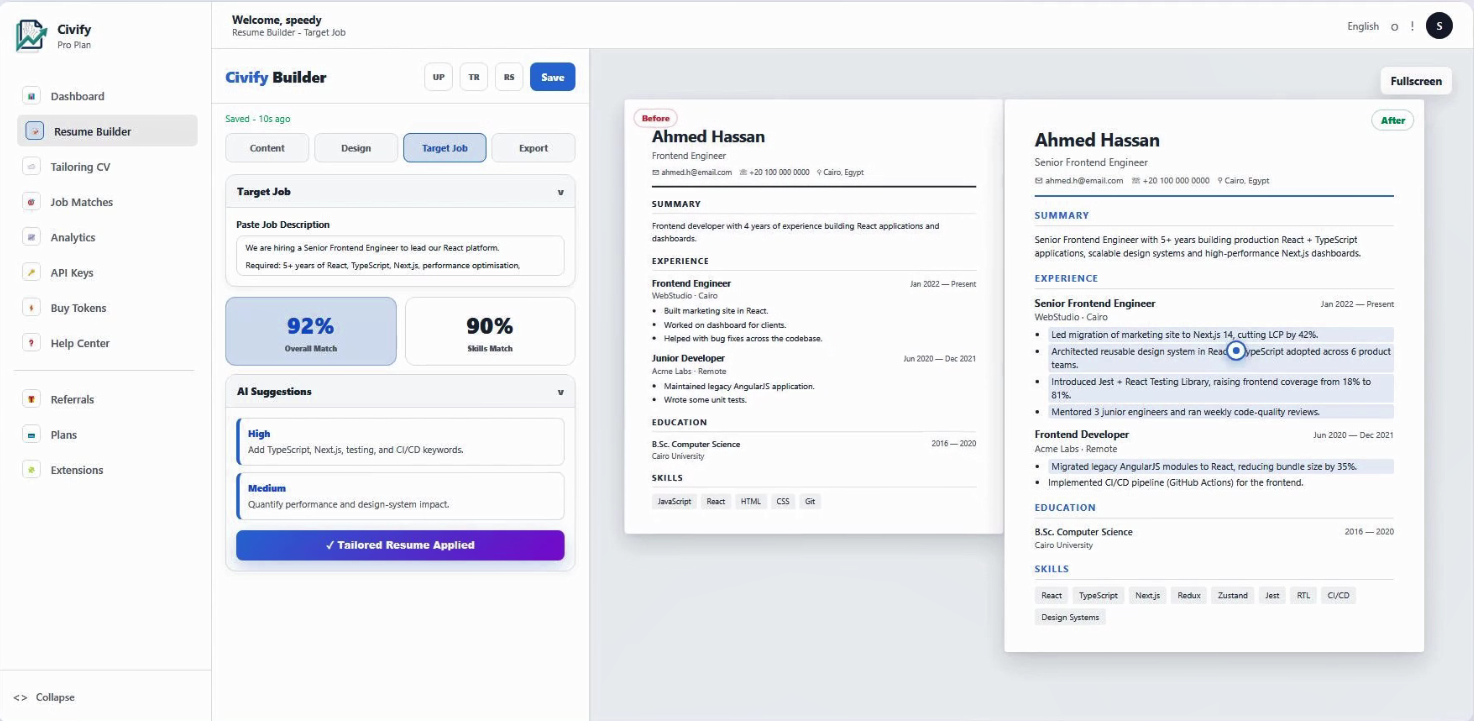
Tailor your resume for a job
-
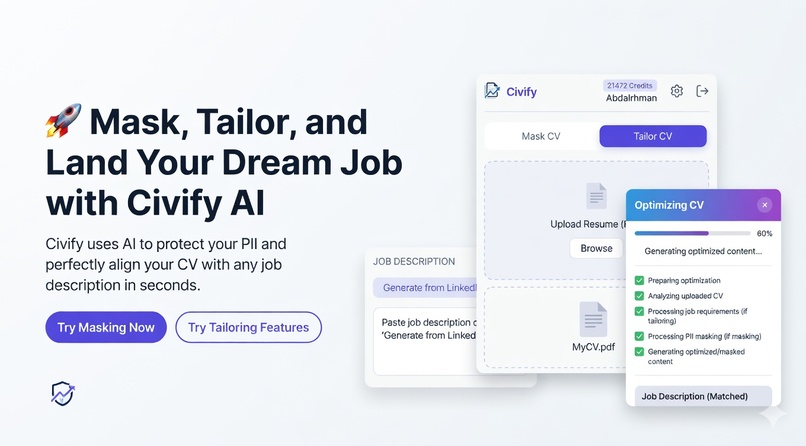
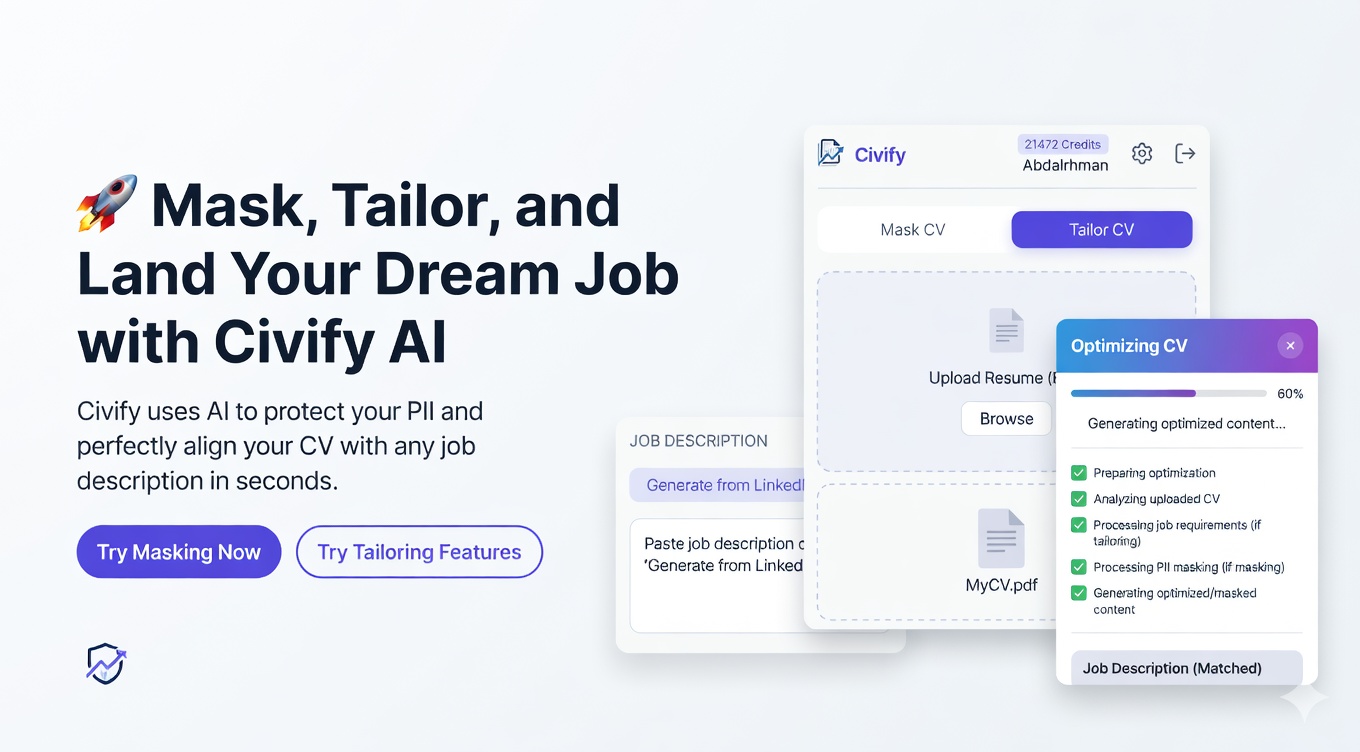
chrome extension to easy use while you are browsing jobs
Inspiration
The initial spark for Civify came from sheer personal necessity. I was applying for jobs and felt like I was throwing my resume into an "ATS black hole." I didn't know much about existing tools, so I built a simple proof-of-concept just to help myself and a few friends figure out why our formatting was being rejected by Applicant Tracking Systems.
As my friends started using it and sharing it, the project snowballed. I realized the HR tech market was completely fragmented: job seekers were fighting blind against algorithms, and developers were stuck paying for incredibly expensive, outdated resume parsing APIs. I completely redesigned the platform from the ground up to solve both problems simultaneously. We built a consumer-facing AI builder to help candidates, and a B2B Developer API so businesses could embed our tech into their own platforms.
What it does
Civify is a dual-engine AI ecosystem built for the modern recruitment space.
For job seekers (B2C), it provides an intelligent career toolkit featuring a dynamic resume builder, real-time ATS scoring, one-click AI translation (highly optimized for bilingual English/Arabic markets), and instant tailoring to match specific job descriptions.
For businesses and developers (B2B), Civify acts as a headless infrastructure platform. We offer a robust Developer API and native CRM integrations (like our Zoho extension) that allow enterprise HR teams to seamlessly embed our proprietary resume parsing, masking, and document generation technology directly into their existing workflows.
How I built it
Civify is engineered as a full-stack, enterprise-grade application designed for high scalability.
Backend Engine: Powered by Java (Spring Boot), the backend handles secure API routing, complex subscription tier management, token usage tracking, and our proprietary API key generation system.
Frontend Architecture: Built with Next.js (React), utilizing server-side rendering (SSR) for optimal performance, strict programmatic SEO, and seamless bilingual routing (i18n).
Document Generation: Handled server-side via Puppeteer, ensuring reliable, high-quality PDF exports that preserve precise, machine-readable formatting while securely injecting dynamic, plan-based UI layers.
Scoring Logic: Our custom parsing engine moves beyond simple keyword matching, utilizing high-dimensional vector math (similar to Cosine Similarity) to understand the semantic density and structural relevance of a resume against a specific job description.
Challenges I ran into
Scaling from a simple proof-of-concept to a full B2C/B2B ecosystem introduced complex architectural hurdles:
Securing the B2B Gateway: Transitioning to an API-first model required building a rigorous, multi-tiered authentication filter to securely manage token limits, data storage, and rate-limiting across different subscription tiers.
Optimizing Heavy Web Vitals: Processing AI logic and rendering complex document previews on the client side introduced performance bottlenecks. We had to dive deep into React component lifecycles and hydration optimization to eliminate dead clicks and ensure a seamless UX.
Global Infrastructure Scalability: Adapting the platform to support a truly international user base meant we had to heavily abstract our subscription and payment architecture to be gateway-agnostic, paving the way for seamless global transactions.
Accomplishments that I'm proud of
I am incredibly proud of bridging the gap between consumer software and developer infrastructure. Building a proprietary ATS scoring engine that actually understands structural formatting—rather than just counting buzzwords—was a massive technical win. Taking that core consumer technology and successfully packaging it into a fully functional Developer API and native Zoho extension proved that our underlying architecture is highly robust, scalable, and adaptable to enterprise needs.
What I learned
I learned that building the core product is only half the battle; distribution and infrastructure resilience dictate a product's survival. Relying on a single organic referral source is incredibly volatile, which taught me the critical importance of building programmatic, server-side SEO into the platform's DNA. Additionally, managing the transition to a freemium SaaS model provided deep, hard-earned insights into the necessity of strict system access controls, precise unit economic tracking, and the value of building decoupled systems.


Log in or sign up for Devpost to join the conversation.