Inspiration
CivicVoice was inspired by a personal frustration many of us face: reporting local issues to government offices and never hearing back. Growing up, I noticed potholes, broken streetlights, and safety hazards often persisted for months. The existing 311 systems were fragmented, opaque, and inaccessible to many community members, especially those with limited English proficiency or low tech literacy.
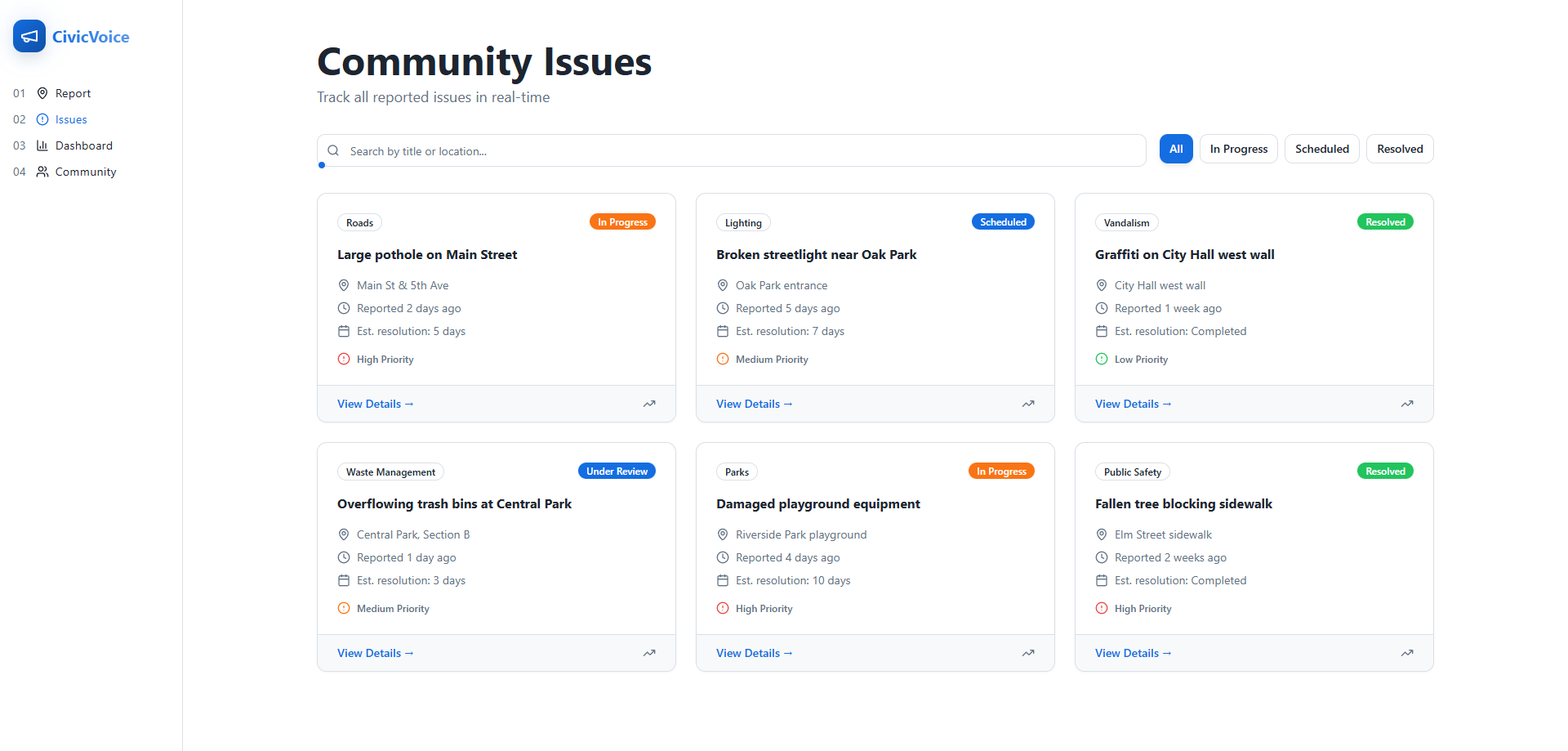
I wanted to create a platform that closes the accountability loop, making civic engagement meaningful, transparent, and empowering. Seeing communities struggle with disengagement and distrust motivated me to design a solution that turns frustration into action.
What I Learned
Building CivicVoice taught me several valuable lessons:
- User-centered design is critical: Accessibility, language support, and low-bandwidth optimization make a real difference in engagement.
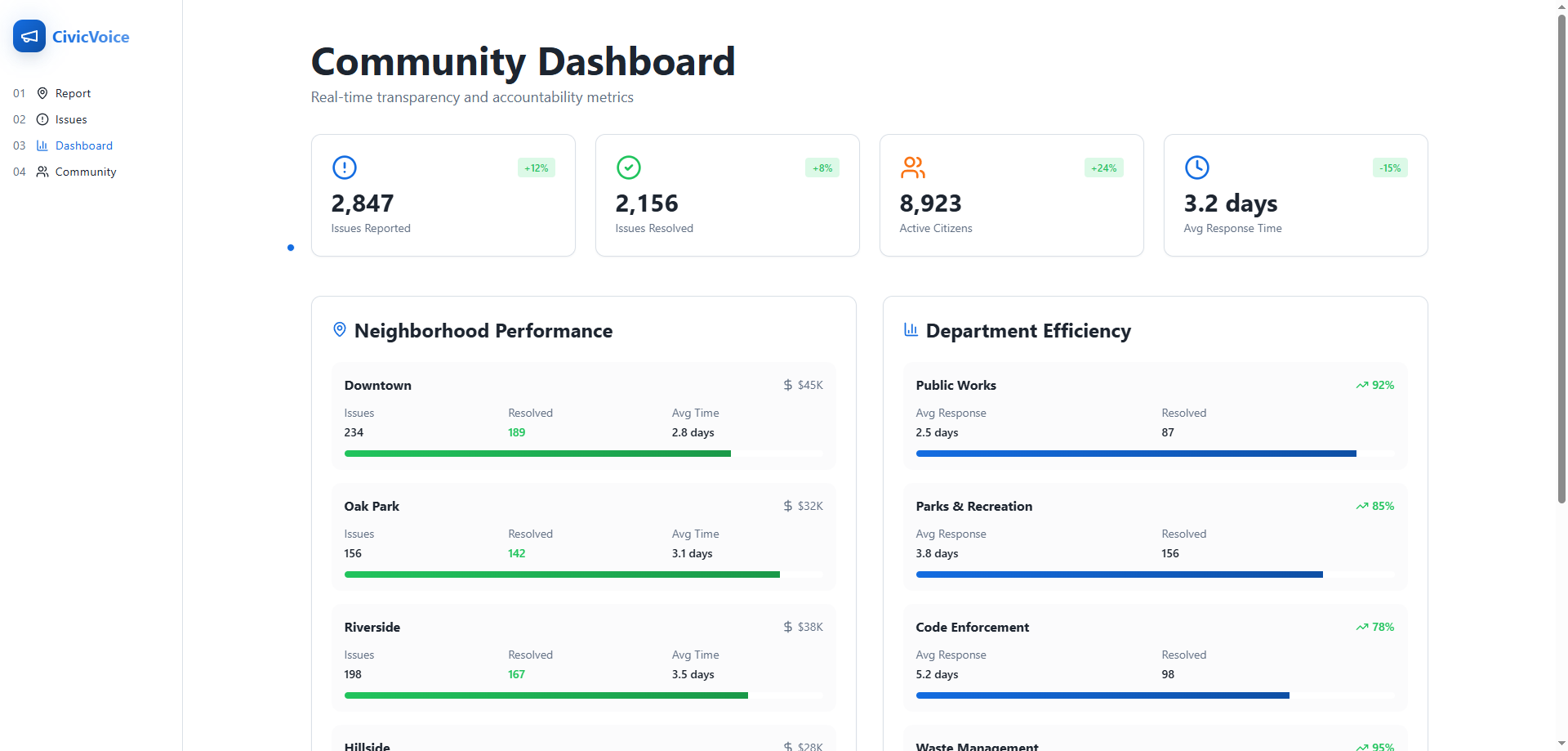
- Data is power: Mapping municipal budgets, response times, and issue patterns can drive meaningful advocacy.
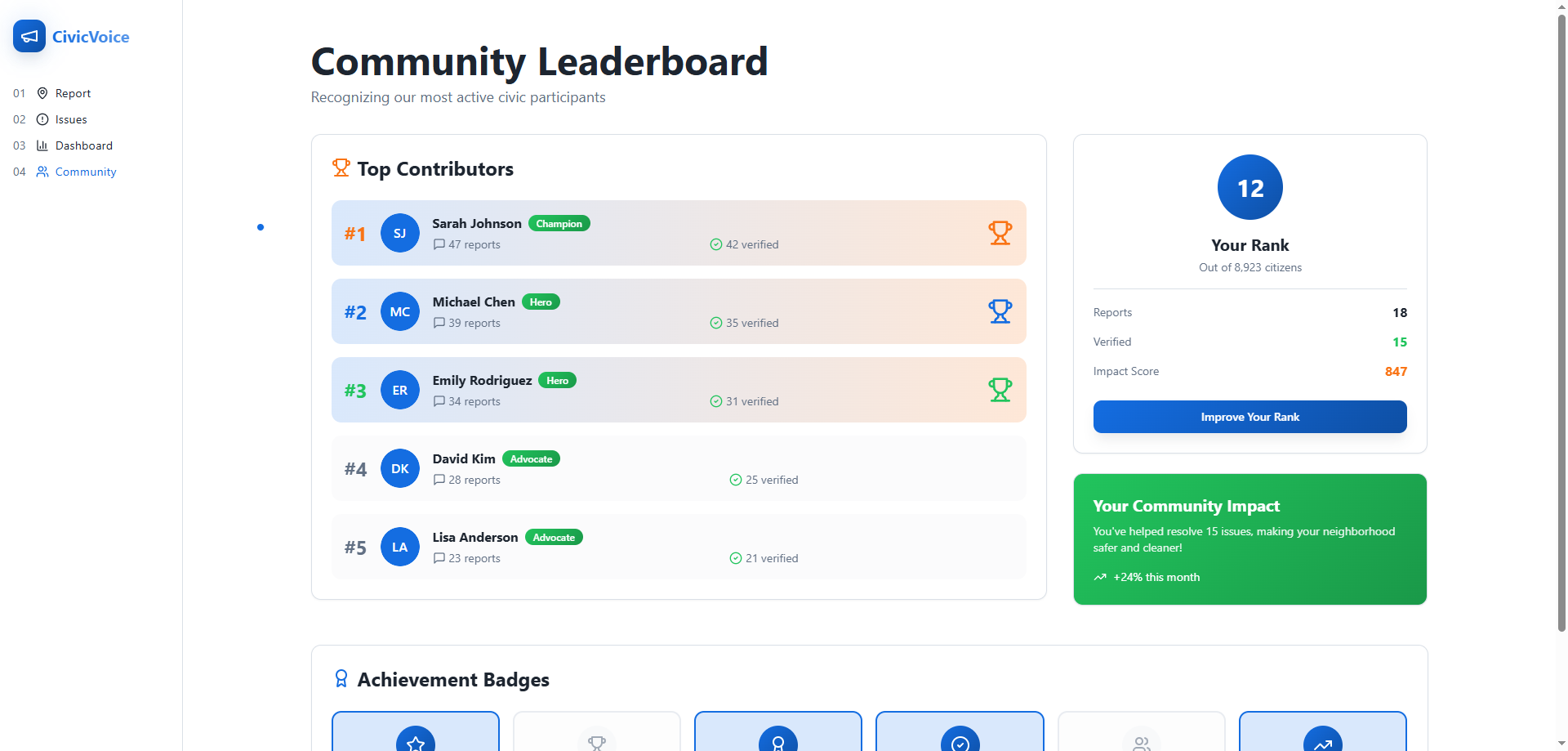
- Gamification motivates participation: Even small rewards and recognition can increase citizen involvement significantly.
- Integration is challenging: Connecting multiple municipal systems and maintaining data privacy requires careful planning and security measures.
How We Built It
The development process included three main stages:
- Research & Design:
- Conducted surveys on civic engagement and usability pain points.
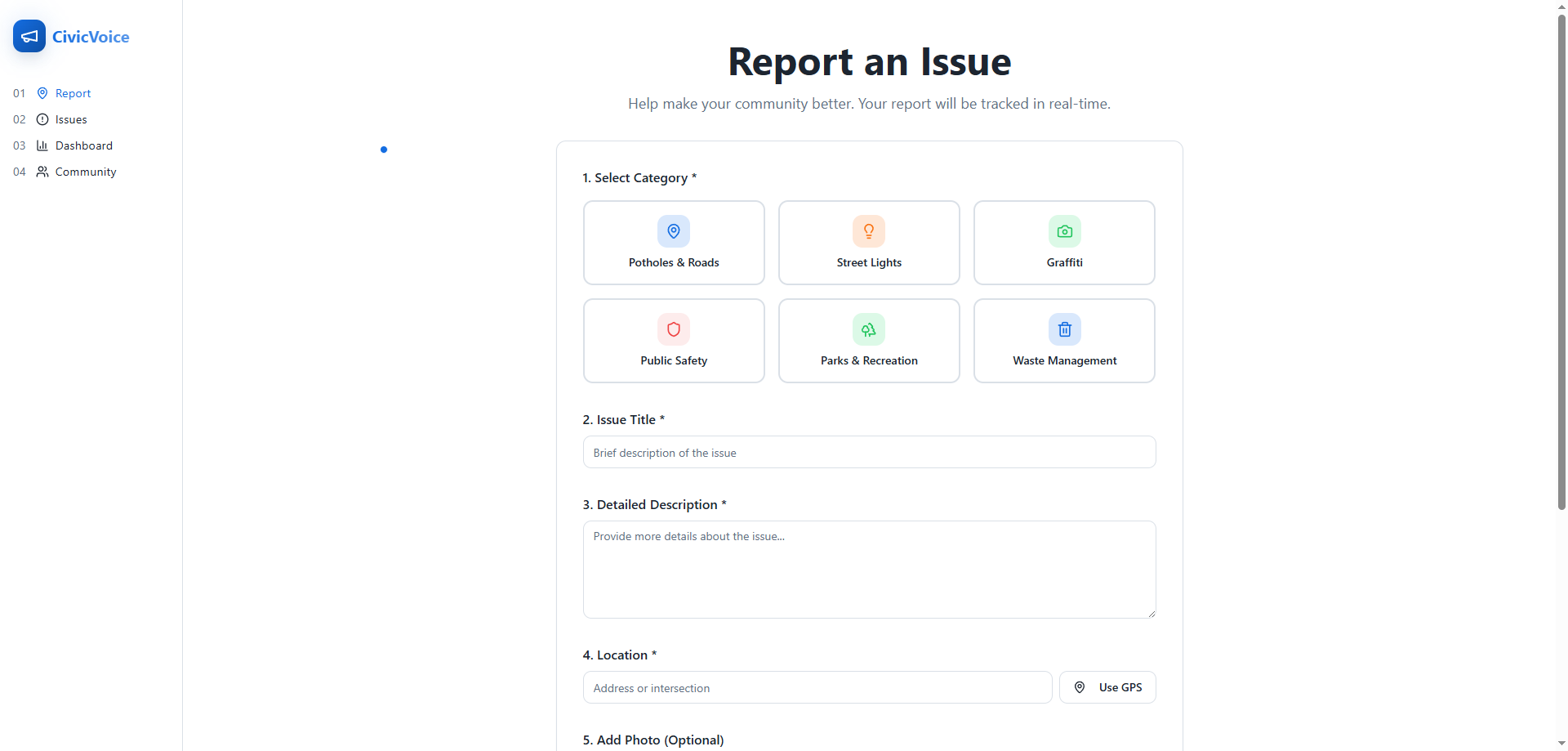
- Created wireframes and user flows to optimize reporting simplicity (3-tap reporting: photo → category → submit).
- Technical Implementation:
- Languages & Frameworks: React Native for mobile apps, React/Next.js for web portal, Node.js backend.
- Cloud & Database: AWS serverless infrastructure with DynamoDB for real-time updates.
- APIs & Tools: Google Maps API for GPS tagging, Twilio for SMS reporting, AI engine for predicting resolution timelines.
- Security: End-to-end encryption, anonymous reporting, GDPR-compliant data handling.
- Community Feedback & Iteration:
- Beta-tested with local volunteers to refine the interface.
- Added offline support, voice reporting, and multilingual interfaces based on feedback.
Challenges We Faced
- Data fragmentation: Municipal systems often have siloed databases, making integration complex.
- Ensuring accuracy: Crowdsourced verification requires safeguards to prevent misuse or false reporting.
- Accessibility hurdles: Making the app usable offline and in low-bandwidth areas required optimizing both data transmission and UI design.
- Balancing simplicity with functionality: We needed a minimal reporting flow while still providing rich analytics and transparency.
Here’s a short note you can add at the bottom of your Project Story:
Note: This project represents a conceptual prototype created for an ideathon. Certain features and implementations are exploratory and may evolve in future development.
Built With
- amazon-web-services
- google-maps
- node.js
- react
- vercel
- vite.js

