-
-
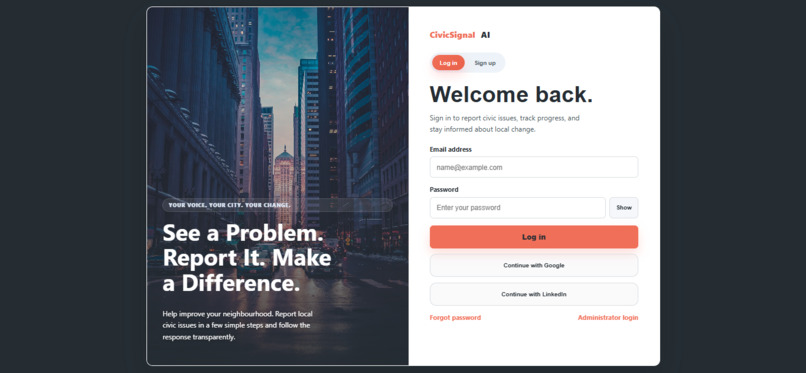
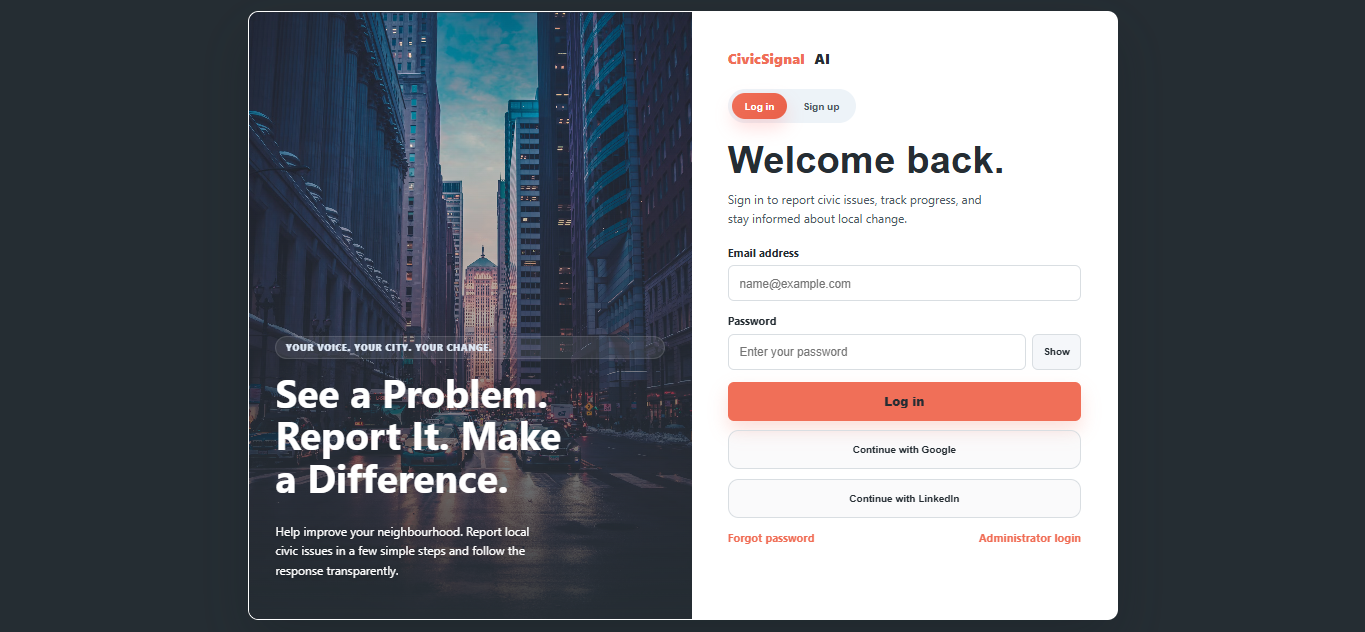
Citizen Login/SignUp Page
-
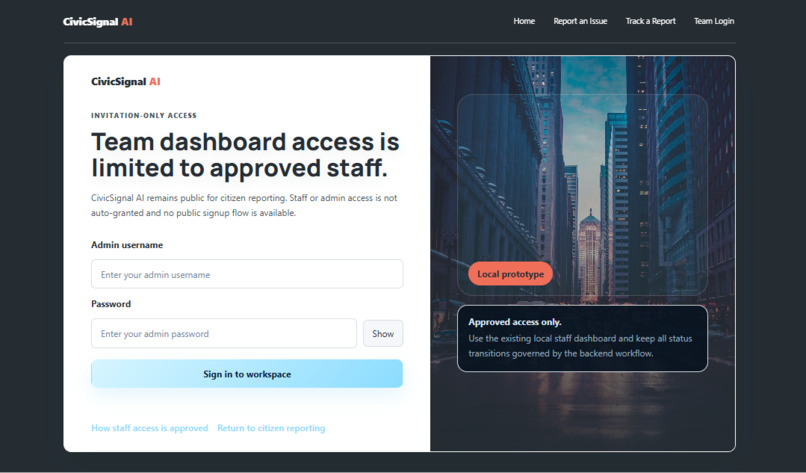
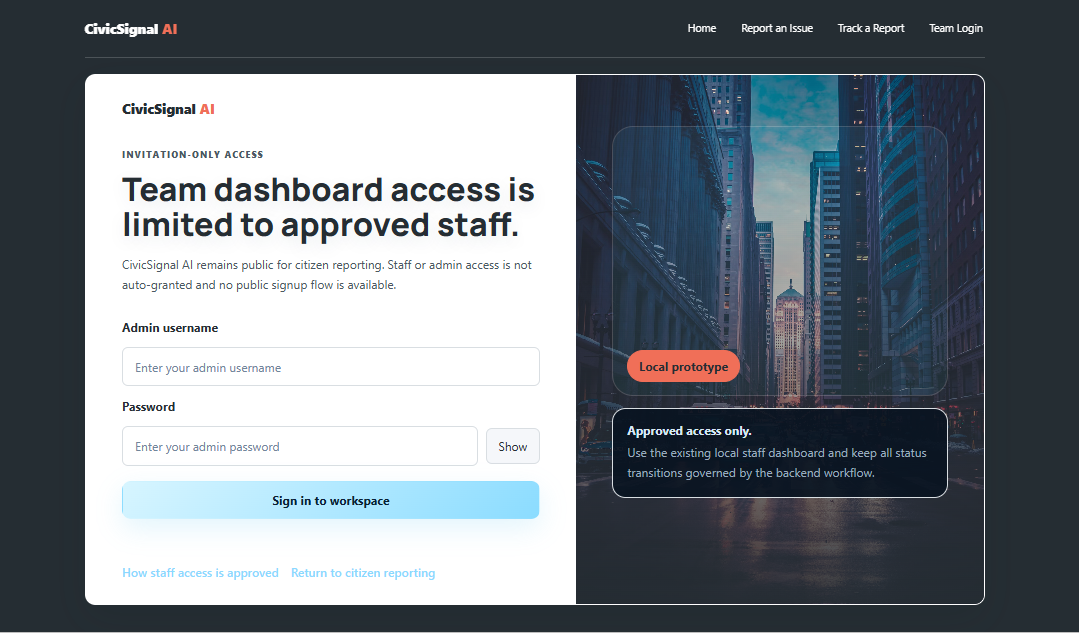
Administrator login
-
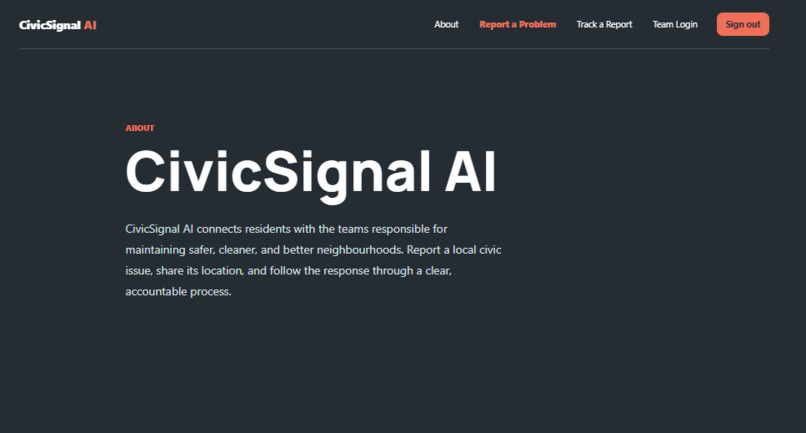
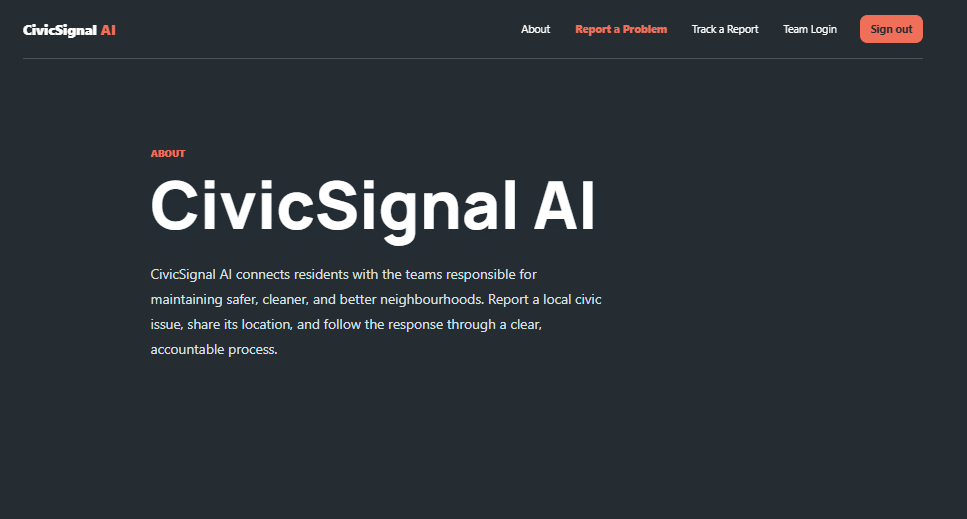
Home and About Page
-
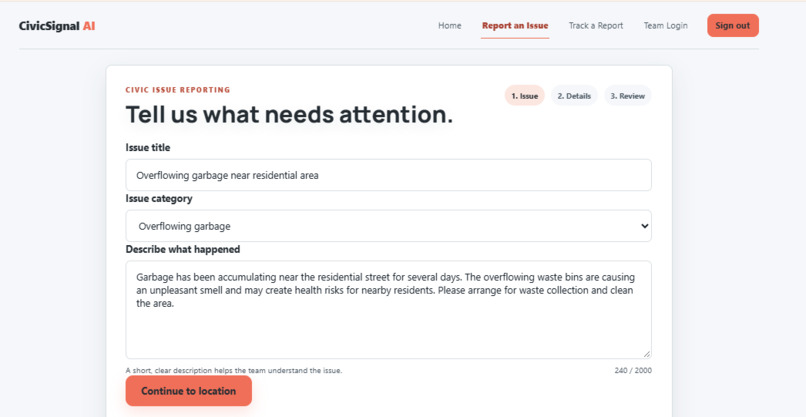
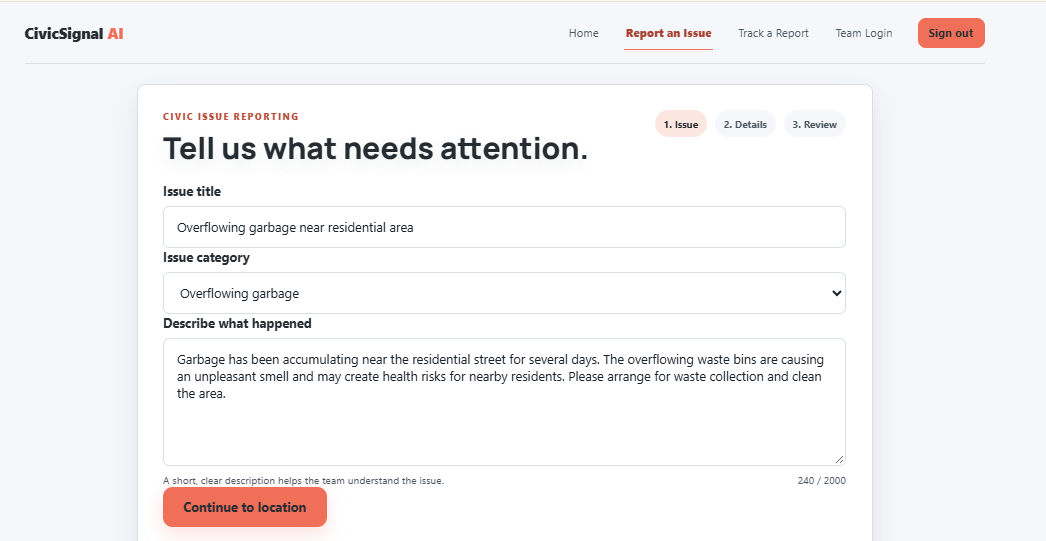
Report an Issue Page - 1
-
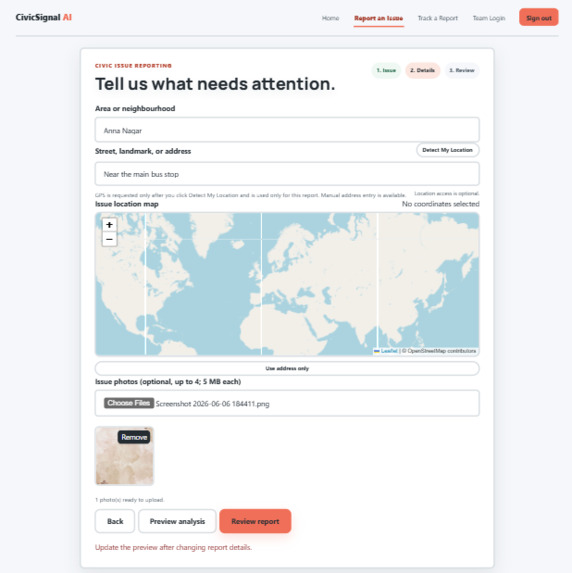
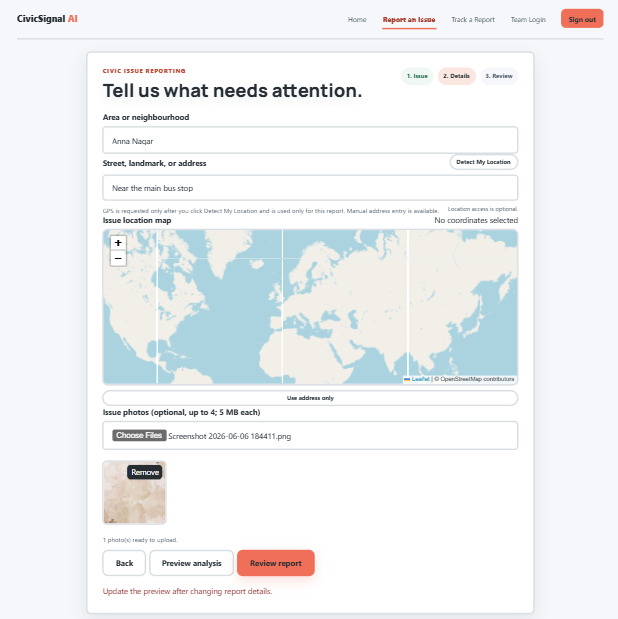
Report an Issue Page - 2
-
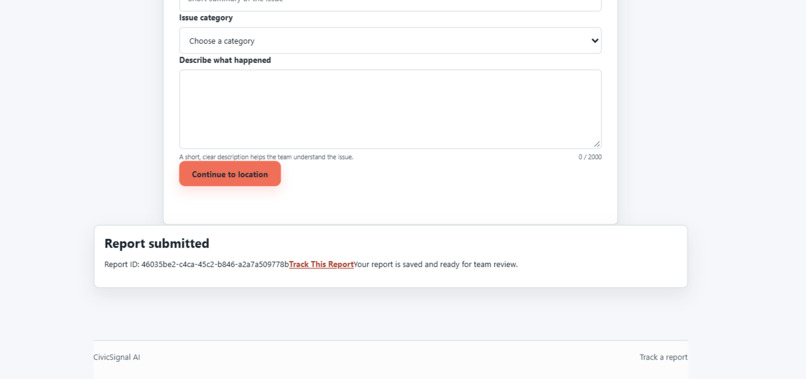
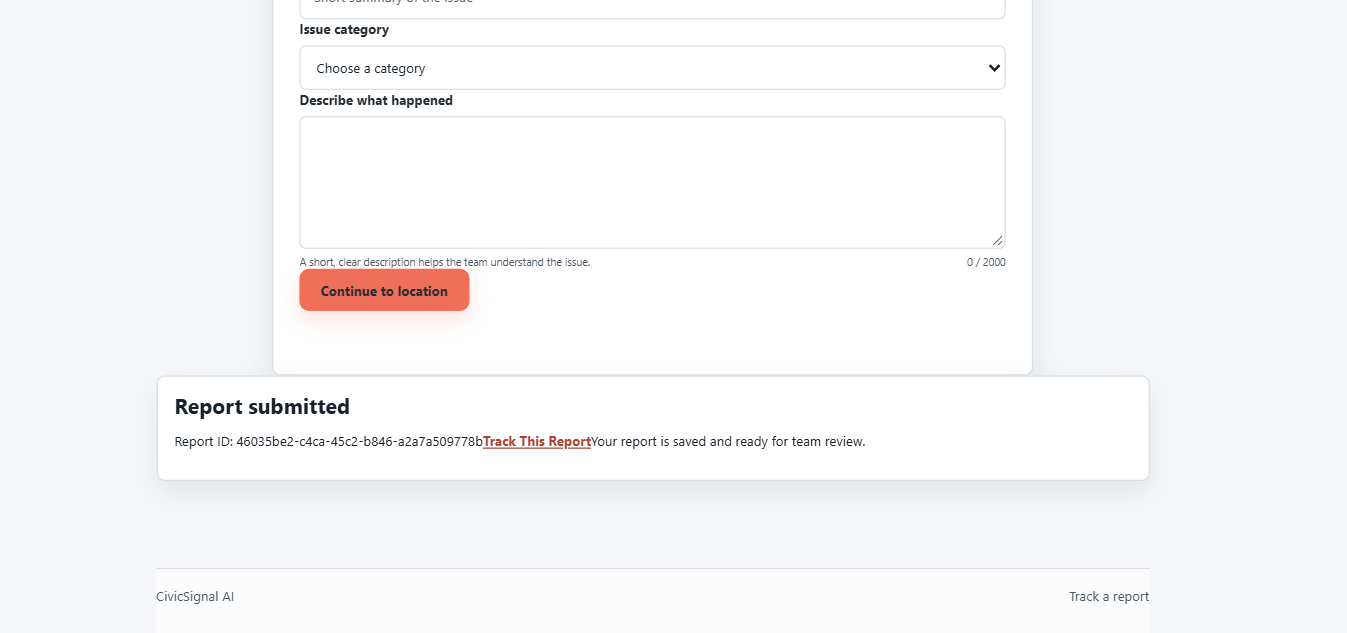
Report Issue Proof
-
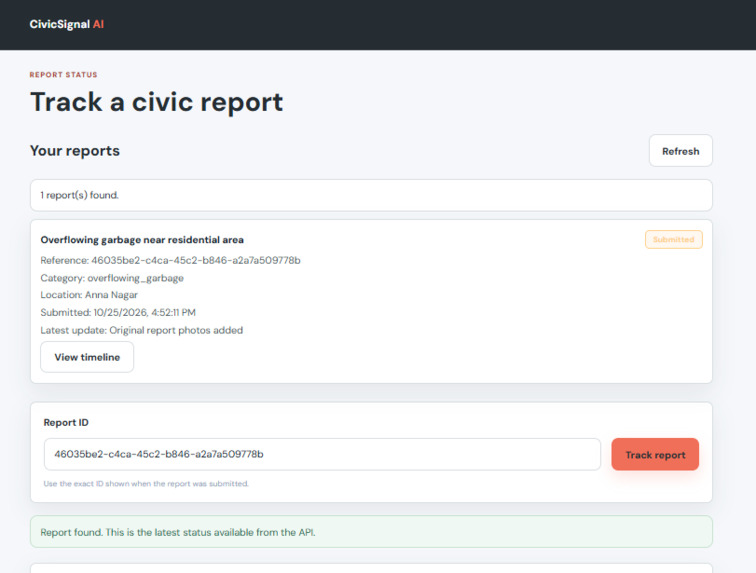
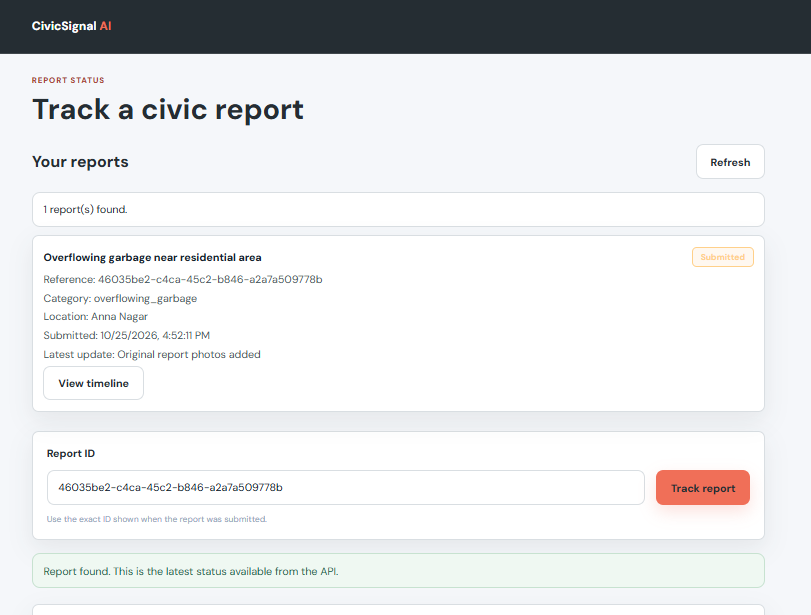
Track Report
-
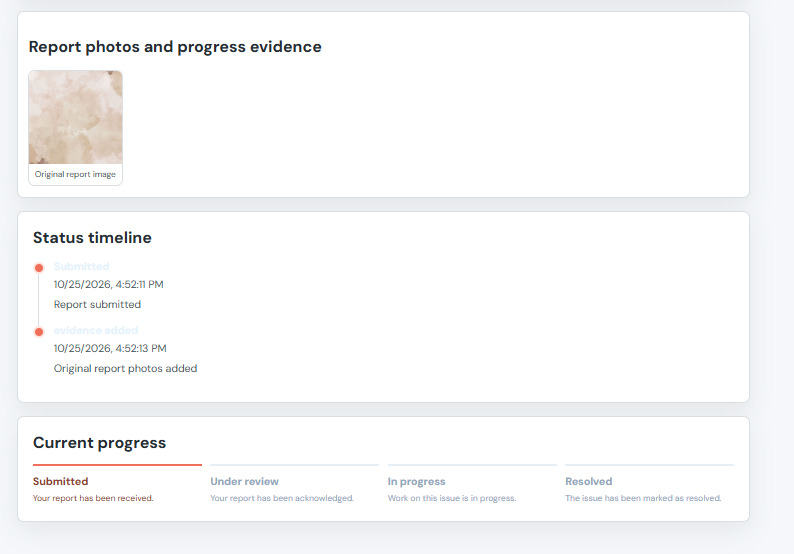
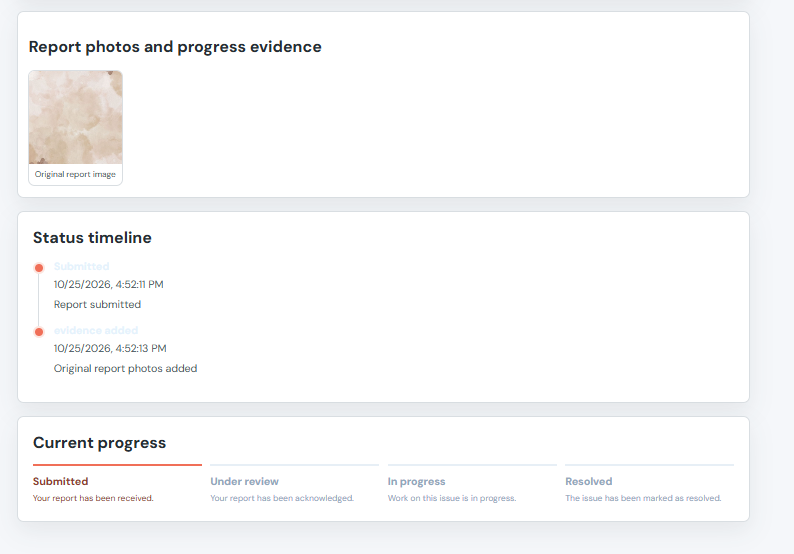
Track the Report
-
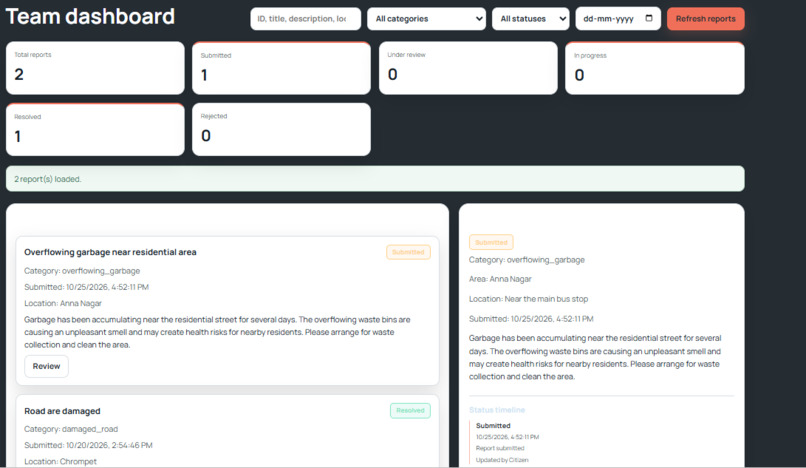
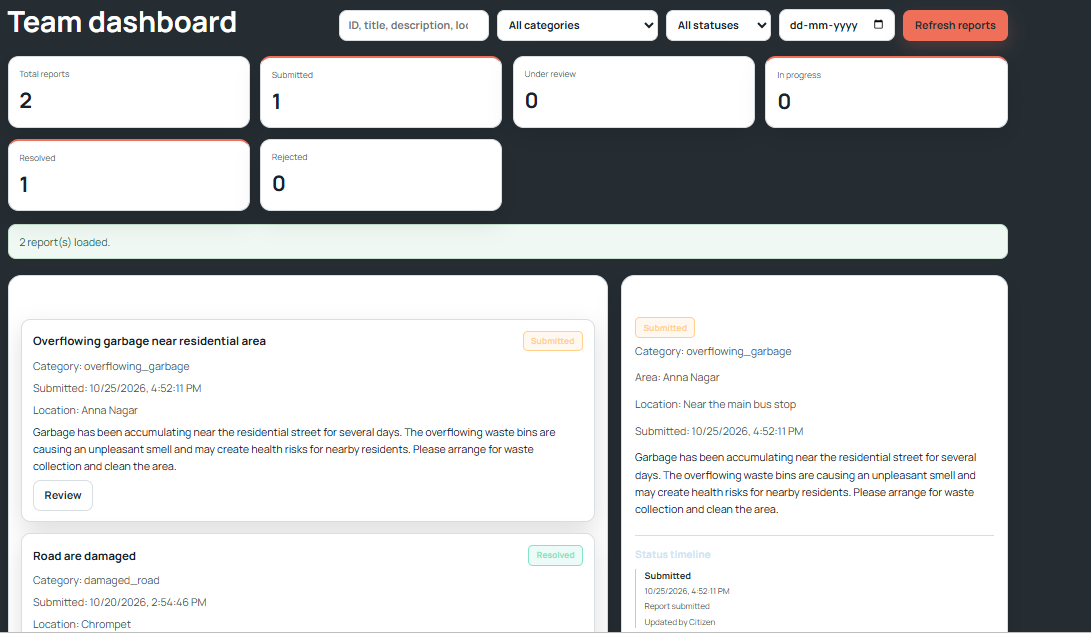
Administrator login - Dashboard
-
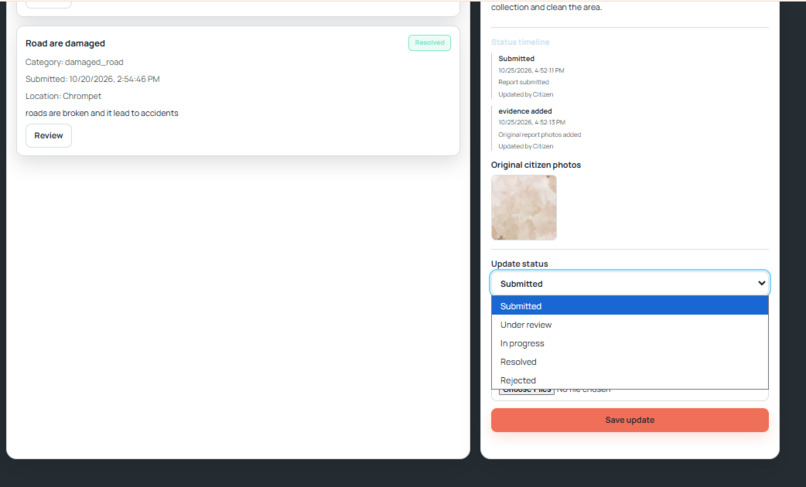
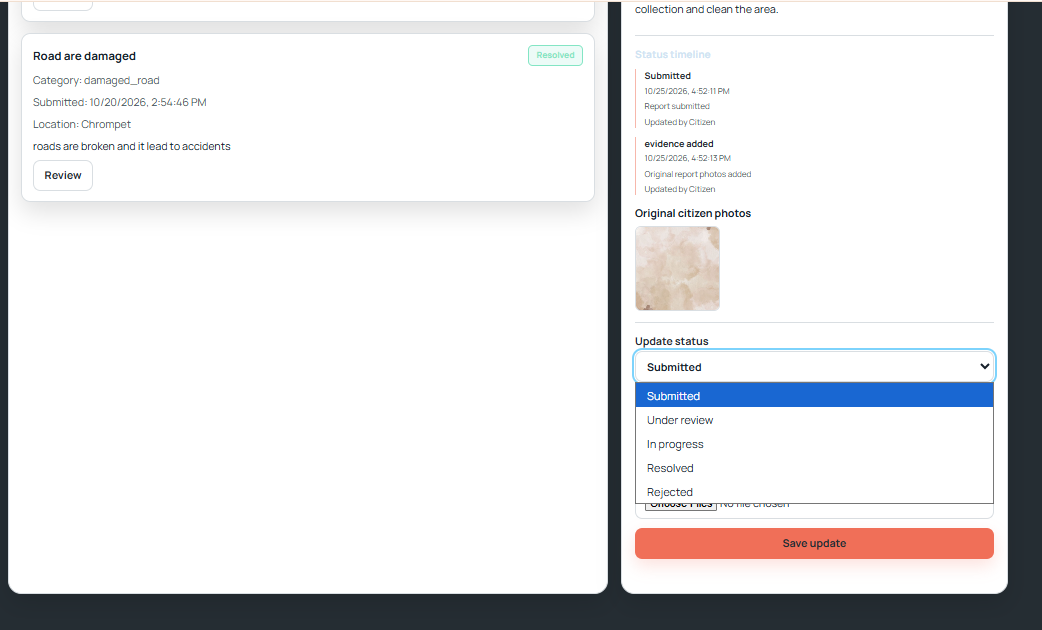
Administrator login - Controller and Status Changing Page
CivicSignal AI — Making Communities Smarter Through Civic Technology
1. Introduction
CivicSignal AI is an AI-powered civic issue reporting platform designed to bridge the gap between citizens and civic authorities. It provides a centralized way for people to report local problems, track their progress, and promote transparency in community issue management.
By combining web technology, structured data management, and a foundation for AI-powered insights, CivicSignal AI aims to make civic problem reporting more accessible, organized, and efficient.
2. Problem Statement
Communities frequently experience civic issues such as damaged roads, overflowing garbage, water leakage, drainage problems, and broken streetlights. However, reporting these issues and tracking their resolution can be difficult.
Citizens may not know where to report a problem, how to follow up, or whether action has been taken. Meanwhile, managing multiple reports and keeping their status updated can be challenging for civic teams.
The lack of a centralized and transparent reporting process can lead to delayed responses, repeated complaints, and reduced public trust.
3. Our Solution
CivicSignal AI addresses these challenges through a centralized digital platform where citizens can submit civic issue reports and monitor their progress.
The platform organizes reports and their status information, creating a clearer process for managing community concerns. Its modular architecture also provides a foundation for future AI capabilities that could help categorize reports, identify recurring problems, and support smarter decision-making.
Our goal is to make civic reporting simpler for citizens and issue management more organized for the teams responsible for resolving problems.
4. Inspiration
We were inspired by the everyday civic problems that affect people's quality of life. A damaged road, an overflowing garbage bin, or a broken streetlight may seem like a small issue, but unresolved problems can affect the safety, health, and convenience of an entire community.
We wanted to build a solution that gives citizens a clearer way to raise concerns and follow their progress. This idea led to CivicSignal AI, a project focused on accessibility, accountability, and smarter civic engagement.
5. What It Does
CivicSignal AI provides a centralized platform for civic issue reporting and tracking.
- Civic Issue Reporting: Enables citizens to submit information about local problems.
- Issue Tracking: Helps users follow the status of their reported issues.
- Transparent Status Updates: Makes report progress easier to understand.
- Centralized Issue Management: Organizes reports and related information in one place.
- Foundation for AI Insights: Supports future enhancements for intelligent categorization, prioritization, and analysis of civic concerns.
Together, these capabilities aim to create a more organized and transparent civic reporting experience.
6. How We Built It
We developed CivicSignal AI using a modular architecture that separates the frontend, backend API, and data persistence layers.
Technologies used:
- Python: Core backend programming.
- FastAPI: Building backend APIs and application functionality.
- SQLite: Storing and managing civic report data.
- Pytest and HTTPX: Supporting automated testing and API validation.
- Git and GitHub: Managing version control and coordinating team contributions.
- Web Technologies: Building the user-facing interface.
The development process involved dividing responsibilities across team members and integrating their contributions into a unified application. This modular approach helped us organize the codebase and make the project easier to test, maintain, and extend.
7. Challenges We Ran Into
One of our main challenges was integrating independently developed components into a single working application. Different modules needed to follow consistent interfaces and work together without breaking existing functionality.
We also had to address database consistency, API integration, project structure, and testing. Coordinating team contributions and debugging integration issues taught us the importance of clear specifications, modular development, and continuous validation.
8. Accomplishments We're Proud Of
We are proud to have developed the core foundation of a practical civic technology solution.
- Built a centralized approach to civic issue reporting and tracking.
- Developed a structured backend using FastAPI.
- Established a database persistence layer for report management.
- Integrated modular contributions into a unified project.
- Used testing tools to support backend reliability.
- Created a foundation that can be extended with AI-powered civic intelligence.
Our biggest accomplishment is turning a real-world community challenge into a software solution with the potential to make civic engagement more accessible and transparent.
9. What We Learned
Through this project, we learned how to structure a modular application, develop and test APIs, manage persistent data, and coordinate software development across a team.
We also learned that solving real-world problems requires more than building features. A useful platform must consider accessibility, reliability, transparency, maintainability, and the needs of the people who will use it.
CivicSignal AI helped us understand how technology can support better communication between communities and the systems responsible for addressing their concerns.
10. What's Next for CivicSignal AI?
We envision expanding CivicSignal AI with additional features that make civic reporting more intelligent and accessible.
- AI-Powered Categorization: Automatically classify reports based on their content.
- Image-Based Issue Recognition: Explore identifying civic problems from uploaded images.
- Interactive Maps: Visualize reported problems by location.
- Smart Prioritization: Help identify urgent issues based on severity and community impact.
- Real-Time Notifications: Inform citizens when their report status changes.
- Analytics Dashboard: Identify recurring issues and trends across communities.
- Multilingual Support: Make civic reporting accessible to people who speak different languages.
These improvements could help transform CivicSignal AI from a reporting platform into a more intelligent civic issue management system.
11. Conclusion
CivicSignal AI represents our vision of using technology to build more connected, accountable, and responsive communities. By providing a centralized approach to civic issue reporting and tracking, the platform aims to make it easier for citizens to raise concerns and understand the progress of their reports.
Although there is room for further development, our project establishes a foundation for smarter civic engagement through organized data, transparent workflows, and future AI-powered capabilities.
Our vision is simple: every civic concern deserves to be heard, every report deserves transparency, and every community deserves a smarter way to move toward solutions.


Log in or sign up for Devpost to join the conversation.