-
-

Thumbnail
-
Dashboard
-
Working Architecture
-
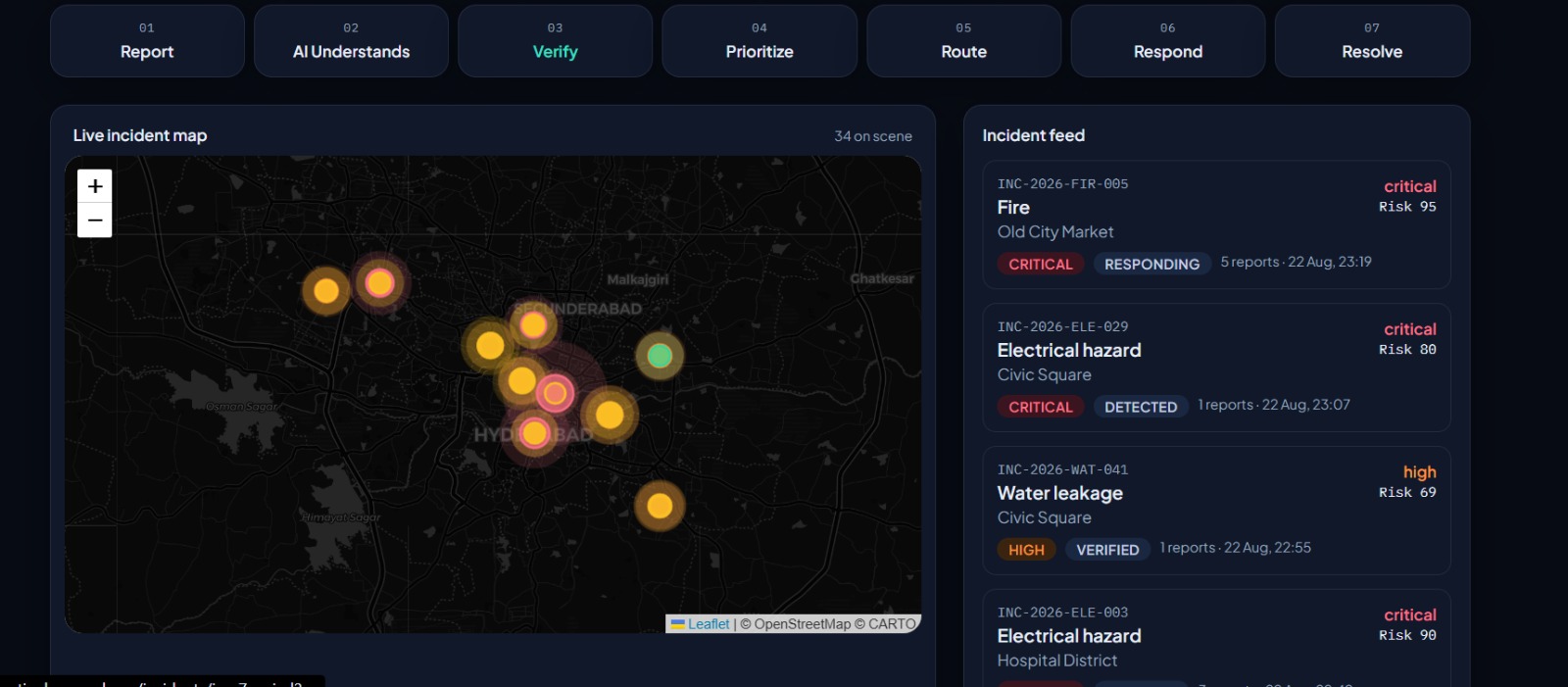
Live map
-
Report
-
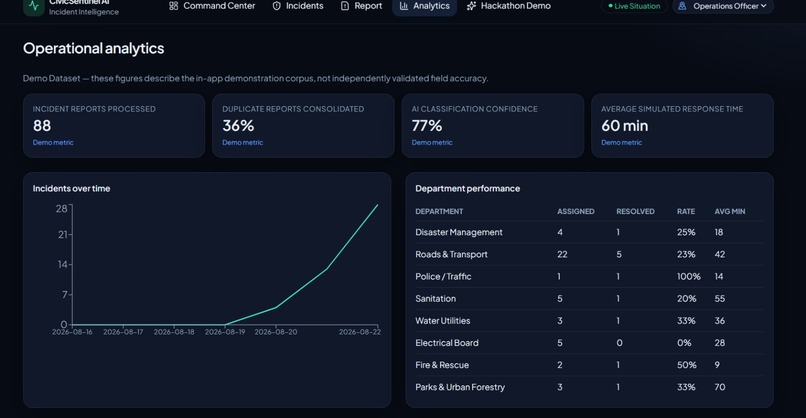
Analytics

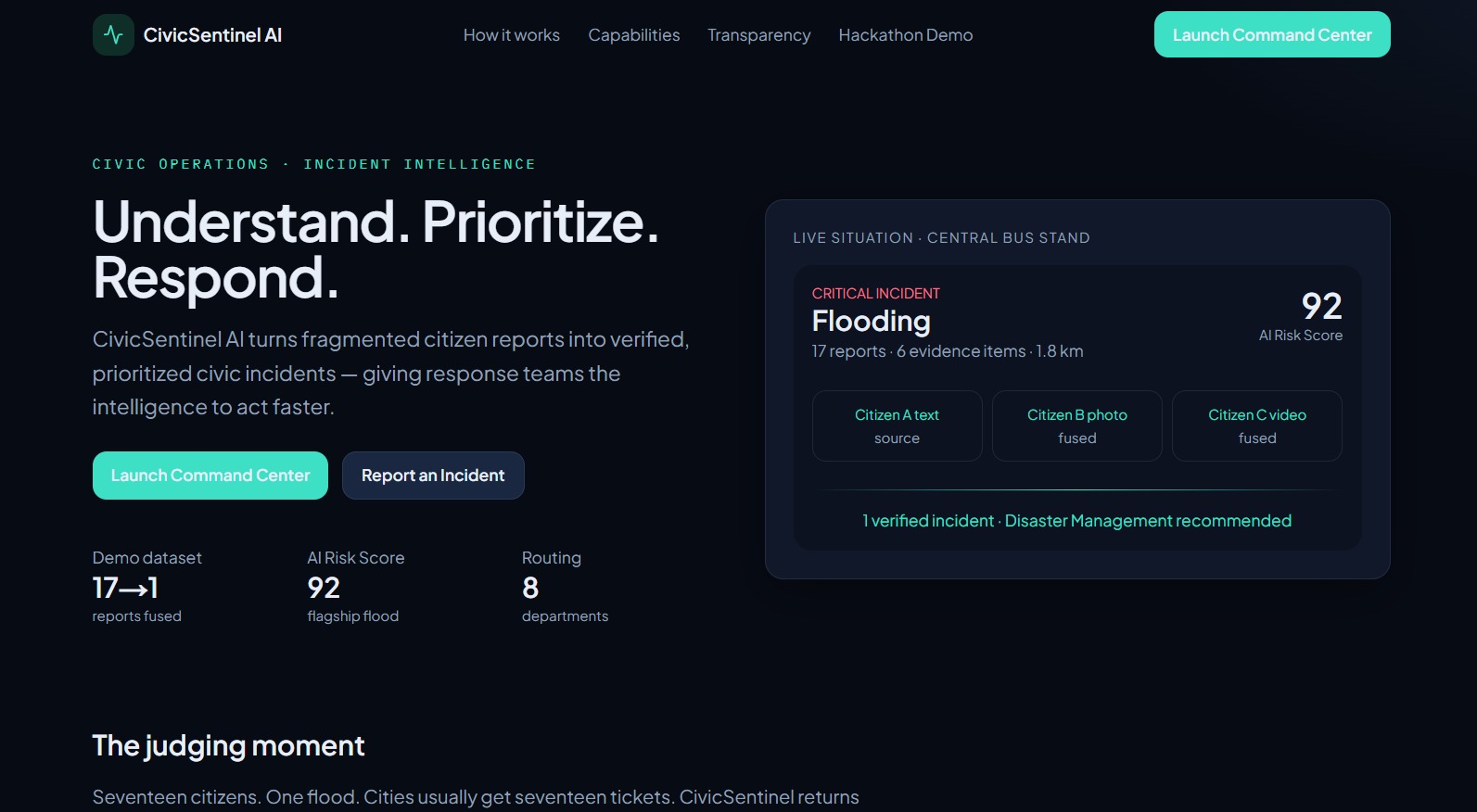
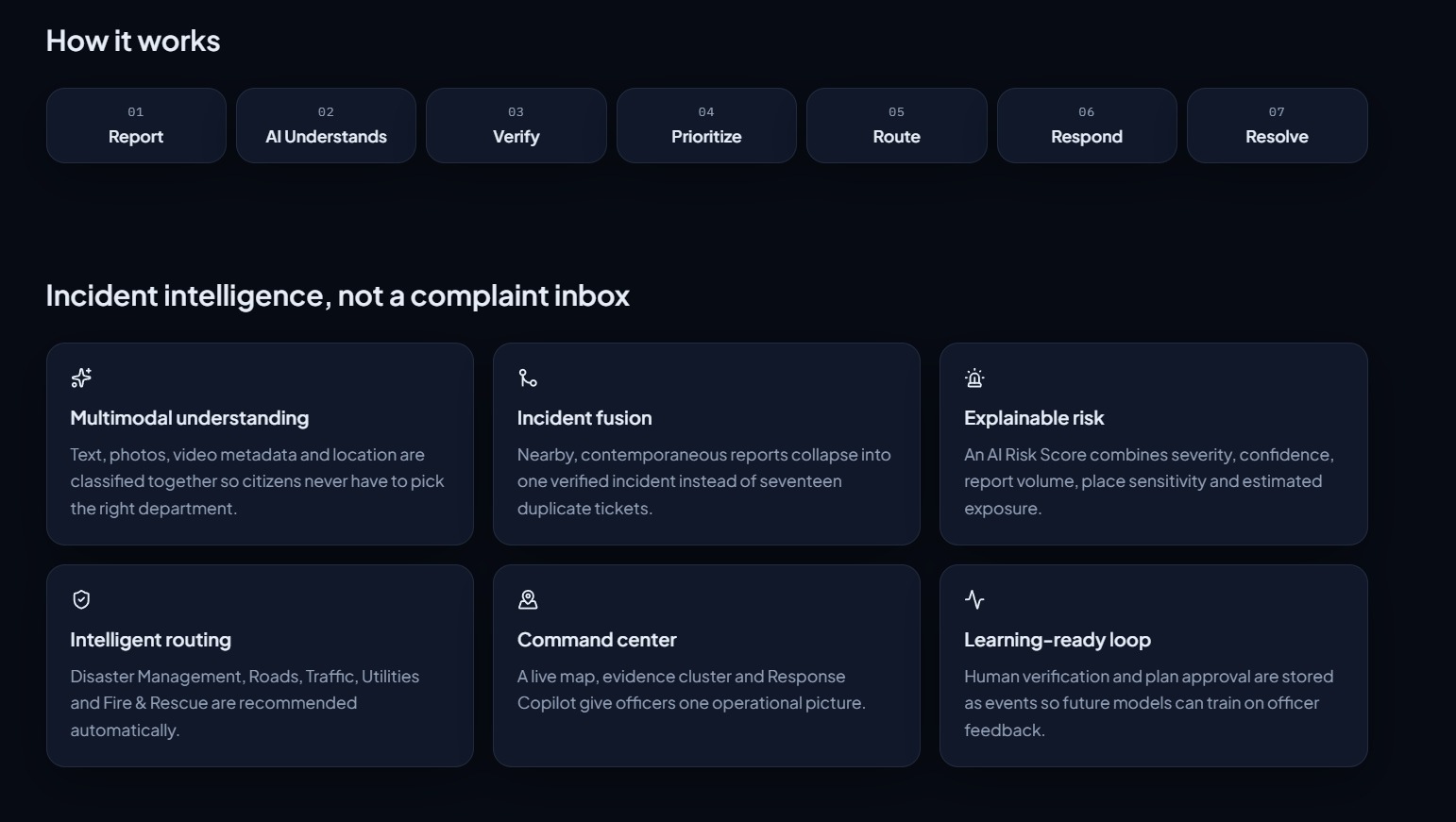
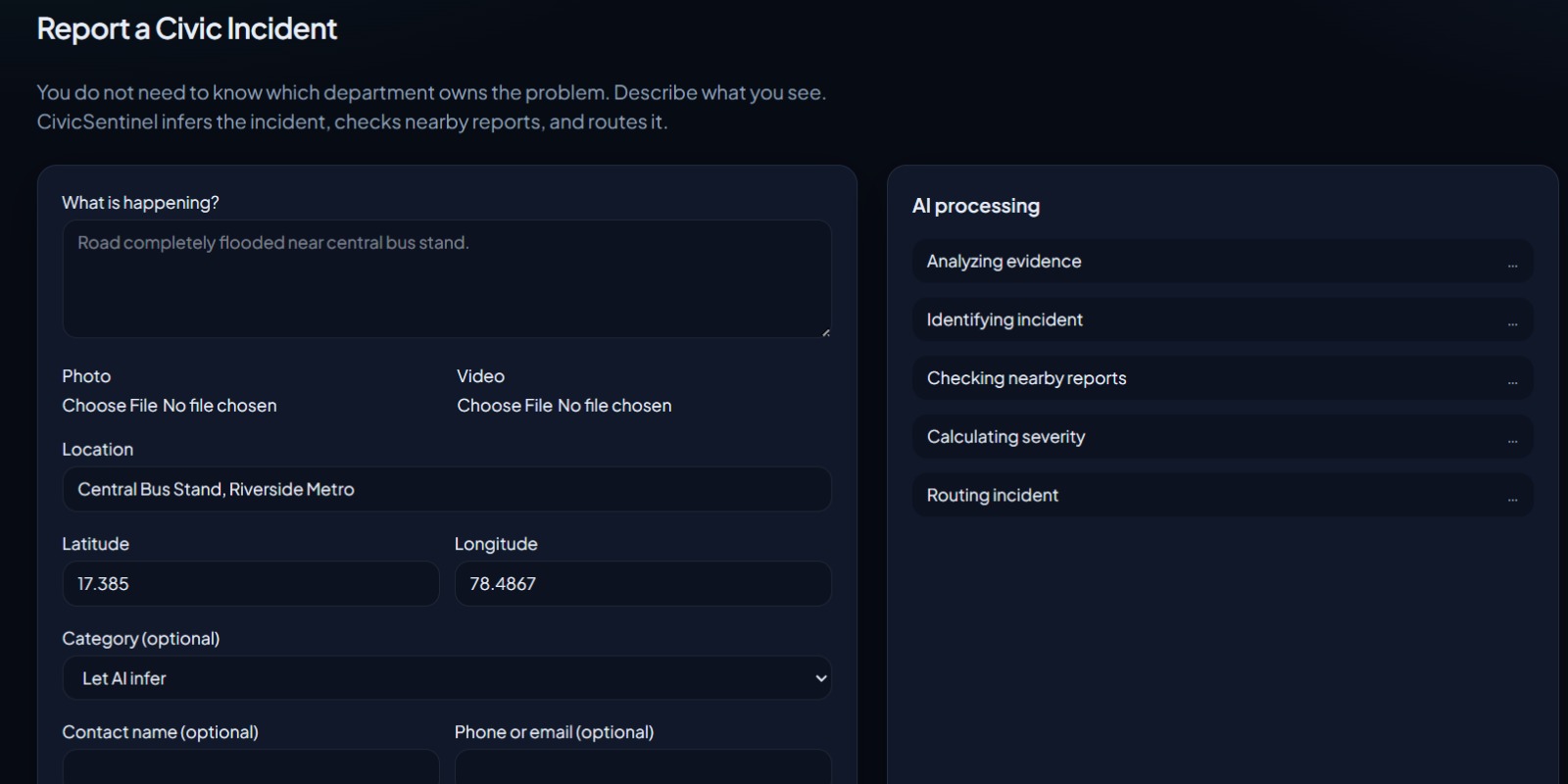
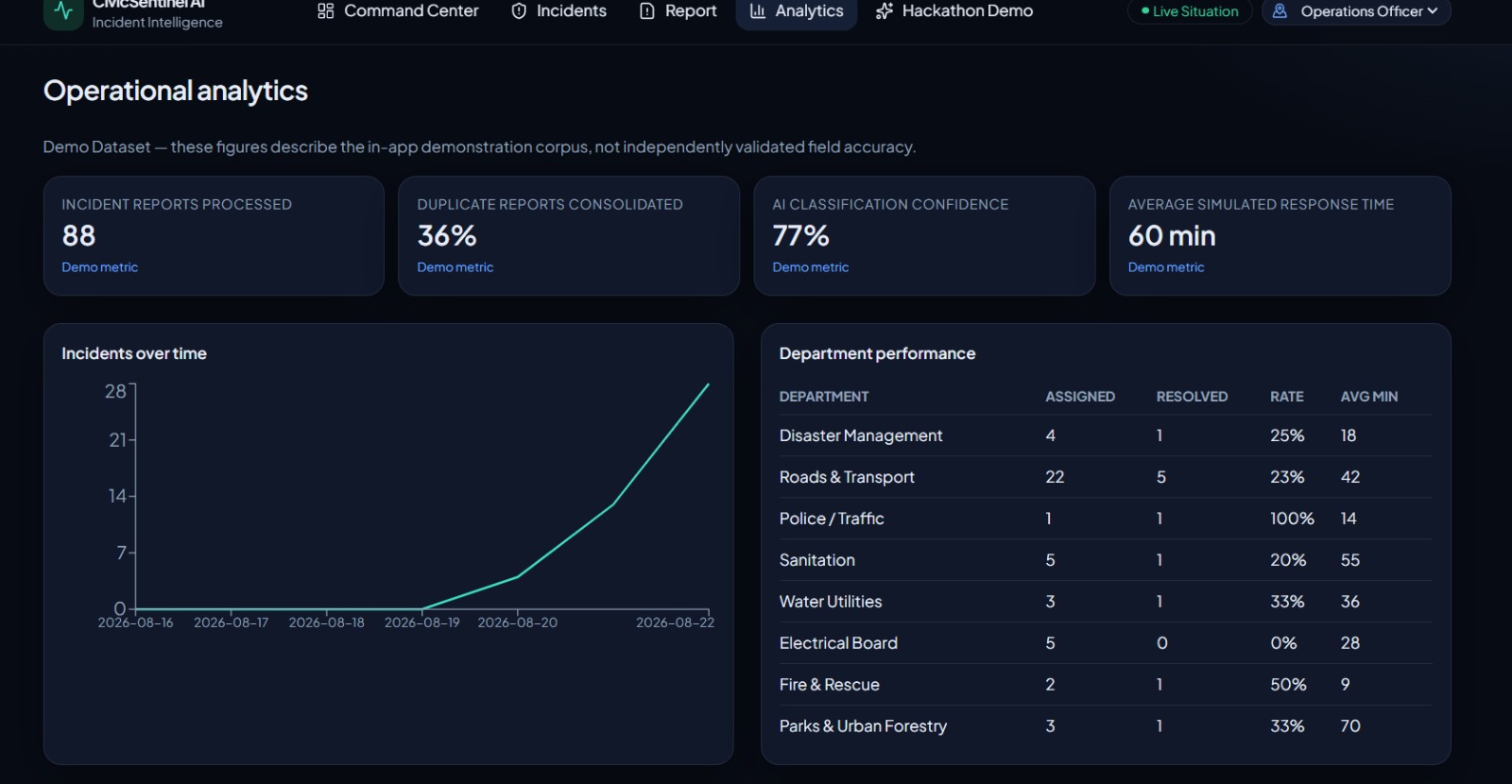
Inspiration
Every day, city operations and emergency dispatchers are overwhelmed by thousands of fragmented citizen reports. A single emergency—like a flooded street or a downed power line—can generate dozens of duplicate tickets. This hides the true scale of the problem, delays response times, and often results in the wrong department being dispatched. We wanted to build a system that cuts through the noise and gives dispatchers instant, actionable intelligence.
What it does
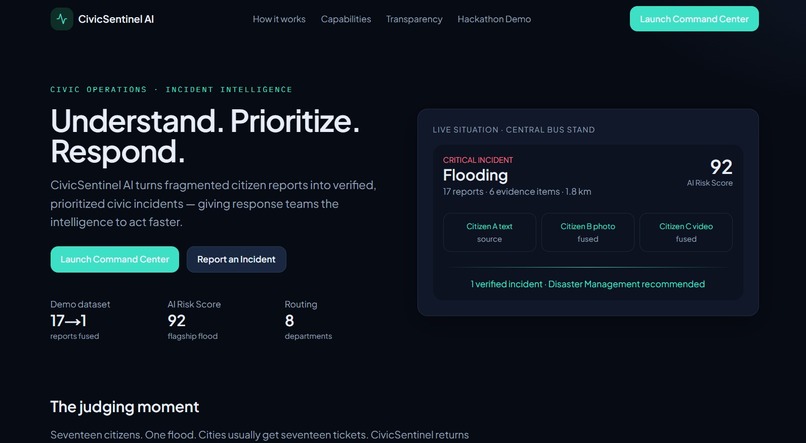
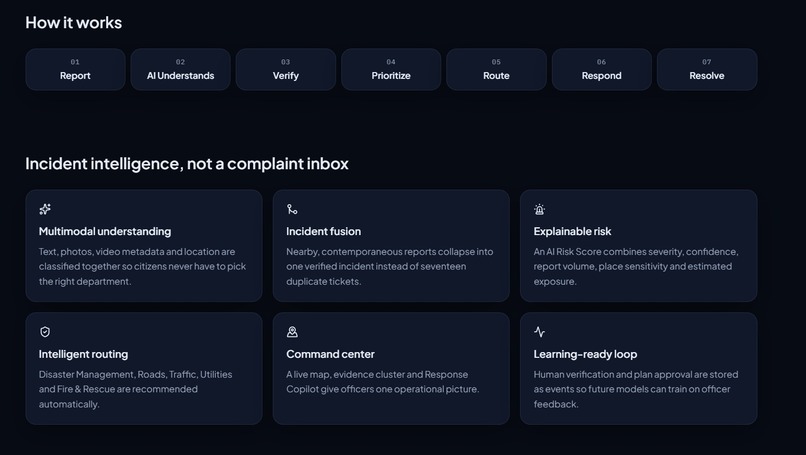
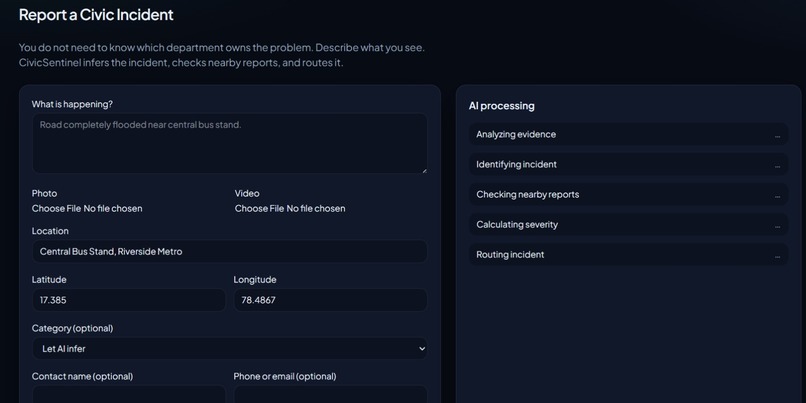
CivicSentinel AI is a real-time incident intelligence platform. It acts as an AI-powered command center that automatically ingests incoming civic reports and uses AI to perform Incident Fusion.
For example, if 17 people report a flooded bus stand from different angles, instead of creating 17 separate tickets, CivicSentinel fuses them into 1 verified flooding incident. The system then automatically:
- Classifies the emergency type.
- Assigns a Risk Score (e.g., 92/100) based on severity.
- Routes it to the correct department (e.g., Disaster Management vs. Public Works).
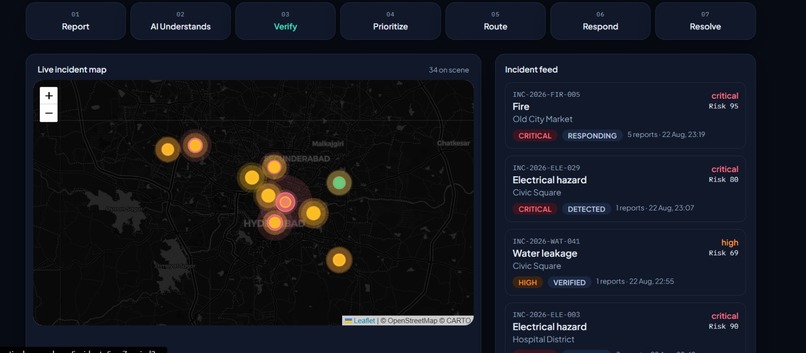
- Plots it on a live heatmap for spatial awareness.
How we built it
We built the frontend using Next.js and React, styled beautifully with Tailwind CSS to create a sleek, dark-mode command center aesthetic. For the mapping interface, we used Leaflet to plot incidents dynamically.
The core intelligence is powered by Llama-3.3-70b-versatile running on the lightning-fast Groq API. We designed custom prompts to analyze raw text reports, determine confidence thresholds, and fuse duplicate locations and descriptions into a single source of truth. Finally, the entire platform is deployed globally on Vercel.
Challenges we ran into
One of the hardest parts was the "Incident Fusion" logic. It's difficult for traditional code to understand that "water on 5th street" and "bus stop is completely submerged" are the same event. Leveraging the Groq API allowed us to use natural language understanding to group these reports accurately, but fine-tuning the confidence thresholds so it didn't group unrelated incidents took significant iteration.
Accomplishments that we're proud of
We are incredibly proud of the UI/UX. Emergency dashboards are notoriously clunky and hard to read. We managed to build an interface that is not only highly functional and data-rich but also feels like a modern, premium piece of software. We're also proud of achieving a high AI Verification Rate, proving that LLMs can drastically reduce human bottleneck in dispatch centers.
What we learned
We learned a lot about spatial data visualization and how to handle rapid state updates in React without crashing the map components. More importantly, we learned that LLMs (especially fast ones like Llama 3 on Groq) are more than just chatbots—they are incredibly powerful reasoning engines for structuring unstructured data in real-time.
What's next for CivicSentinel AI
In the future, we want to integrate a "Response Copilot" that automatically drafts SMS updates to the citizens who reported the issue, keeping them in the loop. We also plan to integrate live traffic and weather APIs to help first responders find the fastest, safest routes to critical incidents.
Built With
- groq
- leaflet.js
- llama-3
- next.js
- node.js
- react
- recharts
- tailwind.css
- typescript
- vercel


Log in or sign up for Devpost to join the conversation.