-
-
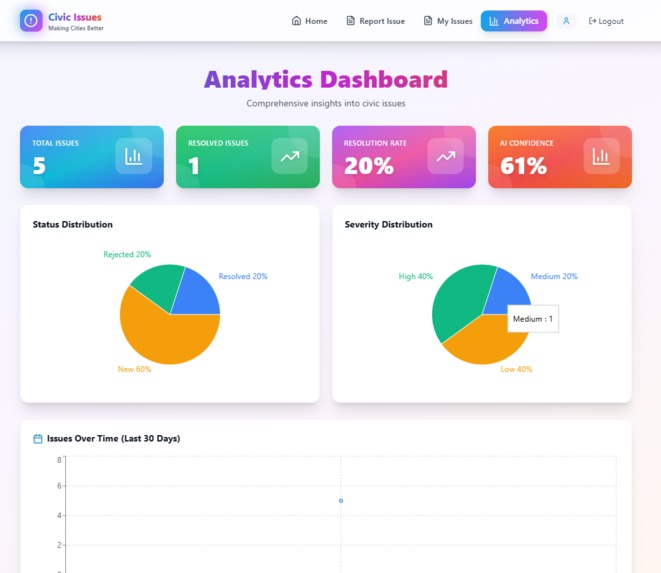
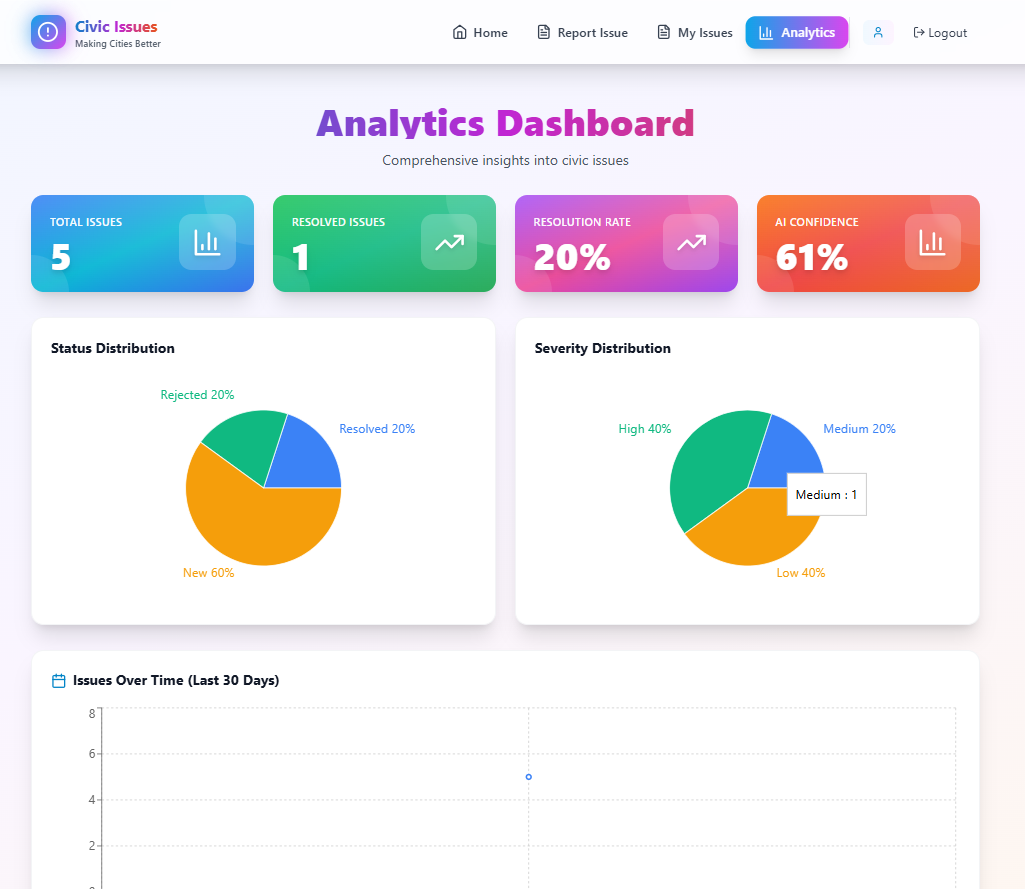
analytics dashboard
-
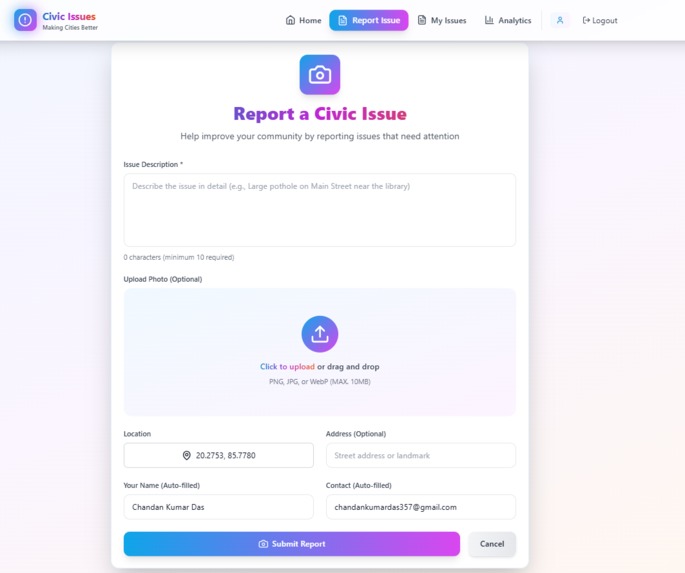
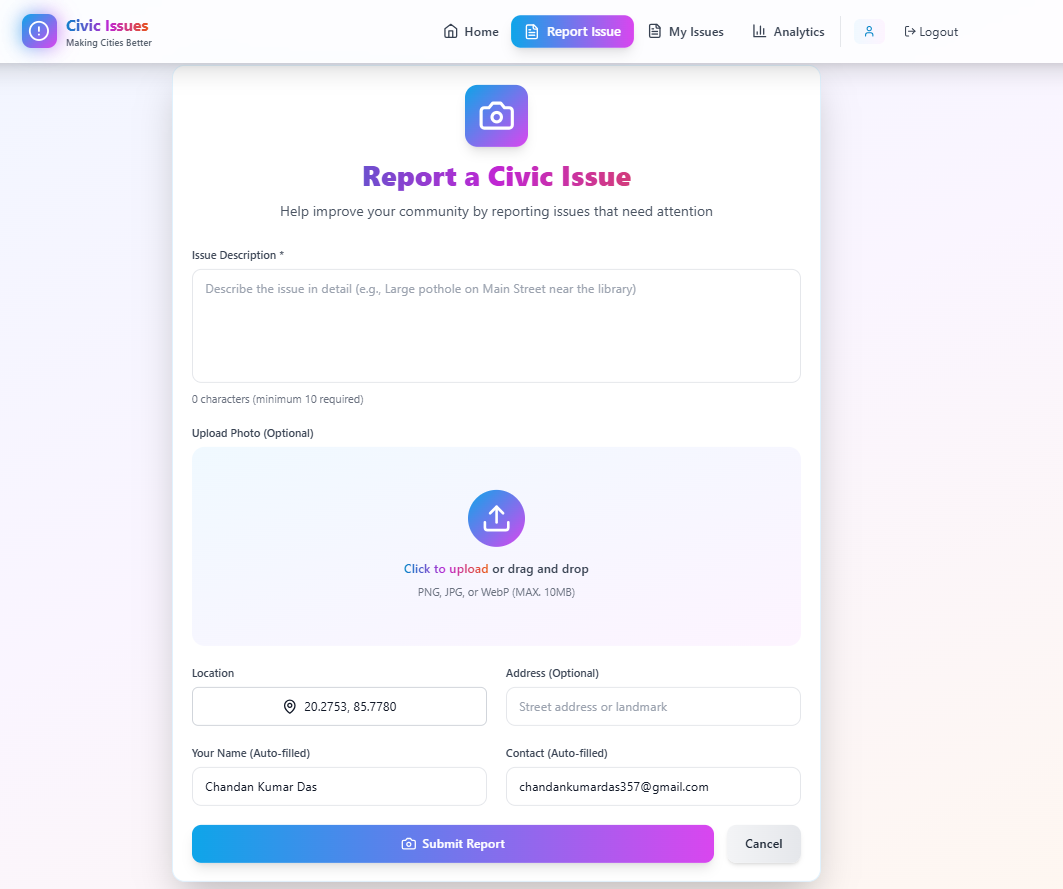
report submit page
-
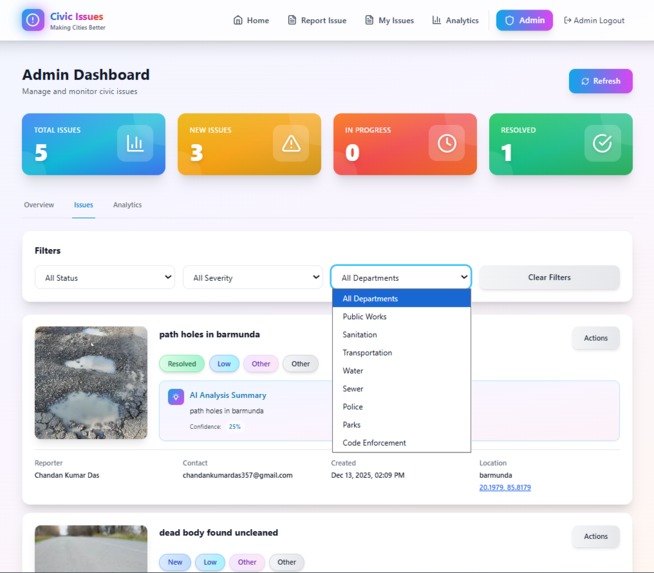
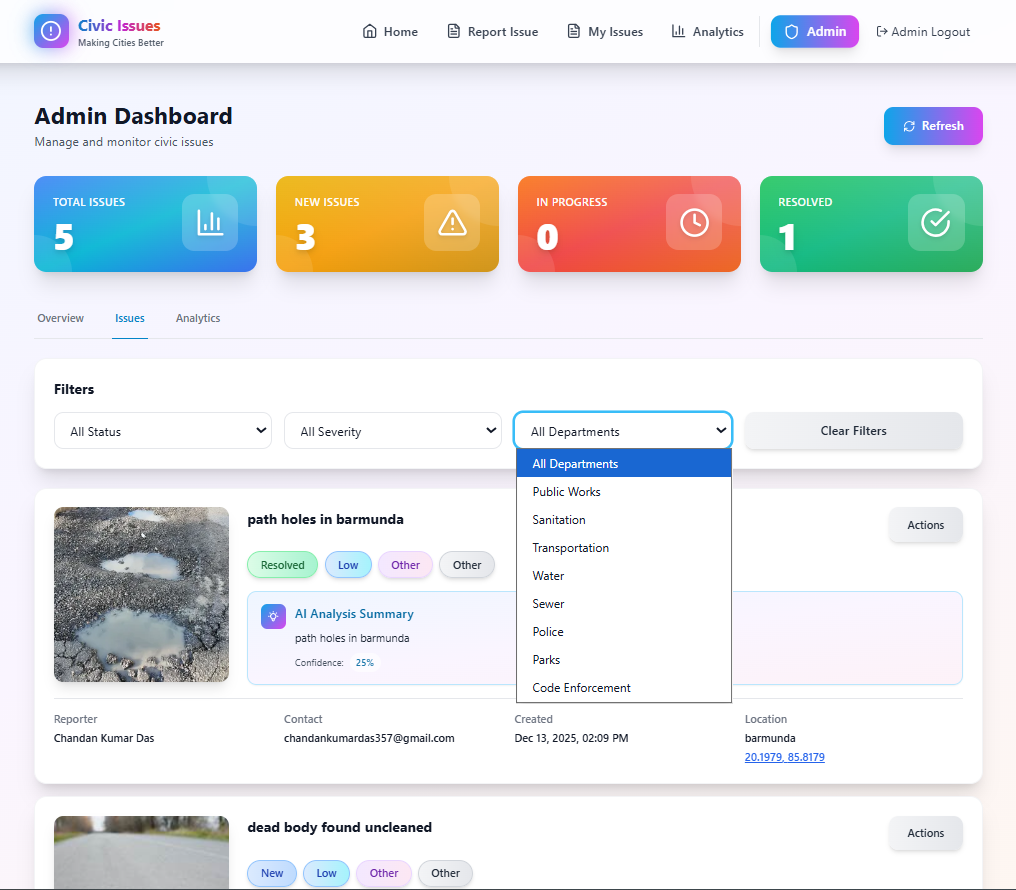
admin dashboard
-
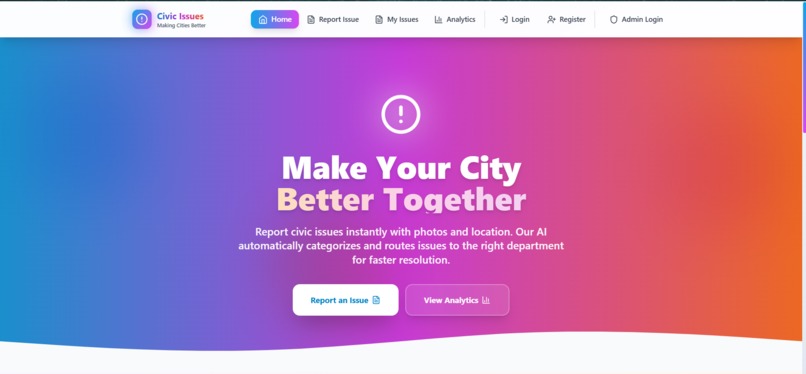
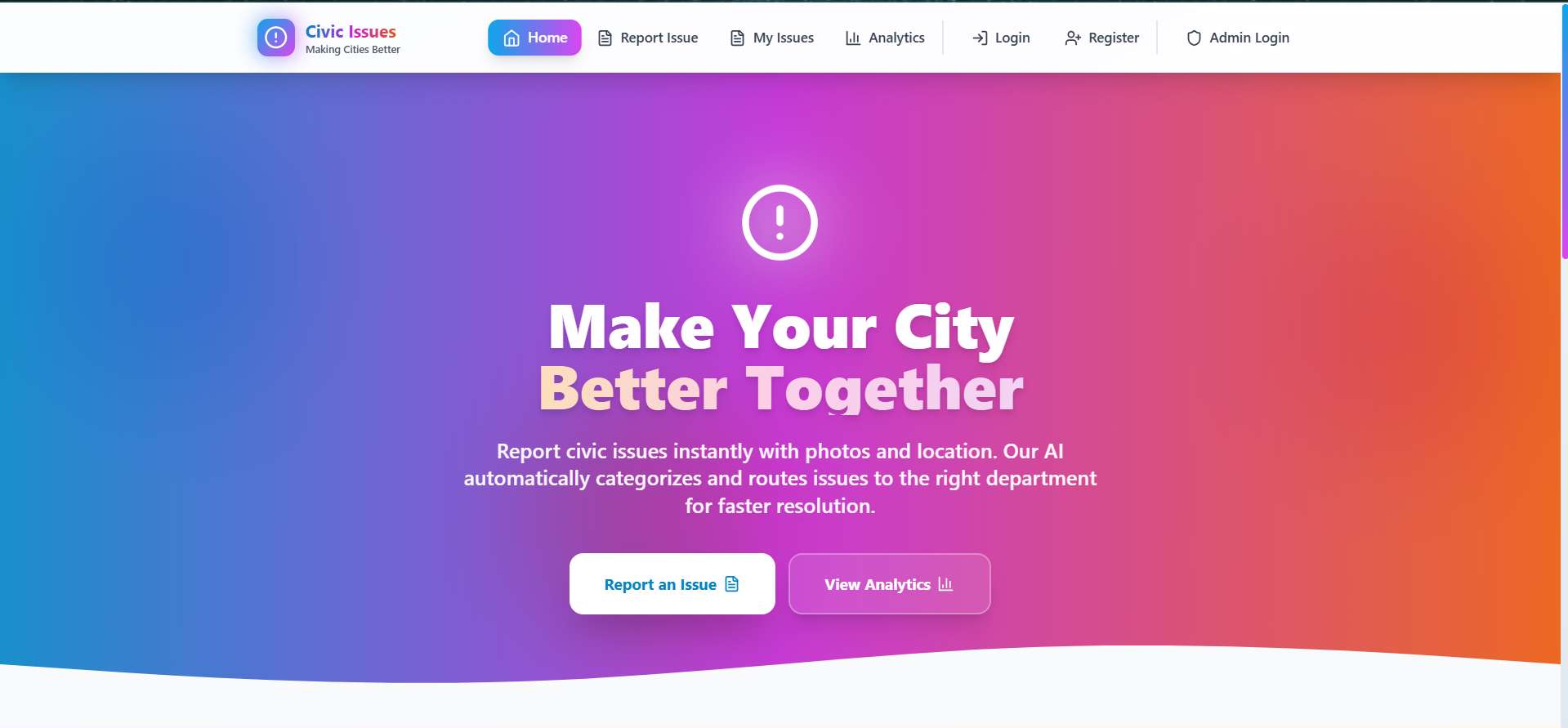
home page
Inspiration
Urban residents encounter civic problems daily — from potholes and broken streetlights to water leakage and overflowing garbage bins. While these issues significantly impact safety and public well-being, the reporting process remains tedious and inefficient. Citizens often need to visit offices, call helplines, or navigate complex portals, only to see their complaints lost, misrouted, or delayed.
This persistent communication gap between citizens and municipal authorities inspired us to build CivicSense AI — an intelligent, AI-powered civic issue reporting platform that simplifies reporting, ensures proper routing, and accelerates resolution.
What it Does
CivicSense AI empowers citizens to report civic issues seamlessly using text, images, and location data. Our platform leverages multimodal AI (powered by the Gemini API) to interpret both text and images, automatically classify the type of issue (road, sanitation, water, etc.), assign a priority level based on severity, and route it to the relevant city department.
For authorities, CivicSense AI provides a map-based dashboard built on GeoJSON-enabled MongoDB, allowing real-time visualization of complaints, filtering by department or priority, and tracking issue resolution status.
Together, this ecosystem ensures faster, data-driven, and transparent governance.
How We Built It
Frontend: Developed an intuitive user interface using Vite + React, enabling citizens to easily submit reports with image uploads and geolocation capture.
Backend: Built using FastAPI, ensuring high-performance asynchronous APIs for handling multimodal data, user submissions, and database operations.
AI Processing: Integrated the Google Gemini API for combined image–text understanding to identify issue type, generate summaries, and assign severity levels.
Database: Used MongoDB with GeoJSON support for precise location tracking and department-wise issue categorization.
Deployment:
Backend hosted on Render (FastAPI + MongoDB Atlas)
Frontend deployed as a Render Static Site with seamless API integration.
This modular architecture ensures scalability and smooth end-to-end data flow between citizens and authorities.
Challenges We Ran Into
Multimodal Integration: Combining text and image understanding in real time required careful tuning of the Gemini API’s input formats.
Data Storage Design: Structuring MongoDB to efficiently handle location-based queries while maintaining scalability for city-wide datasets.
CORS and API Integration: Aligning frontend and backend deployments across different Render services without breaking cross-origin requests.
Automated Categorization Accuracy: Achieving reliable AI predictions across diverse image qualities and issue types.
Despite these challenges, the team successfully delivered a robust and production-ready prototype.
Accomplishments That We're Proud Of
Built a fully functional multimodal AI pipeline using Gemini that categorizes civic issues with high accuracy.
Designed a geo-aware backend capable of scaling from local wards to entire cities.
Created a clean, user-friendly interface that lowers barriers for citizen engagement.
Implemented real-time issue tracking and automated department routing to improve civic response times.
Deployed the complete system — backend, frontend, and database — on cloud infrastructure with seamless API communication.
What We Learned
How to effectively combine AI-driven image and text processing for practical civic use cases.
The power of GeoJSON and spatial indexing for mapping and analyzing urban data.
Real-world challenges of integrating multiple cloud services (Render + MongoDB Atlas + Gemini API).
Designing interfaces that balance technical sophistication with usability for non-technical citizens.
Most importantly, we learned how AI can meaningfully enhance civic governance and community participation.
What’s Next for CivicSense AI
Expansion at Scale: Extend from ward-level implementations to city, state, and national deployments.
Predictive Analytics: Use aggregated data to forecast recurring civic issues and assist in preventive infrastructure planning.
Integration with Government Portals: Sync with Smart City dashboards and e-Governance APIs.
Multilingual and Voice Support: Make the platform inclusive for diverse populations.
Emergency Alerts and IoT Sensors: Connect with city sensors to detect and report critical issues automatically.
Our goal is to transform CivicSense AI into a cornerstone of data-driven, citizen-centered governance for smart cities.

Log in or sign up for Devpost to join the conversation.