-
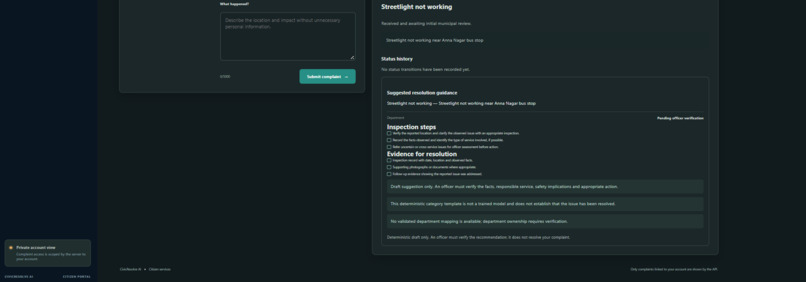
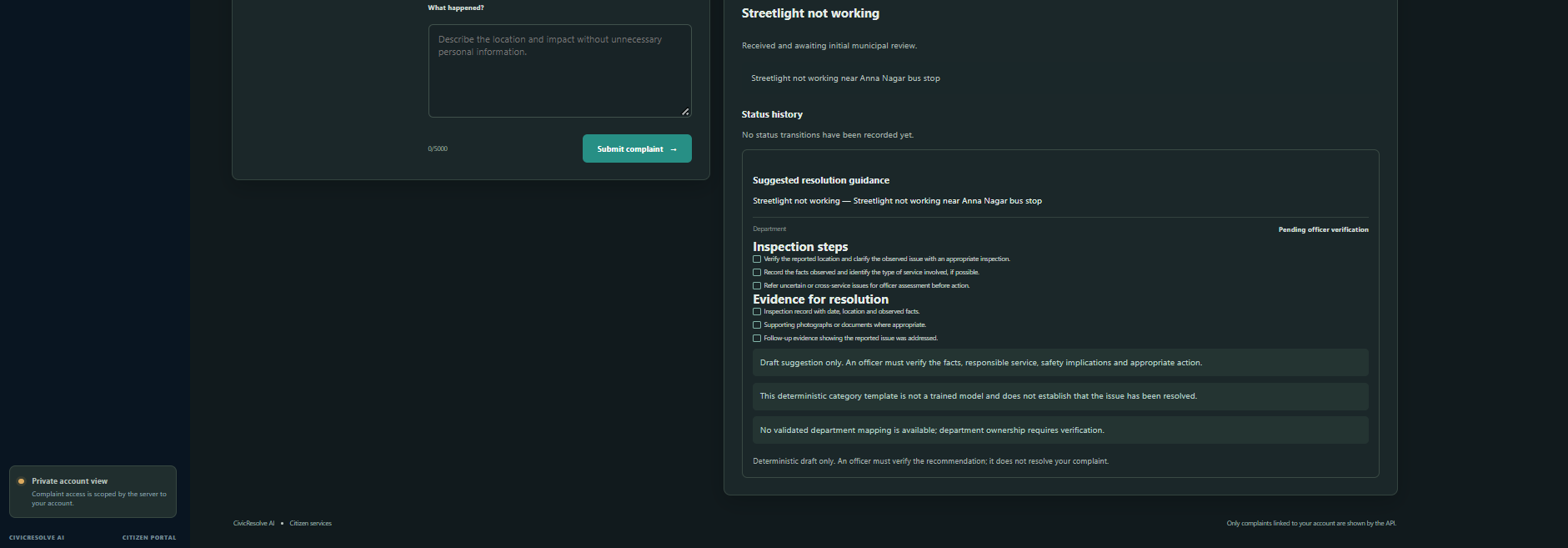
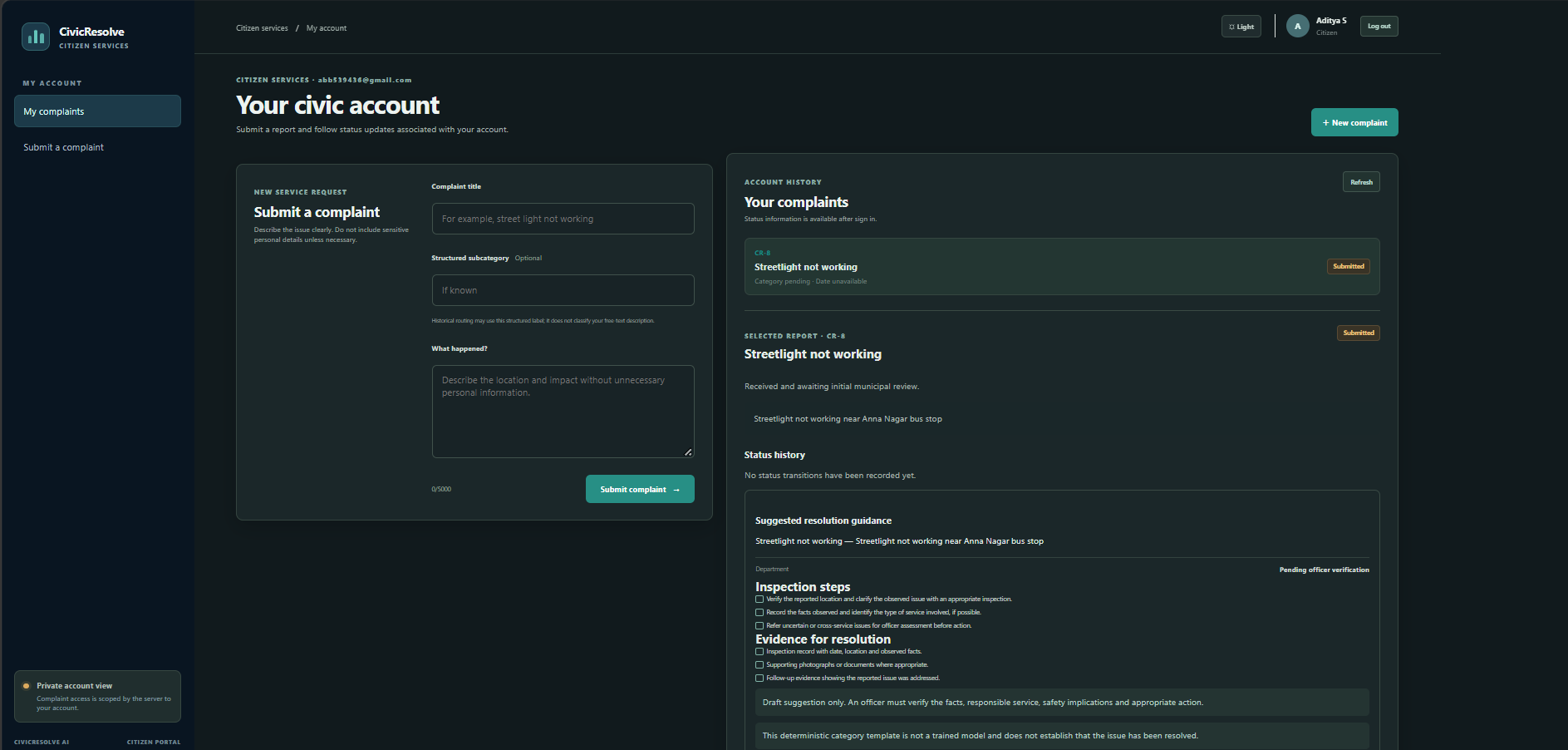
citizen dashboard
-
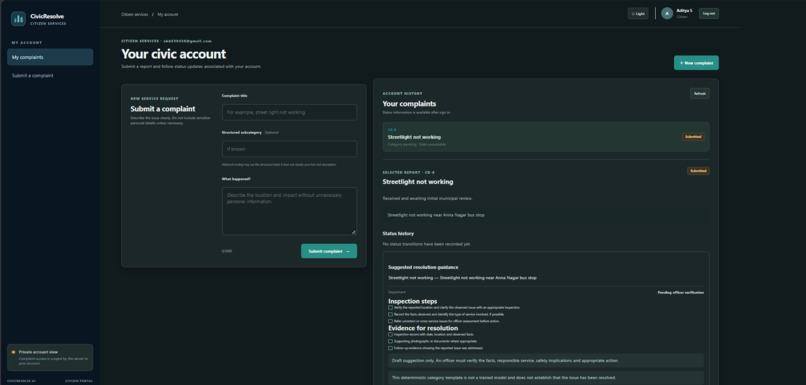
citizen dashboard
-
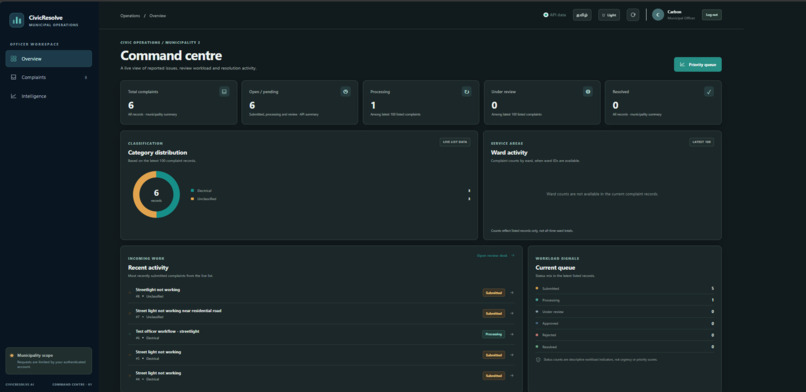
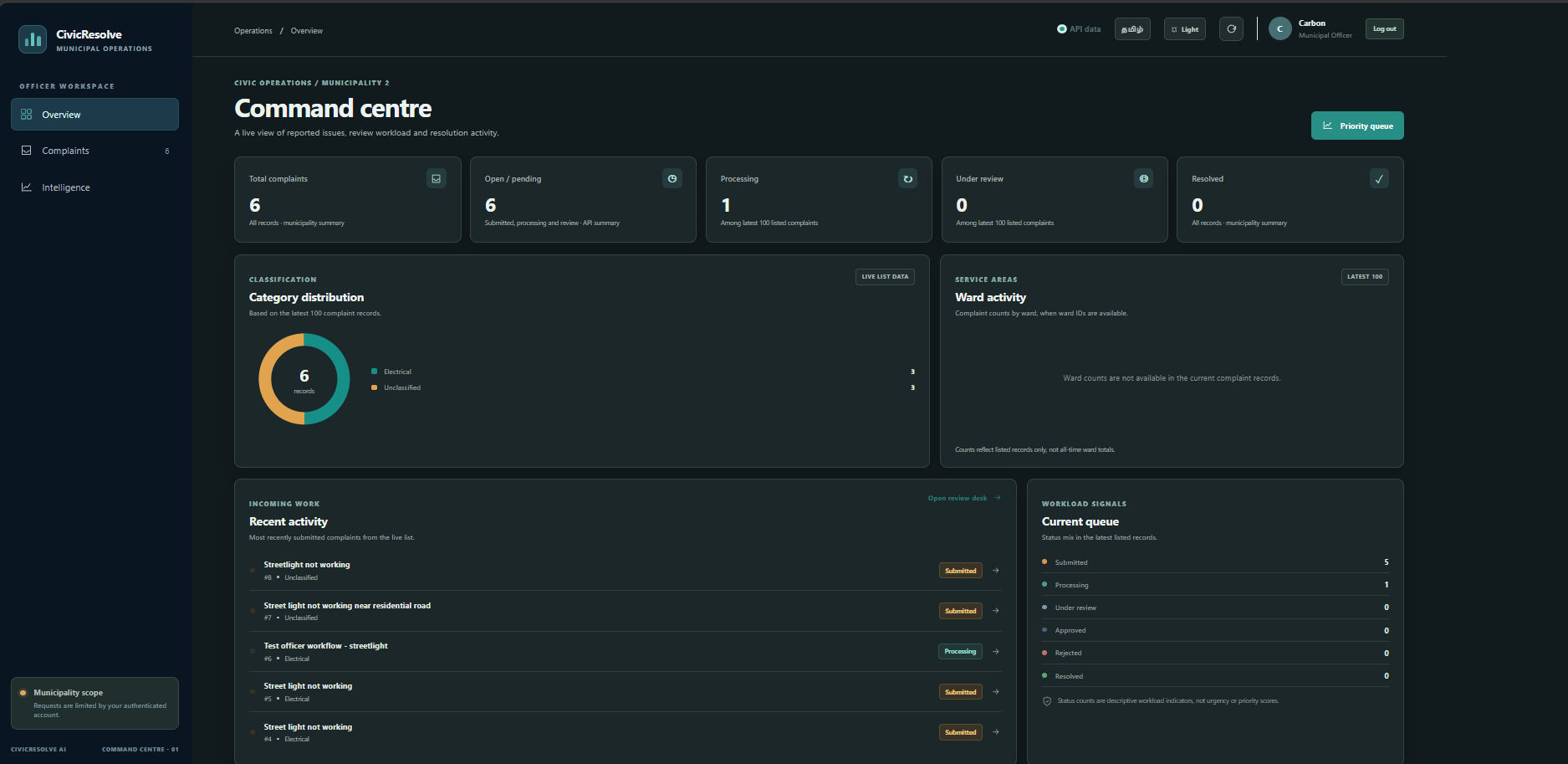
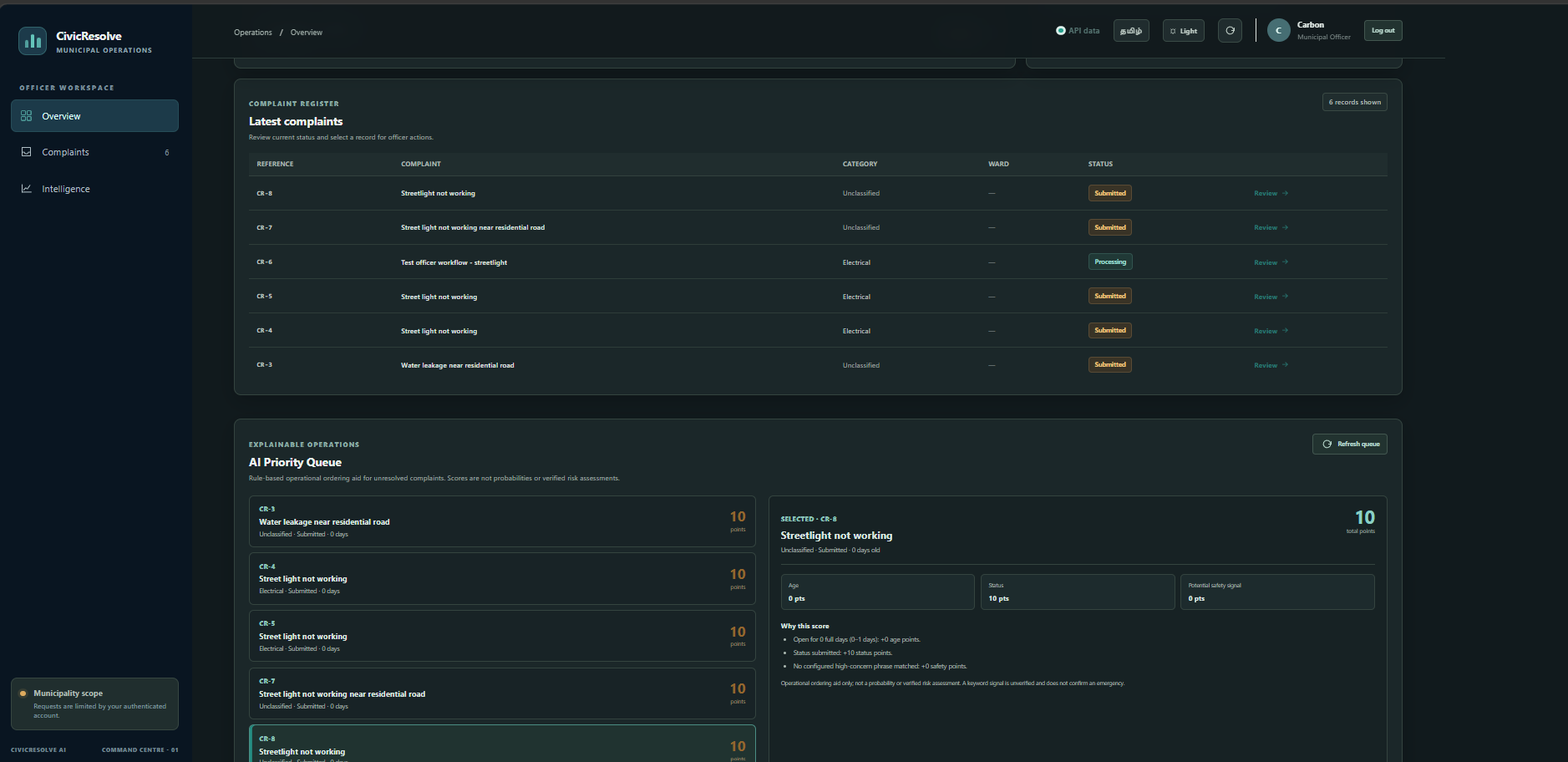
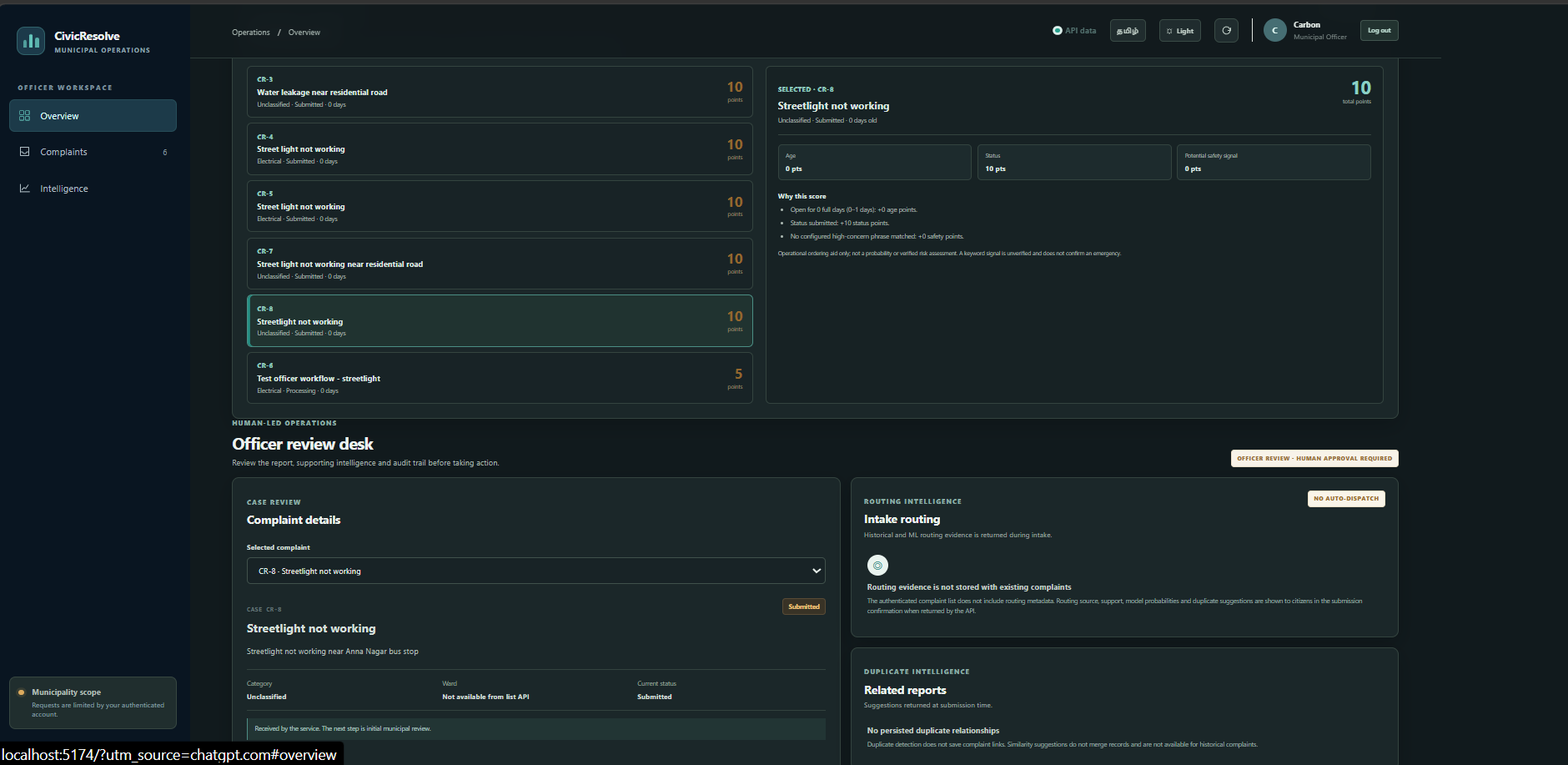
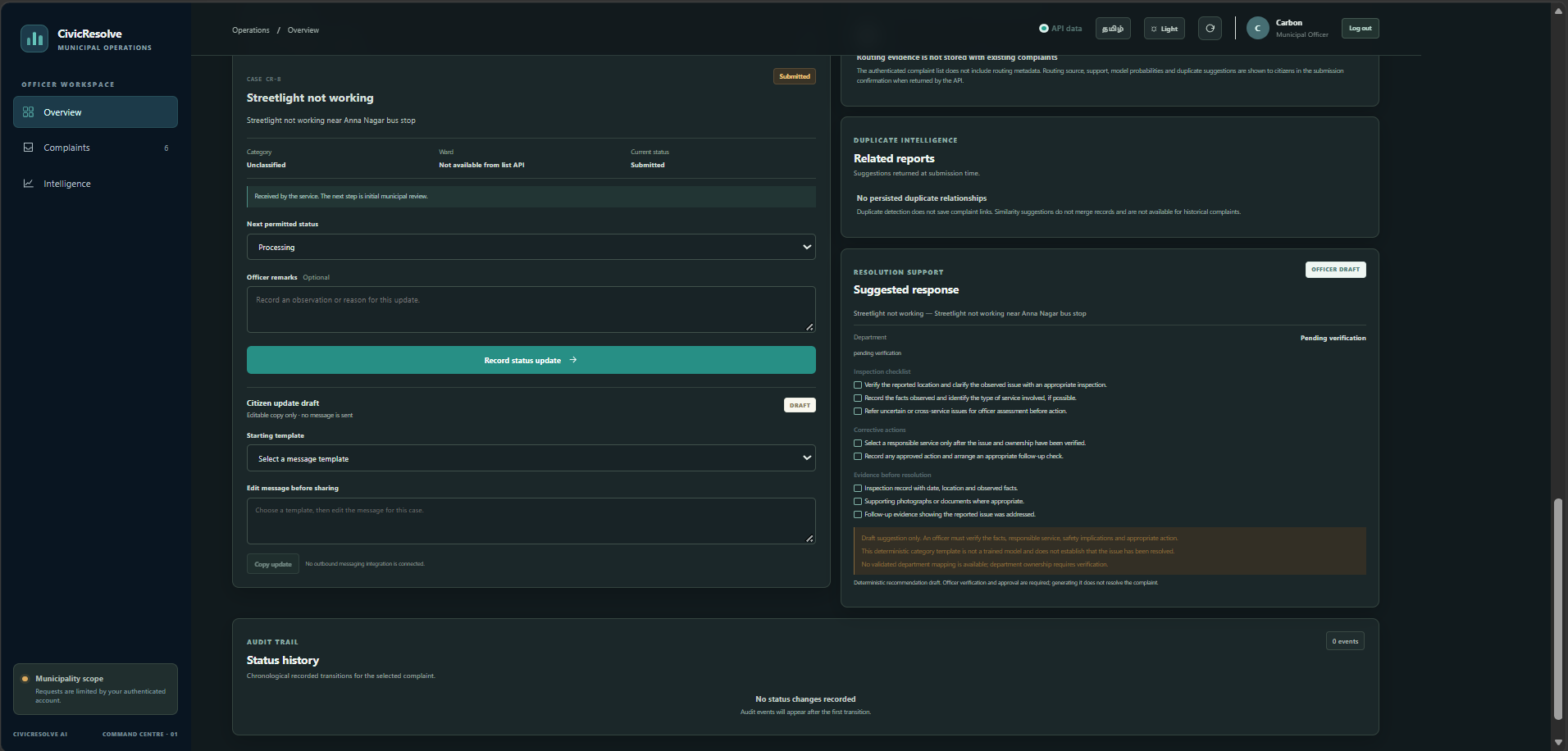
officer dashboard
-
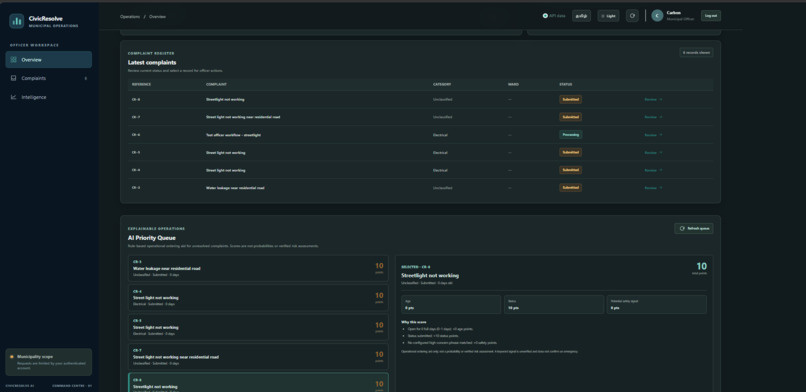
officer dashboard
-
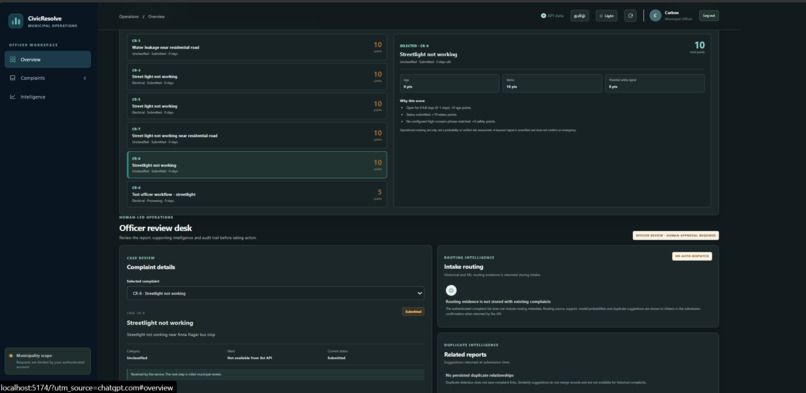
officer dashboard
-
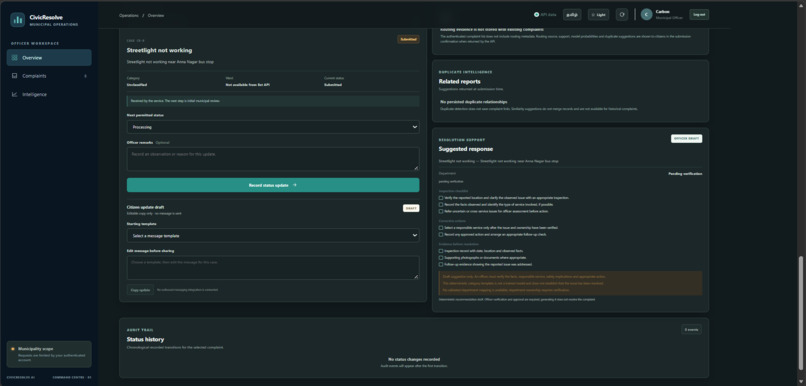
officer dashboard
-
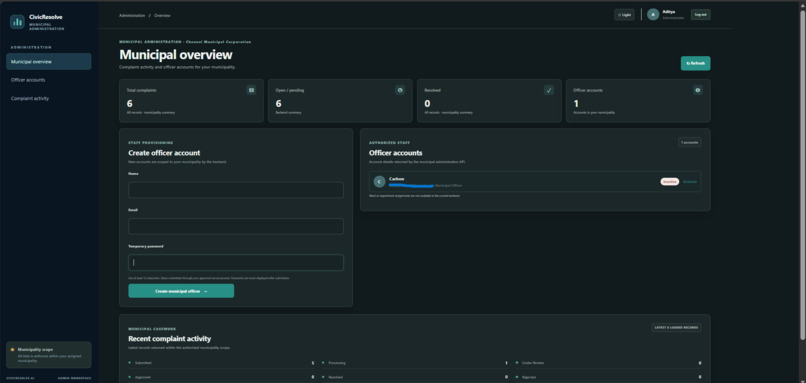
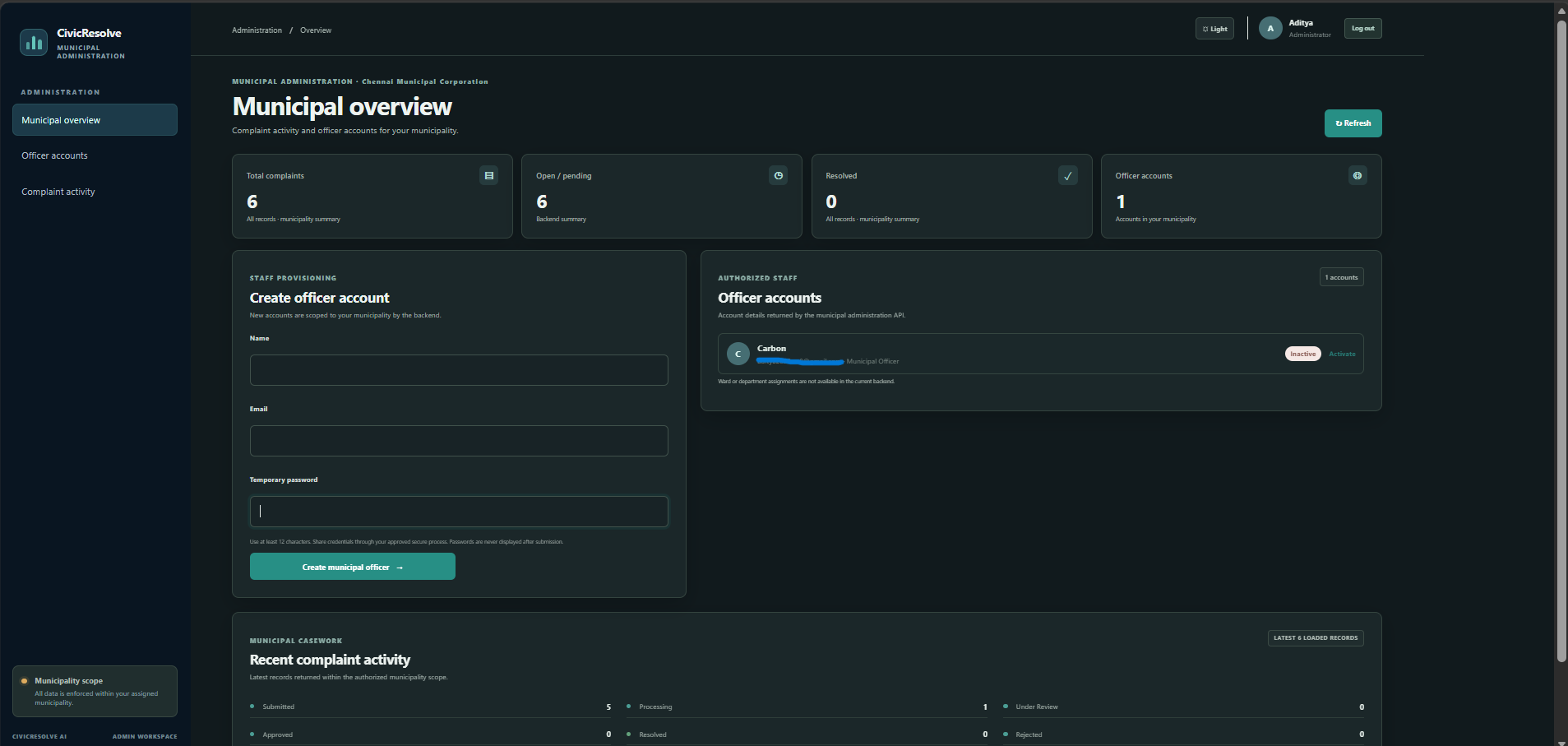
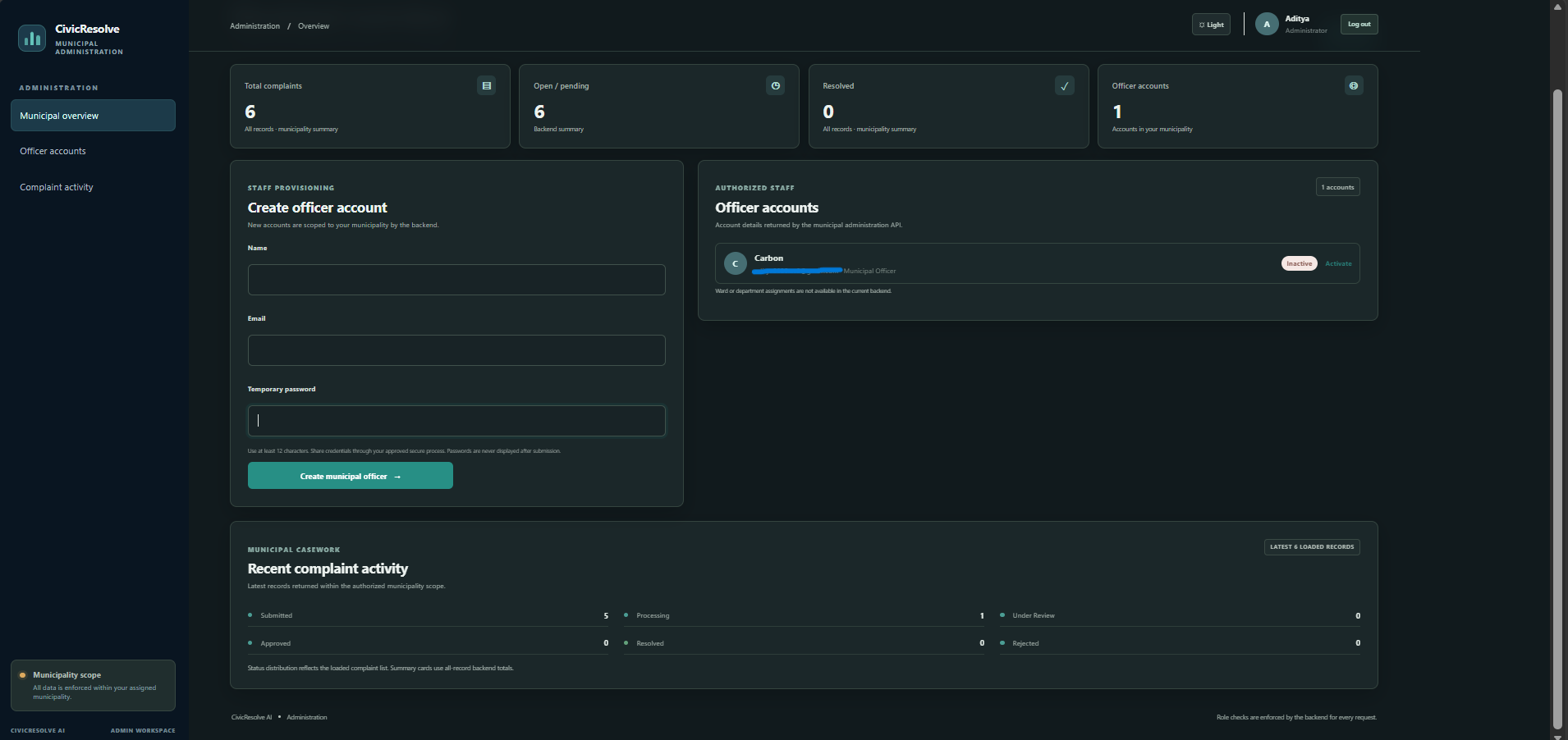
admin dashboard
-
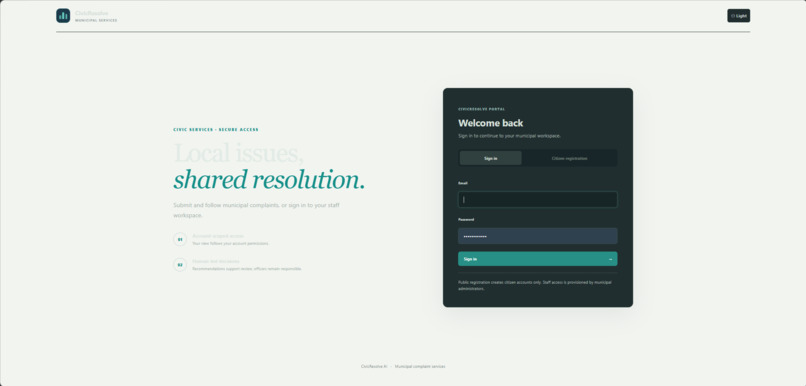
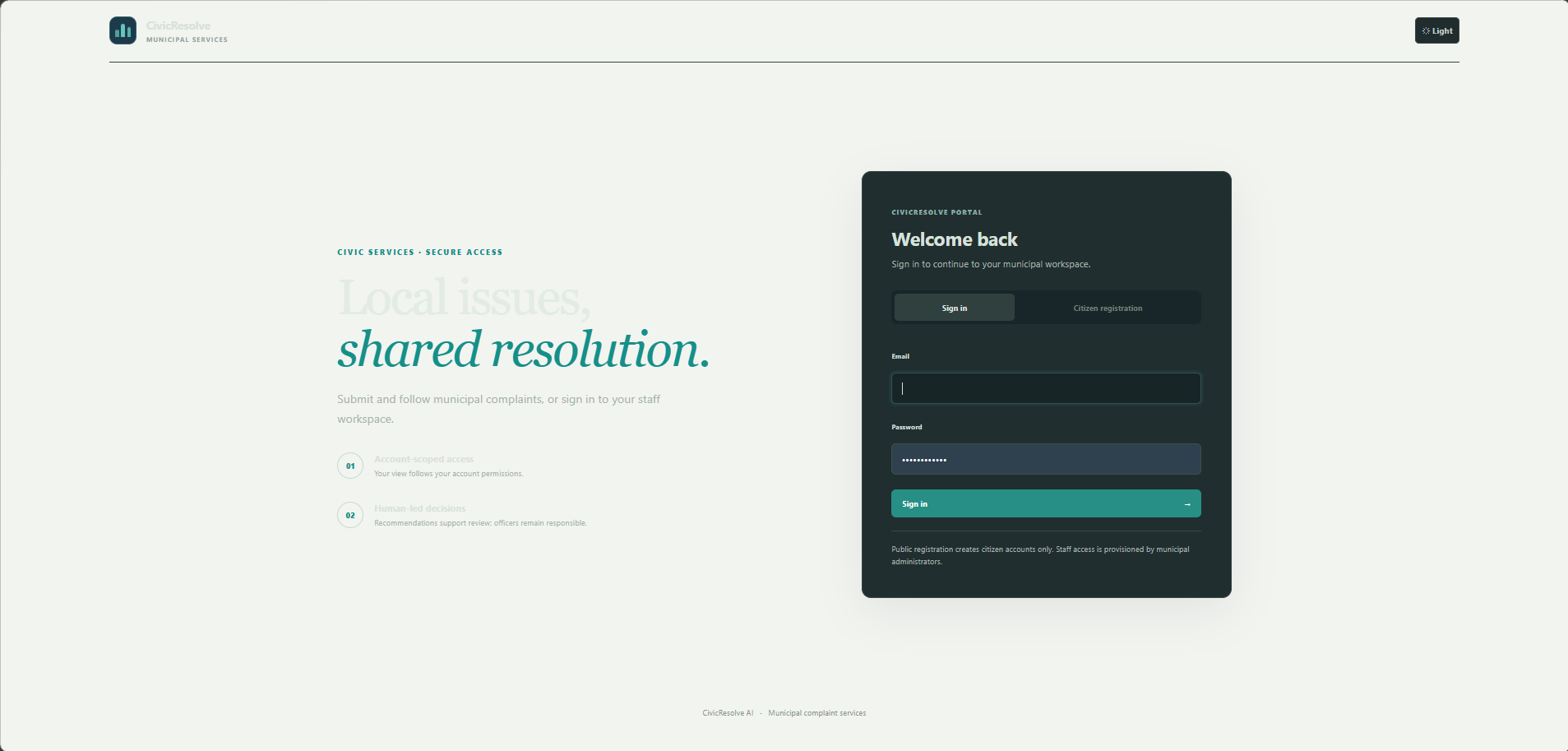
login page , dark theme
-
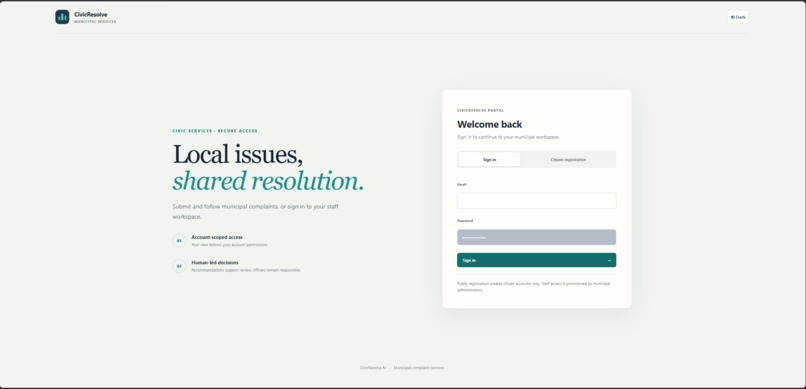
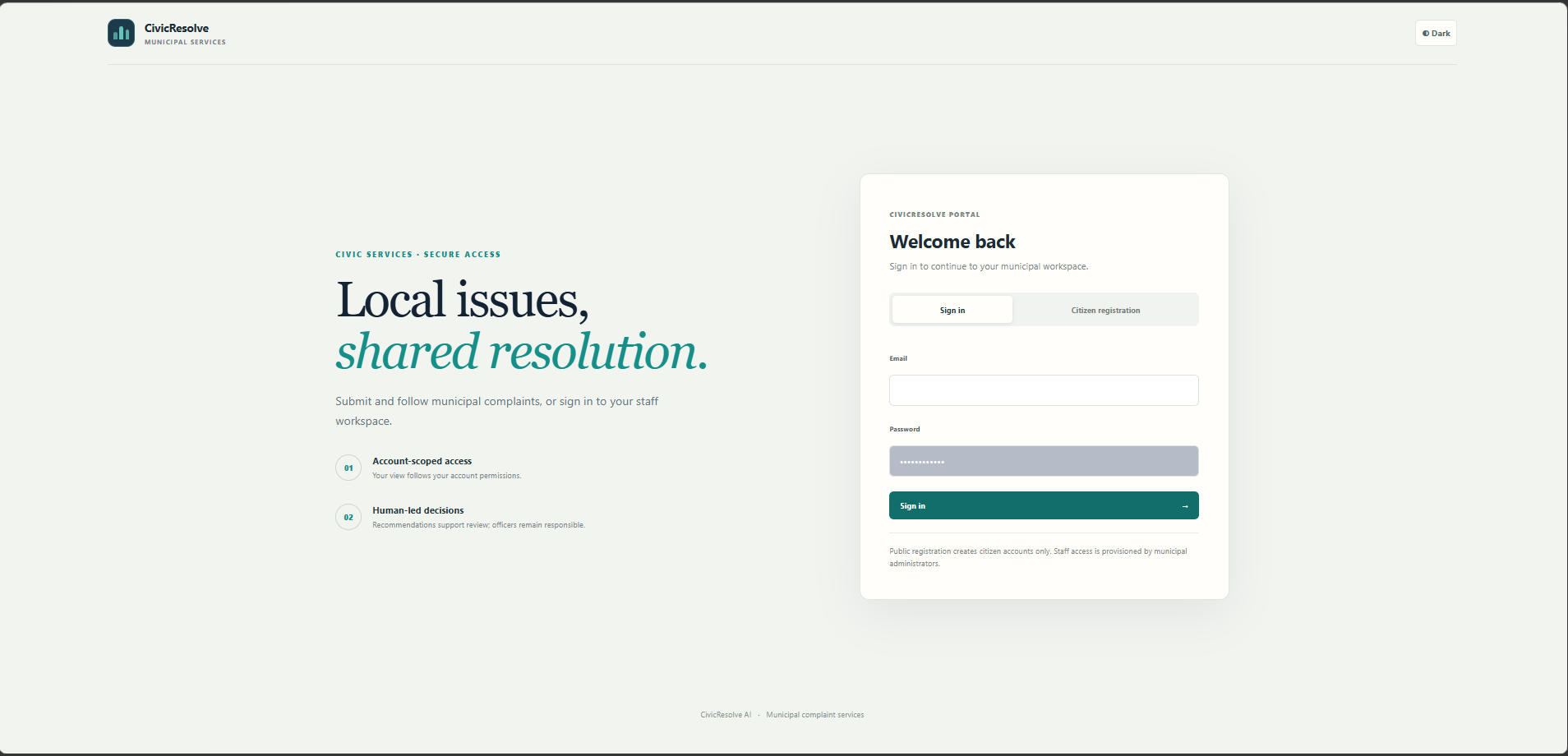
login page , light theme
-
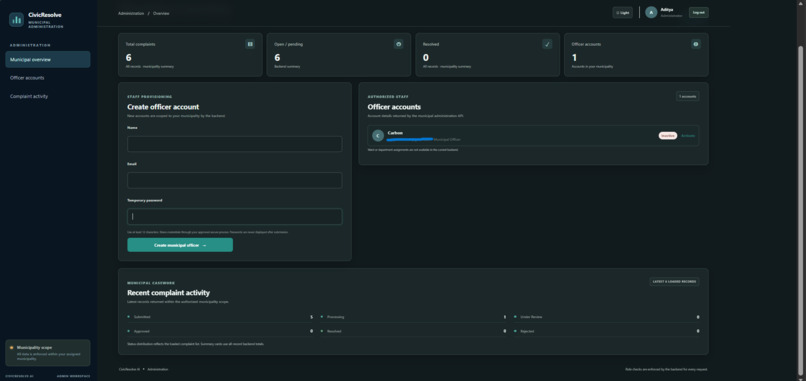
admin dashboard
CivicResolve AI – Intelligent Civic Grievance Management
Inspiration
Municipal complaints are often difficult to track, prioritize, and resolve efficiently. Citizens may not know the status of their complaints, while municipal authorities have to manage large volumes of reports across different categories and locations.
We wanted to build a platform that makes this process more transparent, organized, and accountable. Our goal was to connect citizens and municipal officers through a unified system that uses data-driven intelligence to improve grievance management.
What it does
CivicResolve AI is an AI-assisted municipal grievance management platform with three role-based interfaces:
- Citizens: Submit complaints, track their progress, view complaint history, and receive resolution updates.
- Municipal Officers: View assigned complaints, manage complaint statuses, and prioritize pending issues.
- Administrators: Manage municipal officers and oversee grievance analytics.
Key capabilities include:
- Hybrid ML-assisted complaint classification and routing.
- Duplicate complaint detection using TF-IDF and cosine similarity.
- Priority scoring based on complaint age, status, and high-concern indicators.
- Municipality-scoped role-based access control.
- Complaint lifecycle tracking and status history.
- Analytics to help municipal authorities understand grievance patterns.
How we built it
We developed the backend using Python, FastAPI, SQLAlchemy, and PostgreSQL, with a React-based frontend powered by Vite.
The platform uses JWT-based authentication, Argon2id password hashing, and role-based authorization to separate citizen, officer, and administrator permissions.
For intelligent routing, we implemented a hybrid approach combining historical category mappings, ML-assisted classification experiments, and manual review for ambiguous cases. Duplicate detection uses TF-IDF vectorization and cosine similarity.
We also implemented complaint prioritization and workflow management to make the system more useful for day-to-day municipal operations.
Challenges we faced
One of our biggest challenges was designing a reliable complaint-routing system when historical datasets do not always contain the detailed free-text descriptions needed for direct classification.
We addressed this by combining structured historical mappings, ML-assisted predictions, and manual review instead of blindly accepting every prediction.
Another challenge was implementing secure role-based access so citizens could only access their own complaints while municipal officers operated within their assigned municipality.
We also worked on handling duplicate reports, designing a consistent complaint lifecycle, and making the information understandable through separate dashboards.
What we learned
Through this project, we gained practical experience in full-stack development, REST API design, database modeling, authentication, authorization, machine learning evaluation, and integrating data-driven intelligence into a real-world application.
Most importantly, we learned that building a useful AI-assisted system is not just about making predictions. It also requires validation, transparency, human oversight, and reliable software engineering.
Future scope
Future improvements include multilingual complaint processing, location-aware grievance analysis, more advanced NLP models, predictive resolution-time estimation, and deployment for real municipal environments.
Our vision is to make civic grievance management more accessible to citizens and more efficient for public authorities.
Demo Availability: A video demonstration is not included because the recording contains personally identifiable information. Screenshots of all three role-based dashboards and both login themes are provided in the project gallery.
Built With
- api
- authentication
- dataanalytics
- fastapi
- javascript
- jwt
- language
- learning
- machine
- natural
- postgresql
- processing
- python
- react
- rest
- scikit-learn
- sqlalchemy
- tf-idf
- vite
