
Inspiration :- We noticed that most technology focuses on solving global-scale problems, while the issues people face every day in their own neighborhoods often get ignored. Things like broken roads, waste dumping, poor lighting, or campus safety rarely get resolved because there’s no simple, transparent way for citizens to raise them and for authorities to prioritize them.
CivicPulse was inspired by a simple question: What if cities could actually listen to their people in real time?
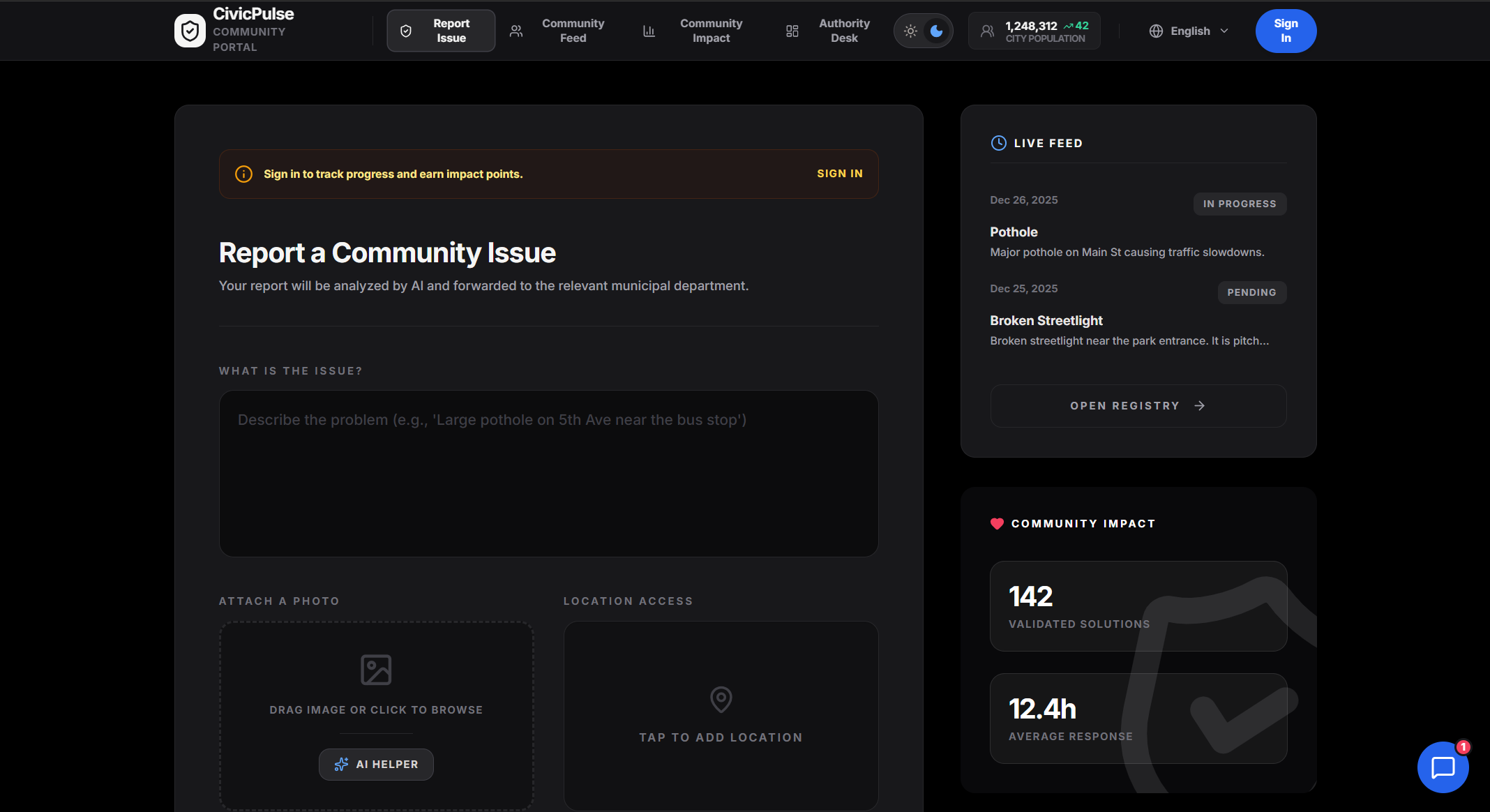
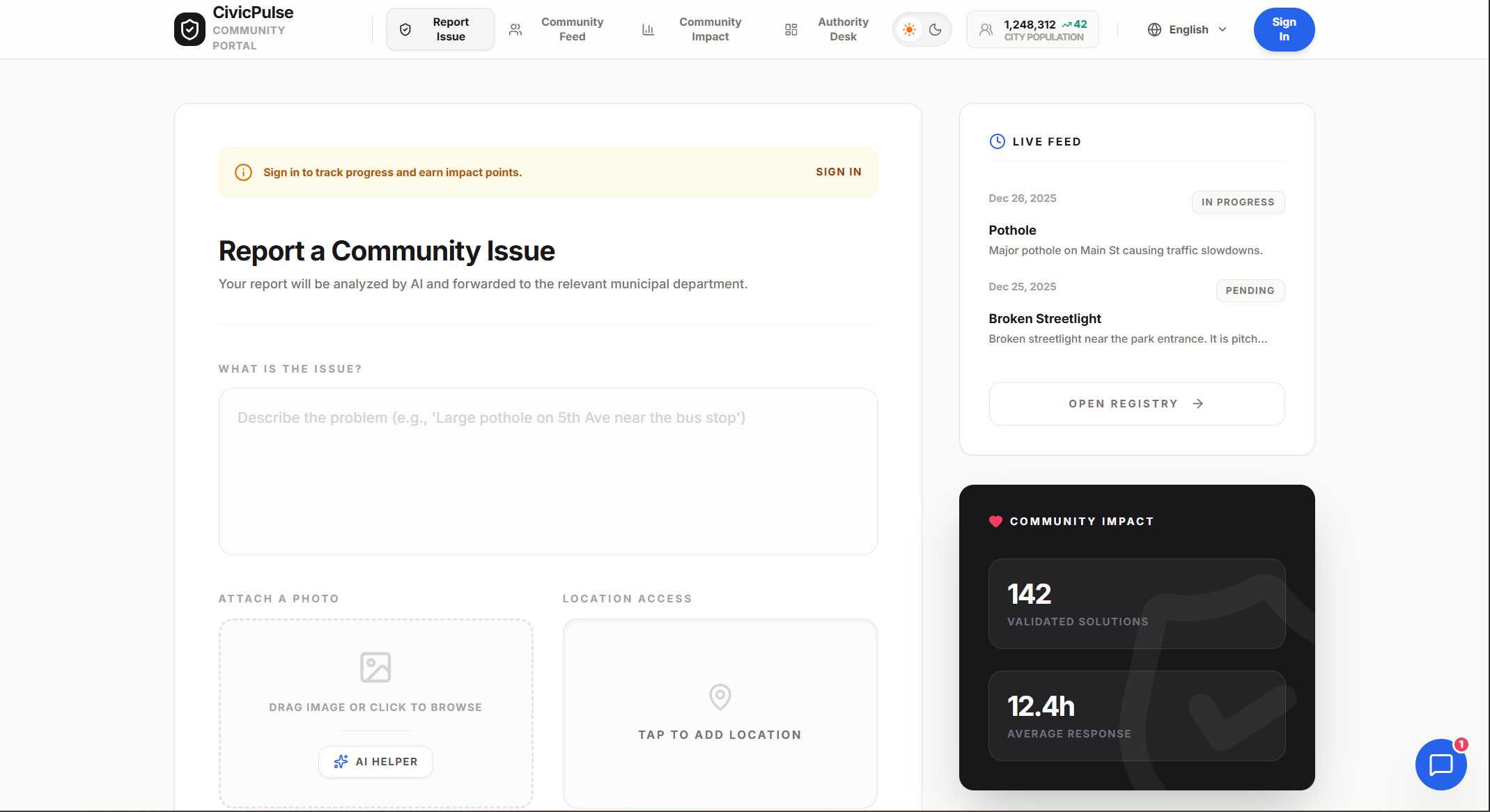
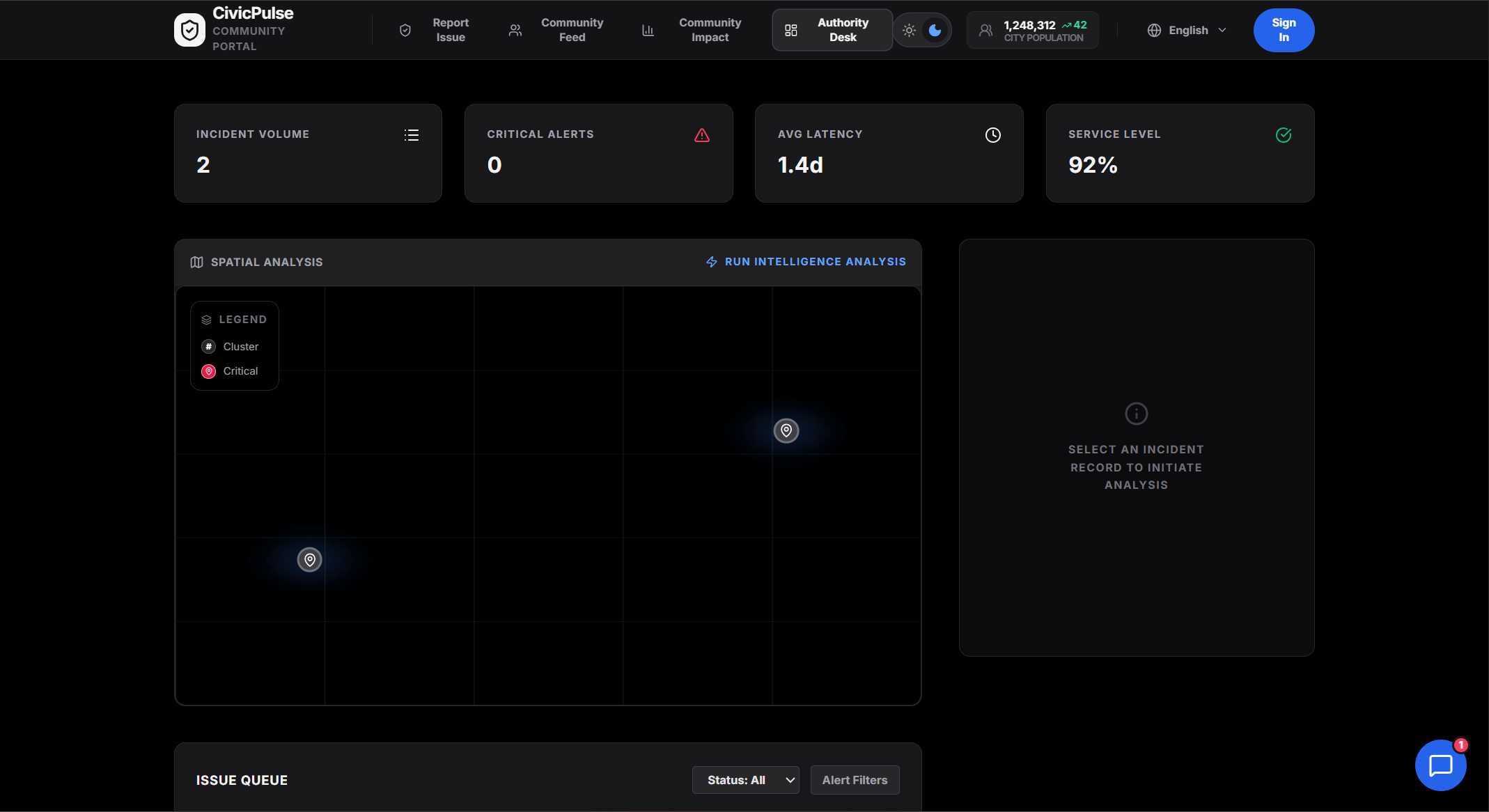
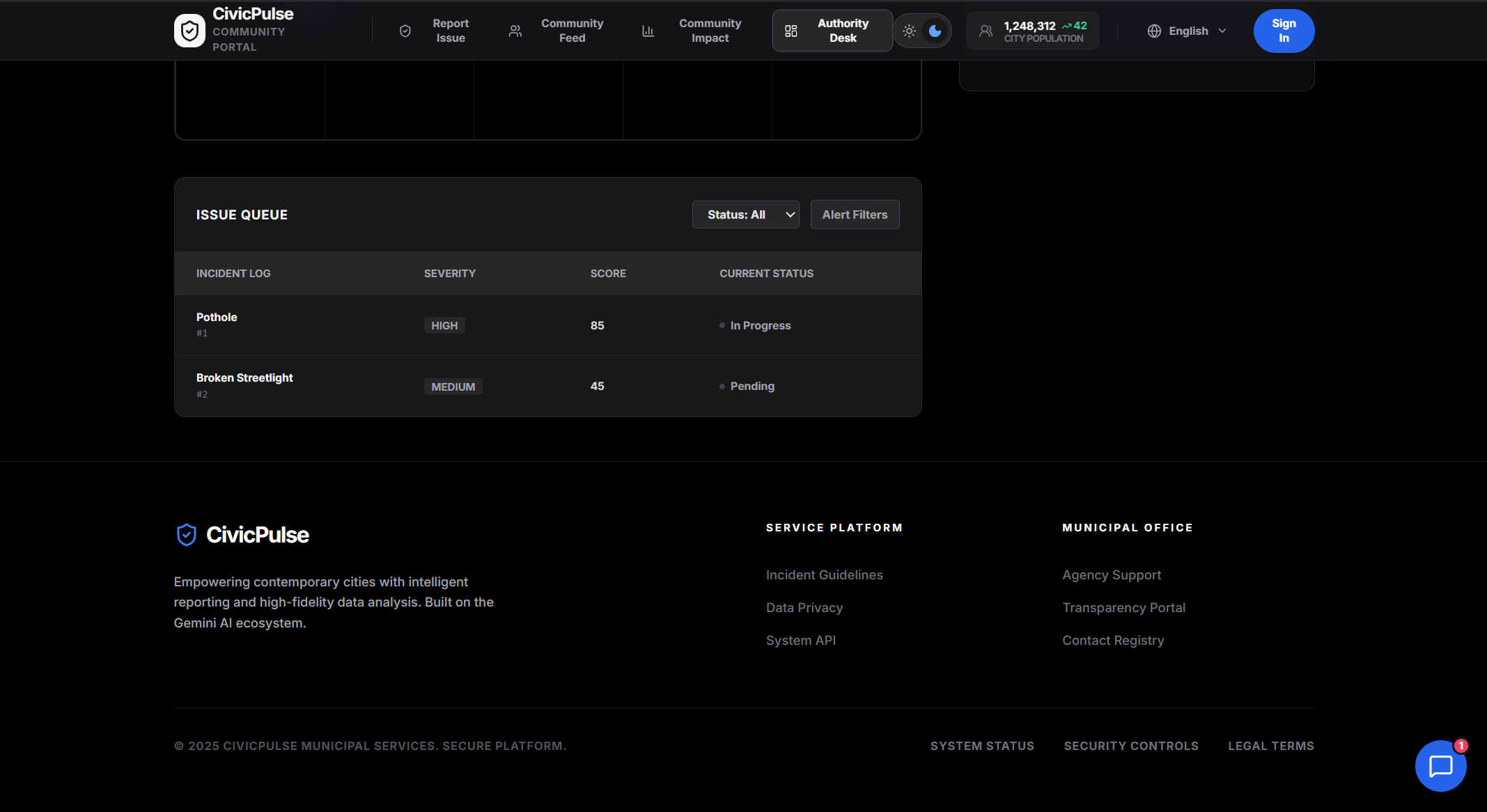
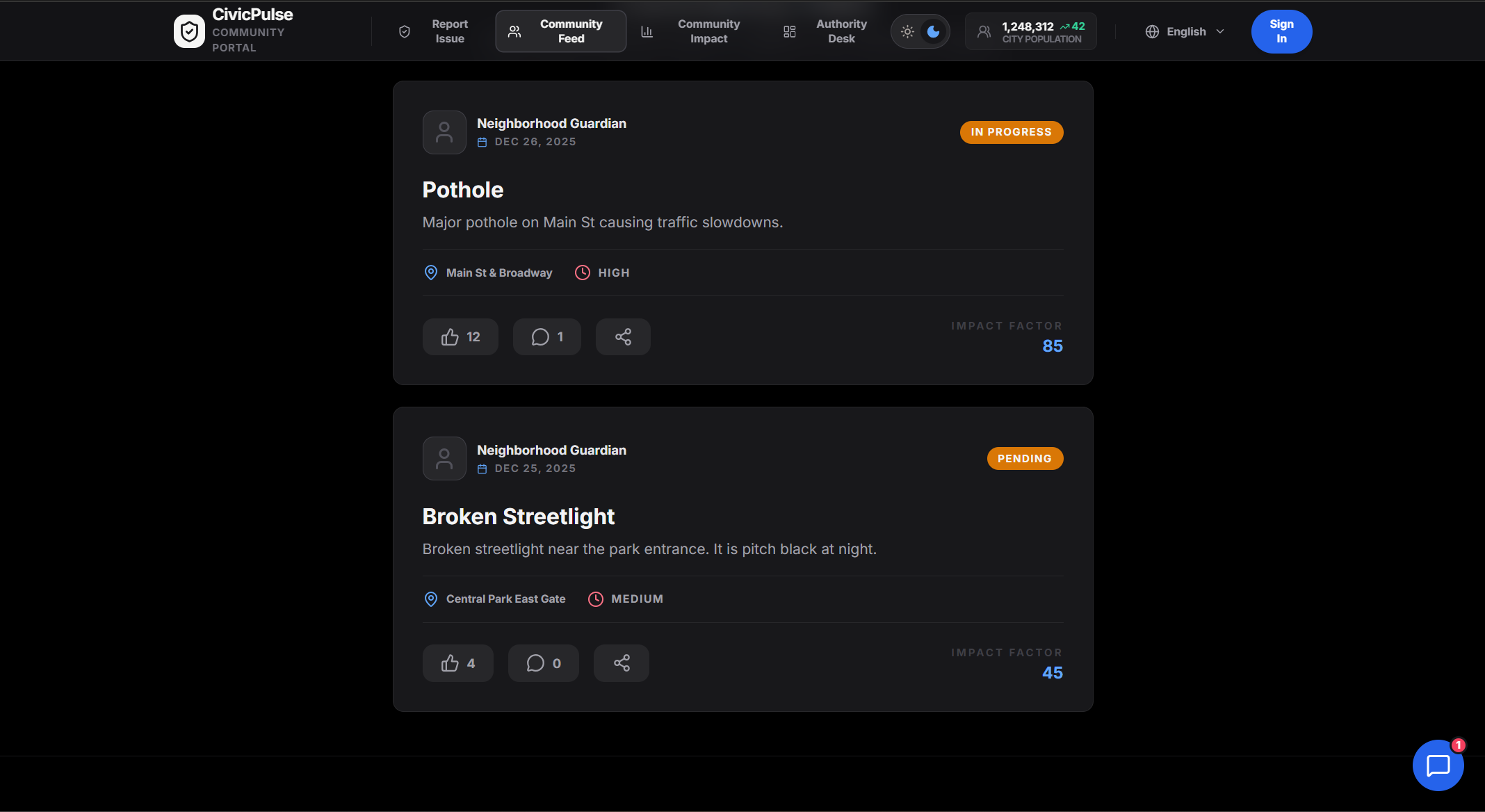
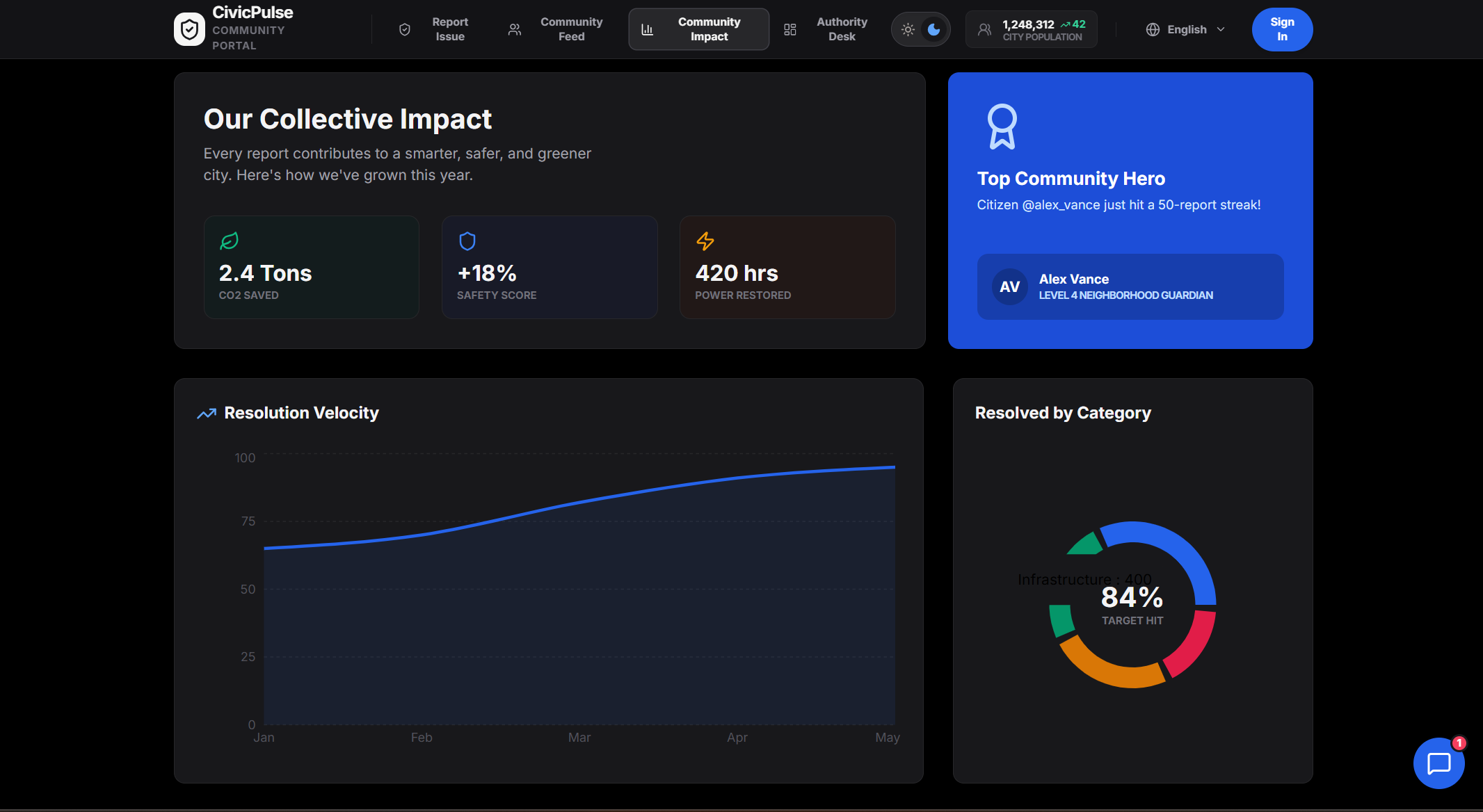
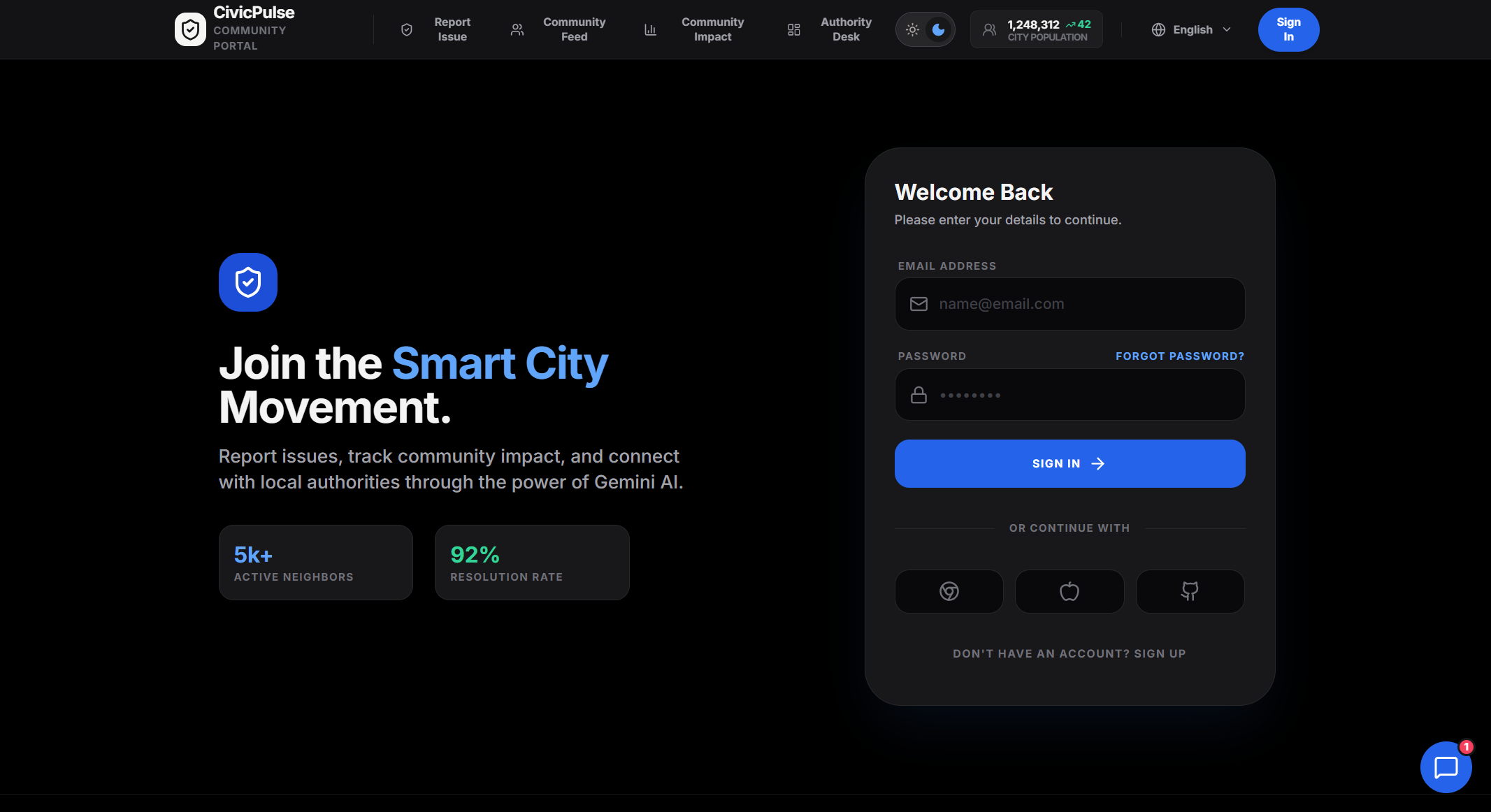
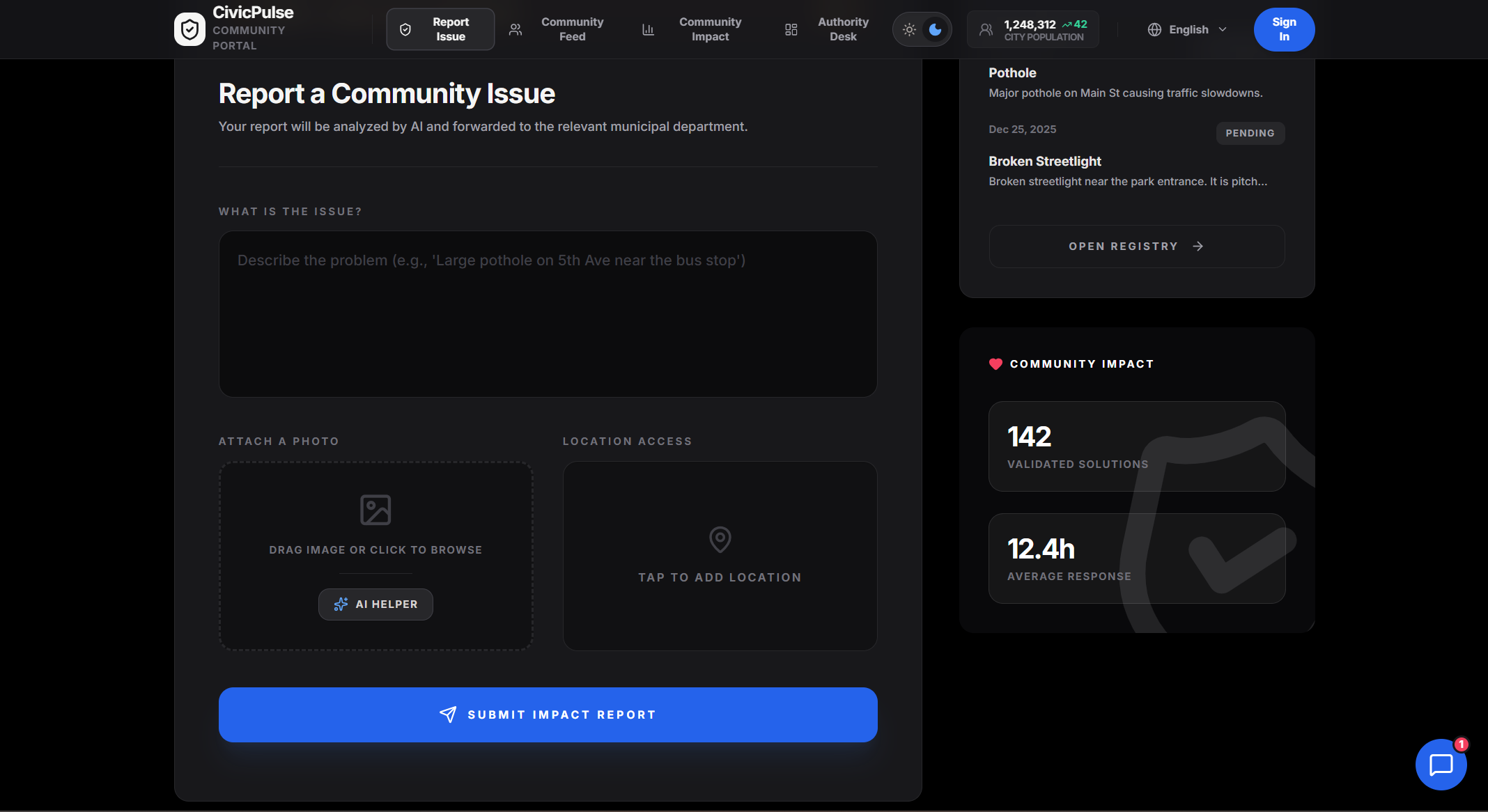
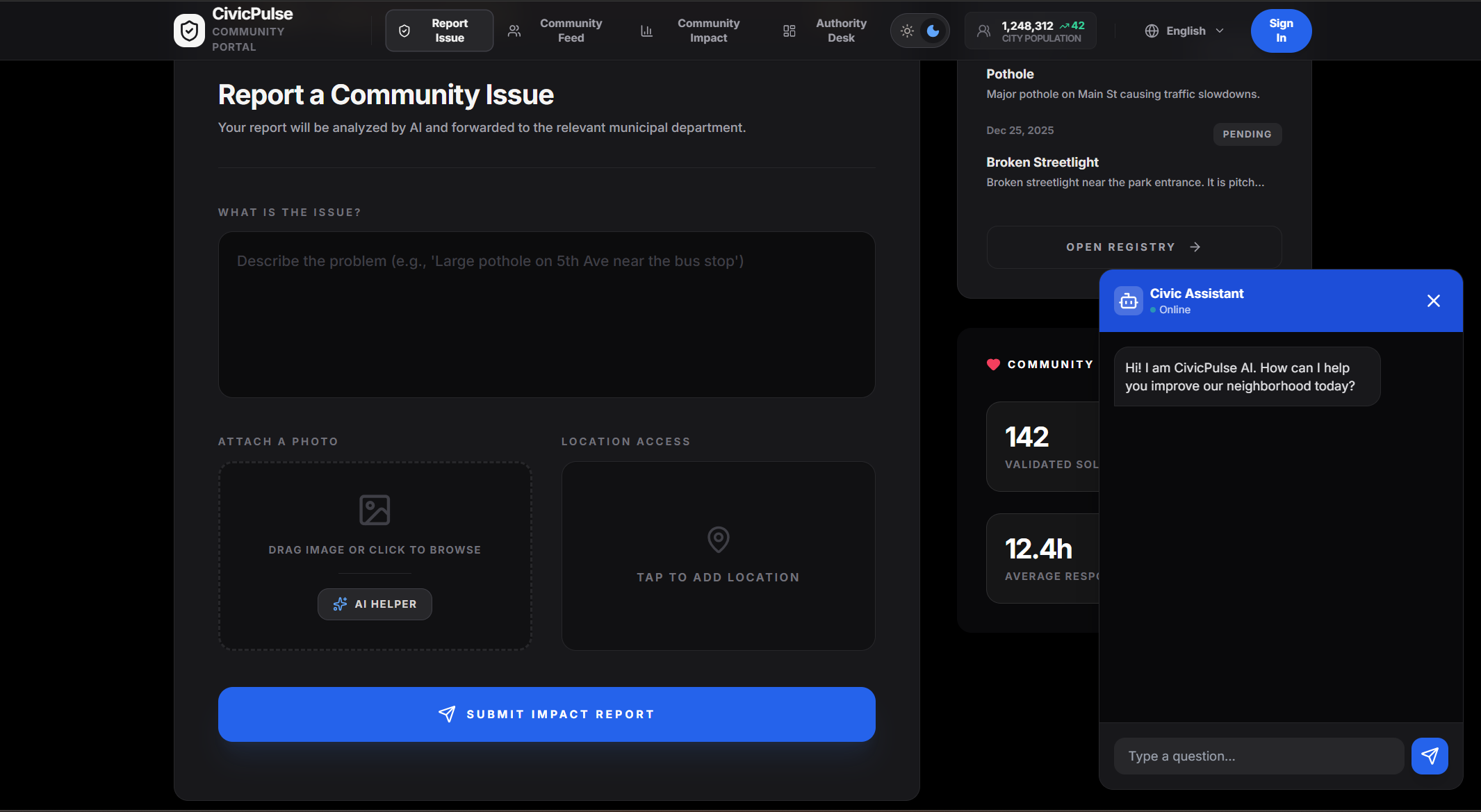
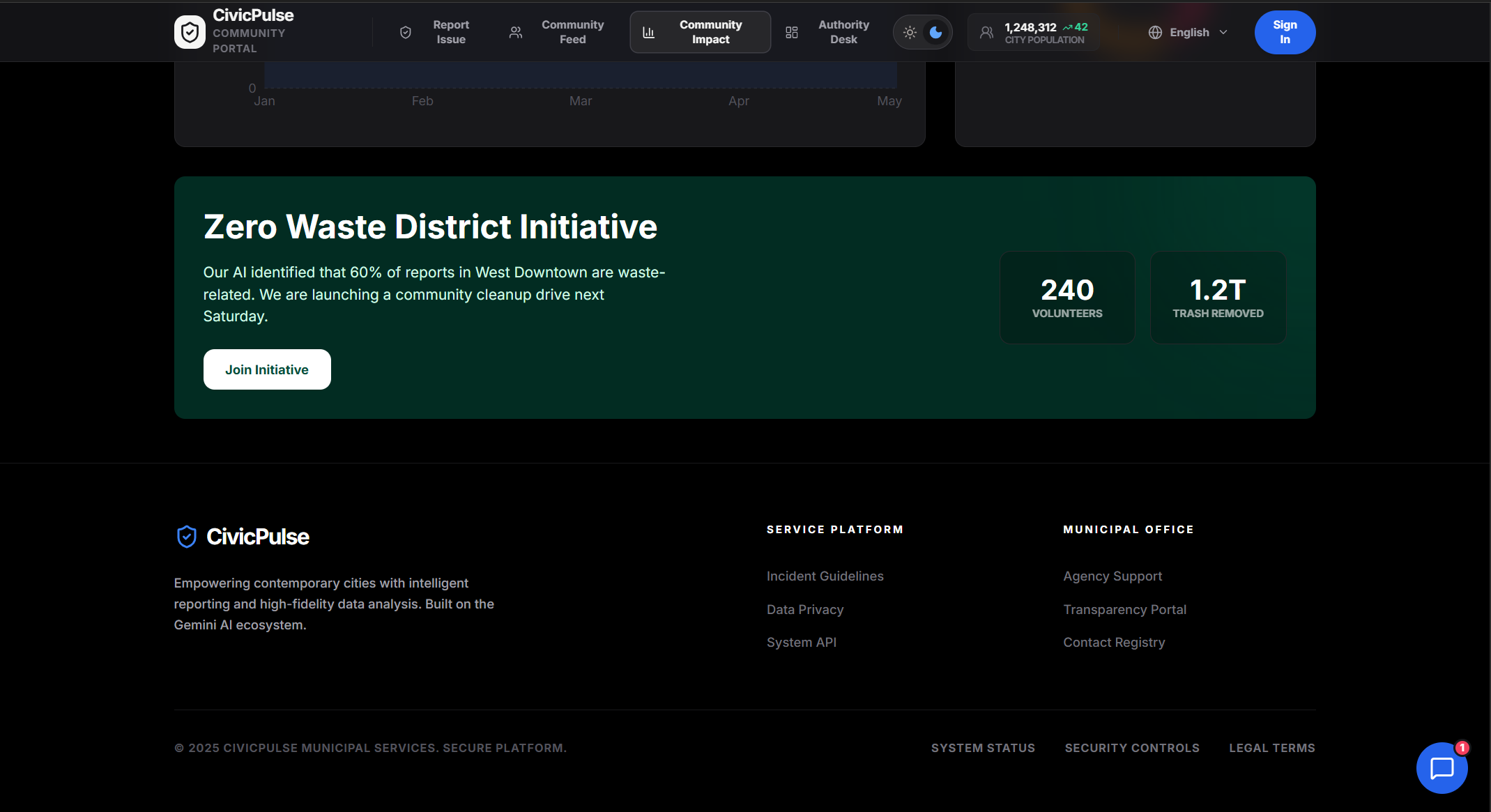
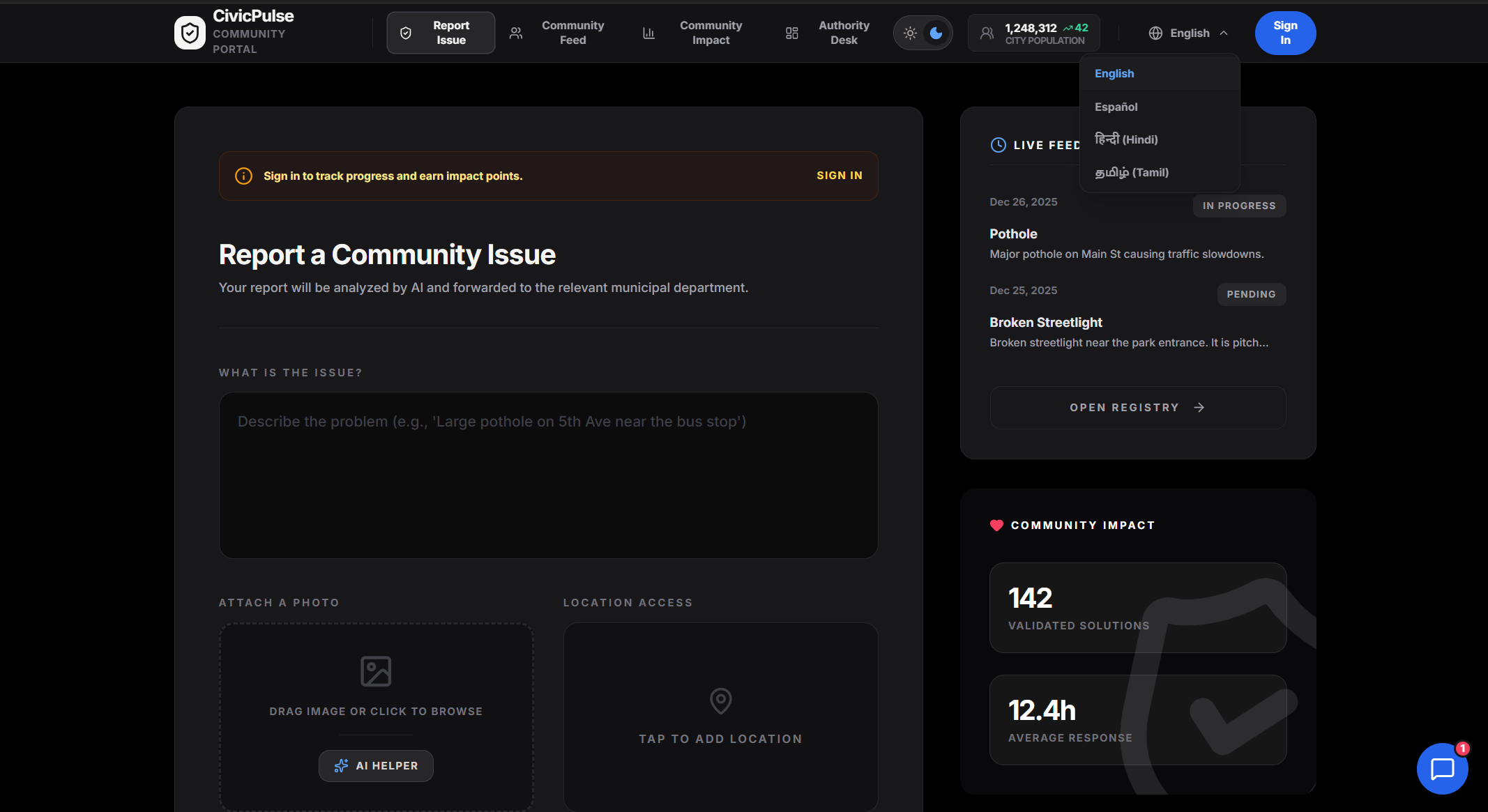
What it does :- CivicPulse is a community-powered civic engagement platform that allows citizens to report local issues, discuss them with neighbors, and track their resolution transparently. Users can submit reports with location data, images, or descriptions, upvote issues that matter most to them, and follow their status from submission to resolution. Behind the scenes, AI helps classify issues, detect duplicates, assess safety risks, and even assist city officials with planning and prioritization. CivicPulse turns scattered complaints into structured, actionable civic intelligence.
How we built it :- We built CivicPulse using a modern, scalable web stack. The frontend is developed with React, TypeScript, and Vite, styled using Tailwind CSS for a clean and responsive experience. We integrated Google Gemini models through Google AI Studio to handle multi-modal analysis, AI-assisted planning, and intelligent classification of reports. Mapping and geolocation features help tie issues to real-world locations, while data visualization libraries make civic impact easy to understand. The platform is deployed on Vercel, allowing us to iterate quickly and deliver a fast, reliable experience.
Challenges we ran into :- One of the biggest challenges was designing for hyper-local problems without making the platform feel overwhelming or bureaucratic. We also had to carefully balance AI automation with transparency, ensuring users still trust and understand how decisions are made. Handling duplicate reports, prioritization logic, and making civic data feel approachable rather than intimidating were all learning experiences during development.
Accomplishments that we're proud of :- We’re proud that CivicPulse goes beyond being just a reporting tool. It brings together citizens, communities, and authorities in a single transparent system. Building meaningful AI features that actually support real-world decision-making — rather than just adding AI for the sake of it — is something we’re especially proud of. Seeing how quickly the platform can adapt to different cities or campuses reinforced that we’re building something scalable and impactful.
What we learned :- We learned that civic technology doesn’t need to feel outdated or complicated to be effective. Good design, clear communication, and thoughtful AI integration can make civic engagement accessible to everyone. We also learned how powerful community signals are — when people come together around shared local issues, real change becomes possible.
What's next for CivicPulse ;- Next, we want to expand CivicPulse with verified authority accounts, deeper analytics for urban planning, and stronger AI-driven prioritization. We also plan to add anonymous reporting for sensitive issues, mobile-first enhancements, and real-world pilot testing with communities and institutions. Our long-term goal is to help cities become more responsive, transparent, and connected — one neighborhood at a time.
Built With
- css
- gemini
- react
- tailwand
- typescript
- vite


Log in or sign up for Devpost to join the conversation.