We learned how to:
- Design a complete full-stack architecture
- Connect frontend interfaces with backend APIs
- Structure data for real-world workflows
- Build role-based municipal dashboards
- Handle state changes across multiple users
- Think about scalability and reliability
- Design systems around real operational processes
- Turn a hackathon idea into a practical product concept
One of our biggest lessons was that the success of a civic platform should be measured by resolution, not simply by the number of complaints submitted.
Challenges We Faced
One of the biggest challenges was designing a system where information flows correctly between citizens and officers.
A complaint should not merely appear as "submitted" on the citizen side. It must actually reach the backend, become visible to the responsible officer, support assignment and status updates, and finally return meaningful progress to the citizen.
We also faced challenges around designing multiple user roles, maintaining consistent application state, connecting APIs with the frontend, structuring the database, and creating a dashboard capable of representing a large number of civic issues without overwhelming users.
The Vision
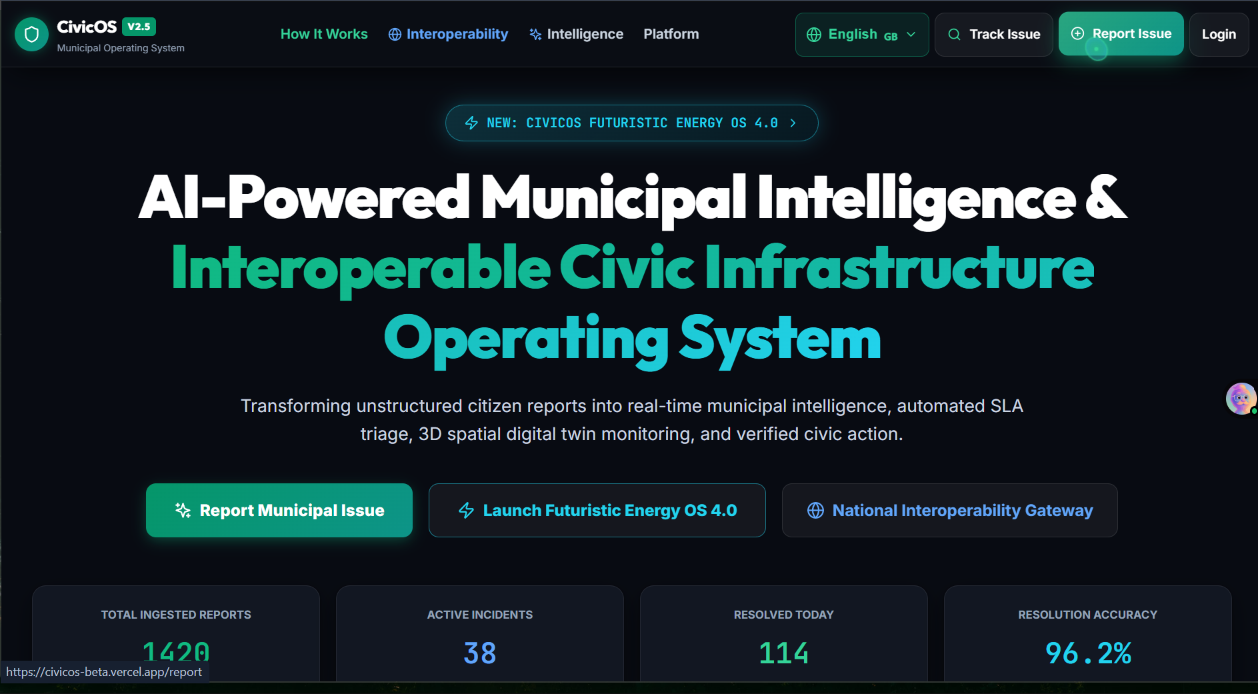
CivicOS is more than a complaint-management application.
Our vision is to create a Municipal Operating System where civic data becomes actionable intelligence.
Instead of municipalities reacting to individual complaints, CivicOS can help them identify patterns, discover problem hotspots, monitor department performance, detect SLA violations, and eventually predict recurring civic problems.
Our goal
Make cities more responsive, transparent, data-driven, and citizen-centric—one complaint at a time.
Built With
- agentic
- agents
- ai
- amazon
- amazon-web-services
- api
- automation
- bedrock
- civic
- cloud
- computing
- development
- full
- generative
- github
- language
- natural
- open
- rest
- source
- stack
- technology
- web


Log in or sign up for Devpost to join the conversation.