Inspiration
Urban governance across many modern cities is frequently slowed down by manual complaint triage, unorganized citizen reports, and isolated departmental silos. When a citizen reports a pothole, water leak, or street light failure, complaints often sit in generic queues or lack clear root-cause analysis—leading to delayed fixes and frustrated residents.
We created CivicMind to transform urban management into a proactive, intelligent system. We were inspired to build a multi-agent AI framework that doesn't just store complaints, but actively inspects, prioritizes, budget-estimates, and links cross-departmental infrastructure failures in real time.
What It Does
CivicMind is an AI-powered civic intelligence platform driven by an orchestrated multi-agent network:
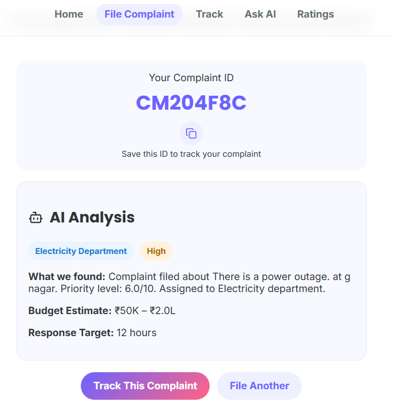
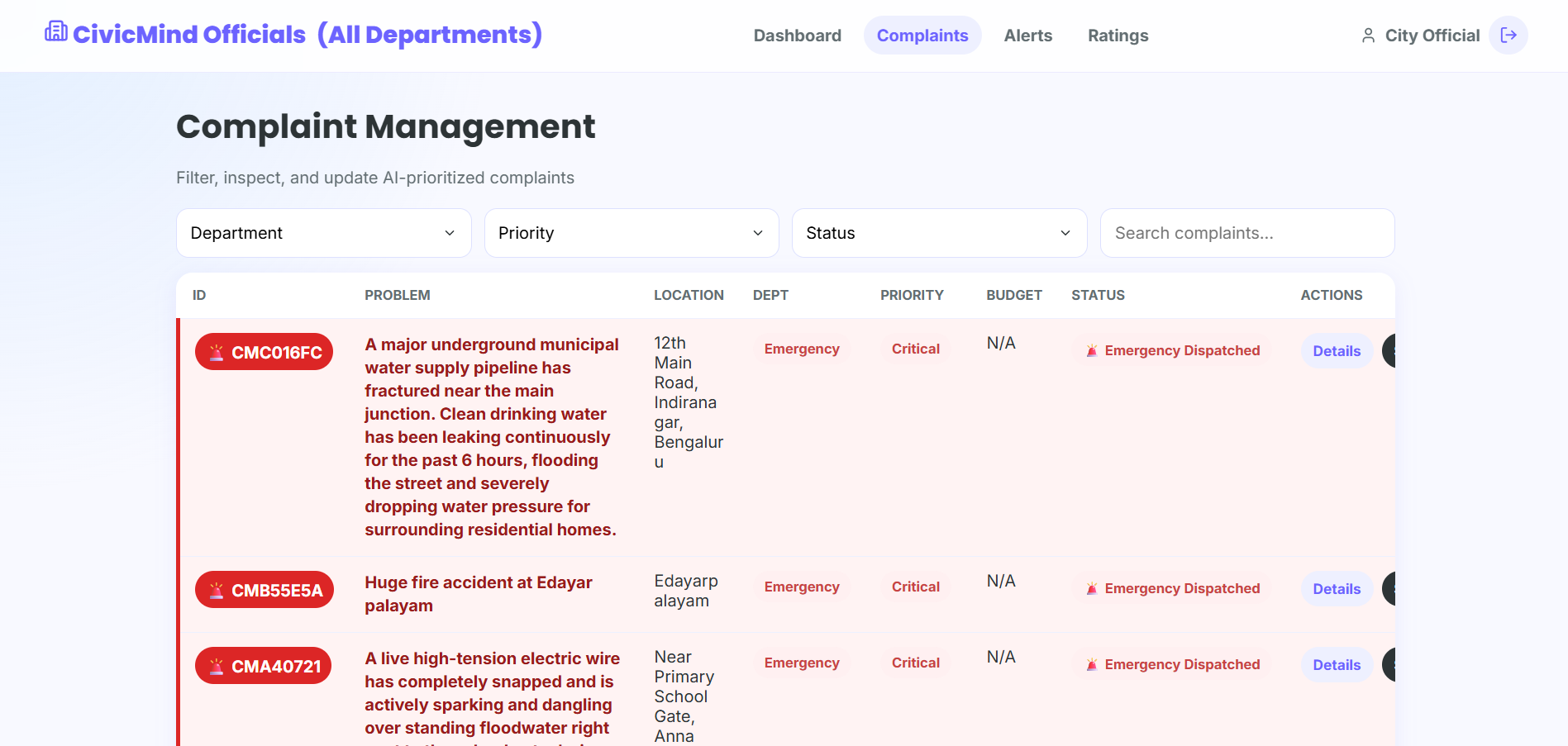
- Agent 1 (Classification): Scans incoming issues and image uploads for immediate safety risks, fast-tracking life-threatening emergencies directly to high-priority dispatch portals.
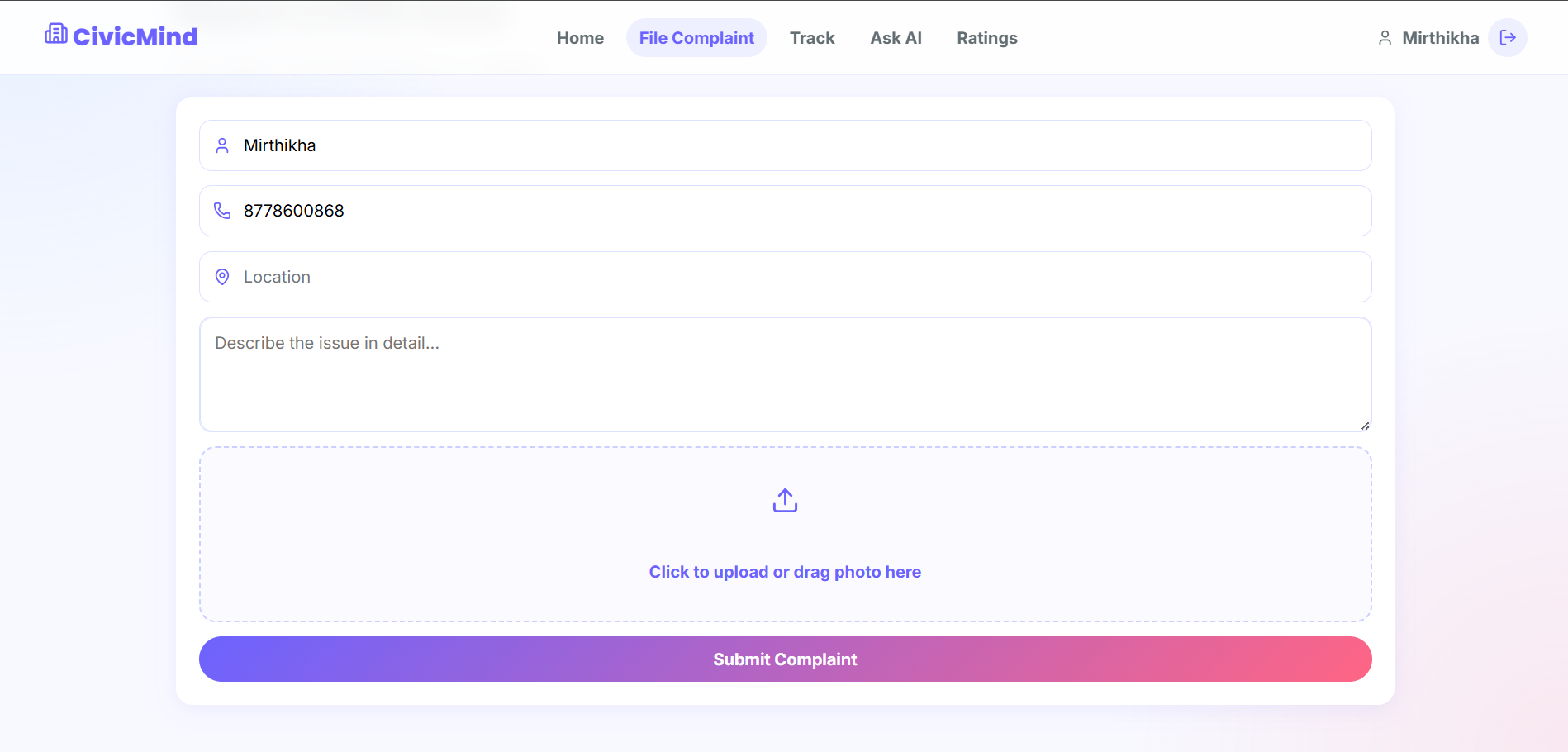
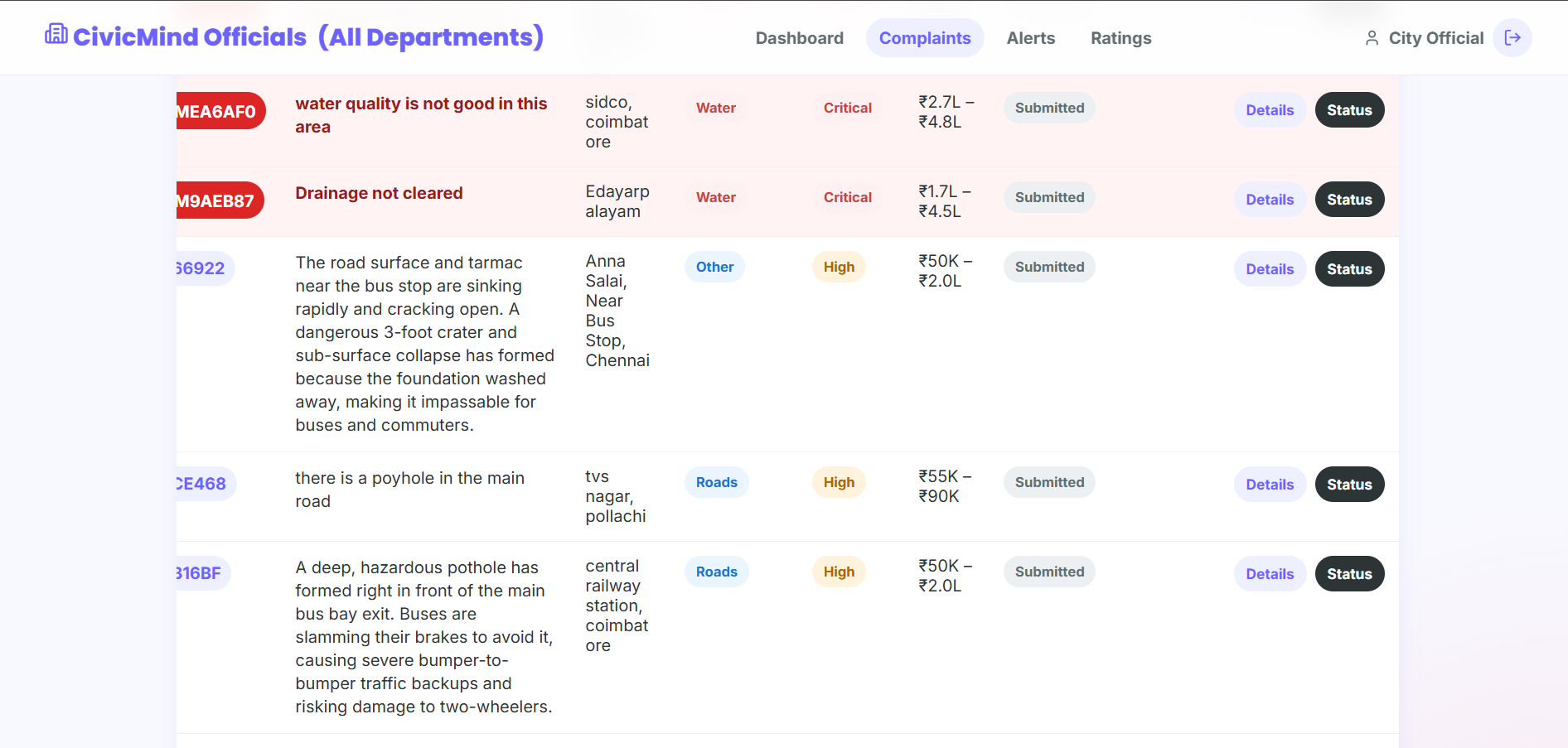
- Agent 2 (Intake): Parses location context, severity scores, and specific problem details, automatically assigning issues to appropriate departments (Roads, Water, Electricity).
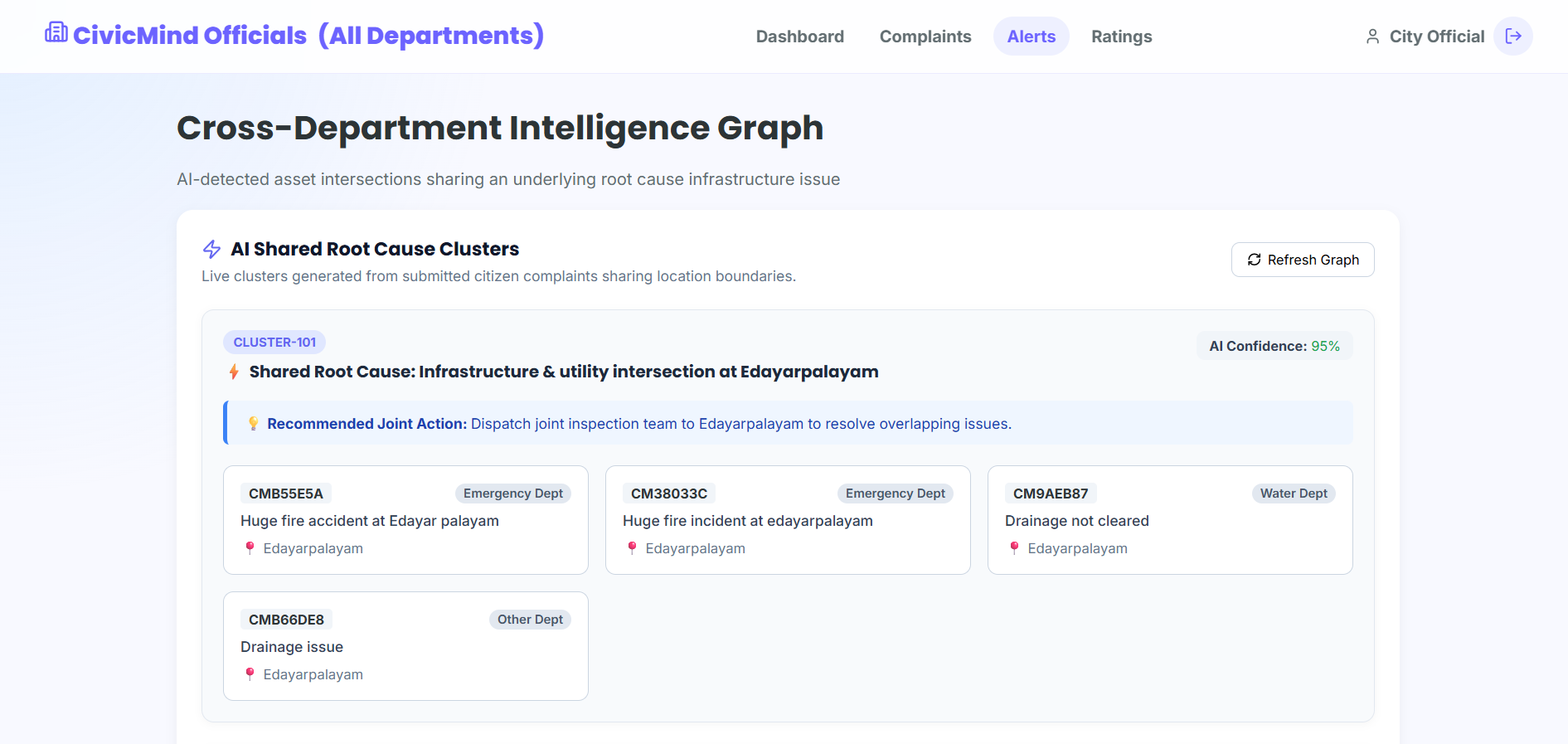
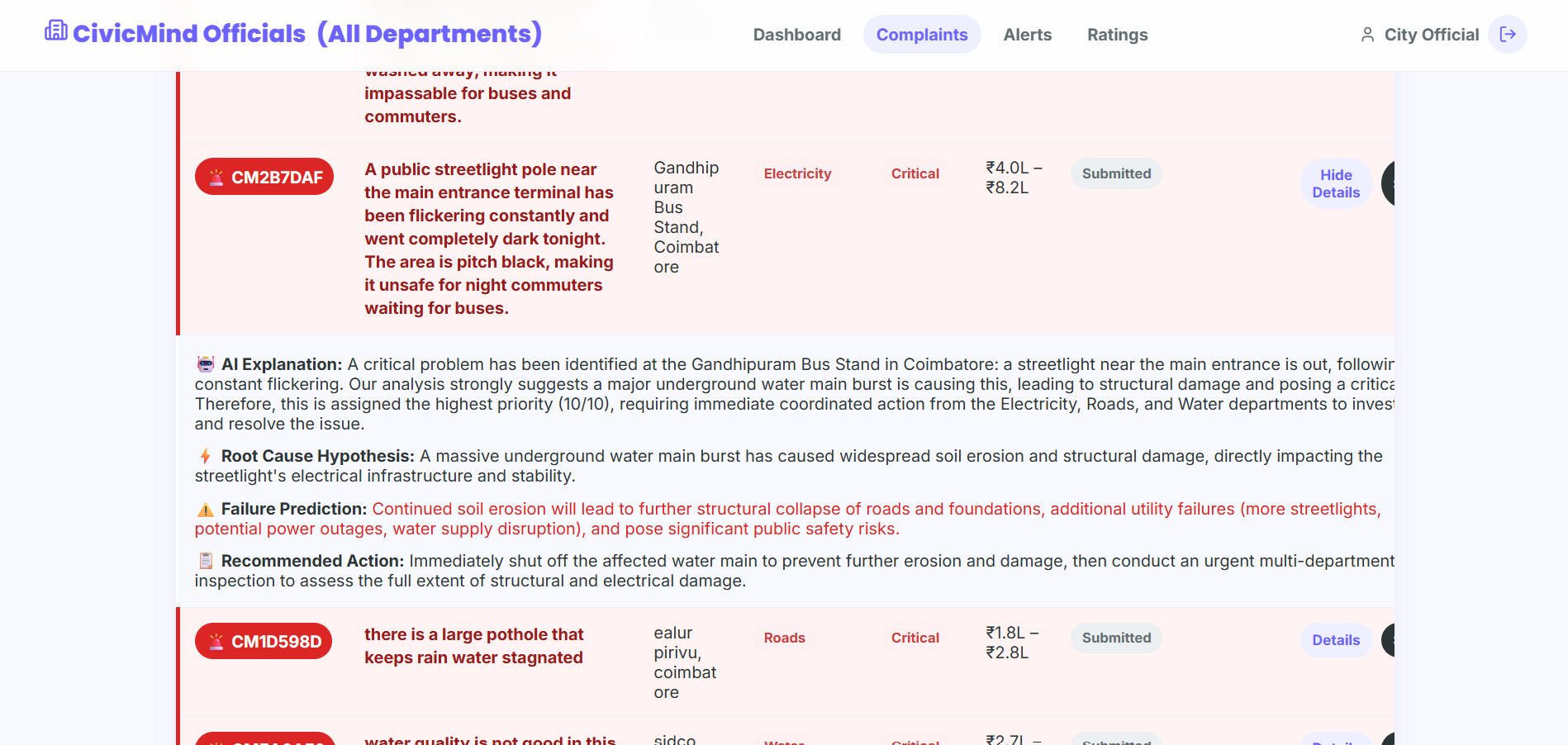
- Agent 3 (Intelligence): Evaluates underlying infrastructure root causes and constructs a Cross-Department Intelligence Graph to group related collateral damage across sectors.
- Agent 5 (Prioritization & Budget): Computes priority scores based on traffic and population impact while calculating instant pre-approved budget bounds and SLA resolution targets.
- Agent 4 (Explainability): Generates clear, human-readable diagnostic explanations for citizens and city officials.
- Agent 8 (Self-Correction Guardrail): Audits and auto-heals output dictionary schemas in the background before database persistence, ensuring zero system crashes and high data fidelity.
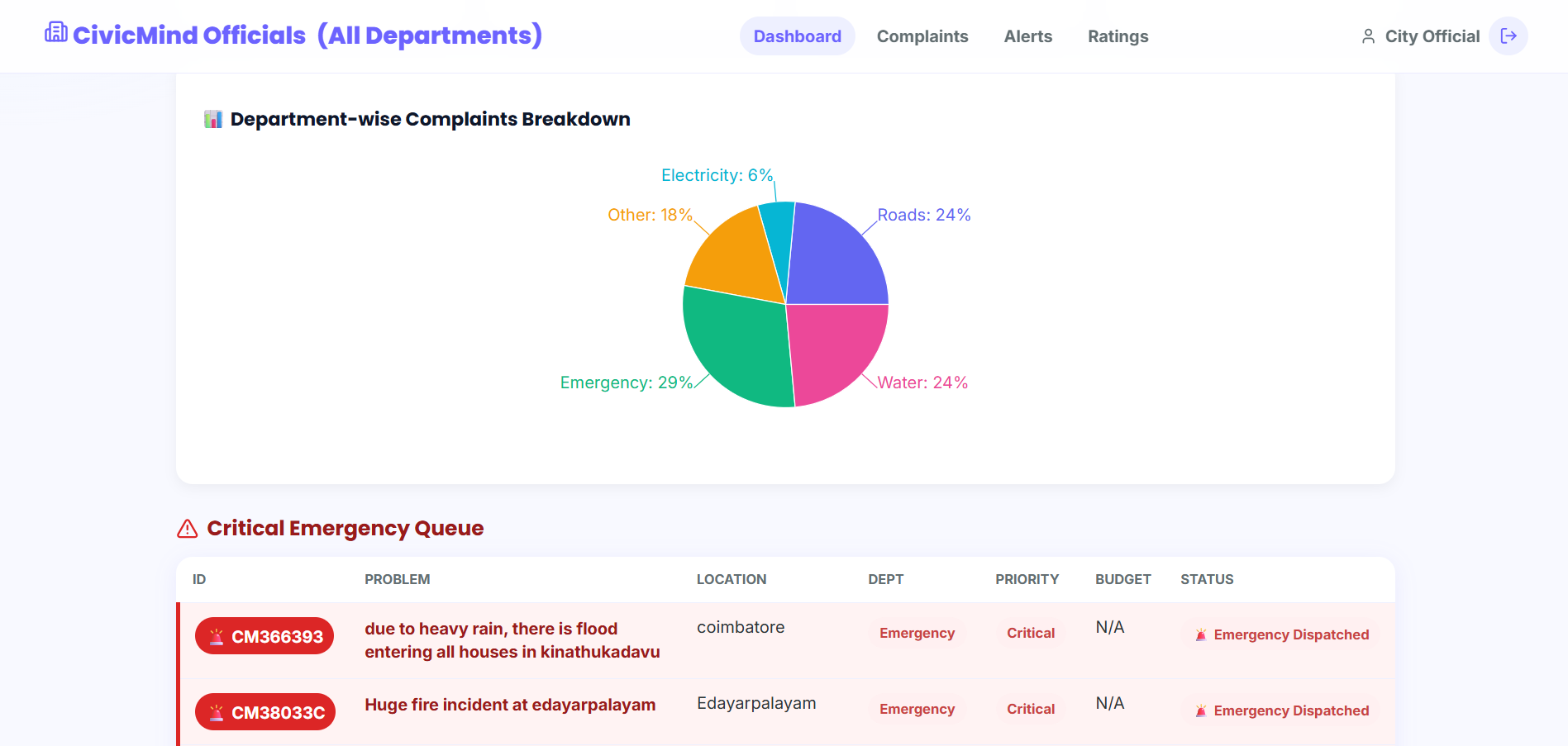
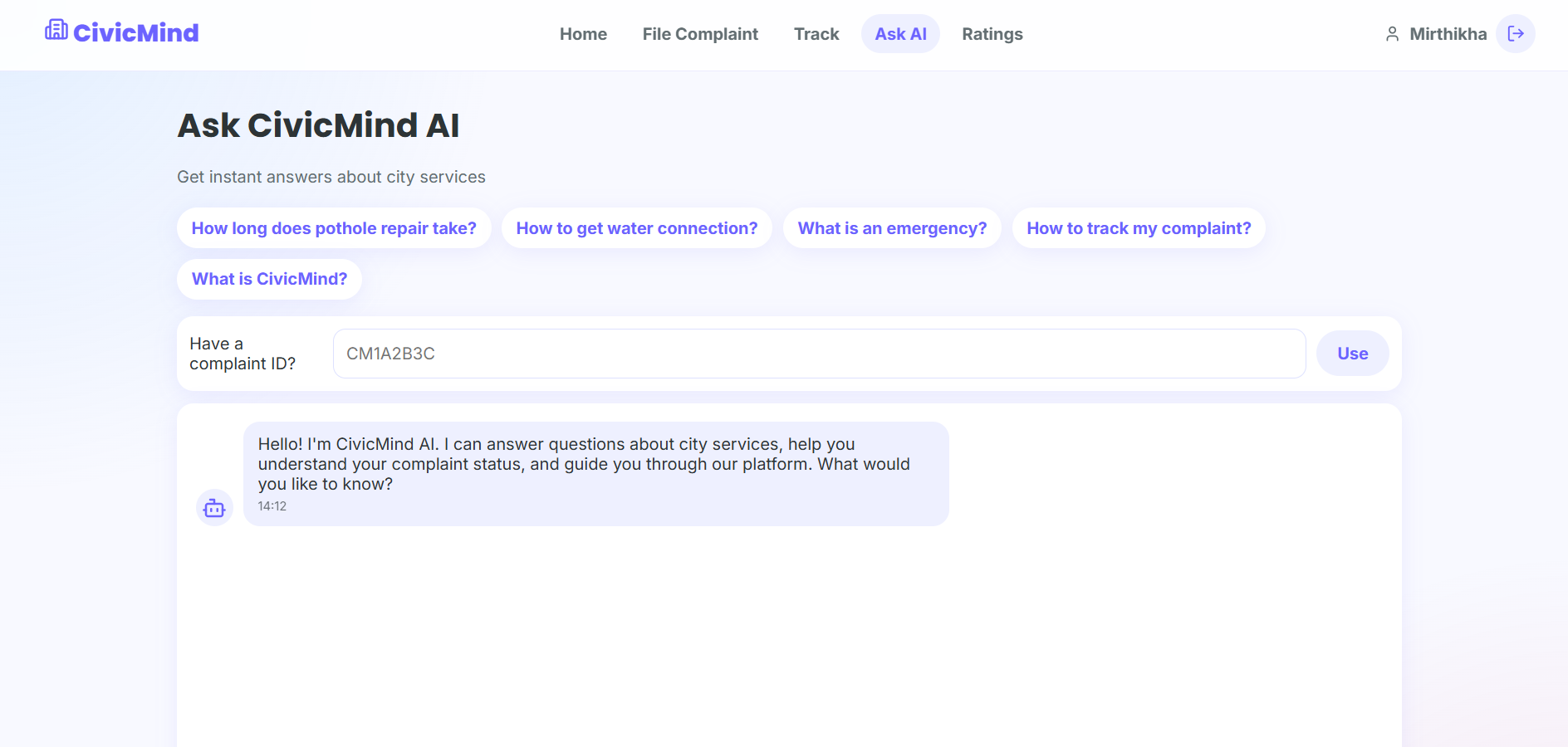
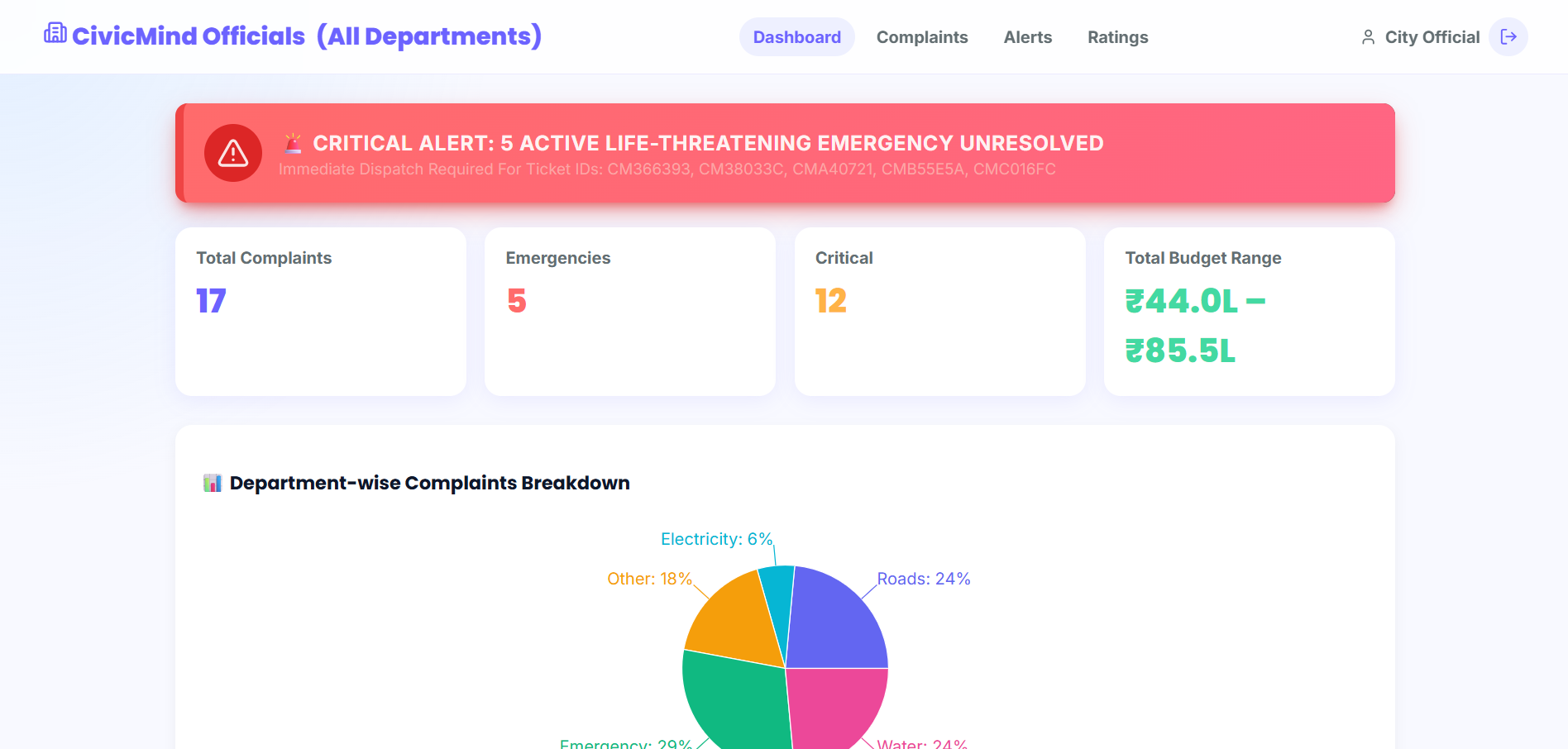
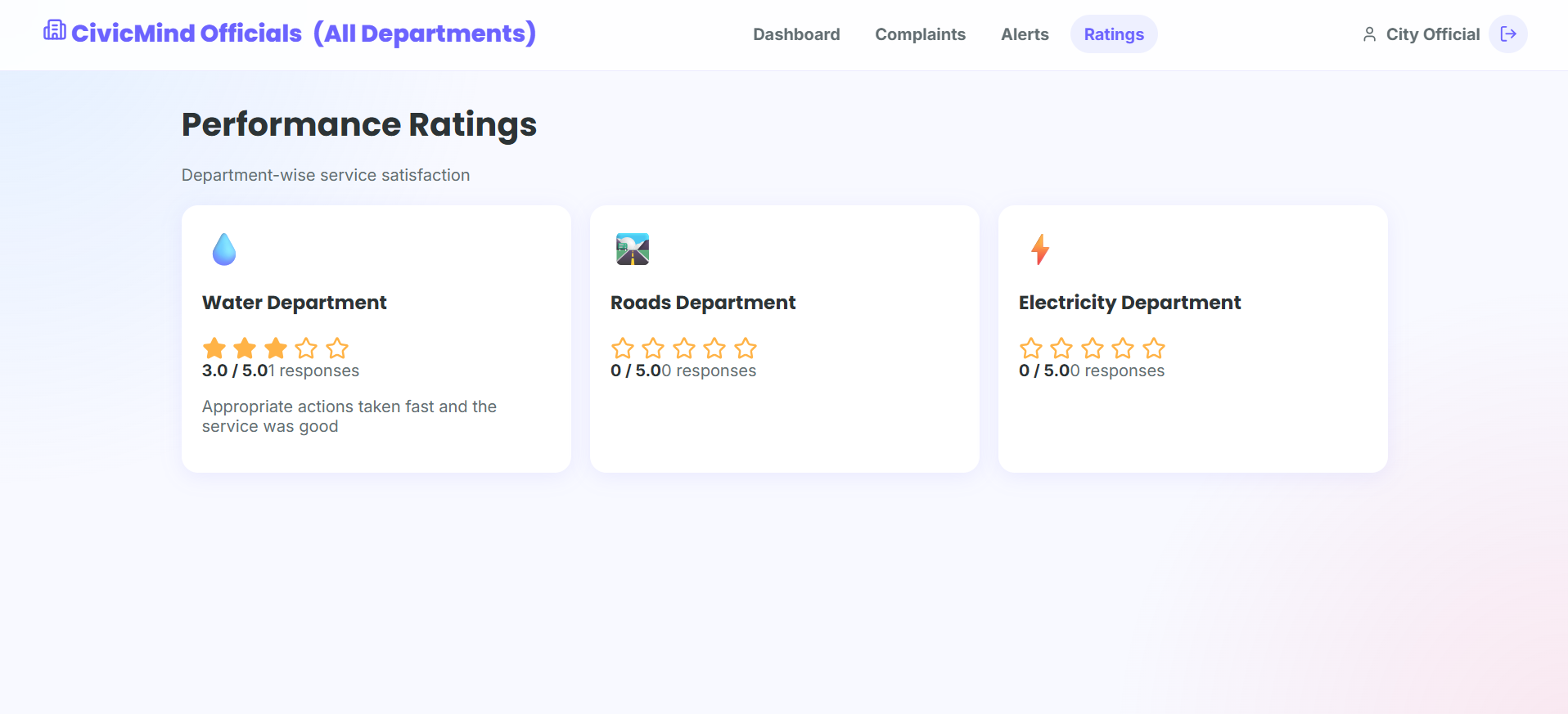
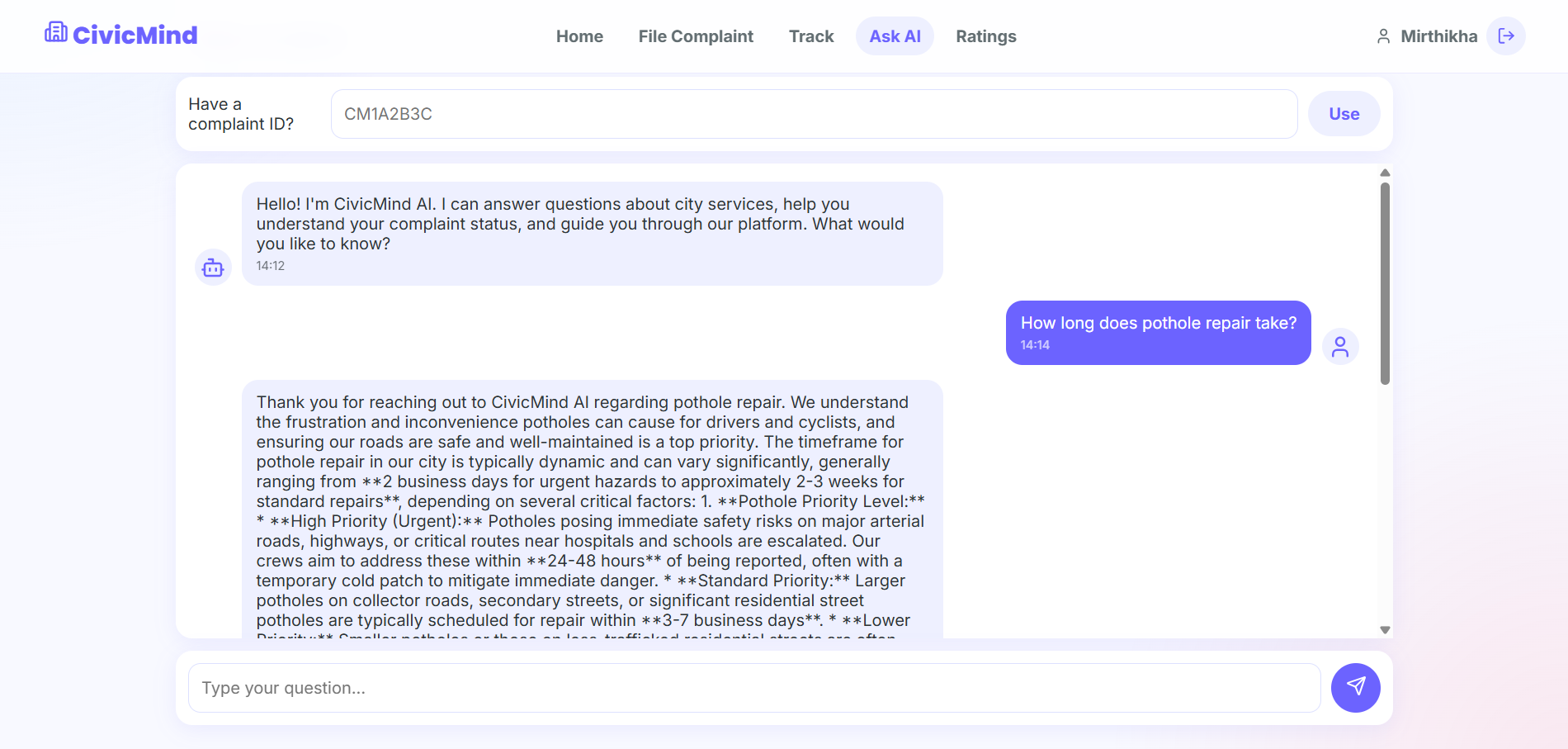
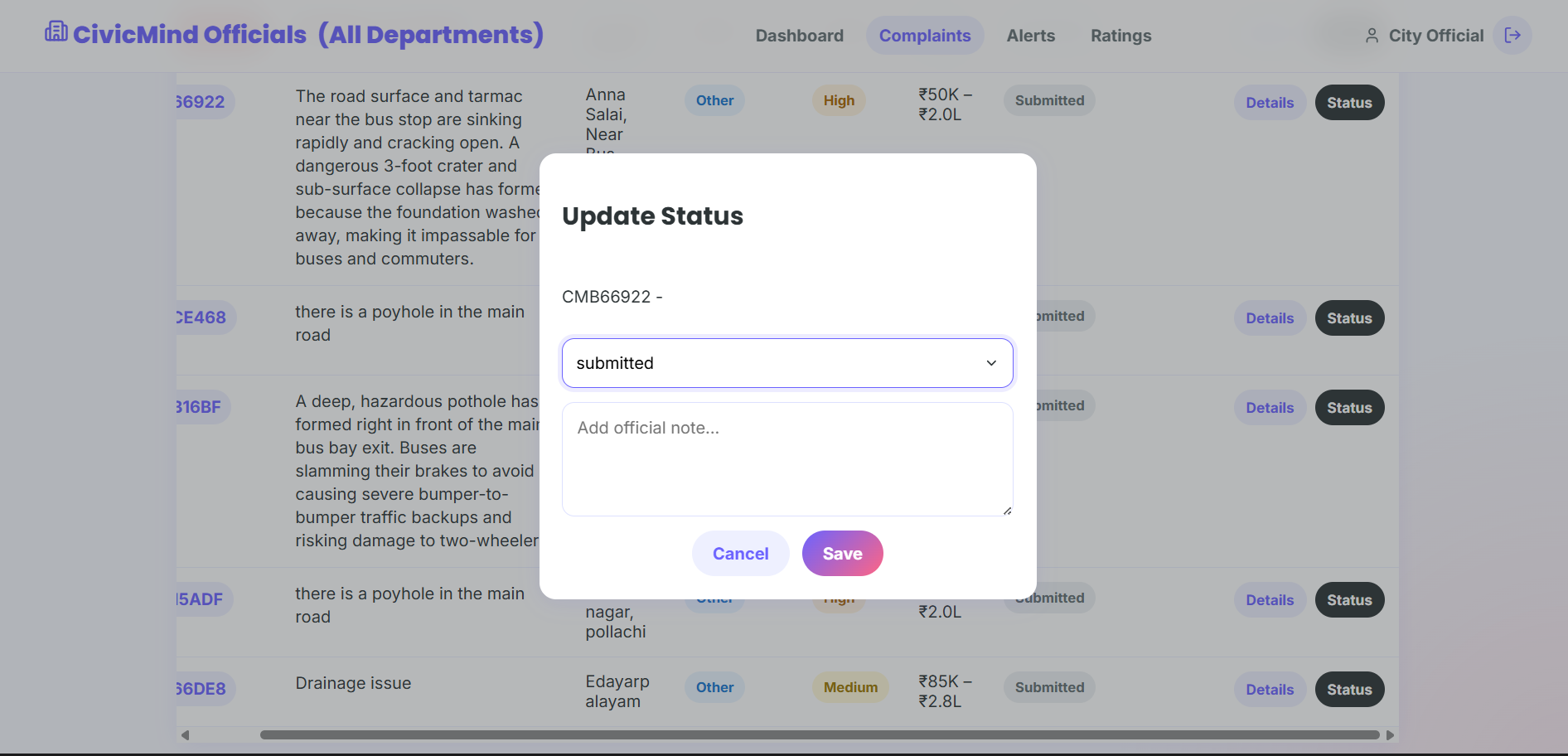
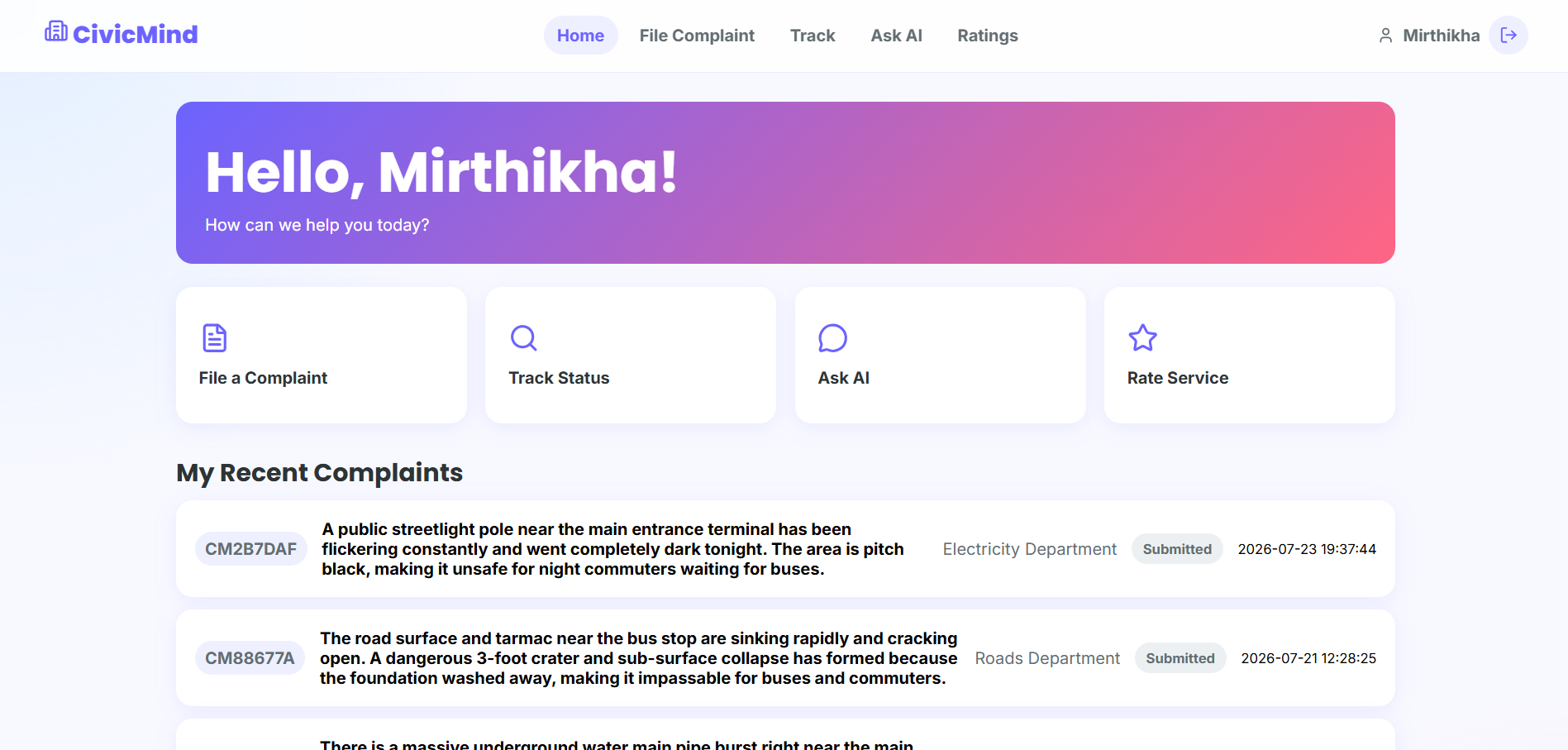
Citizens can stream real-time agent execution telemetry live on screen as they submit complaints, track updates, and query the system using our intelligent assistant. Officials gain access to a unified dashboard featuring emergency alert banners, deduplicated queue metrics, department pie chart breakdowns, and cross-departmental dependency graphs.
How We Built It
- Backend Architecture: Built with Python and FastAPI, serving both structured JSON REST endpoints and Server-Sent Events (SSE) streaming connections (
/api/complaints/submit-stream). - AI Core: Integrated Google Gemini for multi-agent reasoning, diagnostic generation, and vision-based complaint intake.
- Database & Storage: Powered by Firebase Firestore for real-time document persistence and telemetry tracking.
- Frontend UI: Built using React, Lucide Icons, and Recharts to deliver a responsive dashboard featuring live SSE stream terminals, department pie charts, and graph visualizers.
- Self-Correction Guardrails: Engineered custom asynchronous reflection wrappers that dynamically detect schema anomalies or generic template fallbacks, re-prompting the LLM to self-heal output payloads on the fly.
Challenges We Faced
- Handling LLM Response Inconsistencies: LLMs occasionally output truncated JSON or fall back on dry templates like "Requires manual investigation". We overcame this by building Agent 8 (Self-Correction), an active guardrail layer that validates schema compliance and forces detailed diagnostic reasoning before persisting records.
- Real-Time Pipeline Telemetry: Streaming multi-agent intermediate steps to the frontend without blocking server operations required setting up an SSE stream pipeline in FastAPI that yields agent execution events sequentially.
- Cross-Department Graph Mapping: Linking isolated complaints into unified infrastructure root-cause hubs required designing robust node and edge mapping logic that filters out single isolated tickets while retaining complex multi-sector intersections.
What We Learned
- Multi-Agent Orchestration: Designing independent agents with specialized scopes yields far more accurate results than relying on a single monolith prompt.
- Defensive Guardrail Design: Building self-correction loops at the API boundary dramatically increases backend reliability when building LLM-powered applications.
- Real-Time UX Design: Exposing intermediate AI reasoning via live stream telemetry significantly increases user trust and engagement during multi-step processing workflows.
What's Next for CivicMind
- IoT Sensor Integration: Connect smart city water flow sensors and traffic cameras directly to the triage pipeline for automated incident generation.
- Geospatial Mapping: Expand cross-department graphs onto interactive Mapbox maps with heatmaps for localized infrastructure risk planning.
- Predictive Maintenance: Utilize multi-year historical complaint clusters to forecast asset failure risks before major pipeline fractures or road collapses occur.

Log in or sign up for Devpost to join the conversation.