-
-
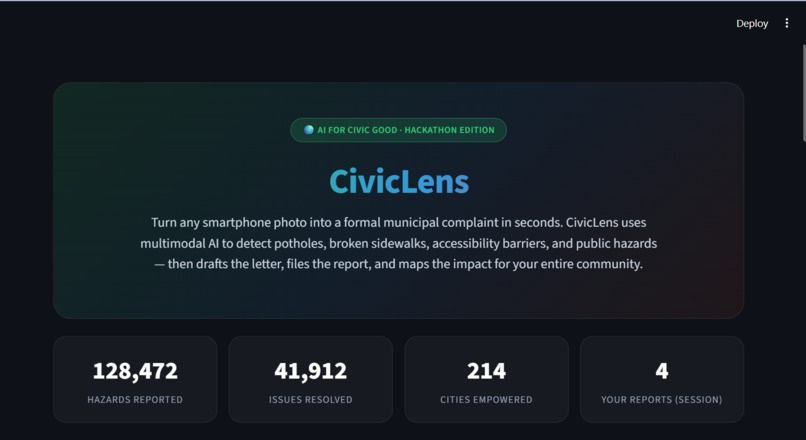
Clean-Impact Dashboard
-
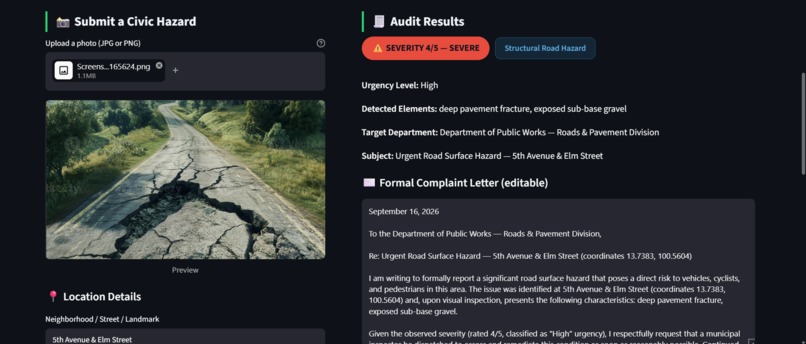
File Report
-
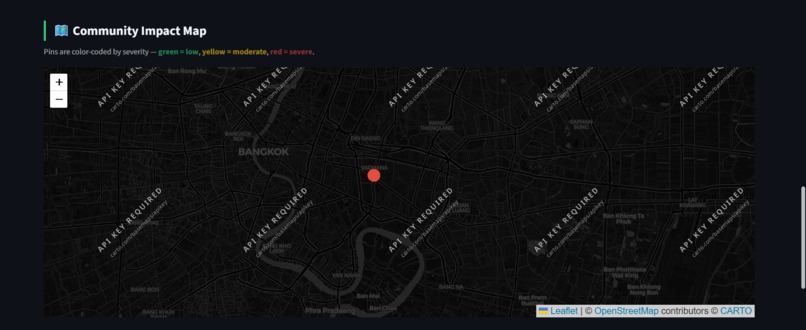
MAP
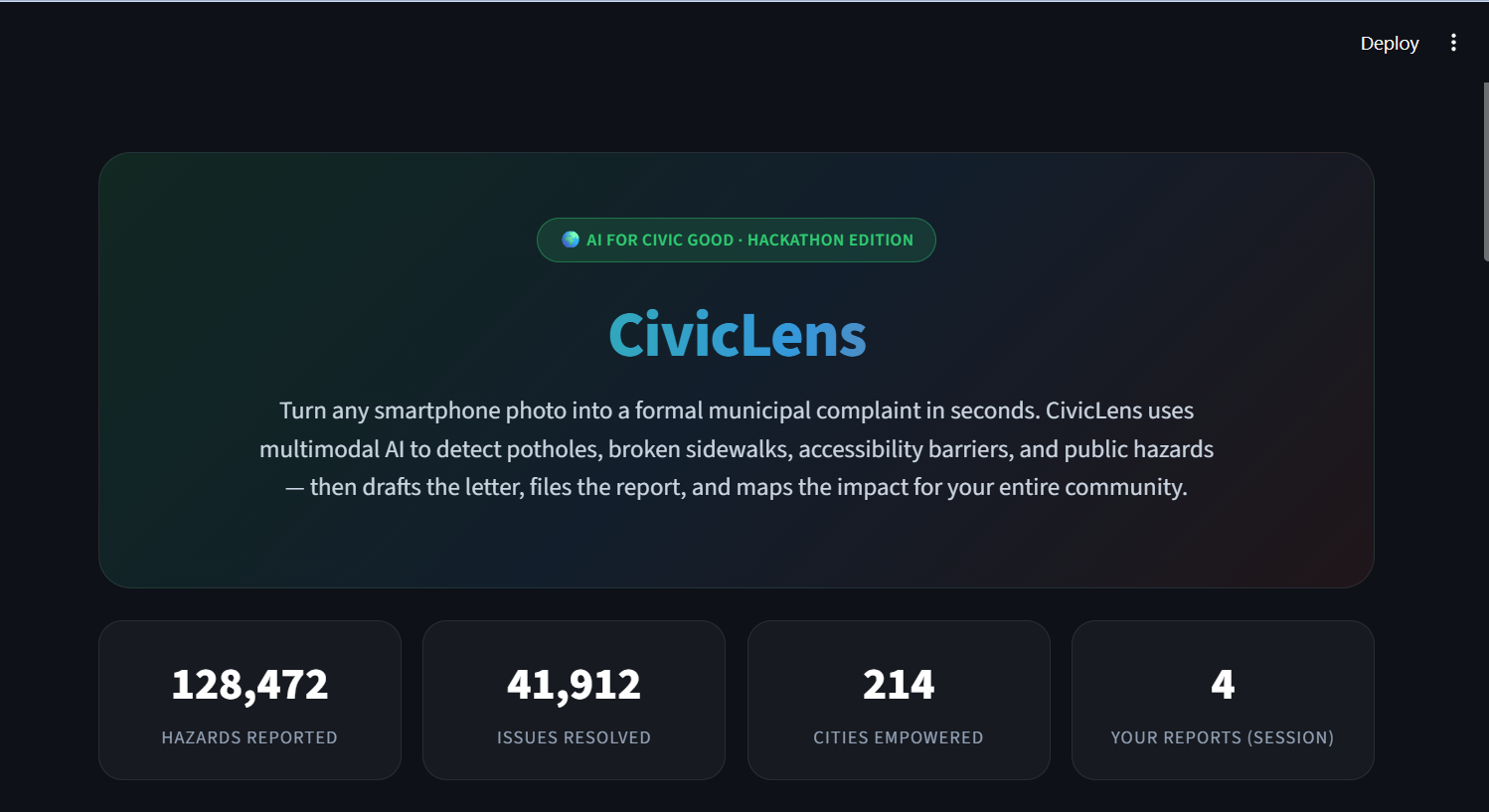
Inspiration
I was inspired to create CivicLens after noticing how many local infrastructure issues—like broken sidewalks, dangerous potholes, and accessibility barriers—go completely unreported simply because government reporting forms are too complicated and tedious for everyday citizens. I wanted to build a tool that bridges the gap between everyday people and local municipal departments, turning community advocacy into something accessible, fast, and impactful.
What it does
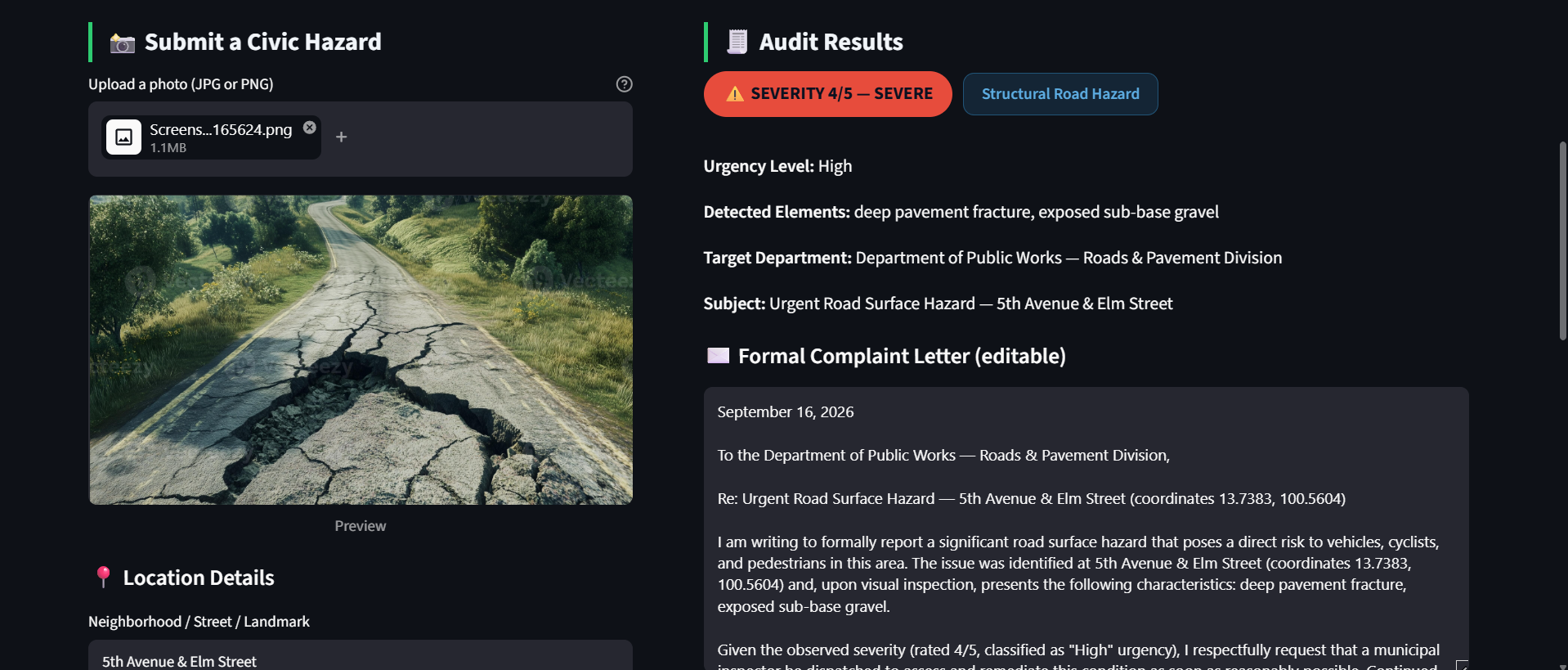
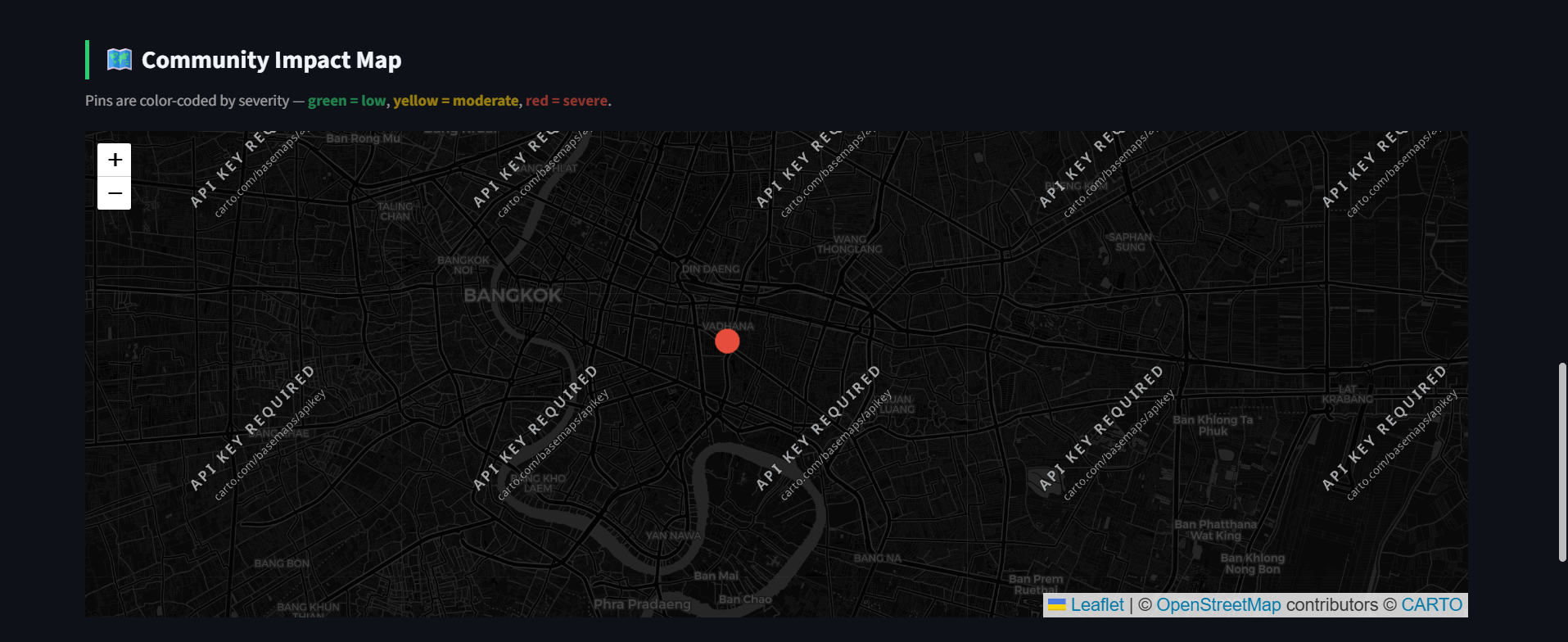
CivicLens is an AI-powered web application that lets users snap a photo of any civic hazard or infrastructure defect. Using multimodal AI, the app instantly analyzes the severity of the issue, categorizes it, and automatically generates a formal, legally grounded municipal complaint letter. It also maps out reported issues on an interactive community dashboard, giving neighborhoods collective visibility over local repairs.
How I built it
I built CivicLens using Python and Streamlit to ensure a fast, clean, and responsive user interface. For the backend logic, I integrated the Google GenAI SDK (Gemini) with a structured JSON system prompt to handle multimodal image inputs and convert them into organized data. I also designed the application to parse structural metadata, dynamically calculate hazard severity ratings, and render color-coded map pins for the user interface.
Challenges I faced
One of the biggest challenges I faced was ensuring the AI returned reliable, parseable structured data without wrapping it in broken markdown or conversational text that could crash the web app. I solved this by writing strict system instructions and formatting guards into the prompt to guarantee clean JSON outputs every single time. Another challenge was balancing a robust feature set—like auto-generated letters and interactive maps—while keeping the codebase lightweight and performant.
Accomplishments that I'm proud of
- Successfully integrated multimodal AI: I built a seamless pipeline where a raw, messy photo of a street hazard is instantly translated into structured, parseable JSON data without breaking the web app.
- Automated municipal communication: I engineered a system that converts simple user inputs into professional, legally grounded government complaint letters, completely removing the bureaucratic friction of civic reporting.
- Built a fully functional end-to-end app: I successfully combined an intuitive Streamlit frontend, AI backend processing, and an interactive map dashboard into a single, cohesive, production-ready web application under tight hackathon conditions.
What I learned
Through building CivicLens, I deepened my understanding of multimodal AI integration, advanced prompt engineering, and structured output parsing. I also learned how to design software with a strong focus on real-world social impact, turning complex technical AI tools into a practical solution for everyday communities.
What's next for CivicLens
- Direct municipal API integration: I want to partner with local city councils and government portals so users can submit their auto-generated reports directly to official ticketing systems with a single click.
- Expanded mobile accessibility: I plan to optimize the platform into a native mobile progressive web app (PWA) so citizens can easily snap photos on-the-go straight from their phones.
- Community voting and tracking features: I aim to add a crowd-sourced upvoting system and status tracking (from reported to under review to resolved) so neighborhoods can monitor local infrastructure repairs collectively.


Log in or sign up for Devpost to join the conversation.