Inspiration
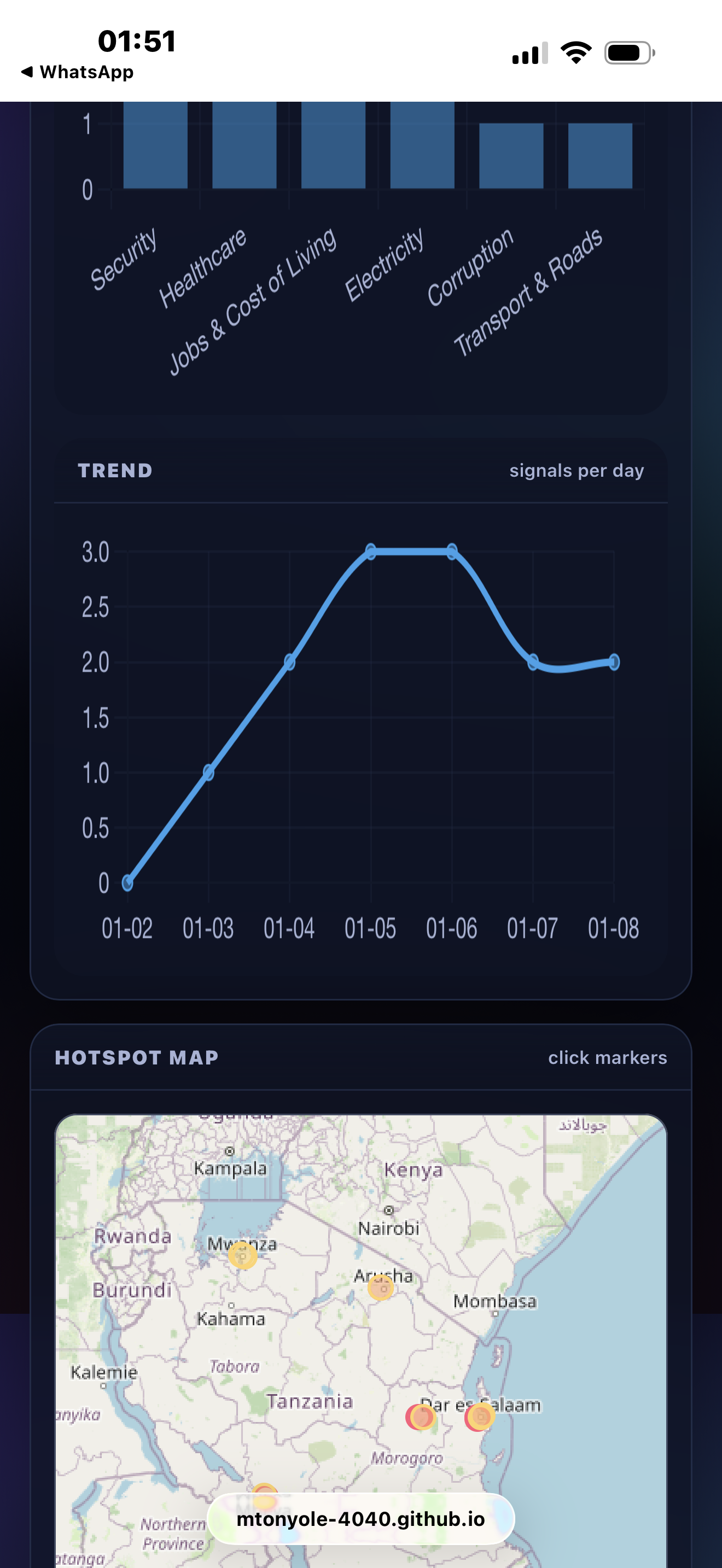
CivicLens AI was inspired by the growing gap between citizen voices and real decision-making. Every day, communities share critical information about public issues such as water access, healthcare shortages, infrastructure failures, and security concerns through social platforms and reporting channels. However, this data is fragmented, unstructured, and difficult for decision-makers to act on in real time. CivicLens AI addresses this gap by transforming unstructured citizen-generated signals into actionable public intelligence. The platform analyzes simulated community reports using AI techniques to detect emerging issues, identify geographic hotspots, assess urgency, and surface trends over time. Instead of focusing on individual complaints, the system highlights patterns that indicate where intervention is most urgently needed.
What it does
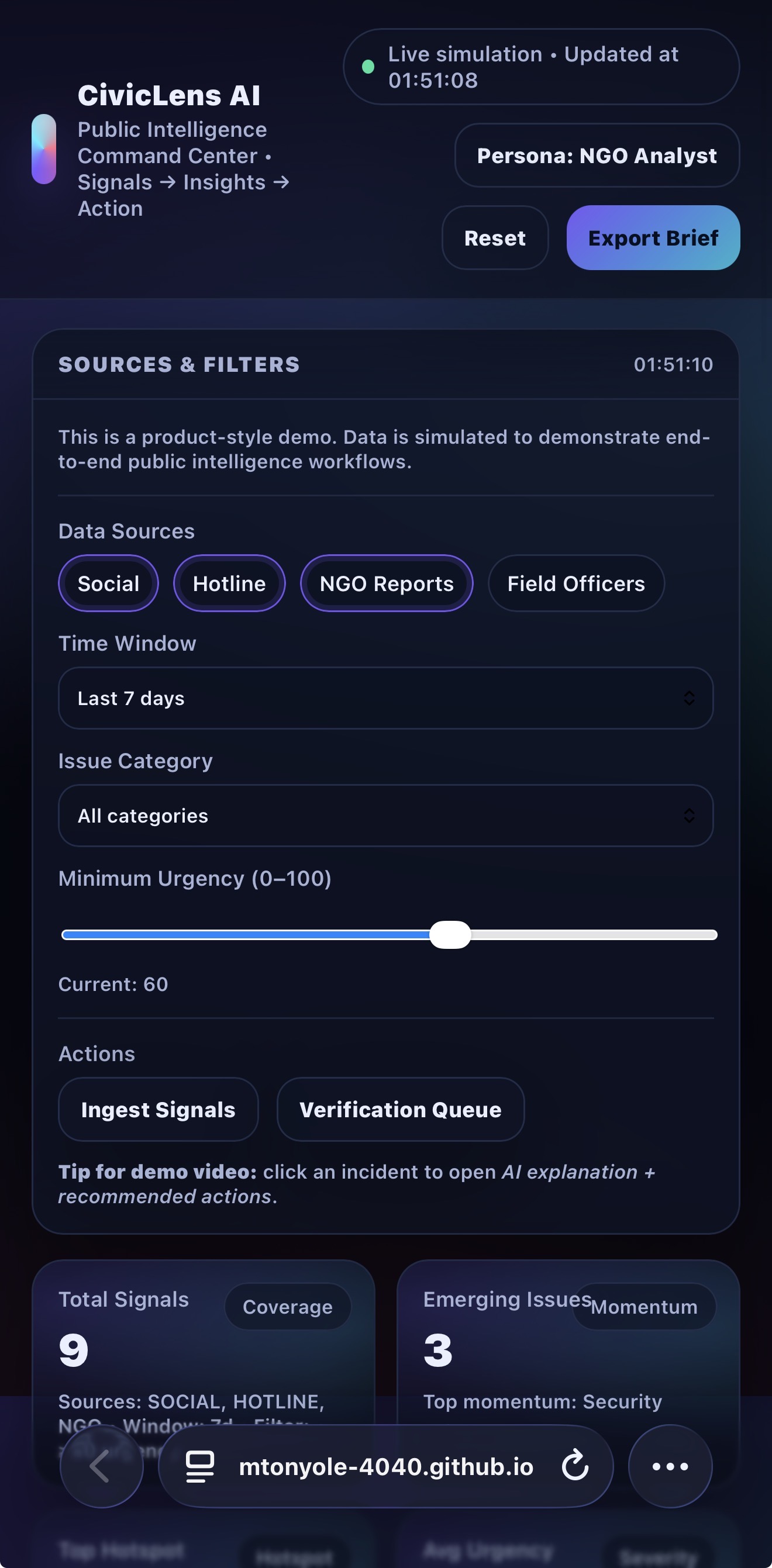
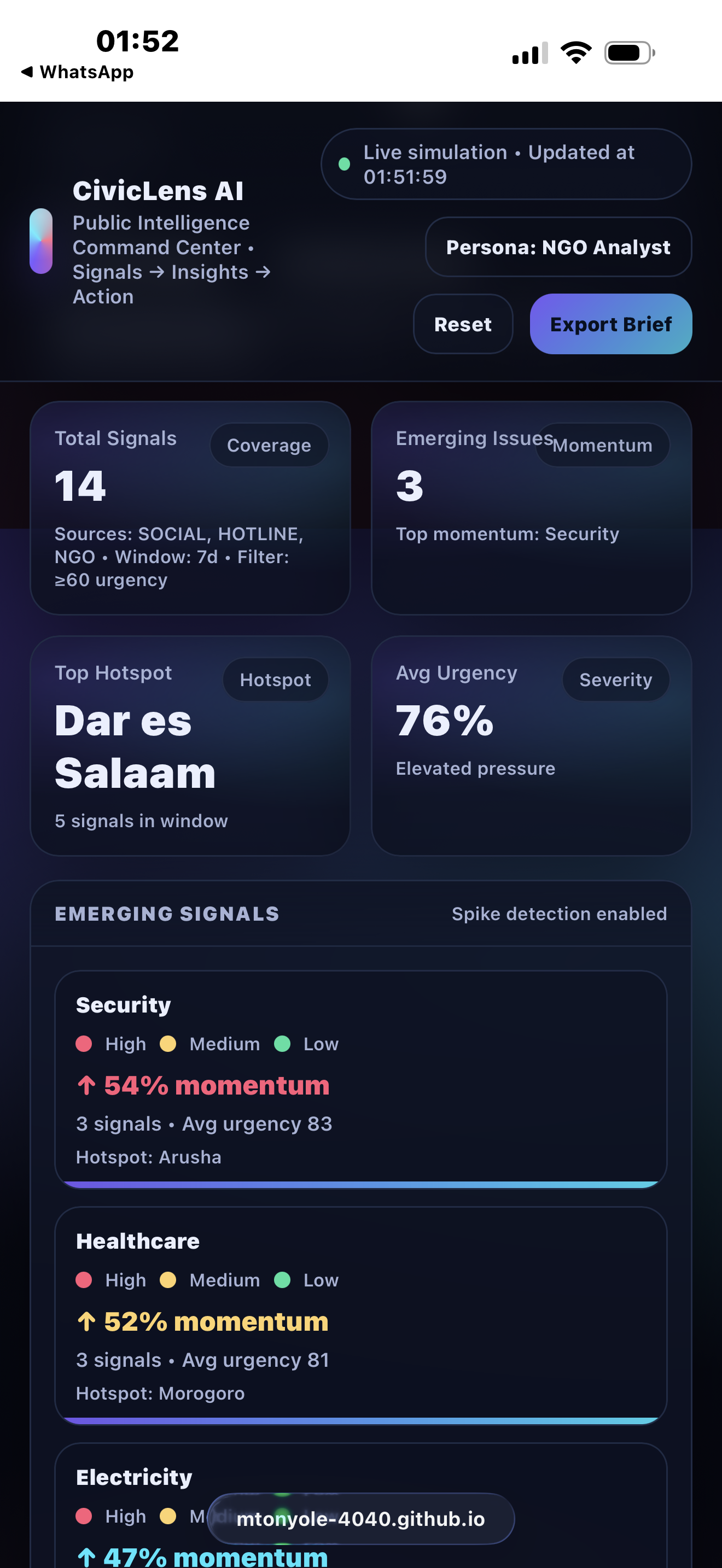
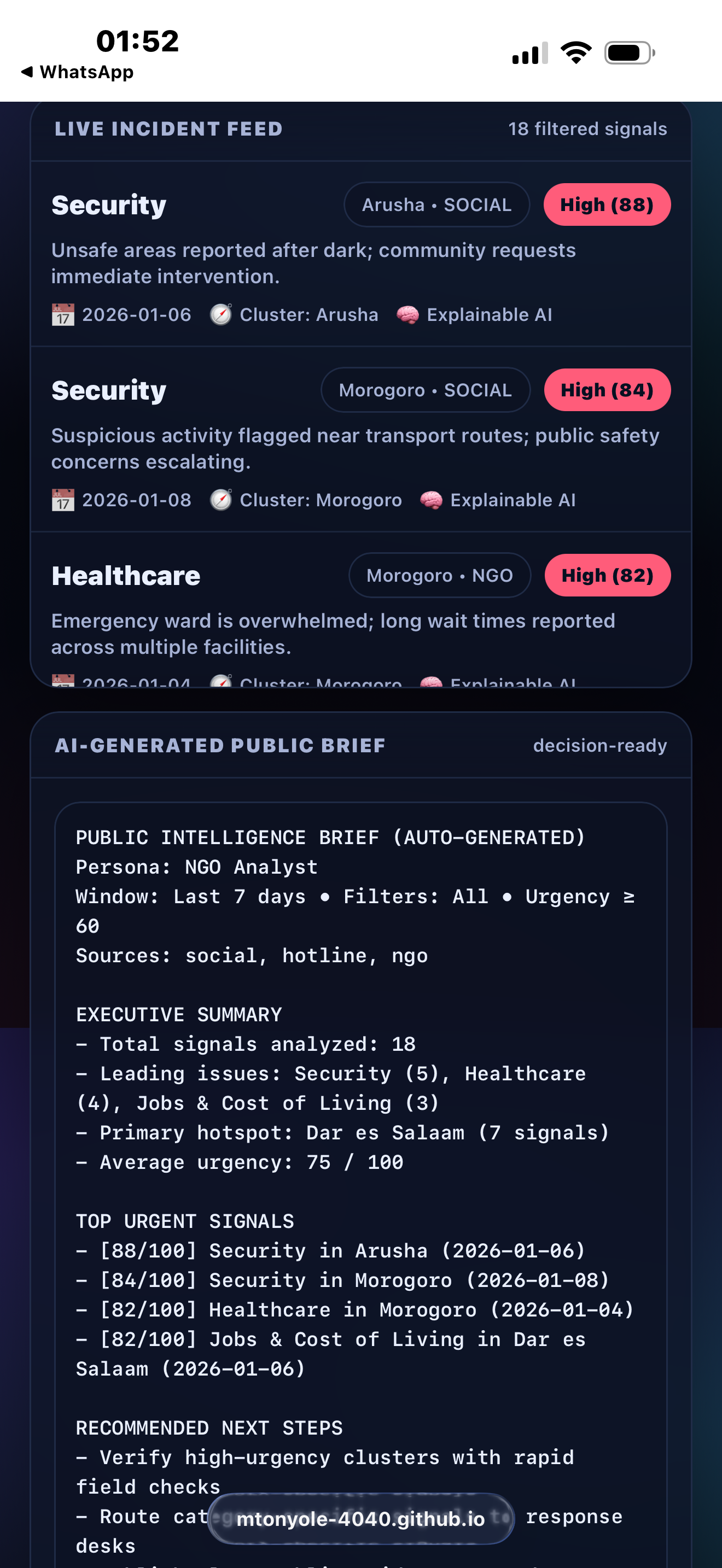
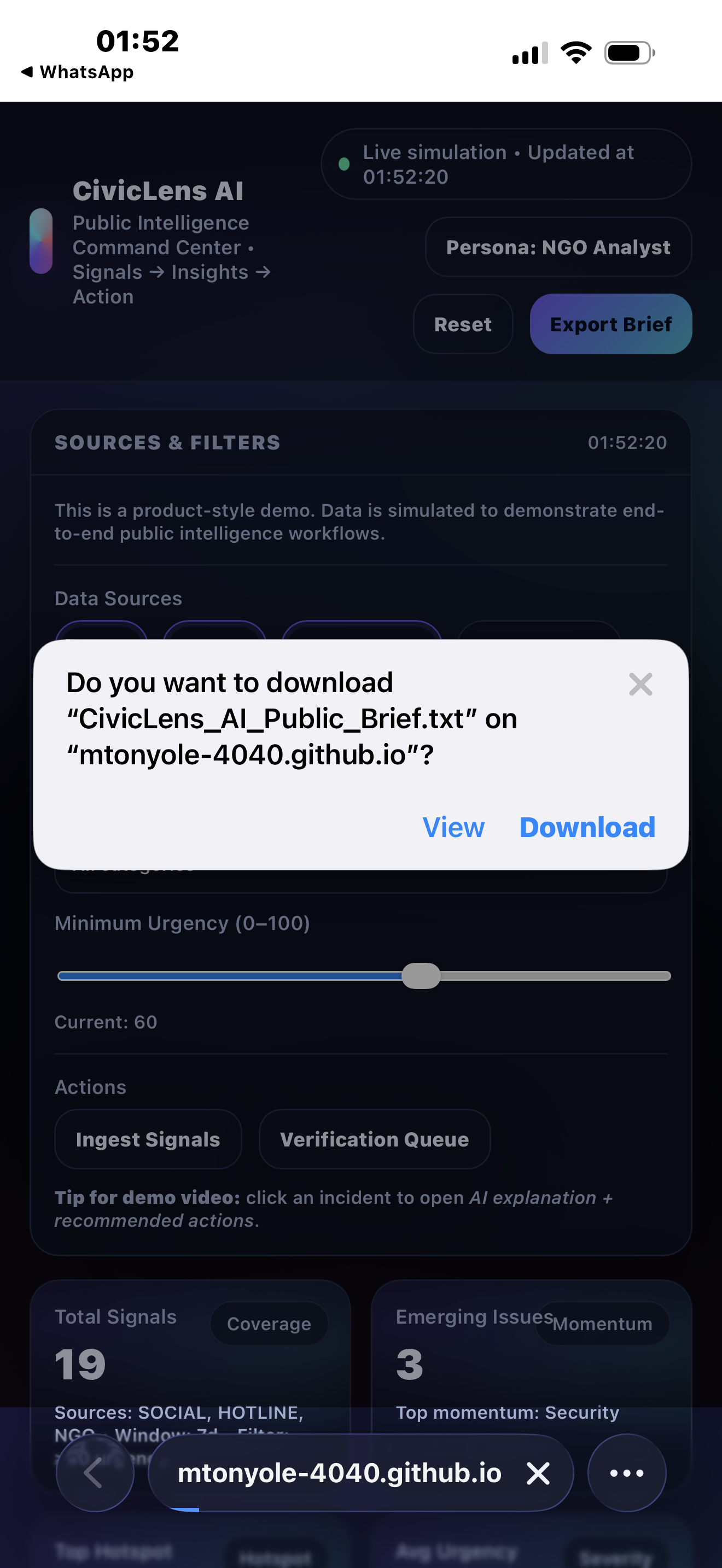
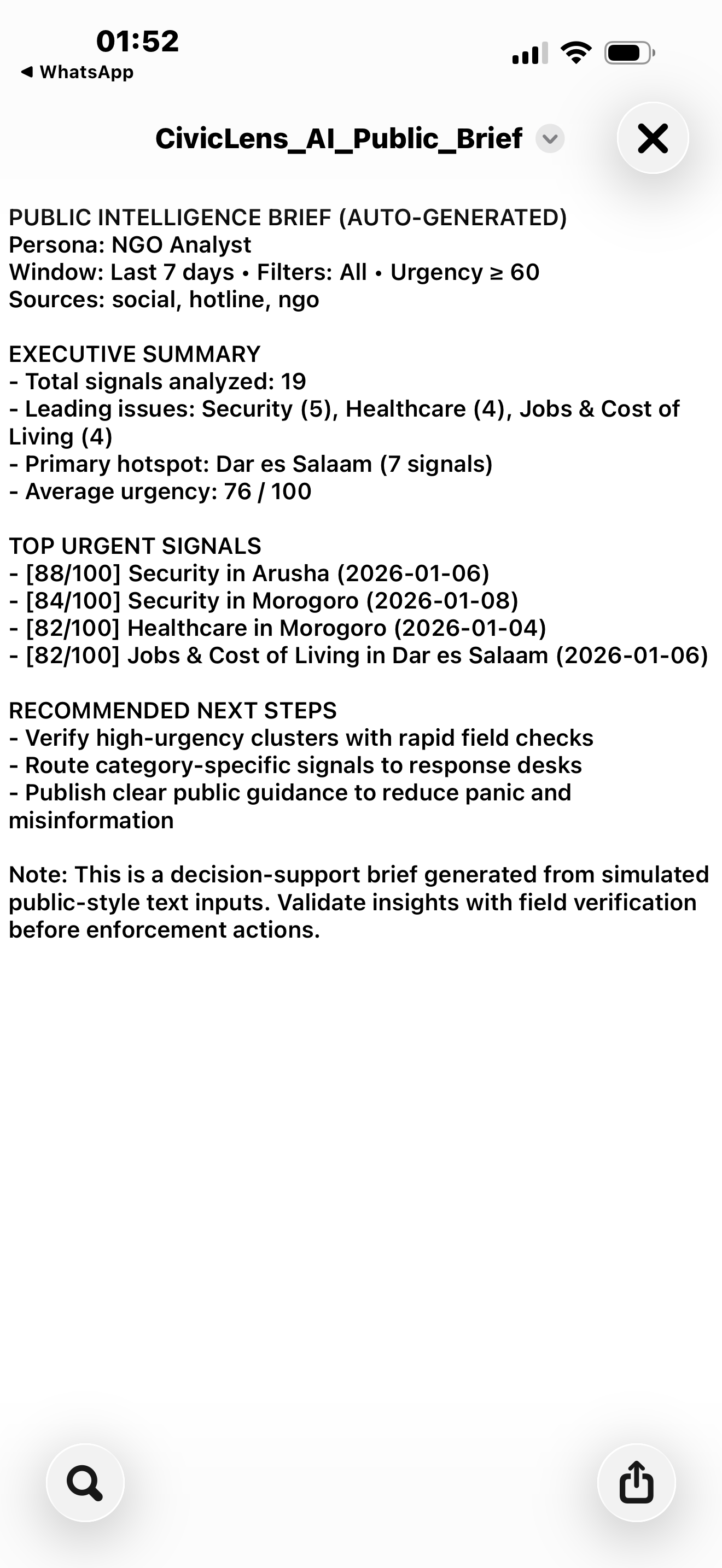
CivicLens AI is an AI-powered public intelligence platform that transforms unstructured citizen-generated data into actionable insights. The platform: • Ingests public signals from multiple sources • Detects emerging public issues and trends • Identifies geographic hotspots • Scores urgency and severity • Provides explainable AI insights for each incident • Generates an automated public intelligence brief for decision-makers It enables governments, NGOs, media, and impact-focused organizations to move from reactive responses to proactive, data-informed action.
How we built it
CivicLens AI was built as a web-based MVP designed to look and behave like a real-world public intelligence command center. The system includes: • A live simulation engine to represent incoming citizen signals • AI-inspired logic for issue classification, urgency scoring, and trend detection • Interactive visual analytics including charts, maps, and dashboards • Incident drill-down views with AI explanations and recommended actions • An auto-generated public intelligence brief with export functionality The frontend was implemented using lightweight web technologies to ensure clarity, speed, and scalability within the hackathon timeframe.
Challenges we ran into
One of the main challenges was balancing realism with feasibility. Public intelligence platforms are complex, and building a full backend and live data pipelines was outside the scope of a hackathon. To address this, the project focuses on: • A believable, functional MVP • Clear visualization of insights rather than raw data • Explainable AI outputs instead of black-box predictions Another challenge was designing a system that communicates trust and usability while handling sensitive public issues responsibly.
Accomplishments that we're proud of
• Building a fully interactive, product-style command center as a solo participant
• Designing a live simulation that demonstrates real-time intelligence workflows
• Creating explainable AI insights rather than opaque predictions
• Delivering a scalable concept that can extend beyond a hackathon demo
• Completing an end-to-end solution from ideation to presentation
What we learned
Through this project, learned that impactful AI systems do not always require heavy infrastructure. Clear problem framing, explainability, and strong user experience can significantly increase the usefulness of AI-driven insights. also learned how to scope complex societal problems into a focused, scalable MVP suitable for real-world decision-making.
What's next for CivicLens AI
Future versions of CivicLens AI could include real-time data ingestion, multilingual support, voice-to-text reporting, advanced verification workflows, and integrations with government and NGO systems.
The long-term vision is to position CivicLens AI as a core public intelligence layer that helps institutions respond faster, smarter, and more transparently to community needs.


Log in or sign up for Devpost to join the conversation.