Inspiration
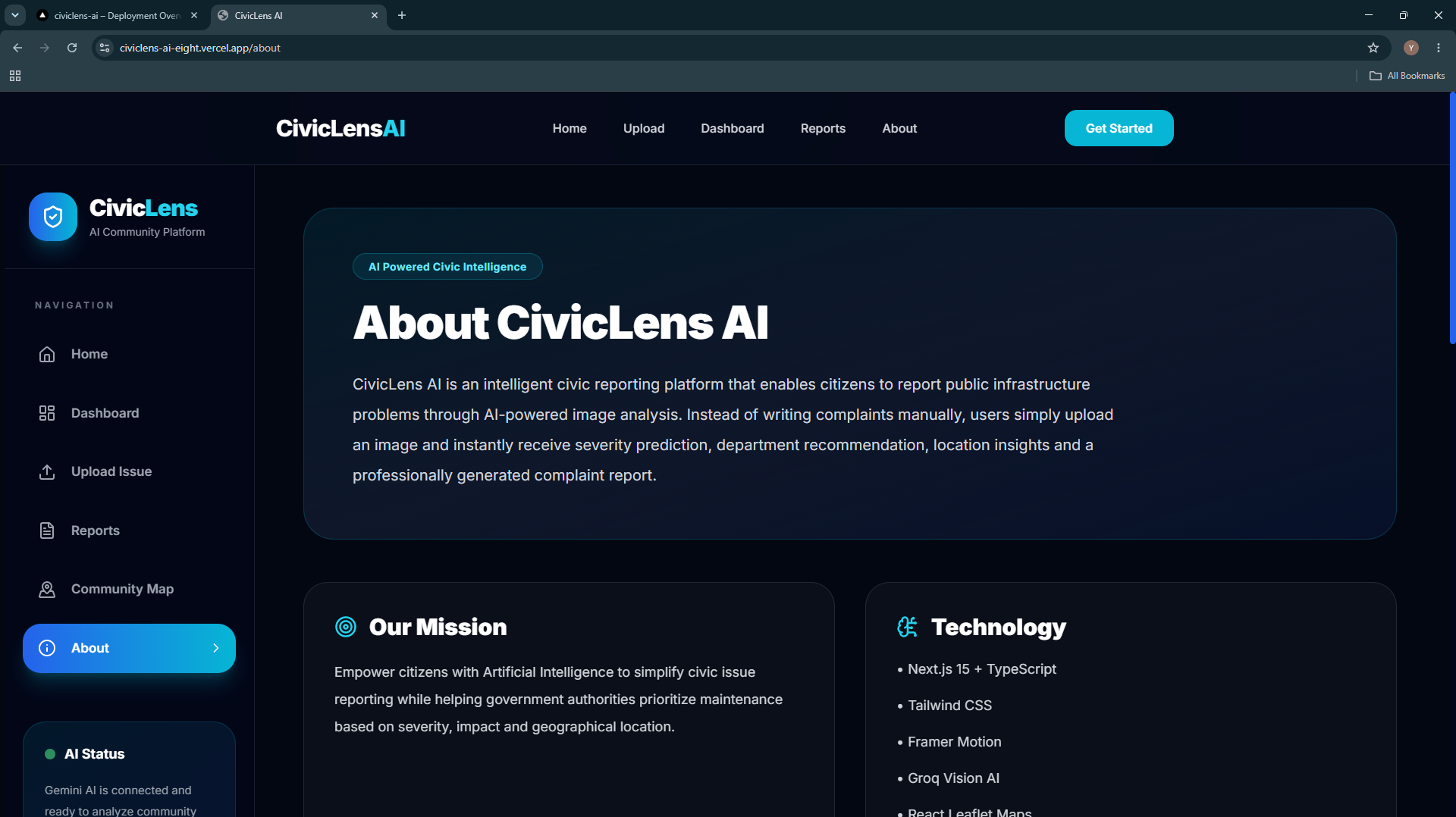
Every day, citizens encounter civic issues such as potholes, overflowing garbage bins, broken streetlights, and damaged roads. Unfortunately, existing reporting systems are often slow, outdated, and difficult to use, resulting in delayed action and unresolved problems. We wanted to build a solution that empowers citizens to report issues effortlessly using artificial intelligence. CivicLens AI was created to bridge the gap between communities and local authorities, making civic reporting faster, smarter, and more transparent while contributing to cleaner and safer cities.
What it does
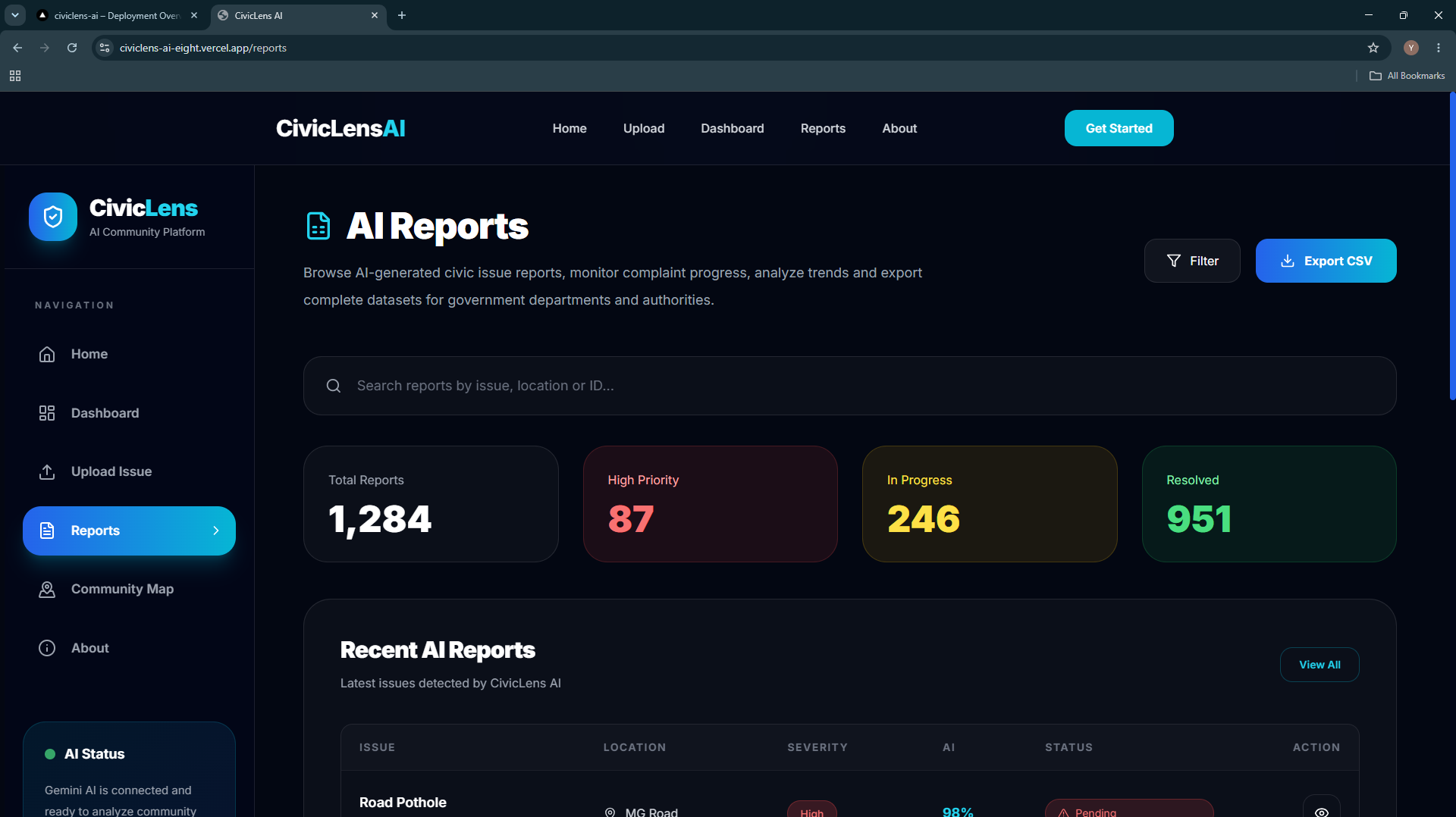
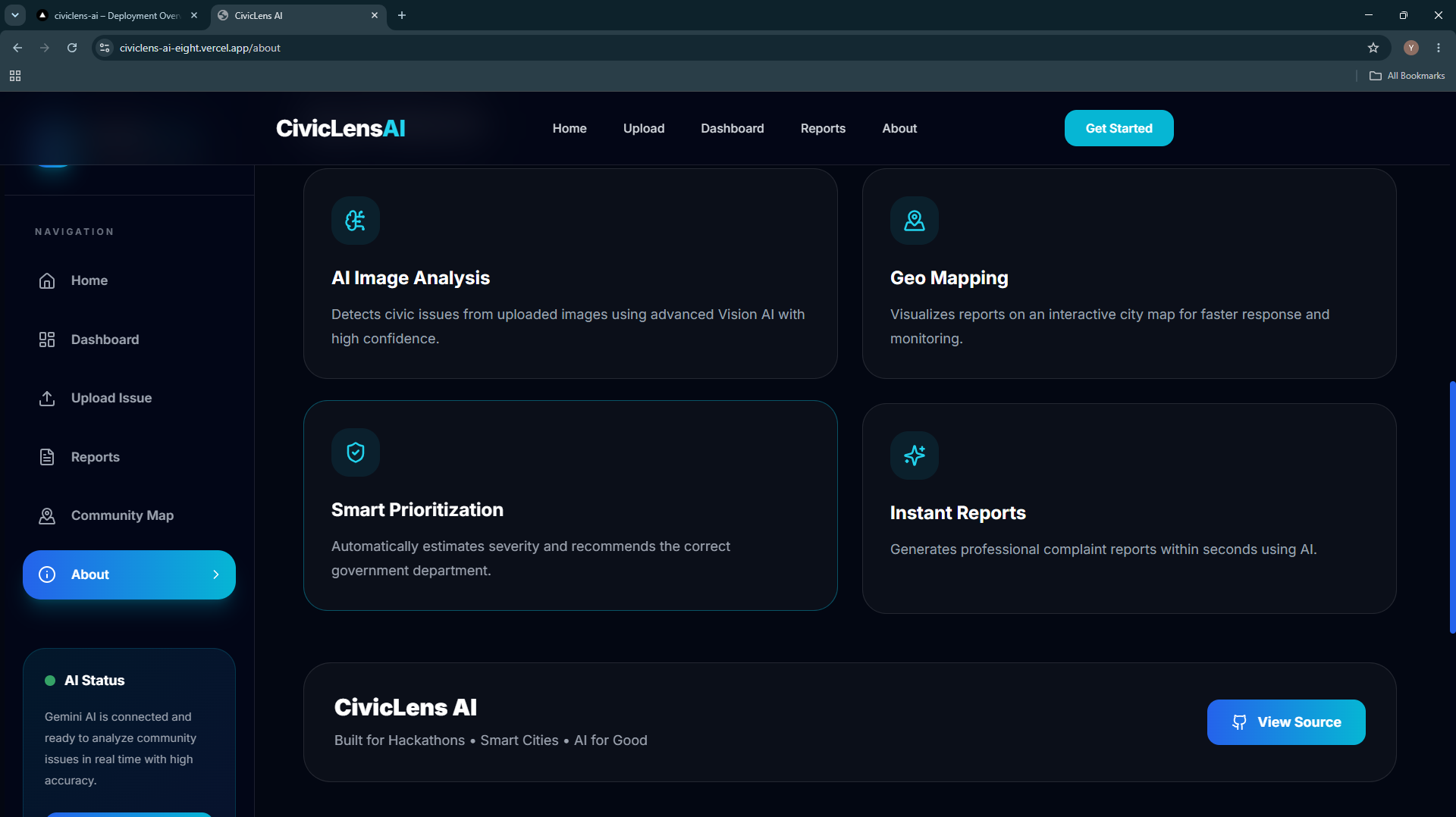
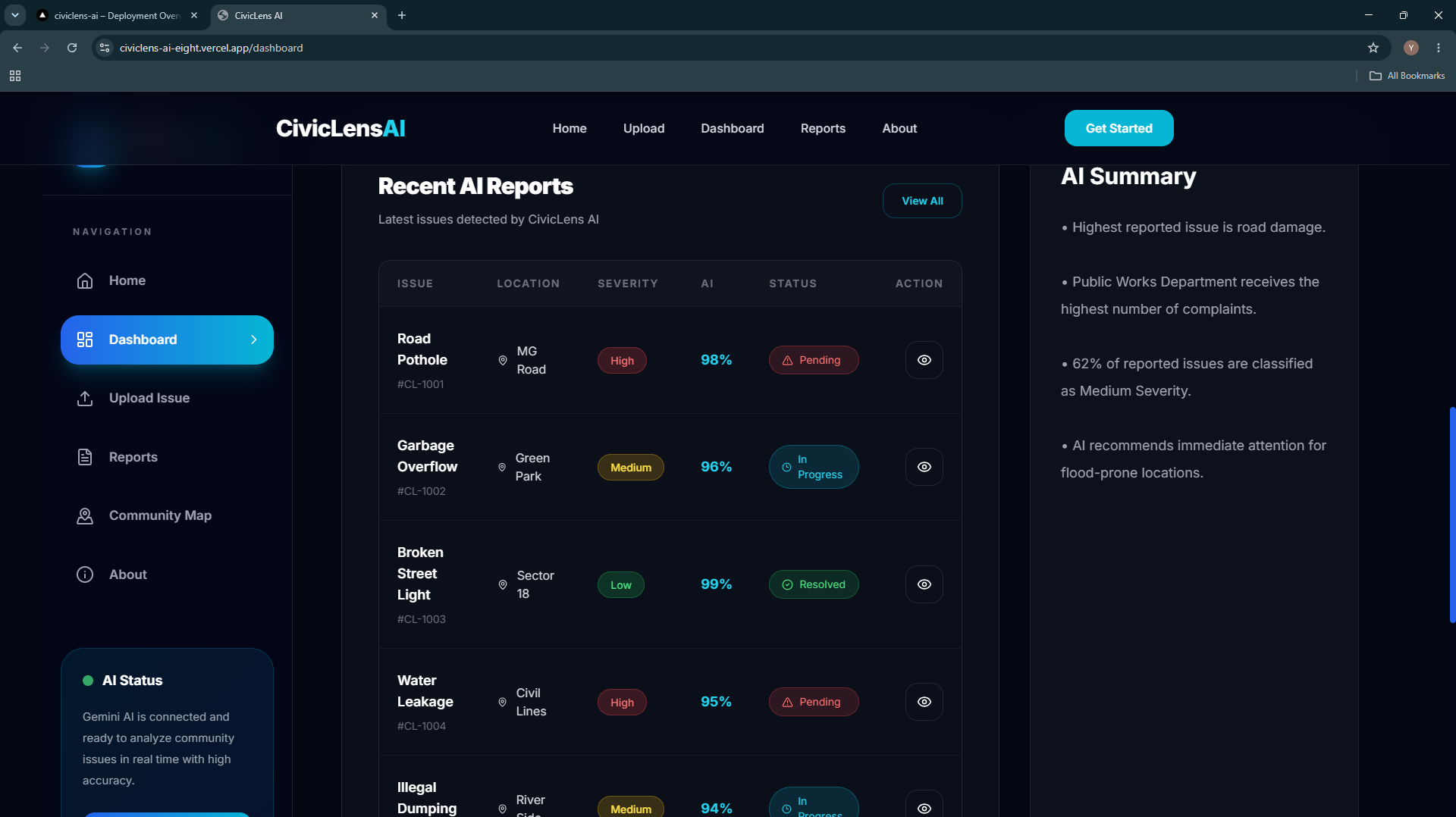
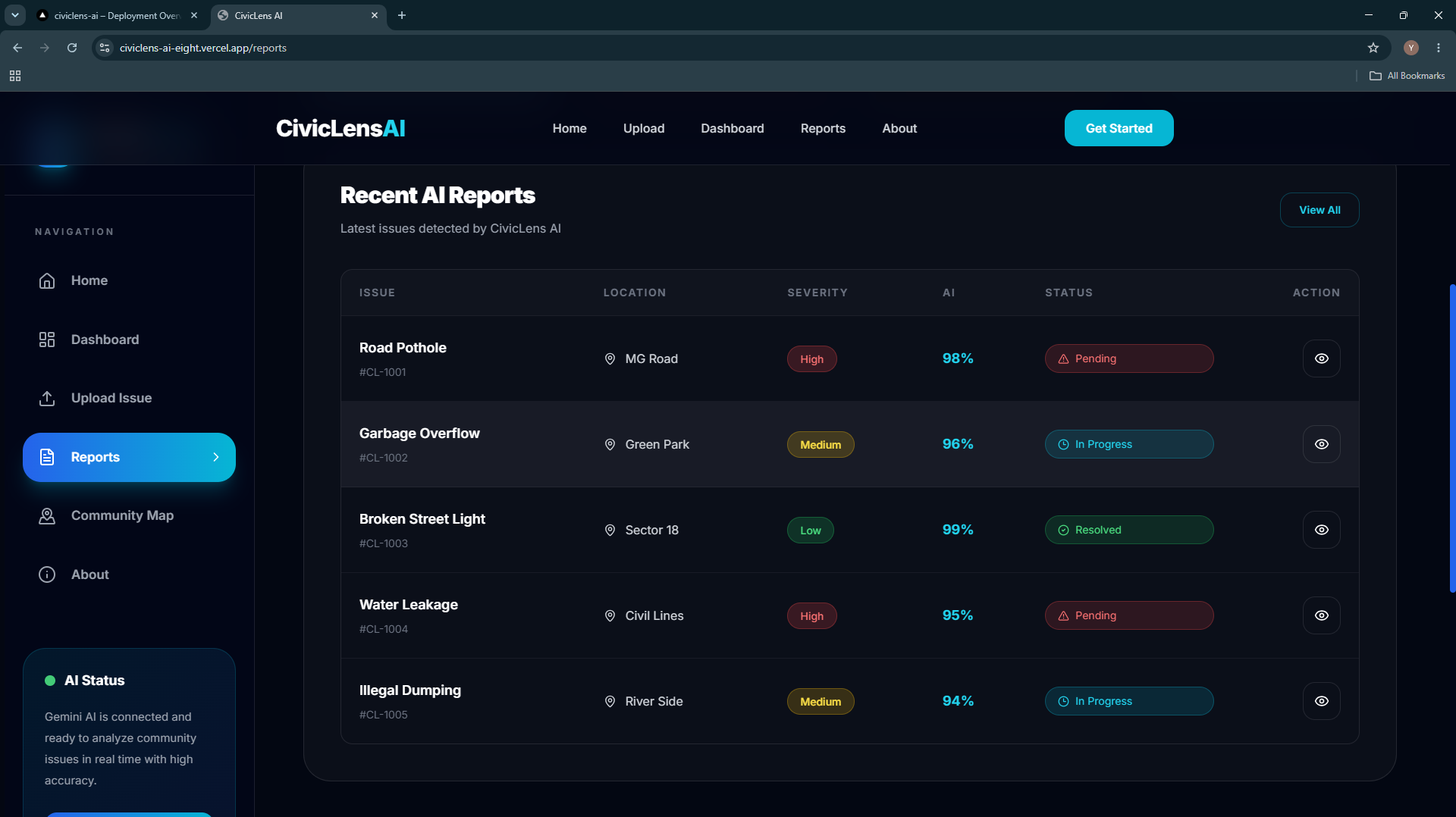
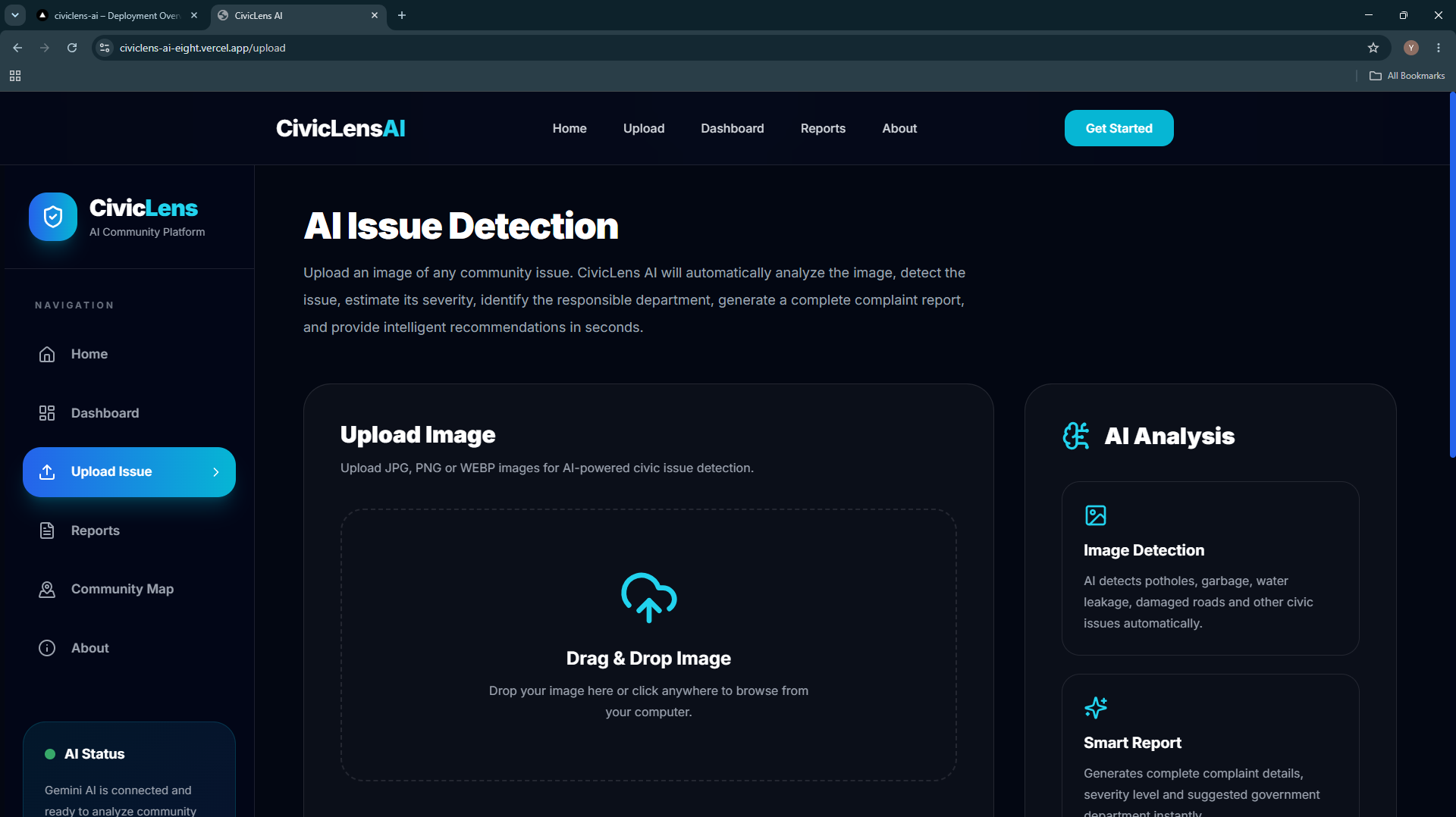
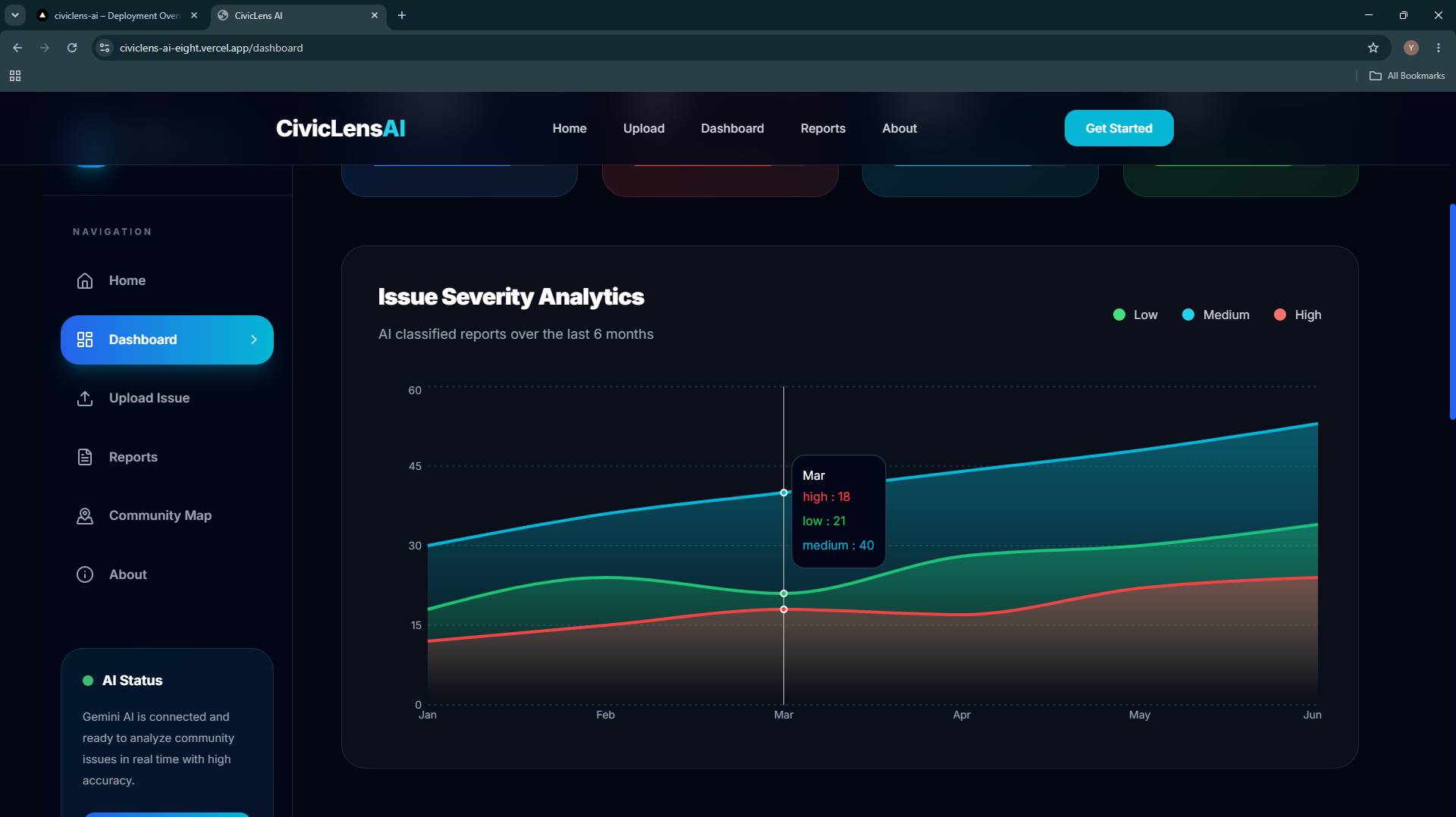
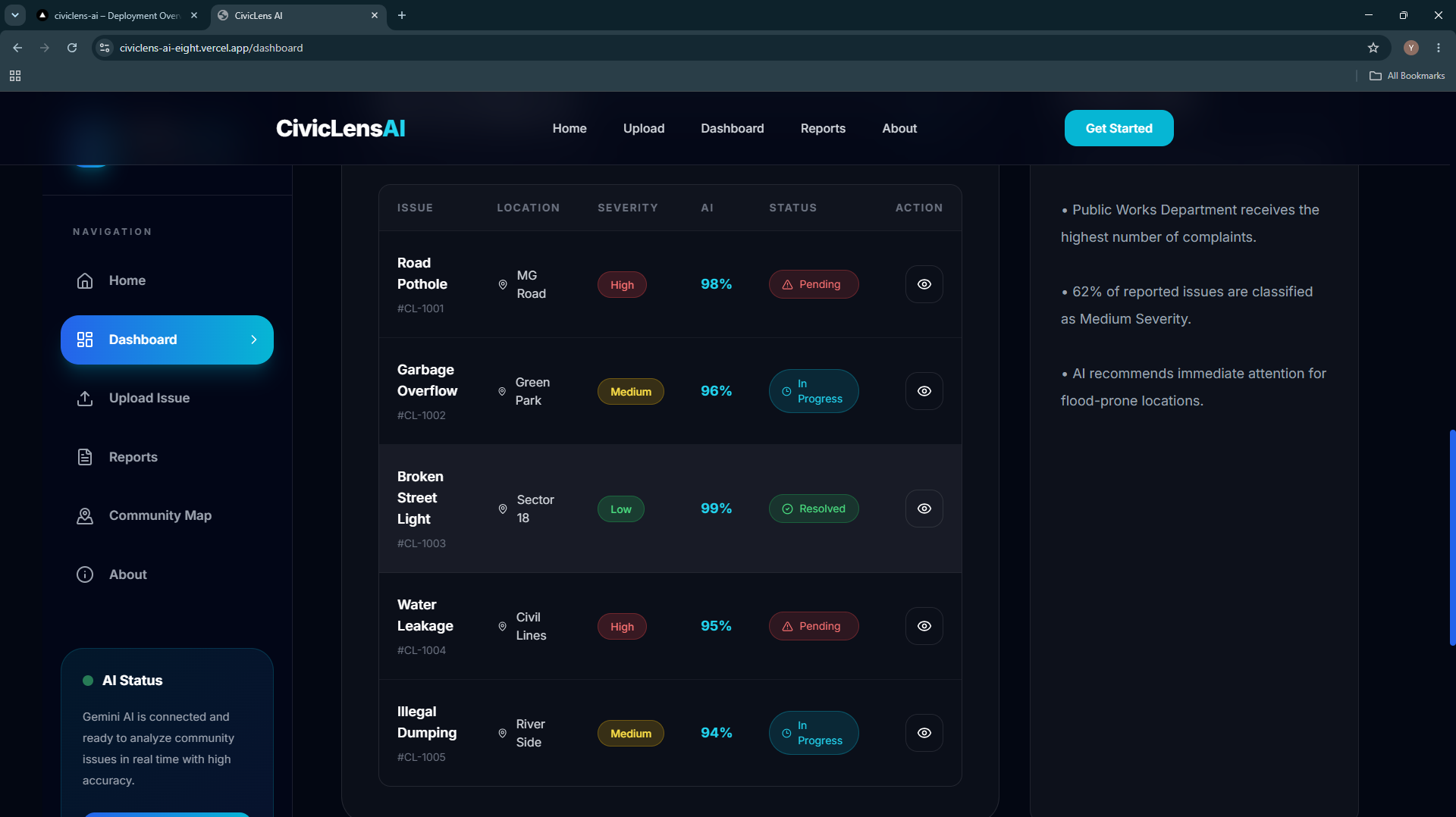
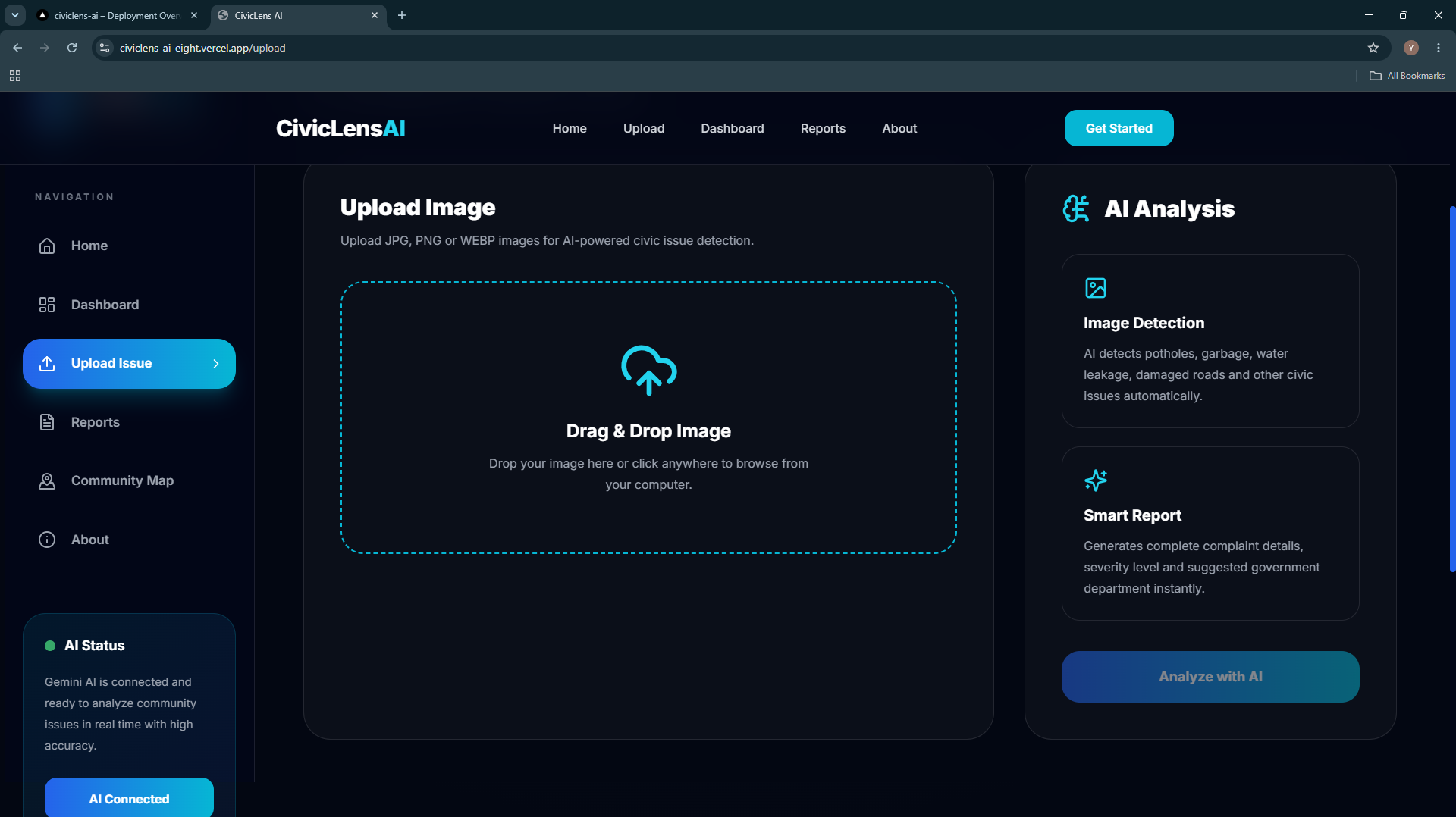
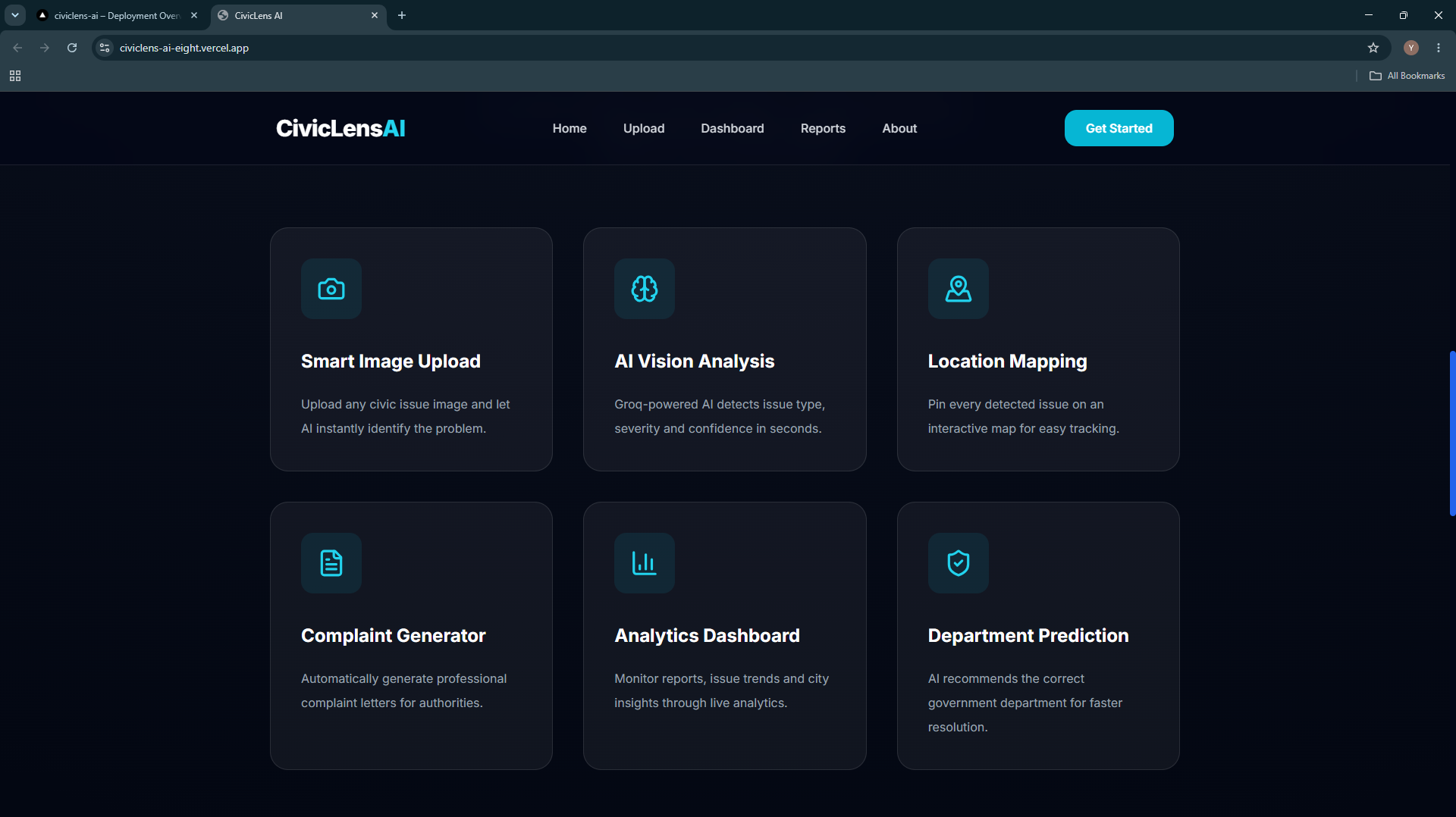
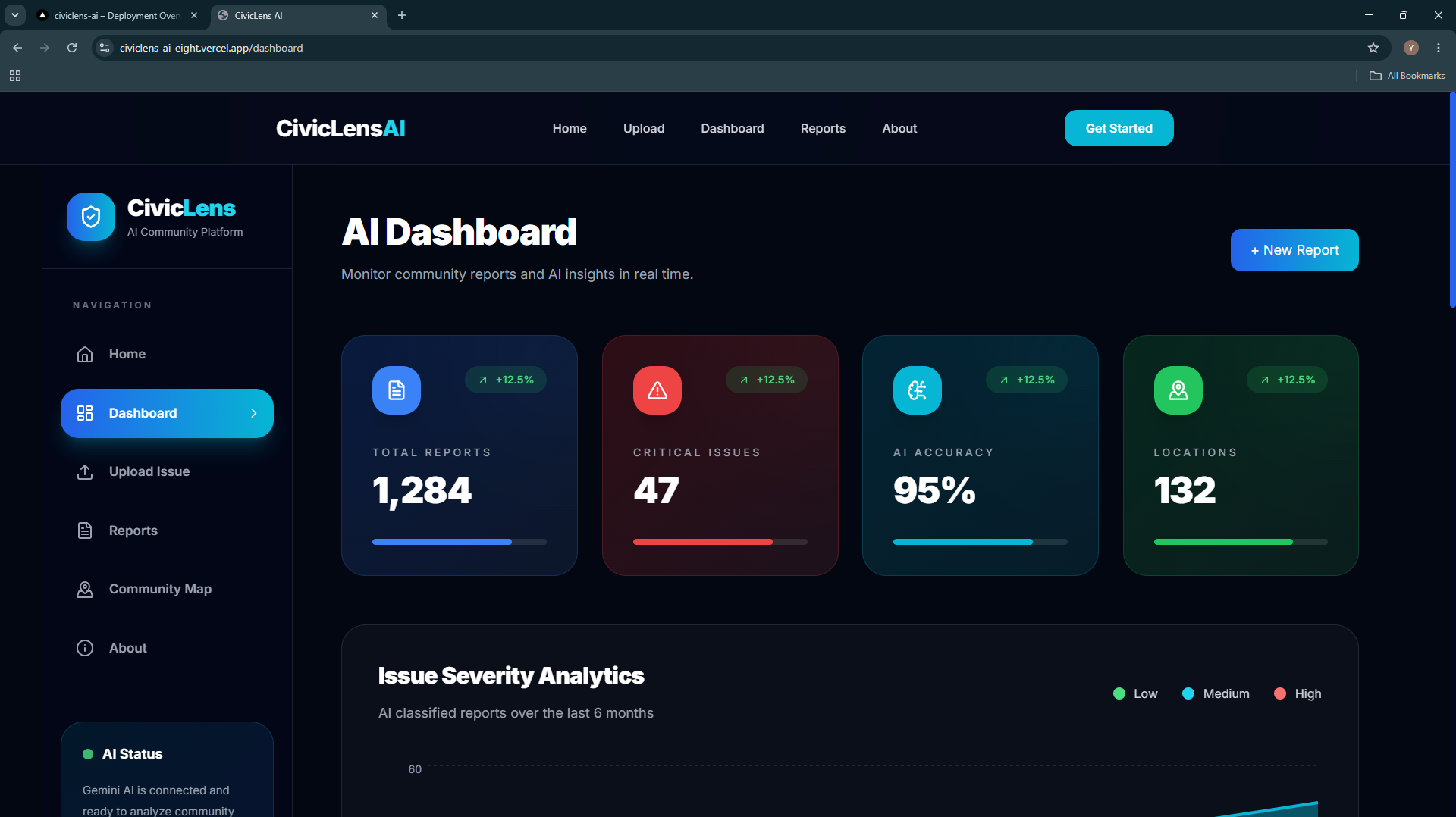
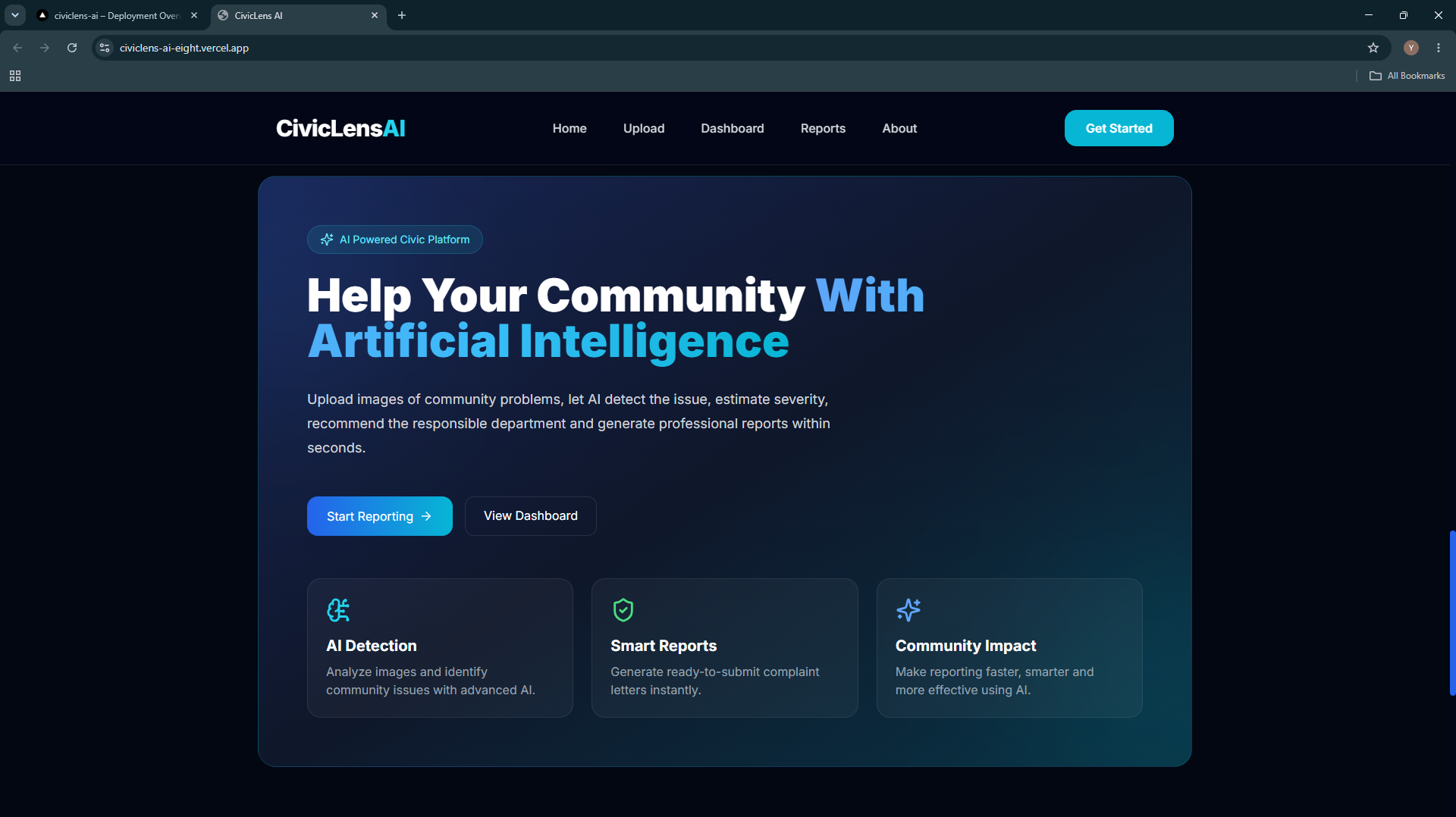
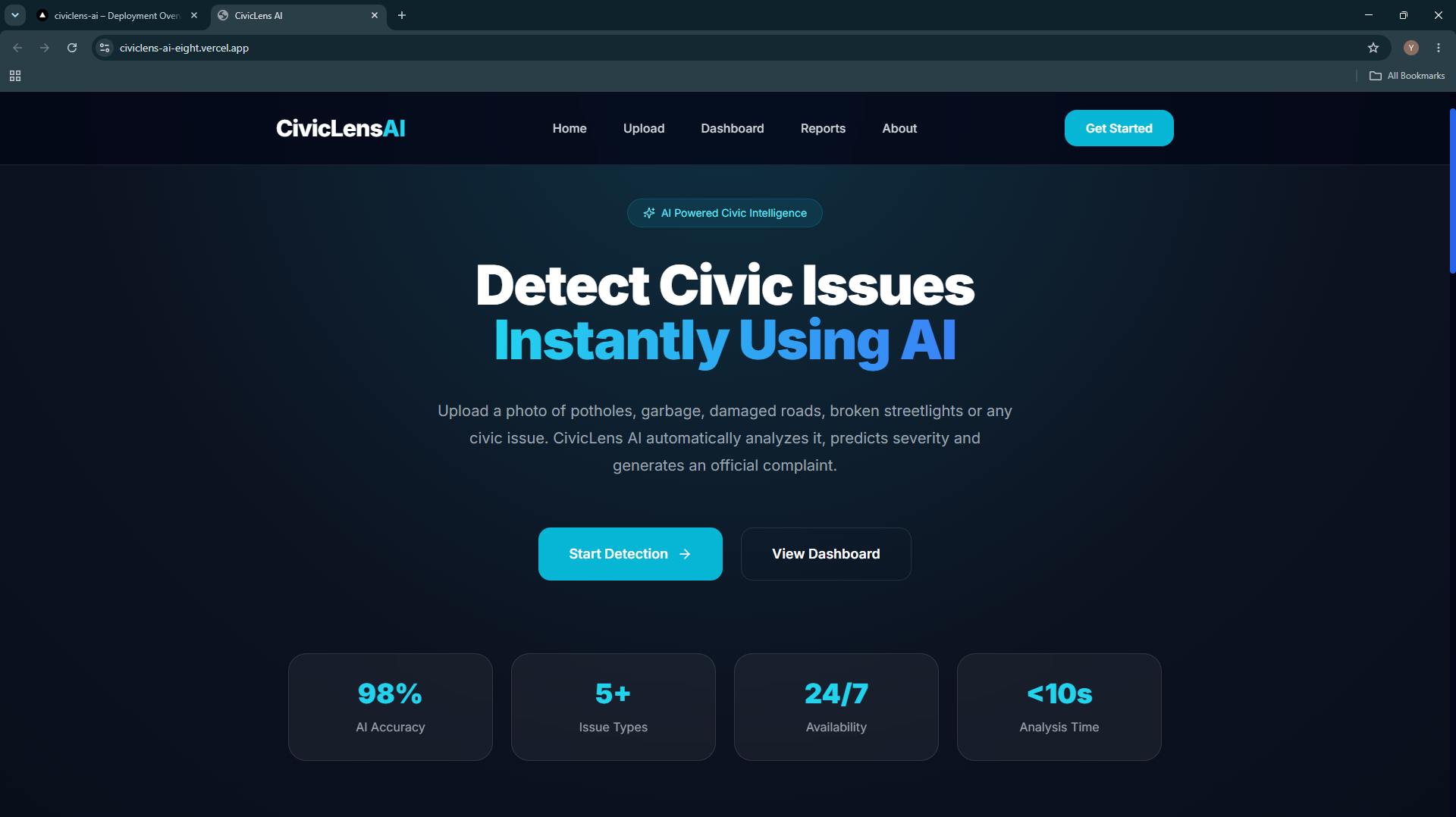
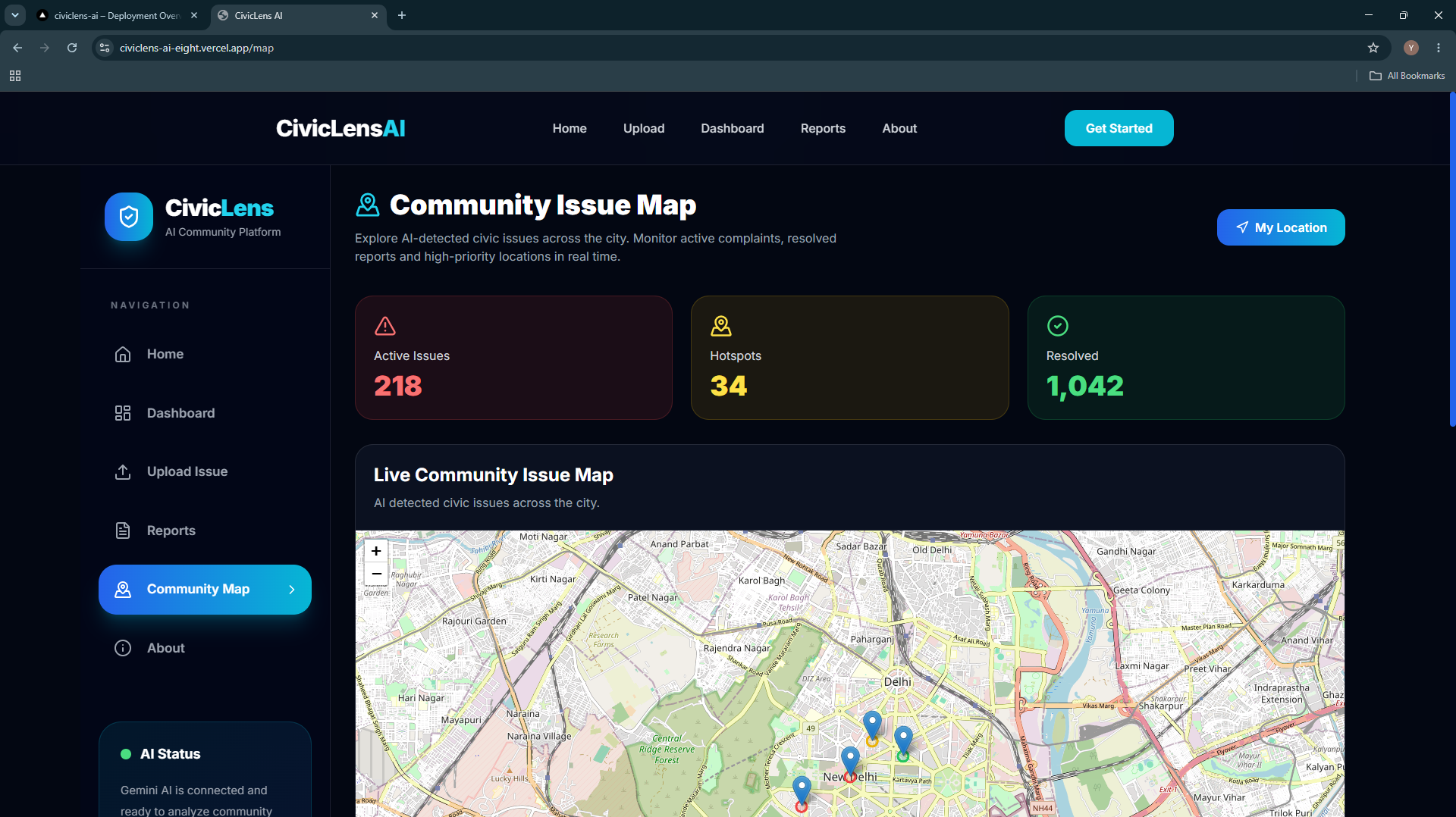
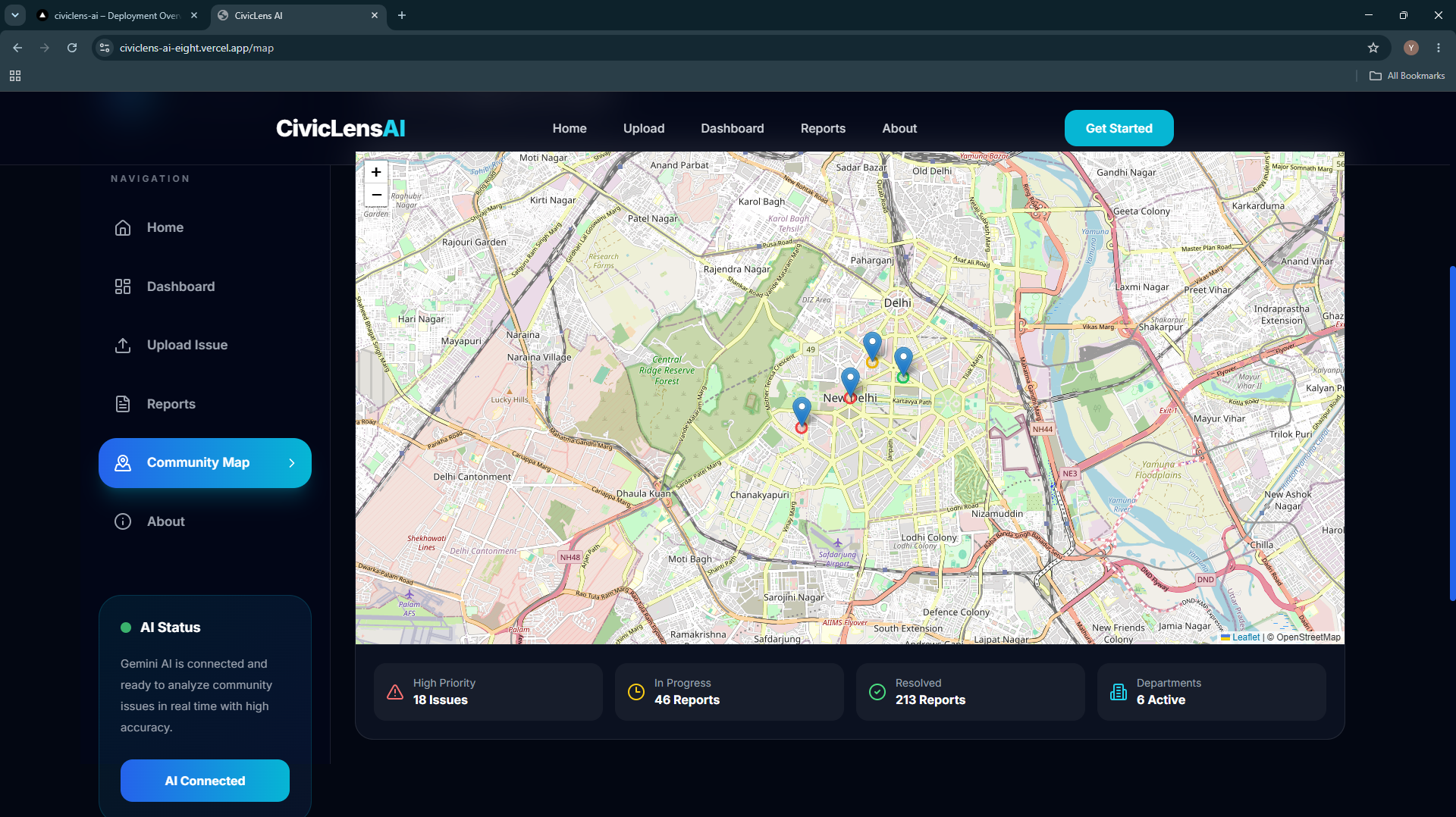
CivicLens AI is an AI-powered civic issue reporting platform that allows users to upload images of public infrastructure problems. The AI analyzes the image, identifies the type of issue, and assists users in submitting a structured complaint within seconds. The platform includes secure authentication, an intuitive dashboard for tracking reports, and analytics that help monitor complaint progress. By simplifying the reporting process, CivicLens AI encourages greater citizen participation and enables authorities to respond more efficiently.
How we built it
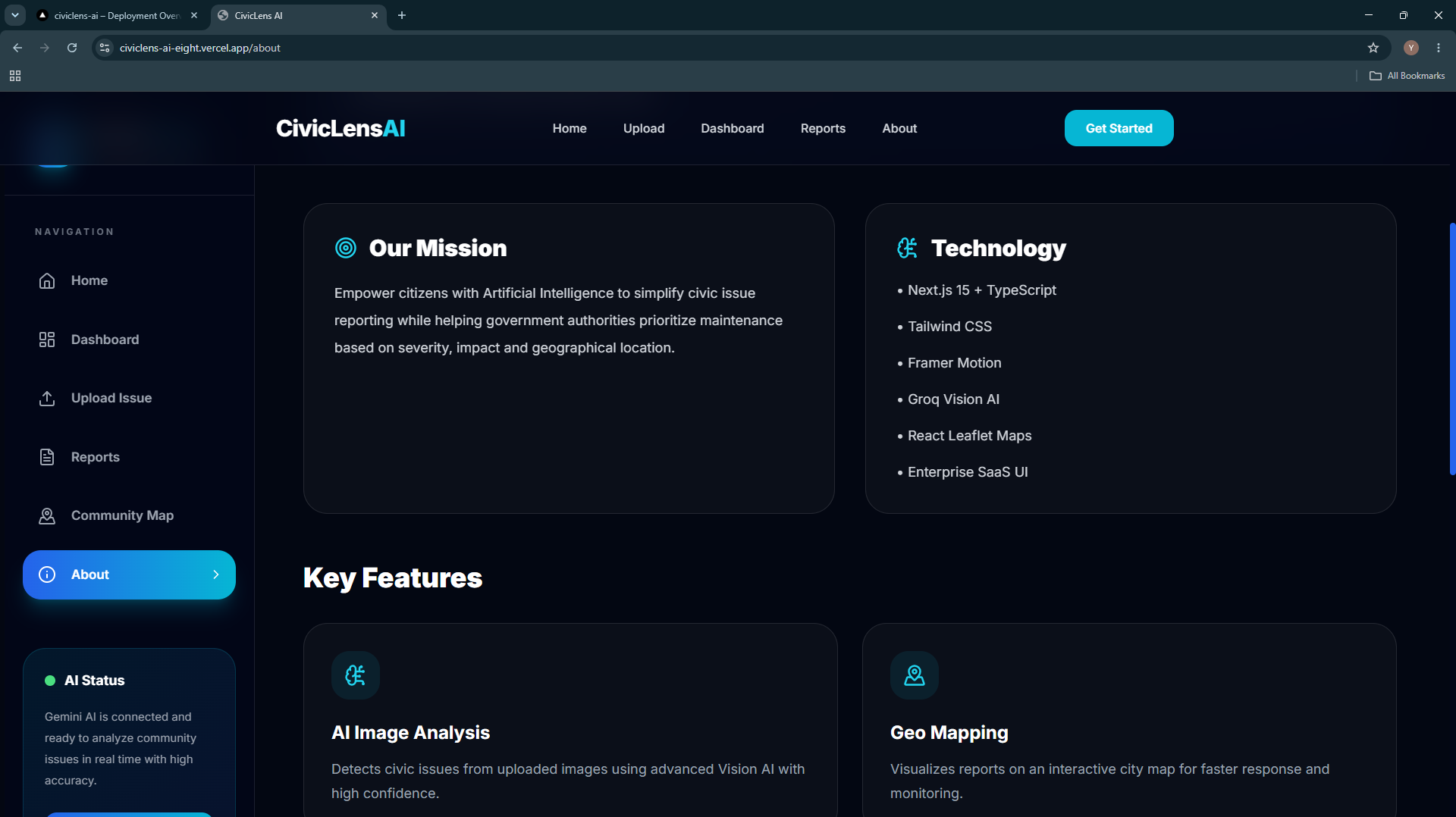
We built CivicLens AI using Next.js, React, TypeScript, and Tailwind CSS to create a fast, responsive, and modern web application. The platform integrates AI-powered image analysis to classify civic issues from uploaded photos. We implemented secure user authentication, a scalable dashboard for report management, and a clean user interface optimized for both desktop and mobile devices. The project follows a modular architecture that supports future expansion, including smart-city integrations and advanced AI capabilities.
Challenges we ran into
One of the biggest challenges was integrating AI image analysis into a smooth and user-friendly reporting workflow. We also focused on designing an intuitive dashboard that could efficiently organize reports while maintaining excellent performance. Ensuring responsive layouts across multiple devices, structuring the application for scalability, and balancing functionality with a premium user experience required continuous iteration throughout development.
Accomplishments that we're proud of
We successfully developed a fully functional AI-powered civic reporting platform with an intuitive and professional user interface. We implemented secure authentication, a responsive dashboard, AI-assisted issue detection, and an organized complaint management system. Most importantly, we built a solution that addresses a real-world problem and has the potential to improve communication between citizens and local authorities while supporting future smart-city initiatives.
What we learned
Building CivicLens AI strengthened our understanding of AI integration within web applications, scalable full-stack development, responsive UI/UX design, authentication systems, and efficient project architecture. Beyond the technical aspects, we learned how technology can create meaningful social impact by solving everyday problems faced by communities.
What's next for CivicLens AI
Our next goal is to transform CivicLens AI into a comprehensive smart-city platform. Planned features include GPS-based issue reporting, mobile applications for Android and iOS, multilingual support, real-time notifications, AI-powered severity prediction, predictive analytics, and dedicated government dashboards for managing complaints. We also plan to integrate community engagement features, open APIs, and advanced analytics to help cities make data-driven infrastructure decisions.
Built With
- ai
- application
- artificial
- city
- civic
- computer
- css
- govtech
- image
- intelligence
- javascript
- learning
- machine
- next.js
- react
- recognition
- smart
- tailwind
- tech
- typescript
- vision
- web


Log in or sign up for Devpost to join the conversation.