-
-
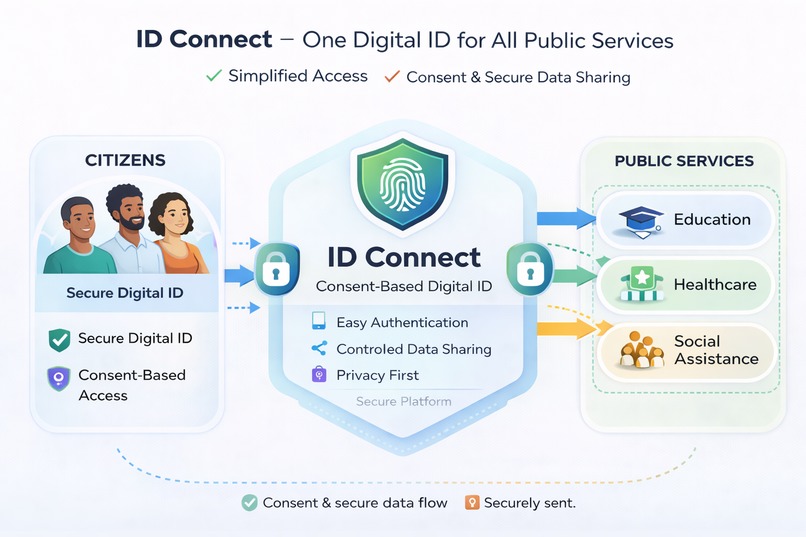
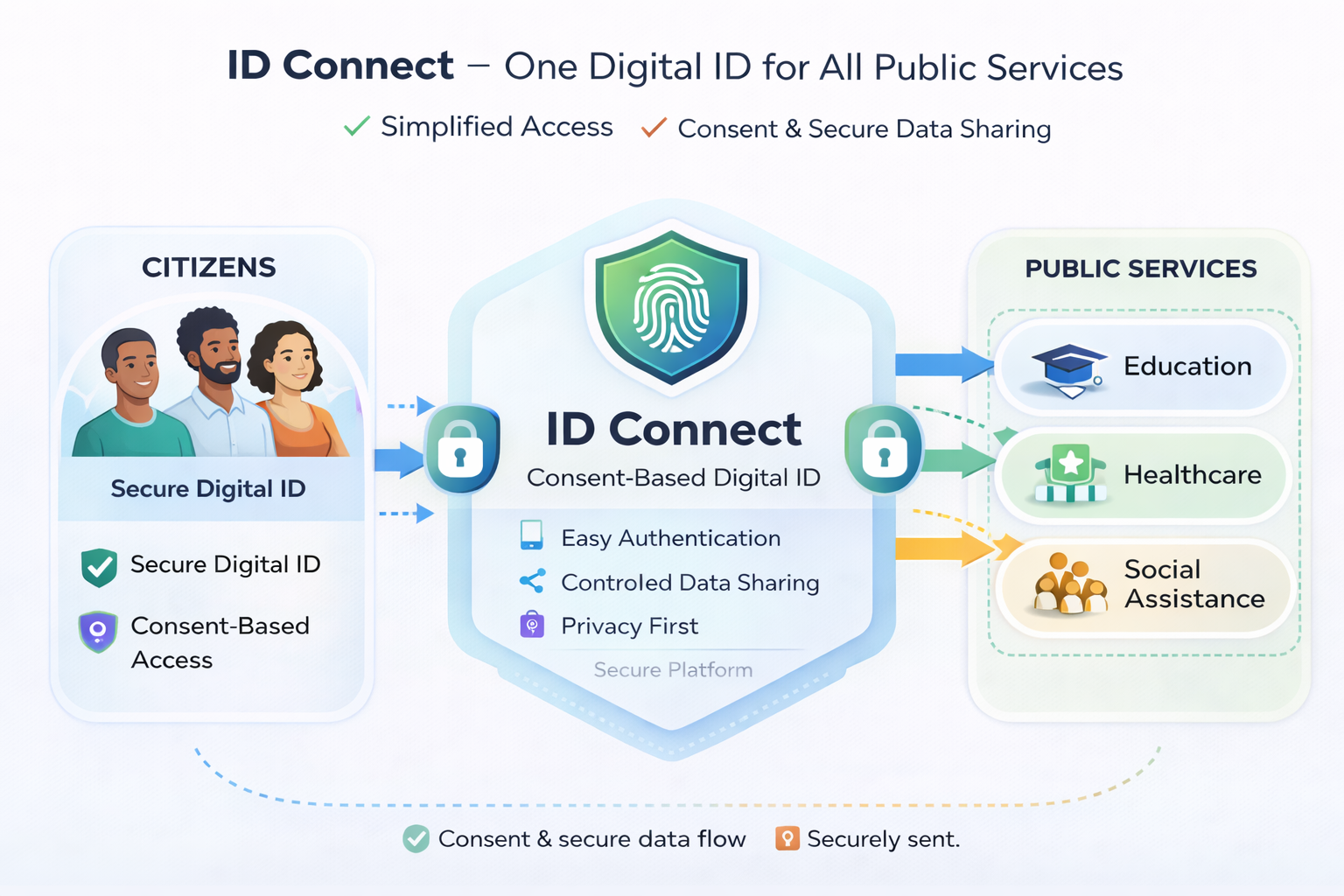
Concept overview of CiviLink showing how a single, consent-based digital ID connects citizens to public services securely and efficiently.
Inspiration Across many African countries, accessing public services often requires multiple forms of identification, repeated paperwork, and in-person verification. This fragmentation leads to delays, exclusion, and increased opportunities for corruption. We were inspired by the idea that a single, trusted digital identity could simplify citizens’ interactions with the state while improving transparency, efficiency, and trust in governance.
What the project does CiviLink is a consent-based digital ID solution that enables citizens to access multiple public services—such as healthcare, education, and social assistance—using one secure digital identity. Citizens remain in control of their personal data by deciding what information is shared, with which service, and for what purpose. This approach ensures privacy protection while enabling seamless and efficient service delivery across government platforms.
How we built it We designed CiviLink conceptually around interoperable digital ID principles and aligned it with digital public infrastructure frameworks such as MOSIP. The system focuses on secure authentication, controlled data sharing, and privacy-by-design. We also introduced a simple optimization approach to balance service efficiency with privacy protection, ensuring that only necessary and consented data is shared.
Challenges we ran into One of the main challenges was balancing efficient service delivery with strong privacy guarantees. Public services require accurate data to function effectively, while citizens need assurance that their information will not be overused or misused. Another challenge was designing a system flexible enough to work across different public sectors with varying data requirements.
What we learned Through this project, we gained a deeper understanding of digital public infrastructure, consent-driven data sharing, and the role of governance in digital identity systems. We learned that successful digital ID solutions must combine technical reliability with trust, transparency, and user empowerment.
What’s next for CiviLink Next steps include prototyping the solution using the MOSIP Sandbox, testing integrations with selected public services, and exploring pilot deployments. Our long-term goal is to support more inclusive, efficient, and trustworthy public service delivery across Africa.
Built With
- basic-web-technologies
- cloud-hosting
- consent-based
- data
- mosip-sandbox
- openapi
- postgresql
- react.js
- rest-apis
- secure-authentication
