Inspiration
We noticed that everyday civic problems such as potholes, overflowing garbage, broken streetlights, and damaged roads are common, but reporting them is not always easy. People may notice an issue but struggle to describe it clearly or categorize it correctly.
This inspired us to build CivicFix AI, a simple tool that uses AI to turn a photo of a civic problem into a structured and useful report.
What it does
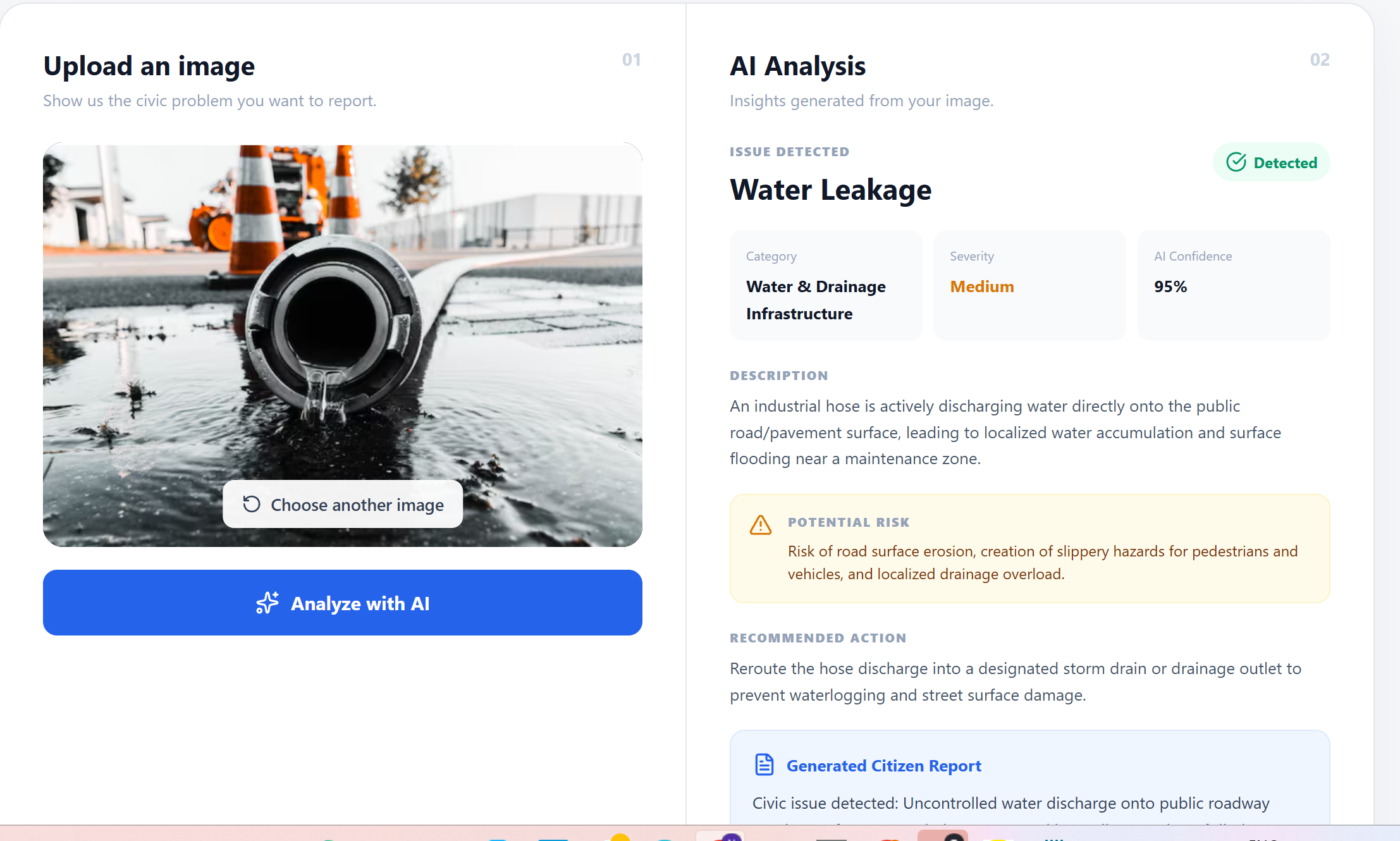
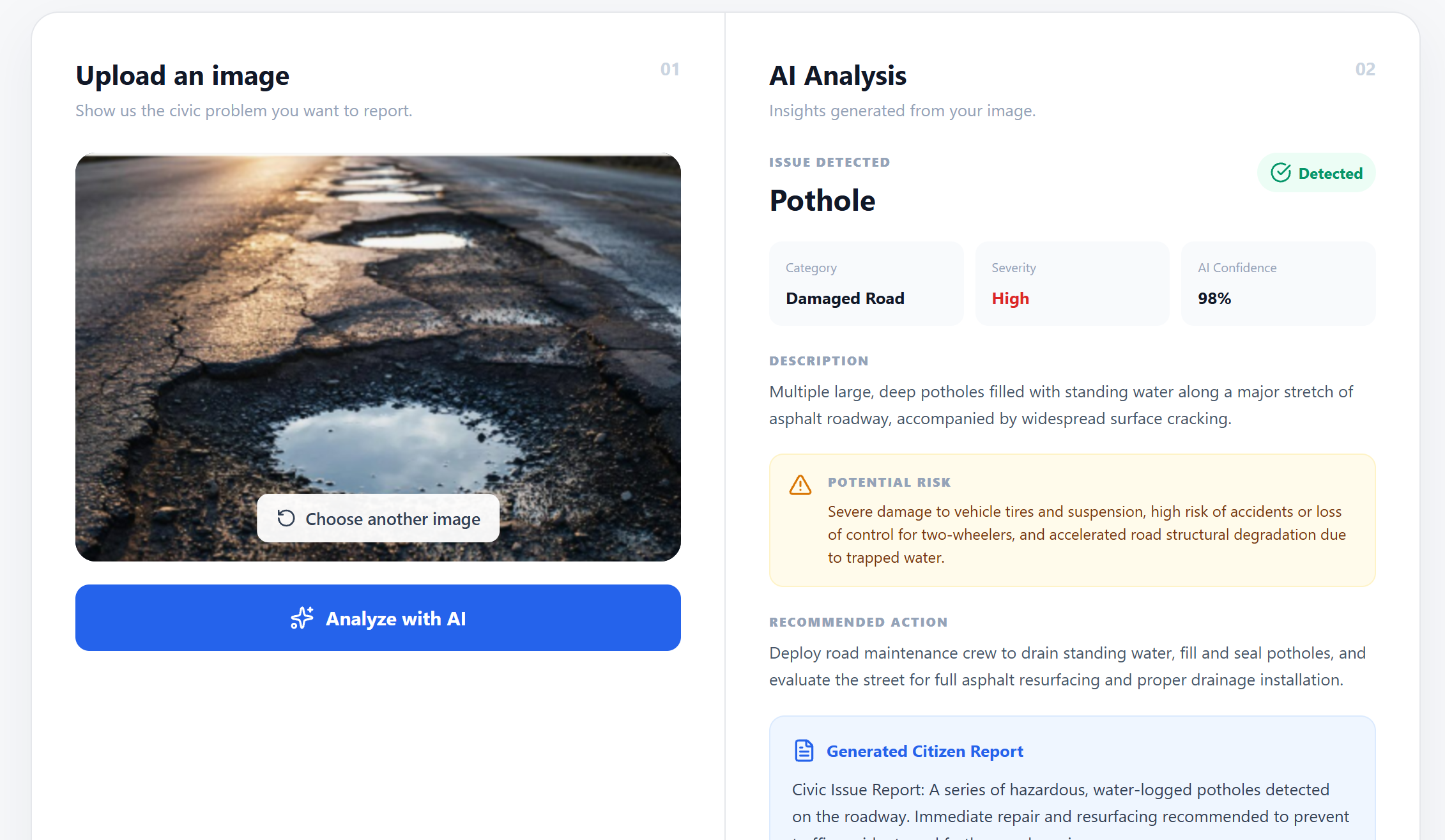
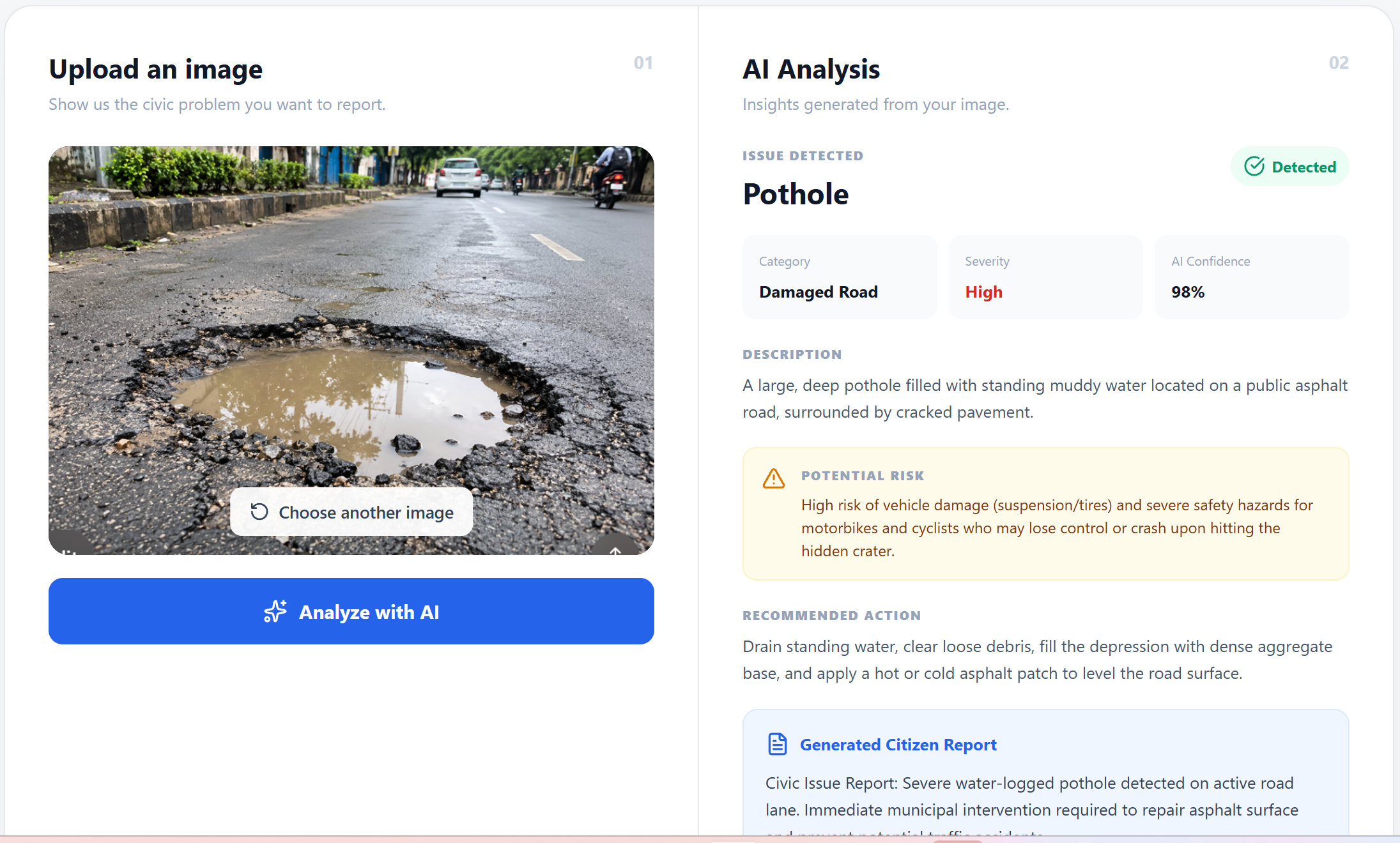
CivicFix AI lets users upload an image of a civic issue. The AI analyzes the image and identifies the type of problem, its severity, relevant category, and possible risks. It then generates a clear report that the user can use when reporting the issue. The workflow is: Upload Image → AI Analysis → Issue Detection → Severity & Category → Generated Report
How we built it
We built CivicFix AI as a web application with a React and Vite frontend and a Python FastAPI backend. The frontend handles image uploads and displays the results, while the backend connects the application to a vision-capable AI model. The AI analyzes the image and generates structured information that is then presented to the user in an easy-to-understand format.
Challenges we ran into
One of the main challenges was making the AI output practical rather than simply describing what was visible in an image. We wanted the system to provide useful information such as what the issue is, how serious it may be, and what category it belongs to. We also focused on keeping the interface simple so that users can upload an image and understand the result without needing any technical knowledge.
Accomplishments that we're proud of
We are proud of turning a simple image upload into a complete AI-powered workflow instead of building only an image classification tool. The system connects image understanding, issue classification, severity assessment, and report generation into one simple experience. We also built the frontend and backend as separate components, making the application easier to extend in the future.
What we learned
This project helped us understand that building a useful AI application involves more than just using an AI model. The way the AI output is structured, processed, and presented to the user is equally important. We also gained practical experience integrating a React frontend with a FastAPI backend and using AI to solve a real-world problem.
What's next for [Untitled]-CivicFix
We would like to add location-based reporting, duplicate issue detection, map visualization, automatic routing to the appropriate department, report status tracking, and support for more types of civic issues.
Our long-term goal is to make** CivicFix AI** a simple bridge between identifying a civic problem and taking action on it.
How we built it
We built CivicFix AI as a web application with a React and Vite frontend and a Python FastAPI backend.
The frontend handles image uploads and displays the results, while the backend connects the application to a vision-capable AI model. The AI analyzes the image and generates structured information that is then presented to the user in an easy-to-understand format.
Challenges we ran into
One of the main challenges was making the AI output practical rather than simply describing what was visible in an image.
We wanted the system to provide useful information such as what the issue is, how serious it may be, and what category it belongs to.
We also focused on keeping the interface simple so that users can upload an image and understand the result without needing any technical knowledge.
Accomplishments that we're proud of
We are proud of turning a simple image upload into a complete AI-powered workflow instead of building only an image classification tool.
The system connects image understanding, issue classification, severity assessment, and report generation into one simple experience.
We also built the frontend and backend as separate components, making the application easier to extend in the future.
What we learned
This project helped us understand that building a useful AI application involves more than just using an AI model. The way the AI output is structured, processed, and presented to the user is equally important.
We also gained practical experience integrating a React frontend with a FastAPI backend and using AI to solve a real-world problem.
What's next for CivicFix AI
We would like to add location-based reporting, duplicate issue detection, map visualization, automatic routing to the appropriate department, report status tracking, and support for more types of civic issues.
Our long-term goal is to make CivicFix AI a simple bridge between identifying a civic problem and taking action on it.

Log in or sign up for Devpost to join the conversation.