-
-
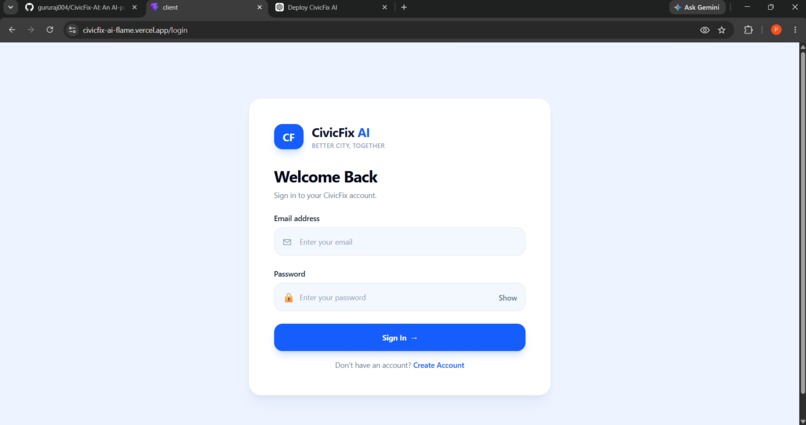
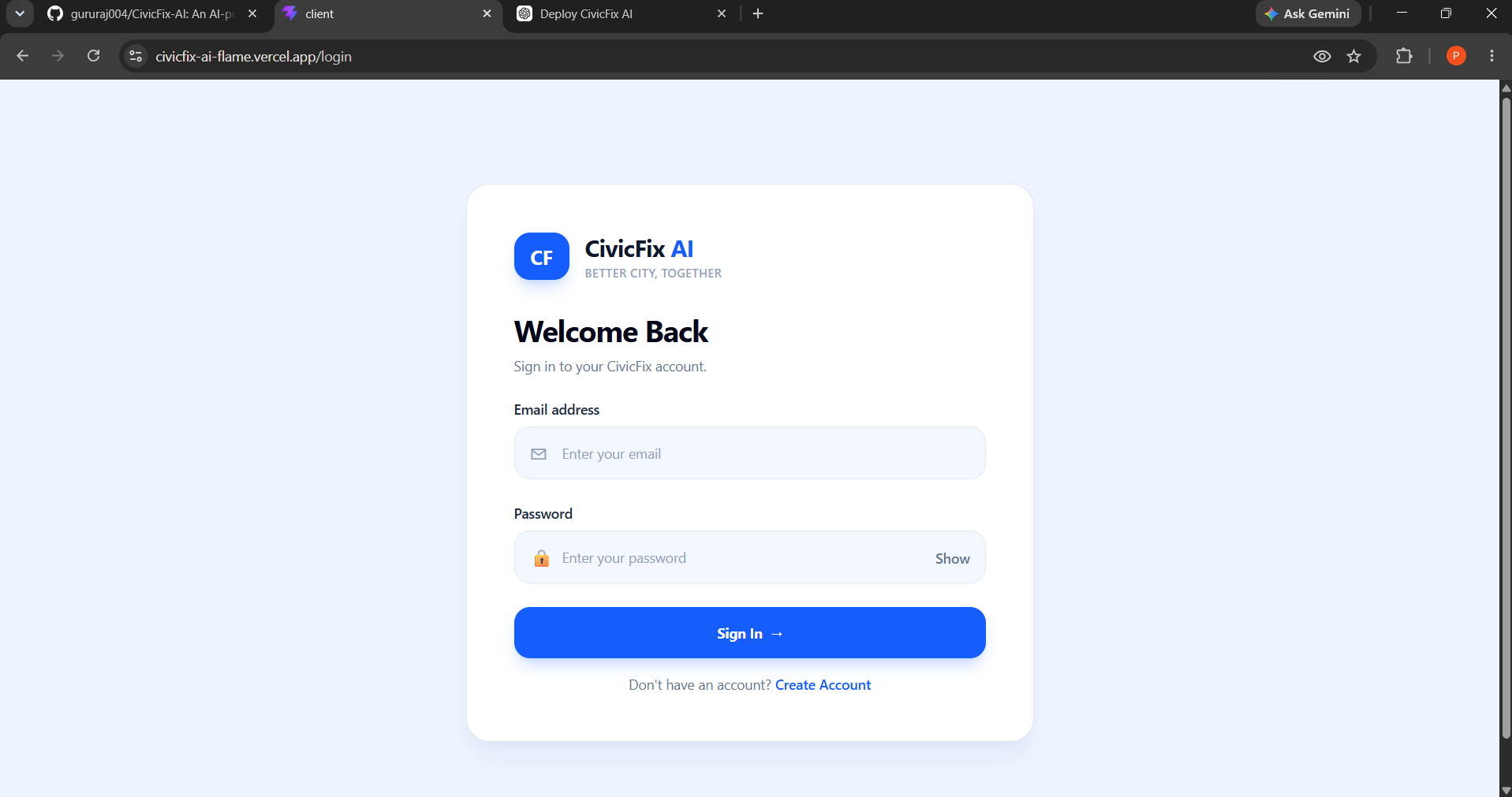
login page of CivicFix-AI
-
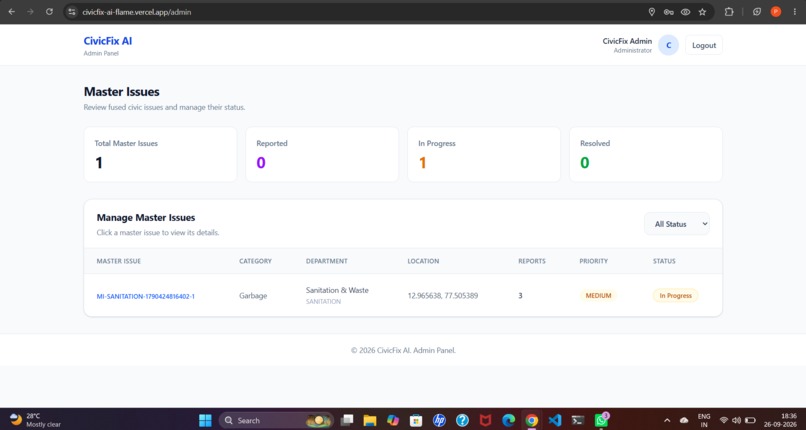
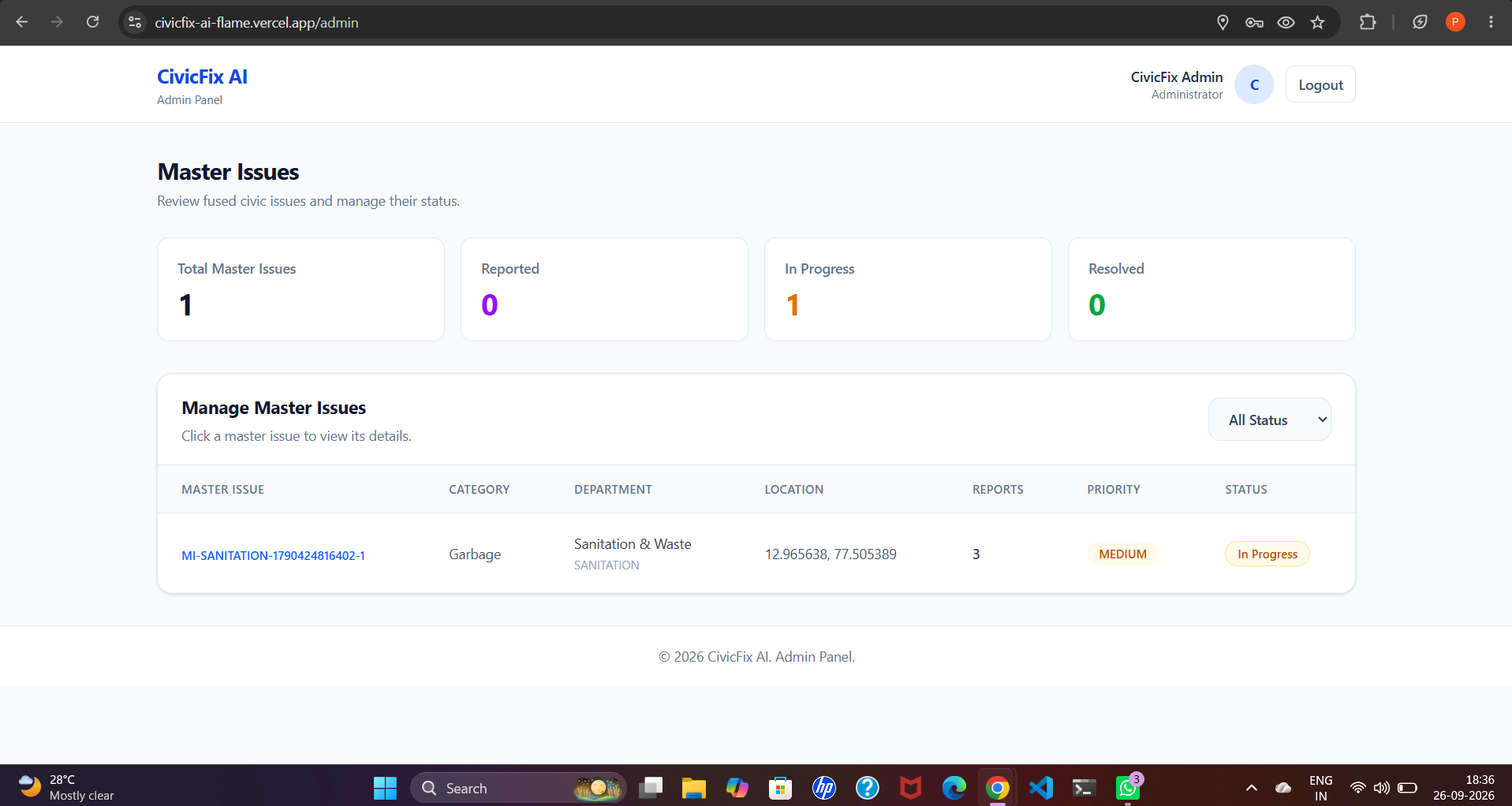
Admin-dashboard
-
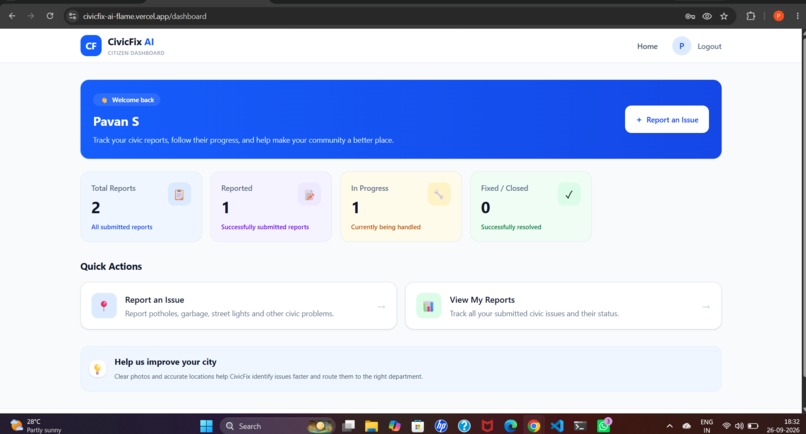
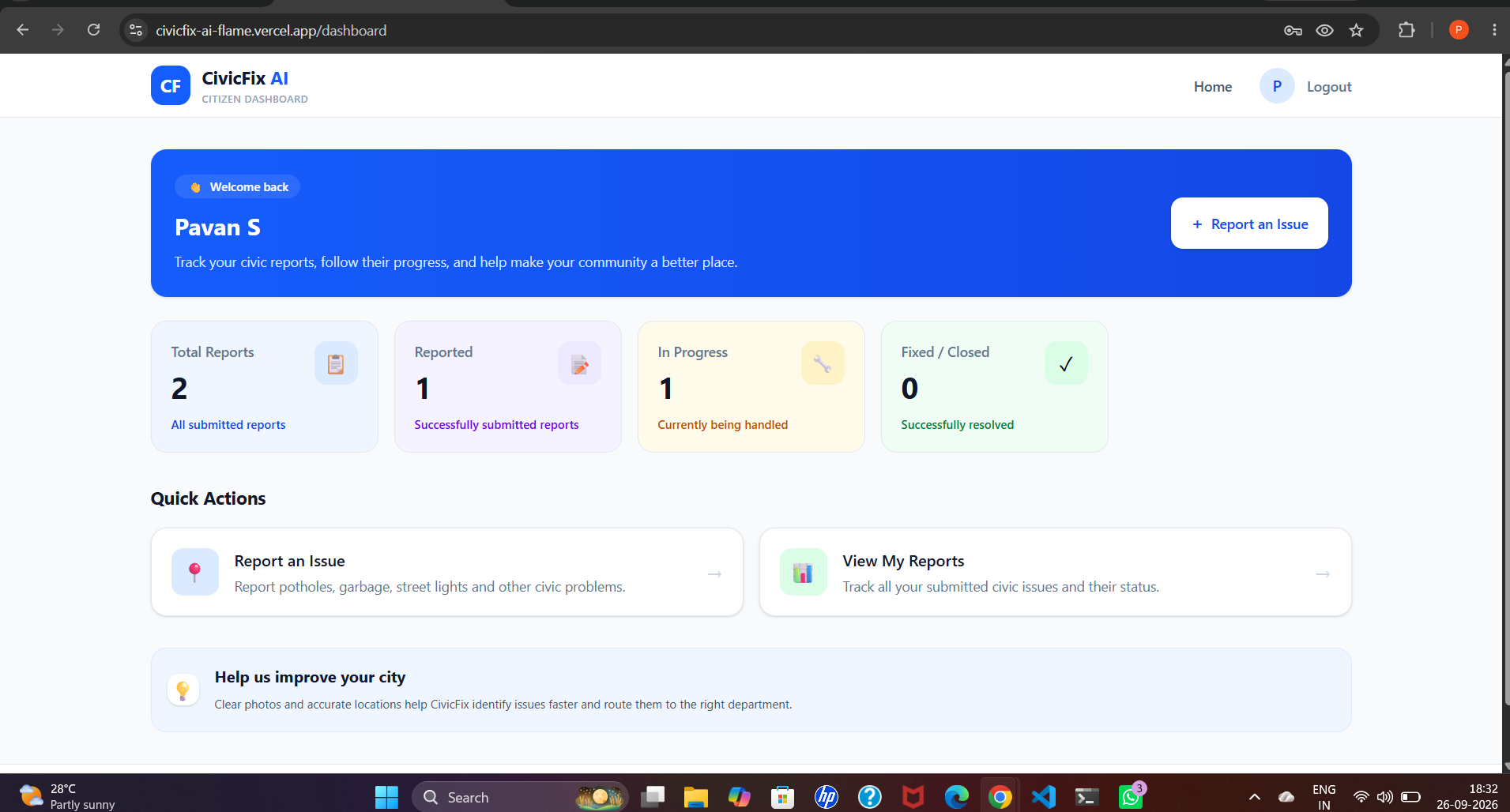
User-dashboard
-
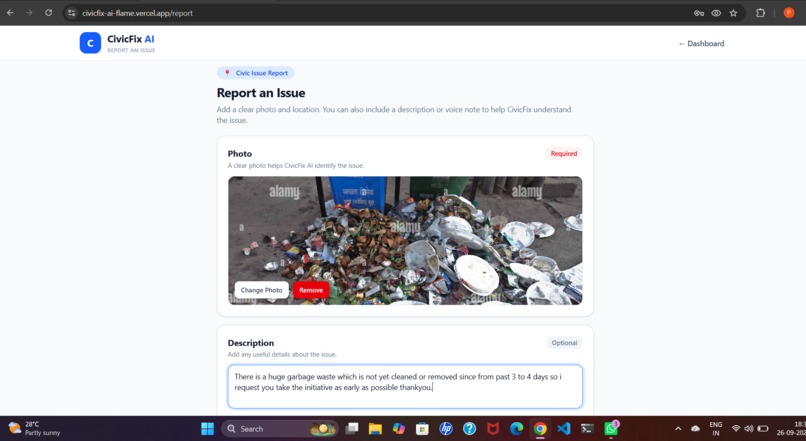
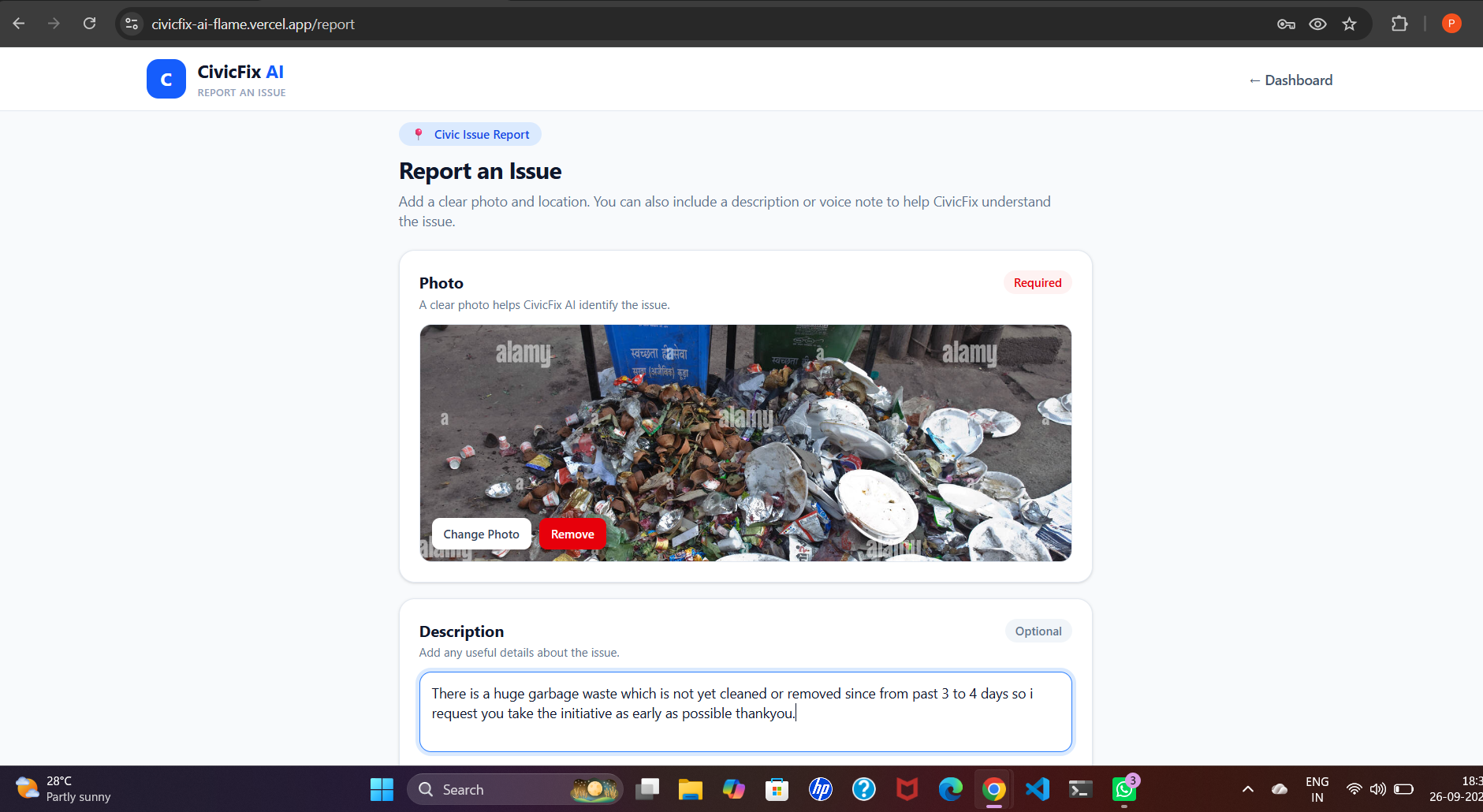
Reporting the issues
-
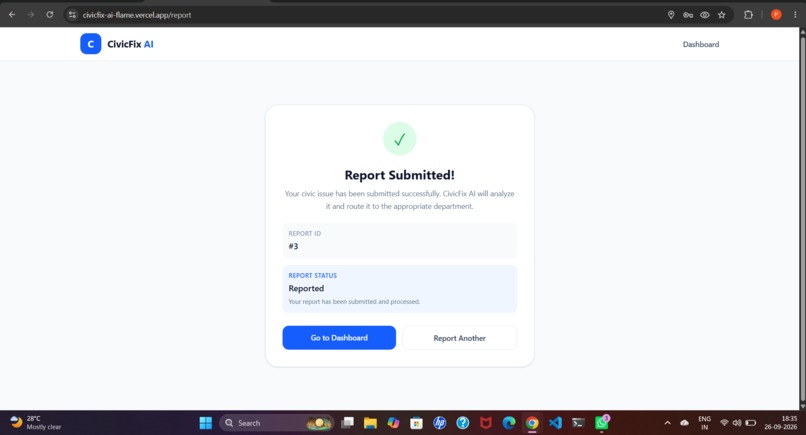
Report-Submission
-
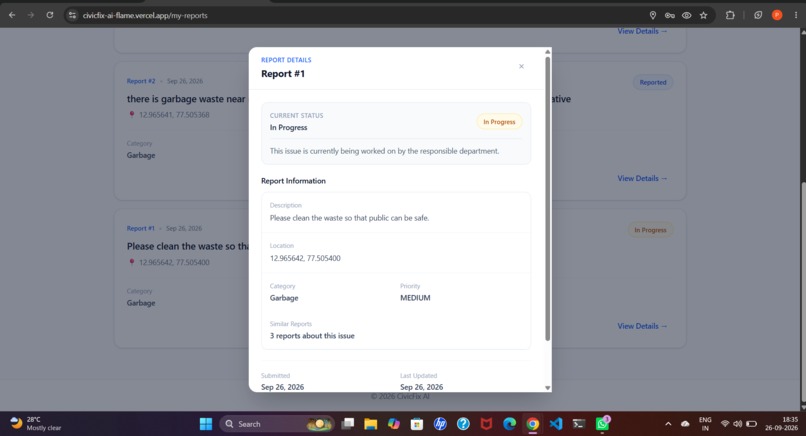
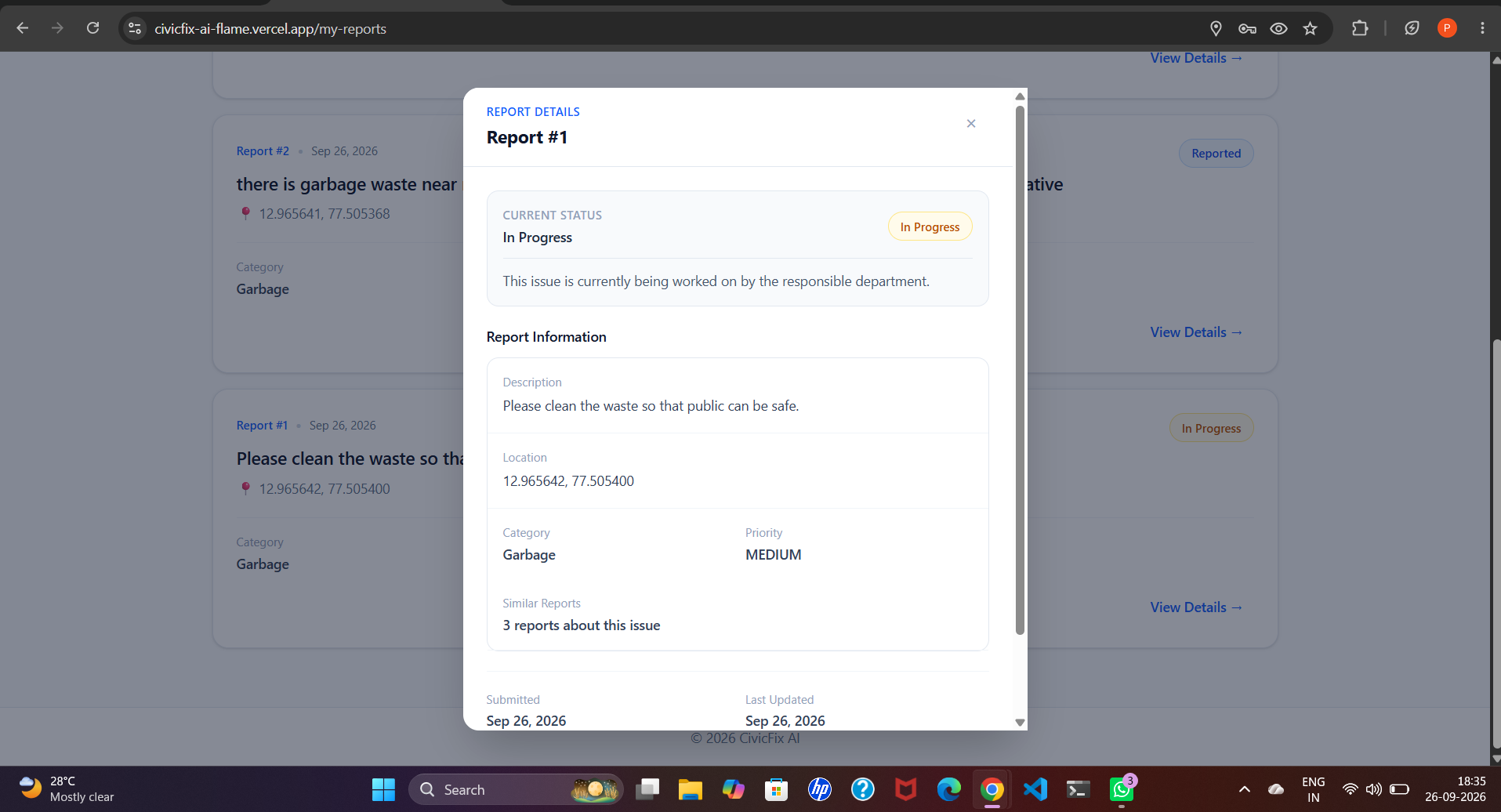
Details of the Report
-
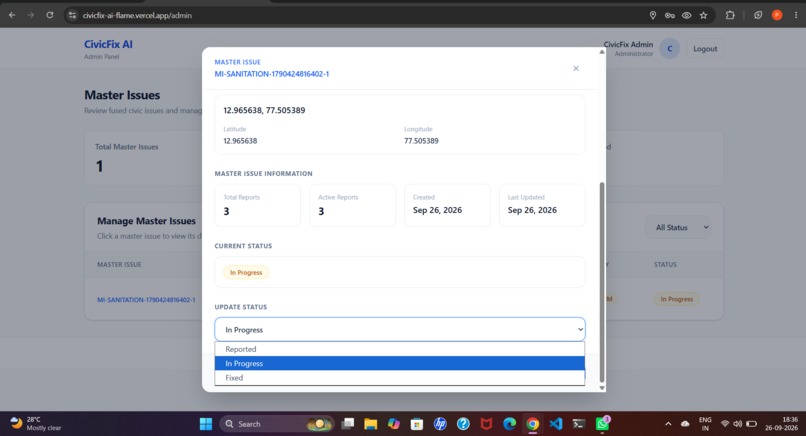
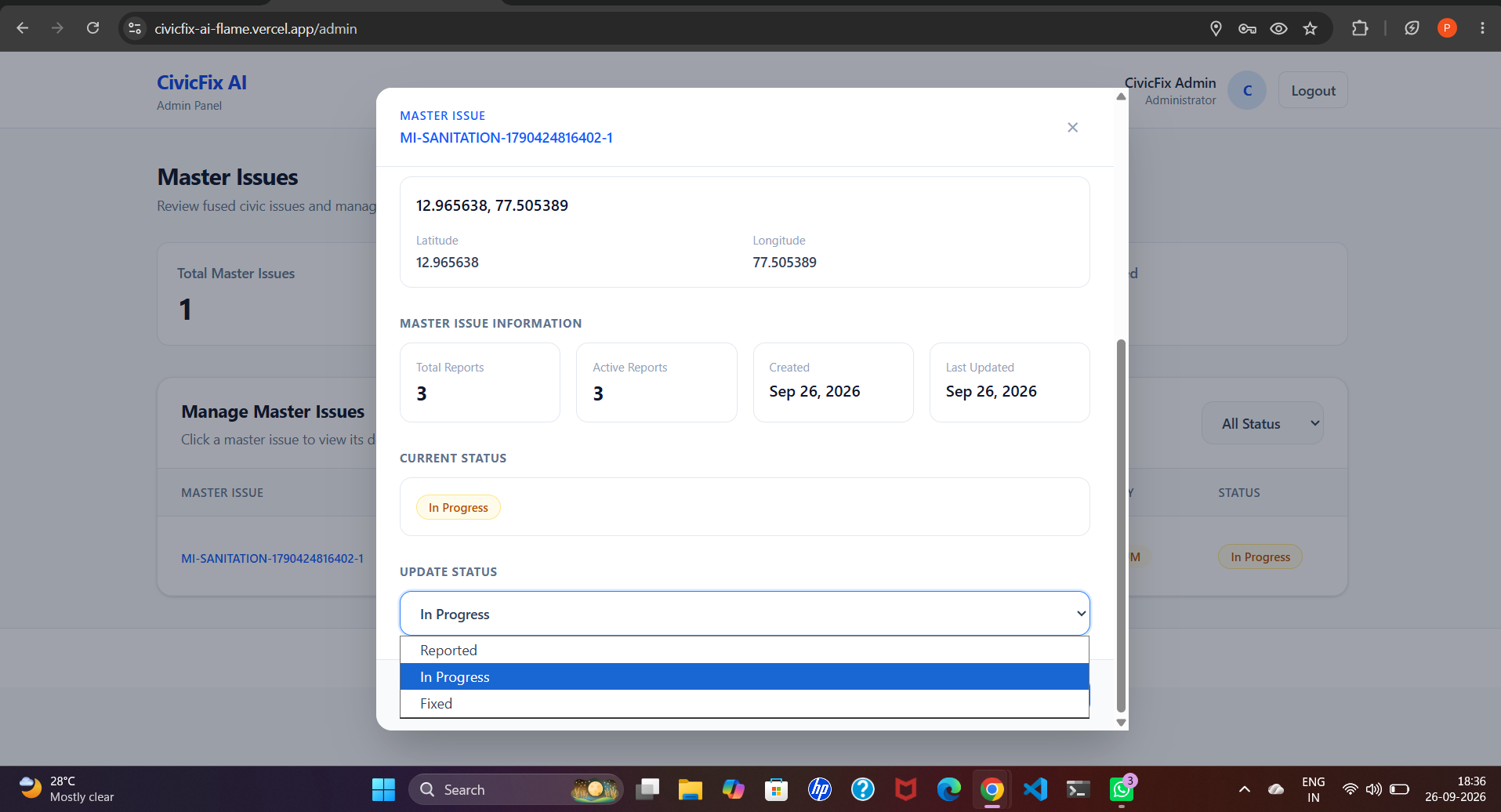
Admin updating the issues

Inspiration
CivicFix AI was inspired by a common problem in cities: citizens regularly encounter issues such as potholes, garbage accumulation, broken streetlights, water leakage, drainage problems, and damaged public infrastructure, but reporting the issue is only the first step.
We wanted to build something that goes beyond simply collecting complaints. Our idea was to create a system where a citizen can report an issue and the platform can help understand the complaint, analyze evidence, identify duplicate reports, prioritize the issue, assign it to the appropriate department, and track it until resolution.
Our goal was to make civic issue management more organized, transparent, and easier to follow for both citizens and administrators.
What it does
CivicFix AI is an AI-assisted civic issue reporting and management platform.
Citizens can submit reports using:
- Text descriptions
- Image evidence
- Voice input
- Location information
The system then processes the report through an AI-assisted workflow:
Citizen Report → AI Analysis → Duplicate Detection → Master Issue → Priority → Department Assignment → Resolution → Citizen Verification
CivicFix AI can:
- Classify different types of civic issues
- Analyze uploaded images
- Process voice/text complaints
- Extract useful information from reports
- Identify potentially duplicate complaints
- Combine related reports into a master issue
- Assist with issue prioritization
- Assign issues to the appropriate department
- Allow administrators to manage issue status
- Allow citizens to track their complaints
- Allow citizens to verify a reported issue after resolution
- Provide role-based access for citizens and administrators
How we built it
We built CivicFix AI as a full-stack web application.
Frontend
- React
- Vite
- React Router
- Tailwind CSS
Backend
- Node.js
- Express.js
- REST APIs
- JWT authentication
- Role-based access control
Database
- MySQL
AI
- Groq API
- Text analysis
- Image analysis
- Voice analysis
- Issue classification and priority assistance
Media Processing
- Multer
- Sharp
- ImageKit
We divided the backend into modular components such as controllers, routes, services, repositories, middleware, validation, and AI modules.
The AI components are separated into areas such as complaint analysis, image analysis, voice analysis, issue fusion, evidence processing, and priority analysis.
Challenges we ran into
One of our biggest challenges was connecting AI-generated information with the structured backend of our application.
AI responses can sometimes return values that do not exactly match the categories or departments expected by the database. We had to handle and normalize these outputs before using them in the application.
We also faced challenges with:
- Integrating multiple AI capabilities
- Processing image and voice inputs
- Connecting the frontend, backend, and database
- Implementing authentication and role-based access
- Handling file uploads
- Managing environment variables and API keys
- Debugging database connectivity
- Deploying the backend and database
- Making different modules work together as one workflow
The deployment process was especially useful because it showed us that getting an application to work locally and getting it ready for a production environment are two very different challenges.
Accomplishments that we're proud of
We are proud that we were able to build a complete working concept rather than just an isolated AI feature.
Some things we are particularly proud of include:
- Building a complete citizen-to-admin workflow
- Integrating AI into an actual application workflow
- Supporting multiple forms of evidence such as text, images, and voice
- Implementing duplicate issue handling
- Creating a master issue concept for related reports
- Implementing role-based access for citizens and administrators
- Building a structured backend with separate modules
- Connecting the application to a MySQL database
- Working through real deployment and integration problems as a team
Most importantly, CivicFix AI helped us understand how AI can be used as part of a larger software system rather than being treated as a standalone chatbot.
What we learned
This project taught us a lot about building real-world software as a team.
Technically, we learned about:
- Full-stack application development
- REST API design
- React and Express integration
- MySQL database integration
- Authentication and authorization
- JWT-based authentication
- Role-based access control
- File uploads and image processing
- AI API integration
- Handling AI-generated outputs
- Backend architecture
- Environment configuration
- Deployment and debugging
We also learned that integrating AI into an application requires more than simply sending a prompt to an API. The output needs to be validated, normalized, and connected properly with the application's existing business logic.
What's next for CivicFix AI
We see CivicFix AI as a foundation that can be extended much further.
Our future plans include:
- 🗺️ Geospatial duplicate detection
- 📍 Smarter location-based issue grouping
- 🔔 Real-time citizen notifications
- 🌐 Multilingual complaint reporting
- 🎙️ Improved multilingual voice reporting
- 📊 Advanced administration and analytics dashboards
- 📱 Mobile application support
- 🏙️ Better department-level analytics
- 🔎 More accurate evidence and duplicate detection
- 📈 Civic issue trends and hotspot analysis
- 🔐 More advanced security and audit trails
In the long term, we want CivicFix AI to evolve from a complaint reporting platform into a more connected civic issue management system that helps bridge the gap between citizens, evidence, government departments, and resolution.
Built With
- ai
- bcrypt
- express.js
- github
- jwt
- mysql
- natural-language-processing
- node.js
- railway
- react
- rest-api
- vite


Log in or sign up for Devpost to join the conversation.