-
-
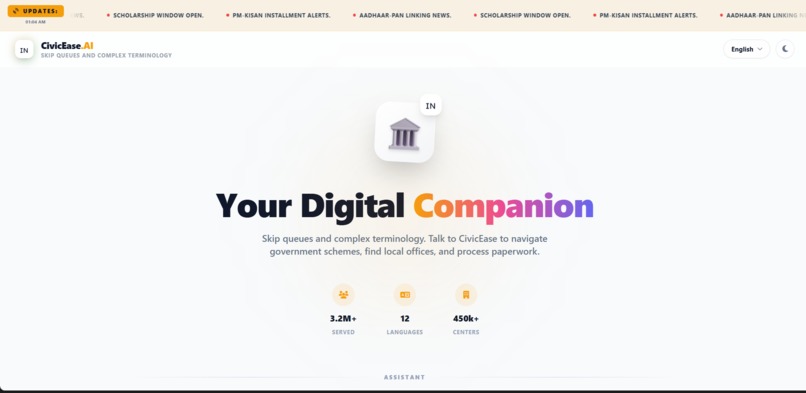
Home Page
-
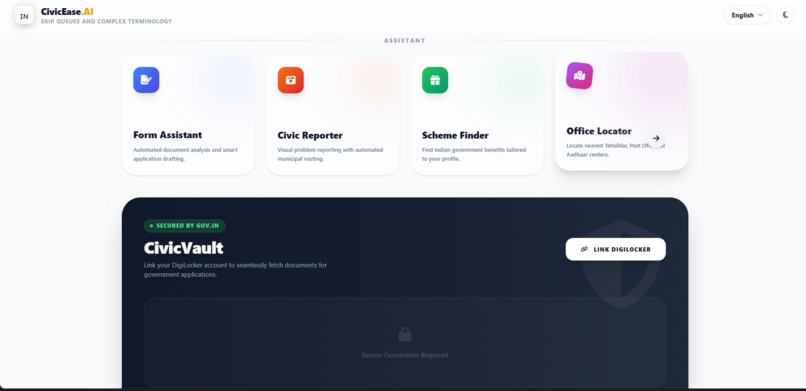
Agents
-
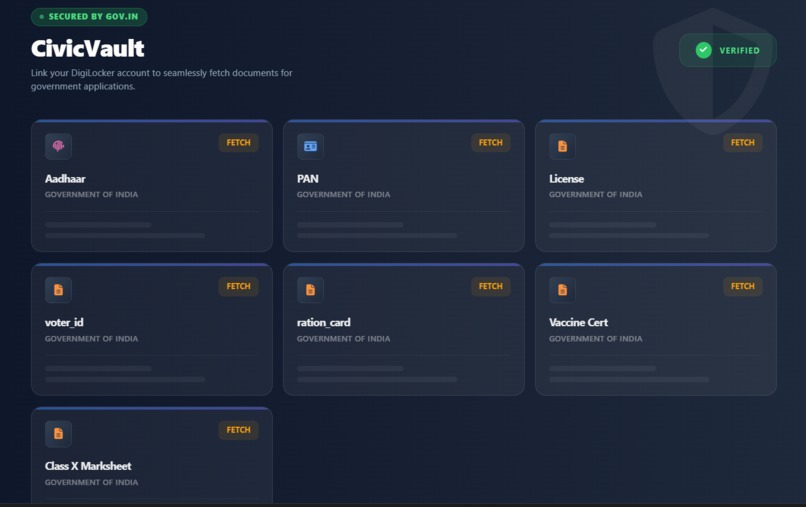
Civic Vault
-
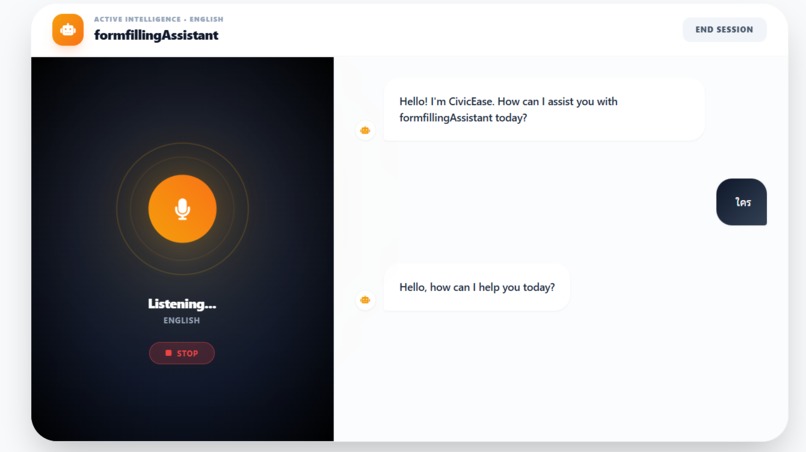
Form AI Assistant
-
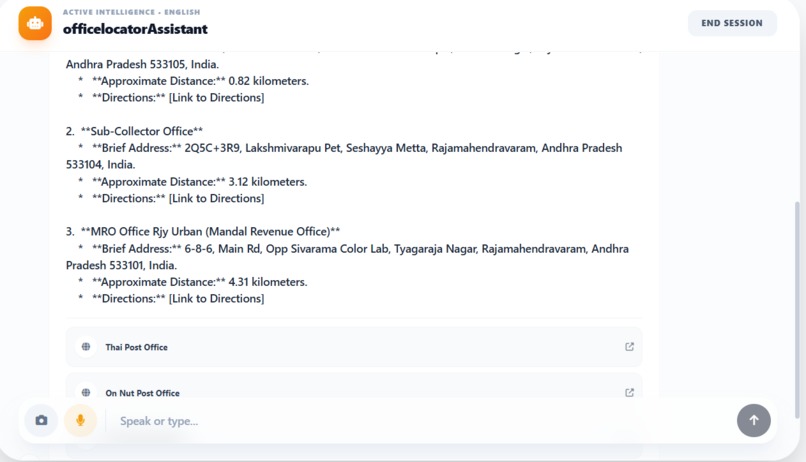
Office Locator Ai


Inspiration
India is a diverse nation with 1.4 billion people, 22 official languages, and thousands of government schemes. However, a significant "Bureaucratic Access Gap" exists. We grew up seeing elderly neighbors struggle to fill out pension forms because they couldn't read English or formal Hindi. We saw farmers miss out on subsidies simply because they didn't know the scheme existed or where the office was. The inspiration for CivicEase came from a simple question: What if every citizen had a knowledgeable, multilingual government officer in their pocket? We wanted to build a tool that doesn't just "chat" but actually sees and does—filling forms, spotting civic issues, and speaking the user's native dialect.
What it does
CivicEase is a Multimodal AI Assistant that bridges the gap between citizens and the state.
- Visual Form Filling: Users snap a photo of a physical application form. The AI analyzes it using computer vision, identifies the fields, and guides the user to fill it out via chat, effectively digitizing paper bureaucracy.
- Civic Reporter: See a pothole or uncollected garbage? Just point the camera. The AI identifies the issue type, assesses severity, and drafts a grievance report.
- Multilingual Voice Mode: Powered by Gemini Live, it allows users to have a natural, real-time conversation in 12 Indian languages (including Tamil, Telugu, Bengali, and Marathi), making the app accessible to those with limited literacy.
- Scheme Finder & Office Locator: It proactively matches users with government schemes using Google Search grounding and finds nearby offices using Google Maps grounding.
- CivicVault: A simulated secure document wallet (like DigiLocker) to manage ID proofs and auto-fill forms.
How we built it
The project is built as a responsive Web App using React (TypeScript) and Tailwind CSS. The core intelligence is driven by the Google GenAI SDK (@google/genai). We utilized a multi-model strategy:
- Gemini 3.0 Pro (Vision & Reasoning): Used for analyzing complex form images (
analyzeFormImage) and identifying civic problems. We useresponseSchemato enforce strict JSON outputs. - Gemini 2.5 Flash (Speed & Grounding): Used for
officeLocatorandschemeFinderfeatures. We utilize Google Maps and Google Search tools to ensure the AI provides real addresses and up-to-date scheme rules. - Gemini Live API (Real-time Audio): Implemented a custom real-time audio pipeline using WebSockets.
- Capture raw audio from the microphone.
- Stream it to the model via
ai.live.connect. - Receive PCM chunks back and decode them manually in the browser. The audio conversion logic handles the raw byte stream directly:
Challenges we ran into
- The "Vernacular JSON" Paradox: Getting the AI to "think" in English (for our code's logic) but "speak" in regional languages (for the user) was tricky. We solved this with a "Translation-First" prompting strategy, injecting TARGET_LANGUAGE instructions into every API call.
- Real-time Audio Sync: Handling the binary audio stream from the Live API in a browser environment without external libraries was complex. We implemented a custom AudioBufferSourceNode scheduler with a
nextStartTimecursor to stitch incoming chunks into a seamless stream without glitches. - State Management via Stream: To make the form fill itself while the AI talks, we implemented a "Side-Channel" protocol. The AI injects hidden tags like
[[UPDATE:Field:Value]]into its text stream, which the frontend intercepts to update React state instantly.
Accomplishments that we're proud of
- Zero-Latency Experience: Watching the form visual fill itself magically on the right side of the screen while casually describing details to the AI.
- True Inclusivity: The app seamlessly switches between 12 languages, changing not just AI's voice but entire UI text—making it truly usable for what we call the next billion users.
What we learned
We learned that Multimodality is key to accessibility. Text-based chatbots are not enough for developing nations. The combination of Vision (seeing forms) and Voice (talking through processes) truly democratizes technology.
What's next for CivicEase AI?
- Offline Mode: Using Gemini Nano for basic form guidance without internet.
- Real DigiLocker API: Replacing our simulation with actual government API for legally valid document fetching.
- GPS-Triggered Reporting: Automatically detecting jurisdiction based on user location when reporting potholes.

Log in or sign up for Devpost to join the conversation.