-
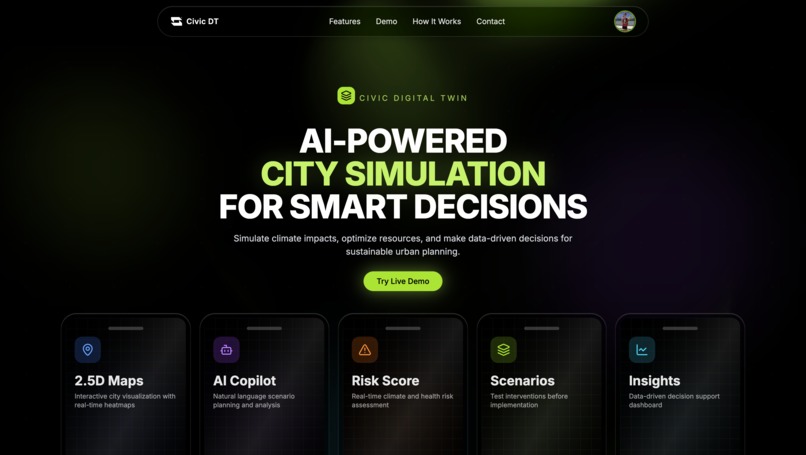
Dashboard
-
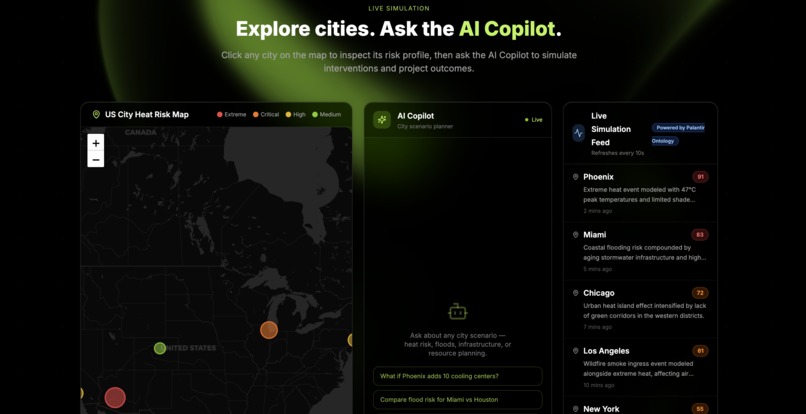
Live simulation w/ AI copilot
-
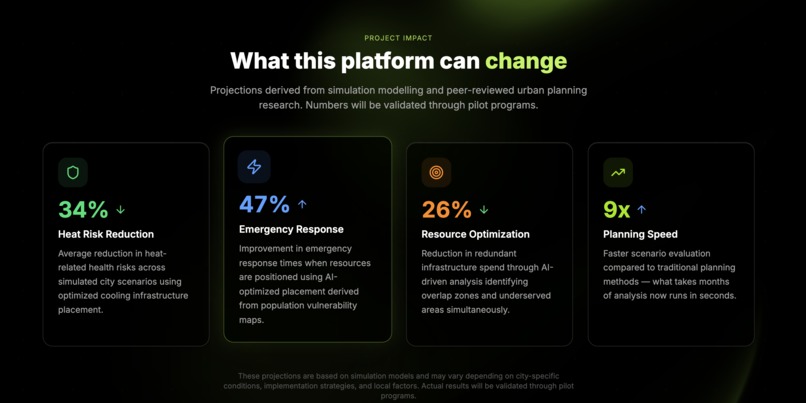
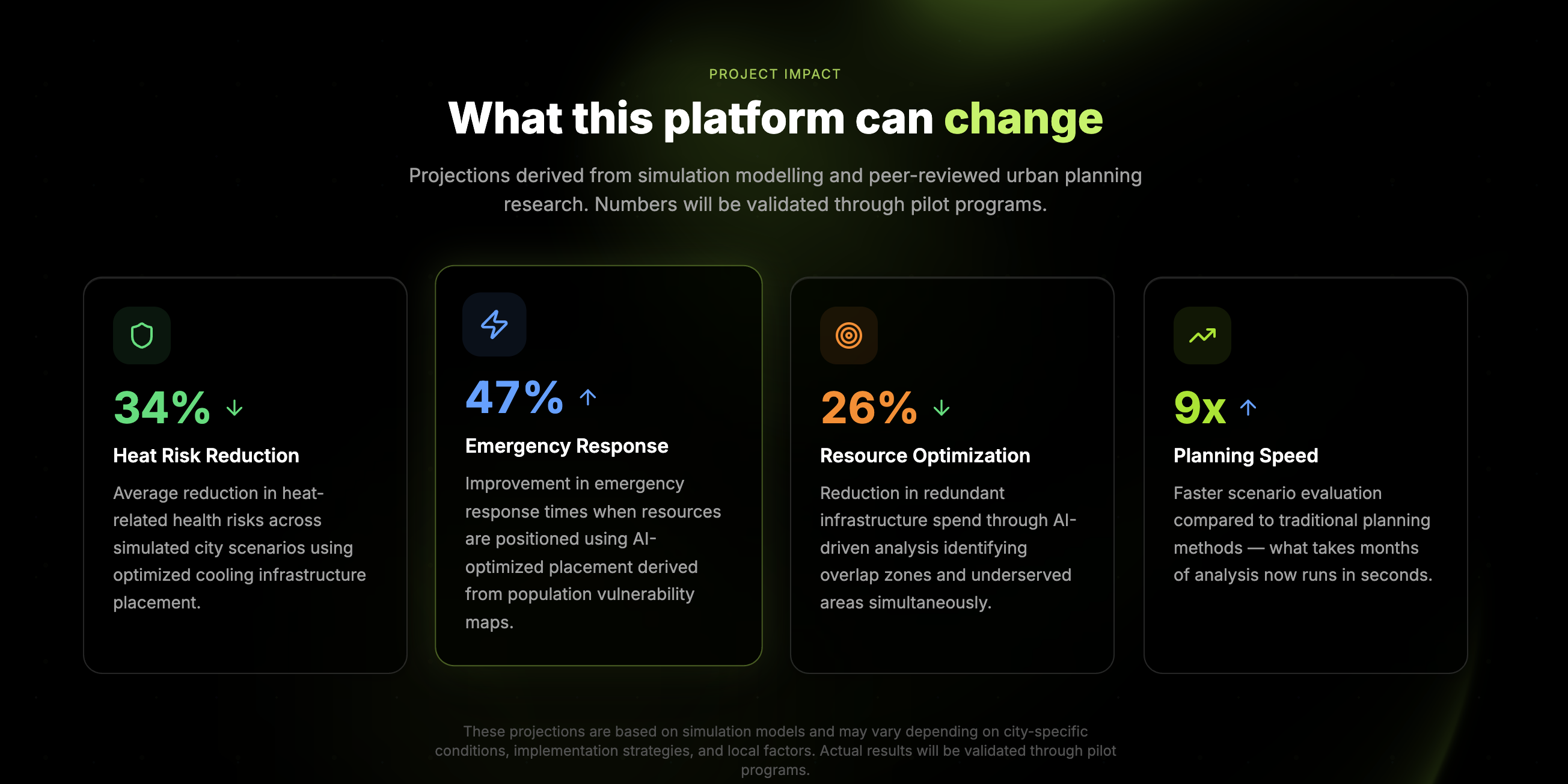
Info on impact
-
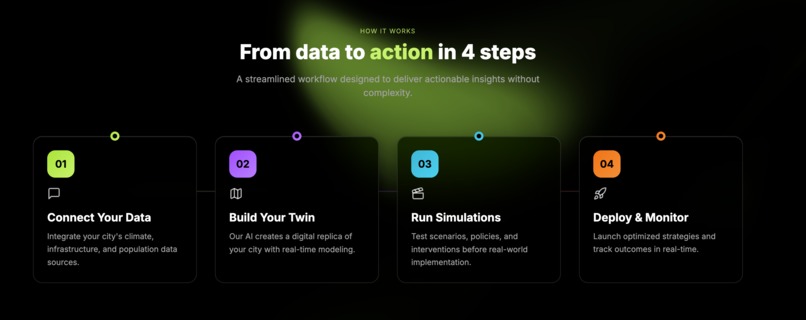
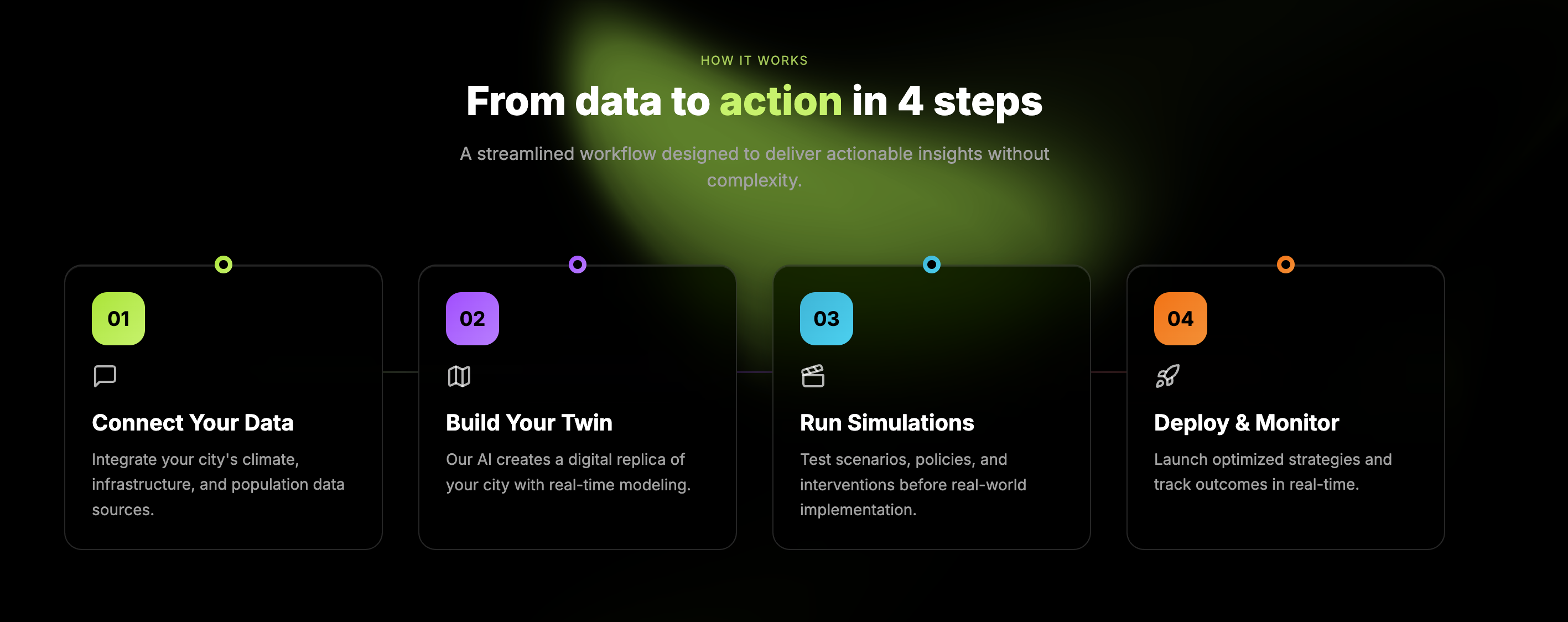
Explanation on how it works
-
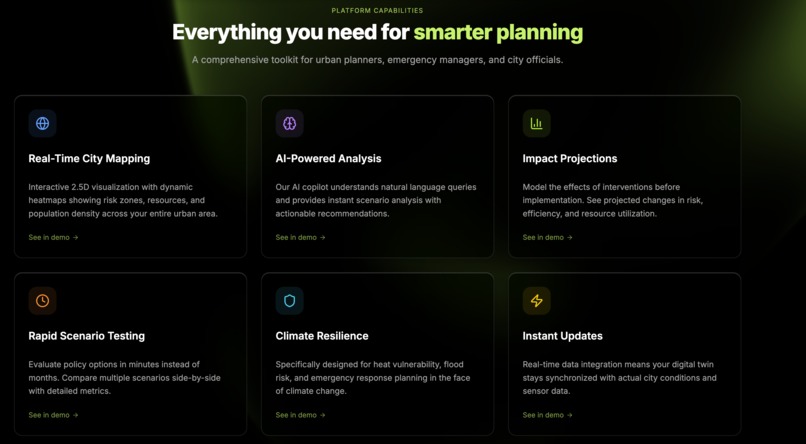
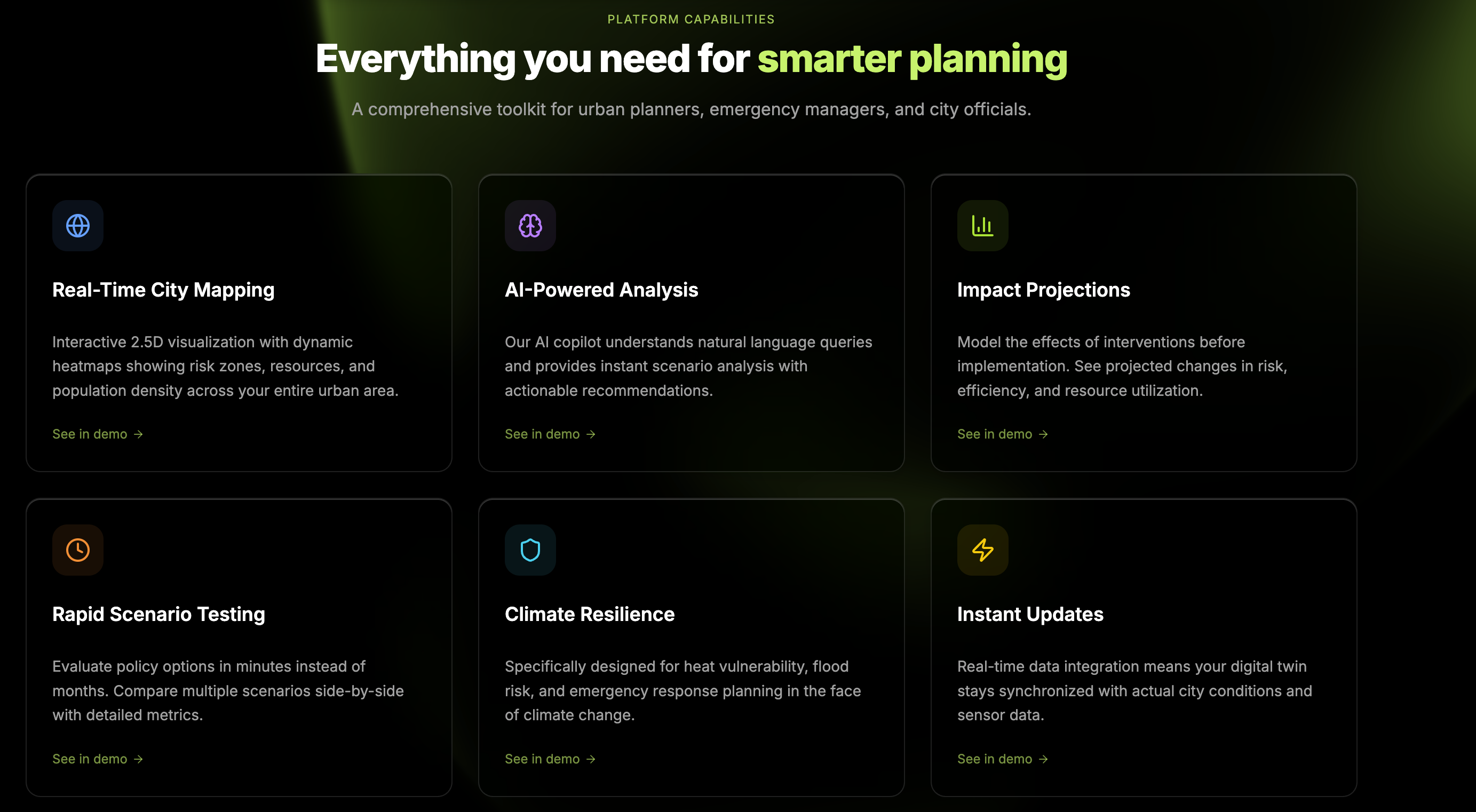
Capabilities shown
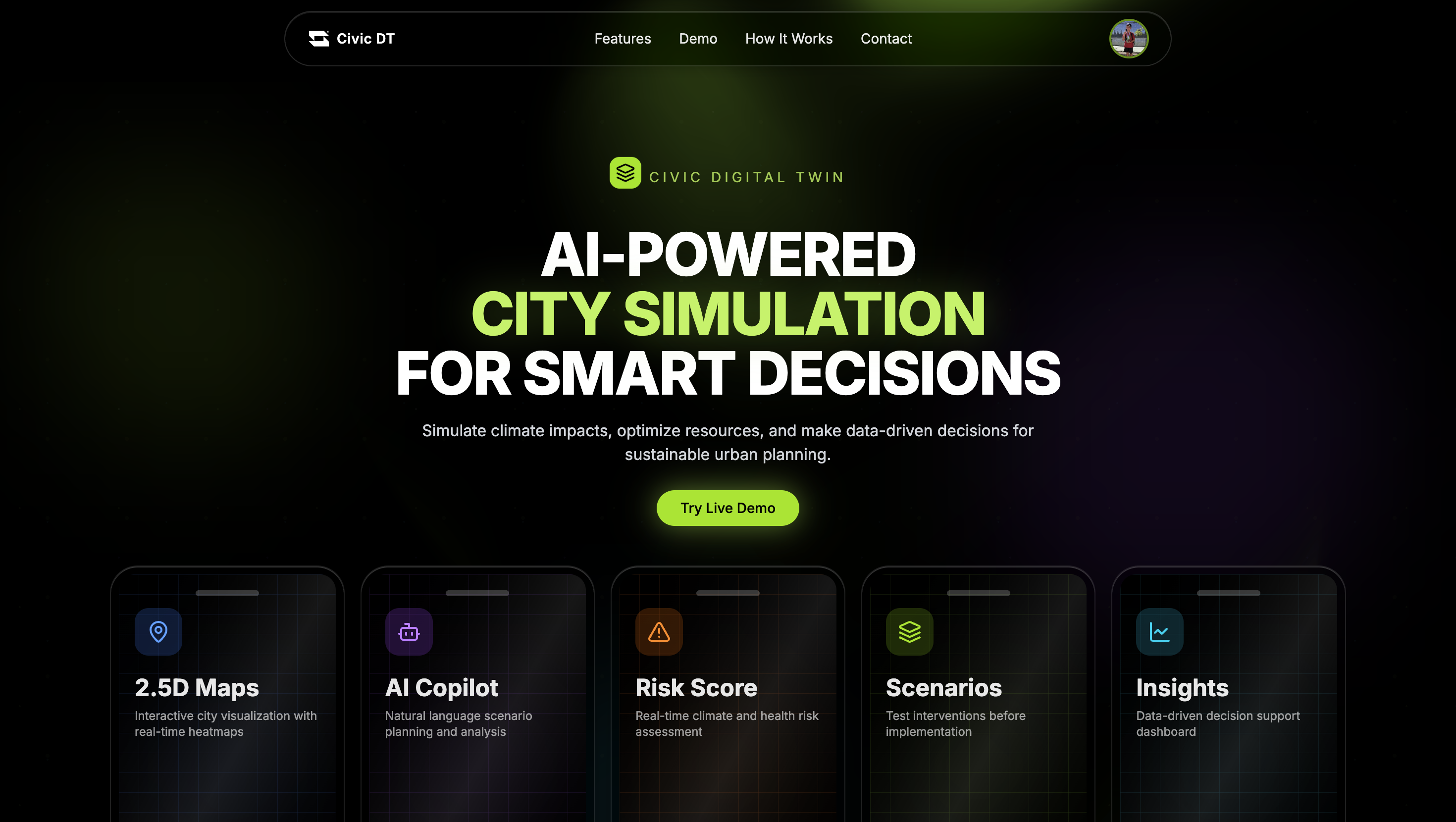
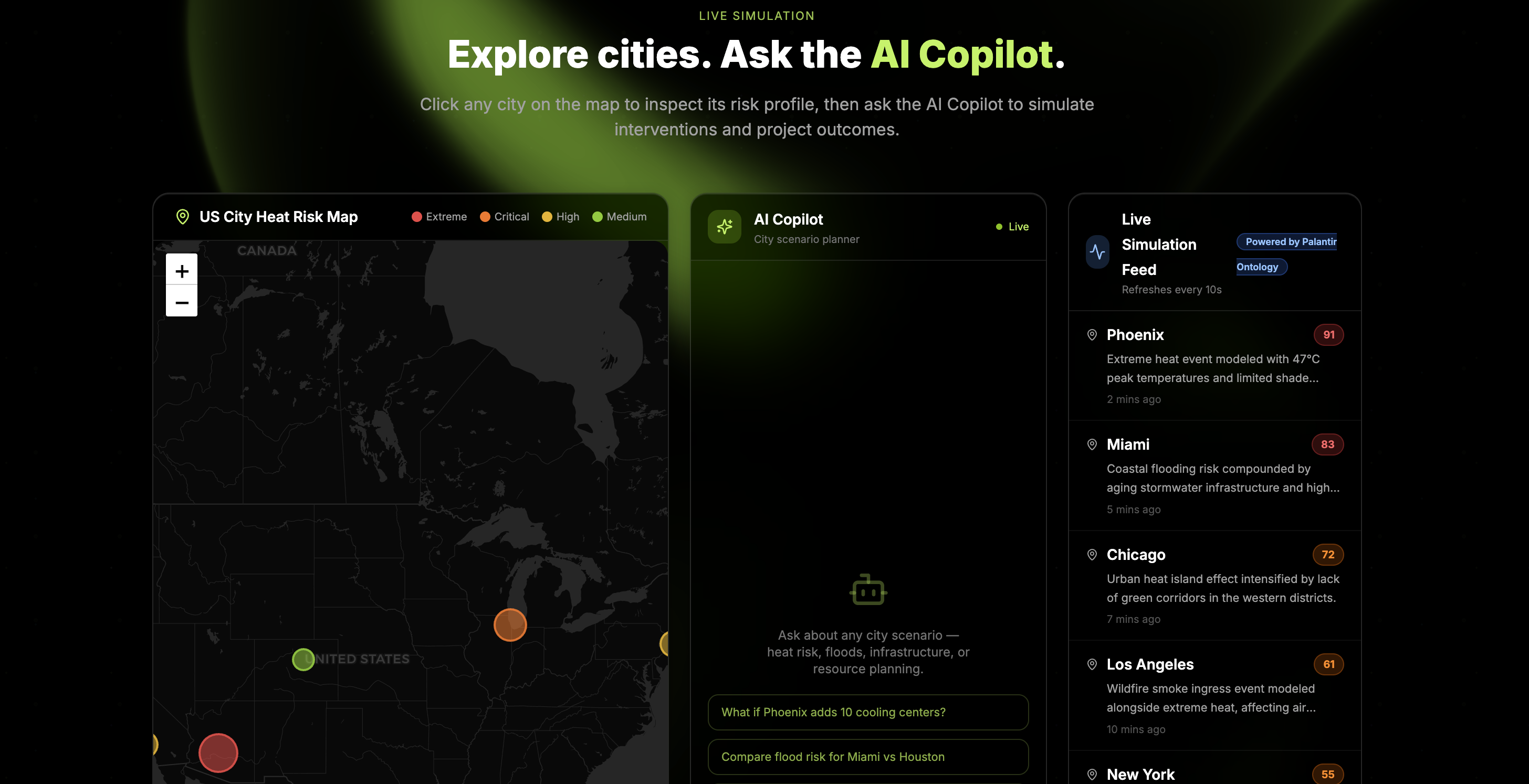
Every year, heatwaves worsen along with air quality(just two of many statistics) and politicians are often overburdened. In a world of tech, why do modern city officials still not utilize artificial intelligence. It is a tool that hastens problem-solving and allows politicians to be exposed to ideas they may have not thought up. We found that cities are missing the lack of a real-time system that can connect, predict, and guide decisions using data. In order to combat this problem, we developed CivicDT(Civic Digital Twin), a website that interacts with multiple cities. One can test different variables such as the quantity of cooling centers or medical resources and receive answers instantly. Utilizing real public data on environment and health within the United States, prediction learning models predict regional risk at a high R^2 value of 0.9703, an exceptionally high variance measurement that indicates that our model accounts for 97% of variance within our data. In terms of our infrastructure & performance, our project holds backend API built with Flask, AMD GPU for simulations with large datasets to enhance accuracy and confirm that our results have high accuracy, and is built with Vercel + API integration. For our chatbot and planning tool, we utilized the agent creation abilities of Palantir AIP to form a workflow combining multiple agents to synthesize together. We still faced many problems integrating all the features of our front end, and backend together. Due to complicated factors, such as a model, simulation, and AI layer, integrating each factor was a difficult challenge, considering that time-management is a difficult ask. Ultimately, it is easy to predict risk, but it is much harder to model how interventions will actually change those outcomes. Through our careful design of the relationships between variables we were capable of making results realistic. Using AIP Logic and AIP Agent Studio, we created a chain of agents that were able to create these relationships and make it realistic. Amidst all the challenges and learning experiences, we learned that a great model is not always enough on its own. Ensuring that everything is seamlessly integrated is key to making a program effective and communicable. Simplicity wins in communication, and if outputs are concise but clear this make them far more usable for the public. In our desire to build a system that helps the city make better decisions, we learned that execution of ideas requires strict communication of roles and seamless integration of building components.
Built With
- agent
- amdgpu
- flask
- nextjs
- palantiraip
- python
- react
- tailwind
- typescript

Log in or sign up for Devpost to join the conversation.