-
-
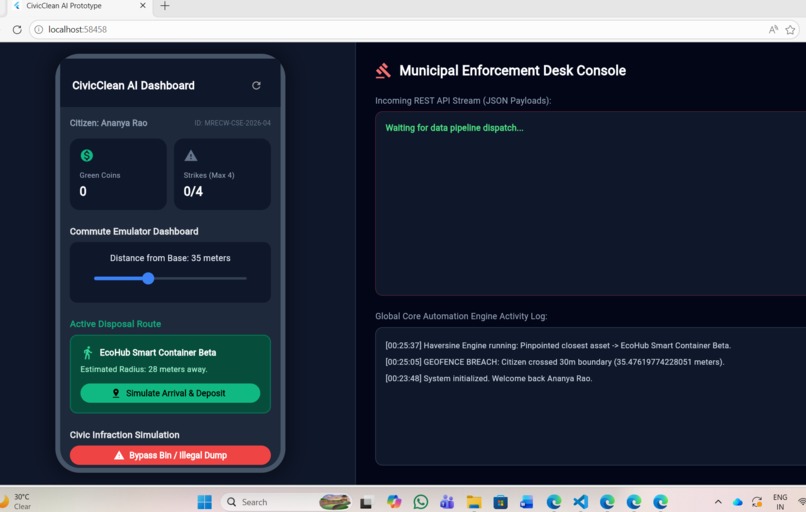
This is the app dual pannel
-
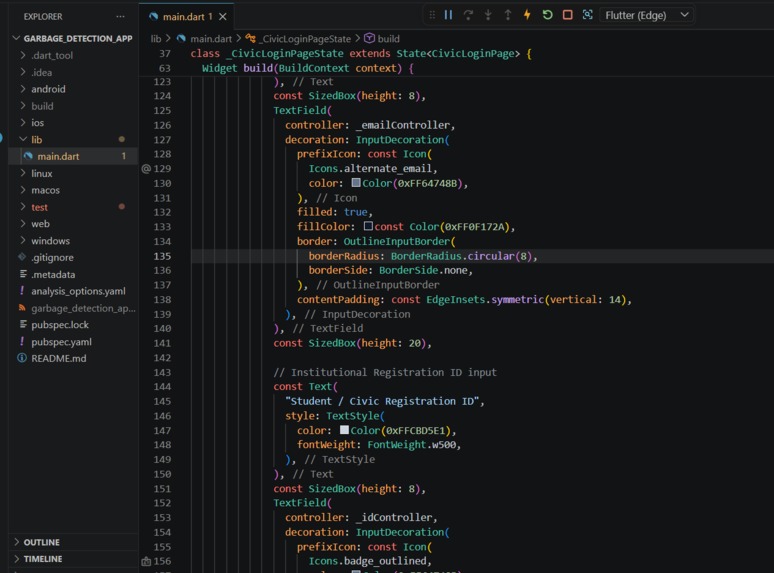
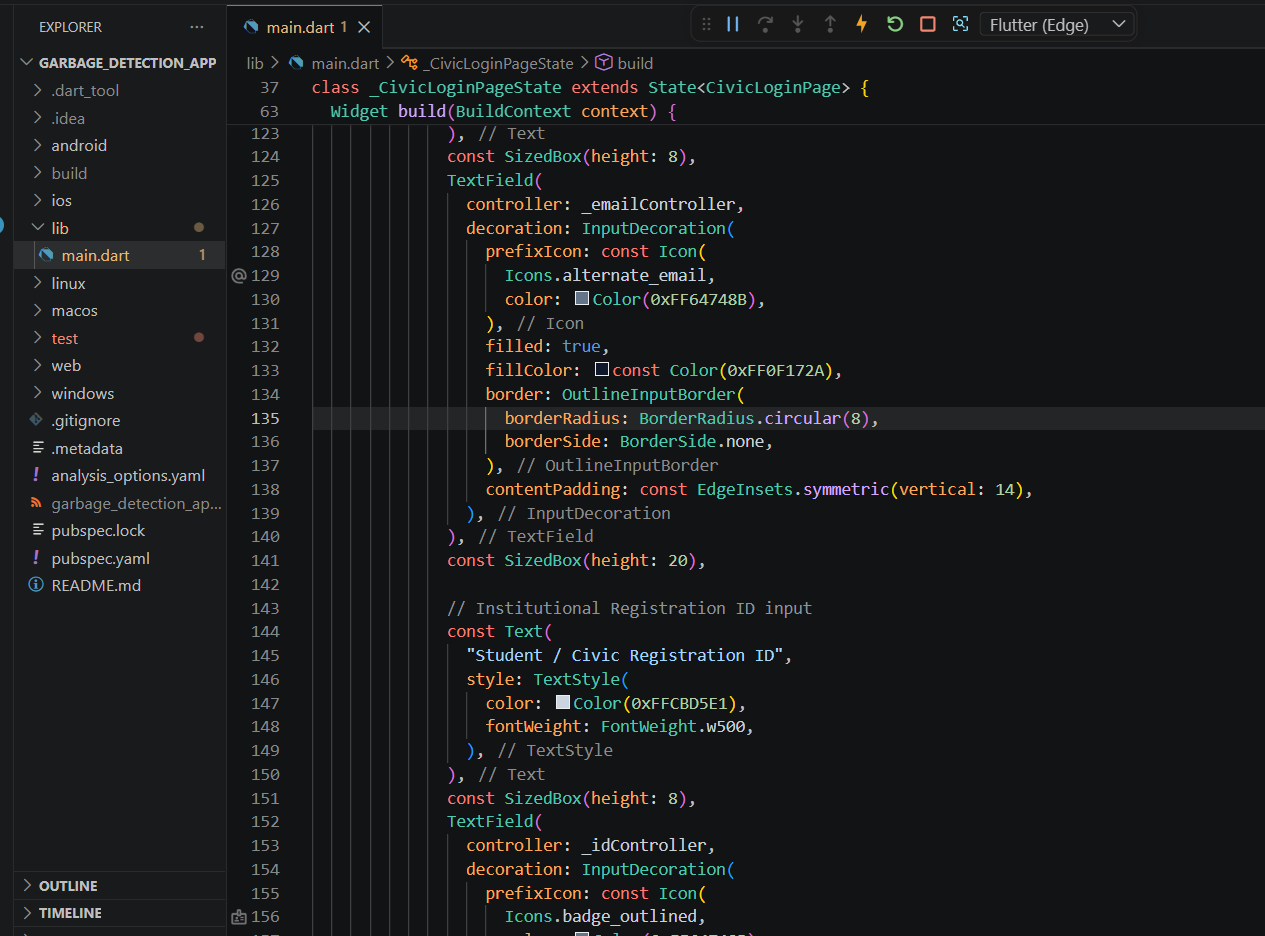
This is the clean main.dart code
💡 Our Inspiration
Our team, the A-Team, wanted to solve a major problem that happens in growing cities: poor garbage management. Right now, waste collection is reactive. Bins overflow, streets become unsanitary, and trucks waste fuel driving around blindly. We were inspired to build CivicClean AI to change this. We wanted to create a smart system that uses technology to automatically detect garbage hotspots and instantly hold areas accountable, making our cities cleaner and smarter.
🛠️ How We Built It
We built a working prototype of the application using a clean, component-based developer framework:
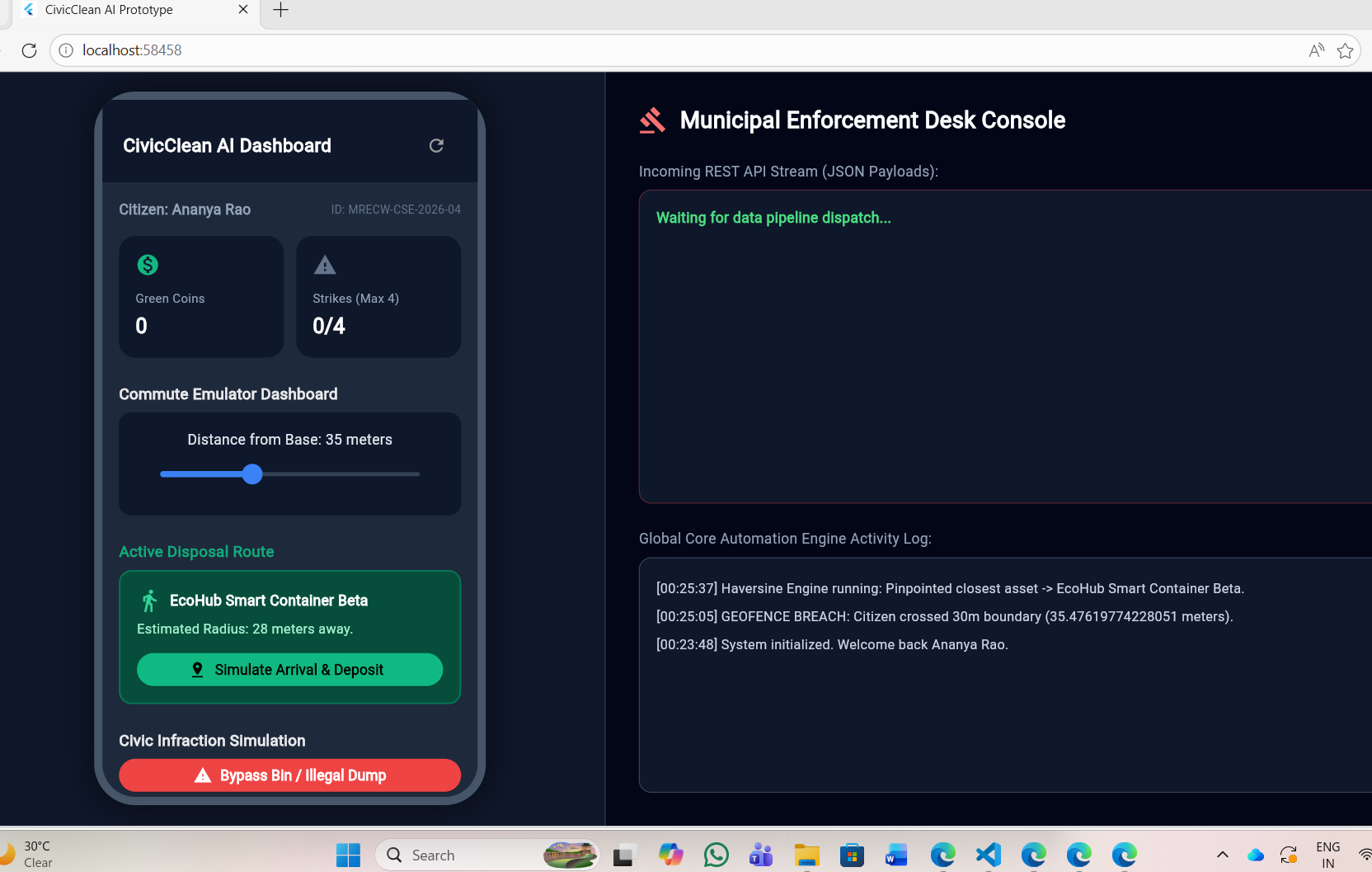
- Frontend & Interface: We used Flutter and Dart to build a responsive, dual-pane desktop dashboard application.
- The Left Pane (Detection Map): We wrote logic to simulate incoming data from urban sensors or mobile reports. When a "Geofence Breach" button is clicked, the app captures real-time GPS coordinates and drops a red marker pinpointing the exact latitude and longitude of the garbage hotspot.
- The Right Pane (Compliance Control): We hardcoded a tracking algorithm. Every time a violation is caught, the app adds a strike. When it hits its 4th strike, a special event trigger automatically shifts the interface into a "Lockdown Console" state to alert municipal authorities.
- Code Management: We used Git to track our code versions and successfully hosted our entire framework on GitHub for evaluation.
Challenges We Faced
As first-year students, we faced a couple of major hurdles:
- State Management & Logic: It was tough connecting the button triggers on the dashboard so that clicking a simulated button on one side would instantly update the maps and data counters on the other side in real-time.
- Git and GitHub Deployment: Setting up our local terminal, authenticating our developer profiles, and handling repository update conflicts (
[rejected]errors) was confusing at first, but we pushed through using the command line and fixed the sync issues perfectly.
What We Learned
We learned a massive amount of technical and team skills during this hackathon:
- We learned how to design dual-pane layouts and manage dynamic interface states using Flutter.
- We mastered fundamental developer workflows, including staging, committing, and force-pushing code repositories using Git commands.
- We learned how to break a big real-world problem down into simple coding logic, moving from basic design to a functional, automated infrastructure prototype.


Log in or sign up for Devpost to join the conversation.