-
-
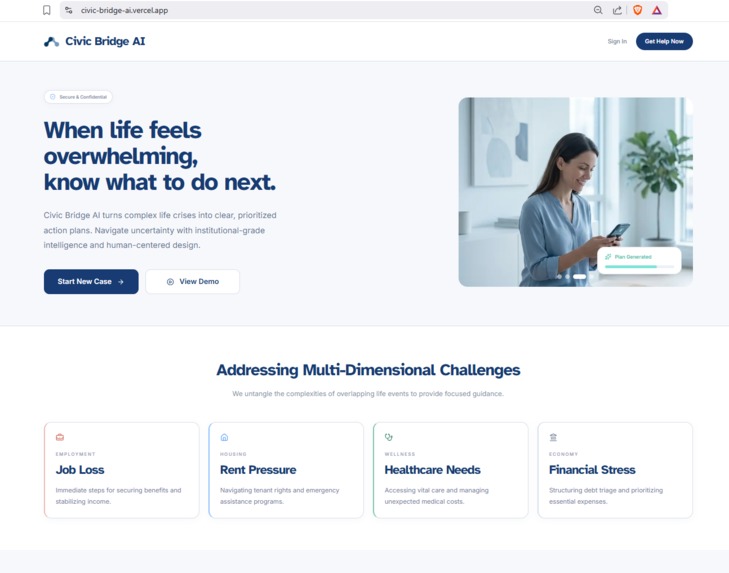
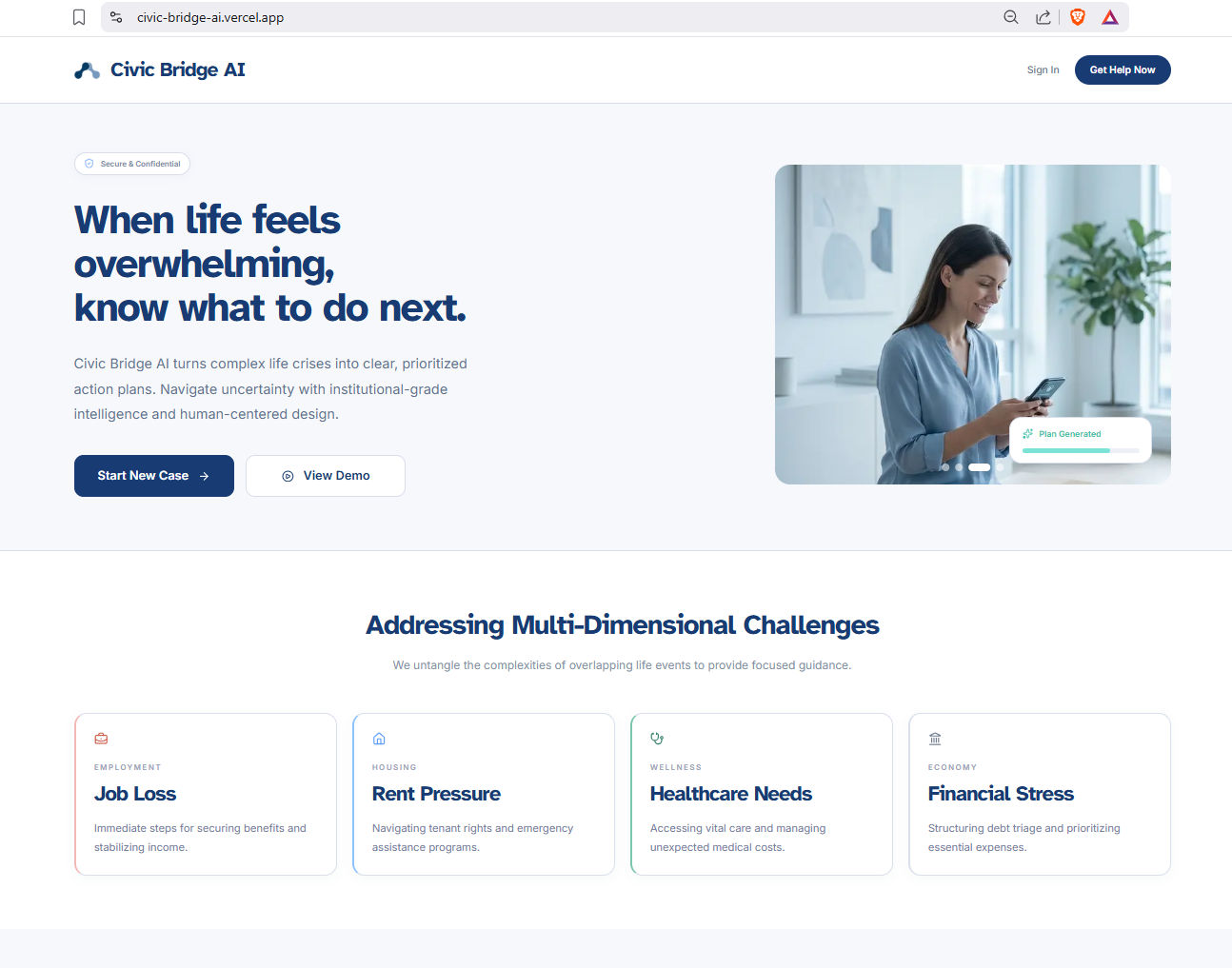
Landing page
-
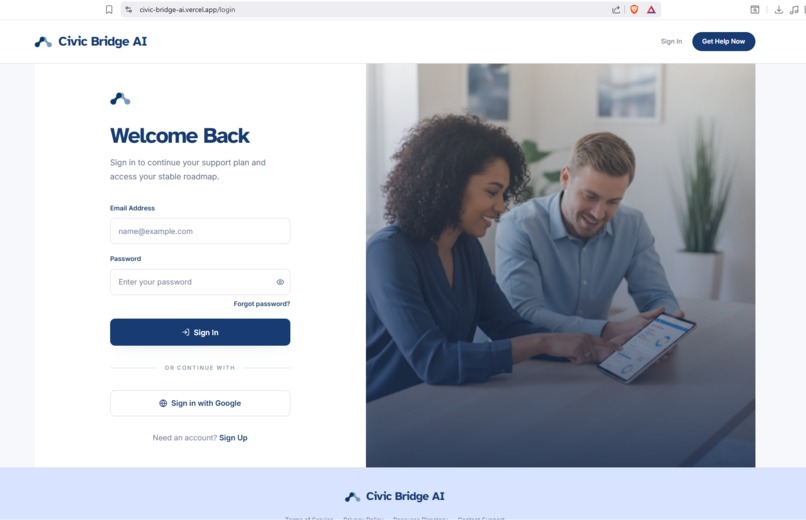
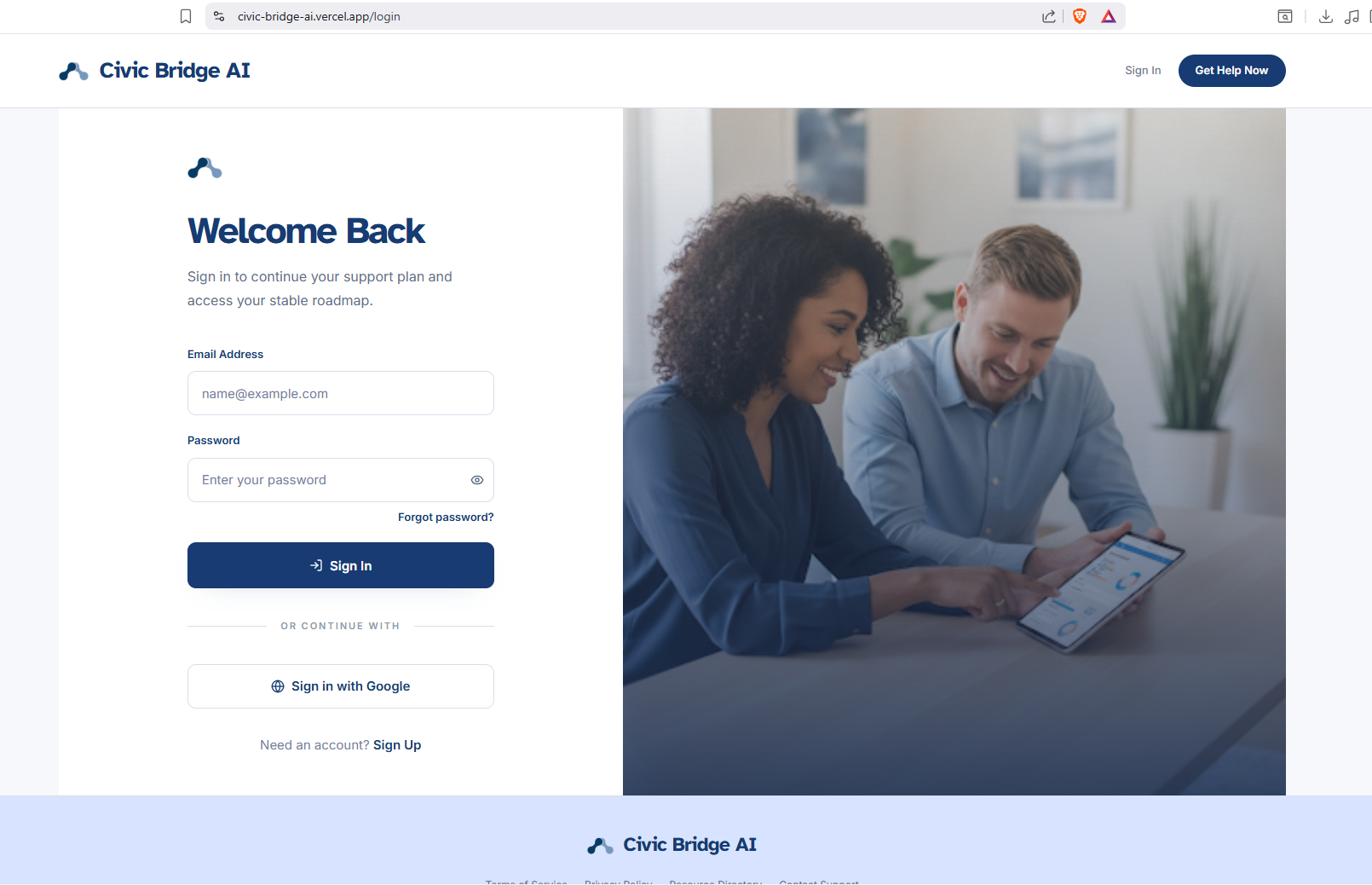
Login Page
-
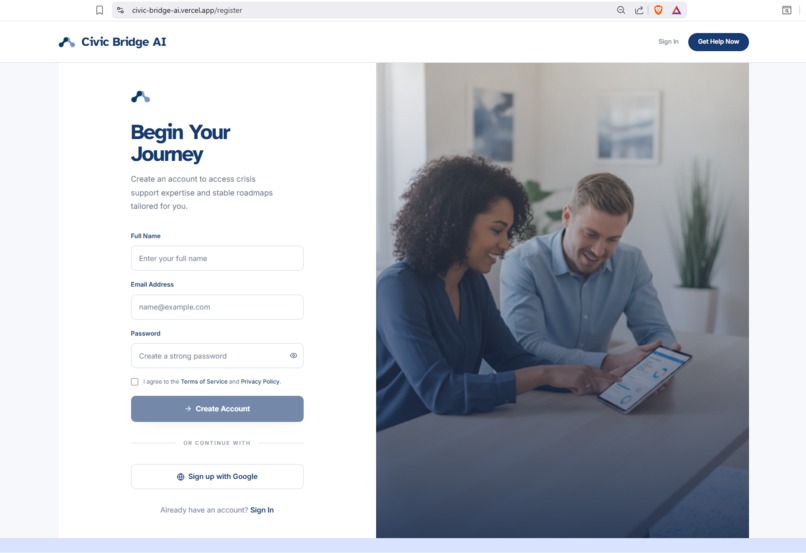
Register Page
-
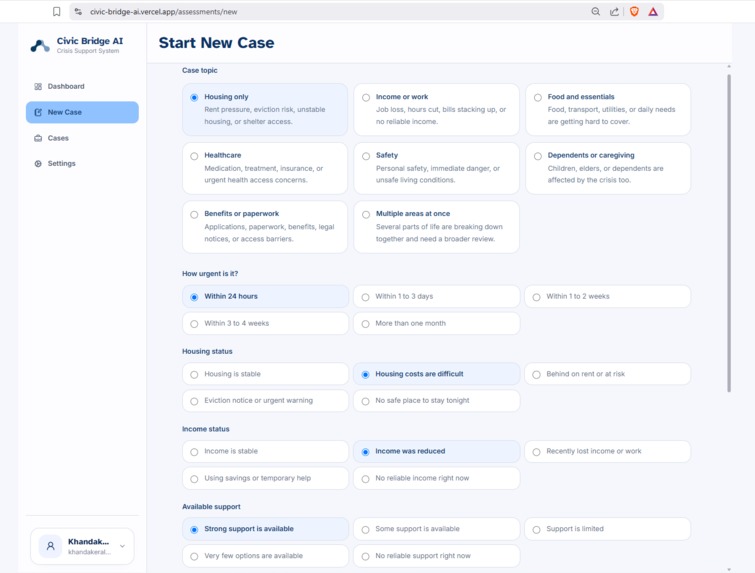
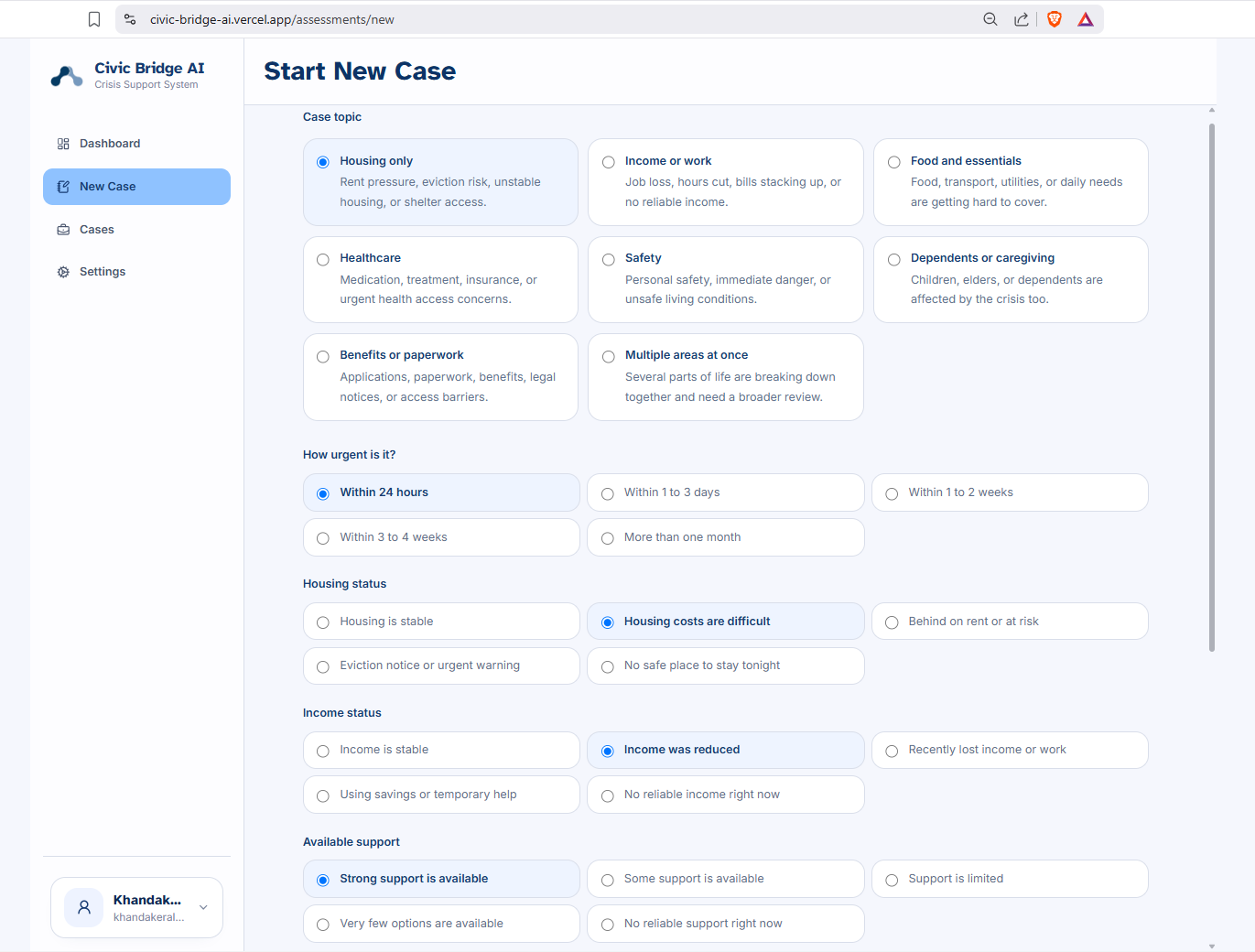
Assessment Page / new assessment
-
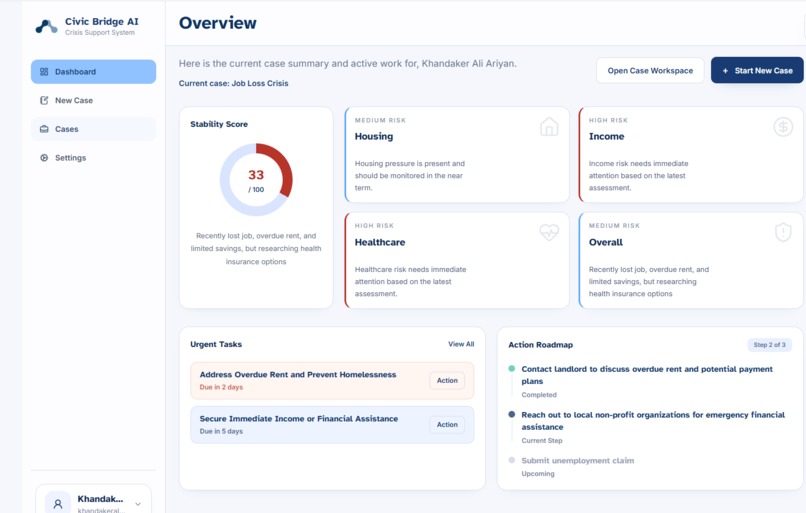
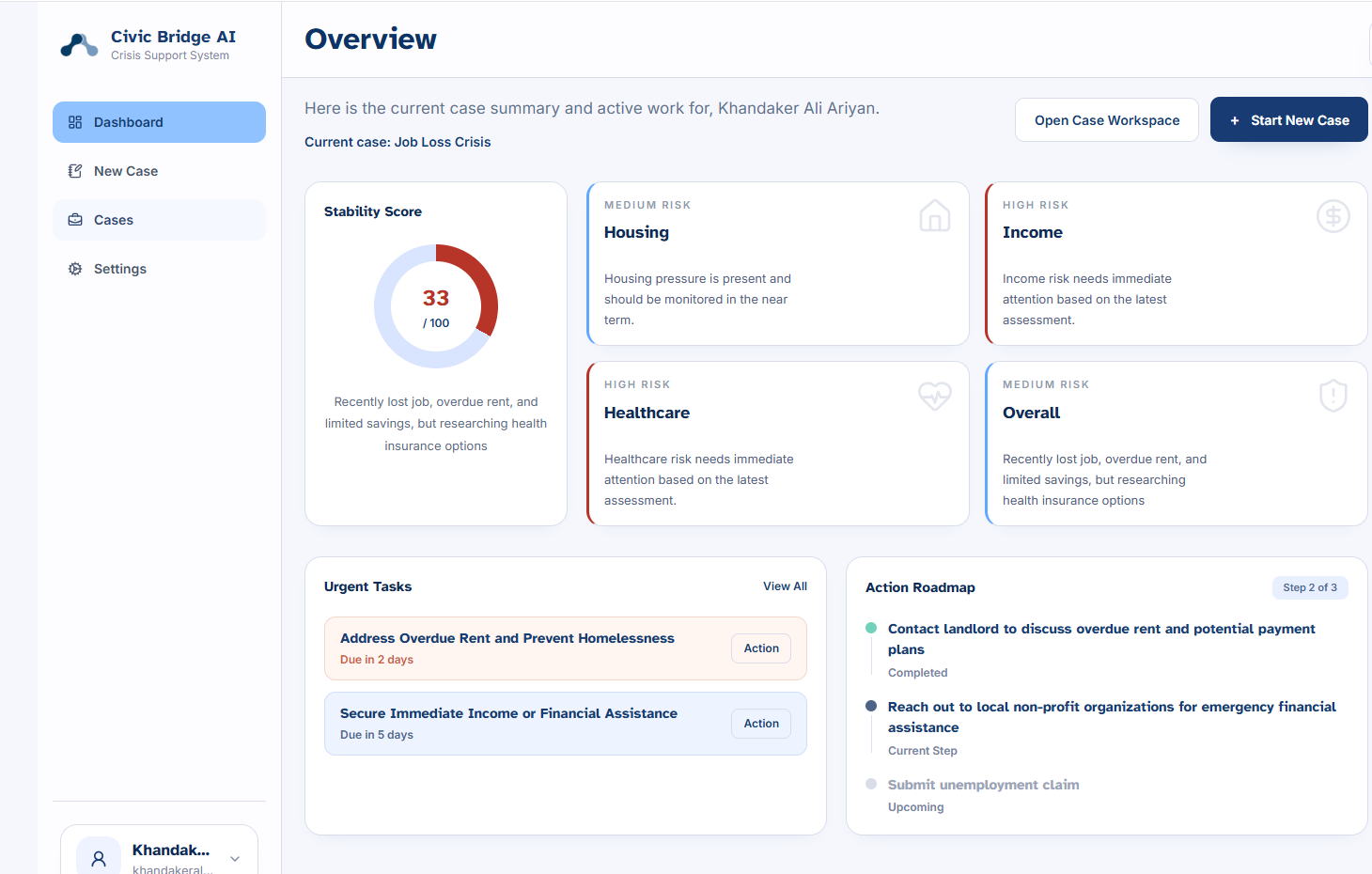
Overview page
-
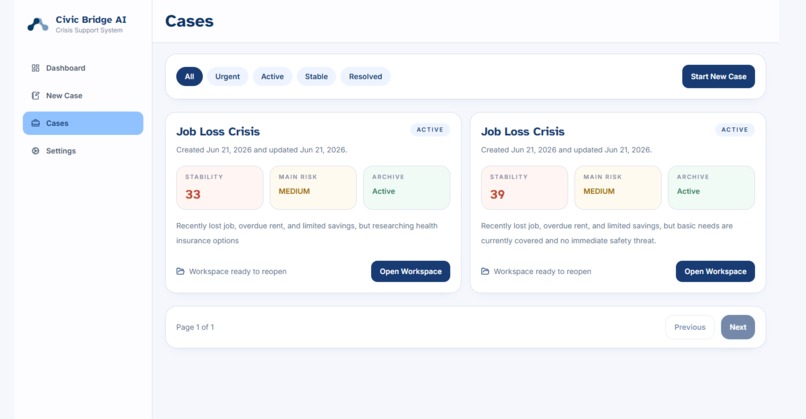
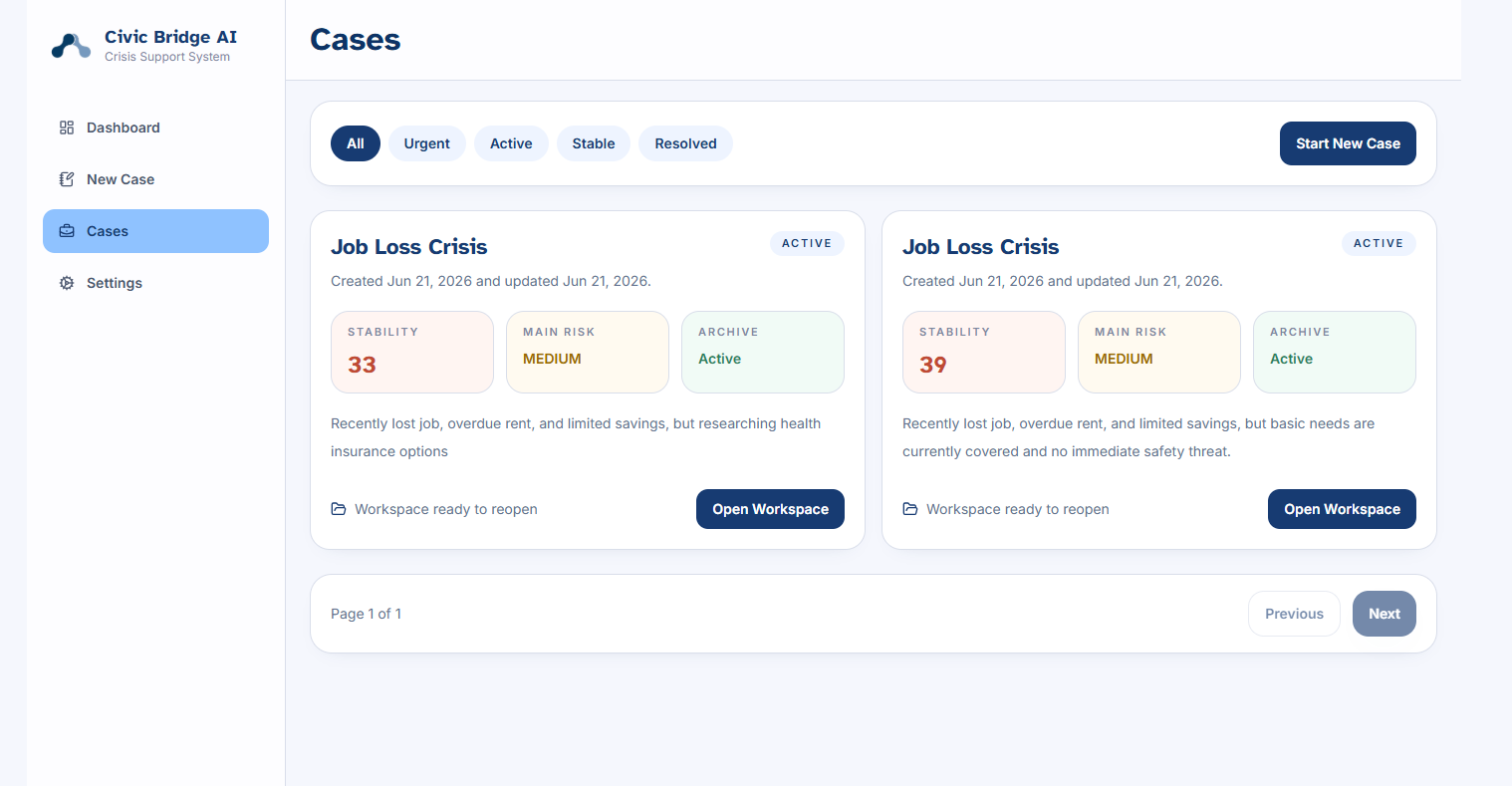
Case pages
-
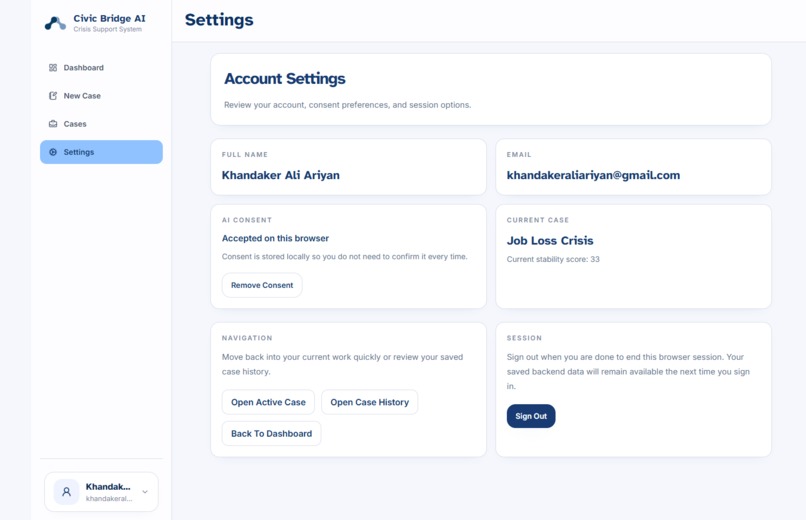
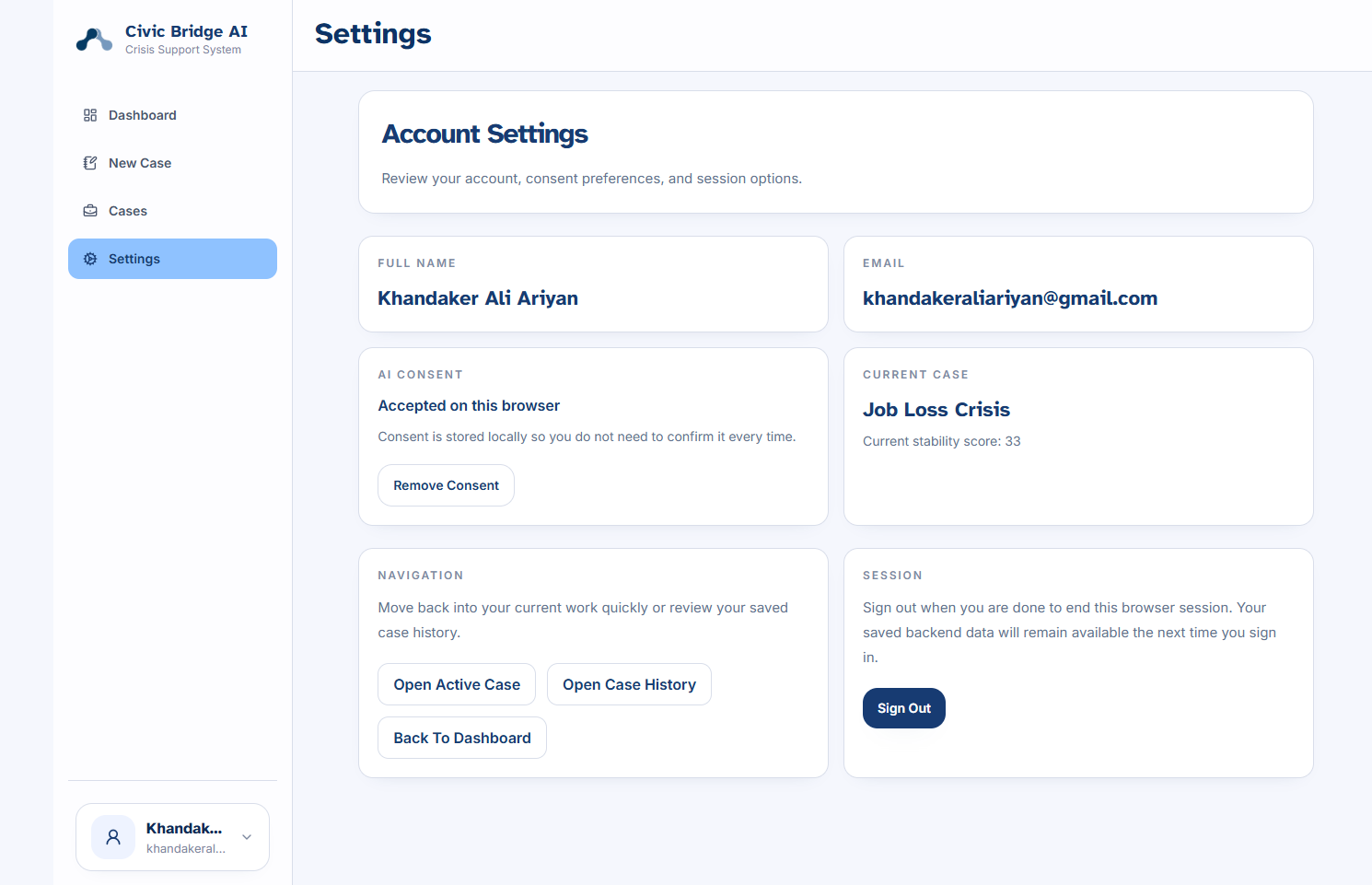
Settings page
-
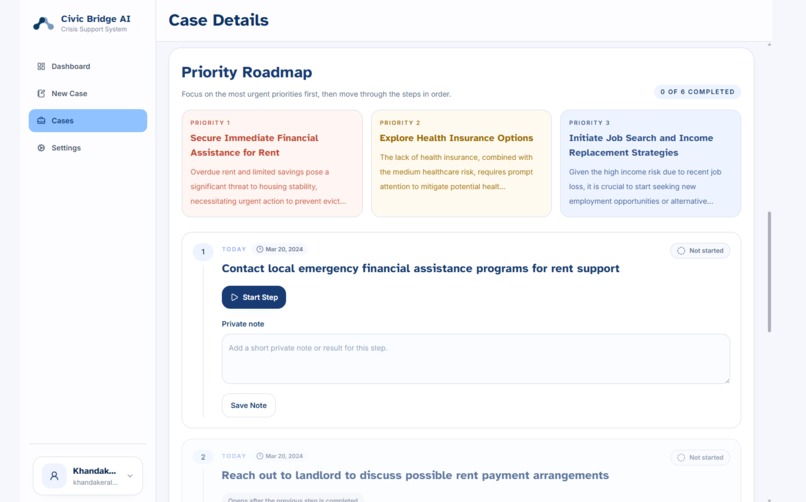
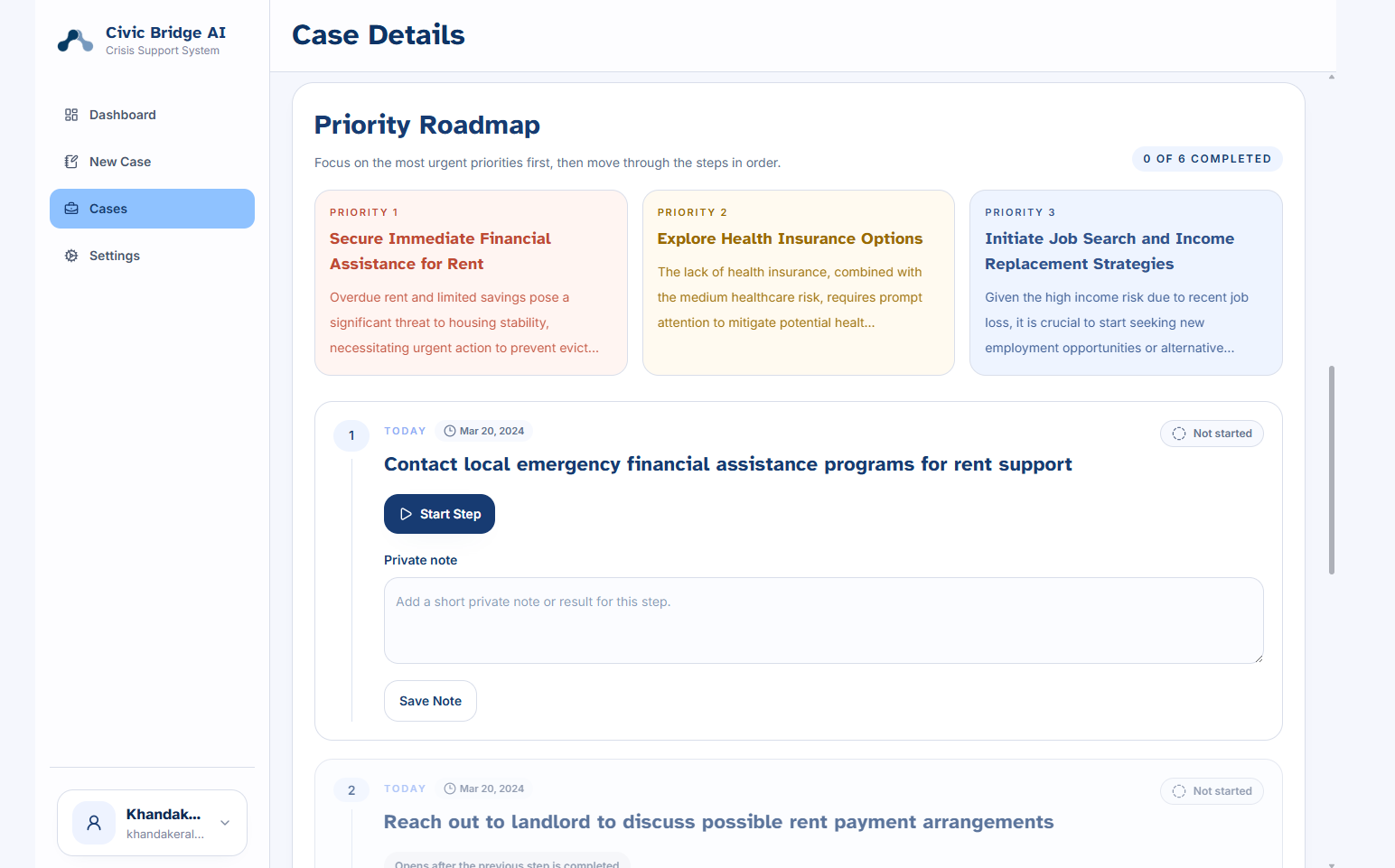
Priority roadmap

Inspiration
Millions of people face life-changing challenges such as job loss, housing insecurity, financial hardship, and healthcare uncertainty. During these moments, people often struggle to identify what actions to take first, what resources are available, and how their decisions may affect future outcomes.
We created CivicBridge AI to transform uncertainty into clarity. Our goal was to build an AI-powered platform that helps individuals navigate complex personal crises through intelligent risk assessment, decision support, personalized recovery planning, and resource guidance.
We believe technology should do more than provide information—it should empower people to make better decisions during their most difficult moments.
What it does
CivicBridge AI is an AI-powered Crisis Decision Intelligence Platform designed to help people navigate personal and financial crises.
The platform:
- Assesses a user's situation using AI-powered analysis.
- Identifies housing, income, healthcare, and overall risk levels.
- Calculates a stability score to measure current circumstances.
- Prioritizes the most urgent actions a user should take.
- Generates personalized recovery roadmaps.
- Simulates the consequences of different decisions before they are made.
- Recommends relevant support resources and assistance programs.
- Tracks progress over time through reassessments and action completion.
- Provides practical application assistance such as checklists, phone scripts, and email drafts.
Rather than functioning as a simple chatbot, CivicBridge AI acts as a structured decision-support system that helps users move from crisis to recovery.
How we built it
CivicBridge AI was built as a modern full-stack web application.
Frontend
- Next.js
- TypeScript
- Tailwind CSS
- Responsive Dashboard UI
Backend
- Node.js
- Express.js
- RESTful API Architecture
Database & Authentication
- Supabase PostgreSQL
- Firebase Authentication
Artificial Intelligence
- Google Gemini AI / Groq AI
- Structured Prompt Engineering
- Multi-stage Decision Analysis Pipeline
Our AI workflow follows:
Assessment → Risk Analysis → Priority Engine → Recovery Roadmap → Outcome Simulation → Resource Matching → Progress Tracking
This architecture allows the platform to provide contextual recommendations instead of generic AI responses.
Challenges we ran into
One of our biggest challenges was building reliable AI workflows that consistently return structured, actionable results.
We had to:
- Design prompts that produce predictable JSON responses.
- Prevent hallucinated recommendations.
- Create meaningful risk assessments from unstructured user input.
- Build a decision simulation engine capable of generating realistic outcomes.
- Ensure recommendations remain explainable and transparent.
- Balance AI assistance with responsible and ethical guidance.
Another challenge was integrating multiple systems—including authentication, databases, AI services, and progress tracking—into a unified user experience.
Accomplishments that we're proud of
- Built a complete end-to-end AI decision support platform.
- Created a multi-stage reasoning pipeline rather than a simple chatbot.
- Developed an AI-powered consequence simulation engine.
- Implemented personalized recovery roadmaps.
- Added progress tracking and reassessment capabilities.
- Integrated resource matching and application assistance tools.
- Designed a scalable backend architecture using repositories, services, controllers, and middleware.
- Successfully combined Firebase, Supabase, Express, Next.js, and Gemini AI into a cohesive system.
Most importantly, we built a platform focused on solving real-world problems that affect real people.
What we learned
Through this project, we learned that effective AI systems require far more than connecting a language model to a user interface.
We gained experience in:
- AI system design
- Full-stack architecture
- Database modeling
- Authentication and security
- Responsible AI practices
- User-centered product design
We also learned the importance of building technology that addresses human challenges with empathy, transparency, and practical value.
What's next for CivicBridge AI
Our vision is to evolve CivicBridge AI into a comprehensive digital support platform for individuals facing life challenges.
Future plans include:
- Location-aware resource recommendations.
- Multilingual support.
- Mobile applications for Android and iOS.
- Integration with local government and nonprofit services.
- Advanced progress analytics and predictive insights.
- Community support and peer guidance features.
- Expanded decision simulation models for housing, employment, healthcare, and education.
Our long-term goal is to make CivicBridge AI the most trusted AI-powered guide for people navigating difficult life situations and major personal decisions.
Built With
- express.js
- firebase-authentication
- framer-motion
- google-gemini-ai
- lucide
- next.js
- node.js
- react
- rest-apis
- supabase-postgresql
- tailwind-css
- typescript
- vercel
- vitest


Log in or sign up for Devpost to join the conversation.