-
-
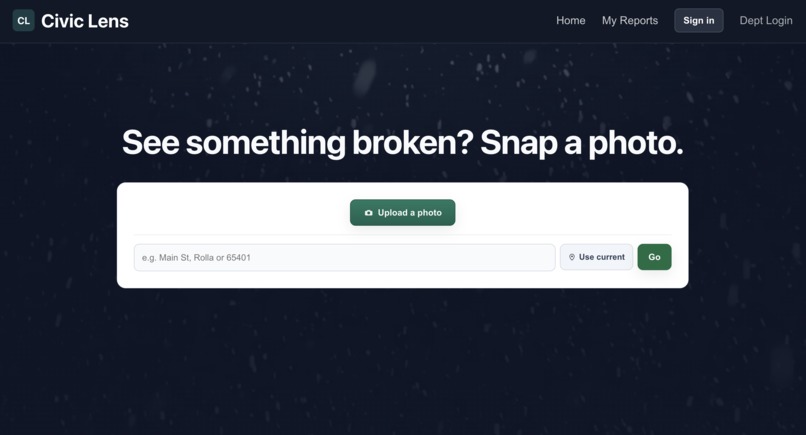
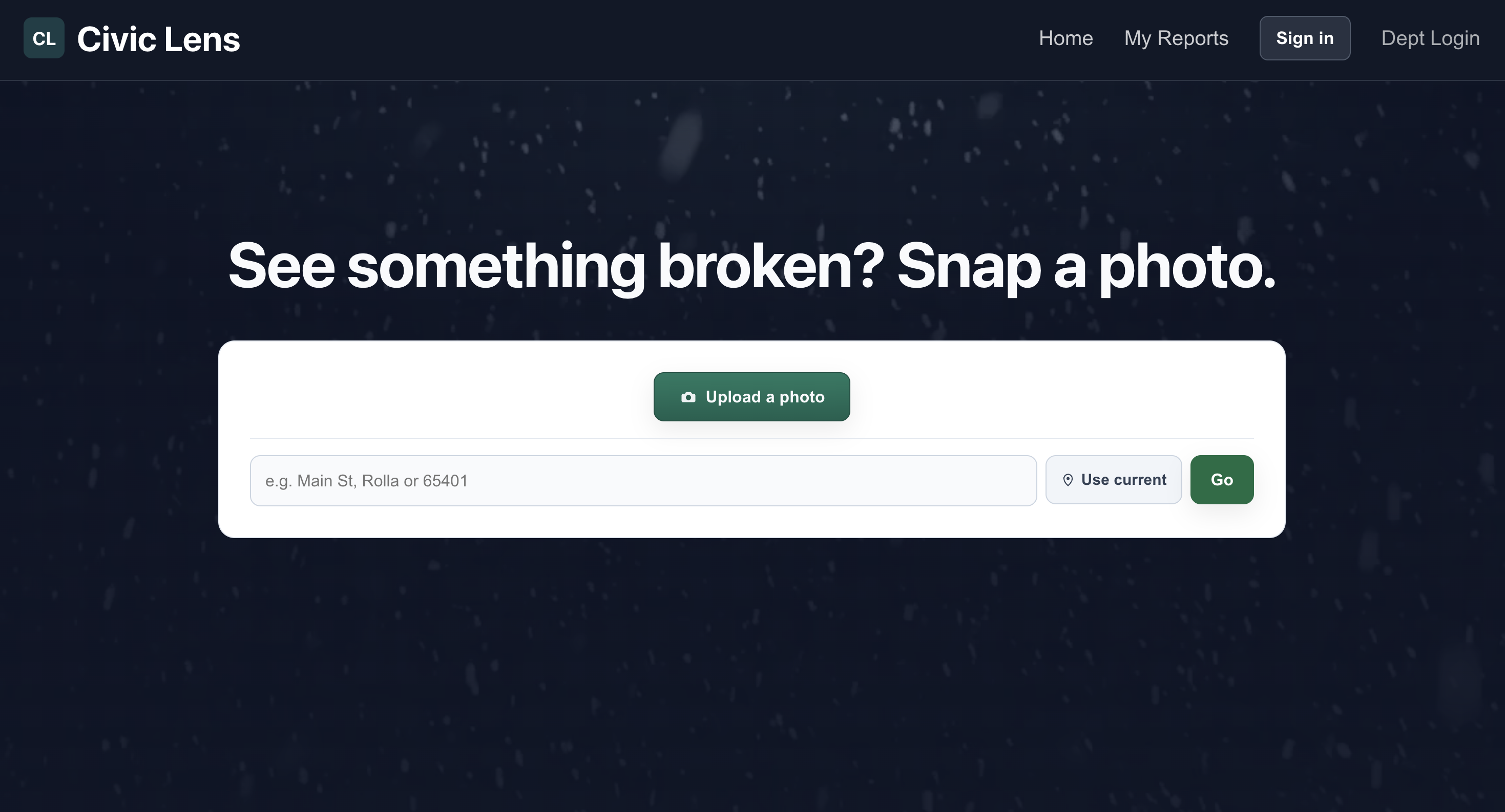
Our main page for Clients
-
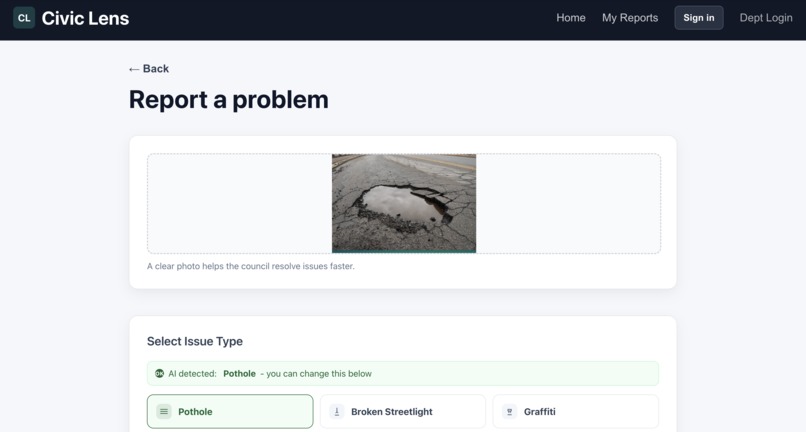
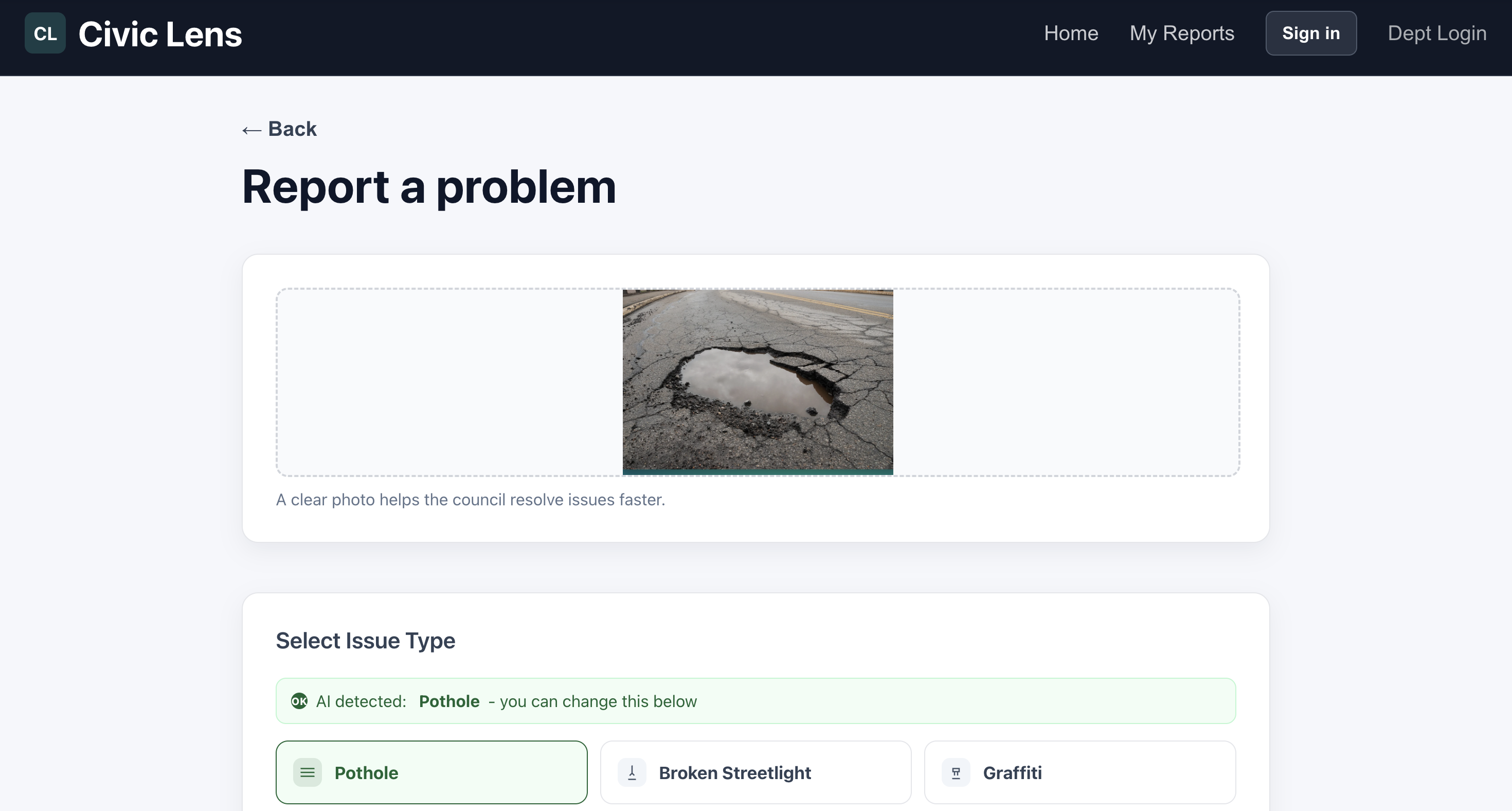
A snap and location is the input and it autofills the form
-
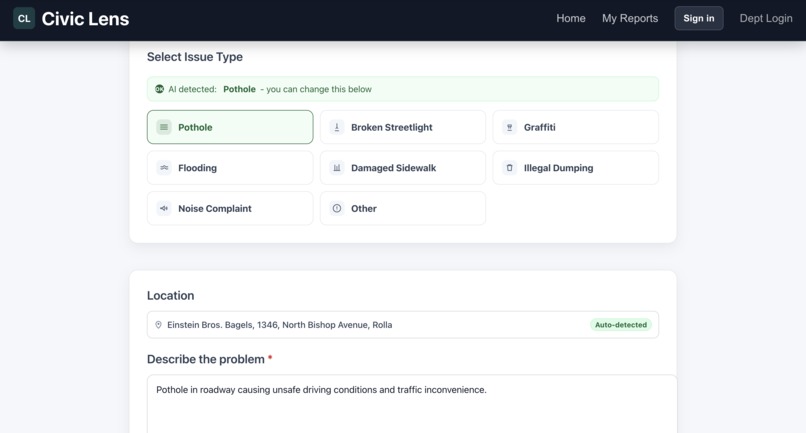
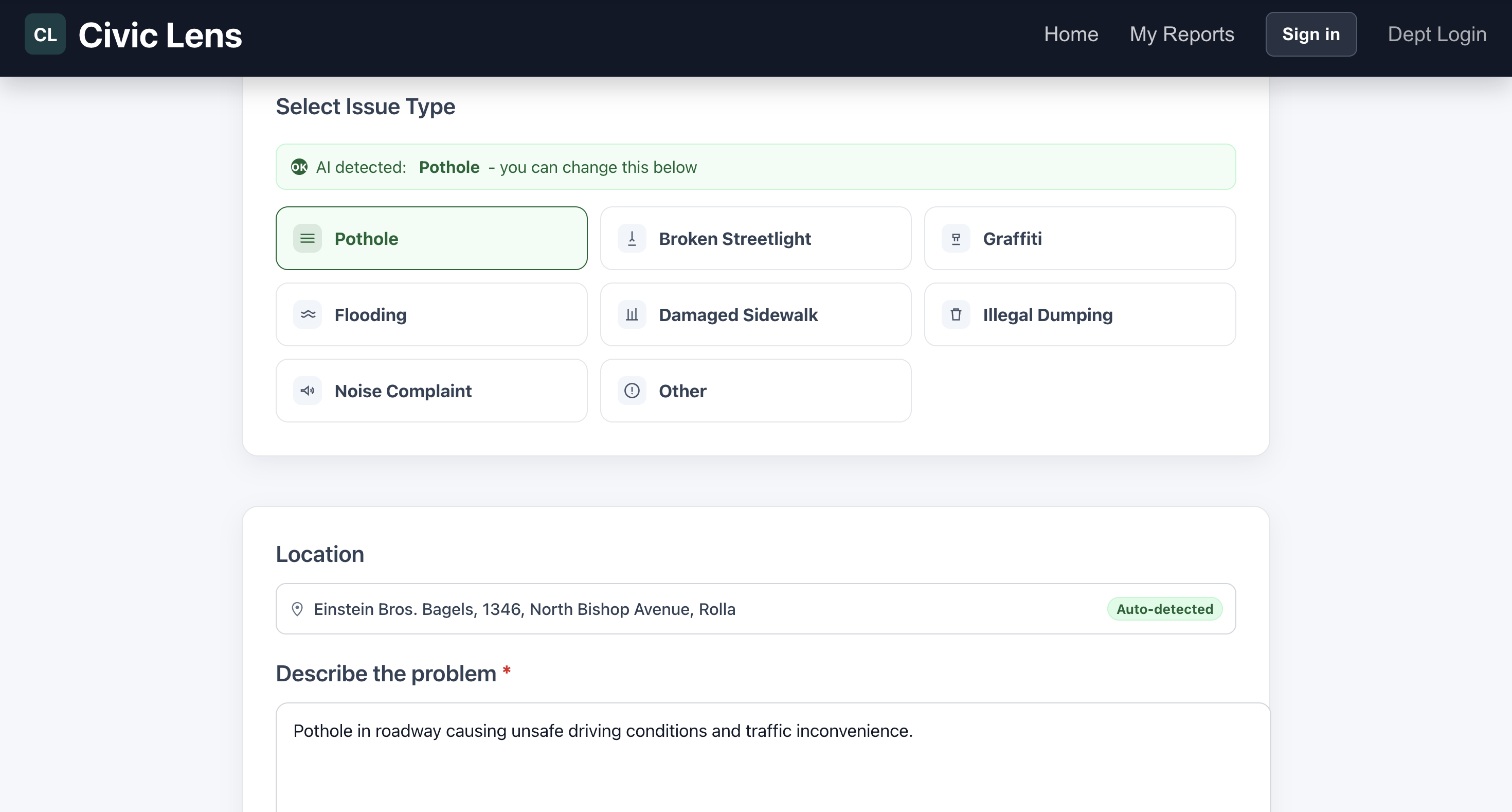
Form part 2
-
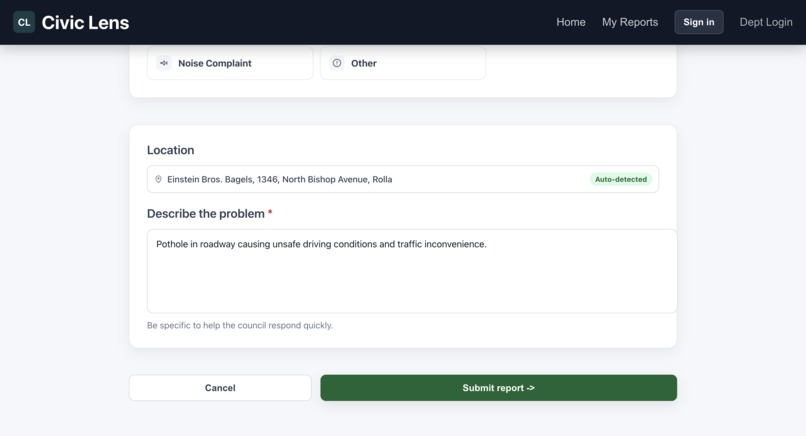
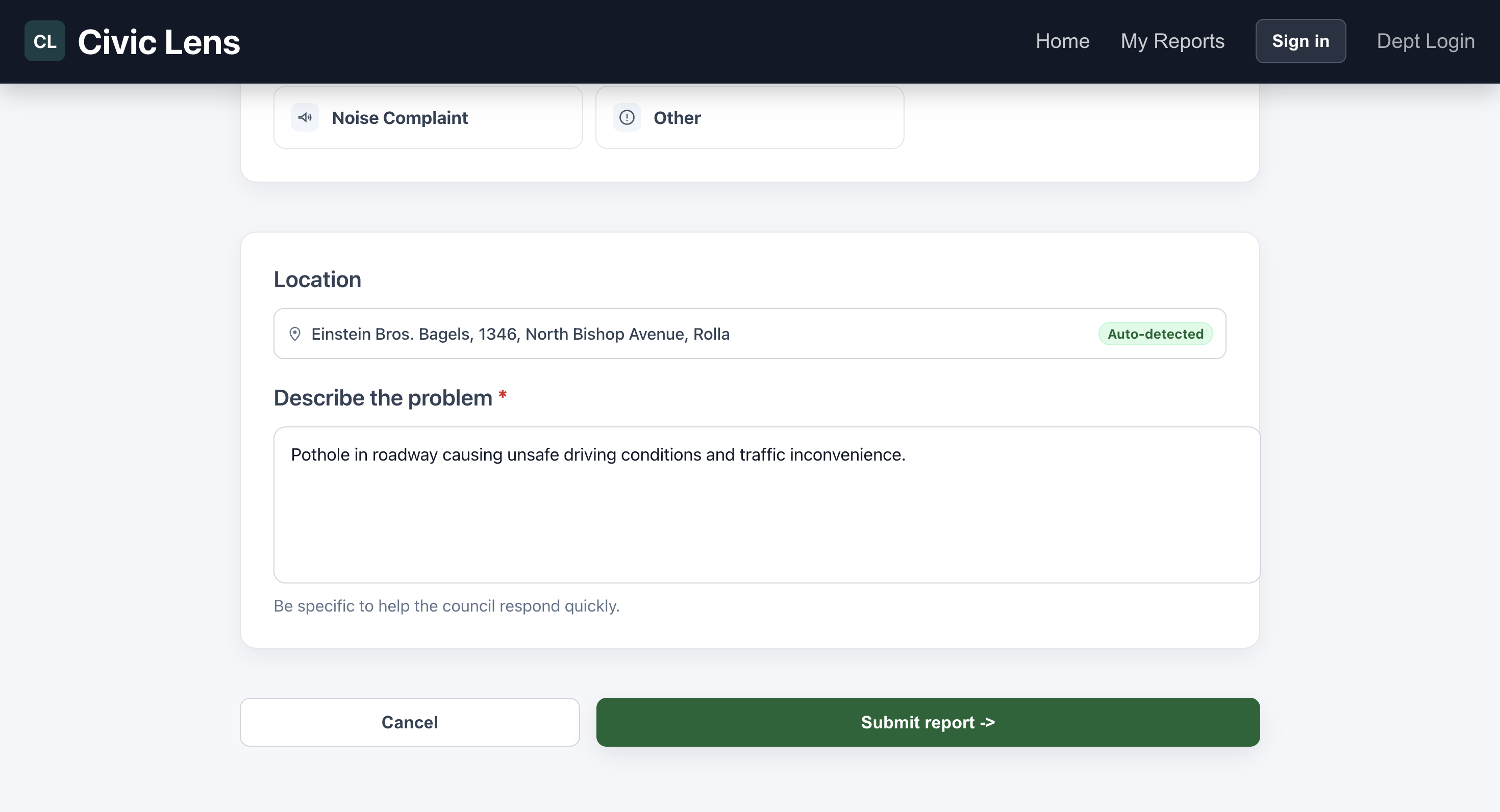
Form part 3 - the description is also auto filled
-
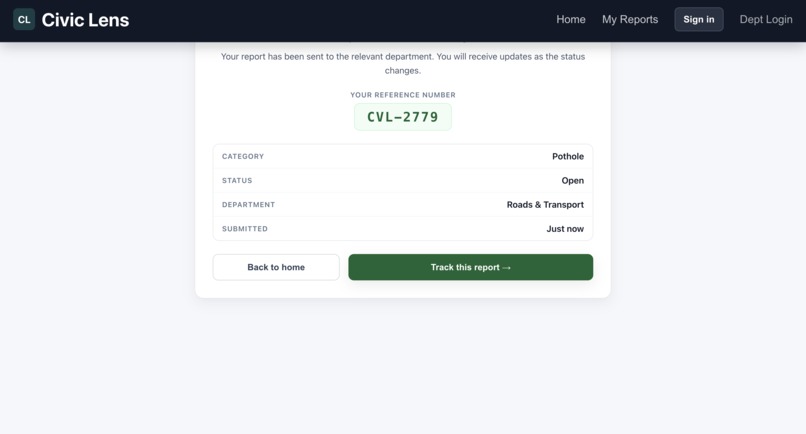
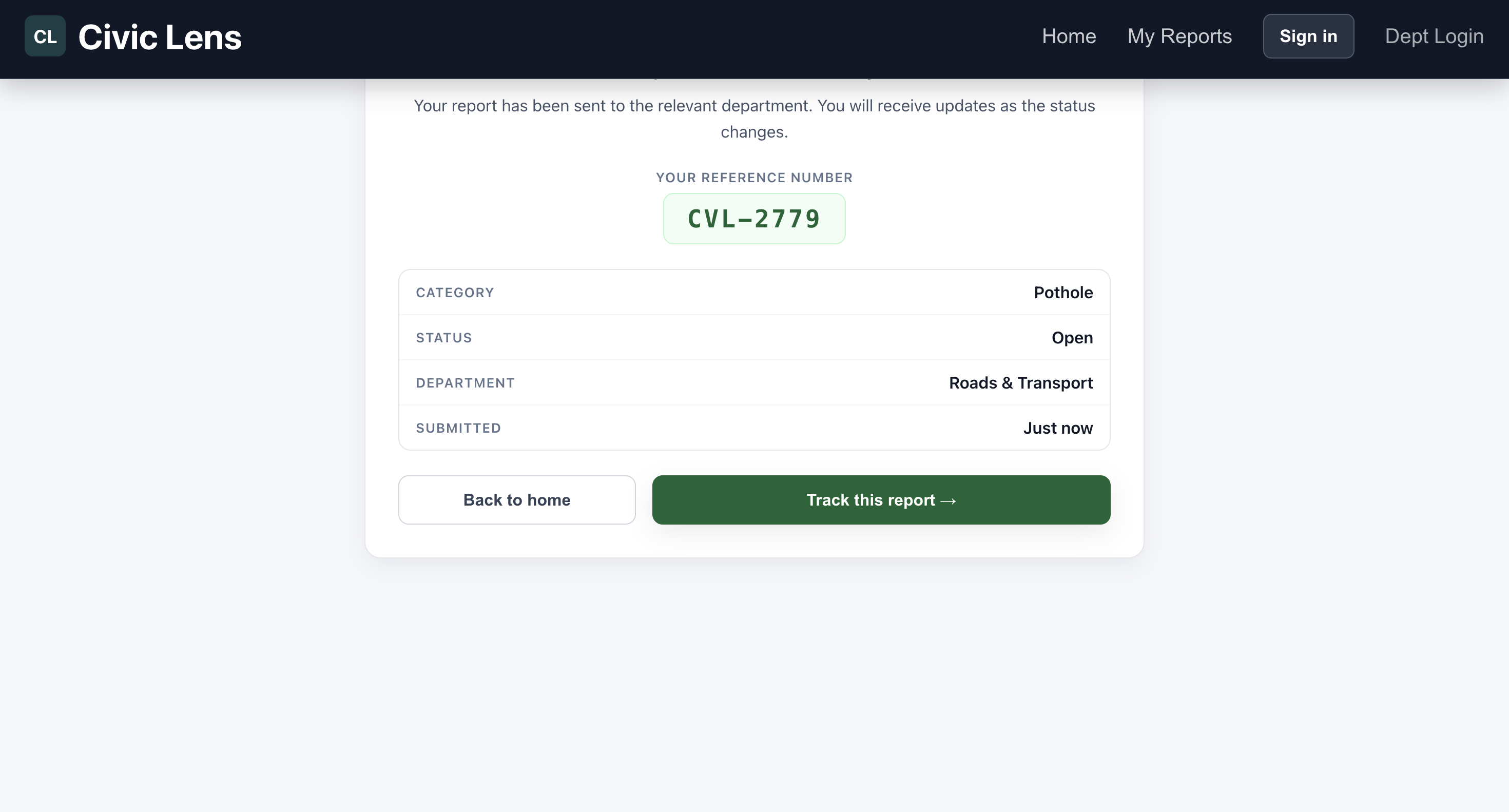
A ticket number is generated to track the submitted report
-
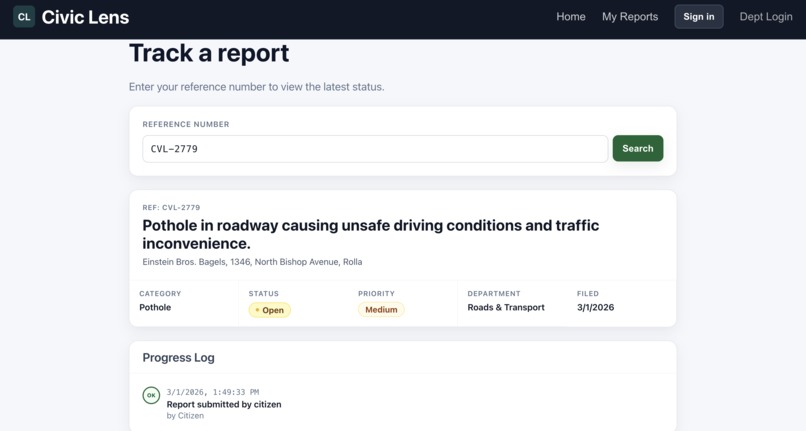
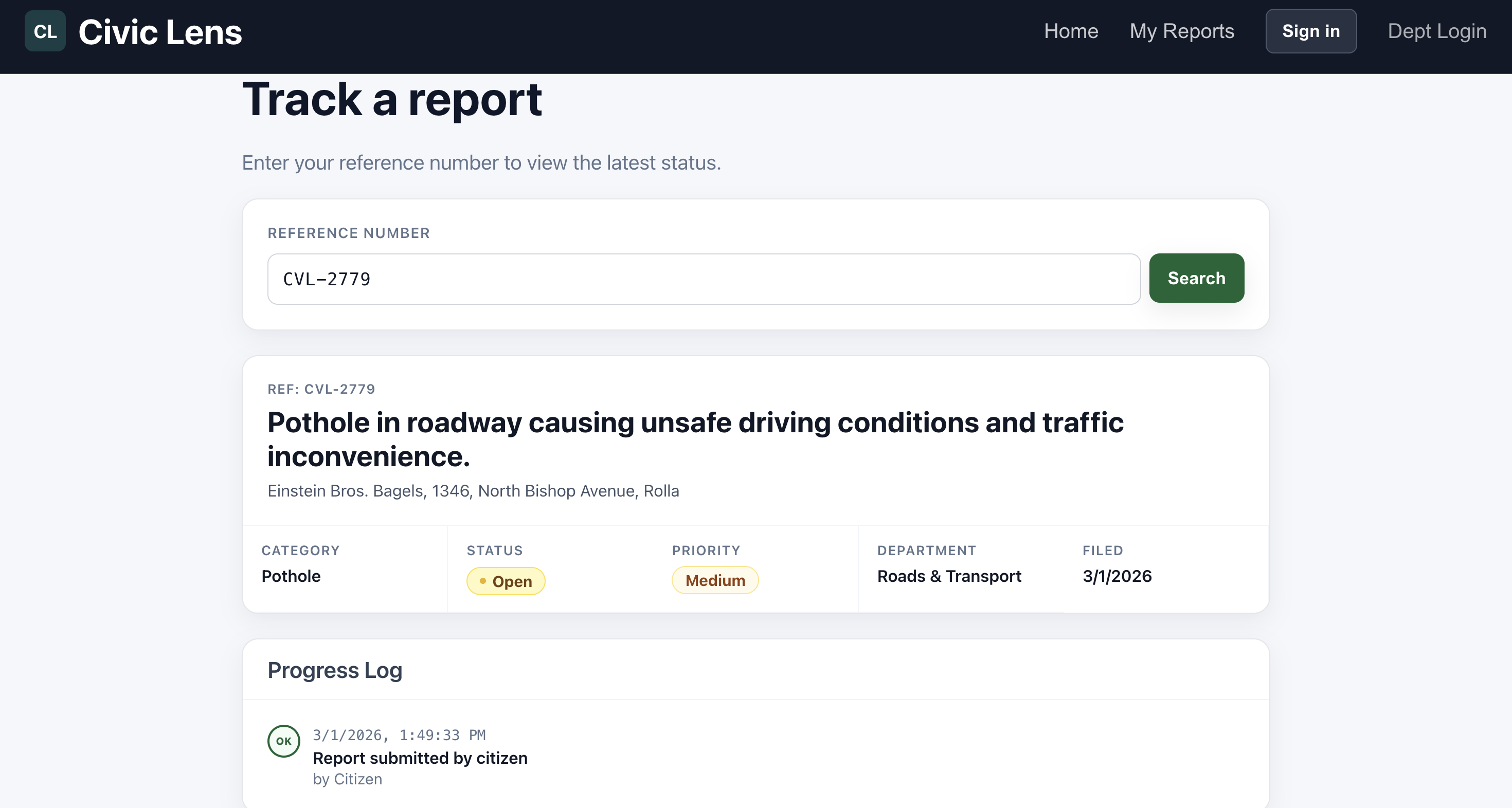
This is how the report shows the tracking
-
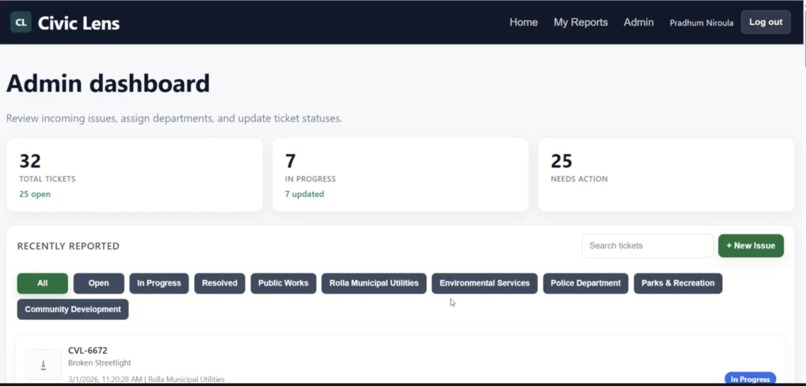
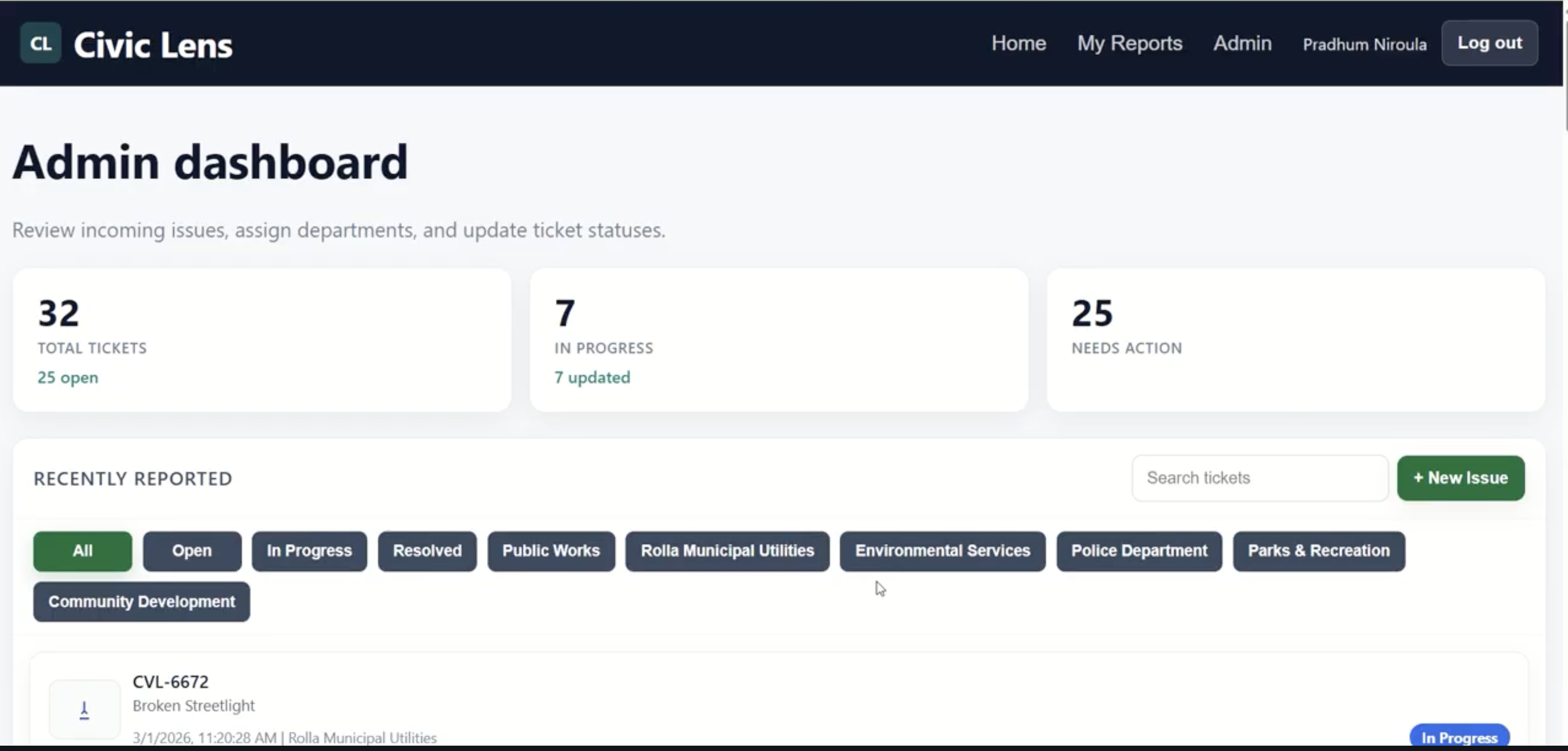
This is how the dashboard from the Admin side looks like
Inspiration
Infrastructure breaks silently in every city, potholes deepen, streetlights go dark, drains flood, and local governments only find out when damage becomes severe or a citizen makes a phone call.
We built Civic Lens to close that gap for every city, starting with Rolla, MO as our implementation base.
What it does
Civic Lens is a scalable smart city issue reporting platform that works for any city, any municipality. A citizen snaps one photo, Gemini AI classifies it instantly and routes it to the correct local department automatically. No drop downs. No phone calls. Just one photo.
The platform is built to be city-agnostic:
- Any city's departments can be onboarded in minutes
- AI classification works for any issue type, anywhere
For our implementation and demo we chose Rolla, MO mapping to real Rolla city departments (Public Works, Municipal Utilities, Environmental Services)
The platform has two sides:
- Citizen App : photo upload, AI classification, GPS tagging, duplicate detection, real-time ticket tracking
- Department Dashboard : live issue map, KPI cards, SLA tracking, predictive hotspot zones, auto-escalation
How we built it
Civic Lens was built as a full-stack web application designed to aggregate and visualize civic data in an intuitive way.
- Frontend : React · React Router · Axios
- Backend : Node.js · Express · Mongoose · CORS · dotenv · express-oauth2-jwt-bearer · @google/generative-ai
- Database : MongoDB Atlas
- AI : Google Gemini API
- Authentication : Auth0
- Infrastructure : Vultr · PM2 · nginx · Cloudflare Tunnel
We focused on creating a minimal yet scalable architecture that could support additional data sources and features in the future.
Challenges we ran into
UI/UX Decisions : Designing something intuitive while keeping development simple was challenging.
Deployment Issues : Ensuring everything worked smoothly in production took debugging and iteration.
Accomplishments that we're proud of
- Successfully built a working prototype within 48 hours.
- Integrated real civic data into a usable interface.
- Created a clean, accessible user interface despite limited time.
- Designed a solution that is scalable beyond the hackathon.
What we learned
- How to rapidly prototype and prioritize under pressure.
- The complexity behind civic data accessibility and usability.
- Improved API integration and debugging skills.
- How technology can directly improve civic engagement and transparency.
What's next for Civic Lens
- Add more real-time civic data sources.
- Implement user accounts and personalization.
- Add data visualization dashboards (maps, charts).
- Introduce AI-based insights to highlight trends or urgent community issues.
- Explore partnerships with local governments or civic organizations.


Log in or sign up for Devpost to join the conversation.