
Inspiration
Cities face civic problems every day — broken streetlights, potholes, garbage overflow, drainage issues — yet reporting and fixing them is still slow, manual, and opaque. Citizens don’t know where to complain, officers lack clear information, and workers often receive vague tasks without accountability. This gap leads to delays, repeated complaints, and loss of public trust. We were inspired to reimagine this entire process using AI, automation, and transparency, creating a system where one citizen report actually leads to real action.
What it does
Civic Fixer is an AI-powered civic issue resolution platform that turns a simple photo or voice complaint into a verified, trackable, and fully resolved civic action.
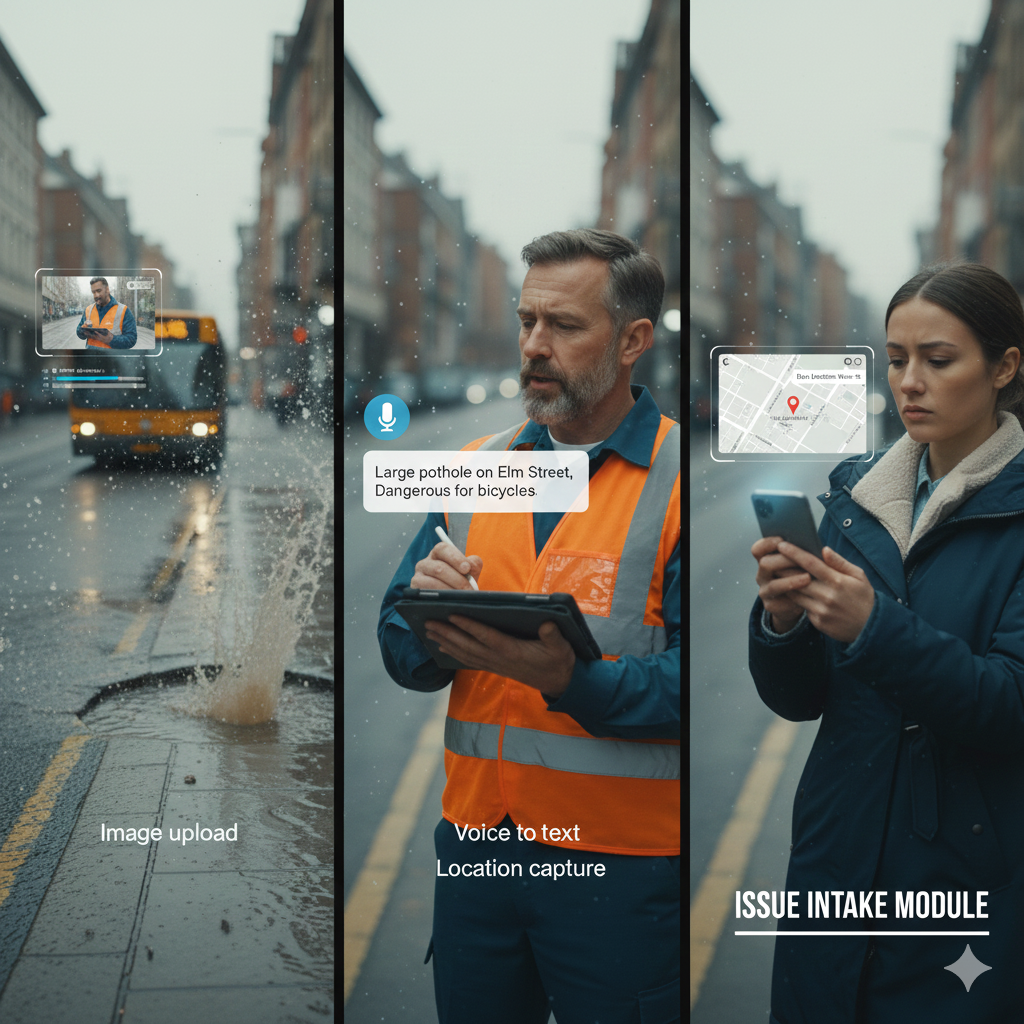
Citizens can report issues using images, voice, or text in multiple languages. The system automatically extracts location, category, severity, and verifies whether the image is real. Nearby citizens help confirm the issue to prevent fake or duplicate complaints. Municipal officers receive prioritized, AI-analyzed issues with routing suggestions, and field workers get precise geo-based tasks with before-and-after photo proof. Every step is transparently tracked, creating accountability and trust.
How we built it
We built Civic Fixer as a full end-to-end system, not just a reporting app.
AI & ML for image authenticity detection, issue classification, and severity analysis
Speech-to-text & NLP for multilingual voice-based complaints
Geospatial intelligence for GPS validation and community verification
Smart routing logic to assign the right department and field worker
Blockchain-backed evidence storage to ensure tamper-proof transparency
Dashboards for officers, supervisors, and workers to monitor progress in real time
The entire workflow is automated while still keeping humans in the loop for critical decisions.
Challenges we ran into
One major challenge was designing a system that balances automation with trust — ensuring AI decisions are explainable and verifiable. Handling incomplete data (missing GPS, unclear photos, or informal voice inputs) required robust fallback logic. Another challenge was making the workflow realistic for government operations while keeping the system simple enough for citizens to use effortlessly.
Accomplishments that we're proud of
Built a complete civic resolution pipeline, not just a complaint form
Reduced resolution time from weeks to under an hour in our demo scenario
Integrated AI + community verification + worker accountability into one system
Designed a solution that is scalable, transparent, and government-ready
Created a project with real social impact, not just a prototype
What we learned
We learned how powerful AI becomes when combined with human verification and clear workflows. Solving real-world civic problems requires not just technical skills, but empathy for users at every level — citizens, officers, and field workers. We also learned how transparency and clear feedback loops dramatically increase trust in digital systems.
What's next for Civic Fixer
Next, we plan to deploy Civic Fixer in a real pilot ward, integrate predictive analytics for preventive maintenance, and expand support for more languages and issue types. We also aim to refine the public transparency dashboard and explore partnerships with municipal bodies to turn Civic Fixer into a production-ready smart governance platform.
Built With
- cloud-storage-other-tools:-github
- express-ai-/-ml:-computer-vision-(image-analysis-&-authenticity-check)
- frontend:-react
- natural-language-processing
- rest-apis
- speech-to-text-apis:-google-maps-api-(geolocation-&-reverse-geocoding)-database:-mongodb-blockchain:-permissioned-blockchain-(for-immutable-evidence-storage)-cloud-&-devops:-aws-(lambda-/-ec2)
- tailwind-css-backend:-node.js

Log in or sign up for Devpost to join the conversation.