-
-
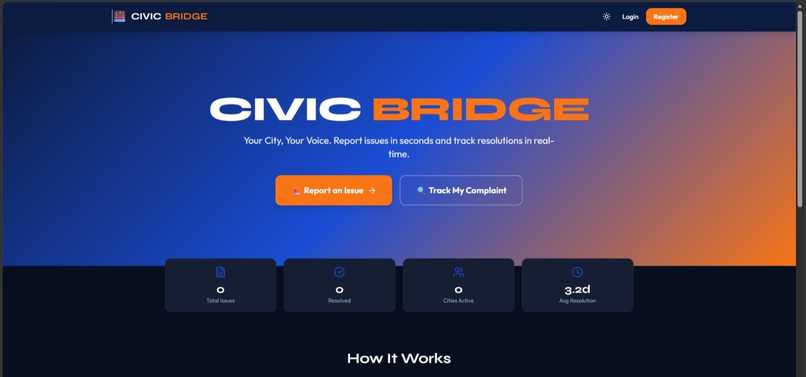
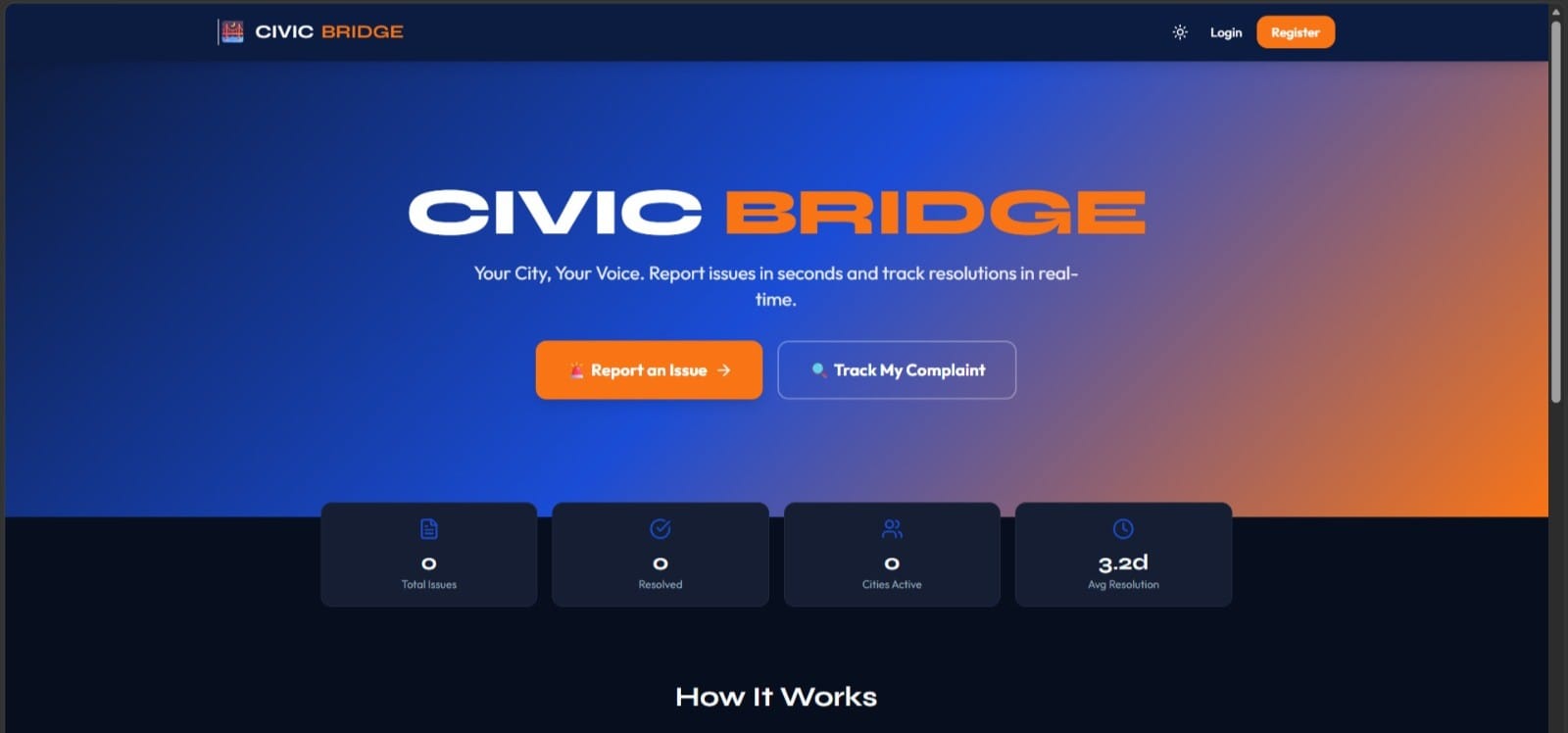
HomePage
-
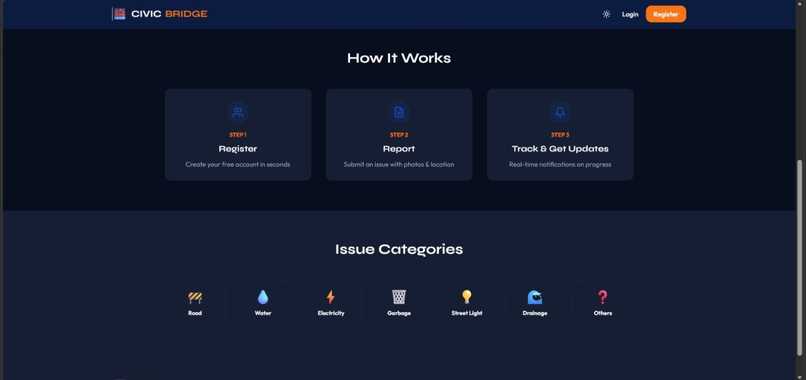
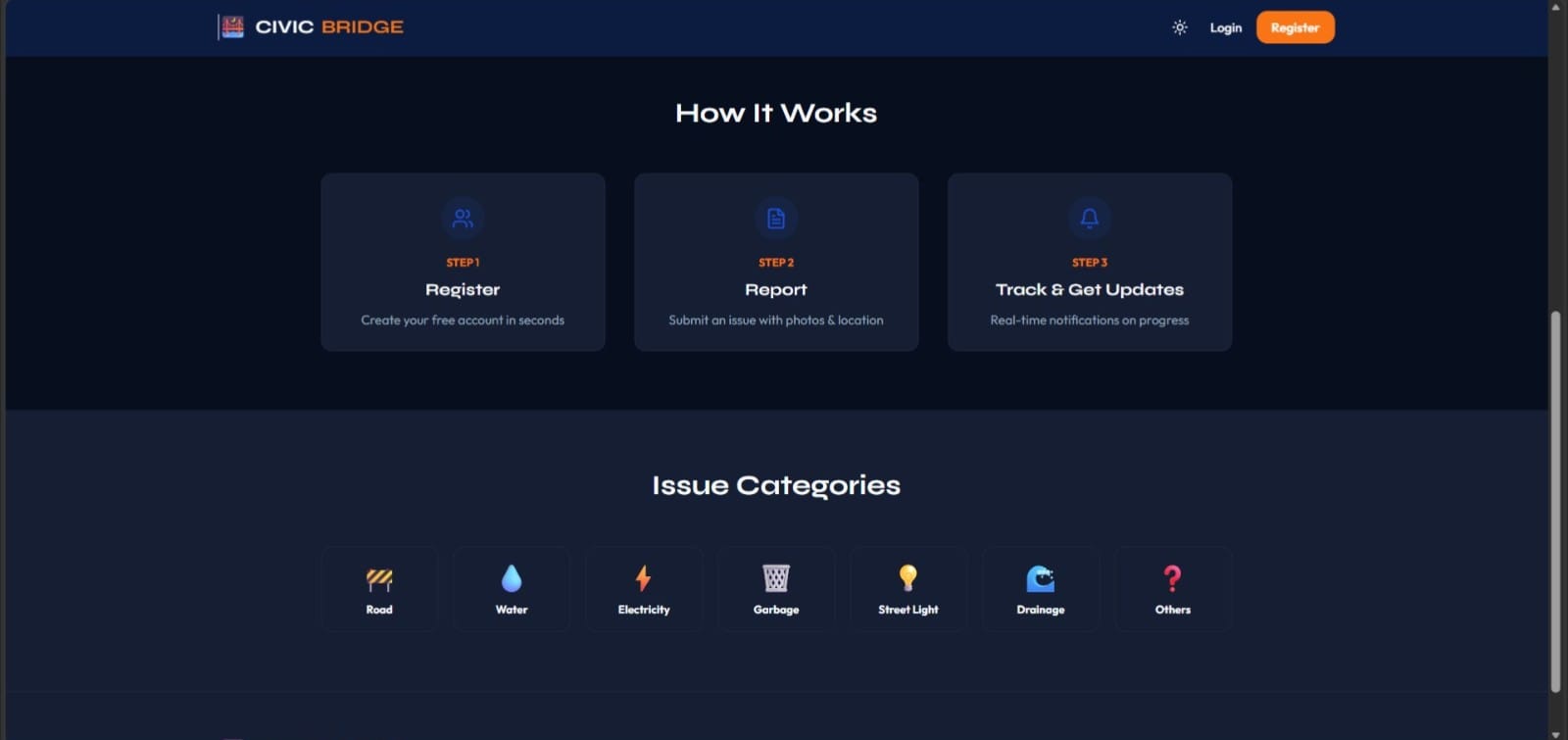
How It Works
-
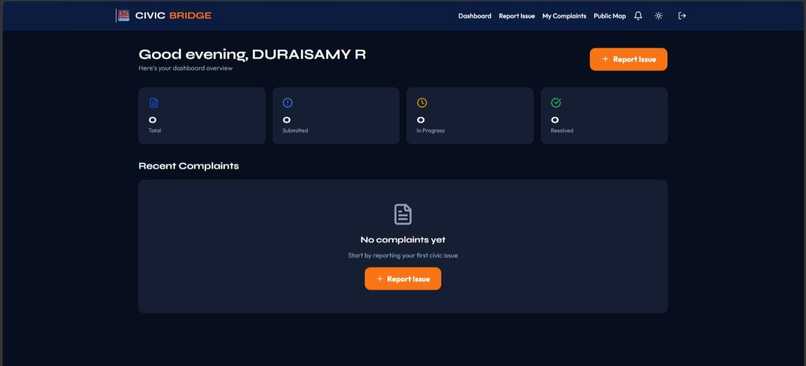
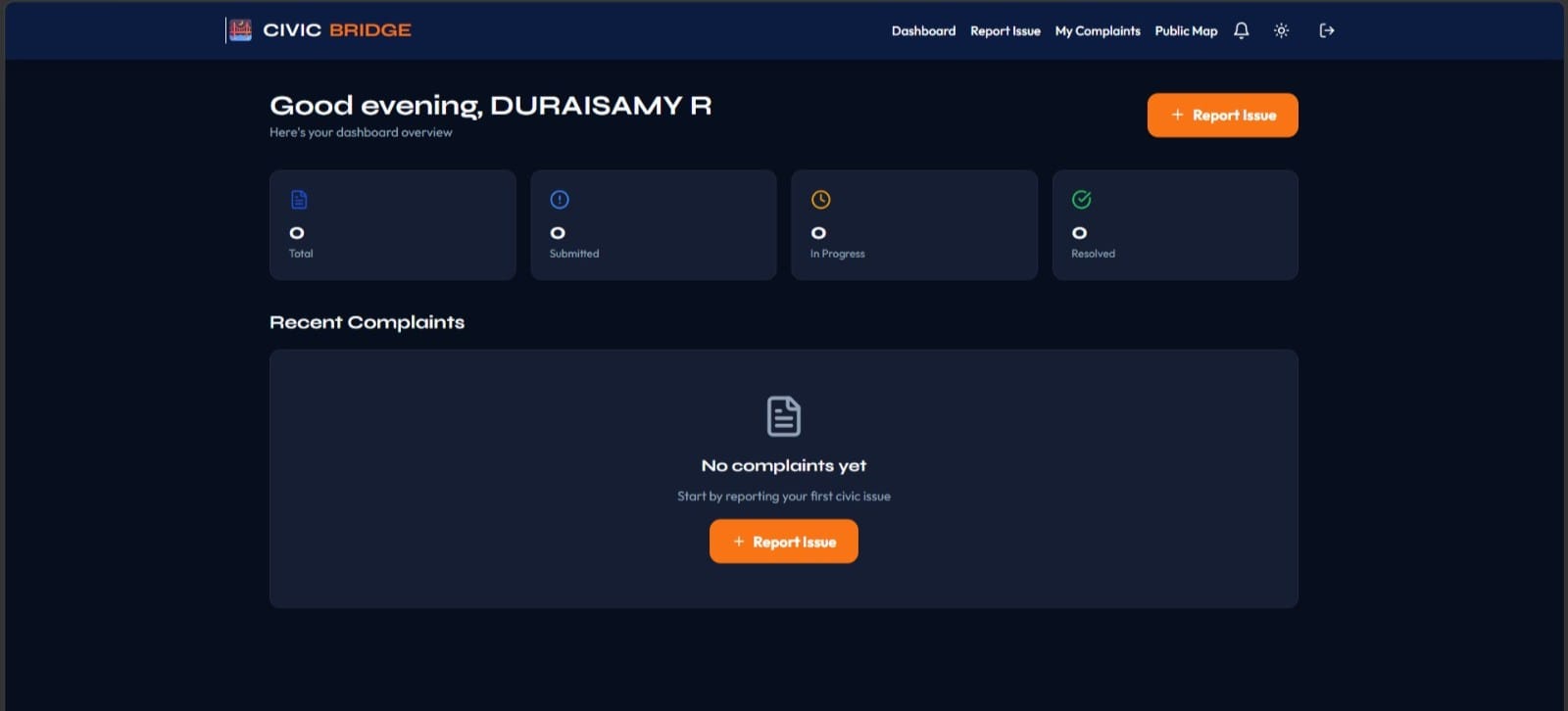
open page after login
-
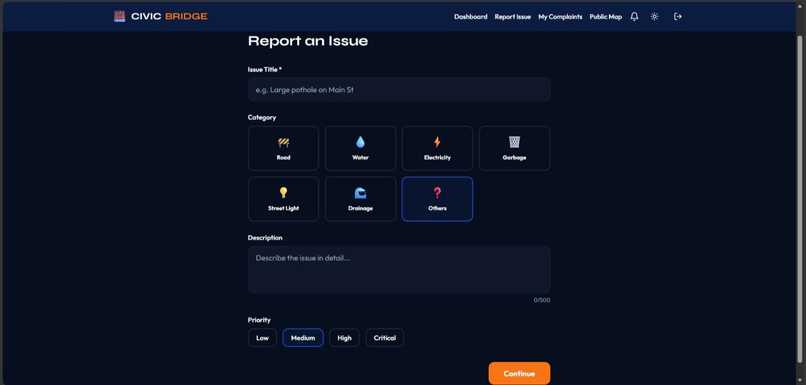
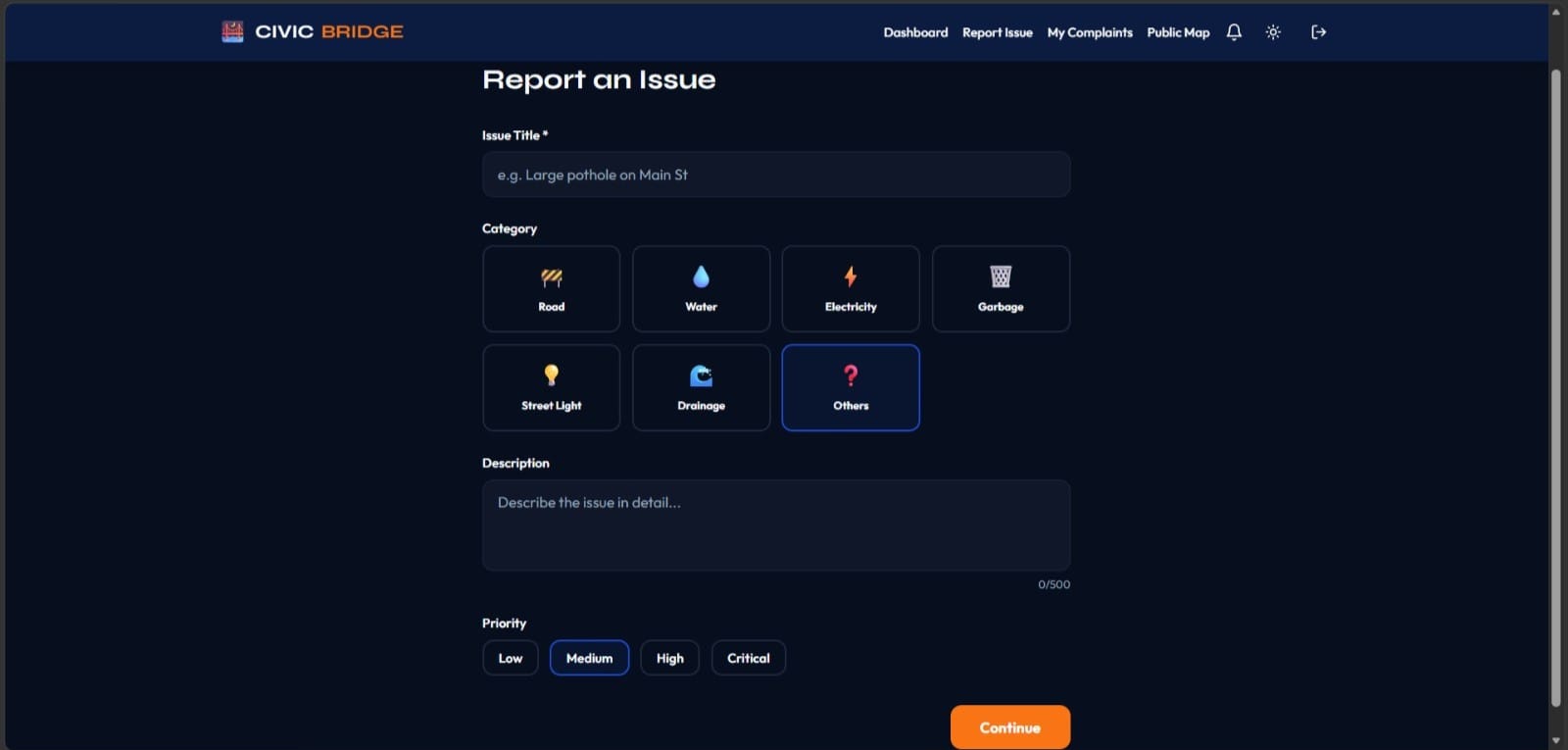
reporting page
-
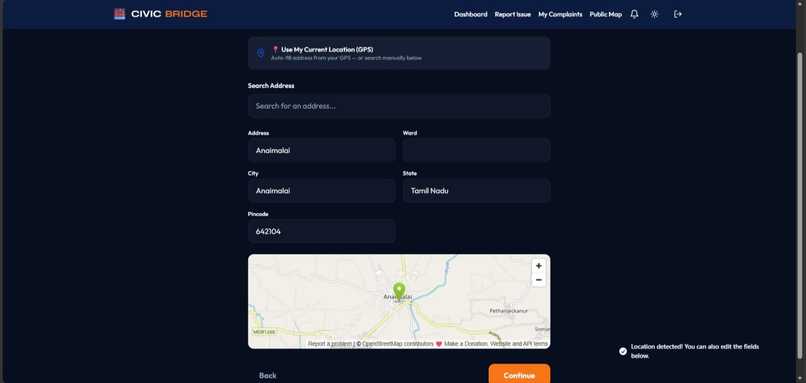
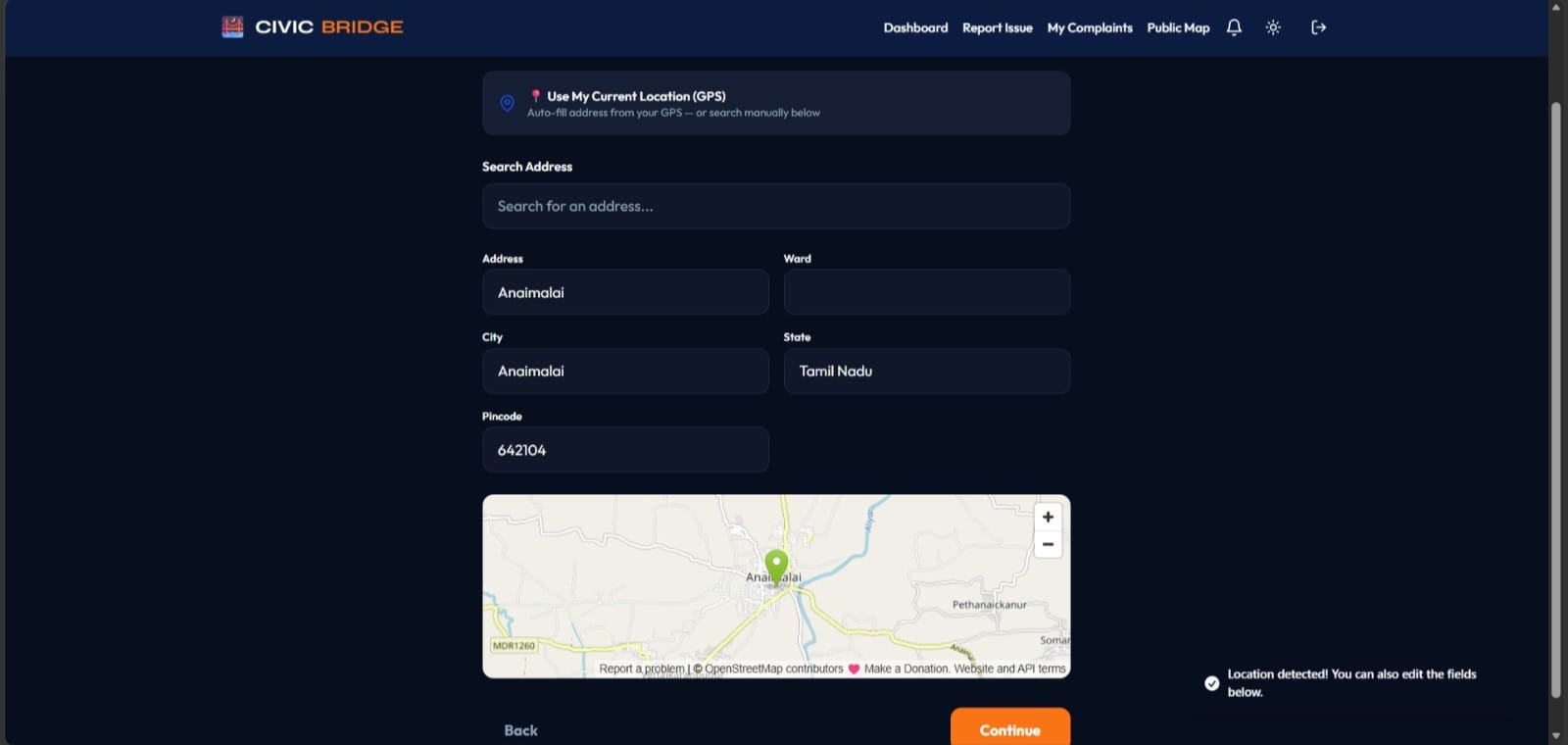
location page
-
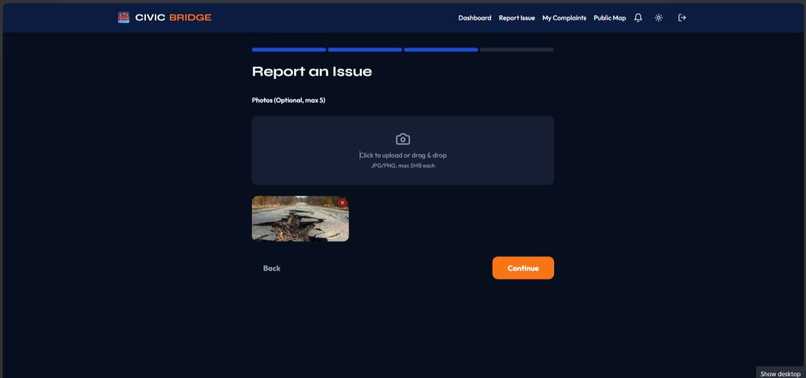
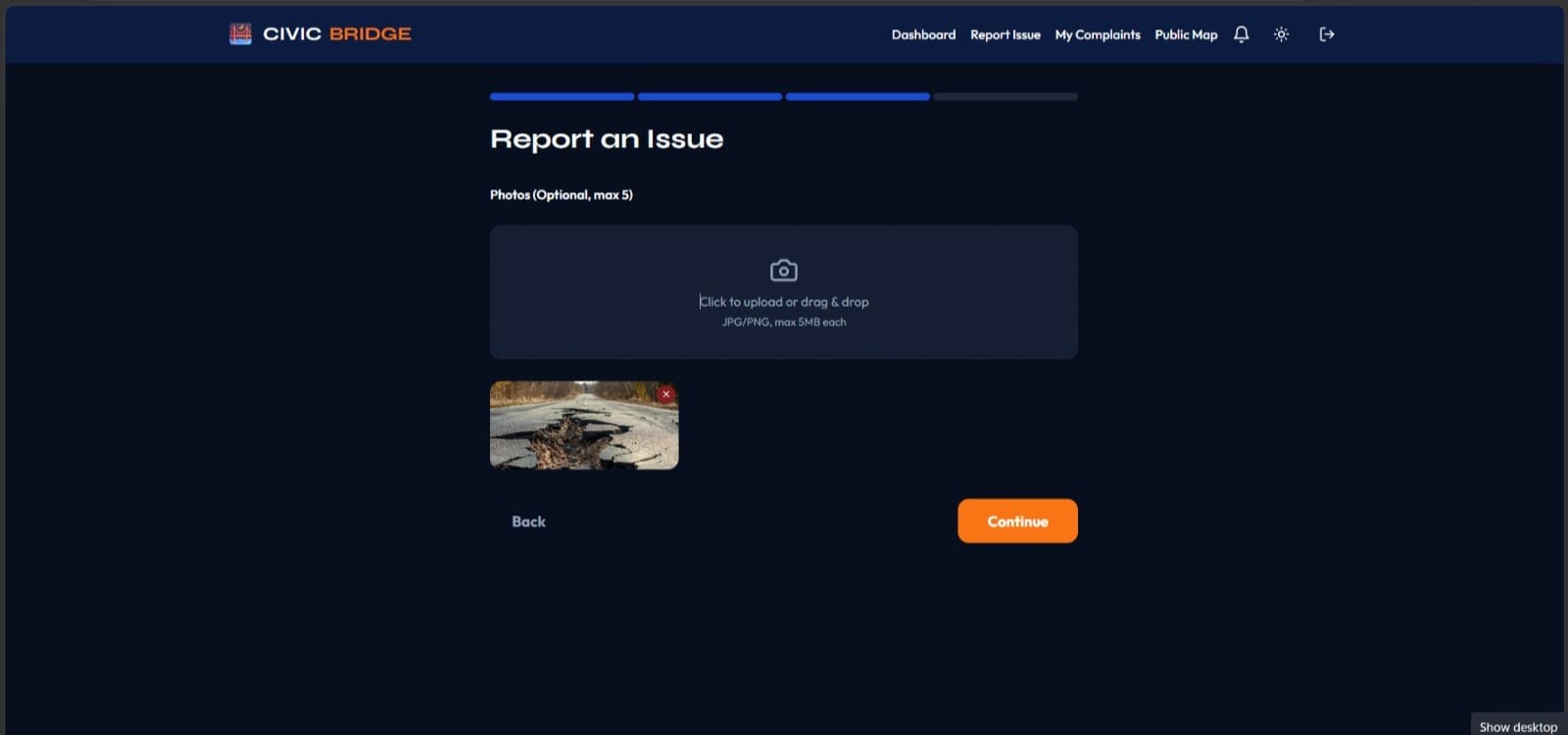
image page
-
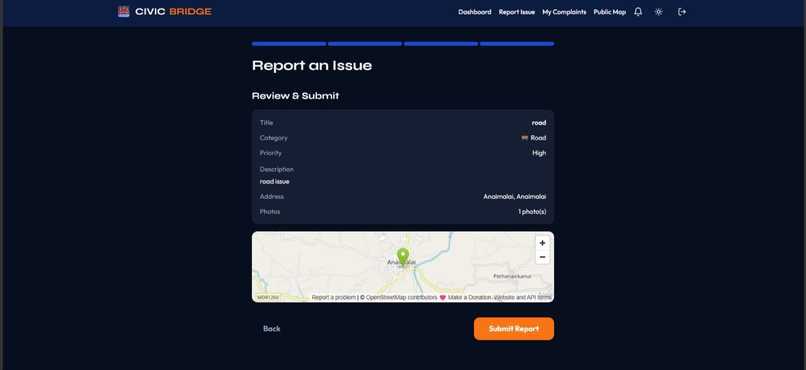
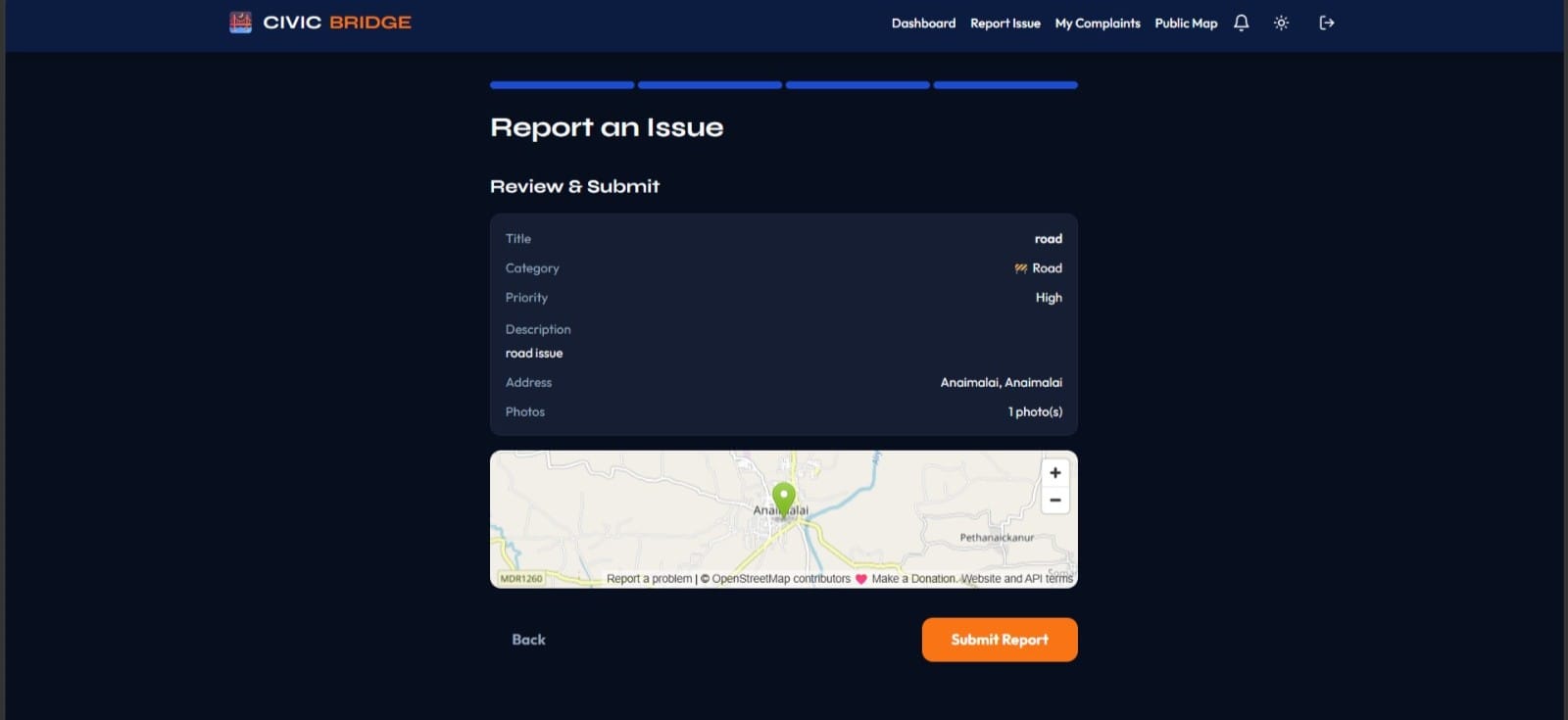
overall details of issues
-
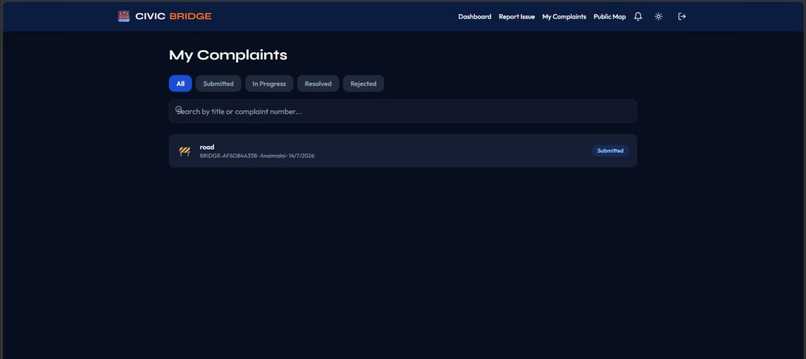
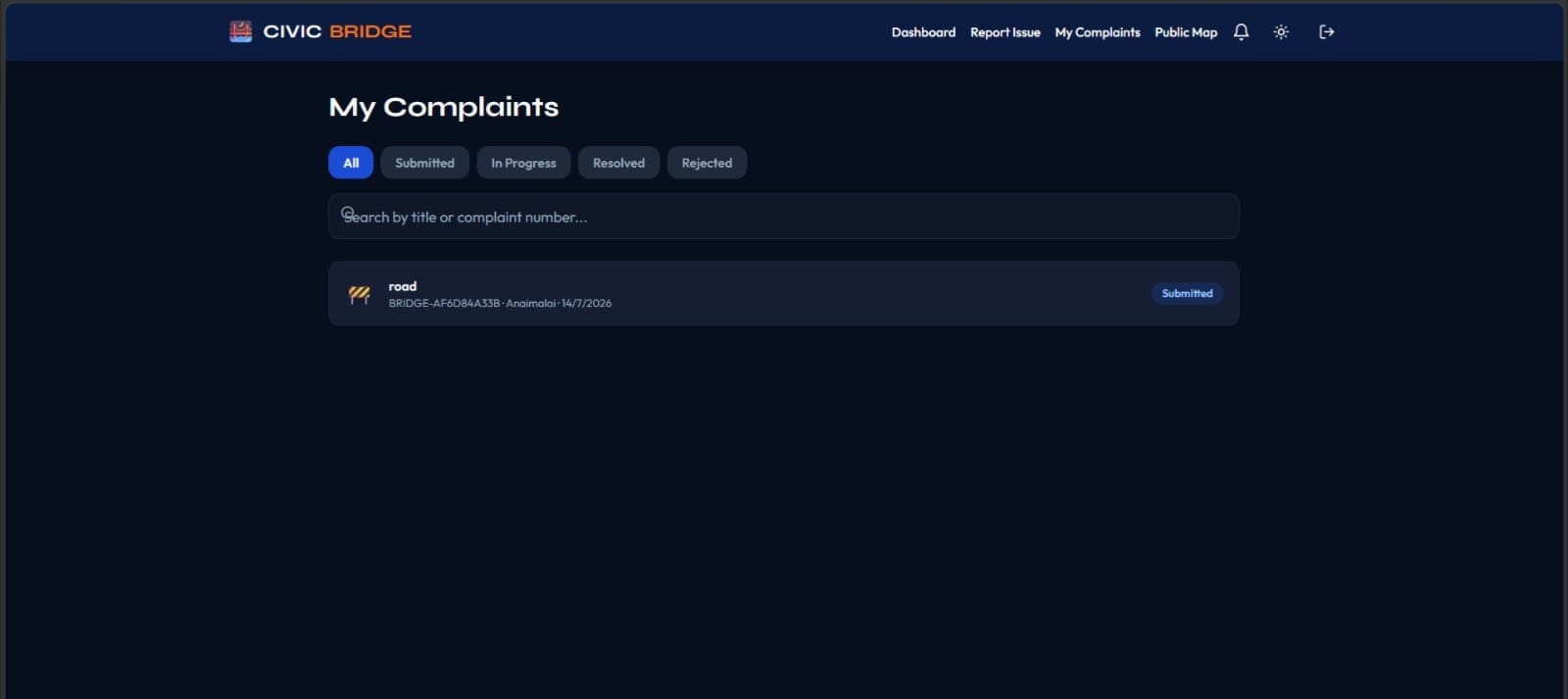
my complaints
-
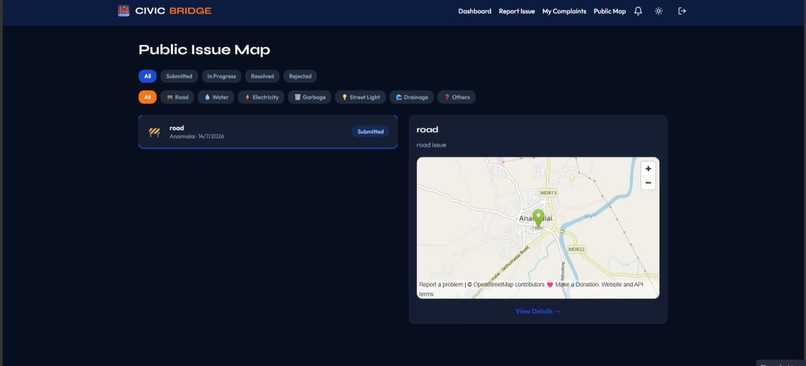
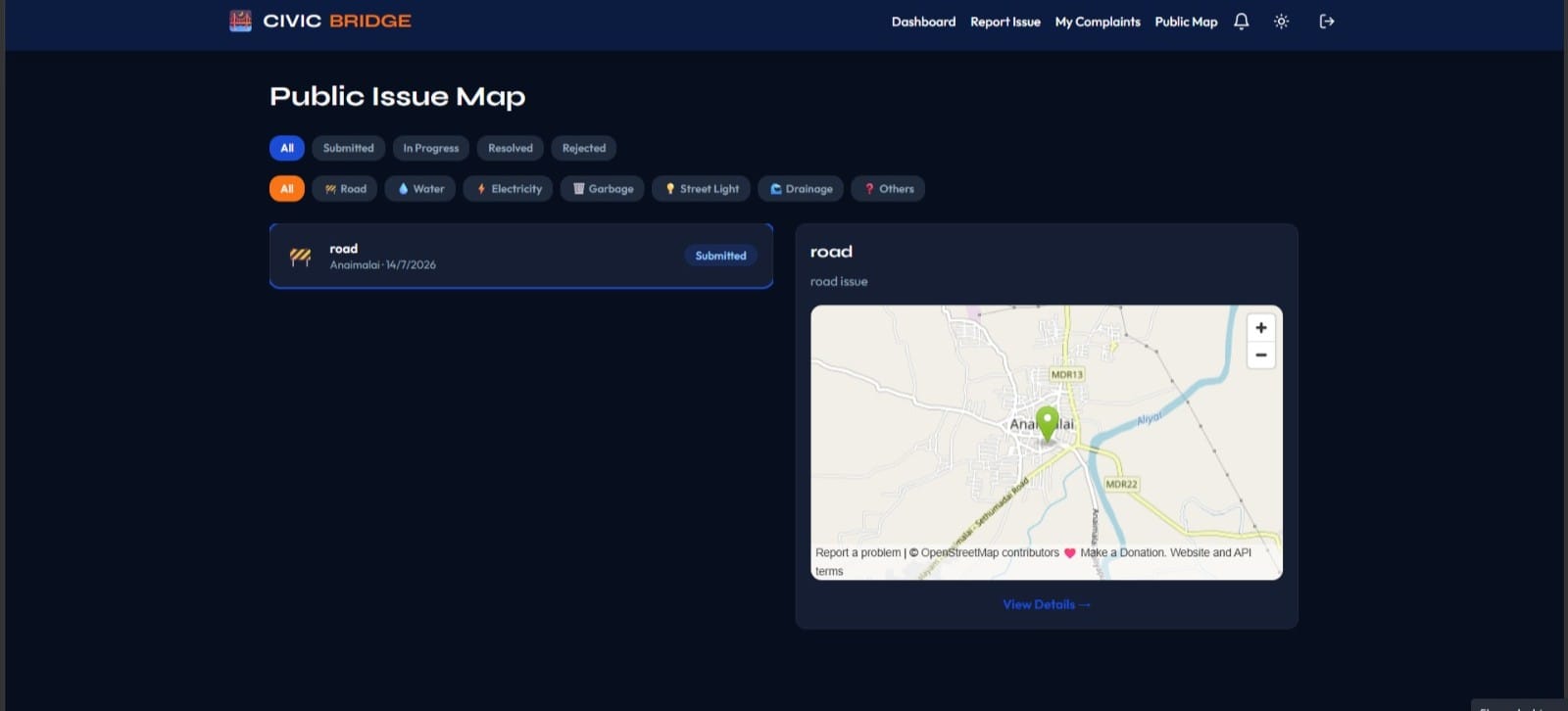
public maps
-
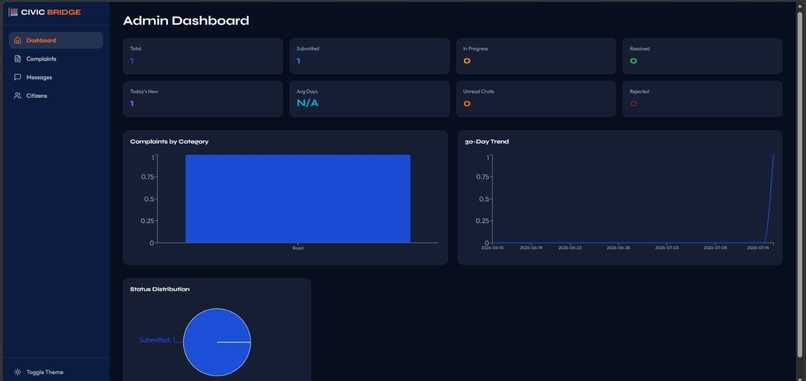
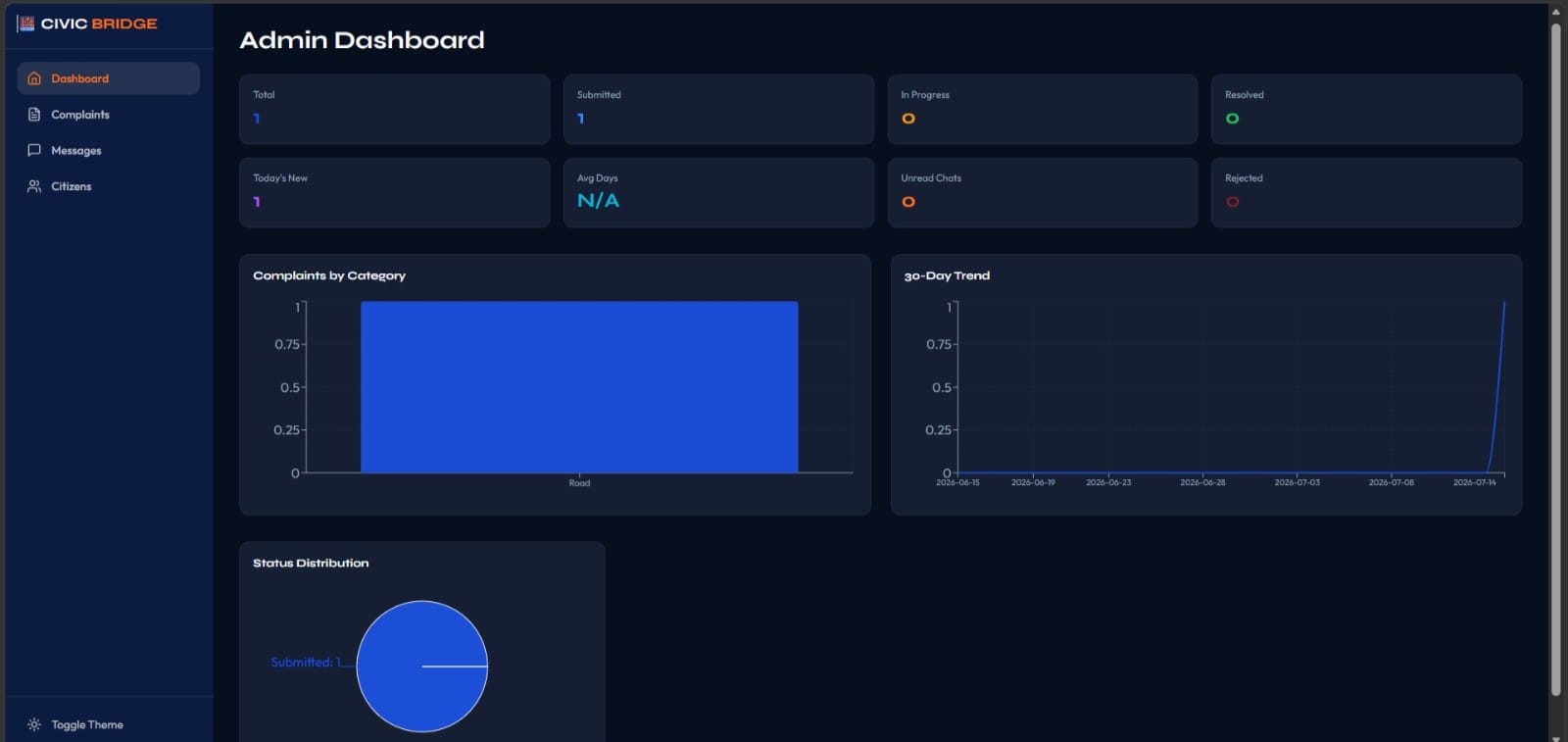
admin dashboard
-
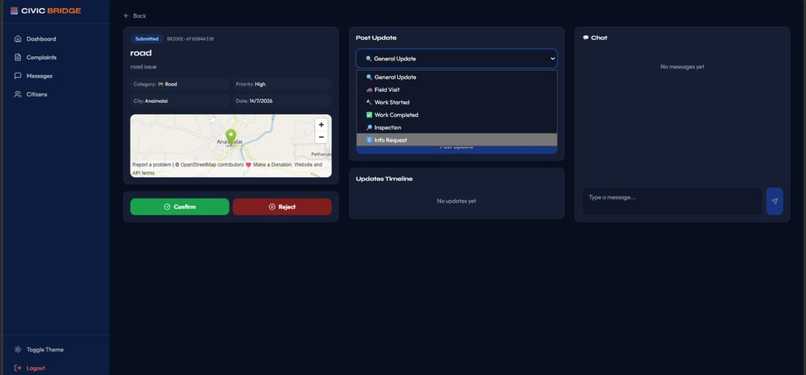
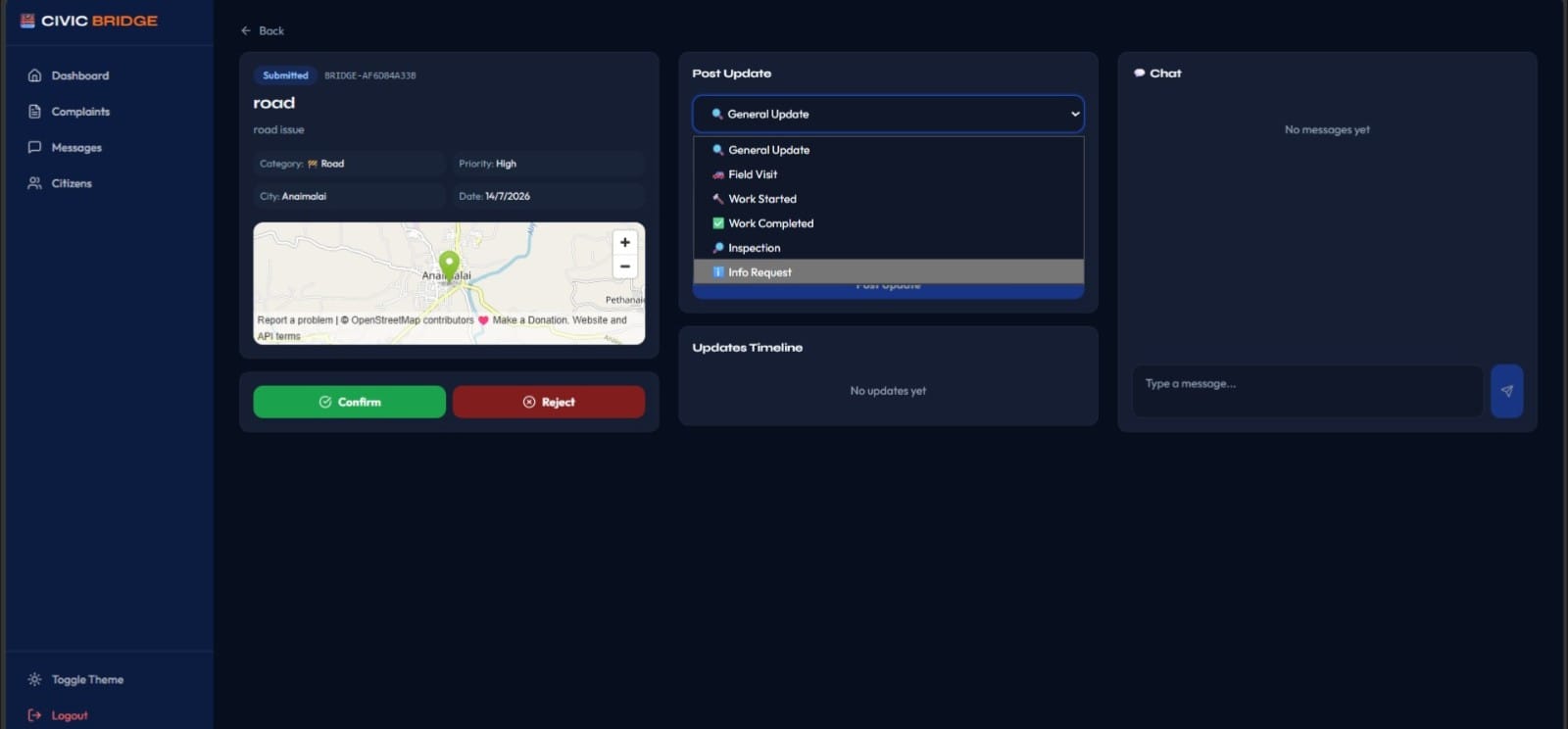
complaint page (admin)
-
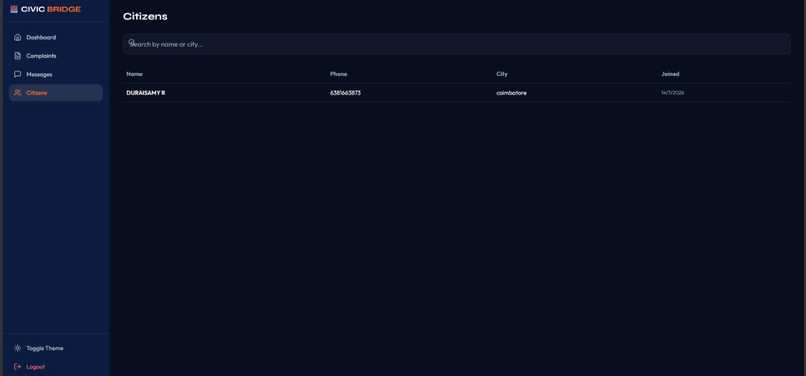
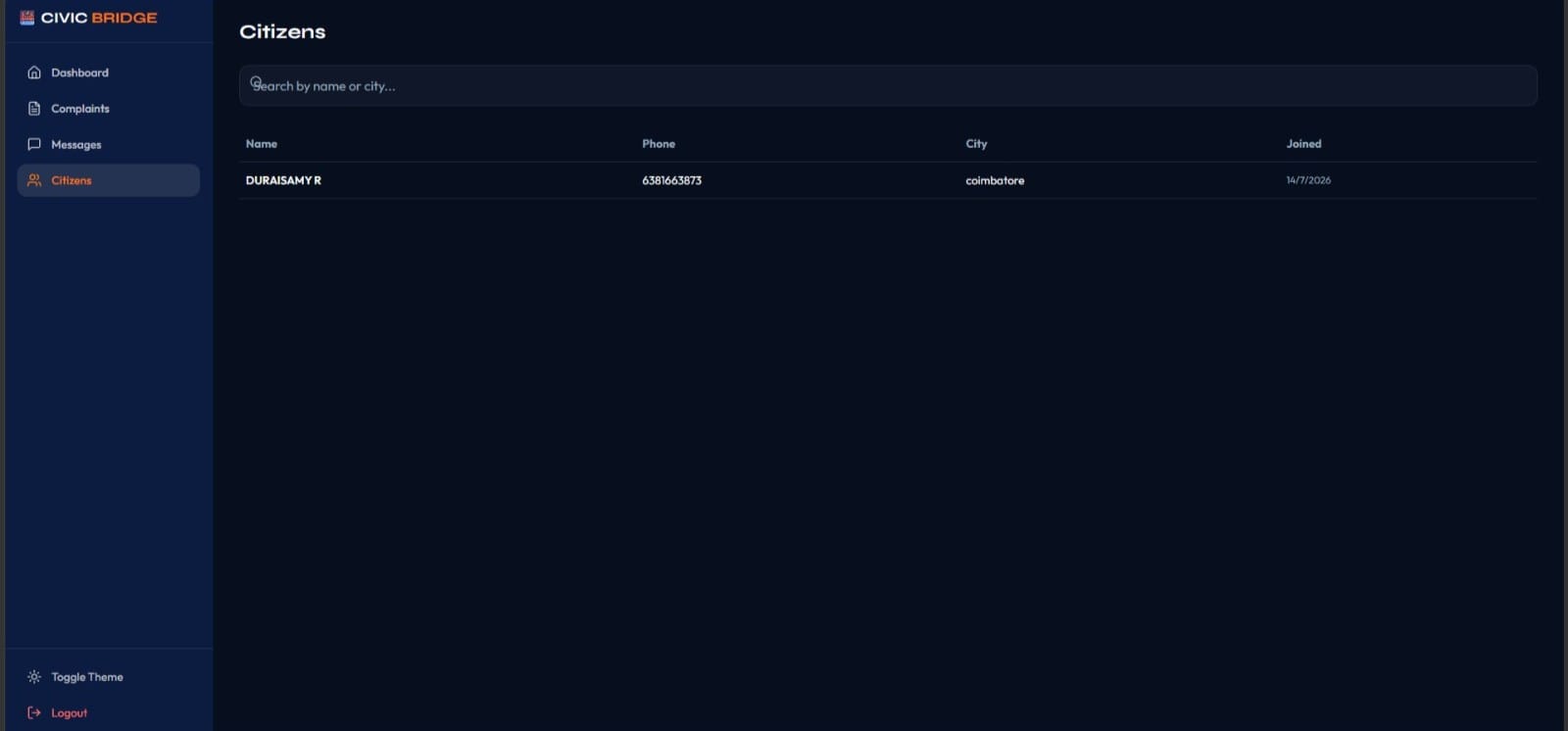
citizens
Inspiration
CIVIC BRIDGE was inspired by the everyday challenges faced by citizens in reporting civic issues such as potholes, garbage accumulation, water leakage, damaged roads, and faulty streetlights. Many existing complaint systems are slow, lack transparency, and do not provide proper tracking of reported issues. The project aims to bridge the communication gap between citizens and government authorities by leveraging Artificial Intelligence, real-time tracking, and smart automation. Inspired by Smart City initiatives and digital governance platforms, CIVIC BRIDGE provides a faster, more transparent, and efficient way to report, monitor, and resolve public issues.
What it does
CIVIC BRIDGE is an AI-powered public issue reporting platform that helps citizens report civic problems such as potholes, garbage dumps, water leaks, broken streetlights, and damaged roads.
How It Works..? 1 Citizens upload a photo and description of the issue. 2 The system captures the location automatically. 3 AI analyzes and categorizes the complaint. 4 The complaint is assigned to the relevant government department. 5 Authorities receive and process the complaint. 6 Citizens can track the status in real time. 7 Notifications are sent until the issue is resolved.
How we built it
We developed CIVIC BRIDGE using a modern full-stack architecture. The frontend was built with React 18, TypeScript, Vite, Tailwind CSS, and shadcn/ui to create a responsive and user-friendly interface. The backend was developed using FastAPI (Python) to handle APIs, authentication, complaint management, and notifications.
For data storage, we used PostgreSQL/SQLite with SQLAlchemy ORM for database operations. AI features were implemented to automatically categorize complaints, predict priority levels, and recommend the appropriate government department. Google Maps and Geolocation APIs were integrated for location-based issue reporting. Real-time status updates and notifications help citizens track complaint progress until resolution.
Challenges we ran into
1 Accurately categorizing complaints using AI from different descriptions and images. 2 Integrating location services for precise issue reporting. 3 Handling duplicate or similar complaints from multiple users. 4 Designing a user-friendly interface for both citizens and government officers. 5 Ensuring real-time status updates and notifications. 6 Managing secure authentication and user data. 7 Building a scalable system capable of handling large numbers of complaints.
Accomplishments that we're proud of
We successfully built an AI-powered civic issue reporting system with automated categorization, location tracking, real-time updates, and a user-friendly interface that improves communication between citizens and government authorities.
What we learned
- Applying AI to solve real-world civic and governance problems.
- Building a full-stack web application using modern technologies.
- Integrating geolocation and mapping services for location-based reporting.
- Designing scalable database architectures and APIs.
- Improving user experience through intuitive UI/UX design.
- Understanding the importance of transparency and citizen engagement in smart governance.
- Collaborating effectively as a team to develop an end-to-end solution.
What's next for Civic Bridge (Public Issue Reporting System)
Future enhancements include mobile app development, AI-based image detection, multilingual voice reporting, predictive analytics, government system integration, and advanced smart city dashboards for better governance and citizen engagement.
Built With
- ai
- bcrypt
- fastapi
- geolocation-api
- google-maps
- jwt
- machine-learning
- postgresql
- pydantic
- python
- react-18
- react-hook-form
- react-query
- recharts
- rest-api
- shadcn/ui
- smart-cities
- sqlalchemy
- sqlite
- tailwind-css
- typescript
- uvicorn
- vite
- zod


Log in or sign up for Devpost to join the conversation.