-
-
Civic Bridge - Citizen Advocacy
-
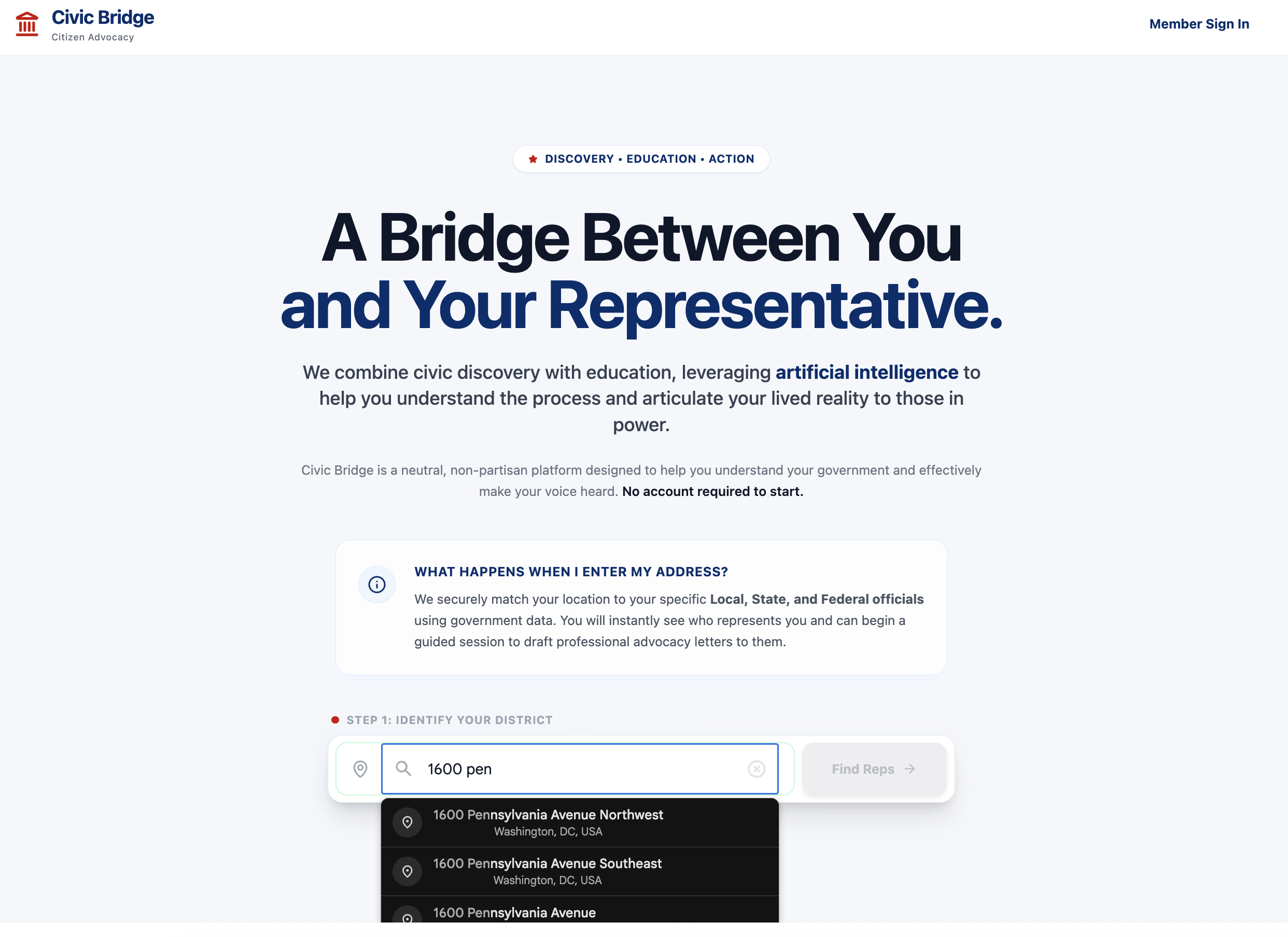
Civic Bridge Landing Page
-
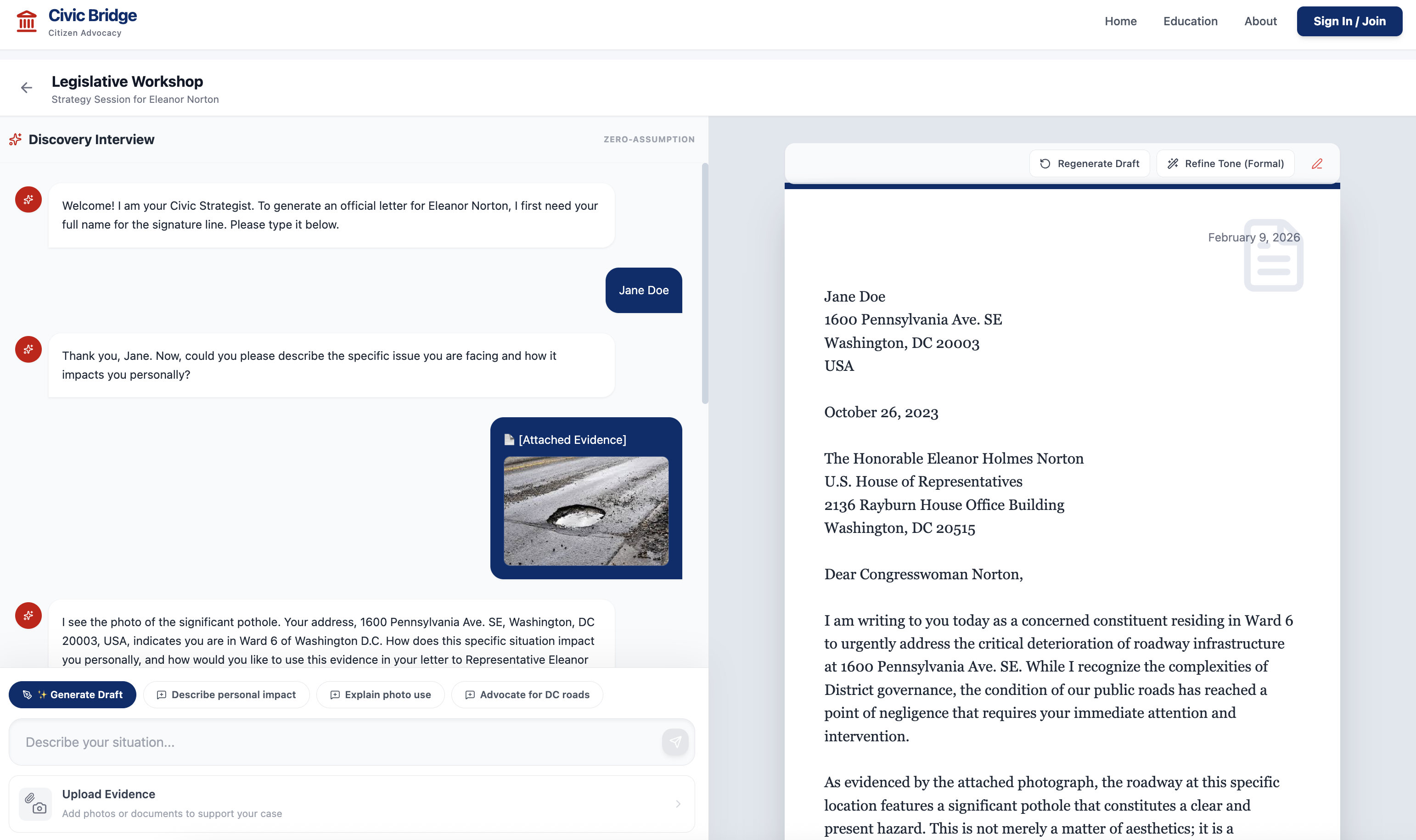
Civic Bridge Assistant
Inspiration
The seed for Civic Bridge was planted during my time as a Supportability agent at Intuit. While leading an Employee Resource Group (ERG), I bridged the gap between our members' concerns and the corporate legal team regarding policy. I realized then that advocacy wasn't about status; it was about having a professional channel to engage effectively.
Years later, a TikTok conversation about FAFSA administrative changes highlighted a heartbreaking disconnect: people were using their voices to attack one another rather than engaging with the system that could actually create change. I realized then that if those users had a direct, effective way to channel that energy toward their representatives, they could be making a tangible impact. I wanted to build a tool that transformed online frustration into professional participation.
What it does
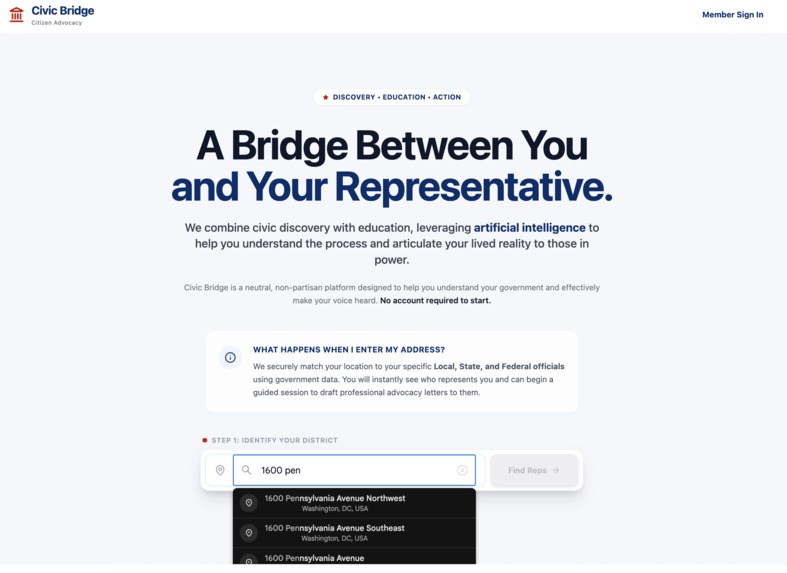
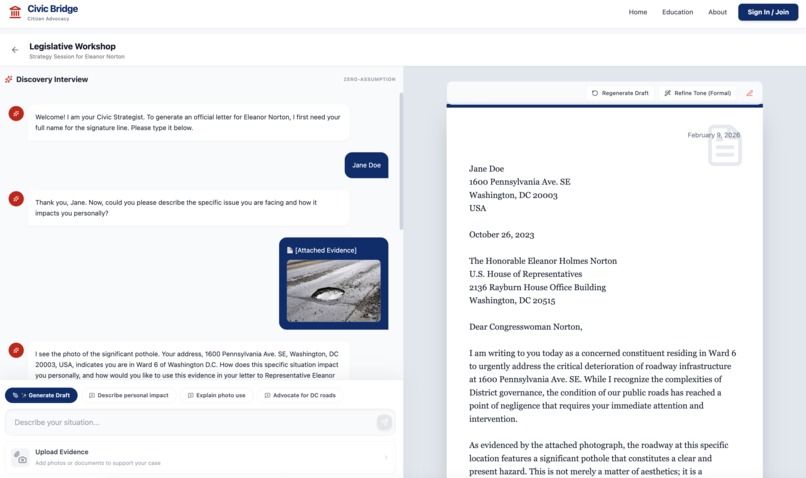
Civic Bridge is a digital advocacy platform that turns "lived reality" into professional communication. Users can upload photos of community issues (like infrastructure or policy impacts), and the AI analyzes that evidence to help craft a constitutionally grounded message to their representative. To ensure these messages carry weight and aren't dismissed as spam, the app enforces a 24-hour "Ethical Cooldown," prioritizing quality advocacy over automated noise.
How we built it
The project was built in a high-intensity 24-hour sprint using the Google developer ecosystem. I "Vibe Coded" the application using AI Studio and Gemini 3 Flash, leveraging Firebase for authentication and Google Cloud Console for infrastructure. The front-end was built with React and Tailwind CSS, using Lucide-React for a clean, professional UI and jsPDF for generating formal advocacy documents.
Challenges we ran into
The primary challenge was a technical "AI loop" during the build—a logic hallucination that forced me to restart the entire project from scratch with the clock ticking. Navigating the integration of Stitch, Gemini, and Antigravity in such a short window required a steep learning curve and forced me to master prompt engineering and version control on the fly.
Accomplishments that we're proud of
I am most proud of the "Aha!" moment during my first conversation with the AI agent after setting the system instructions. I felt like I was finally talking to a collaborator who truly cared about researching trends and bills—someone who understood how to help me get my word out in a way an elected official’s office would actually respect and understand. Seeing the AI successfully translate a constituent's concern into a formal, structured draft was a massive win.
What we learned
I learned that the Constitution is a living framework that simply needs a modern interface to stay accessible. On a personal level, I learned that engagement isn't just a feeling; it’s the active work required to maintain a relationship with our country. I also discovered a new level of resilience in my ability to rebuild a vision from zero under extreme time pressure.
What's next for Civic Bridge
The hackathon version is just the foundation. Moving forward, I plan to build out premium features to track and archive messages and expand the platform to include state, local, and judicial representatives. My goal is to continue evolving Civic Bridge based on user feedback, ensuring every American has the tools they need for effective civic engagement across all levels of government.
Built With
- api
- css3
- css3-frameworks:-react-19
- firebase
- firestore)
- gemini
- google-maps
- html5
- react
- tailwind
- tailwind-css-cloud-services:-google-firebase-(auth
- typescript
- vite

Log in or sign up for Devpost to join the conversation.