-
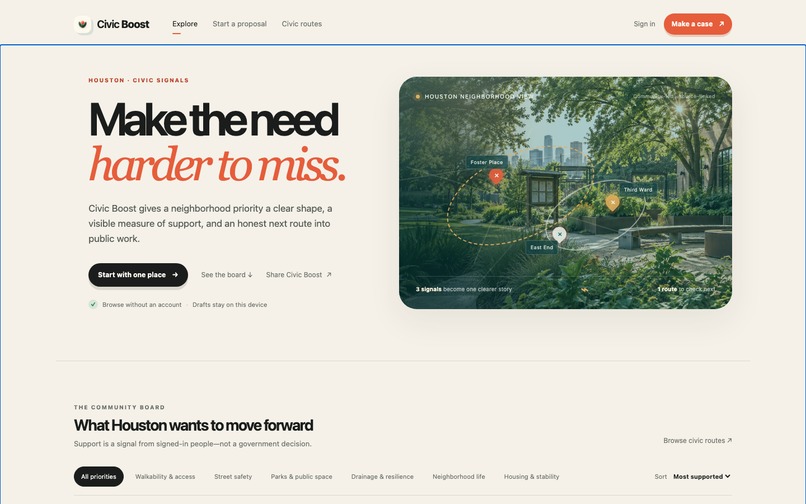
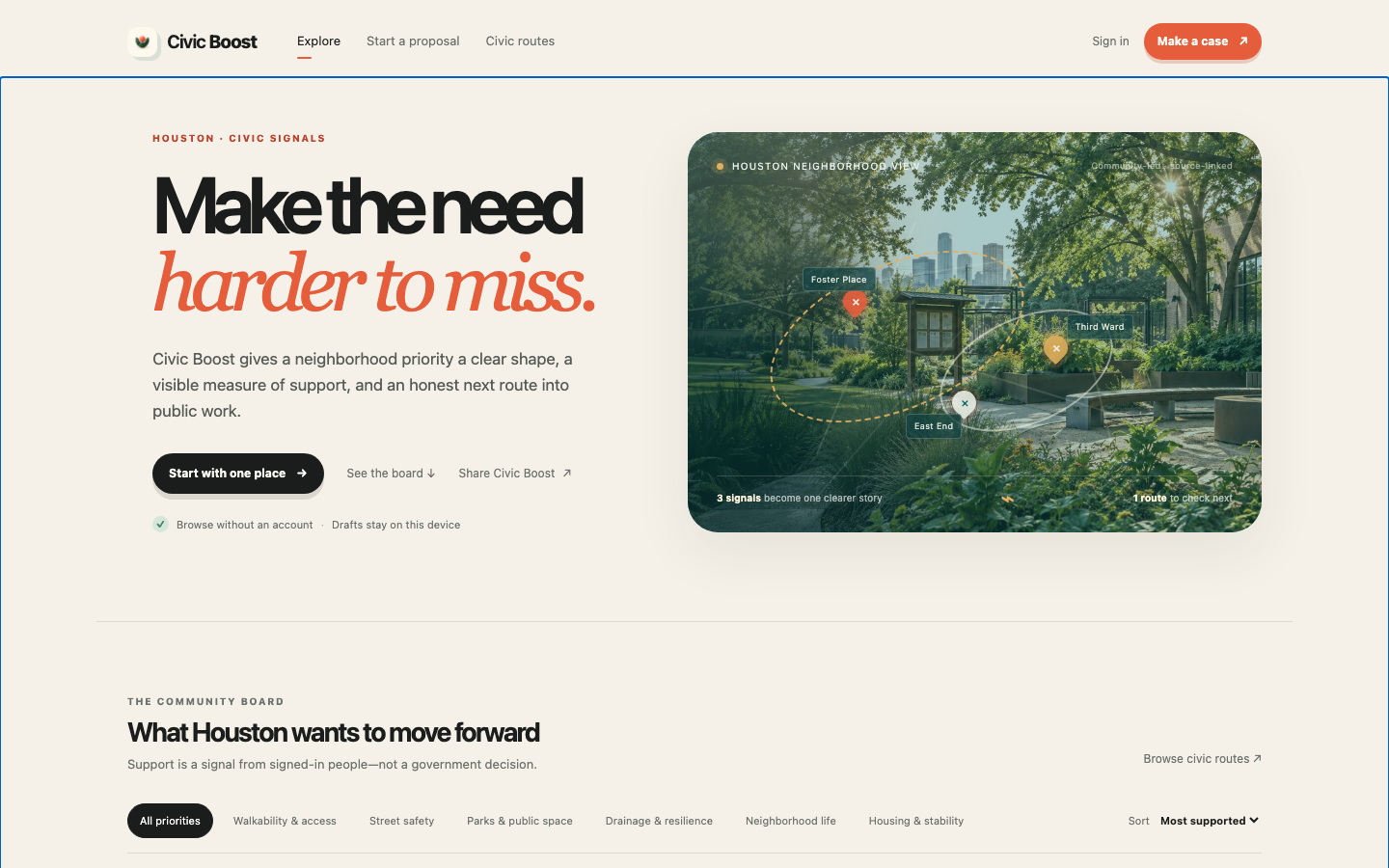
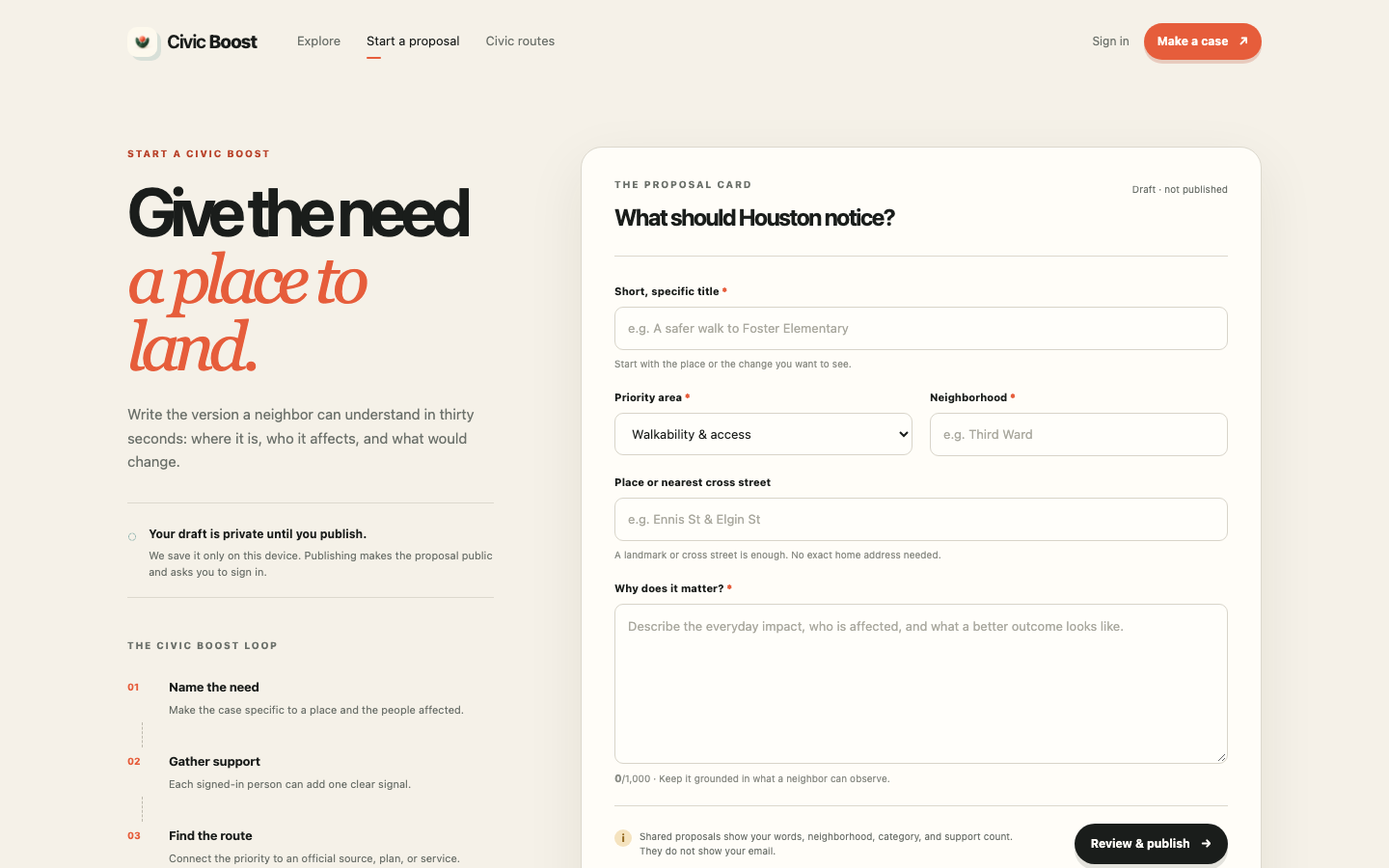
Civic Boost: prototype interface and core workflow.
-
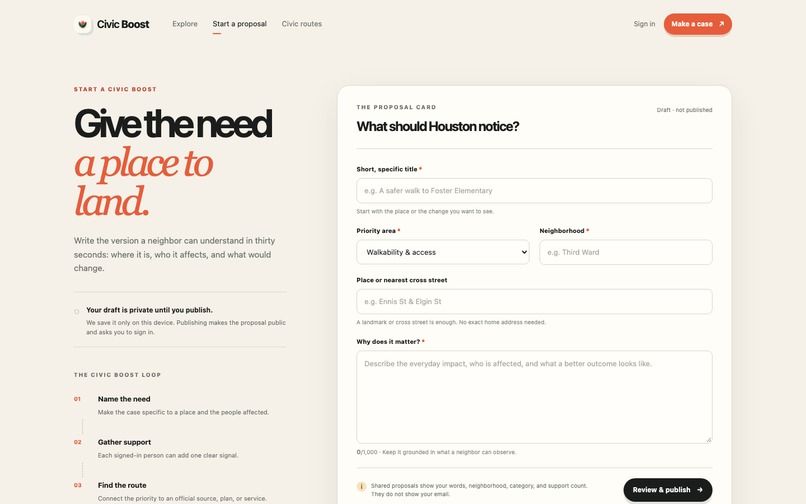
Civic Boost: prototype interface and core workflow.
-
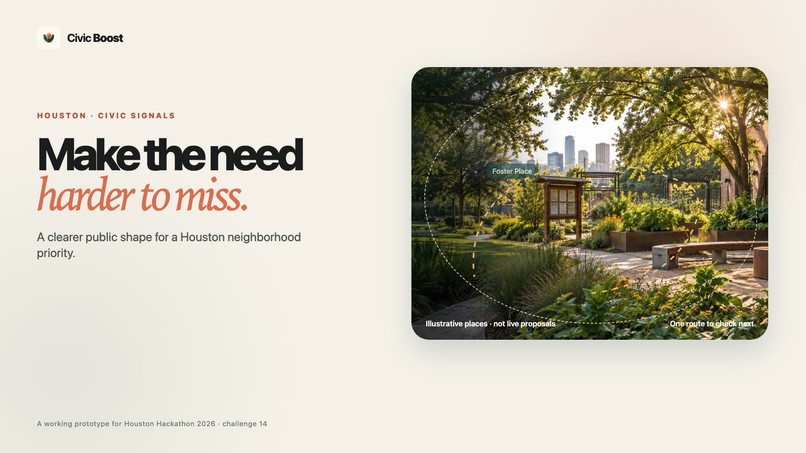
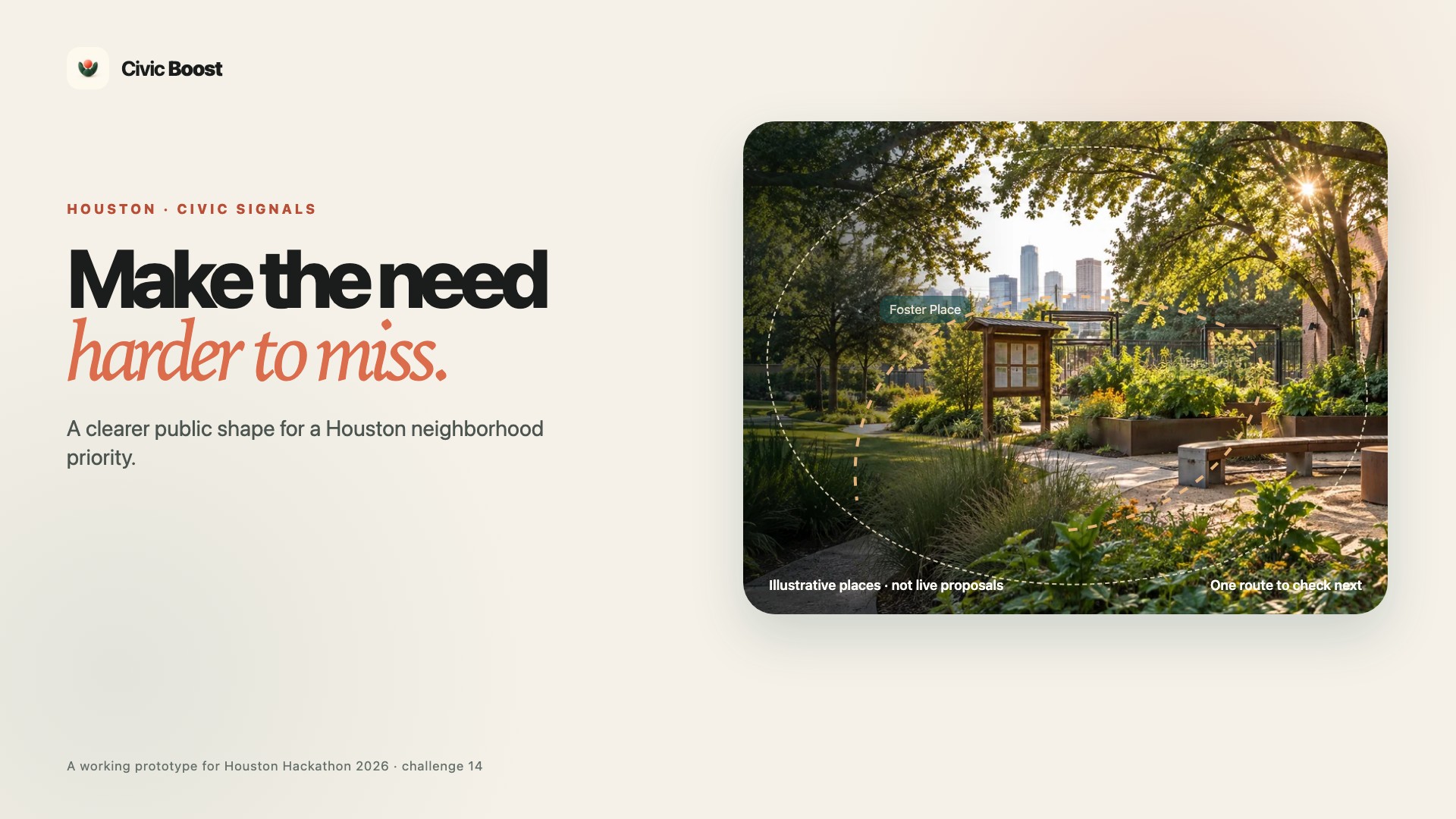
Civic Boost: product demo cover.
Inspiration
The Civic Boost challenge asked how resident priorities and public-work information could meet in one understandable flow. Civic Boost focuses on making a need legible and connected to official routes without pretending that a status label is government approval.
What it does
Anyone can browse example priorities and official resources. A resident can draft a proposal in the browser, publish after Google sign-in, and invite a one-time support signal from another signed-in person. The resources view links to Houston 311, the Capital Improvement Plan, Complete Communities plans, and public-facilities funding context.
How I built it
The prototype uses Vite and vanilla browser modules with an Express and TypeScript API, PostgreSQL and Drizzle ORM, Google Identity Services, local draft storage, and explicit Civic Boost workflow labels. The public board is separate from official city systems.
Challenges
Community support is one input, not a substitute for need, equity, feasibility, or an accountable response process. Proposal examples are illustrative, the product avoids a crowdfunding or grant marketplace, and sign-in and mutation boundaries are clear.
Accomplishments
The prototype supports public browsing, local drafting, source-linked civic routes, authenticated proposals, one support signal per account, and a transparent status timeline. It gives a neighborhood issue a shareable shape without claiming City partnership, funding, delivery, or 311 write-back.
What I learned
A civic workflow needs to say who owns the next step. Labels can help people understand progress, but they should never borrow authority from the institution a prototype hopes to connect with.
What's next
A pilot would need a named government or community partner, a committed response process, an equity model alongside support counts, and a clear administrator for any funding or delivery tracking.
Explore
Built With
- browser-local-storage
- drizzle-orm
- express.js
- google-identity-services
- node.js-22
- postgresql
- typescript
- vanilla-javascript-and-es-modules
- vite


Log in or sign up for Devpost to join the conversation.