-
-
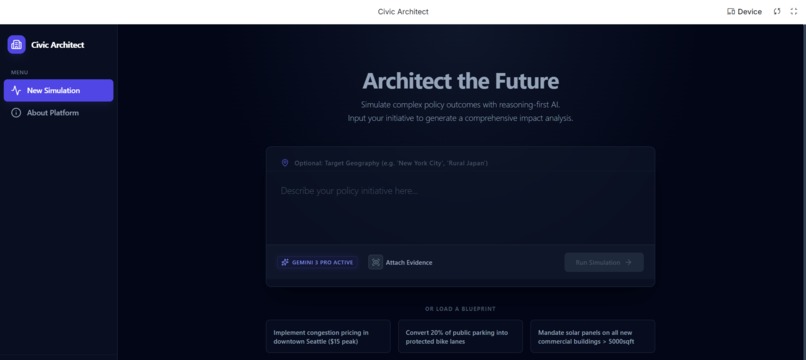
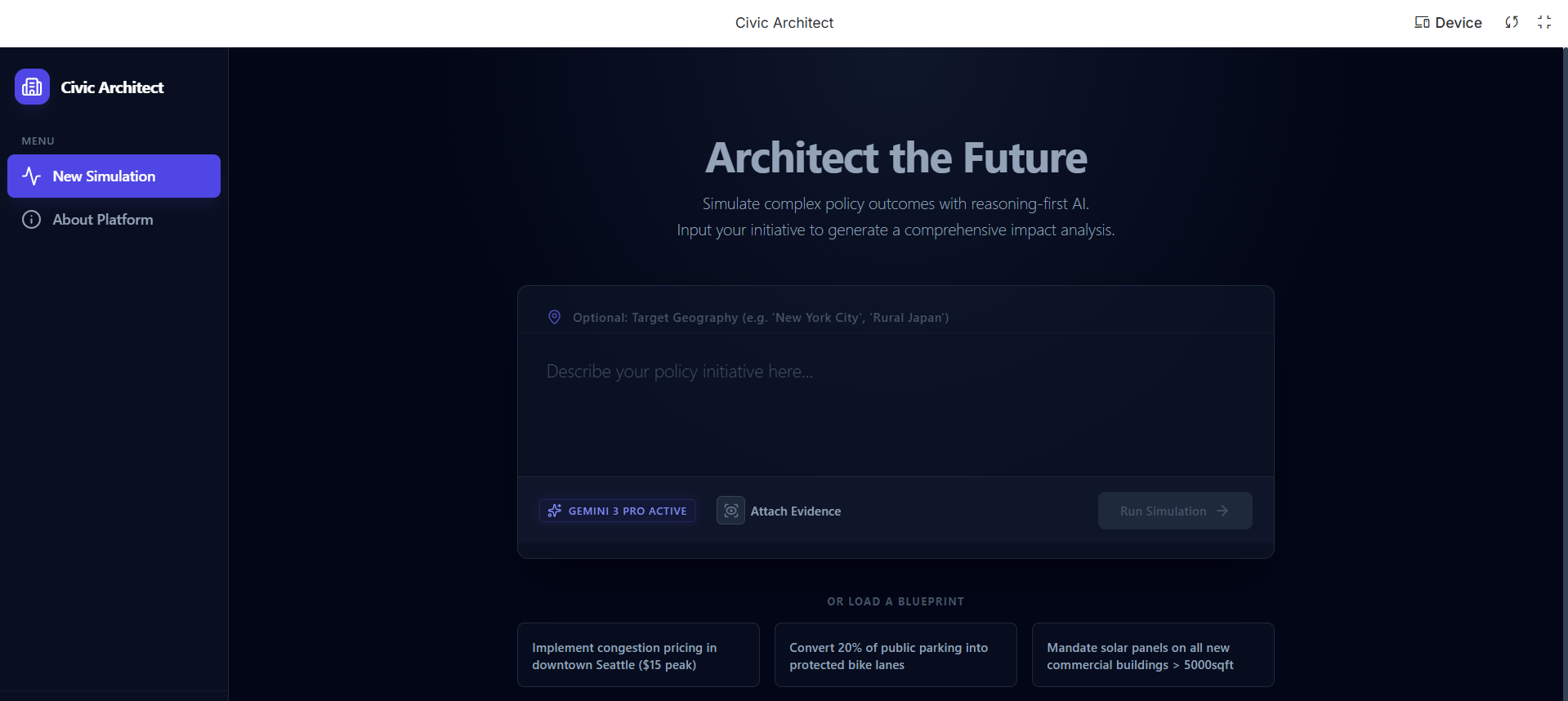
main Window
-
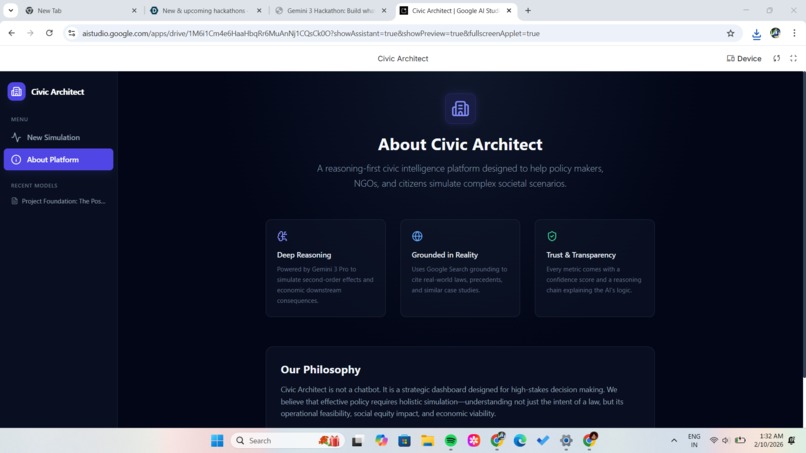
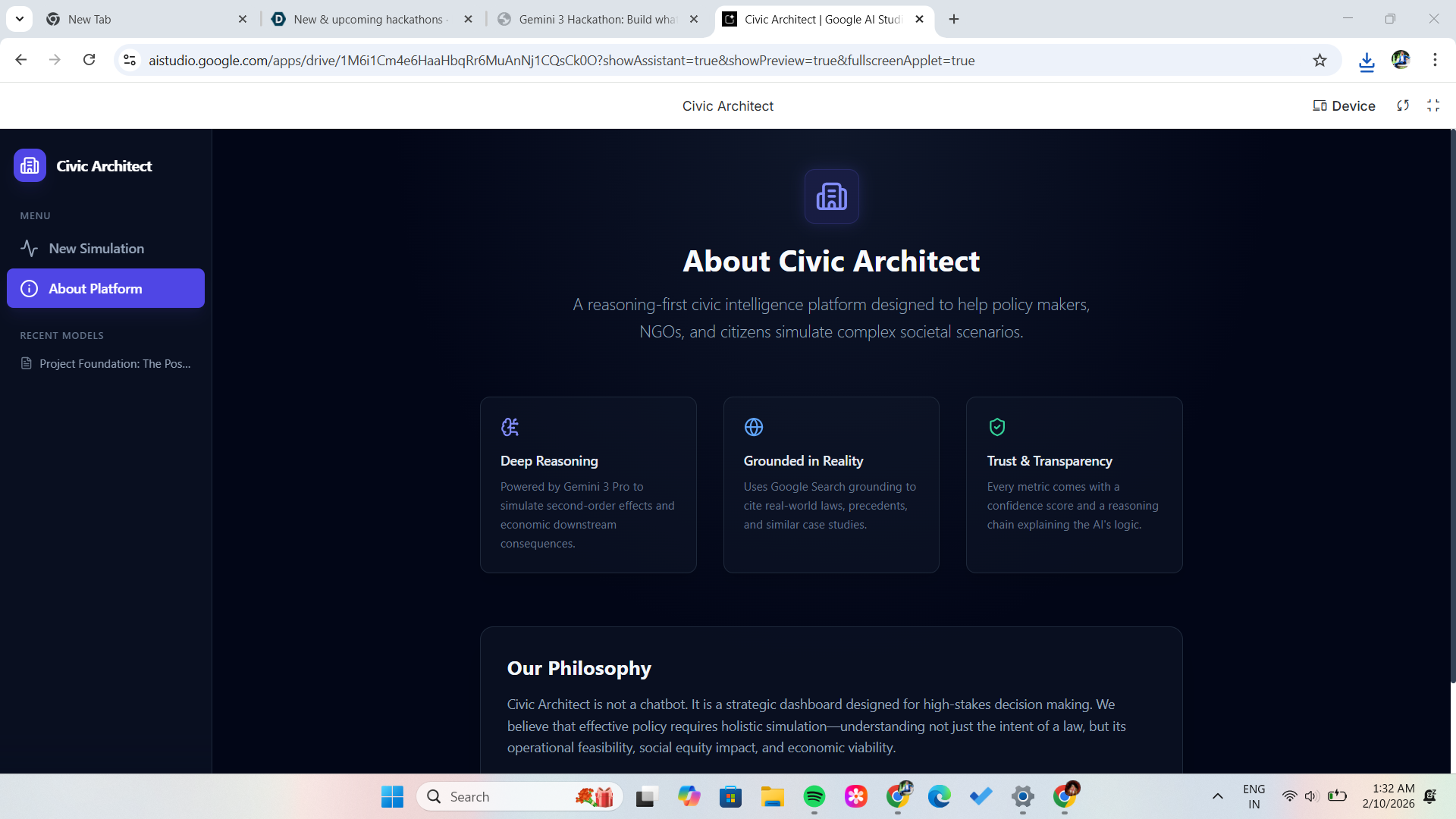
About Window
-
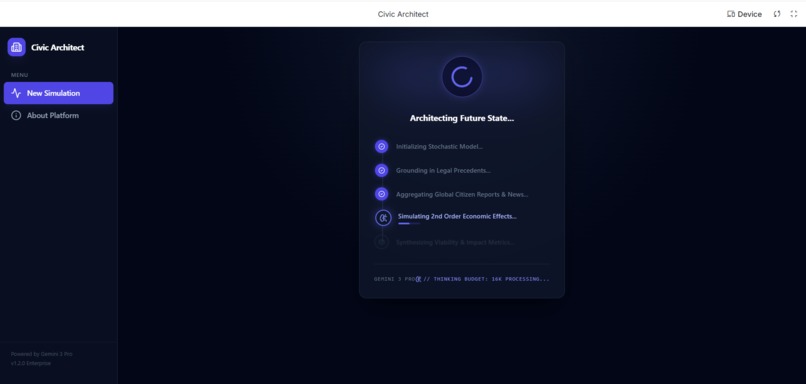
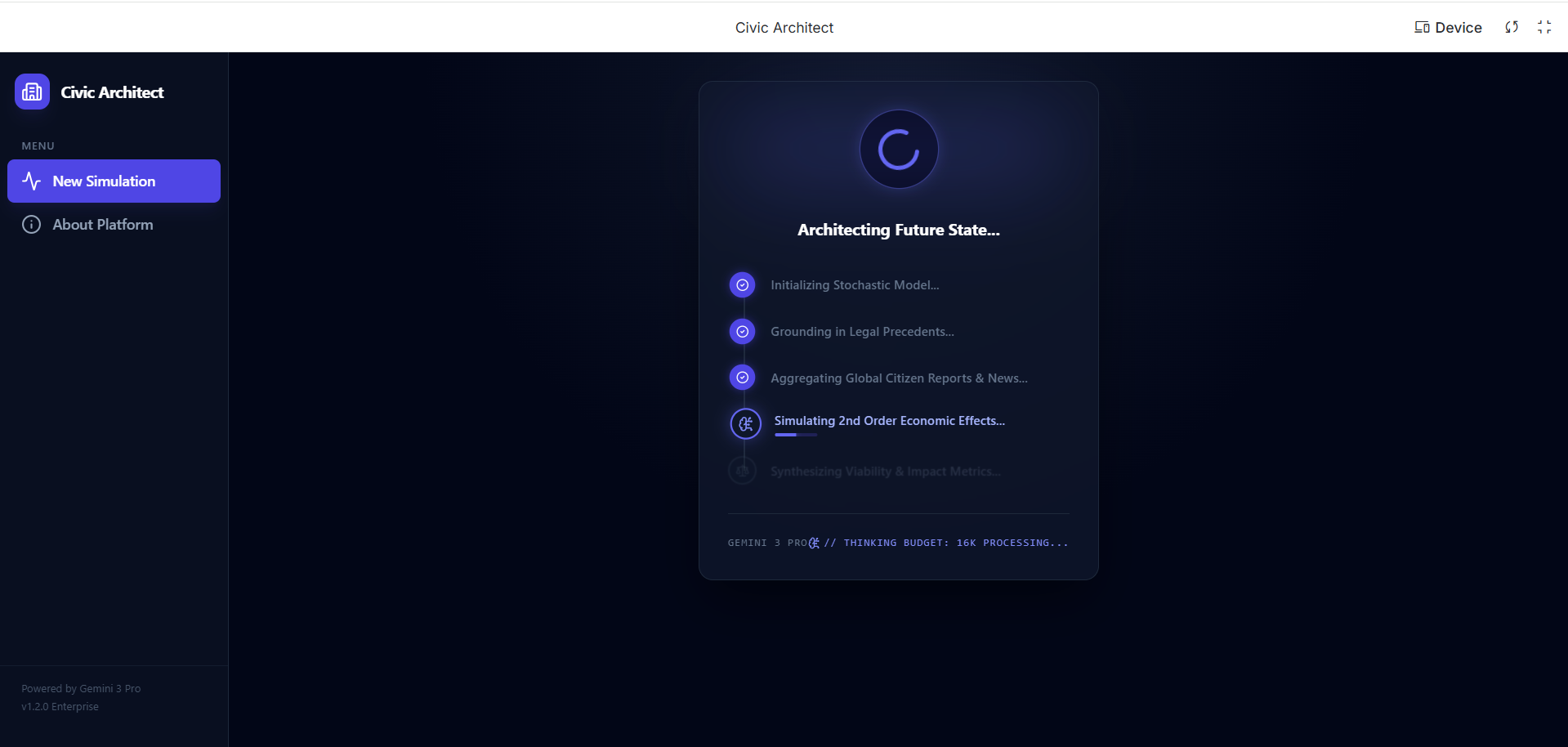
Processing and giving best results
-
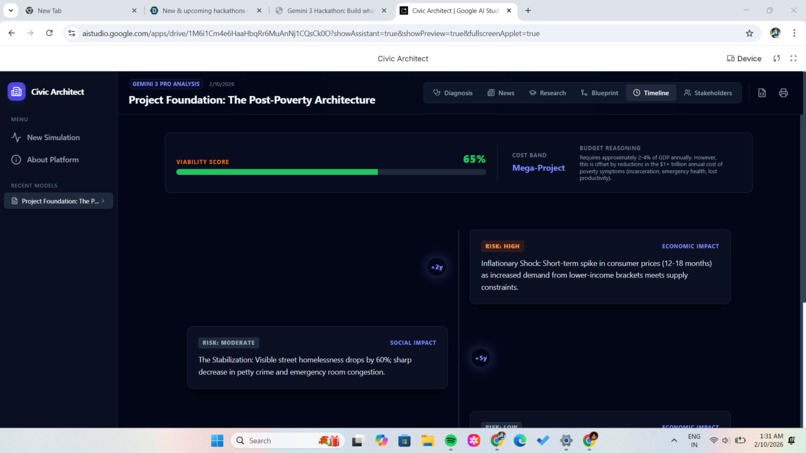
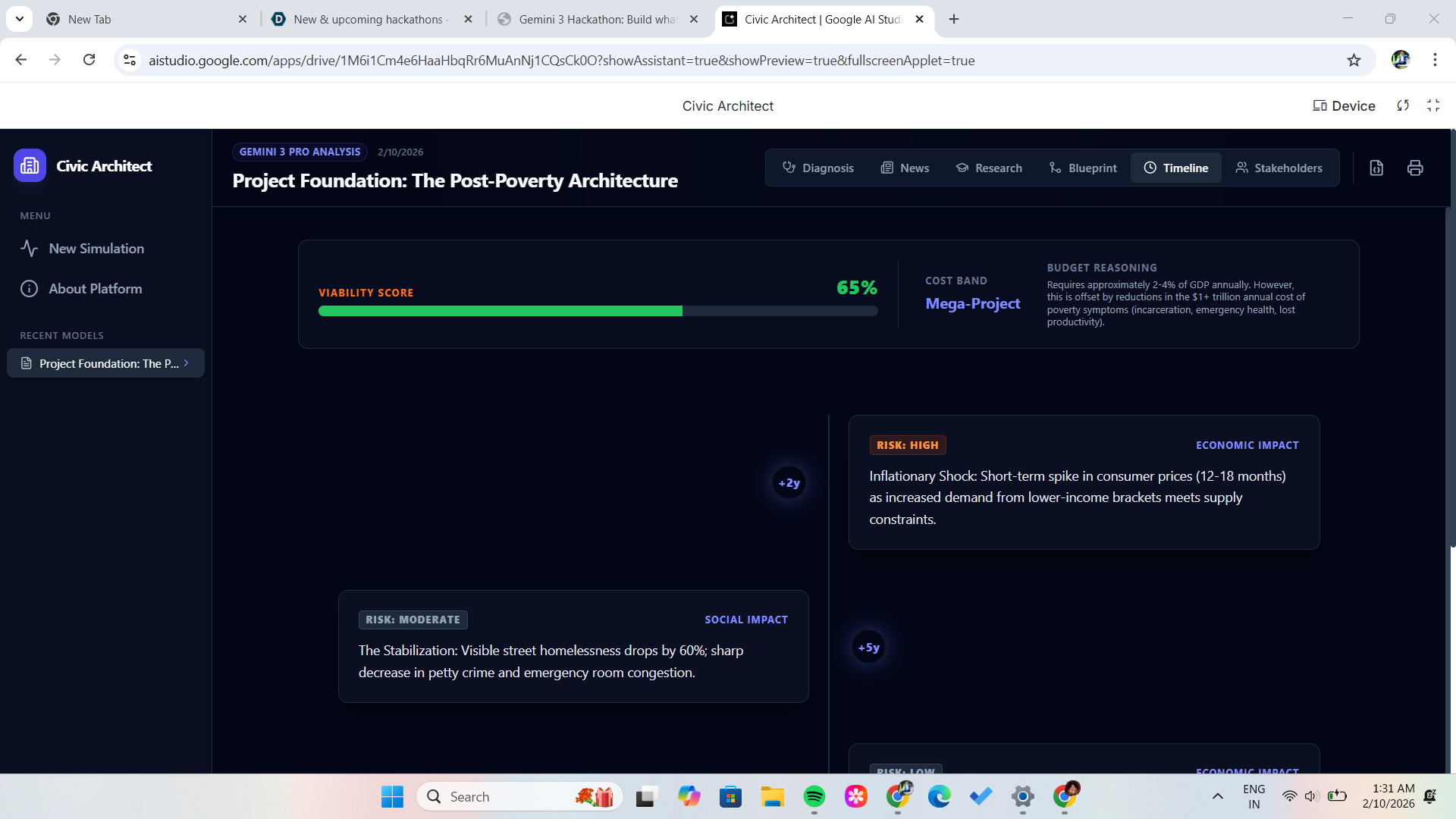
Analysis Window
-
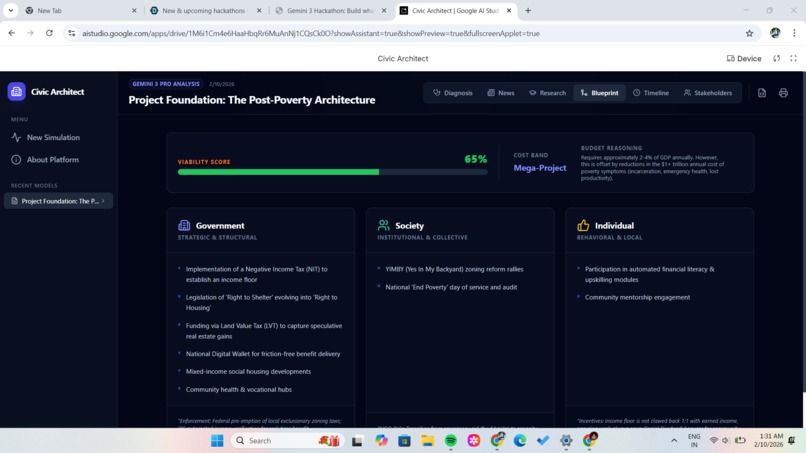
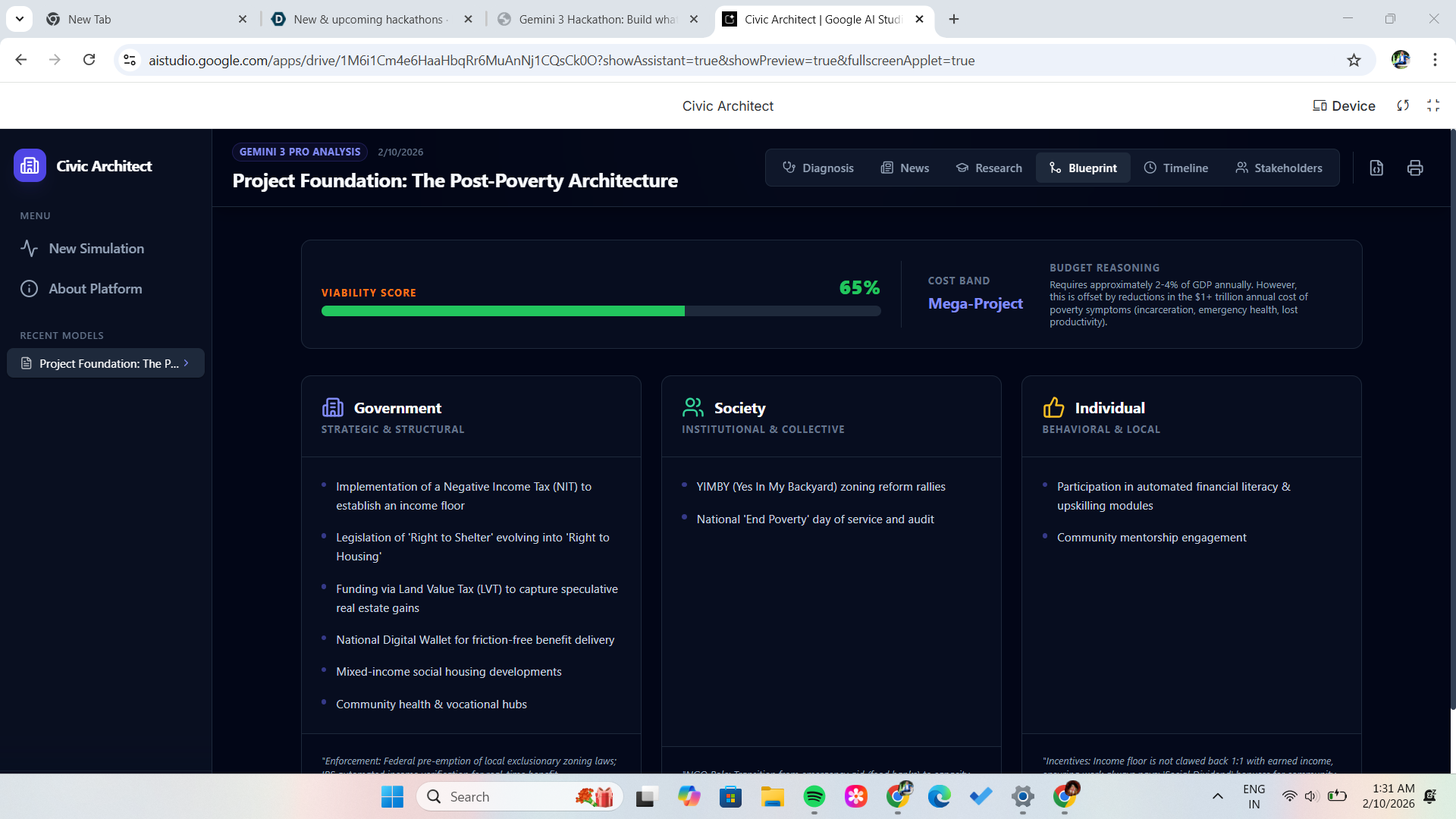
Blueprints
-
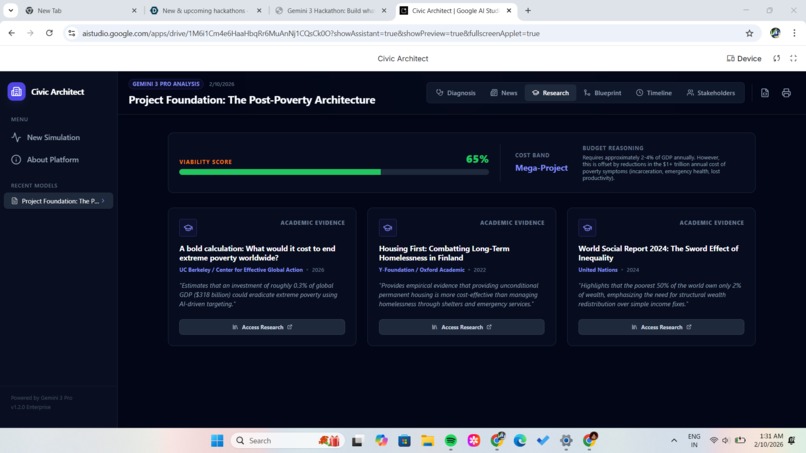
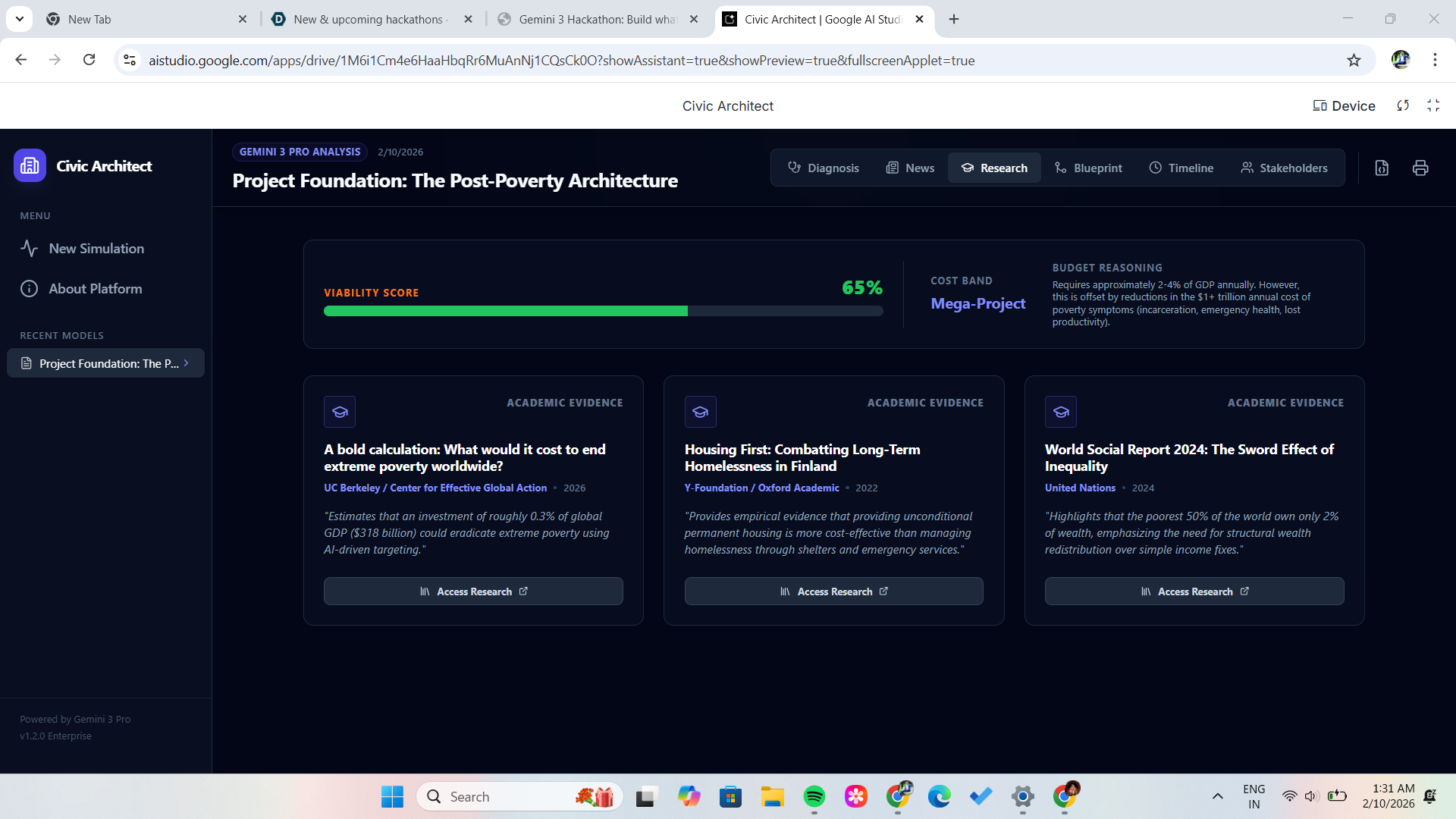
Reserch
-
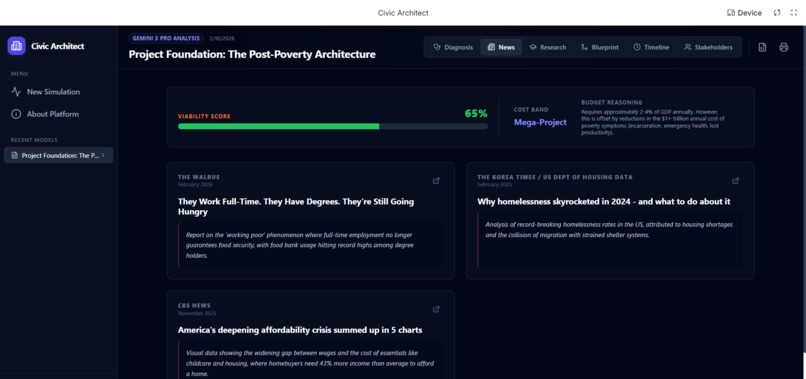
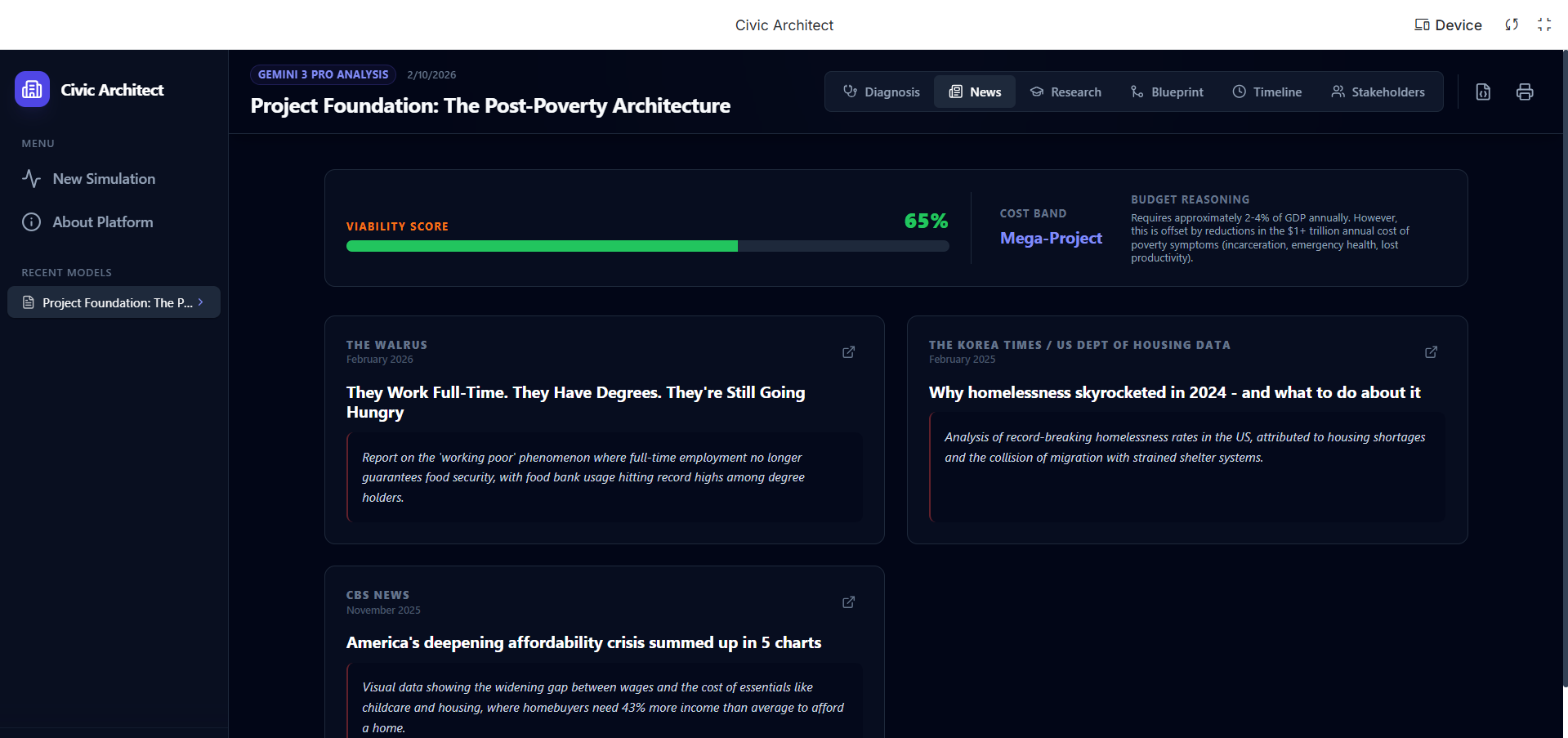
News
-
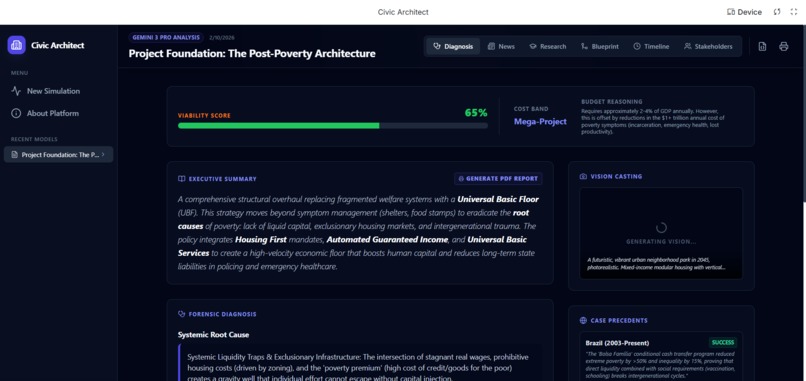
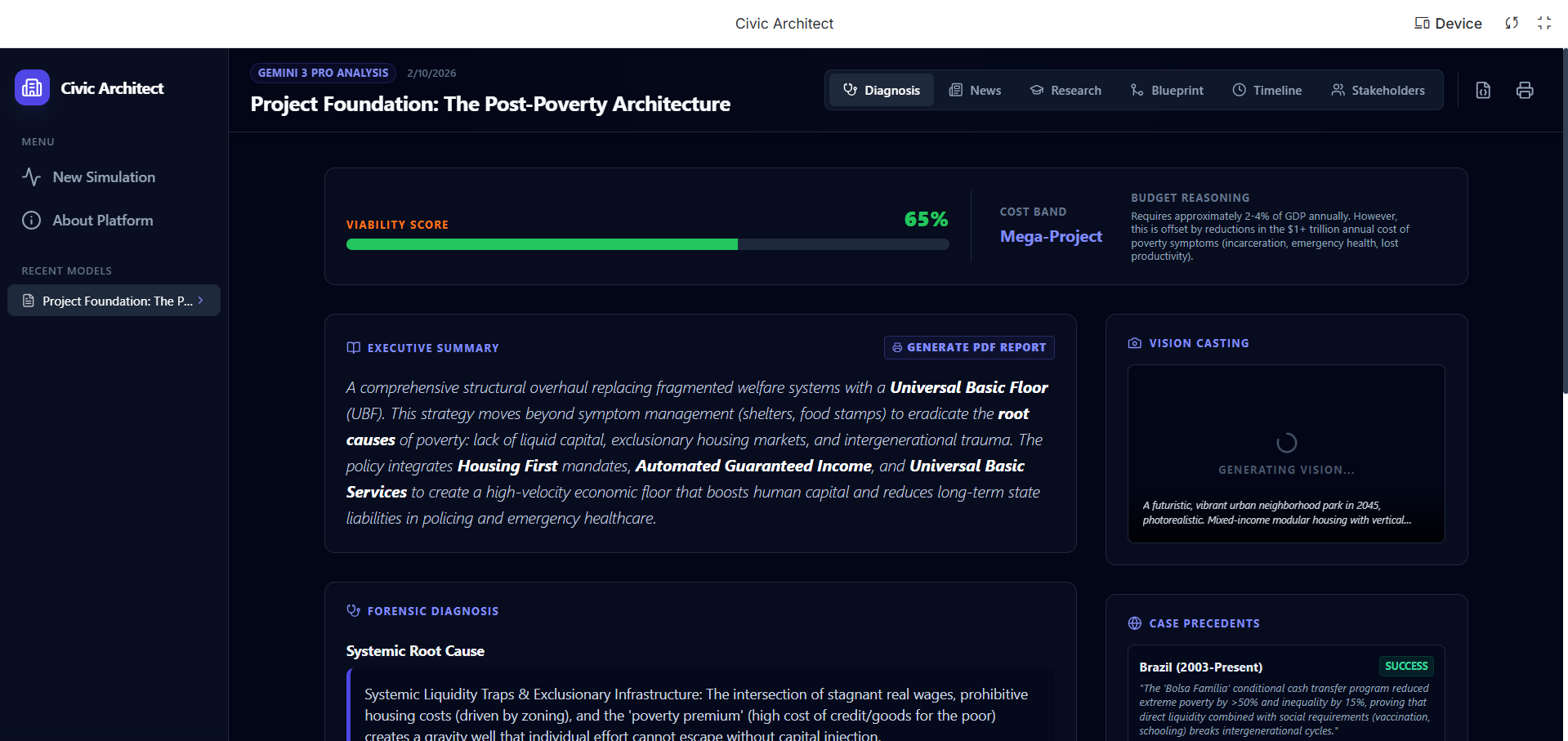
Main Diagnosis
Inspiration
The inspiration came from a simple observation: when a civic crisis hits—like a flood or a housing shortage—information exists, but coordination is missing. People are talking on social media, governments are issuing PDFs, and NGOs are working in silos. We wanted to build something that moves beyond "AI chat" and acts as a strategic intelligence layer—taking the raw, messy data of a city and turning it into a unified, actionable blueprint.
What it does
Civic Architect is a reasoning-first platform that helps society plan and act. Multimodal Diagnosis: Users can upload photos or videos of local issues (e.g., broken infrastructure). The AI analyzes this as primary evidence to assess risk. Three-Tier Strategy: It doesn't just give advice; it generates a structured plan with specific tracks for Governments (policy), NGOs (coordination), and Citizens (individual action). Shadow Timeline: It simulates a "future of inaction," showing exactly how a problem scales over 10–20 years if ignored, making long-term risks visible today.
How we built it
We built Civic Architect using the Gemini 3 Pro API. Gemini 3 Pro: Leveraged for its native multimodality (analyzing video/images) and its advanced Thinking Mode for multi-step reasoning. Structured Output: We utilized Gemini’s ability to generate strict JSON schemas to ensure the "Civic Blueprints" could be integrated into real-world project management tools. Context Window: We used the 1M+ token window to feed in historical urban planning data and local city ordinances so the AI understands the specific legal context of the user.
Challenges we ran into
The biggest hurdle was Reasoning Depth. Standard LLMs tend to give "hallmark" advice (e.g., "build more drains"). We had to implement a Chain-of-Thought prompting architecture to force the model to identify why previous attempts failed before suggesting new ones. Managing the latency of "Thinking" while keeping the UI responsive was also a significant technical balance.
Accomplishments that we're proud of
We are incredibly proud of the Shadow Timeline. Seeing the AI connect current data to a 20-year risk projection was a "lightbulb moment." We also successfully proved that an AI can handle spatial reasoning—identifying specific drainage blocks or structural cracks from a 10-second smartphone video with high accuracy.
What we learned
We learned that structure is more important than conversation. In a civic context, people don't want a "buddy" to talk to; they want a framework. We also discovered that Gemini 3 Pro’s ability to "think" before responding drastically reduces hallucinations in complex fields like urban policy and budget estimation.
What's next for Civic Architect
We're moving toward Agentic Governance. Live Data Integration: Connecting to IoT sensors and city traffic APIs to update blueprints in real-time. Direct Drafting: Allowing the AI to draft formal policy proposals or grant applications based on the generated blueprints. Collaborative Mode: A multi-user environment where city officials and community leaders can "co-reason" with the AI on the same plan.
Built With
- gimini
- gimini3pro

Log in or sign up for Devpost to join the conversation.