-
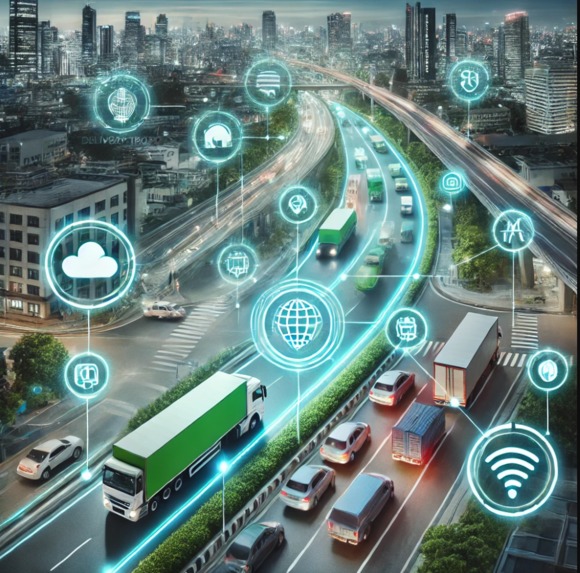
CitySync Logistics, highlighting the smart city logistics concept with real-time route optimization, IoT integration, and sustainability.
Inspiration
The inspiration came when considering that urban cities are perpetually under challenge in a situation of traffic congestion, not fully optimized delivery routes, and unnecessarily high levels of emissions. With increased pressure in building smarter and greener cities, it became apparent that it was the right time to focus on these major pain points using some of the latest technologies that included IoT, real-time data, and AI in optimizing city logistics. The concept builds on my experience of logistics platforms like Gati Seva(my own project), which specifically target independent trucking to now reach and solve urban-scale challenges.
What it does
CitySync Logistics optimizes urban logistics through the real-time adjustment of delivery trucks and public transport routes and schedules because of the live traffic data, weather updates, or other IoT inputs. It minimizes congestion; cuts delivery times; reduces emissions; and provides insights for city planners and local fleet operators.
How we built it
SmartFleet is synthesized through the integration of the following key modules: Data Integration: We connected, in this module, to APIs of extant traffic monitoring systems, weather services, and smart city infrastructure, gathering them together for real-time data. Routing Algorithm: A design of a machine learning algorithm that would update routes periodically according to the data received in order to optimize pathways for delivery trucks and other public vehicles. User Interface: The frontend will include a City Planners and Local Fleet Managers dashboard monitoring vehicle efficiency, fuel consumption, and an eco-score. Sustainability Analysis We implemented analytics on the route optimization tool so that one is able to see the effects of environmental impact associated with route optimization in terms of emissions and fuel efficiency. IoT Connectivity: Devices, such as smart traffic lights, were used to deliver in-time feedback to the vehicles and regulate the flow of traffic.
Challenges we ran into
Of the biggest challenges I recall, one was handling real-time data. The ability to reliably process high-frequency inputs from sources that include traffic sensors and GPS demanded robust data architecture and optimisation. Another challenge was trade-off between efficiency and environmental concerns; there were certain situations wherein the shortest route was not the most environmentally friendly. So weighing those two factors against each other was crucial. It involves integrating various fleets, such as public transport, private trucks, and independent drivers; therefore, it requires the building of a flexible system adaptable to the varying needs of users.
This project has challenged me not only to think about technological solutions but also about their environmental and social implications, shaping a smarter, greener future for urban transportation.
Accomplishments that we're proud of
We are proud of creating a real-time optimization of logistics system that offers fewer traffic instances and emission reductions, but greater efficiency in delivering goods. It was not an easy task to create an integration of multiple sources of data, like traffic sensors and IoT devices, and bring them to life effortlessly within an easy-to-use interface. And with our sustainability-focused routing system on the books for independent drivers and city planners, we prove to be champions of greener urban solutions.
What we learned
I could see the value in how networked systems could drive smart city infrastructure; indeed, by integrating a number of diverse sources-from sensors in traffic to, conceivably weather probability-machine learning algorithms must apply to real-time decision-making. This concept really made me better understand the importance of sustainable logistics and the role that technology can play to help a city decrease its carbon footprint.
What's next for CitySync Logistics
Future steps for CitySync Logistics include further scale-up of the platform using more diverse data sources, such as parking sensors and electric vehicle charging stations, in order to further improve fleet operation. We also plan to expand the user base by partnering with local governments and private logistics companies in order to streamline urban transport across more cities. This would also entail predictive analytics in traffic and environmental issues to predict congestion patterns and environmental impacts even further ahead for an even smarter, more proactive approach in city logistics management.

Log in or sign up for Devpost to join the conversation.