Inspiration
Cities today generate massive amounts of data, but most of it is scattered, unused, or too complex for leaders and citizens to understand. I wanted to imagine a future city where information is unified, decisions are data‑driven, and communities feel empowered.
The idea came from thinking:
What if a city had an AI brain?
What if every system, traffic, energy, water, safety, sustainability, could be monitored and optimized in real time?
CitySense AI was built to explore that future.
What it does CitySense AI is an intelligent platform that acts as a digital operating system for future cities. It includes:
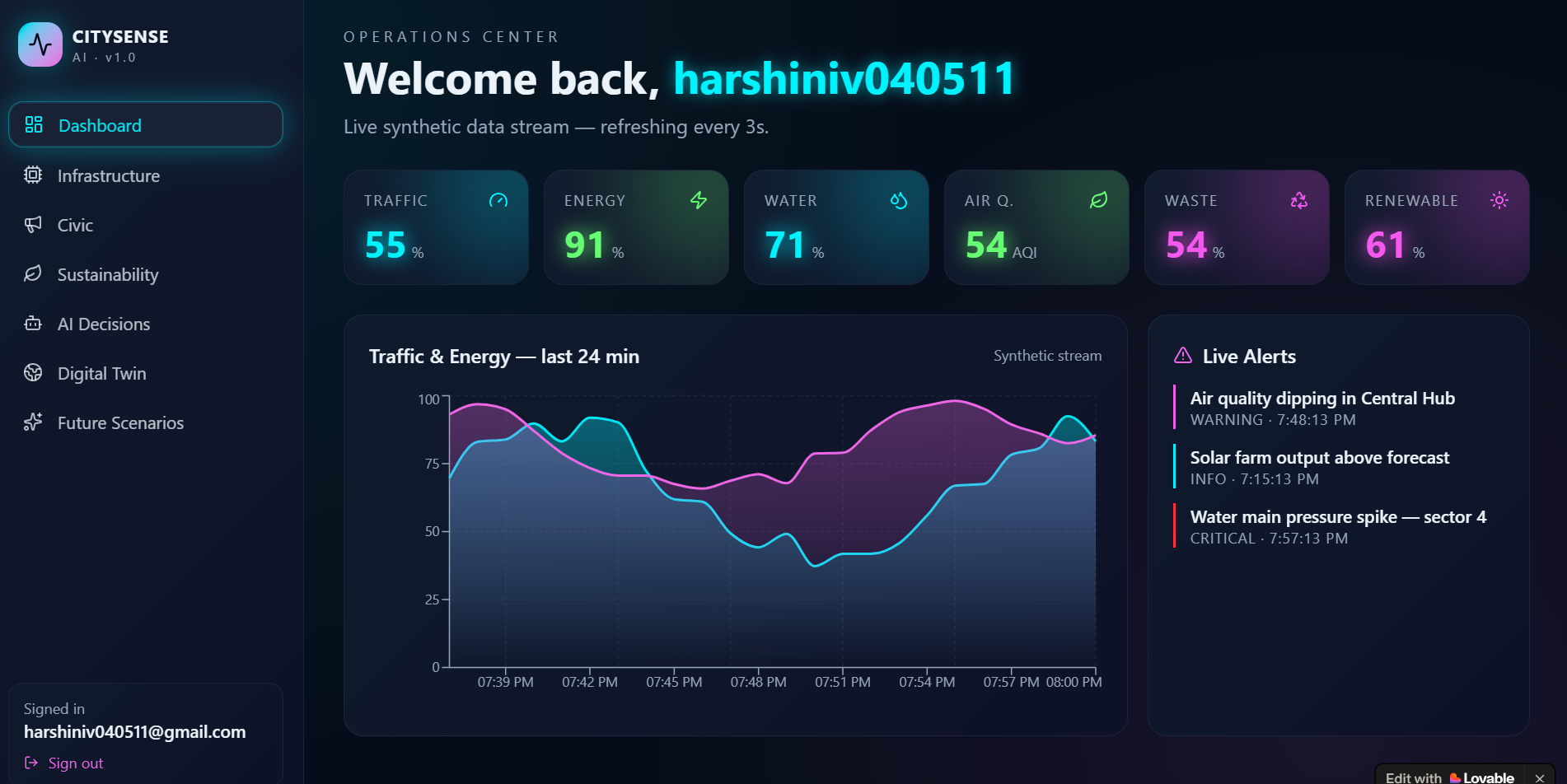
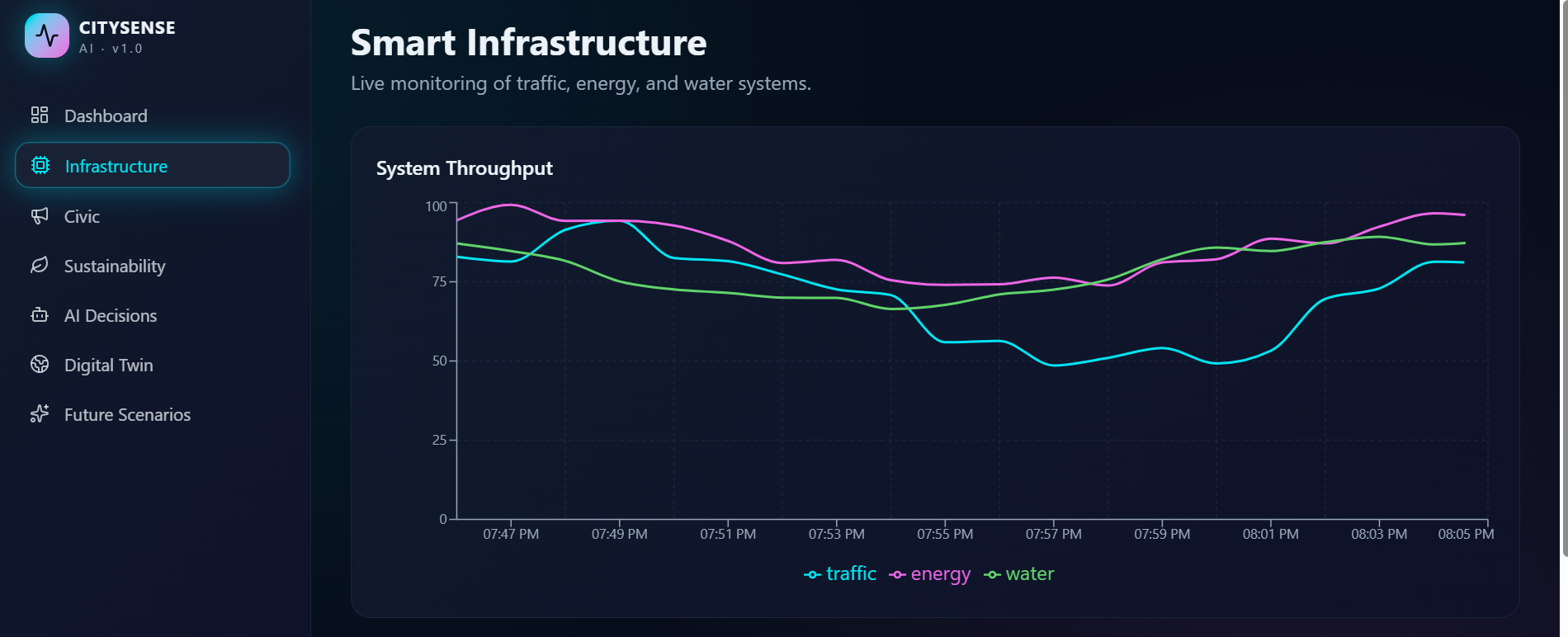
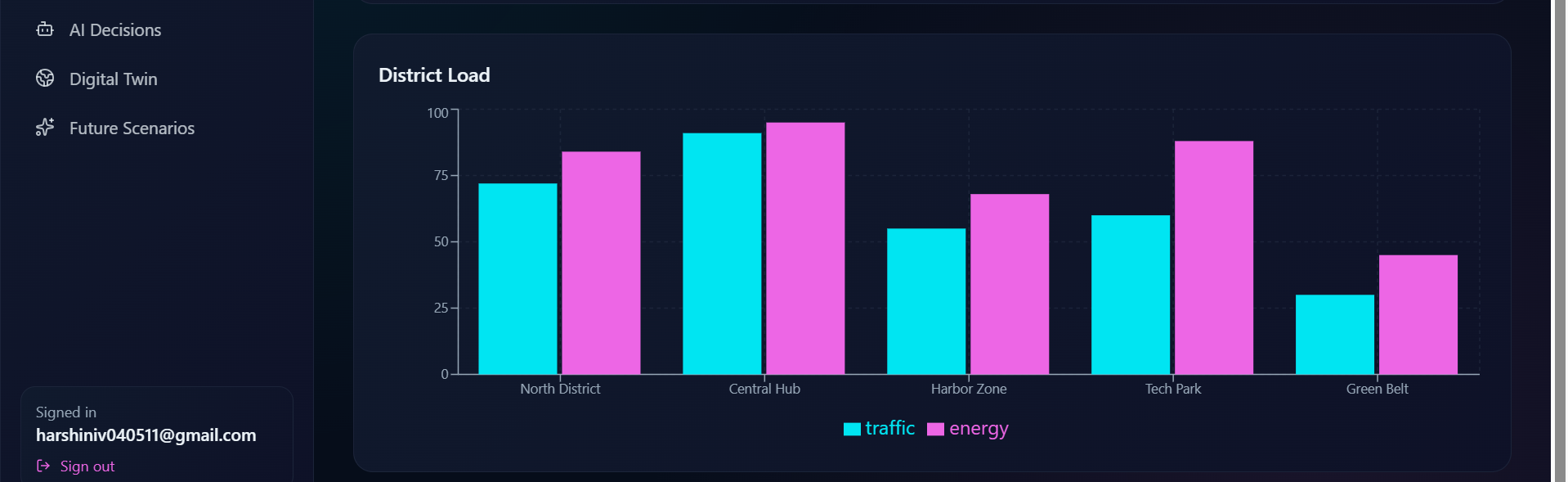
- Smart Infrastructure Monitoring
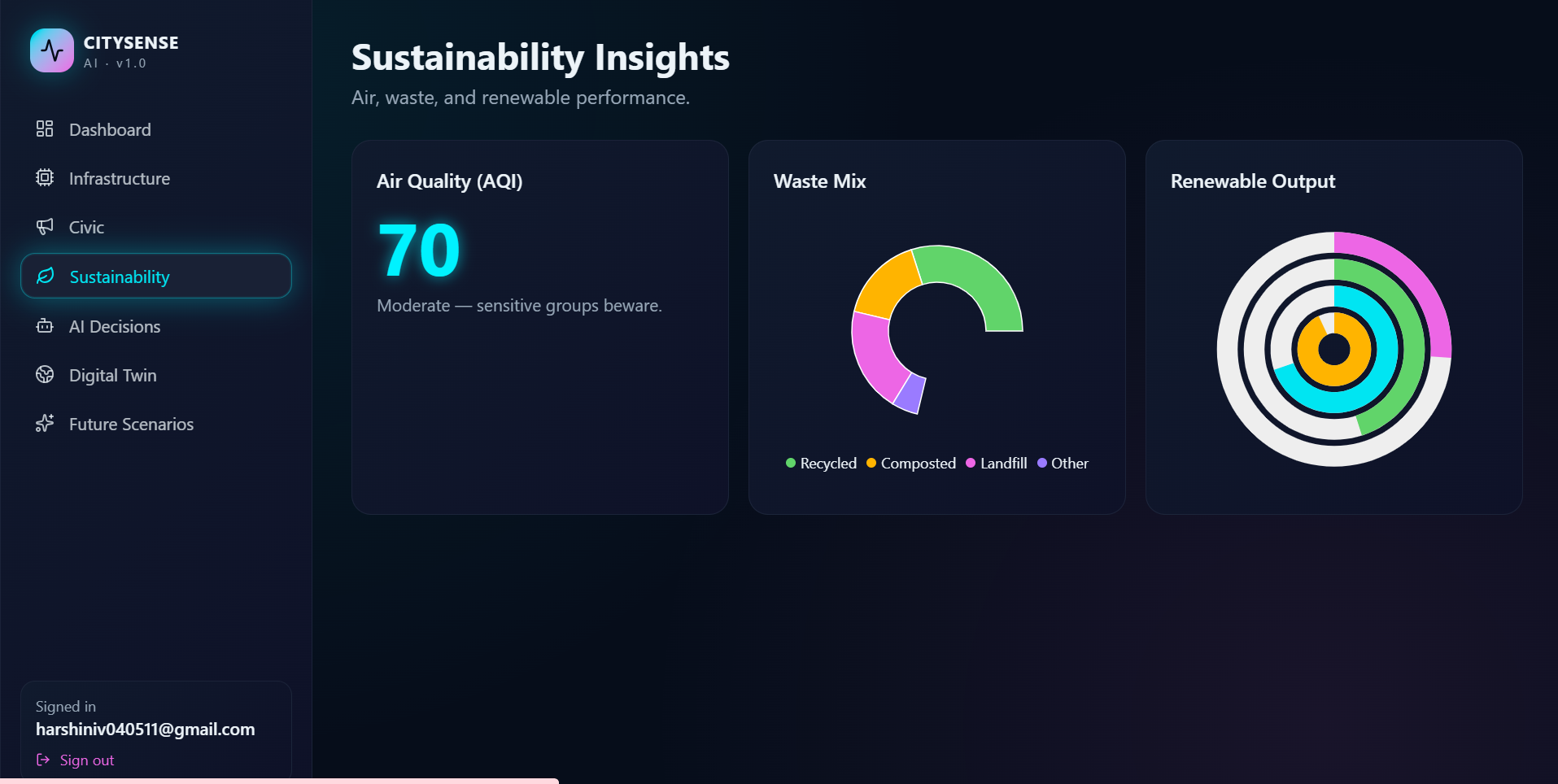
-Live dashboards for traffic flow, energy usage, water systems, and public services. - Sustainability Insights
- Air quality, waste levels, renewable energy performance, and environmental alerts.
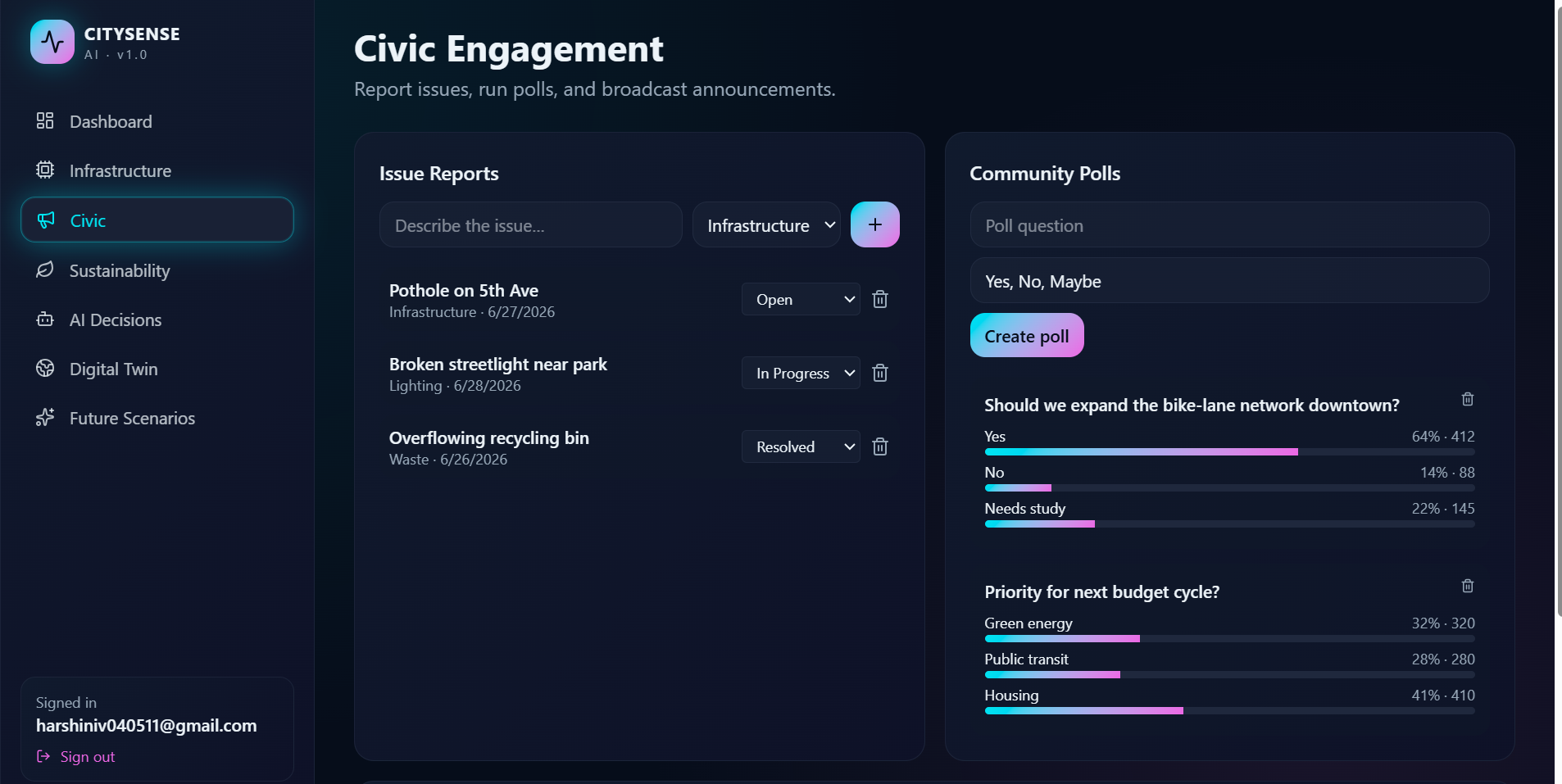
Civic Engagement Tools
Issue reporting, community polls, announcements, and citizen feedback.
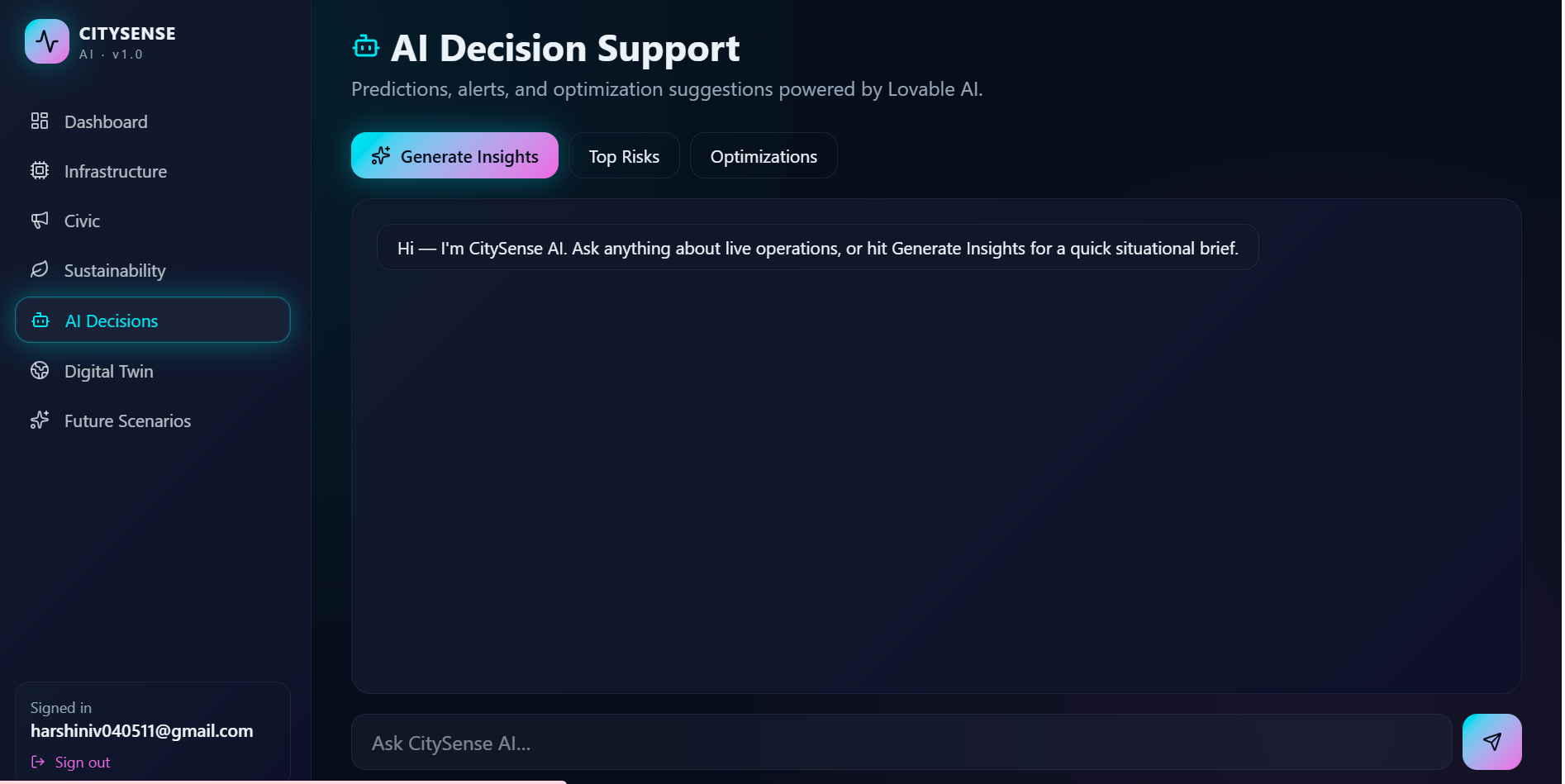
AI Decision Support
An AI assistant that analyzes all city data and generates predictions, alerts, and optimization suggestions.
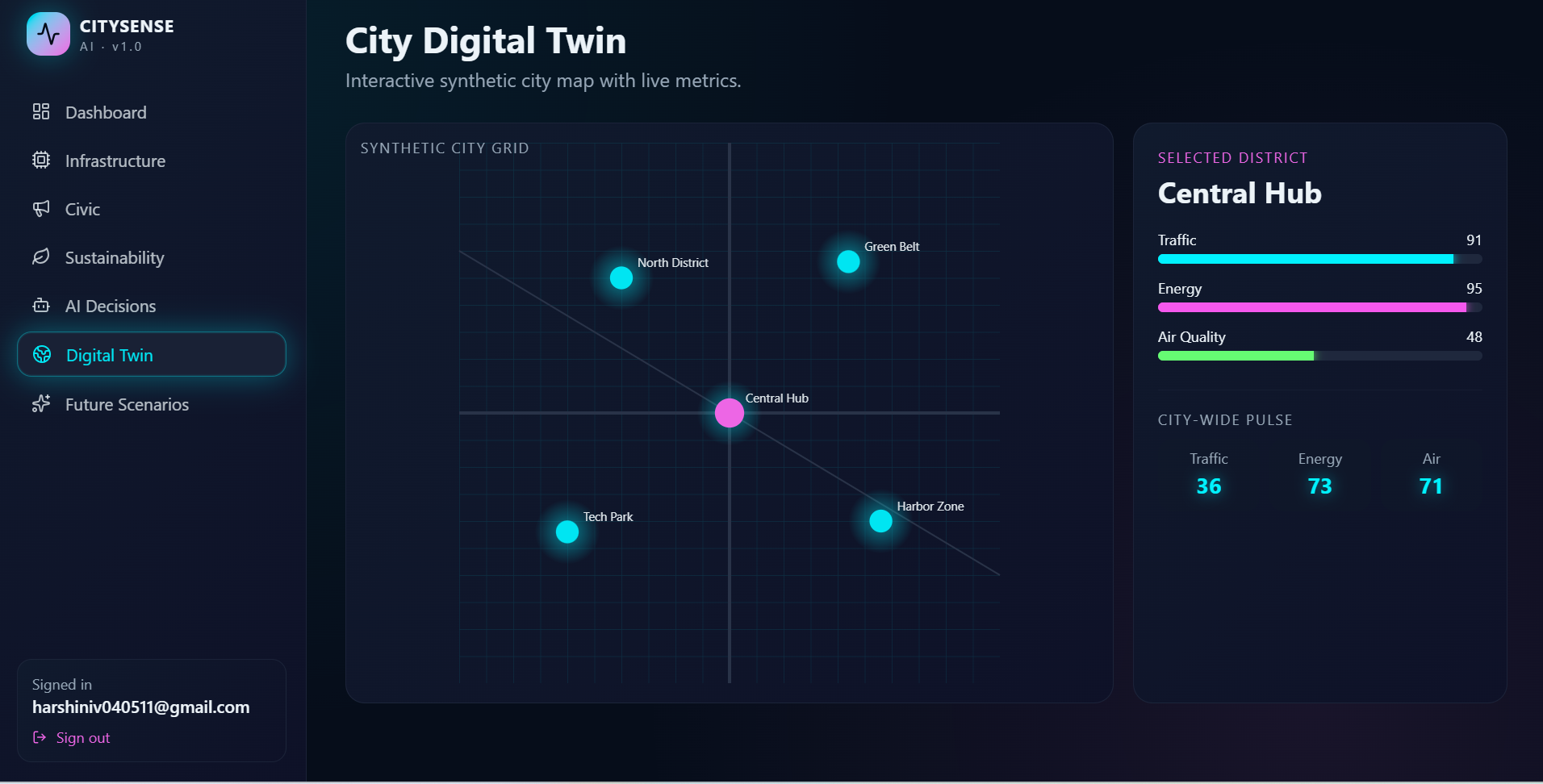
Digital Twin Simulation
A simple interactive map showing real-time city metrics.
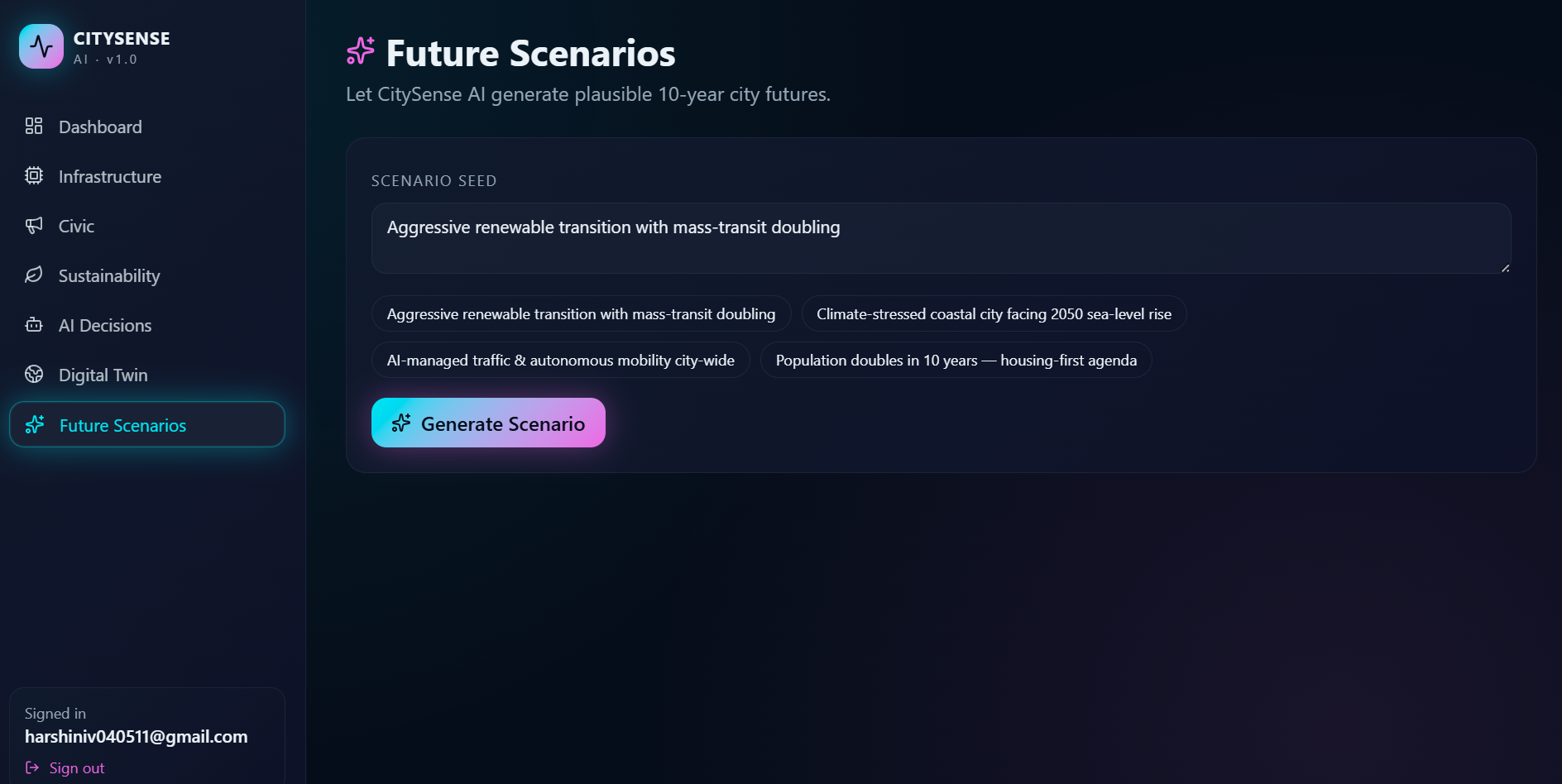
Future Scenario Generator
AI-generated “what-if” futures for city planning.
How we built it CitySense AI was built using Lovable’s AI-powered development environment. I provided a detailed system prompt that instructed Lovable to generate:
A modular architecture
A futuristic UI
Real-time synthetic data streams
CRUD systems for civic tools
An AI analysis engine
Interactive charts and maps
Authentication and global state management
Lovable generated the full frontend, backend, components, pages, and mock APIs automatically. I refined the app by adjusting prompts and regenerating modules until everything worked smoothly.
Mathematically, the AI engine uses simple weighted scoring models like:
City Health Score= 0.3𝑇+0.25𝐸+0.2𝐴+0.15𝑊+0.1𝑆 Where: 𝑇 = traffic efficiency 𝐸 = energy usage 𝐴 = air quality 𝑊 = water system stability 𝑆 = sustainability metrics This helps the AI generate meaningful insights.
Challenges we ran into
- Designing a system that feels futuristic but still realistic
-Getting Lovable to generate multiple complex modules in one pass
-Ensuring the AI assistant produced useful, structured insights
-Making the dashboard feel alive with real-time synthetic data
-Creating a digital twin map without external APIs
Accomplishments that we're proud of -Built a fully functional future-city OS in one weekend
-Created a clean, futuristic UI that feels like a real city control center
-Integrated AI predictions and scenario generation
-Designed a digital twin simulation from scratch
-Made civic engagement tools that actually work
What we learned -How to design systems for smart cities
-How to use Lovable to generate complex, multi-module apps
-How to structure AI prompts to get perfect results on the first try
-How to combine sustainability, infrastructure, and civic tools into one platform
-How to use synthetic data to simulate real-time systems
What’s next for CitySense AI -Integrating real city open-data APIs
-Adding machine learning models for traffic and energy forecasting
-Building a mobile app version
-Creating a full 3D digital twin
-Partnering with local governments to pilot the platform
Built With
- authentication
- data
- loveableai
- mapbox
- node.js
- streams
- synthetic
- tailwindcss
- typescript


Log in or sign up for Devpost to join the conversation.