-
-
-
-
-
Politicians
-

Inspiration
What it does
How we built it
Inspiration The inspiration for our project began with Gideon, a passionate user of X platform, who started posting about stalled projects in Kenya. His posts were fueled by the Finance Bill protests of 2024 and his personal experience as a resident of Kuresoi. Gideon had witnessed the pain and suffering of his community when the government forcibly displaced them to build the Itare Dam. The promise of compensation and relocation was never fulfilled, leaving many residents in makeshift tents. A year later, despite the Kenyan government securing a loan, the contractor abandoned the project. Frustrated by the lack of accountability, Gideon decided to speak out and highlight the alarming pattern of government projects stalling due to embezzlement.
Kevin, another concerned citizen and resident of Kericho, noticed Gideon’s posts and felt overwhelmed by the sheer number of stalled projects being shared. Kevin had previously written numerous emails to the EACC about the unfinished Kapsoit-Sondu road but received no conclusive response. Realizing the power of collective action, Kevin reached out to Gideon with a suggestion: to create a public Google Sheet that would track these stalled projects across Kenya. This collaboration sparked the beginning of what would become a powerful tool for citizens to hold their government accountable.
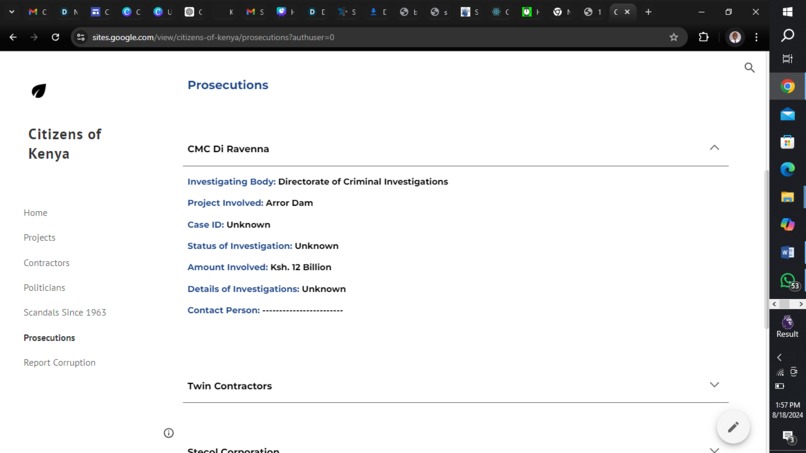
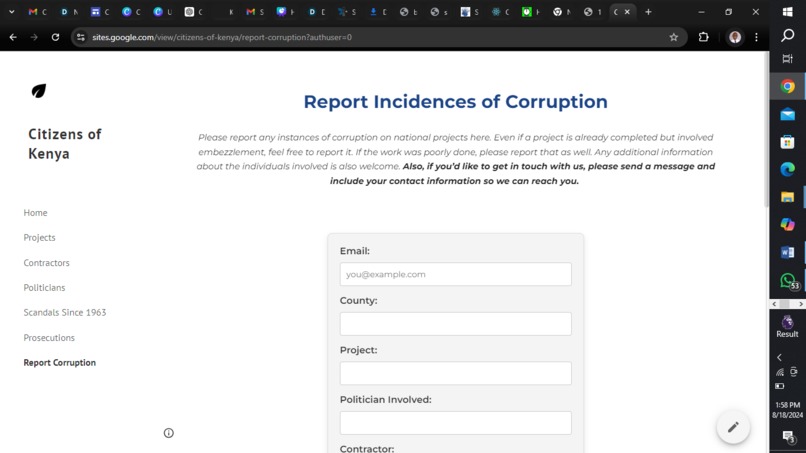
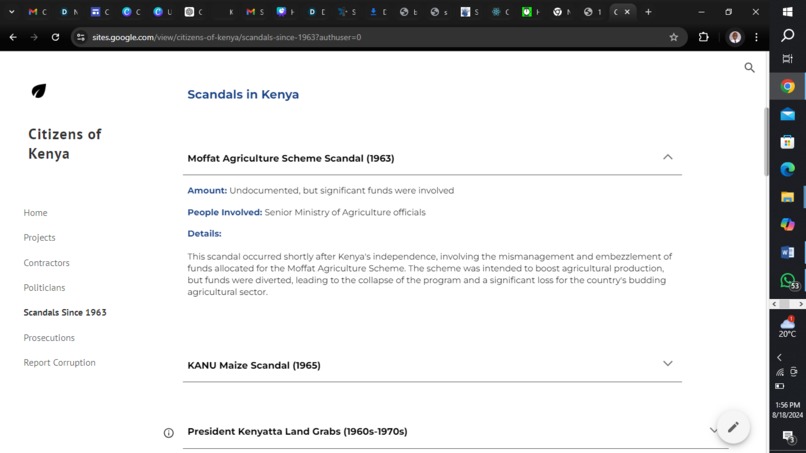
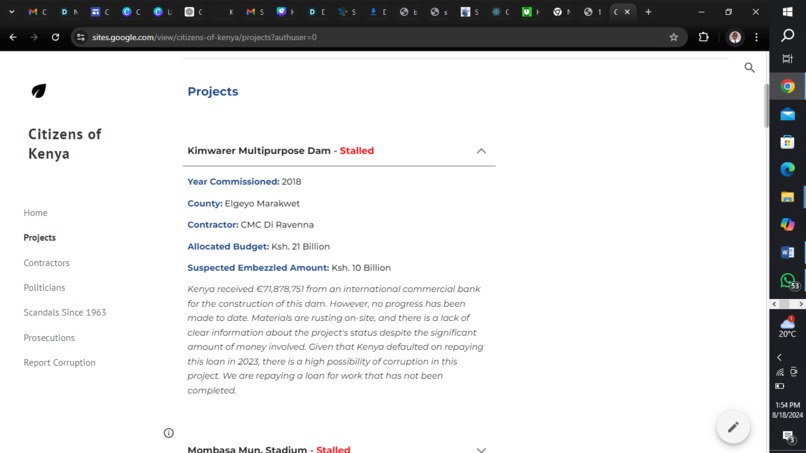
What it Does Our project, Citizens of Kenya, is a simple yet impactful web application designed to track stalled and embezzled projects across the country. It offers three key features:
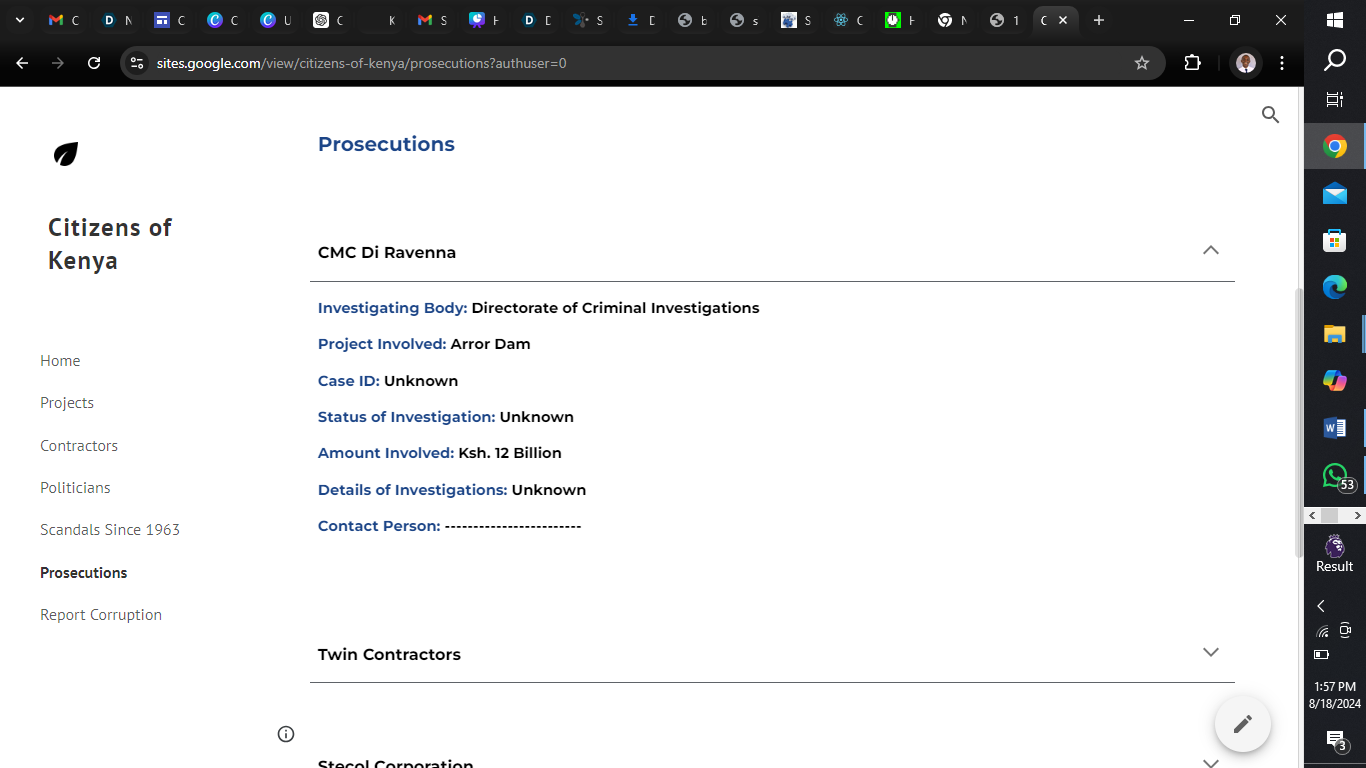
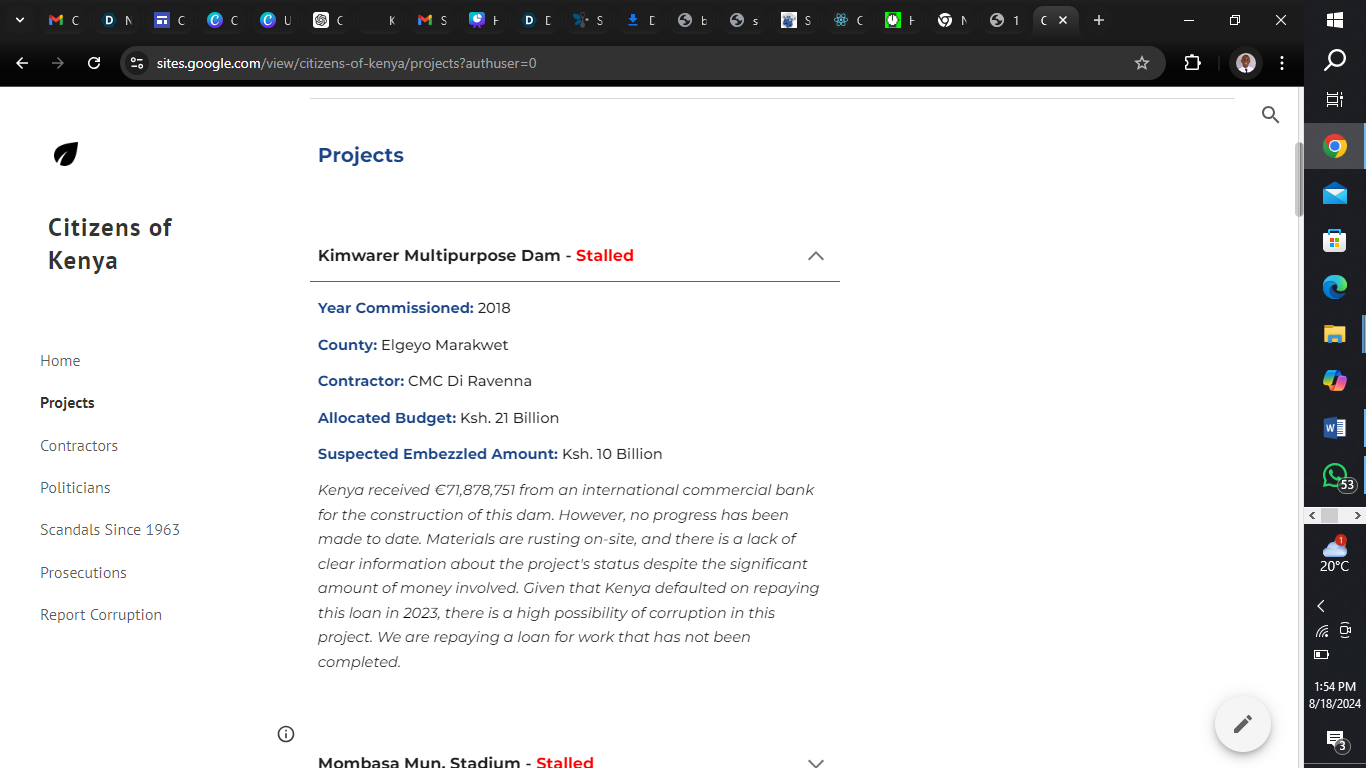
Stalled Project Tracker: A comprehensive database that provides detailed information on stalled projects, including instances of corruption, involved contractors, and the amounts embezzled.
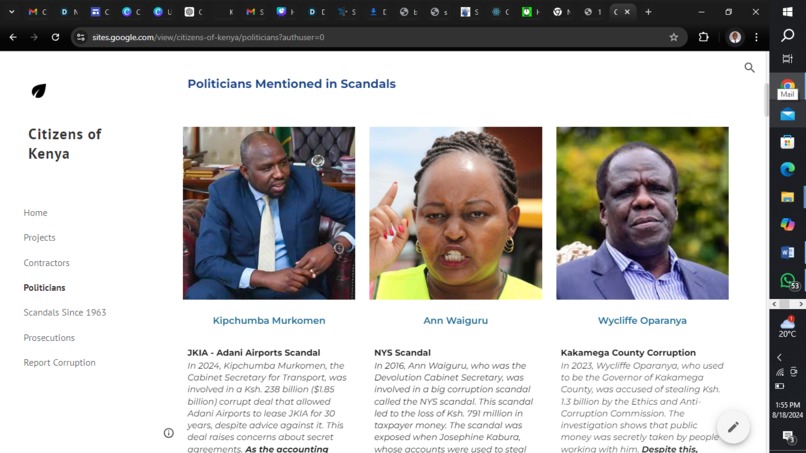
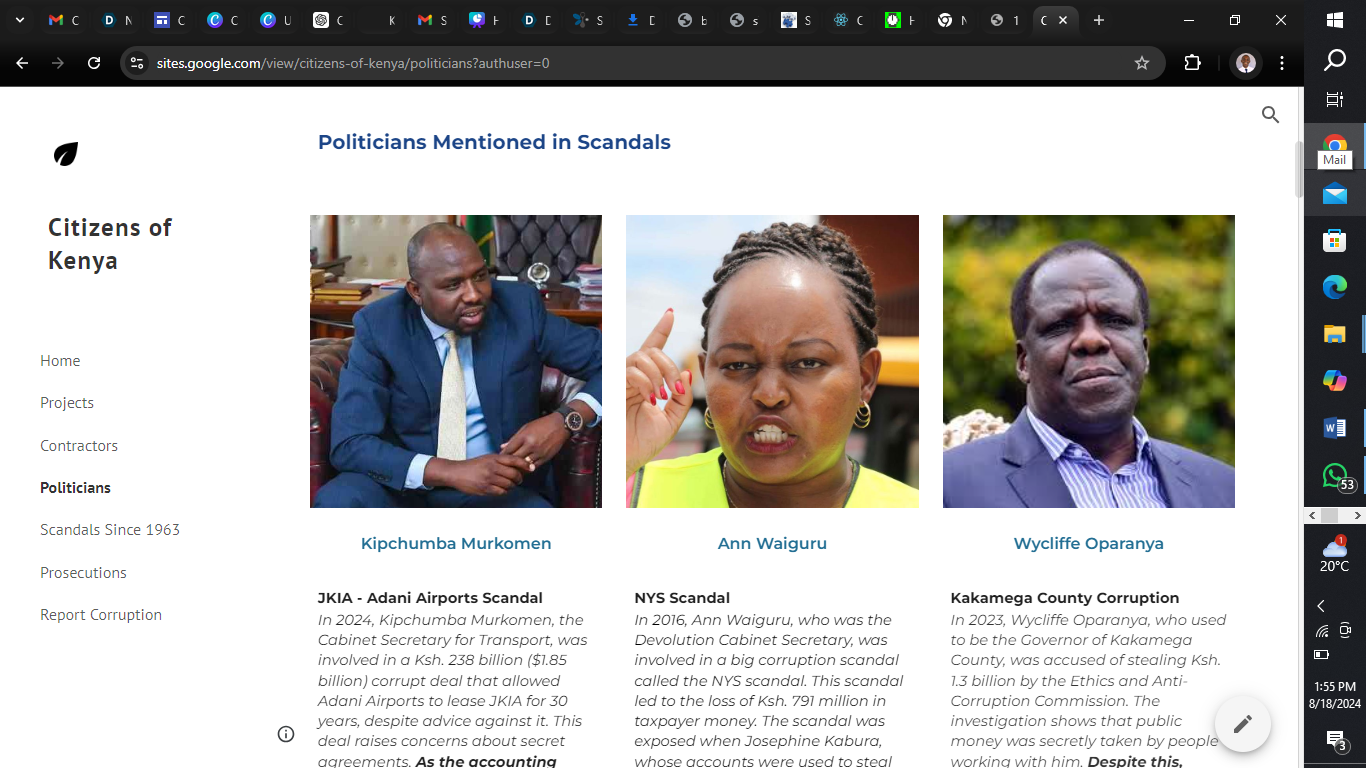
Corrupt Politician Database: A centralized platform that exposes politicians involved in corruption, highlighting their scandals and the sums implicated, thereby promoting transparency and accountability.
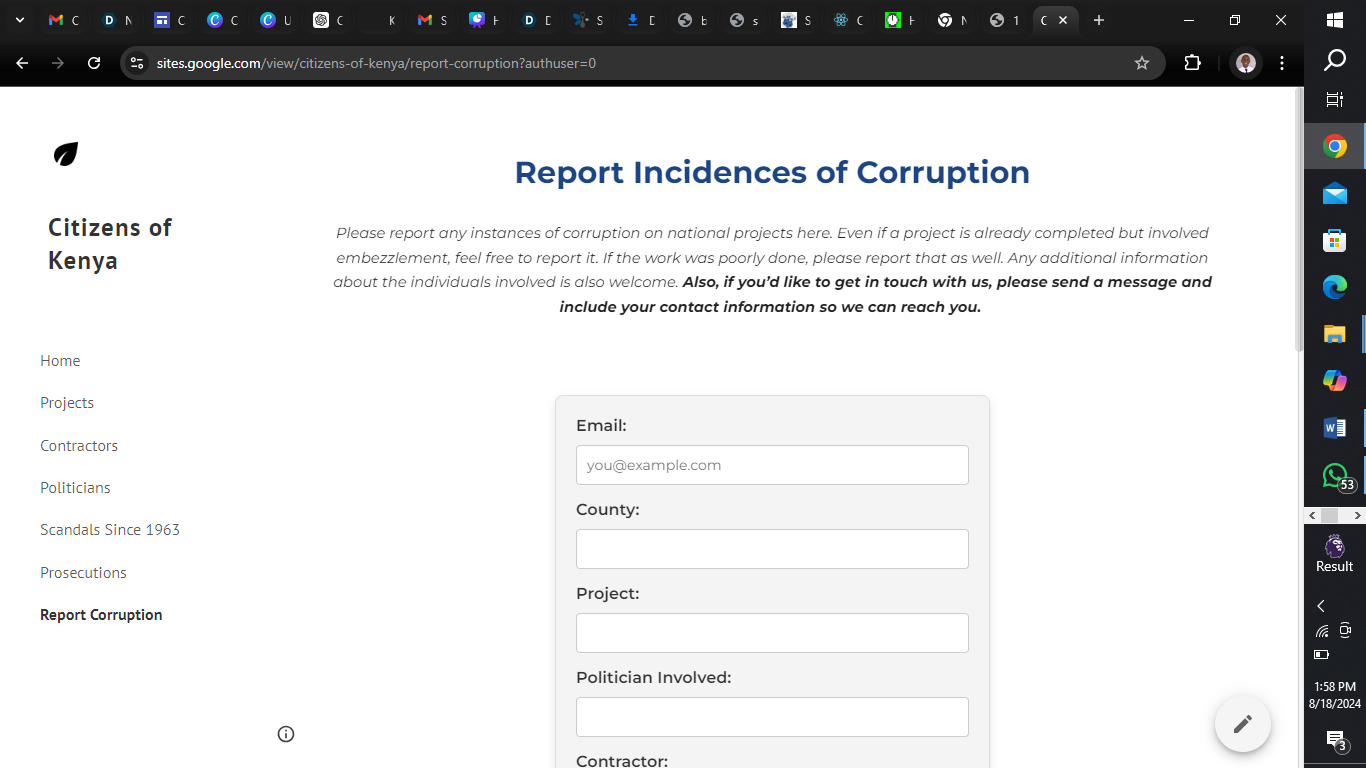
Citizen Reporting Platform: An easy-to-use reporting tool that allows citizens to report cases of corruption anonymously. This platform empowers everyday Kenyans to contribute to the fight against corruption and make their voices heard.
How We Built It The project started as a simple Google Sheet open to the public, allowing users to input and track various stalled projects across Kenya. As more data poured in, the sheet became increasingly complex, prompting complaints from users about its usability. Recognizing the need for a more accessible solution, we decided to build a dedicated website. With help from Charles in Nairobi, and following our participation in the Haki Hackathon, we refined our platform, incorporating user feedback and iterating on the design. Over three weeks, we managed to build a functional prototype that captured key details about stalled projects, integrated user-friendly navigation, and implemented a secure reporting feature for whistleblowers.
Challenges We Ran Into Our journey wasn’t without challenges. The initial complexity of the Google Sheet made it difficult for users to navigate and contribute effectively. Transitioning from a spreadsheet to a web application required technical expertise, which we had to quickly develop. Additionally, gathering reliable data on stalled projects and corrupt politicians posed significant hurdles, as much of this information was fragmented or deliberately obscured. Ensuring the security and anonymity of whistleblowers also required careful consideration, as we aimed to protect those brave enough to report corruption.
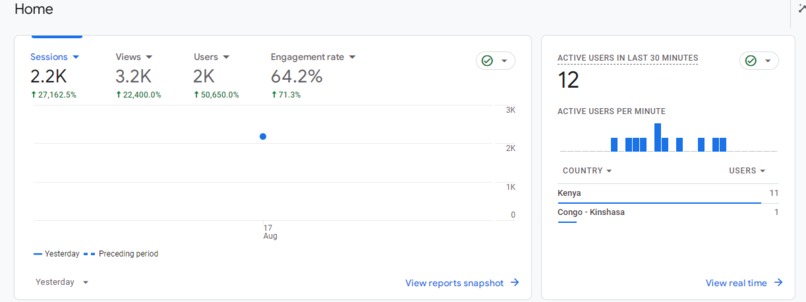
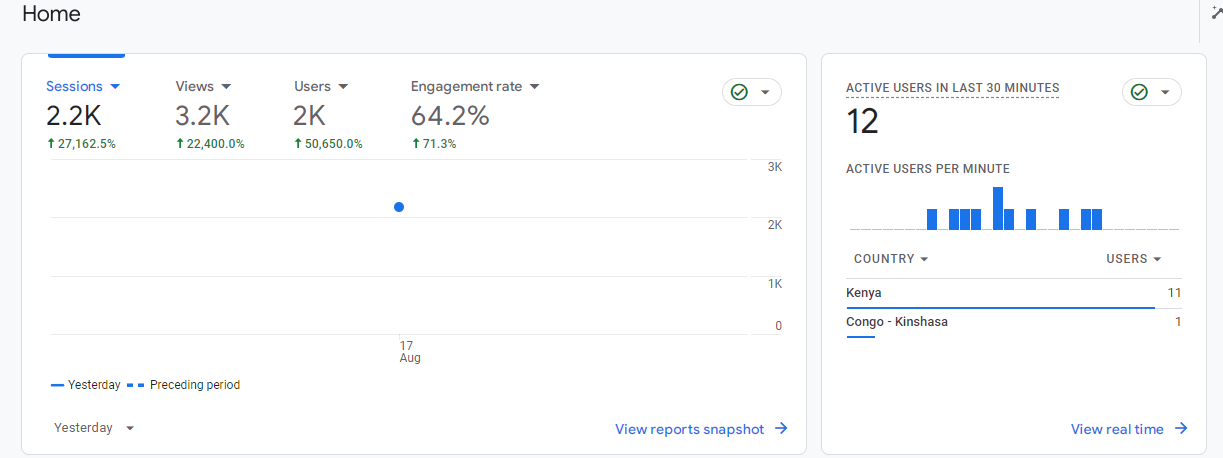
Accomplishments That We're Proud Of Our website now attracts 100-200 users per hour, reflecting the public’s strong desire for transparency and accountability. We’ve received reports from 12 whistleblowers, demonstrating the trust users have placed in our platform. Participating in the Haki Hackathon was a significant milestone, allowing us to refine our project with valuable input from experts and peers. In just one day during the hackathon, we reached 1,100 users from 43 countries, garnered 71,000 views on X, and achieved an impressive engagement rate of 16,000. Most importantly, we’ve built a community of engaged citizens dedicated to making a difference in Kenya.
What We Learned Through this project, we’ve learned the power of collective action and the importance of accessible technology in driving social change. We’ve also gained insights into the complexities of project management, particularly in balancing user needs with technical capabilities. Our experience has reinforced the need for transparency in governance and the role that ordinary citizens can play in holding their leaders accountable.
What's Next for Citizens of Kenya Looking ahead, we plan to expand the features of our website, including adding a verification system for reported cases to ensure accuracy and credibility. We also aim to collaborate with investigative journalists and anti-corruption organizations to amplify the impact of our platform. Additionally, we’re exploring the possibility of developing a mobile app to make it even easier for citizens to report corruption and stay informed about stalled projects. Our ultimate goal is to inspire a new era in Kenya where transparency, accountability, and good governance are the norm, not the exception.


Log in or sign up for Devpost to join the conversation.