-
-

Does AI recommend your business? Cited shows the evidence and drafts fixes the owner approves.
-
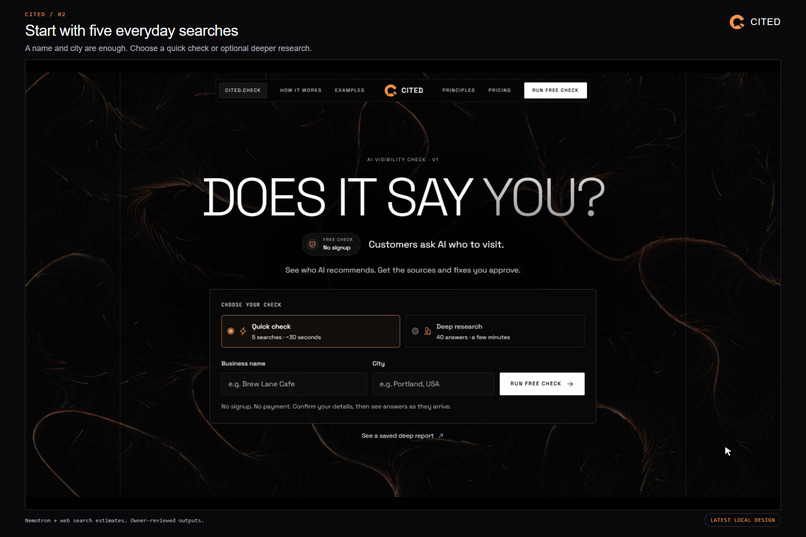
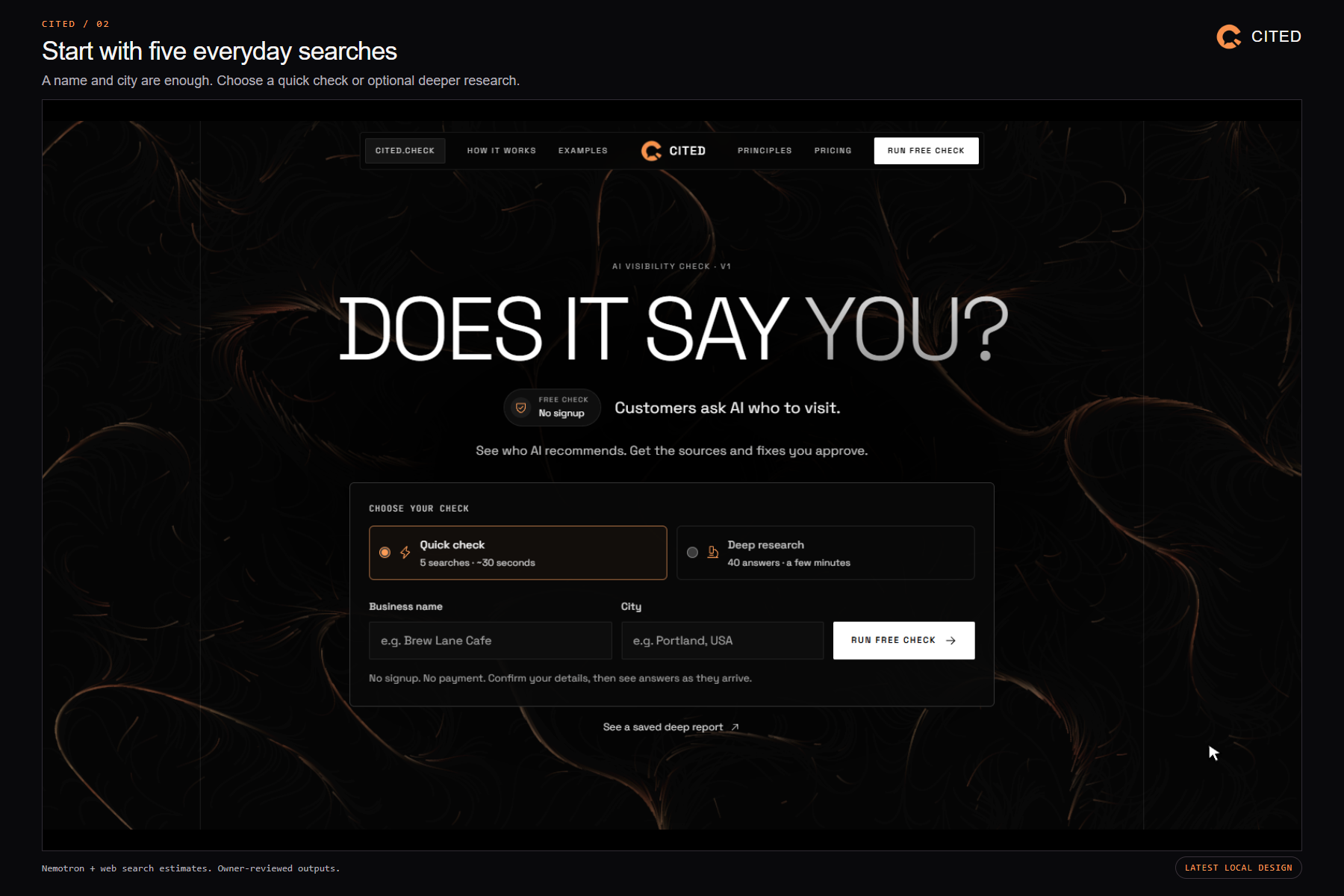
Start with five everyday searches, or choose deeper research when you need more detail.
-
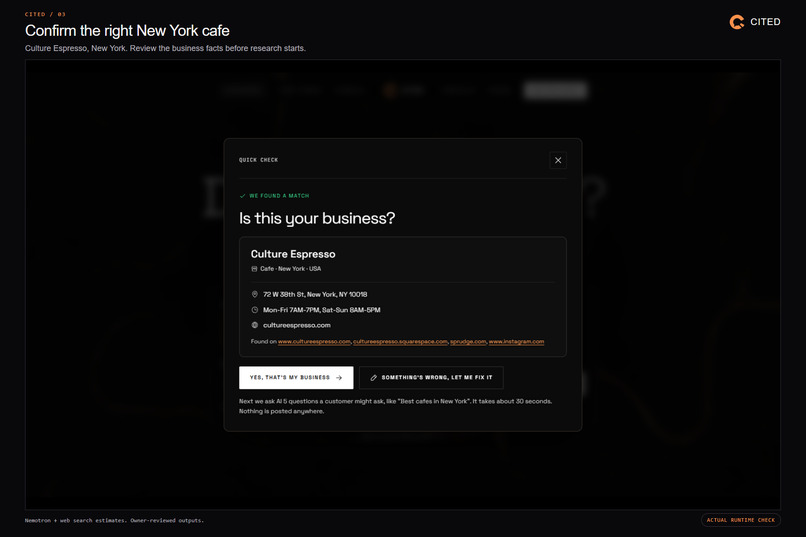
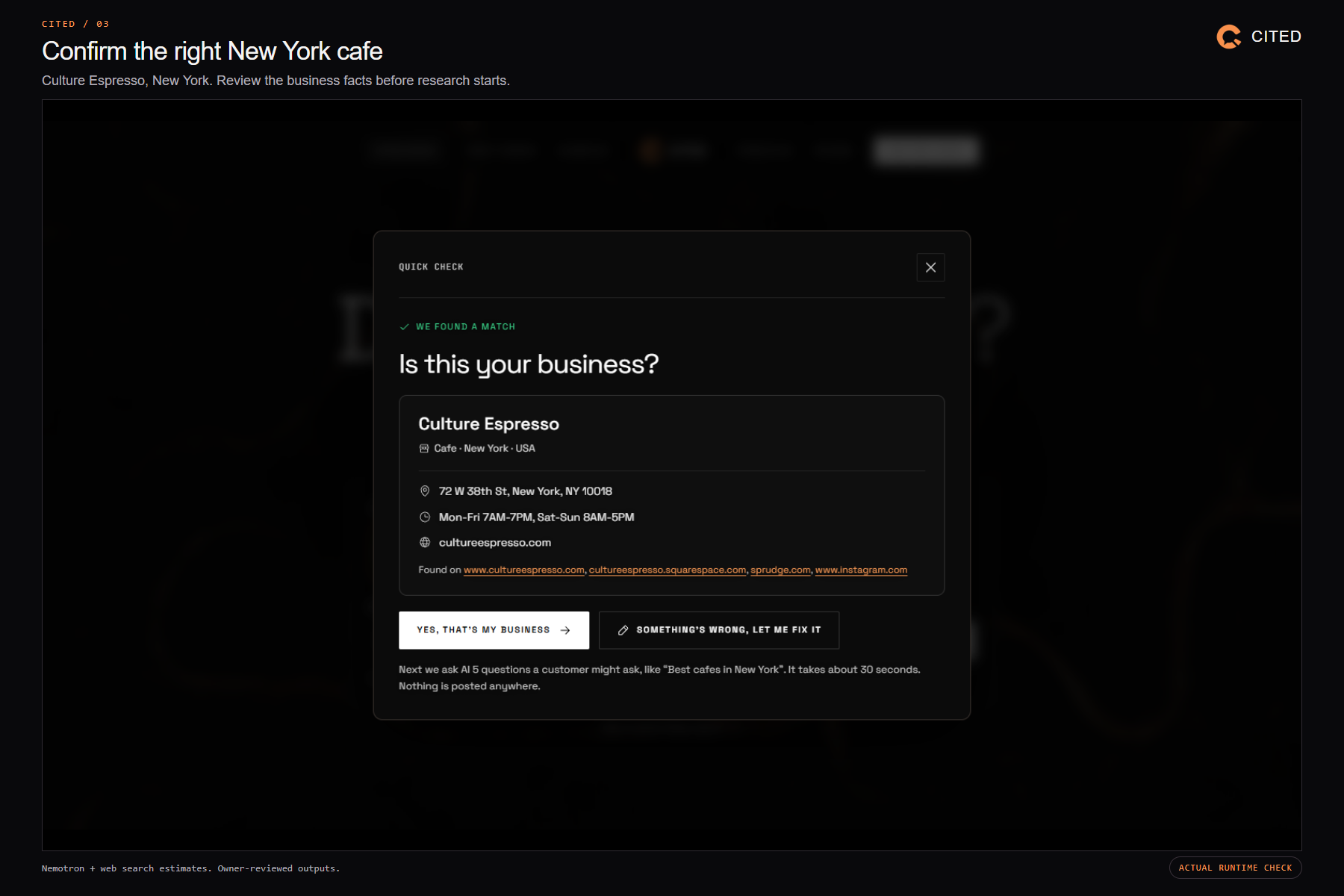
Confirm Culture Espresso in New York before research starts, with business details and source links.
-
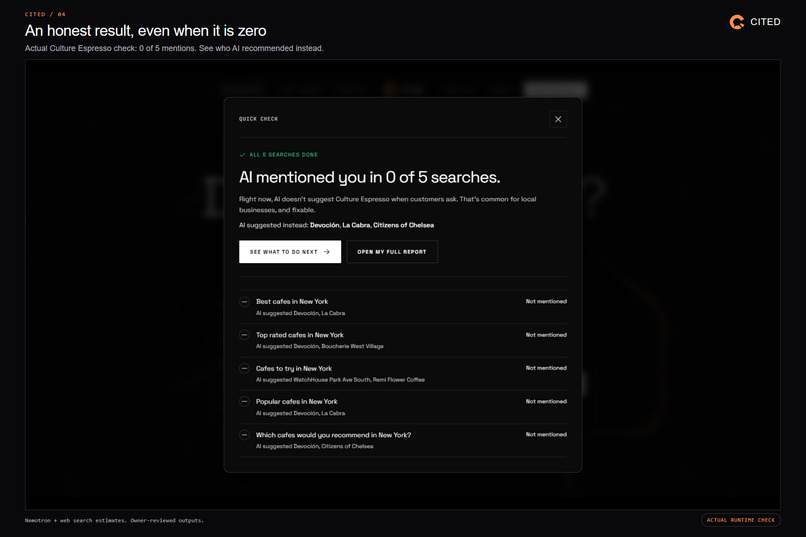
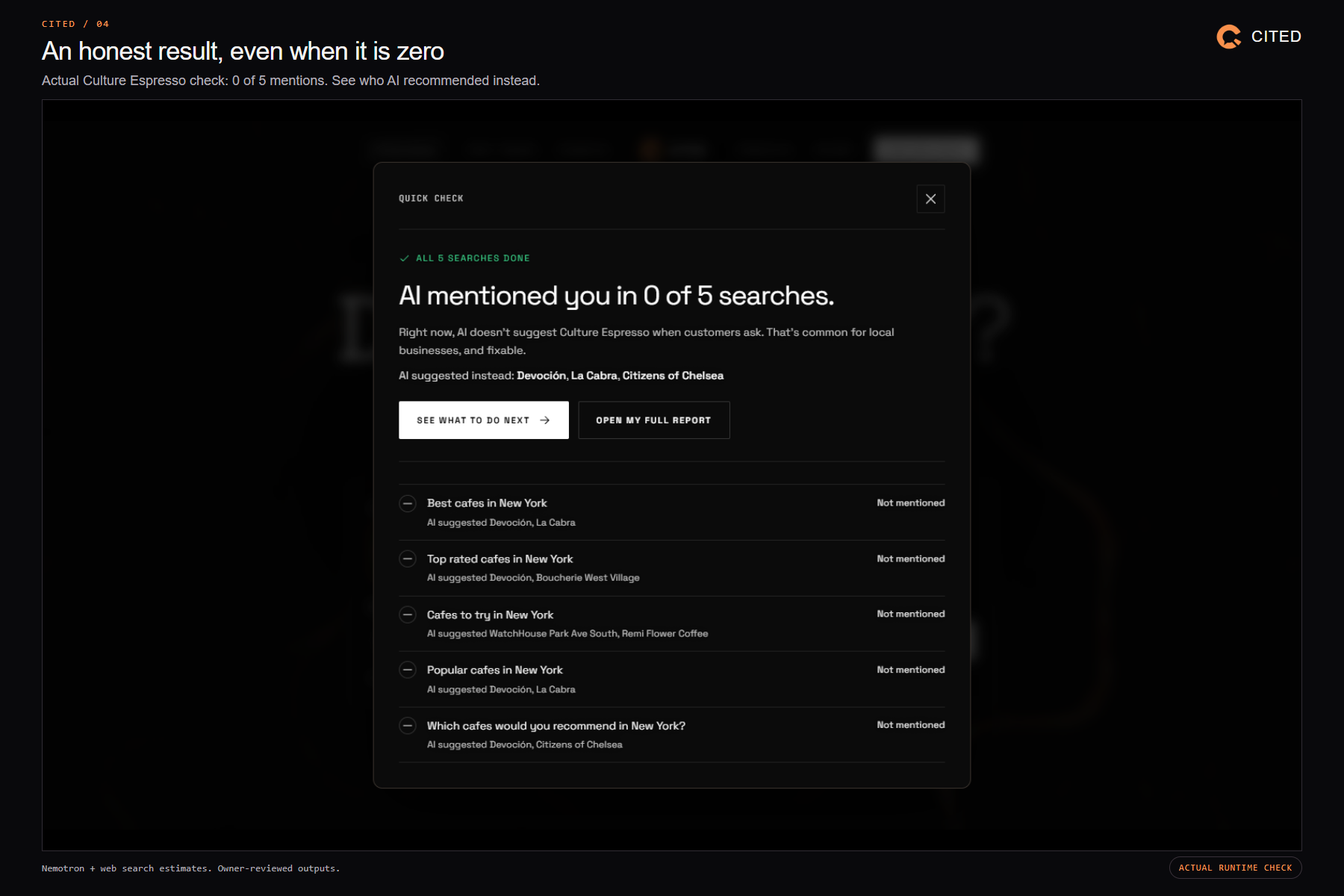
An actual quick check: 0 of 5 mentions. See which cafes AI recommended instead.
-
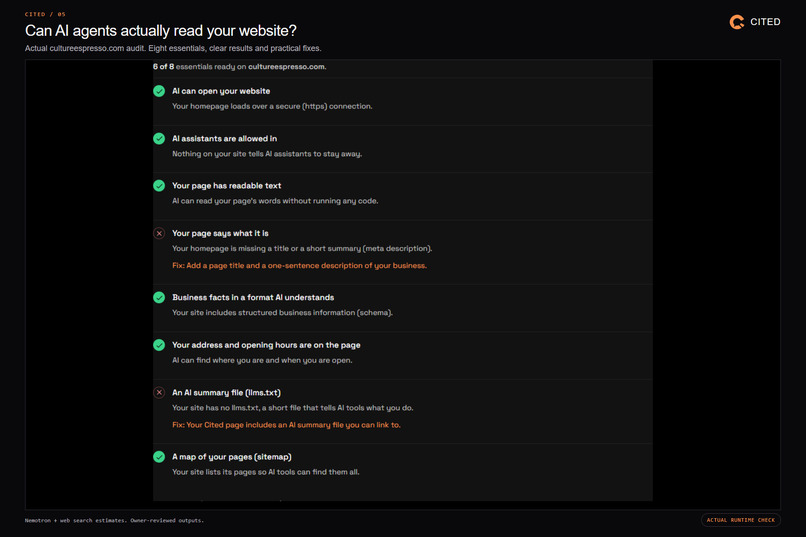
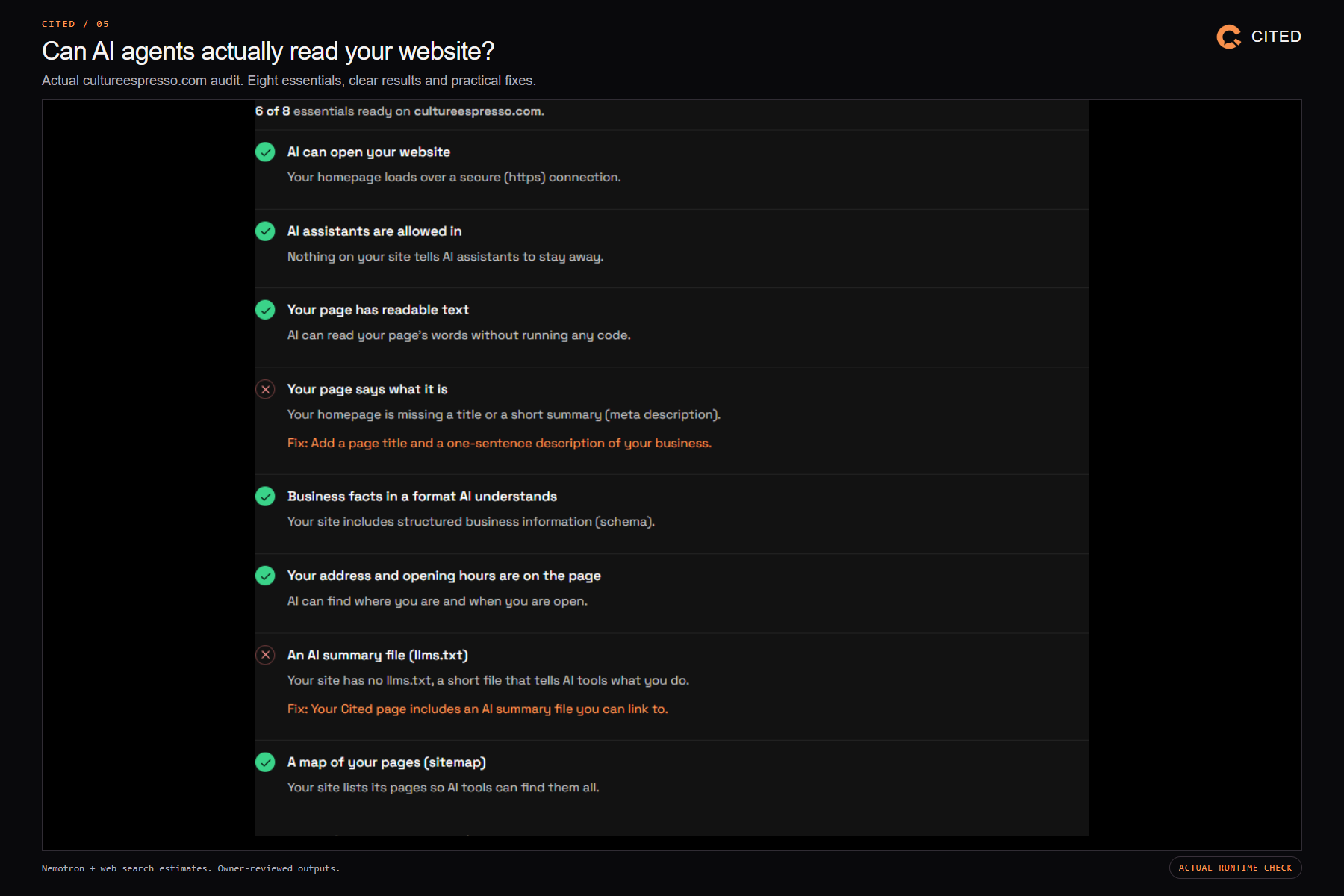
Culture Espresso’s website passes 6 of 8 agent-readiness checks, with practical fixes for missing essentials.
-
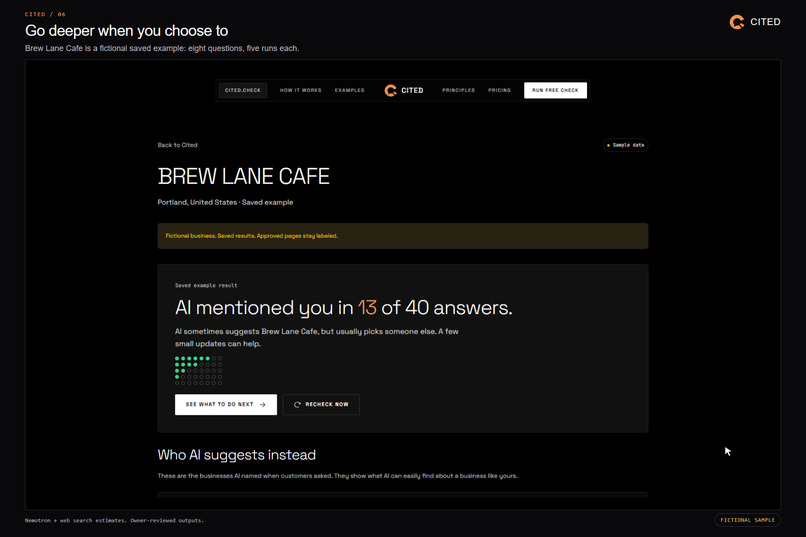
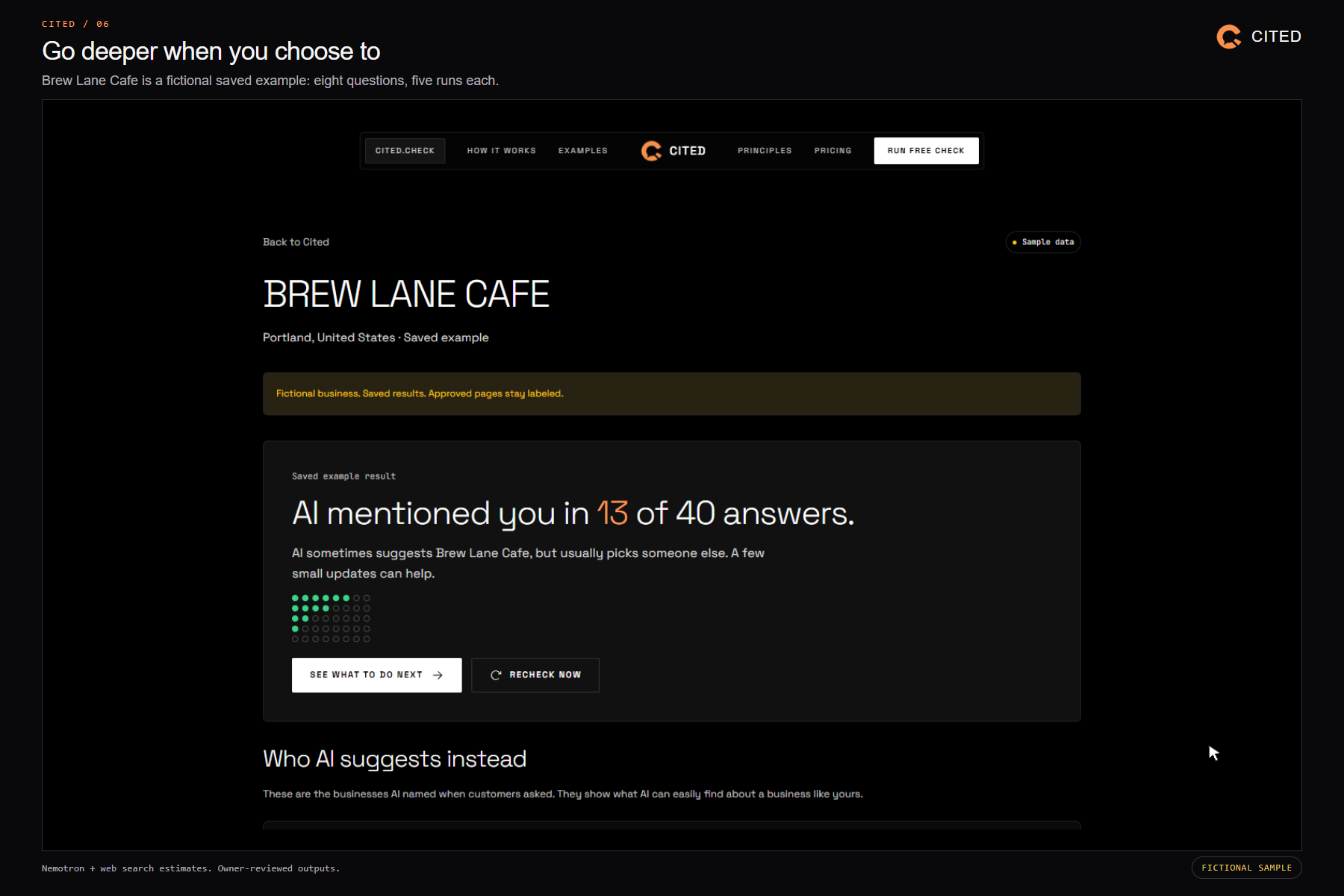
Explore a fictional deep report: eight customer questions, repeated five times each.
-
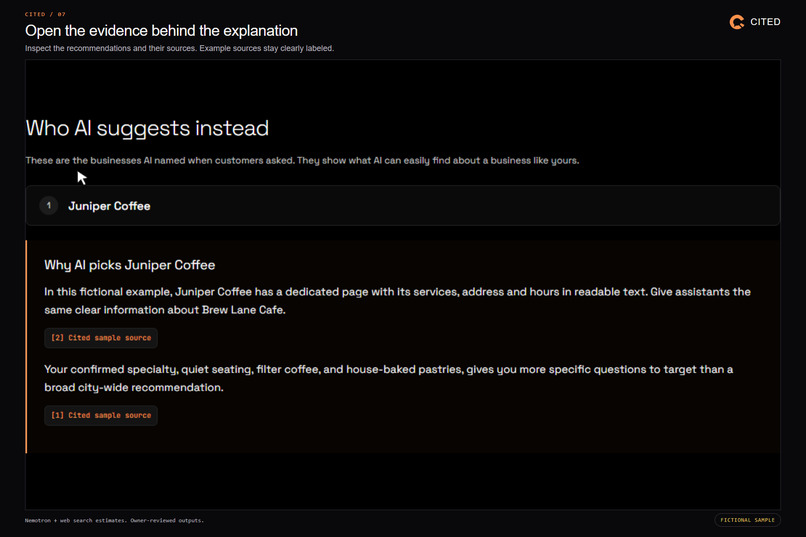
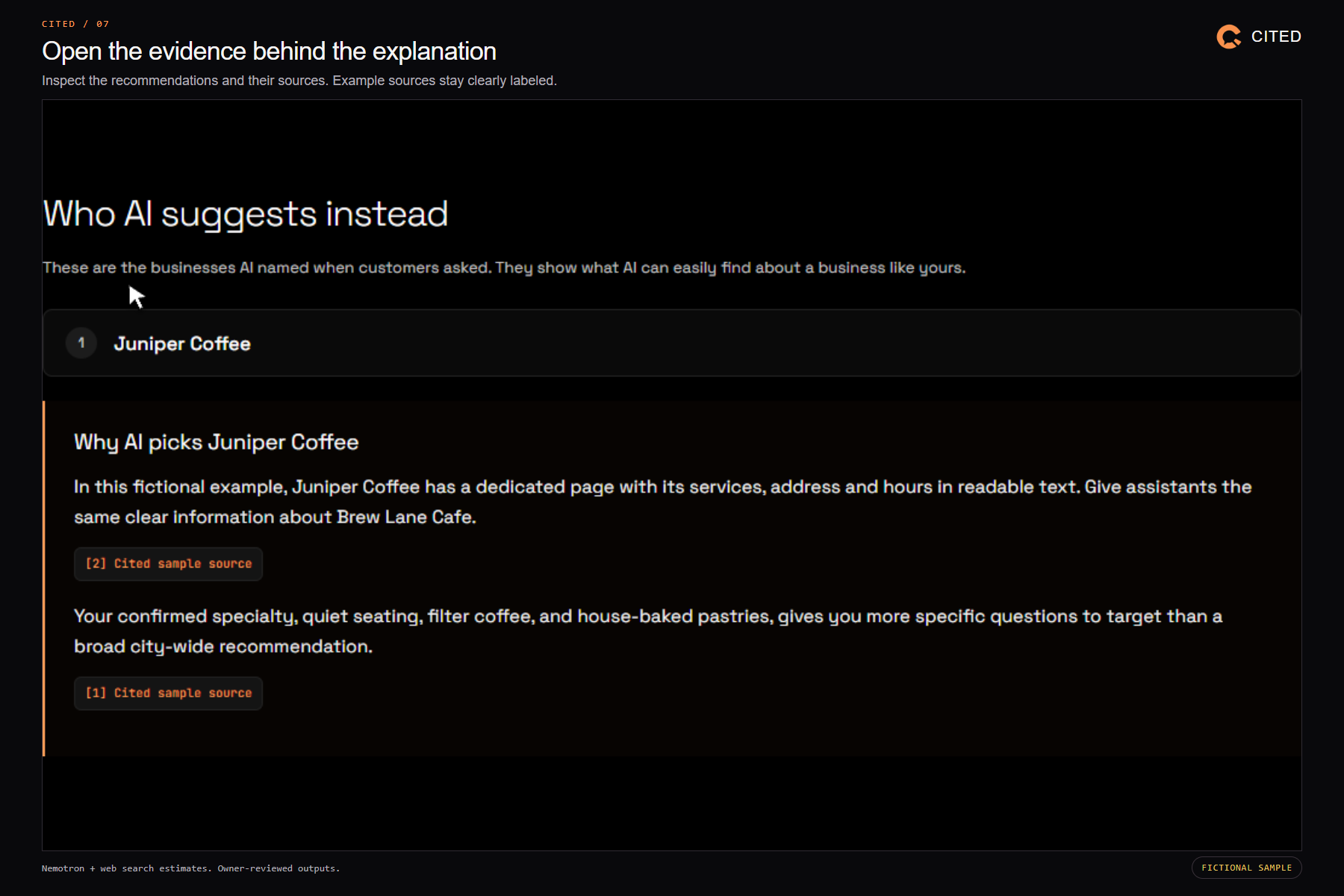
See why another business was recommended, with numbered sources. Fictional example sources are clearly labeled.
-
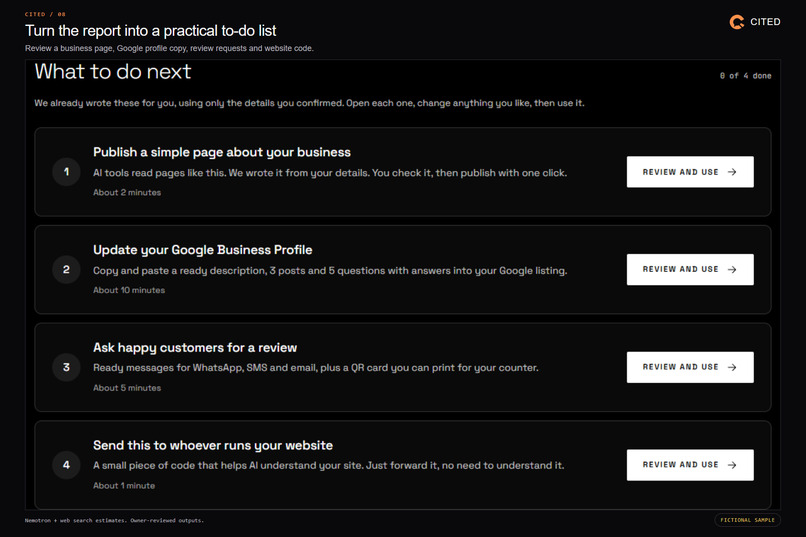
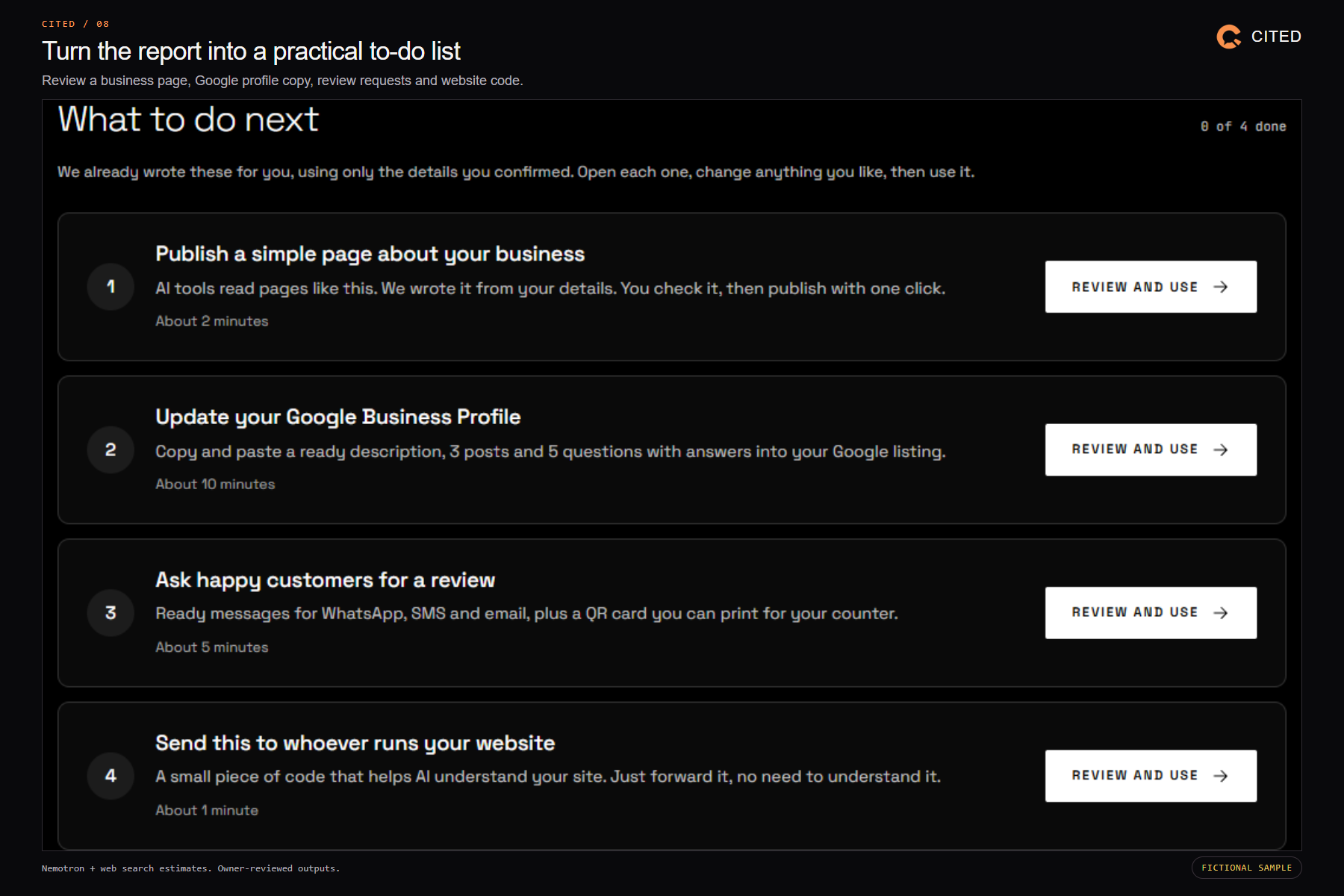
Review ready-to-use fixes: a business page, Google profile copy, review requests and website code.
-
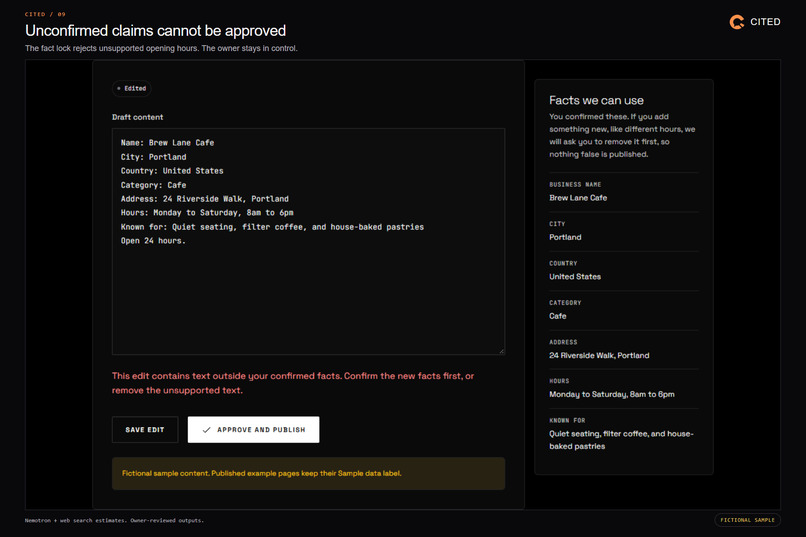
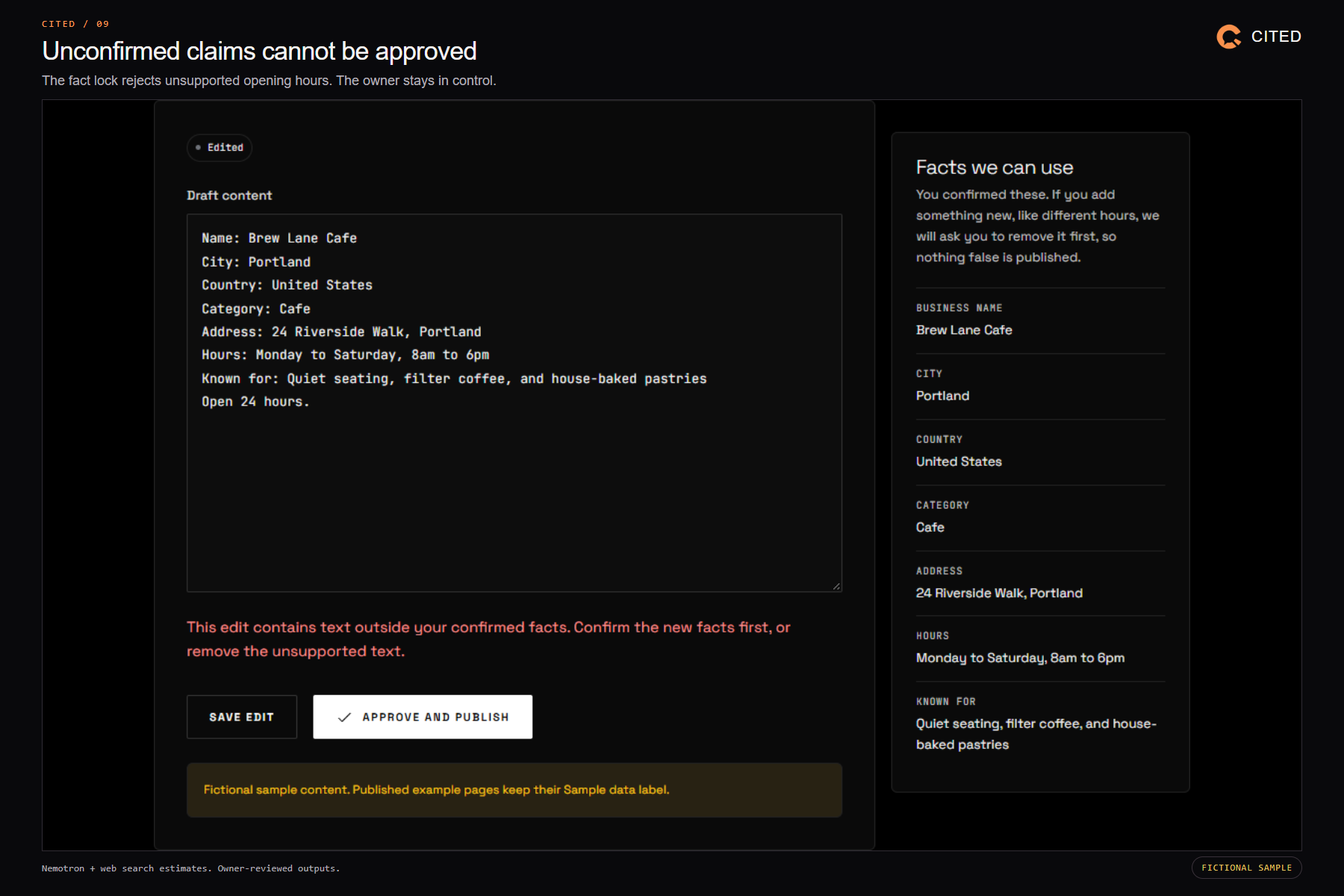
The fact lock blocks unsupported opening hours before approval. Owners stay in control.
-
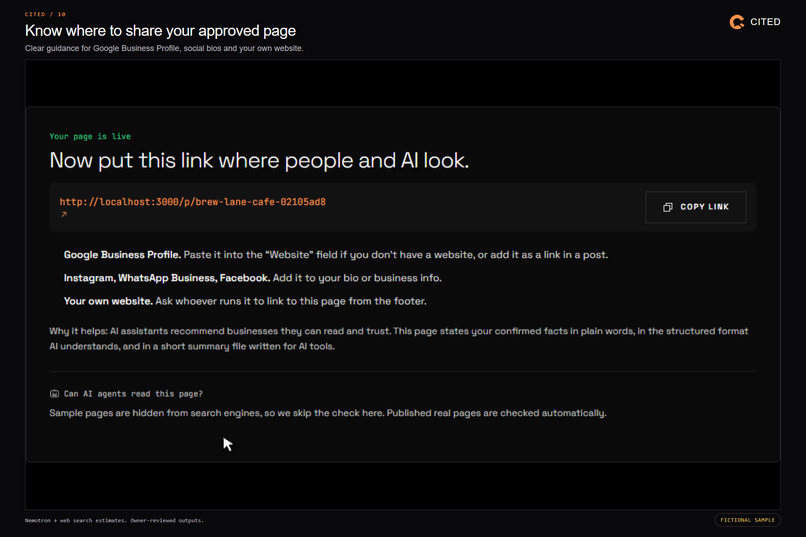
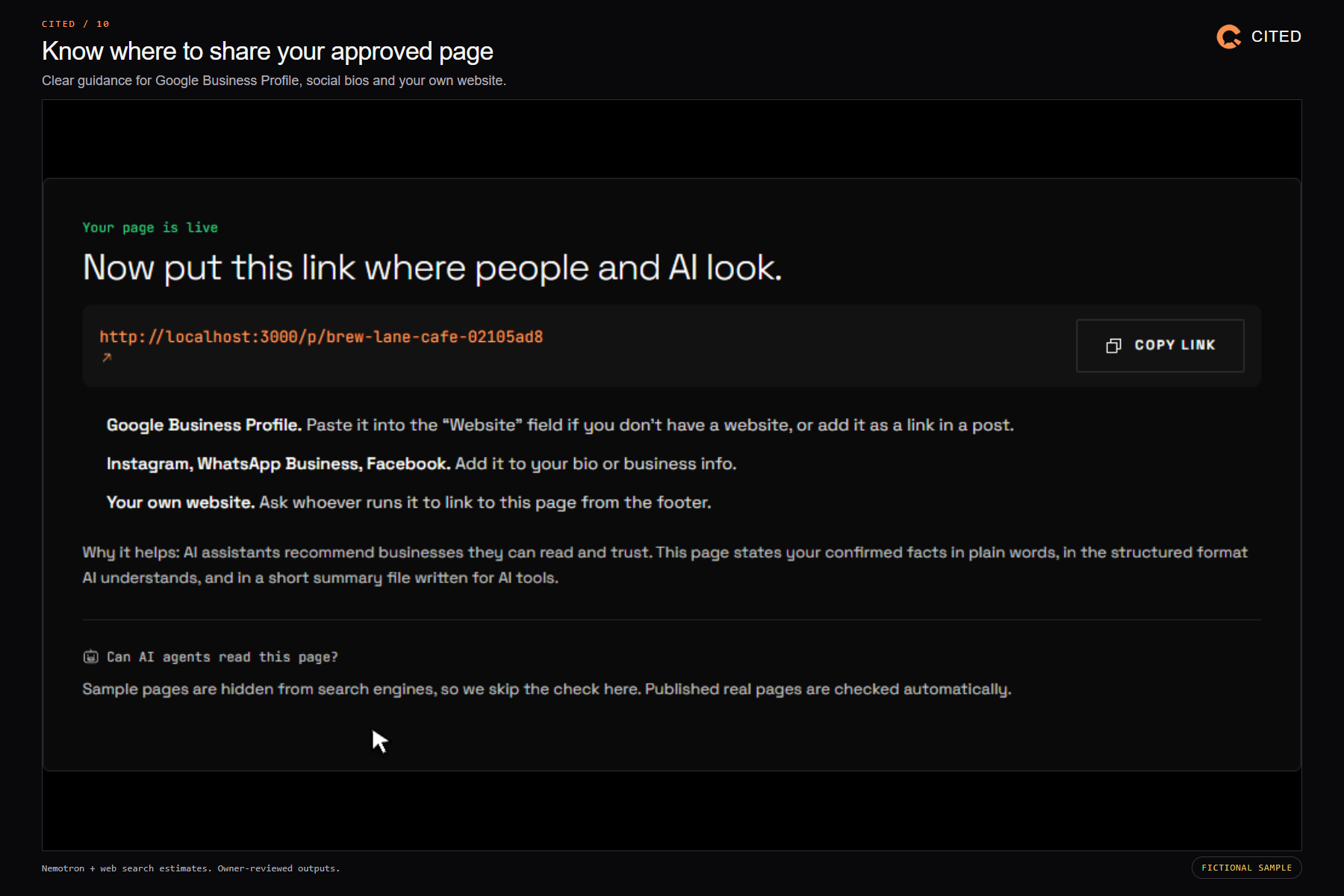
After approval, see where to share your page: Google Business Profile, social bios and your website.
-
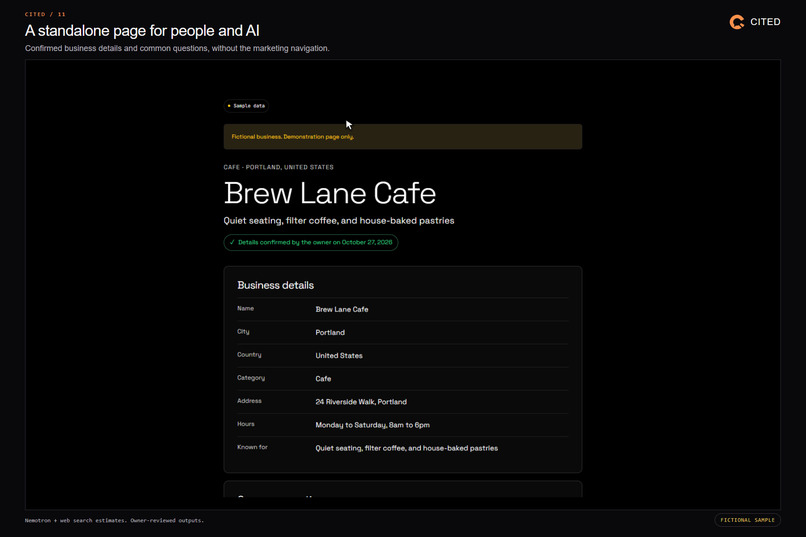
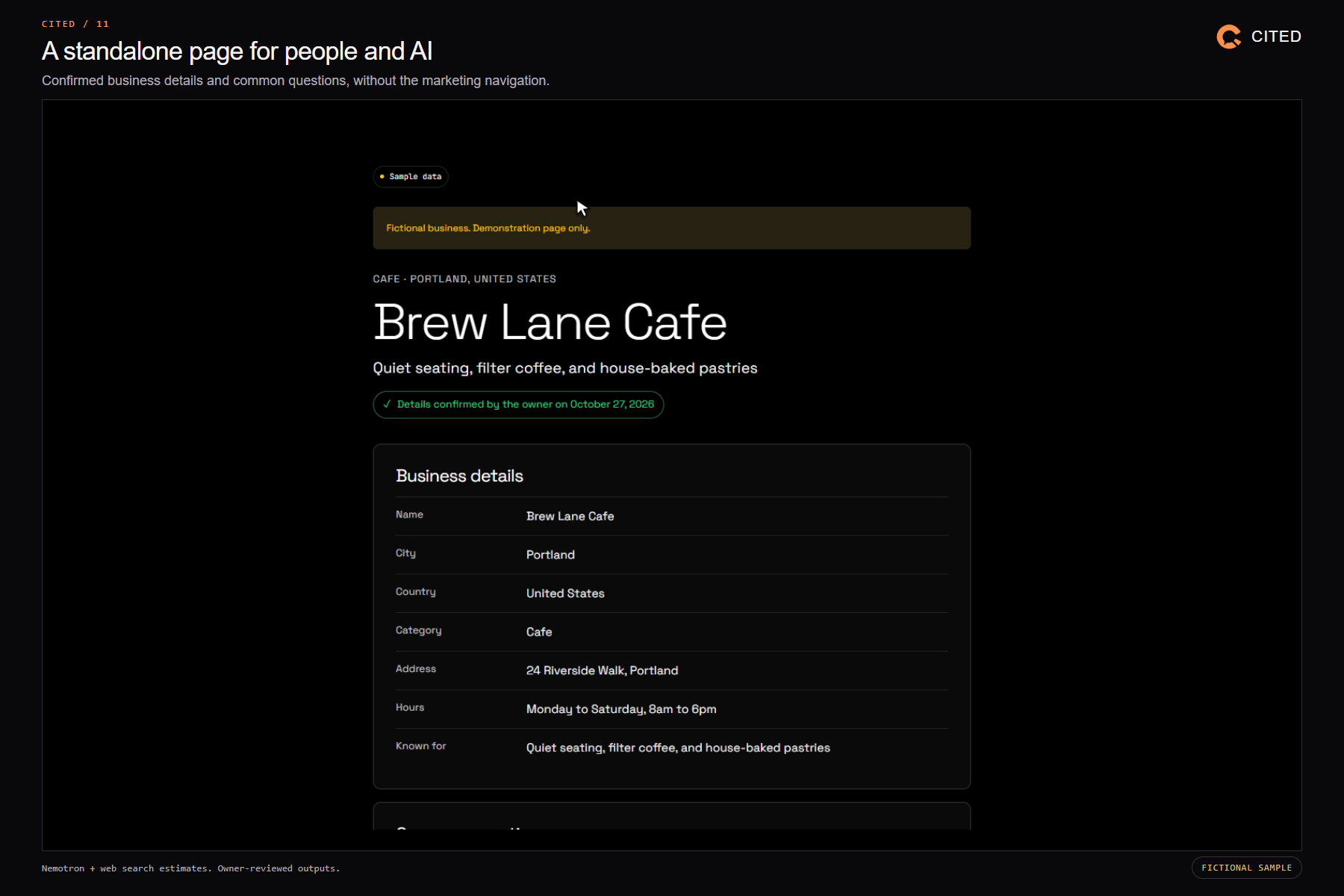
A standalone, owner-approved business page with confirmed details and FAQs. This example is fictional.
-
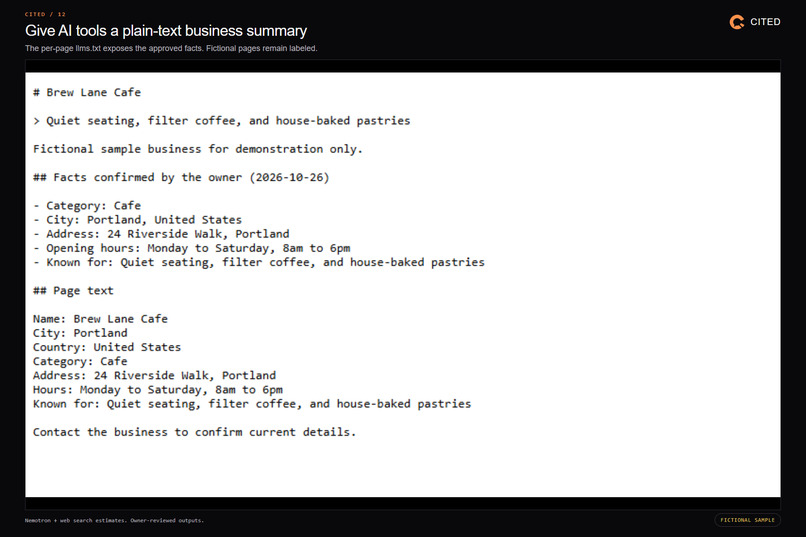
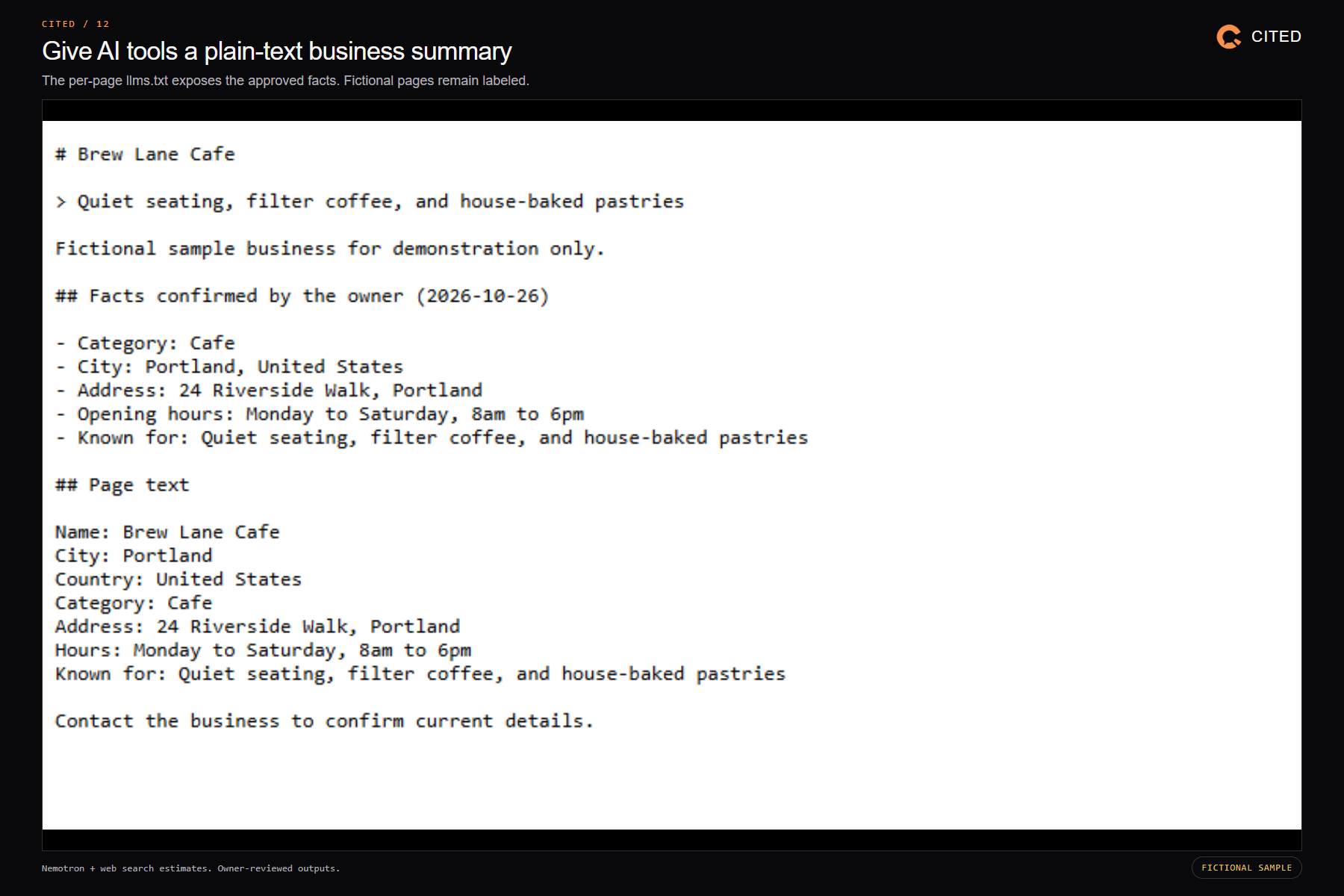
A per-page llms.txt gives AI tools a plain-text version of approved facts. Fictional sample shown.

Inspiration
I build websites and run a small SaaS, and one night I did something I had never done: I asked ChatGPT the questions my customers might ask, to see if I would come up. It named three competitors and not me.
I had no idea why, and no idea what to do about it. If a developer who builds for the web struggles to understand this, what does a cafe or clinic owner do?
When customers ask AI "where should I go?", small businesses need a way to understand how they appear. I wanted to build the tool I wished I had that night.
What it does
Cited answers two connected questions: Does AI recommend your business? Can AI agents read your website? It turns the findings into practical fixes the owner reviews and approves.
You enter a business name and city, choose a check, and confirm the business details Cited found.
- Quick check: Five everyday category-and-city questions, such as "Best cafes in New York." Each runs once, with answers and sources appearing as they finish.
- Deep research: Eight questions, including three purchase-intent questions, each run five times. The report shows observed counts, explains competing recommendations with citations, and provides a prioritized next-step list.
Cited also checks eight website-readiness essentials: HTTPS access, AI crawler permissions, readable text without JavaScript, page metadata, business schema, address and hours, an AI summary file, and a sitemap. Missing items get plain-language fixes. Where available, it shows Vercel's Is Agentic score; otherwise, it links to their full audit.
The fix pack includes:
- A hosted business page with confirmed details and FAQs.
- Google Business Profile copy, posts, and Q&A.
- Review-request messages, with a QR card when a review link is confirmed.
- LocalBusiness schema markup for the owner's website.
Quick checks use fact-only templates. Deep research adds model-assisted drafting and verification. A fact lock blocks unsupported edits from approval. Nothing is published without the owner's approval, and Cited does not automatically post to Google or send review requests.
Approved real business pages include structured data and a plain-text summary at /p/<business>/llms.txt. After publishing, Cited explains where to share the link and automatically checks the real page's agent readiness. Manual and opt-in weekly rechecks help owners compare visibility over time.
How we built it
I built Cited with Next.js, React, TypeScript, and Tailwind CSS, deployed on Vercel, with Supabase and PostgreSQL for persistence and authentication.
All runtime AI calls go through Nebius Token Factory, with a separate job for each NVIDIA Nemotron model:
- Nemotron Nano handles business lookup and source-grounded recommendation answers.
- Nemotron Super analyzes competing recommendations in deep research, then independently checks findings against their cited excerpts.
- Nemotron Ultra prioritizes and drafts the deep-research fix pack, then checks it against confirmed facts.
Tavily provides runtime web search and page extraction. Quick checks use search excerpts; deep research adds full-page extraction. Source URLs, excerpts, and timestamps are stored with the research.
The website-readiness checks are deterministic server-side checks, separate from the AI visibility estimate. Public pages use server-rendered content, JSON-LD, and per-page AI summaries, alongside site-wide robots, sitemap, and summary files.
Challenges we ran into
- Waiting loses users. I split the workflow into quick checks and optional deep research. Parallel requests, incremental saving, and per-question progress keep the experience useful while work continues.
- Unnatural questions distort the result. Quick checks use broad searches people recognize. More specific purchase-intent questions belong in deep research.
- Answers change between runs. Deep research repeats each question five times. Quick results remain clearly labeled single-pass snapshots.
- Citations need verification. Deep findings must reference stored sources and pass a separate model verification step. Unsupported findings are filtered out.
- Being mentioned and being readable are different problems. I added website checks and an approved public page so the report leads to something an owner can actually improve.
- Measurement has limits. Cited estimates visibility using Nemotron plus web search, rather than querying live ChatGPT. Readiness checks and outlook labels are useful heuristics, not ranking guarantees or forecasts.
- Retries should preserve work. Completed answers are saved so a failed request does not force the whole check to restart.
Accomplishments that we're proud of
- A complete workflow from business confirmation to cited results, editable fixes, and an approved public page.
- AI visibility and website-readiness checks in one owner-friendly report.
- A fix that addresses the diagnosed problem: a readable page with structured facts and an AI summary.
- Fact-constrained drafts with explicit owner approval.
- An honest New York cafe demo, including a zero-mention result rather than a staged success.
- Clearly labeled fictional examples so judges can explore deep research and publishing without approving a real business's content.
What we learned
A bigger research pipeline does not automatically make a better product. The questions need to feel familiar, progress needs to reflect real work, and the result needs to give the owner a clear next action.
I learned to separate recommendation visibility from website readability, and to match model size to the job instead of sending every request to the largest model.
An observed "2 of 5 runs," with its evidence and limitations visible, is more useful than a flashy score that hides how it was produced.
What's next for Cited
- Measure production latency and improve completion rates.
- Expand website checks while keeping the explanations useful to non-technical owners.
- Make recurring reports easier to compare over time.
- Add source-grounded blog drafts for relevant purchase-intent questions.
- Add a GitHub integration that proposes website changes through pull requests.
- Build an agency workspace with client reports.
- Explore direct sampling of AI assistants, clearly separated from the current Nemotron-plus-web-search estimate.
Built With
- nebius-token-factory
- next.js
- nvidia-nemotron
- postgresql
- react
- supabase
- tailwind-css
- tavily
- typescript
- vercel

