-
-
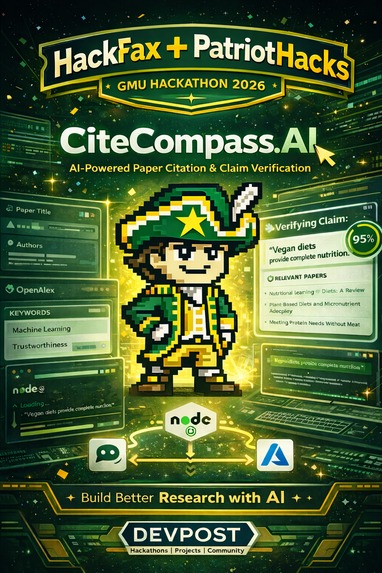
CiteCompass AI Evidence workspace for Mason Patriots
-
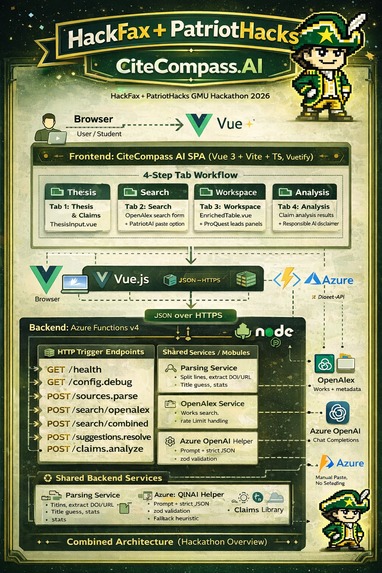
Architecture
-
-
Project Story
Inspiration
CiteCompass AI was inspired by my own experience as a graduate student pursuing a second master’s degree. During my first master’s program, I regularly spent countless hours searching for academic papers that truly supported the claims I wanted to make in my research. The challenge was not finding sources — it was finding the right sources.
Many papers appeared relevant based on titles or abstracts, but once examined more closely, they did not meaningfully support the argument I was constructing. The process was time-consuming, cognitively draining, and often inefficient.
At the same time, AI tools like ChatGPT were rapidly entering academic environments, raising concerns about integrity and overreliance. I began to wonder: instead of replacing research, could AI be used to strengthen it?
CiteCompass AI was built to answer that question.
What It Does
CiteCompass AI helps students evaluate whether their sources truly support their claims.
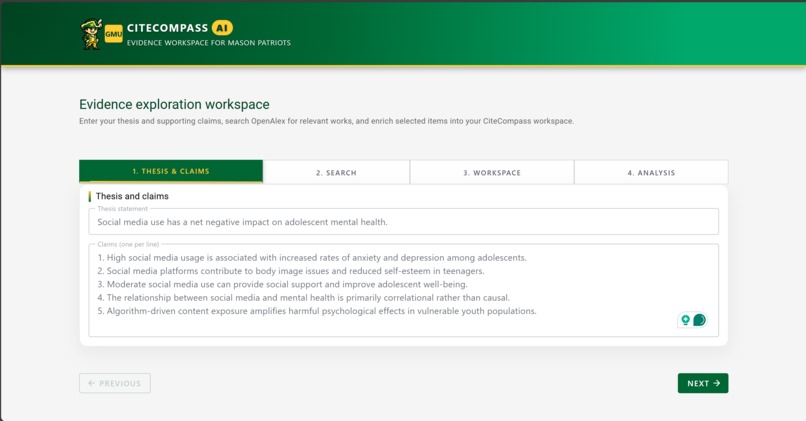
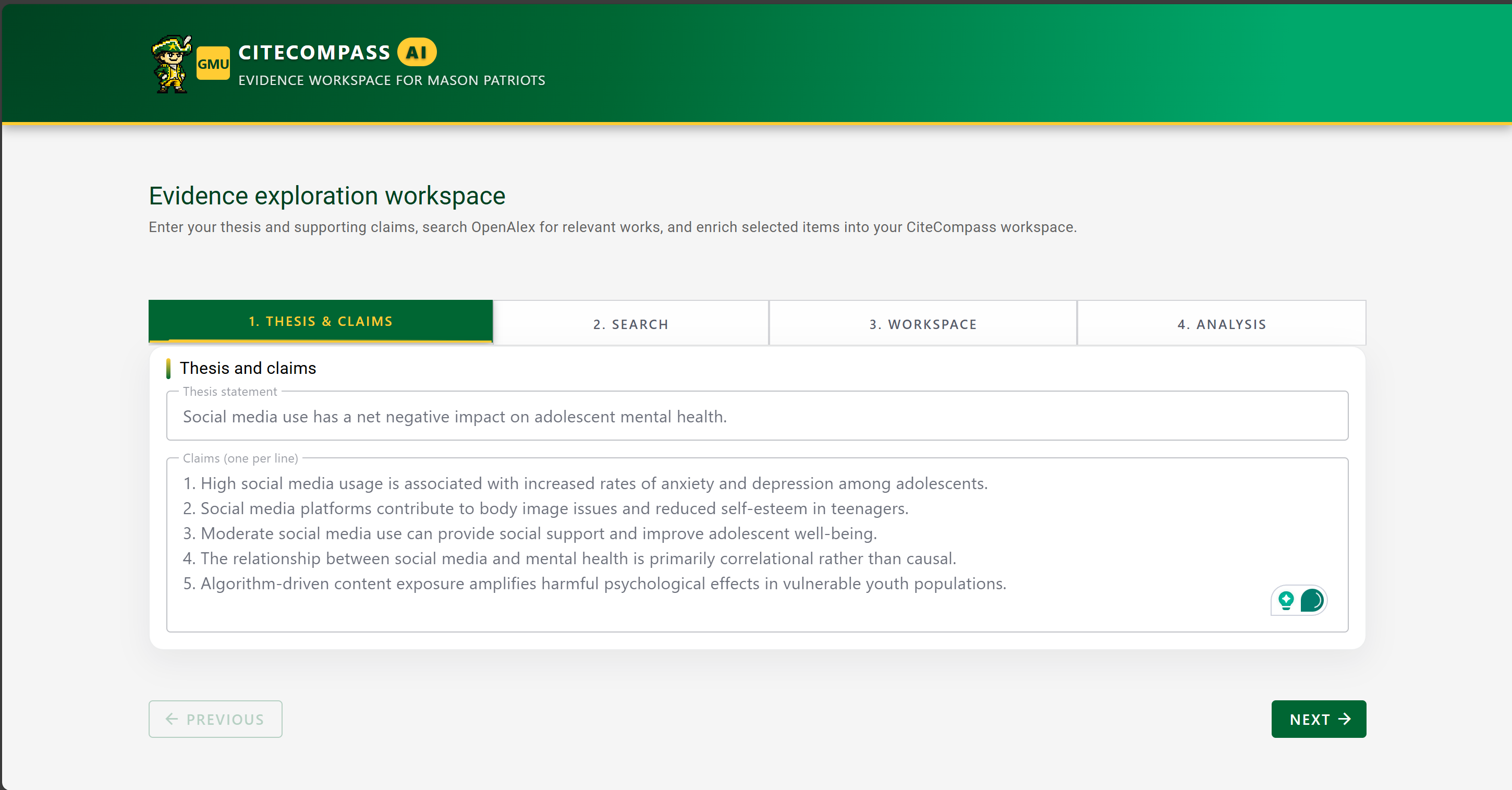
Users input a thesis and structured claims. The system then:
- Retrieves academic metadata using OpenAlex
- Optionally incorporates additional results via PatriotAI
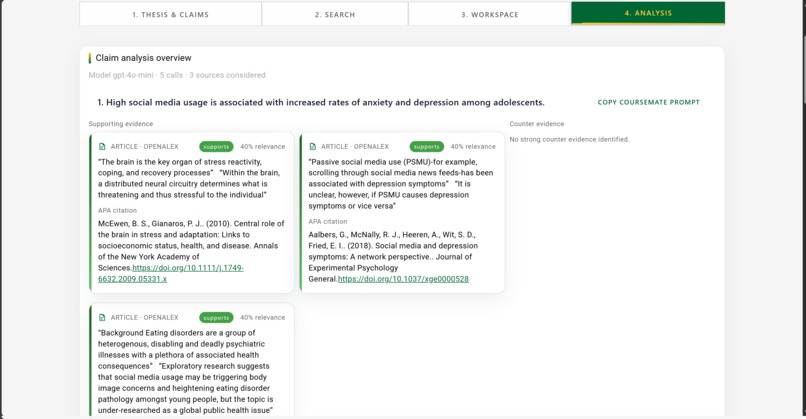
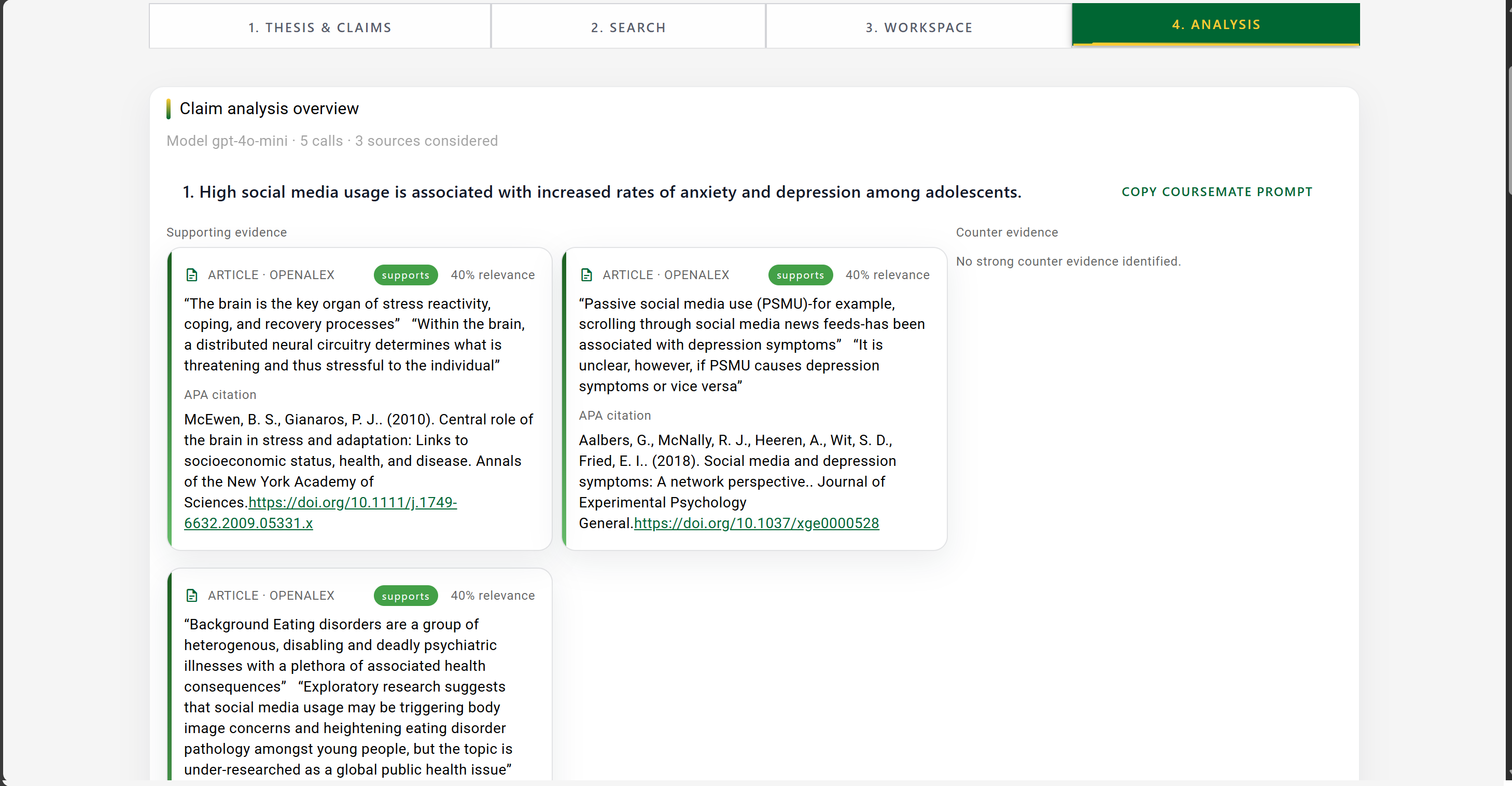
- Uses Azure OpenAI to score relevance
- Classifies each source’s stance (supports, mixed, counter, neutral)
- Synthesizes structured research insights
The core innovation is the scoring system that helps students filter out irrelevant research and focus on evidence that meaningfully contributes to their argument. Instead of reading dozens of marginally related papers, students can prioritize high-impact sources aligned with specific claims.
The goal is not to automate writing — it is to improve research quality and critical thinking.
How It Was Built
CiteCompass AI was built as a solo project using:
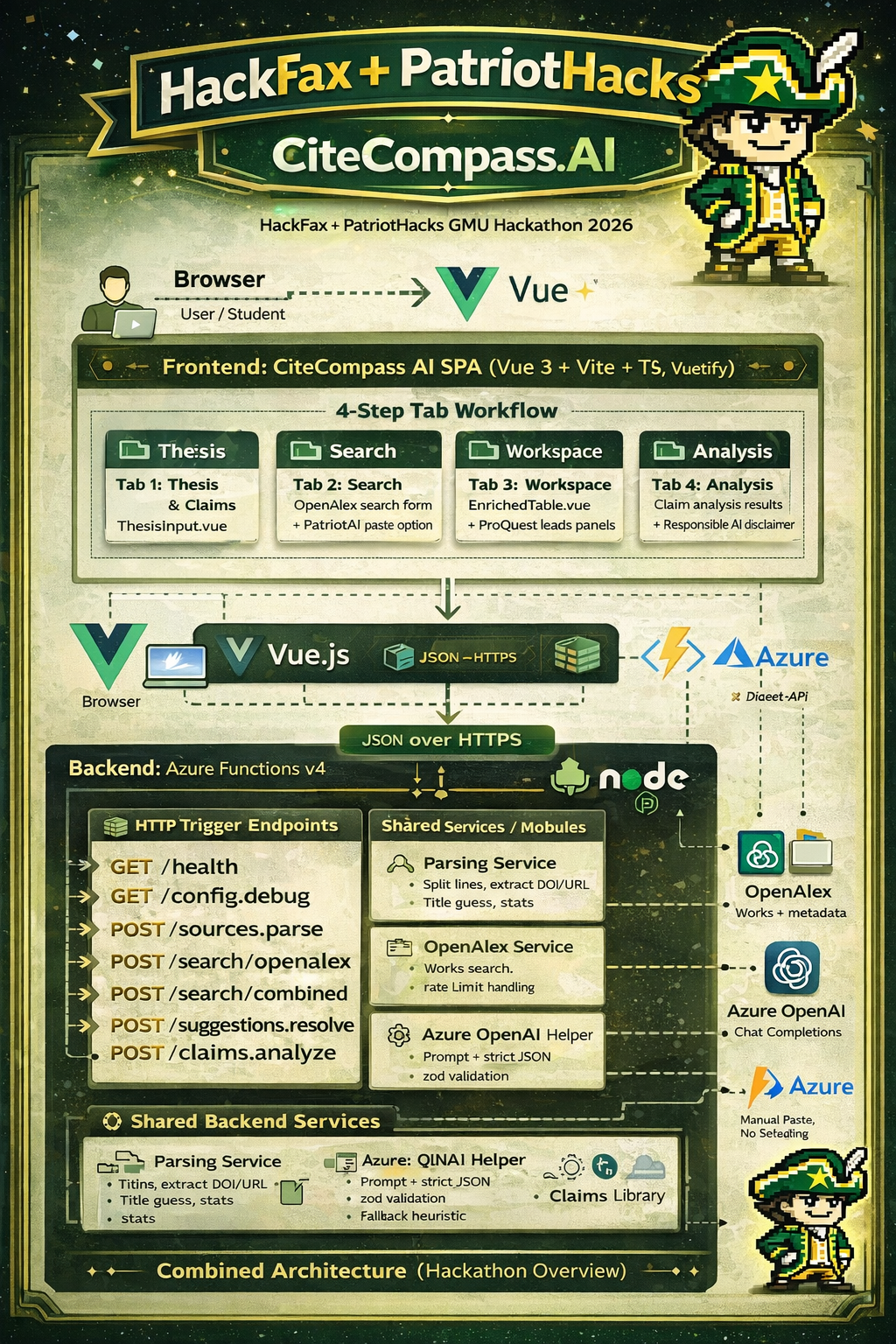
- Vue 3 + TypeScript + Vuetify for a structured tab-based frontend workflow
- Azure Functions (Node + TypeScript) for server-side processing
- Azure OpenAI for relevance scoring, stance detection, and synthesis
- OpenAlex API for academic metadata retrieval
- PatriotAI integration for additional academic search results
The application architecture separates user interaction, search retrieval, AI analysis, and presentation layers to maintain clarity and reliability.
Azure OpenAI is used strictly on the server side to ensure controlled and responsible use of generative AI.
Challenges
The most significant technical challenge involved Azure infrastructure. During development, one of the Azure Functions was unexpectedly lost in the cloud environment, requiring recreation and reconfiguration under time constraints.
This required rebuilding the function, restoring environment variables, and revalidating API connections to Azure OpenAI. It reinforced the importance of deployment discipline, backups, and cloud configuration management — especially in a hackathon setting.
Another challenge was ensuring reliable structured output from Azure OpenAI. Prompt engineering had to be refined to consistently return usable relevance scores and stance classifications.
What I Learned
Through building CiteCompass AI, I learned:
- How to integrate and deploy Azure OpenAI in a structured backend environment
- How to design AI prompts for consistent analytical output
- How to integrate PatriotAI into a larger research workflow
- How fragile cloud deployments can be without proper safeguards
- How to design AI systems that support — rather than replace — academic reasoning
Most importantly, I learned that AI tools can be designed to encourage better scholarship when structured carefully.
Closing Reflection
CiteCompass AI is not designed to shortcut research. It is designed to make research more intentional.
By helping students identify strong evidence, recognize opposing viewpoints, and filter out weak or irrelevant sources, the platform promotes rigor, balance, and responsible AI use in higher education.
As AI becomes increasingly embedded in academia, tools like CiteCompass AI aim to ensure that technology strengthens — rather than undermines — critical thinking.


Log in or sign up for Devpost to join the conversation.