-
-
Landing page
-
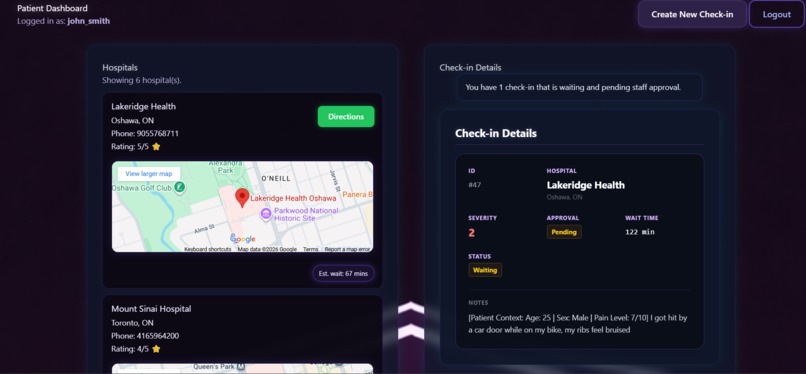
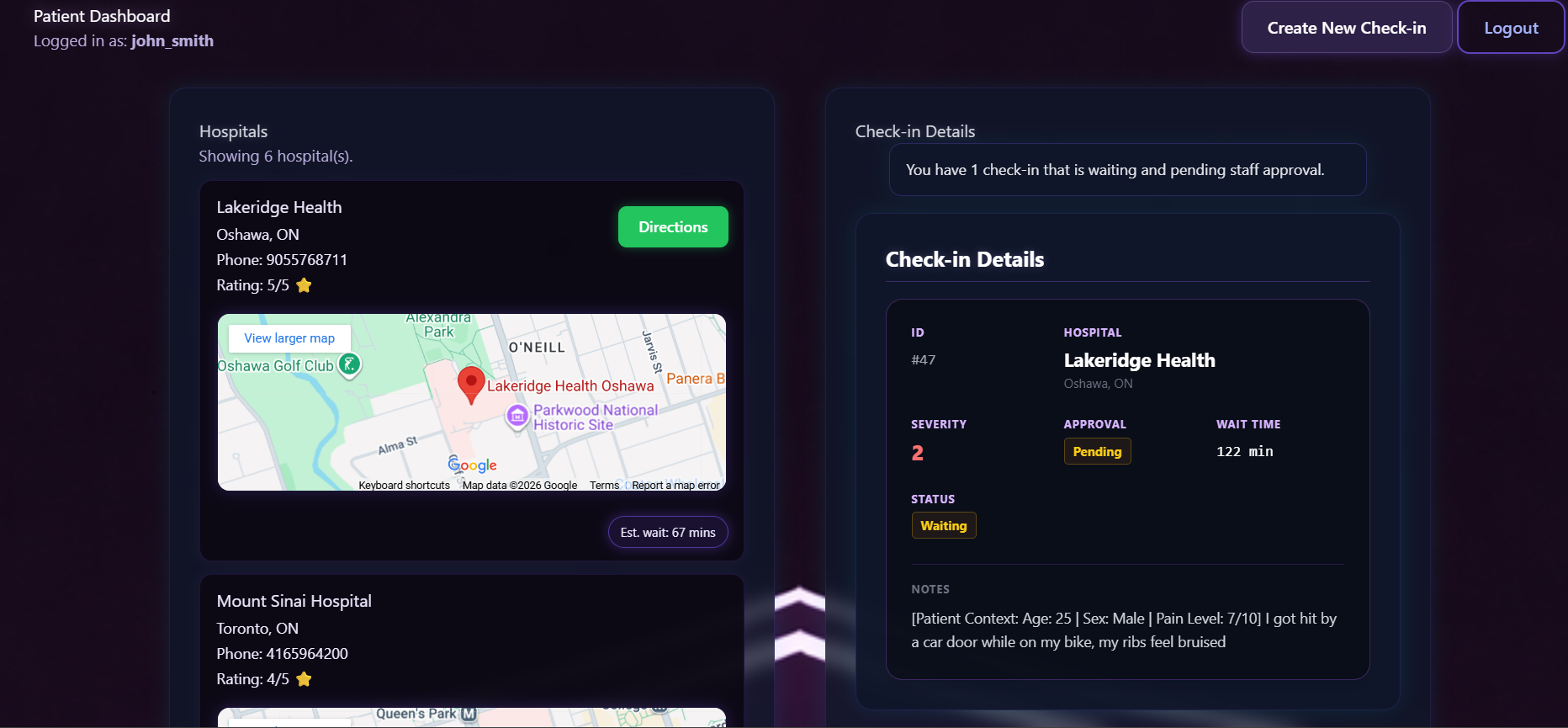
Patient homepage (note: AI suggested severity & predicted wait time)
-
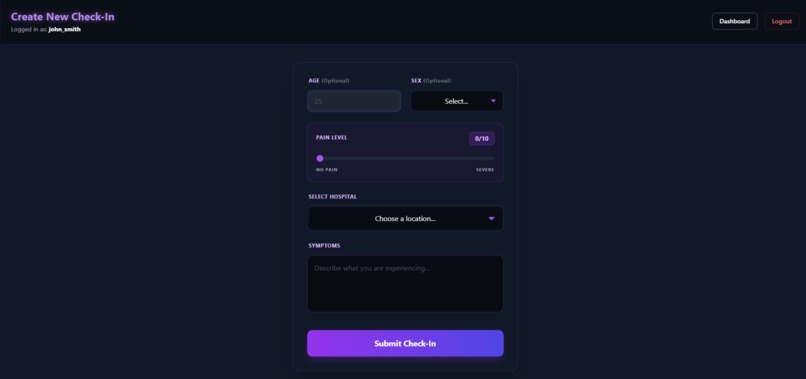
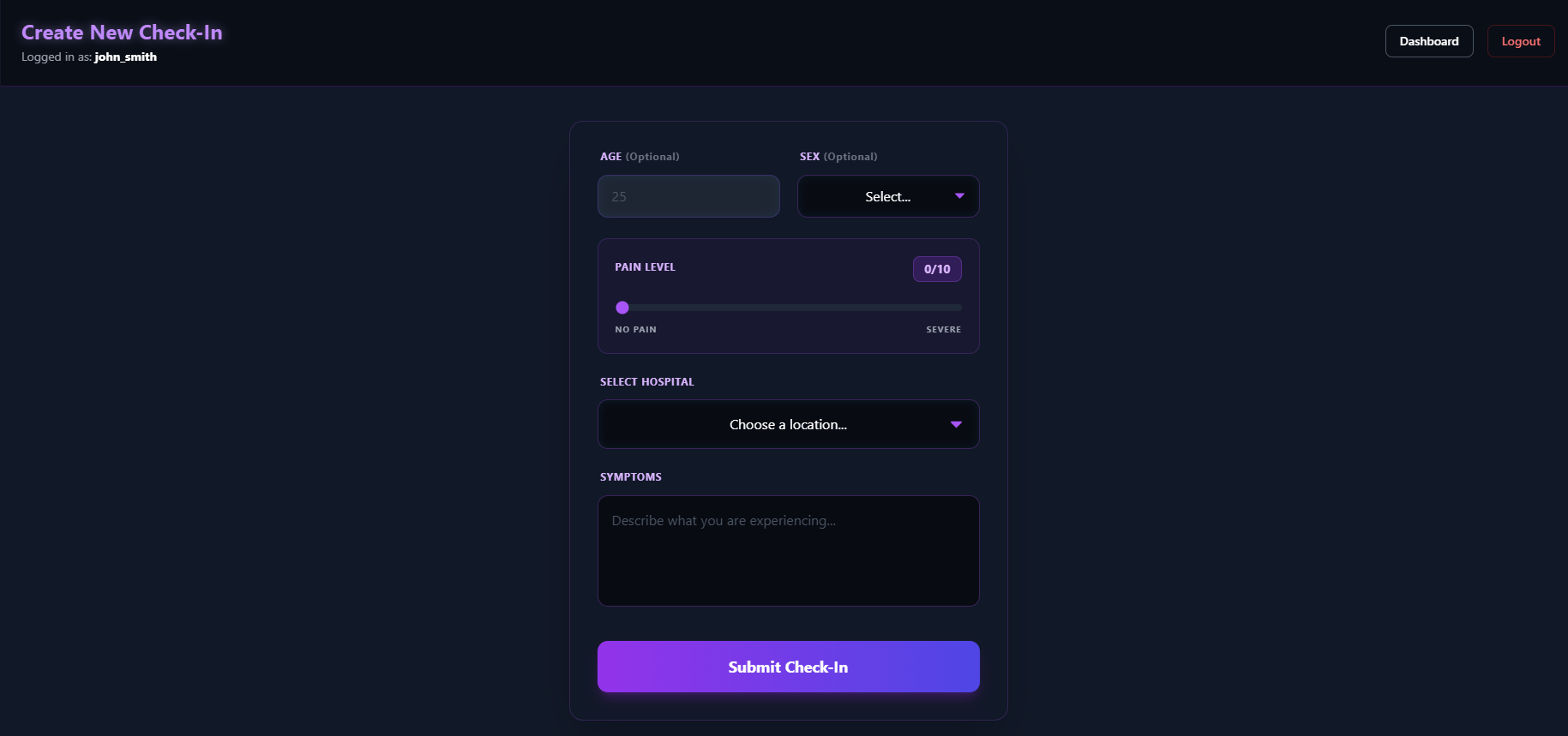
Patient check-in form
-
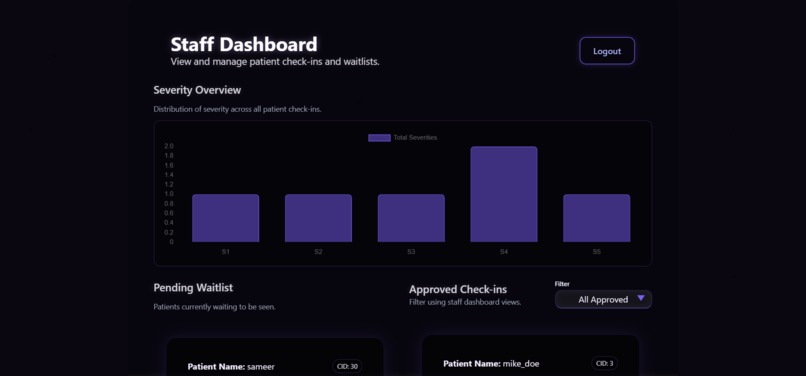
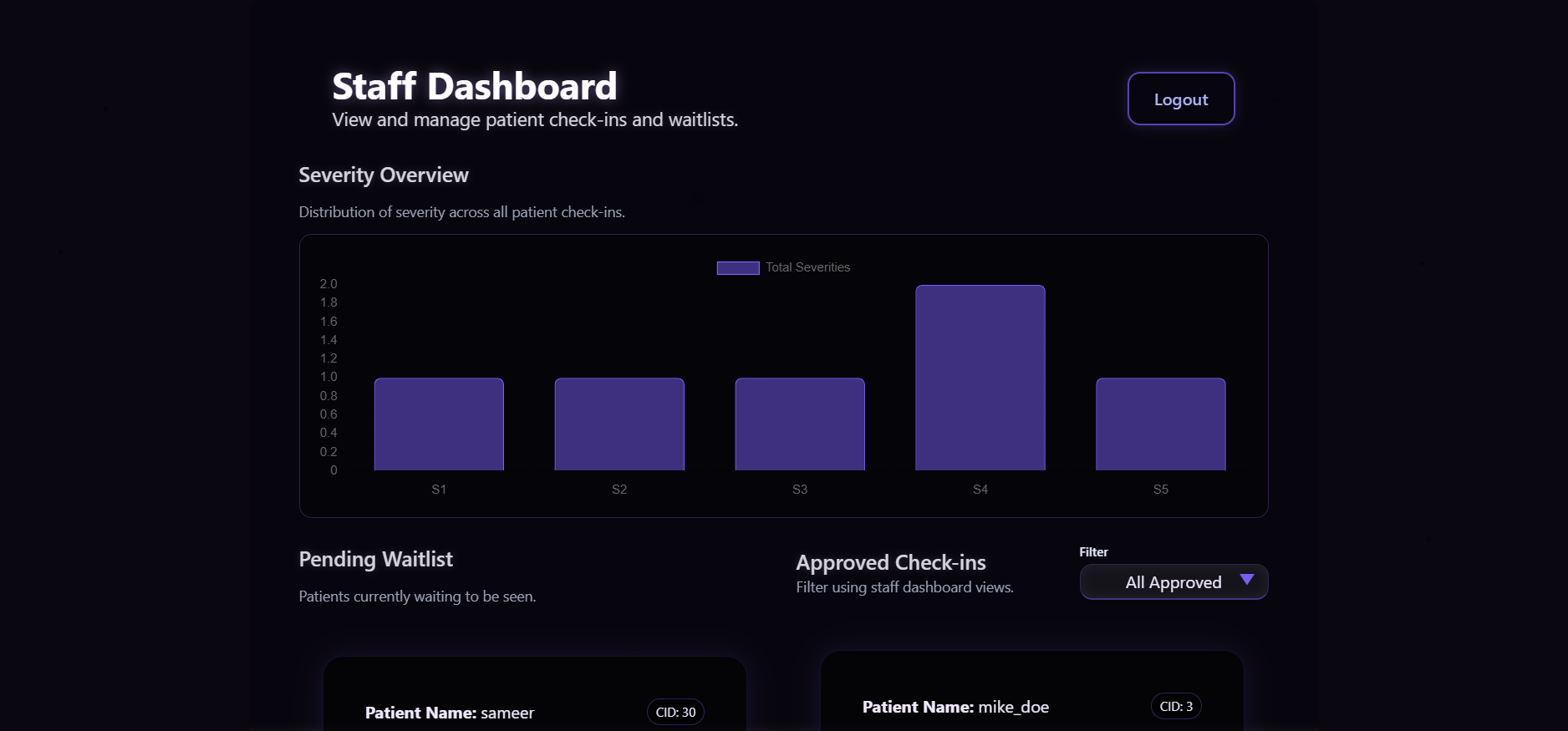
Staff homepage
-
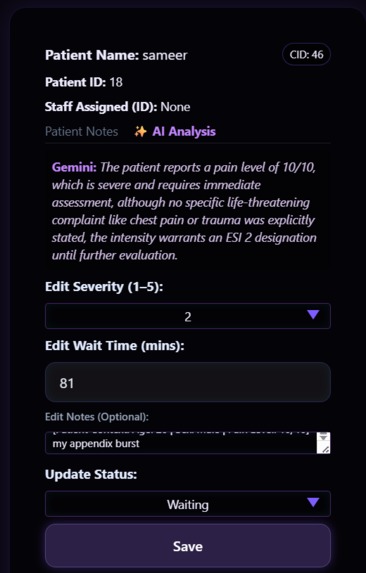
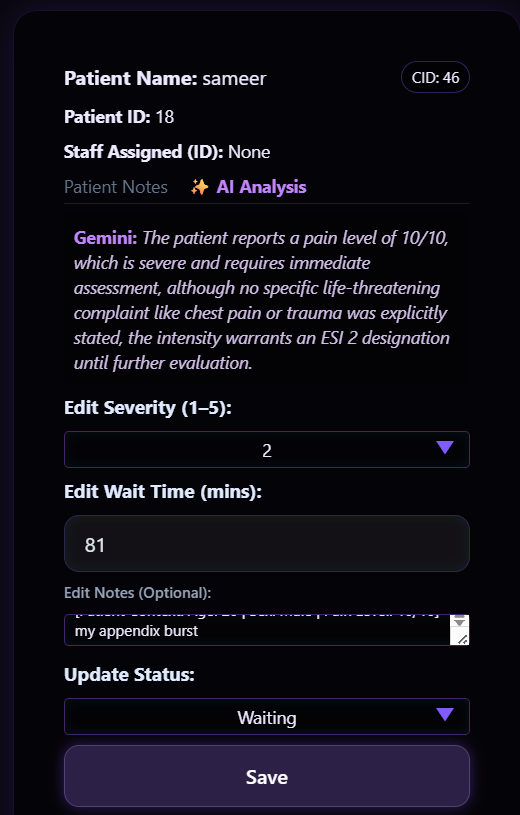
Example of AI Suggestion (Staff homepage)
-
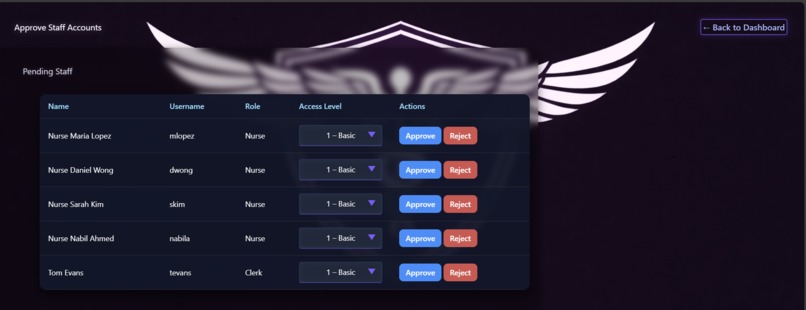
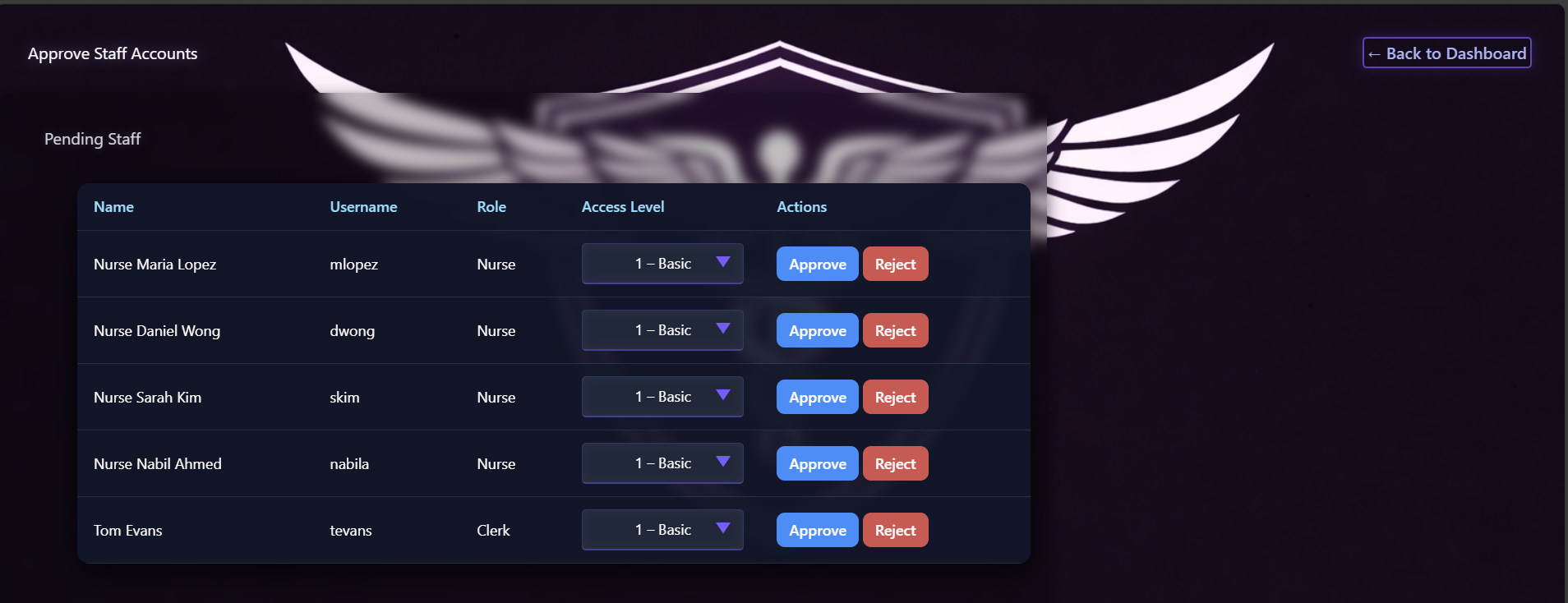
Admin homepage
Inspiration
Emergency rooms are often overwhelming for both patients and medical staff. The long, uncertain wait times can increase stress, make it difficult for hospitals to manage patient flow efficiently, and make a patient's experience chaotic. This results in fewer people seeking help, because no one wants to spend their whole day there. We wanted to create a system that could improve transparency for patients while also helping hospitals prioritize care more effectively. Our goal was to use technology and AI to create a system that improves communication, prioritization, and overall efficiency in emergency care.
What it does
Citadel is both a hospital intake and triage platform designed to reduce ER wait times and make them transparent.
Patients can check in online and describe their symptoms. Gemini analyzes those symptoms, along with optional fields such as age, sex, and pain level, to suggest a severity level, which helps staff determine the case's urgency. Based on this severity and the current queue, the system predicts how long the patient will have to wait before being seen.
Staff can view and manage the patient queue in real time, update patient statuses, and focus on higher-priority cases first. Similar to Co-Pilot, Citadel works with staff to suggest case severity and wait time; it is ultimately up to the staff to edit and approve the information.
Administrators can manage hospitals and accounts to keep everything running as intended.
How we built it
We decided to build Citadel as a full-stack web application using PHP and MySQL backend, with separate interfaces for patients, staff, and administrators. To help with triage, the system uses Gemini to interpret patient symptom descriptions and map them to severity levels. We also implemented a machine learning model that predicts a patient's wait time based on their severity level. This prediction is combined with queue logic to account for higher-severity patients who are ahead in line.
Challenges we ran into
A challenge we ran into early in the project was actually creating the ML Model and structuring it so we could use it in our system. We didn't know how to search and use our current data to send to our model and get an accurate estimated wait time, especially since we wanted to allow more urgent patients to jump up the wait list instead of waiting. Another challenge we ran into was implementing subjective bias with clinical judgment. We prompted Gemini to weight objective symptoms higher than subjective pain scores, since a patient could rate 10/10 for a simple paper cut.
Accomplishments that we're proud of
We're very proud to have a working and accurate Triage AI paired with an equally impressive ML Model! Tying those 2 technologies together over the Emergency Severity Index (ESI) makes us really excited for the real industry change that Citadel could bring.
What we learned
From this hackathon, we learned so many great things! We learned technical skills, such as how to work with Gemini to create more than just a chatbot and how to design/train accurate models that reflect real-world, constantly changing data. We learned a lot from the mentors as well, insights such as AI is there to guide the human, not fully take over, and how to create an instinctive UI. Lastly, we learned so much about ERs and why their wait times are so high; we really believe Citadel has the potential to help.
What's next for Citadel
We would love to apply Citadel in a real-world ER. Allowing us to turn our mock data into a real set, specific to that hospital, gives the frantic workspace some peace and lets them watch the steady return of patients to the ER without hesitation. We can also scale our database to the cloud, allowing potentially thousands of hospitals and endless patients to benefit from Citadel.


Log in or sign up for Devpost to join the conversation.