Inspiration
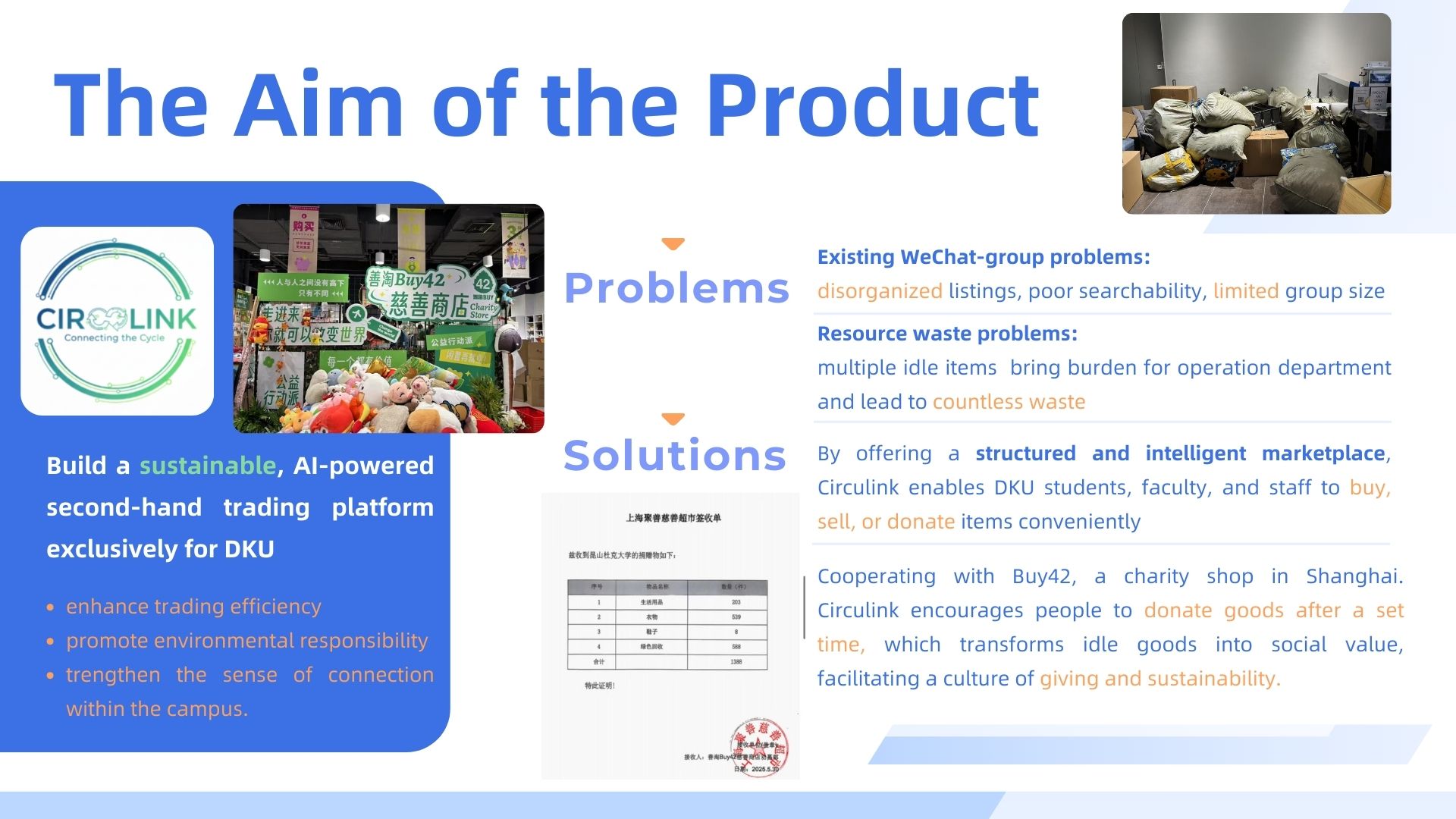
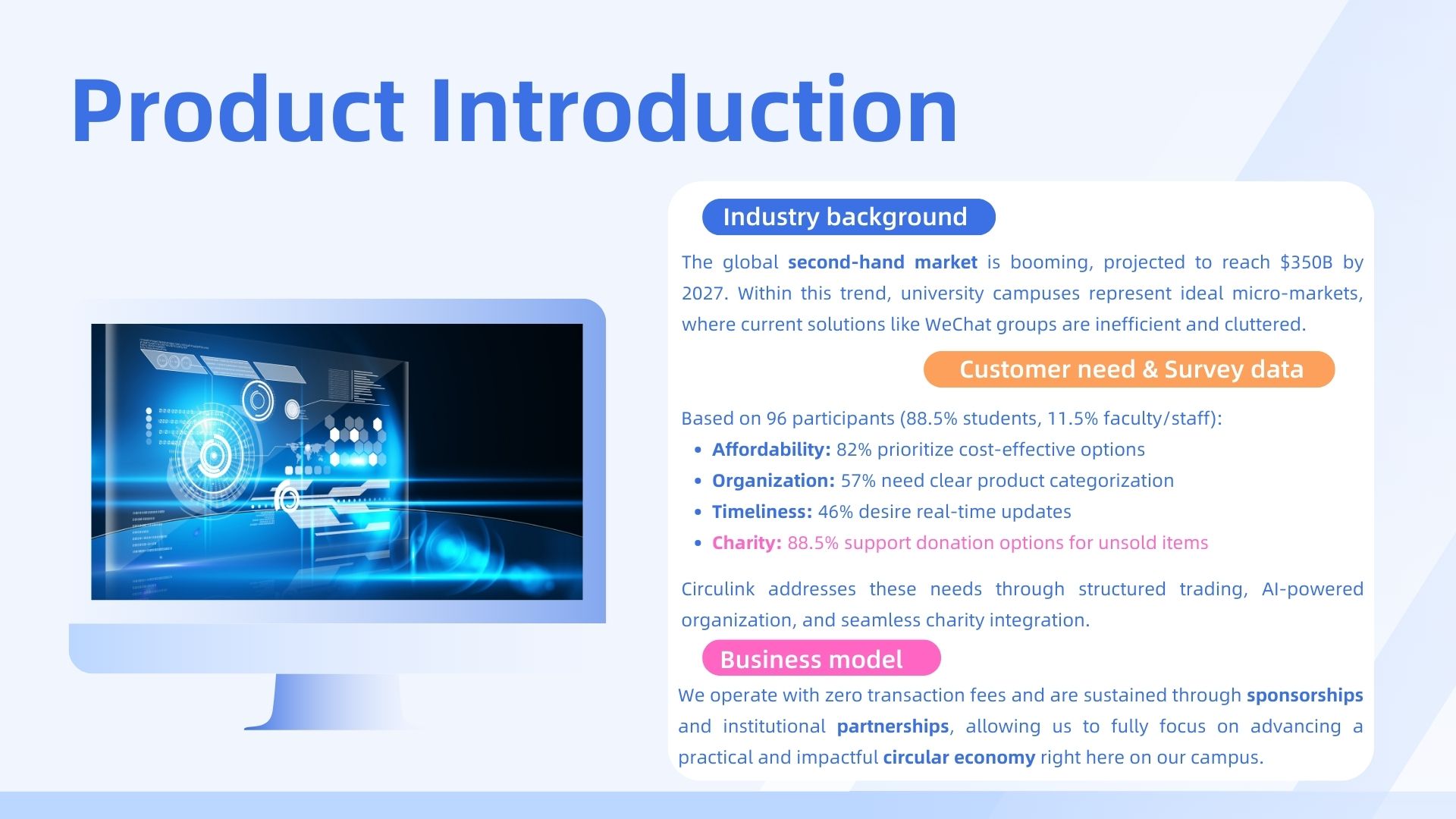
Circulink started from a simple frustration on campus: buying and selling second-hand items in WeChat groups has limit on the number of participants and unclassifiable issue. Posts get buried quickly, search is unreliable. Moreover, each year’s graduation season—piles of unwanted items were left behind, creating extra workload for campus operations and leading to unnecessary waste. Behind Circulink is REACH, a sustainability-focused student organization that has partnered with the Shanghai charity shop Buy42 for nearly a year. Through our campus donation initiatives, we’ve already helped redirect 1,300+ items into the charity shop system. That experience made it clear: DKU is naturally suited for reuse, but the tools to make circular exchange easy and scalable were missing. We wanted to combine our technical skills with REACH’s community network to build a campus-only marketplace where items are easy to list, easy to find, and where unsold goods can automatically enter a donation pathway—supporting the community while advancing sustainability and a true circular economy on campus.
What it does
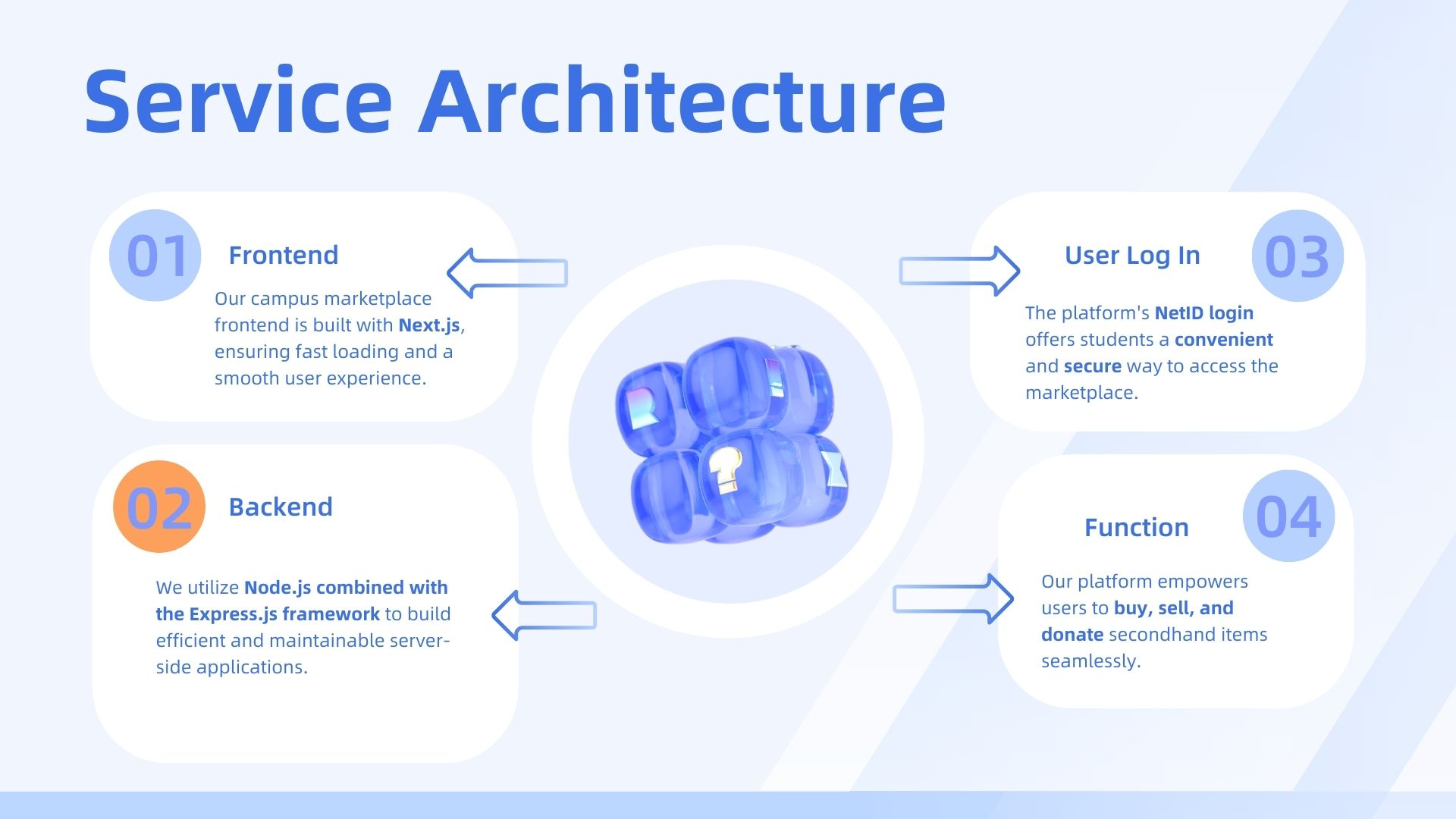
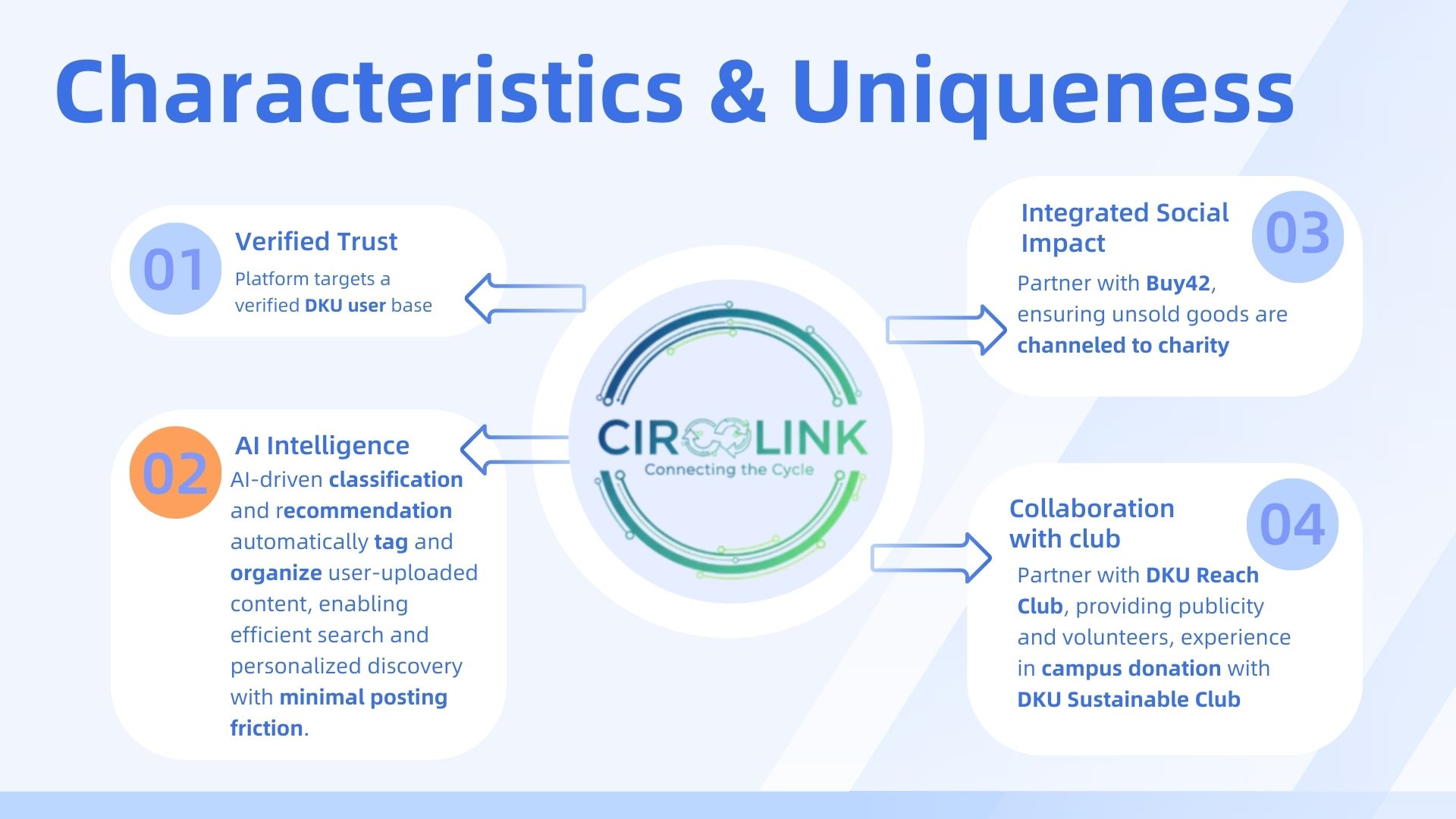
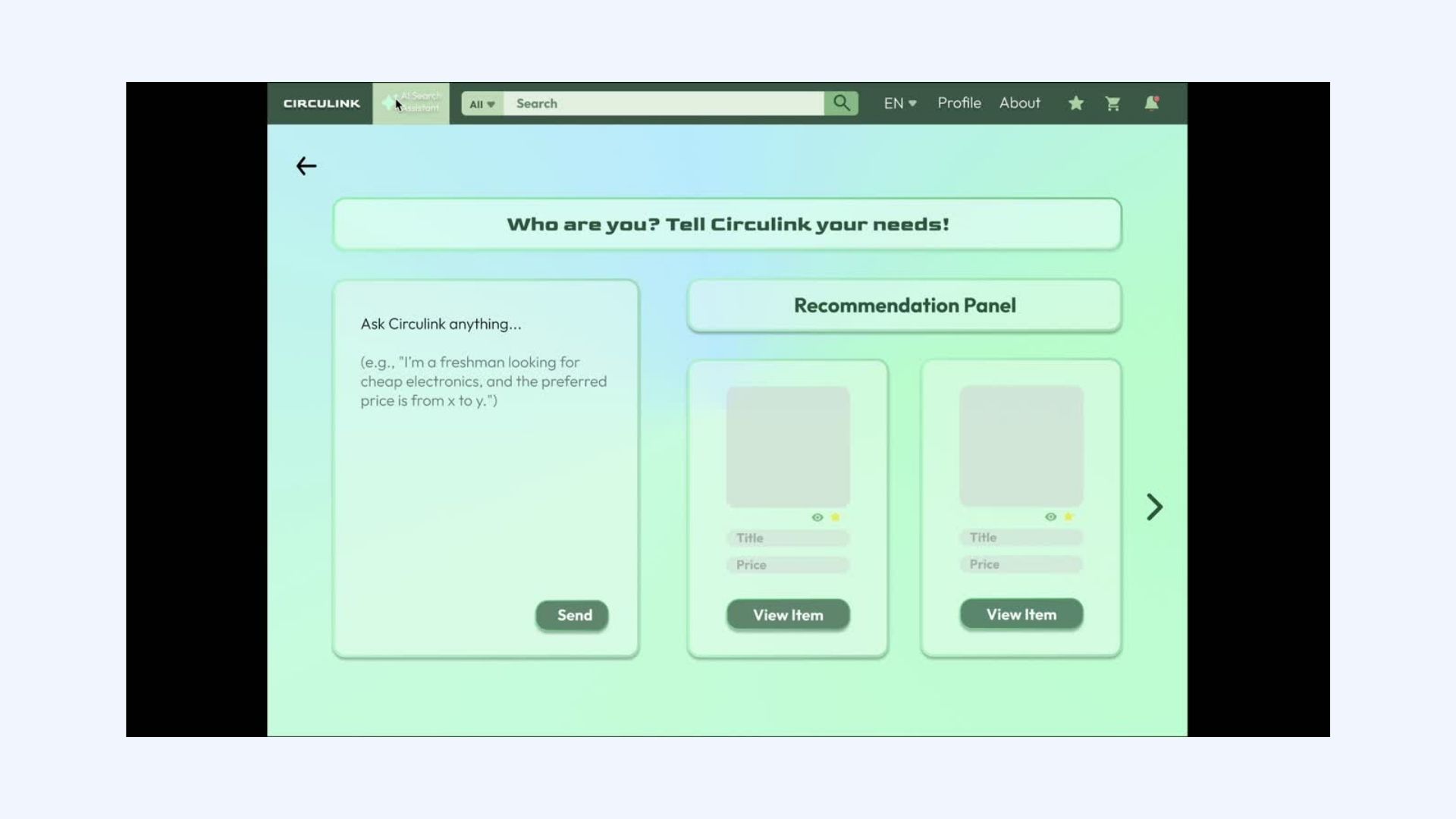
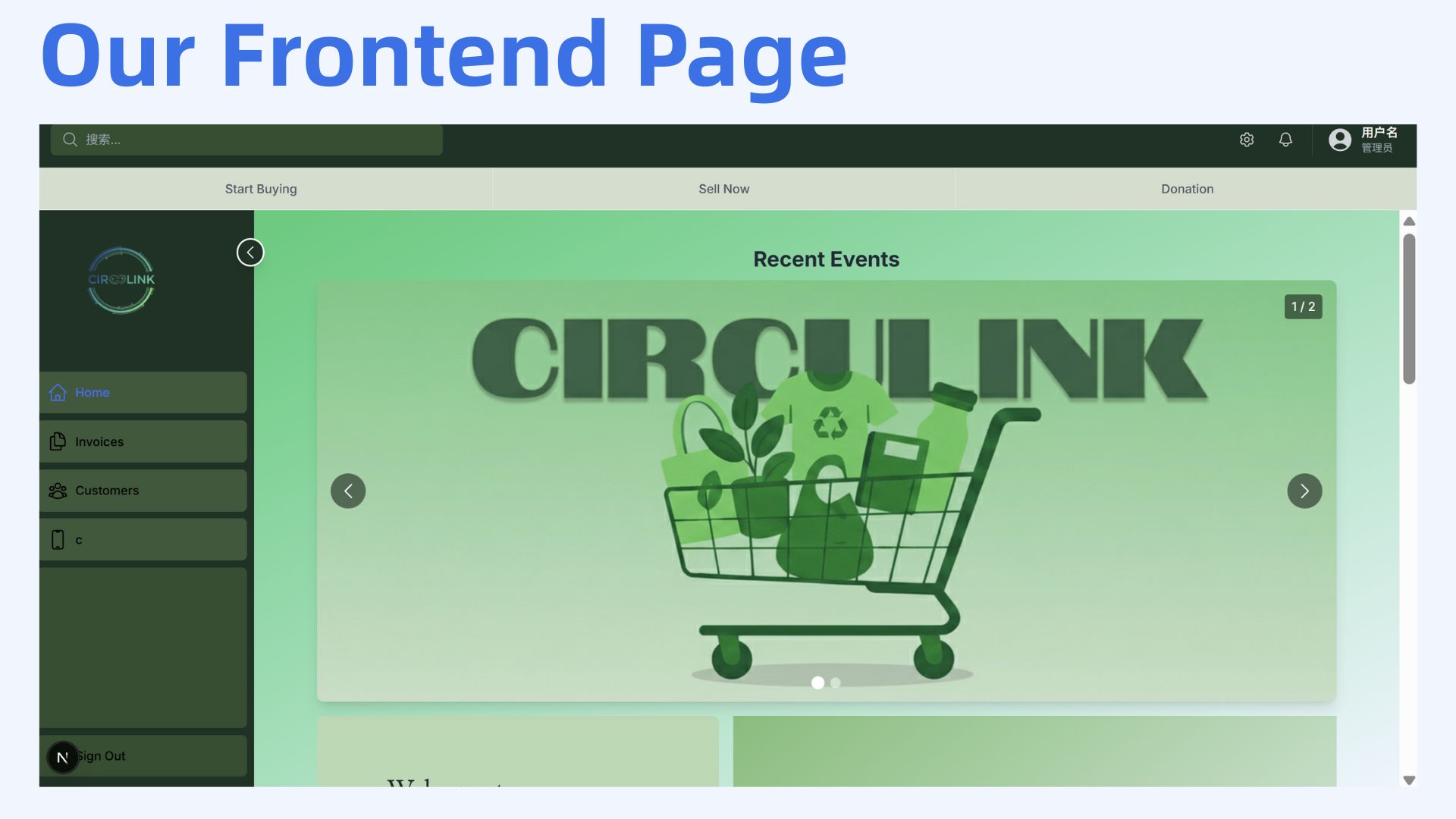
Circulink is an AI-powered, campus-only resale and donation platform designed for DKU. It replaces unstructured WeChat listings with a searchable marketplace backed by NetID SSO, making transactions more trustworthy within the campus community. Sellers can list items quickly with photo upload, category selection, optional bargaining range, and an optional “donate upon expiration” setting (defaulting to the end of the semester or a user-defined date). Buyers can find what they need faster through semantic search and smarter recommendations, then negotiate via in-app messaging. If an item expires unsold and donation is enabled, it moves into a dedicated donation pool to support handoff to partners like Buy42, reducing waste and closing the reuse loop. Also, they can simply donate idle items and contribute to the recycling economy.
How we built it
- Trusted access: Implemented a campus-only entry point via NetID single sign-on (SSO) to ensure verified community participation.
- Marketplace core: Built listing creation (photos, category, description, bargaining range), item lifecycle states (active, sold/off-shelf, expired, donated), and user profiles.
- Messaging workflow: Added item-based chat so buyers and sellers can negotiate in-platform; contact sharing can be gated behind an explicit “contact seller” action.
- AI assistance: Designed an AI pipeline to (1) recognize item category/keywords from images, (2) generate tags, (3) recommend a category users can edit, and (4) draft or polish descriptions to reduce posting friction.
- Circular donation loop: Built an expiration trigger that moves eligible unsold items into a donation pool for follow-up and partner handoff.
Challenges we ran into
- Balancing trust and privacy: NetID creates accountability, but we still needed a careful approach to when and how personal contact info is revealed.
- AI reliability in the real world: Image-based classification can be uncertain; we had to design editable suggestions and fallbacks so users stay in control.
- Lifecycle complexity: A listing isn’t just “available/unavailable”—we modeled states like active, sold (manual off-shelf), expired, donation-pending, and donated, which affects UI, search, and notifications.
- Donation operations: Turning “donate upon expiration” into a real pipeline required a separate pool and clear status tracking to avoid items getting stuck.
Accomplishments that we're proud of
- Defined a clear “campus-trusted + AI-assisted + donation-by-default” product direction for circular reuse at DKU.
- Designed an end-to-end flow that reduces friction for sellers (faster posting) and buyers (faster discovery) while keeping the transaction within one platform.
- Built the concept of a donation pool connected to real partners (e.g., Buy42), grounded in REACH’s prior experience donating 1,300+ items.
What we learned
We learned that AI features only help when the underlying system is structured: clean item categories, tags, and well-defined states make semantic search and recommendations possible. We also learned that product adoption depends on trust and workflow design as much as technology—NetID verification, clear messaging flows, and respectful privacy controls are essential. Finally, we learned that sustainability outcomes improve when reuse is built into the default lifecycle: making donation an integrated “next step” prevents waste, reduces campus cleanup burden, and helps scale circular economy practices.

Log in or sign up for Devpost to join the conversation.