Inspiration
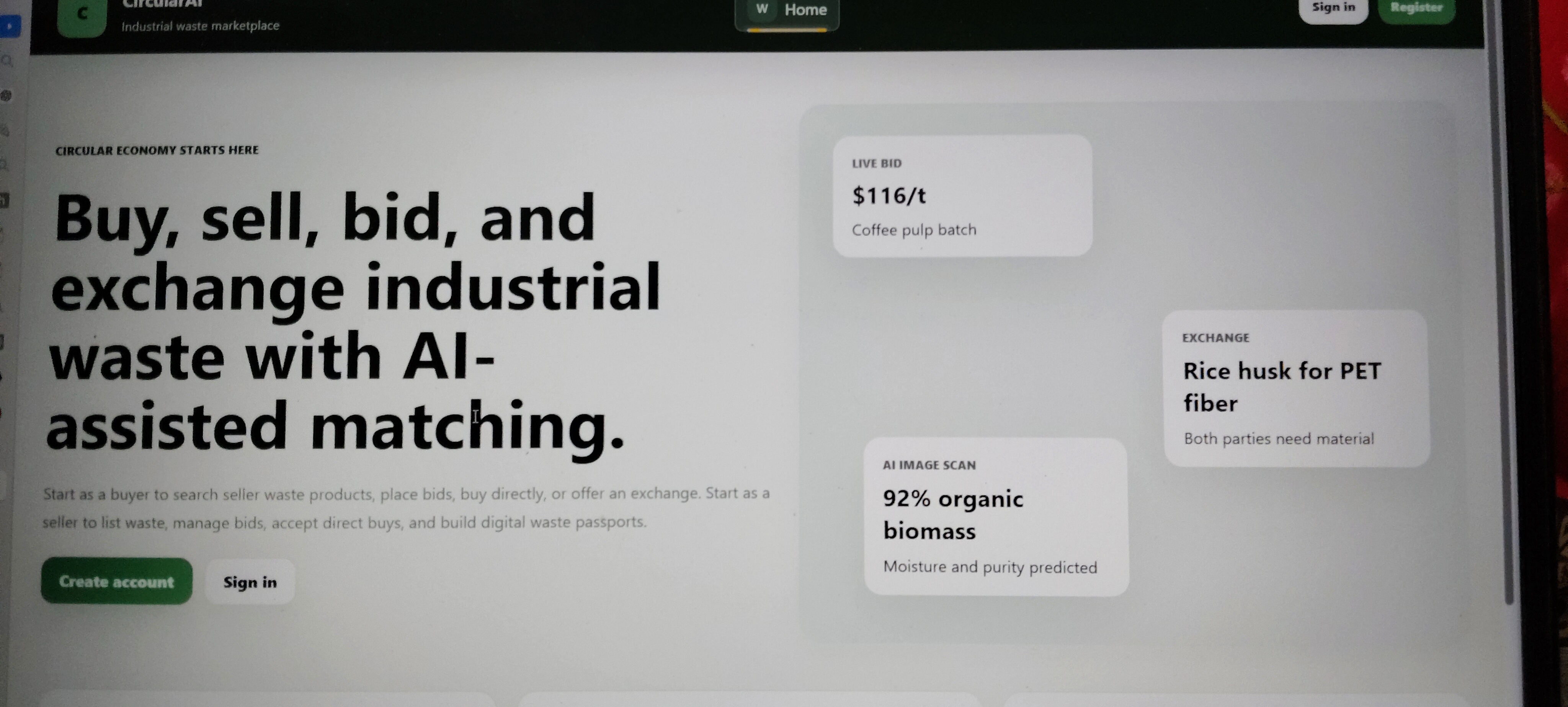
Industries generate large amounts of waste that still contain economic and environmental value. However, businesses often struggle to identify suitable buyers, verify material quality, and find reliable reuse opportunities. We were inspired to build a platform that transforms industrial waste from a disposal problem into a valuable resource.
What it does
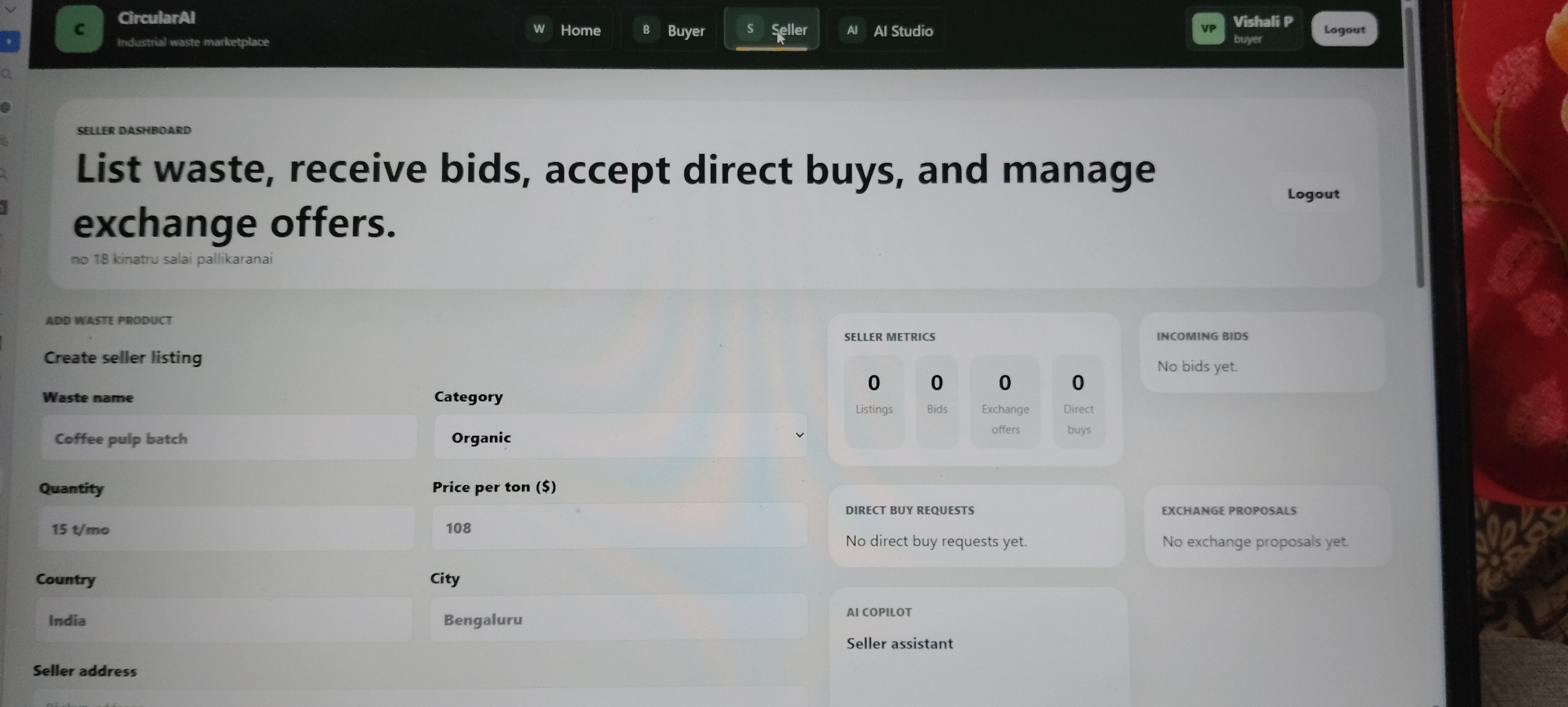
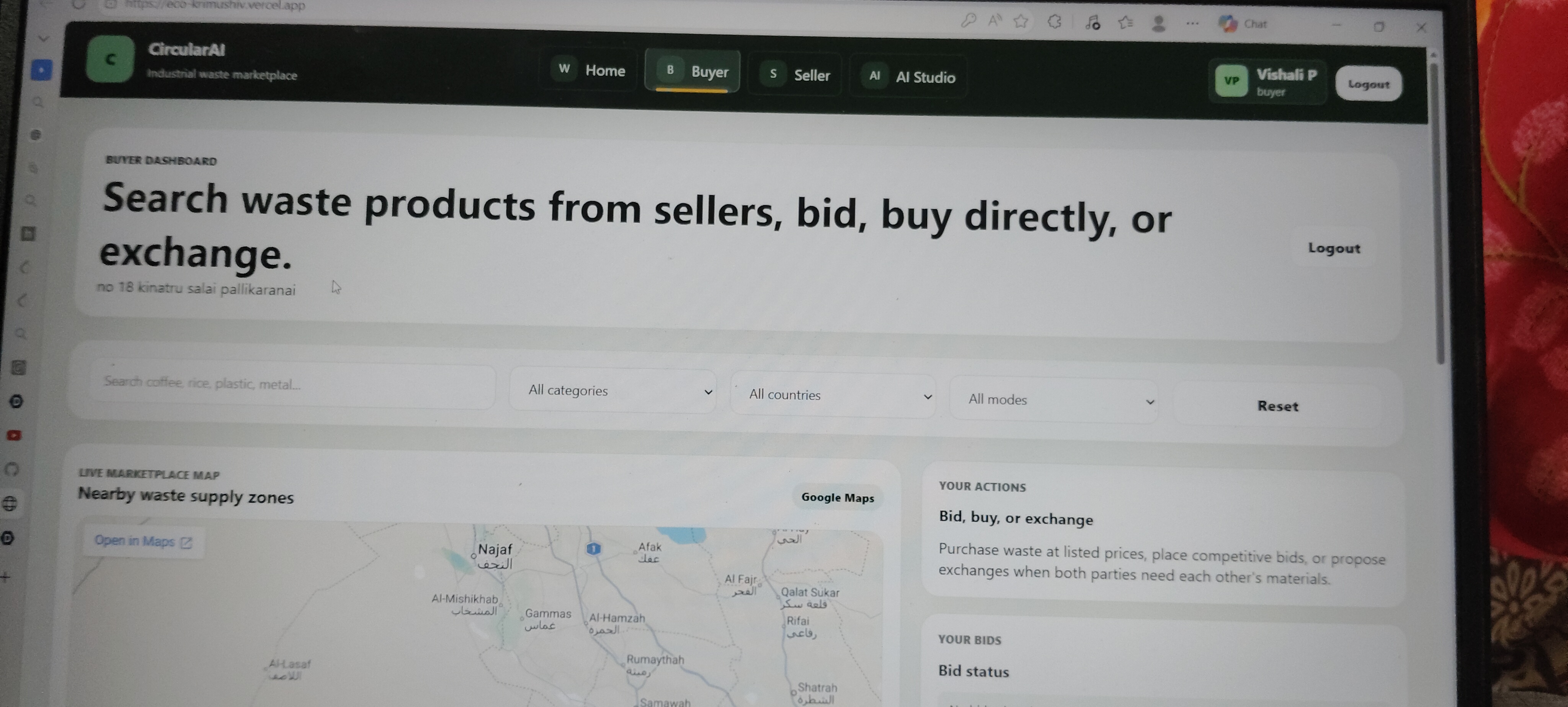
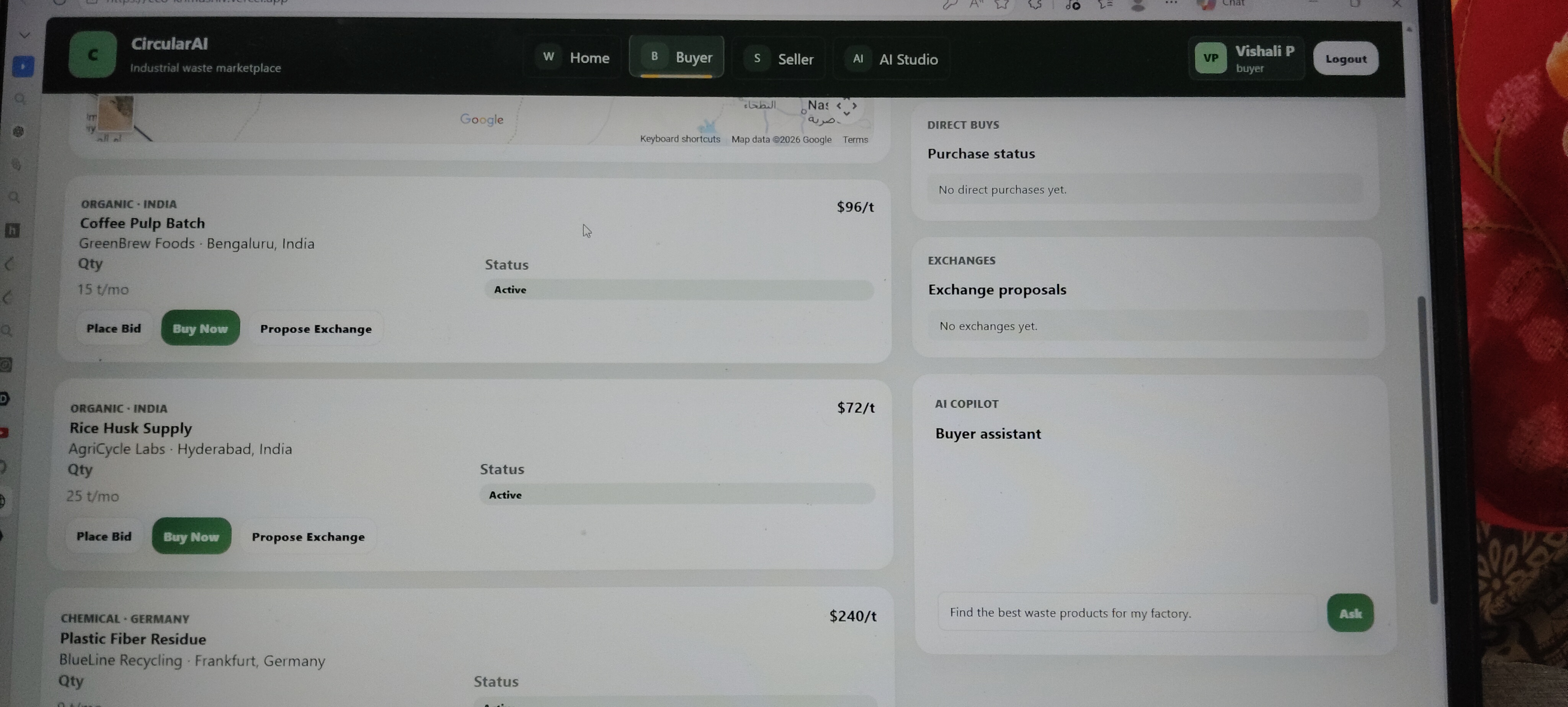
Our platform connects industrial waste generators with potential buyers and enables the reuse of materials through a digital marketplace.
Key capabilities include:
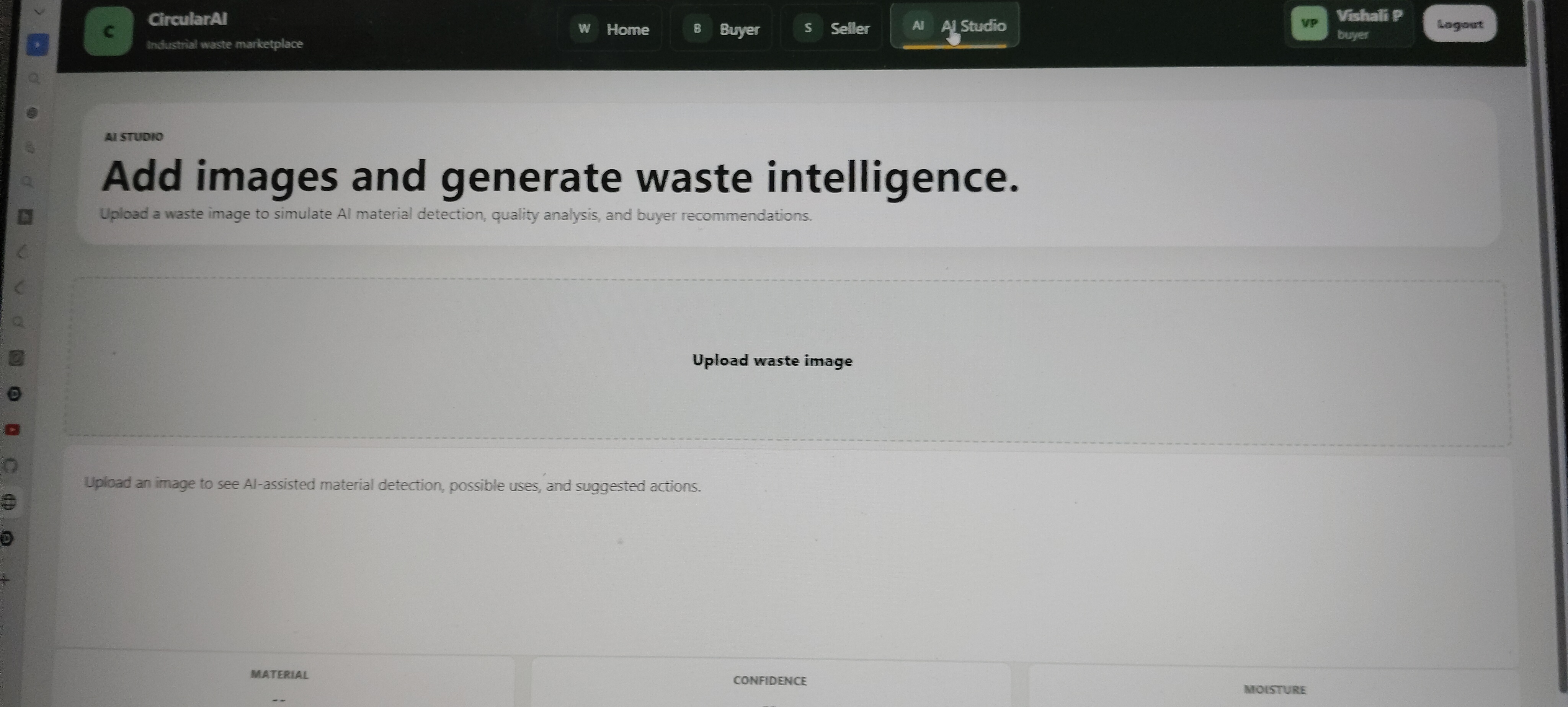
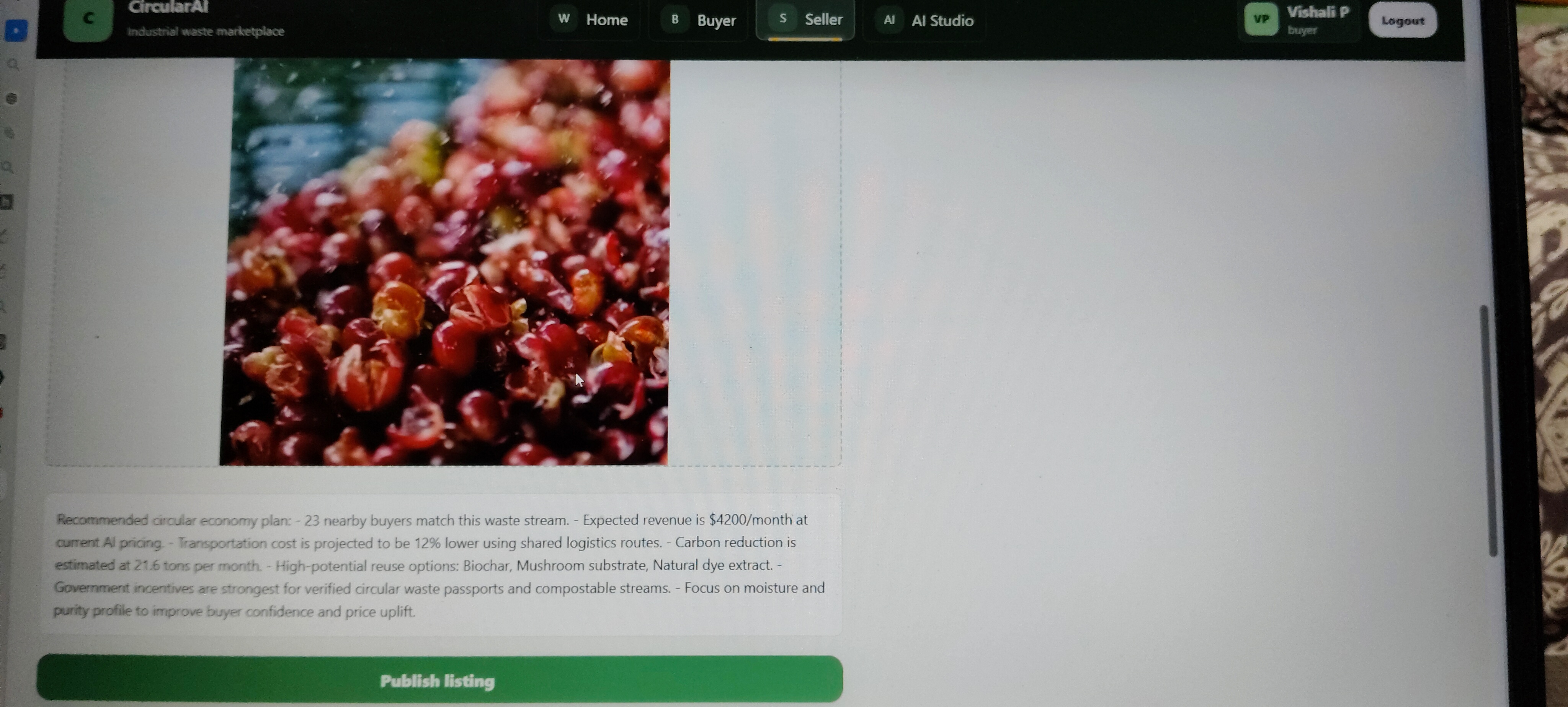
- AI-assisted waste categorization and matching
- Connecting waste suppliers with relevant buyers
- Material information and quality assessment
- Digital marketplace for discovering reusable materials
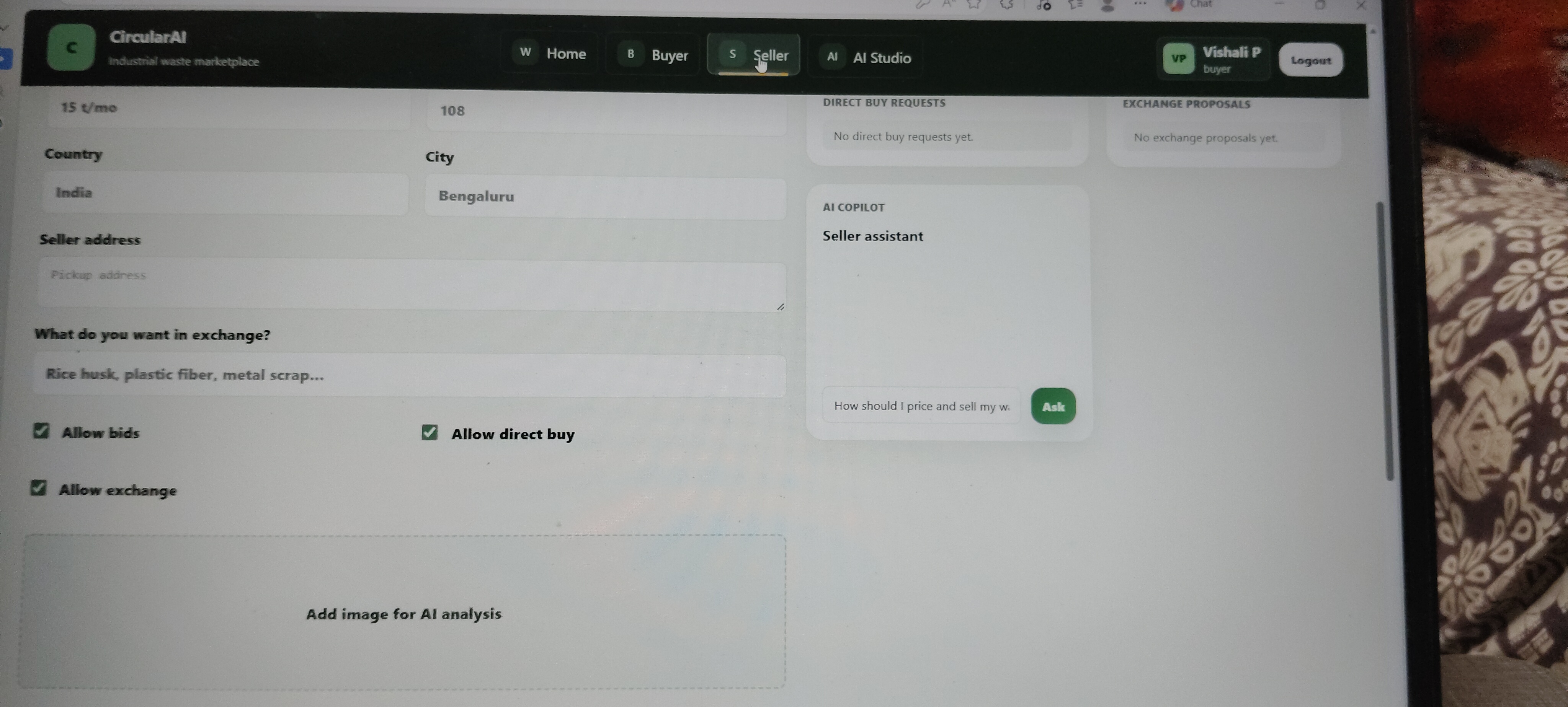
- Bidding and exchange workflows
- Supporting circular-economy practices by reducing waste sent to disposal
The platform aims to maximize the value recovered from waste while reducing environmental impact.
How we built it
We built the platform as a modern web application with a responsive user interface and intelligent matching capabilities.
The system combines:
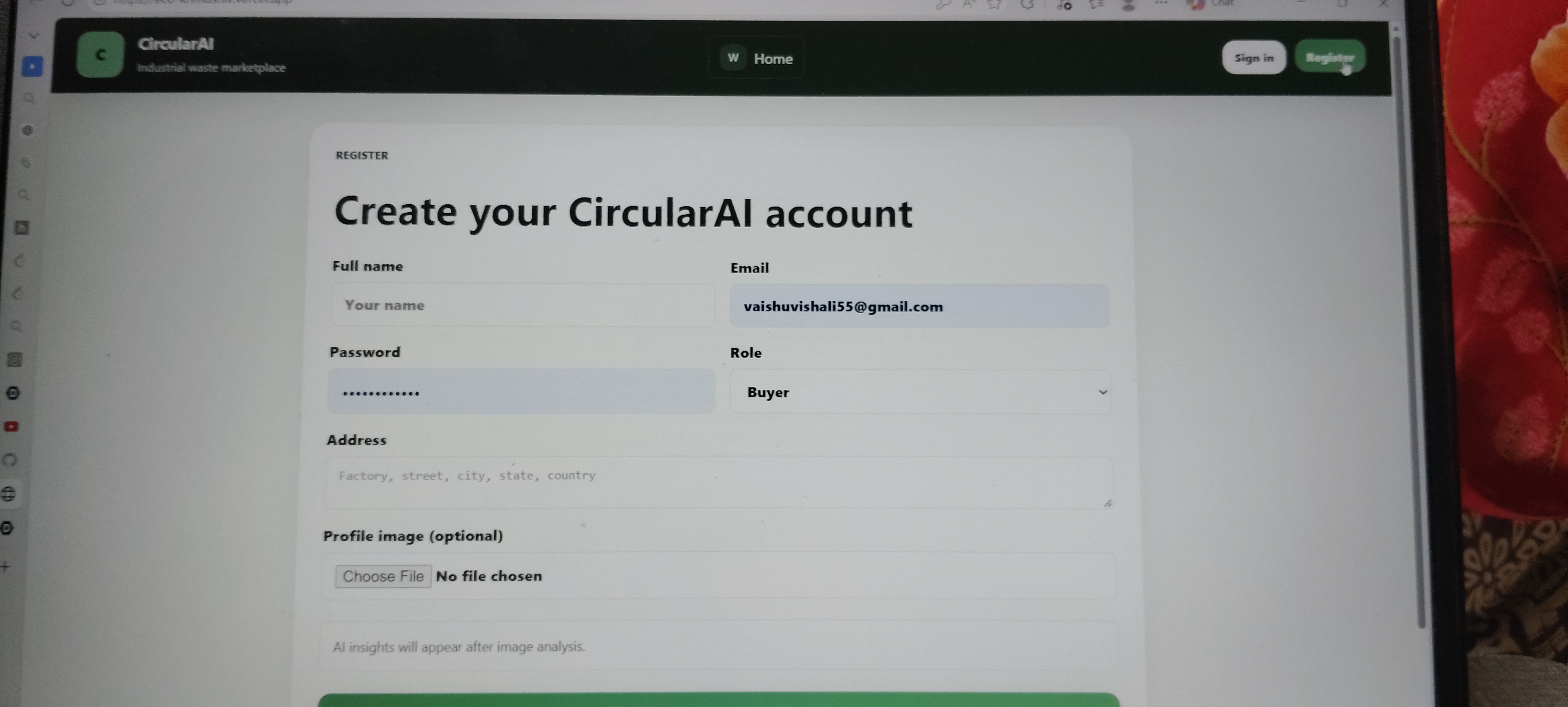
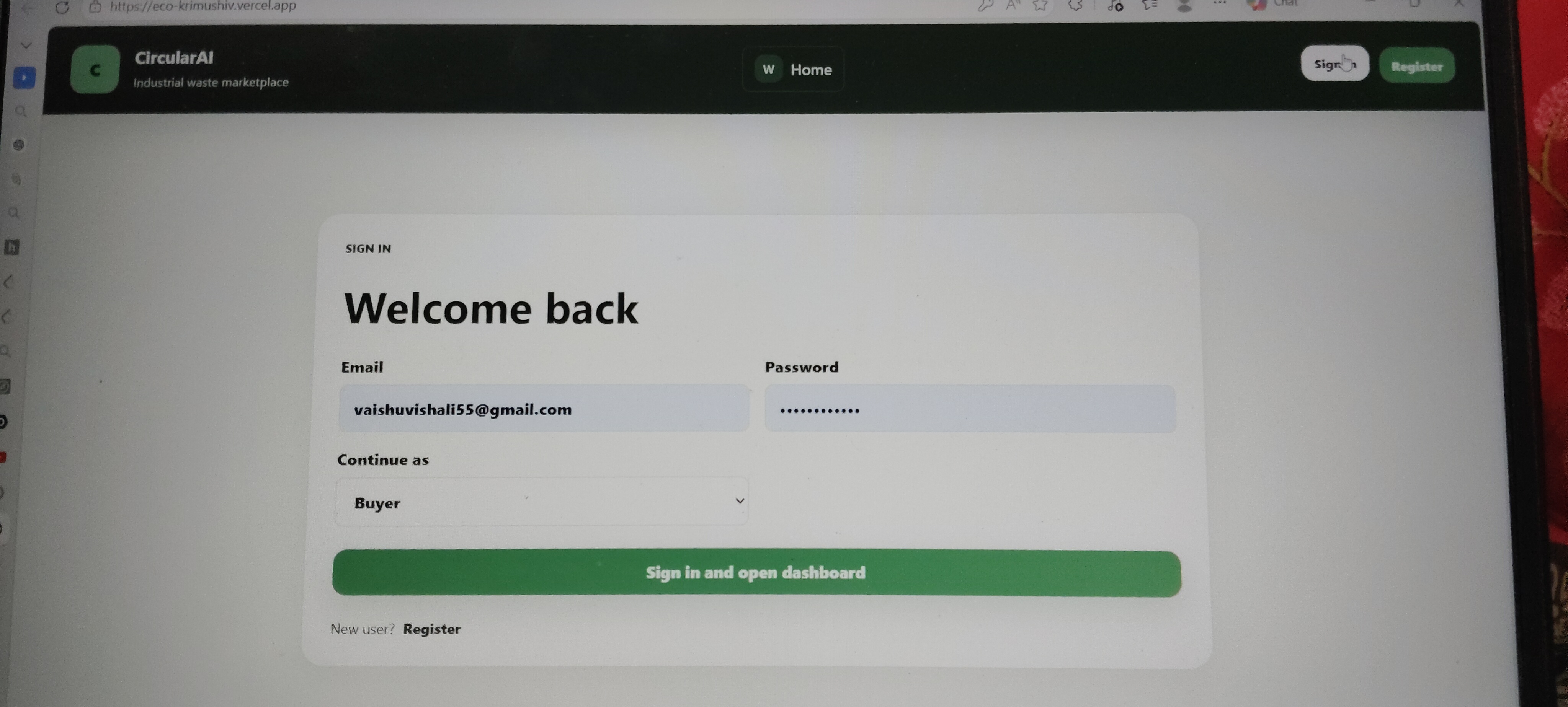
- Frontend: Modern responsive web interface for suppliers and buyers
- Backend: APIs and database services for managing users, waste listings, transactions, and marketplace data
- AI layer: Waste categorization and buyer–material matching based on material type, properties, quantity, and requirements
- Marketplace: Listings, search, filtering, bidding, and exchange workflows
- Data layer: Structured material information to help buyers evaluate potential reuse opportunities
- Deployment: Cloud-based deployment to make the platform accessible and scalable
The architecture was designed to support future integrations such as automated material-quality verification, logistics coordination, carbon-impact estimation, and industrial analytics.
Challenges we ran into
One of the biggest challenges was converting highly diverse industrial waste into structured and searchable information. Different industries describe similar materials using different terminology, while material quality can vary significantly.
Another challenge was designing a matching system that considers more than just material type. Quantity, quality, location, intended use, and buyer requirements can all affect whether a waste material is actually reusable.
We also had to balance automation with user control so that AI-assisted recommendations remain transparent and users can make the final decision before initiating an exchange.
Accomplishments that we're proud of
We created a working digital marketplace concept that brings together multiple stages of industrial waste reuse in one platform.
Instead of treating waste only as a disposal issue, our platform presents it as a secondary resource that can have measurable economic value.
We are particularly proud of integrating material discovery, intelligent matching, and exchange workflows into a single ecosystem rather than building only a waste-listing platform.
What we learned
This project helped us understand that building a circular-economy solution requires more than simply connecting buyers and sellers.
Successful waste reuse depends on standardized material information, trust, quality verification, logistics, and economic feasibility.
We also learned how AI can be used as a decision-support layer to reduce the effort required to discover potential reuse opportunities while keeping humans involved in important business decisions.
What's next
Our next goal is to expand the platform into a more comprehensive industrial circularity ecosystem.
Future improvements include:
- Automated material-quality verification
- AI-powered reuse and alternative-application recommendations
- Carbon and landfill-diversion impact tracking
- Logistics and transportation matching
- Verified supplier and buyer profiles
- Digital documentation and compliance support
- Predictive demand forecasting for recyclable materials
- Integration with industrial and waste-management systems
Ultimately, we aim to create an ecosystem where industrial waste becomes a searchable, verifiable, and tradable resource rather than an unavoidable disposal cost.


Log in or sign up for Devpost to join the conversation.