-
-
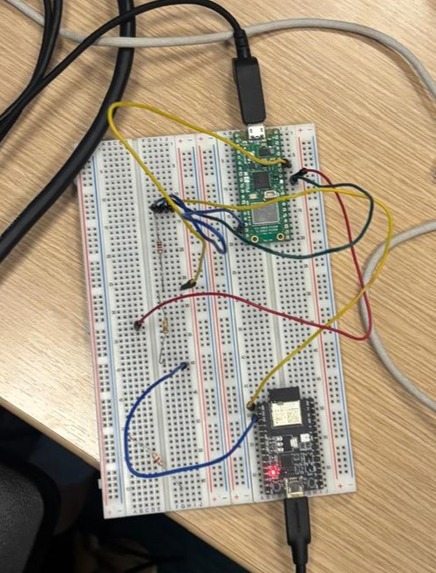
Overhead Video of the Circuit
-
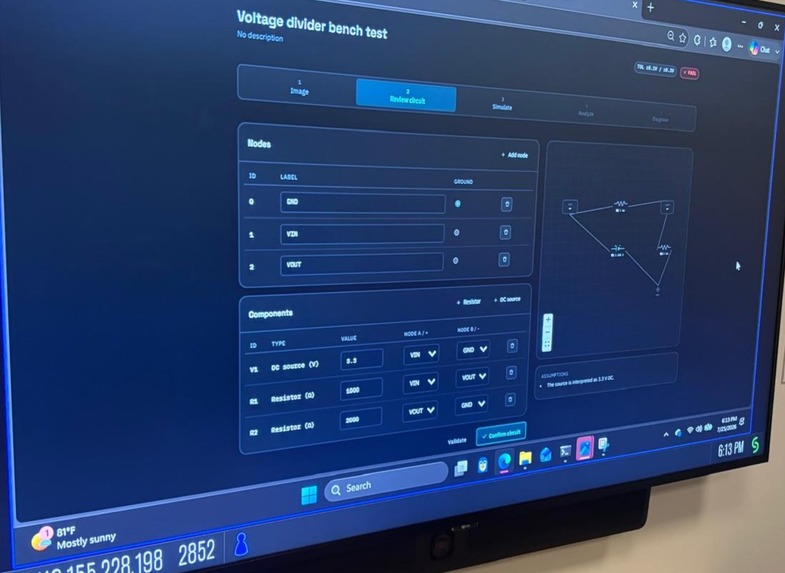
GUI of CircuitSync
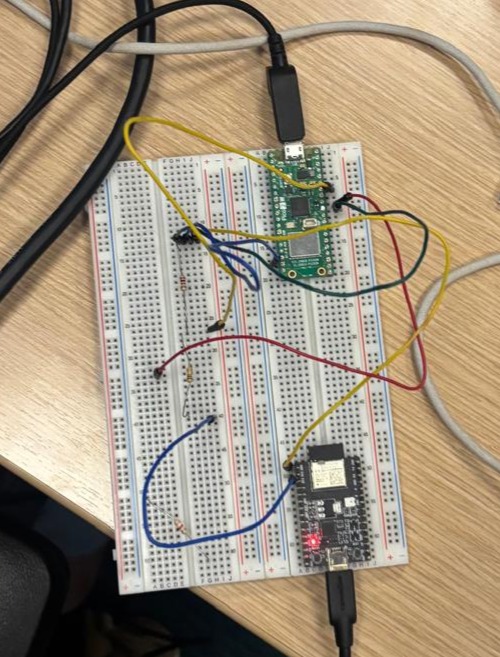
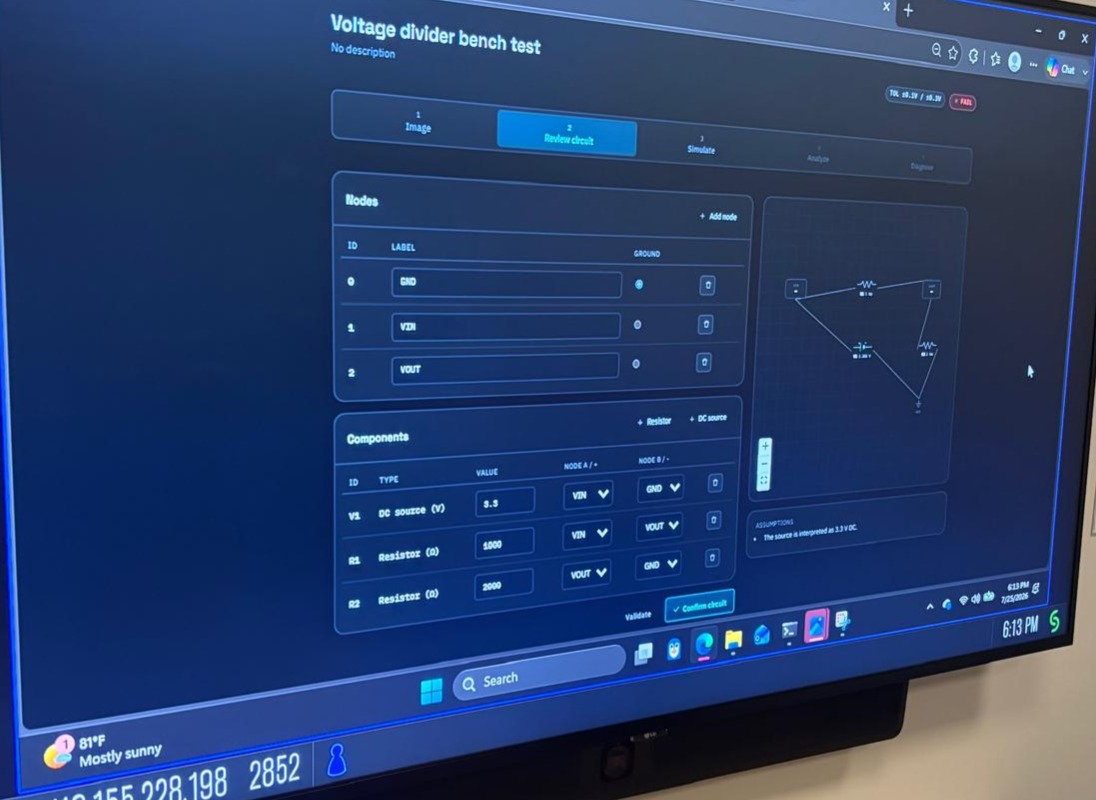
Inspiration
What it does
CircuitSync is a hardware-assisted learning and debugging tool that compares a hand-drawn circuit with a real physical circuit. Users upload a photo of a circuit diagram, confirm the component values, and the software generates a digital SPICE model to calculate the expected voltage and current. A Raspberry Pi Pico then measures the physical circuit and compares the real results against the simulation. When the values do not match, CircuitSync provides targeted troubleshooting hints, such as detecting reversed resistors, incorrect component values, missing power, open connections, or shorts.
How we built it
We built CircuitSync using Python, OpenCV, Streamlit, ngspice, and a Raspberry Pi Pico. OpenCV processes the uploaded photo and isolates the circuit drawing. The user confirms the voltage source and resistor values before the program generates a SPICE-compatible netlist. Ngspice simulates the circuit, while the Pico uses its ADC input to measure the physical breadboard circuit and sends the reading to the computer through USB serial communication. The application then compares the simulated and measured values.
Challenges we ran into
Some challenges that we came across is the measurement and finding out the correct pinout for the the Raspberry Pi Pico since there is only 3 ADC pins. We did not have a battery so we used a second board to be used as an alternative to power the system through 5V.
Accomplishments that we're proud of
We are proud to have made a working product! We have established a complete connection between a circuit drawing, digital simulation and real hardware. Here CircuitSync can create a SPICE netlist, calculate the expected behavior and and receive the live voltage measurement from the Raspberry Pico.
What we learned
We learned that effective educational technology should not only identify that an answer is wrong—it should guide the learner toward understanding why. We also learned the importance of limiting the first prototype to a reliable use case. Instead of attempting to recognize every possible circuit, we focused on completing one full workflow for a simple two-resistor series circuit. This allowed us to prove the larger concept while keeping the system understandable and safe.
What's next for CircuitSync
The next version of CircuitSync will support current measurements, parallel circuits, LEDs and capacitors. Here this system could be used in a AI-powered virtual lab assistant for schools universities, workforce-training and people wanting to learn about electronics at home.
Built With
- api
- circuits
- debugging
- electrical
- engineering
- pi
- pico
- raspberry
- wires

Log in or sign up for Devpost to join the conversation.