-
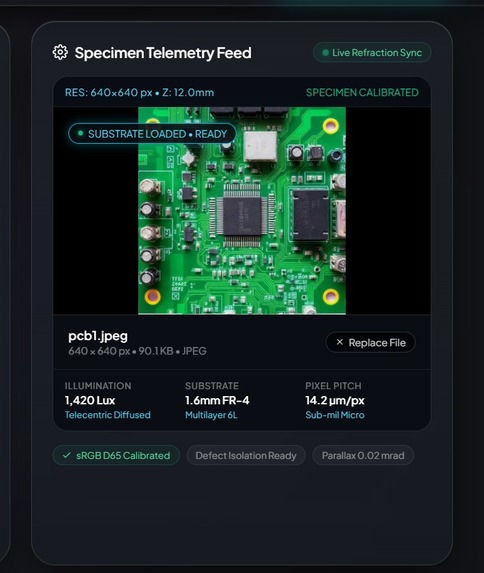
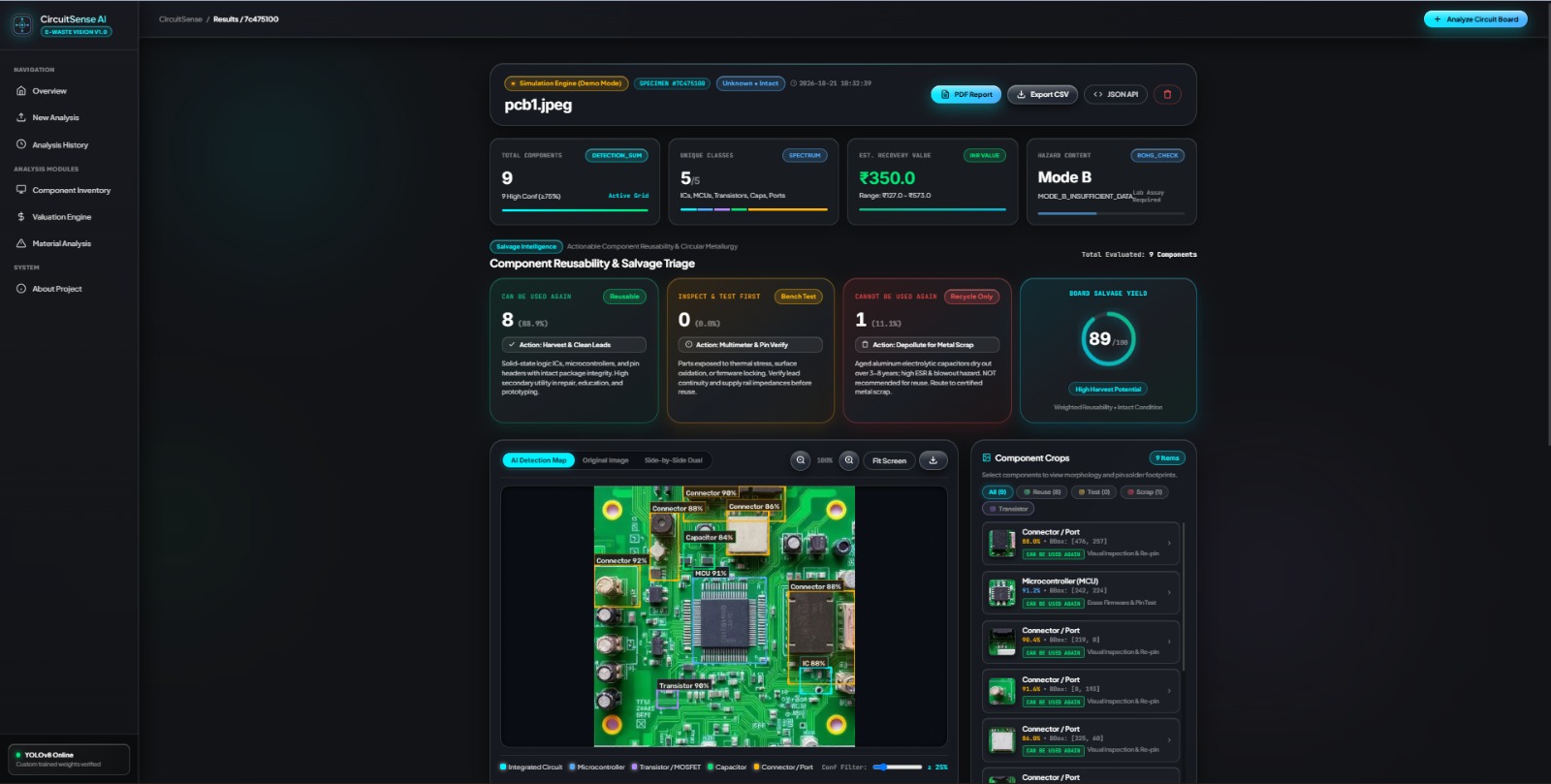
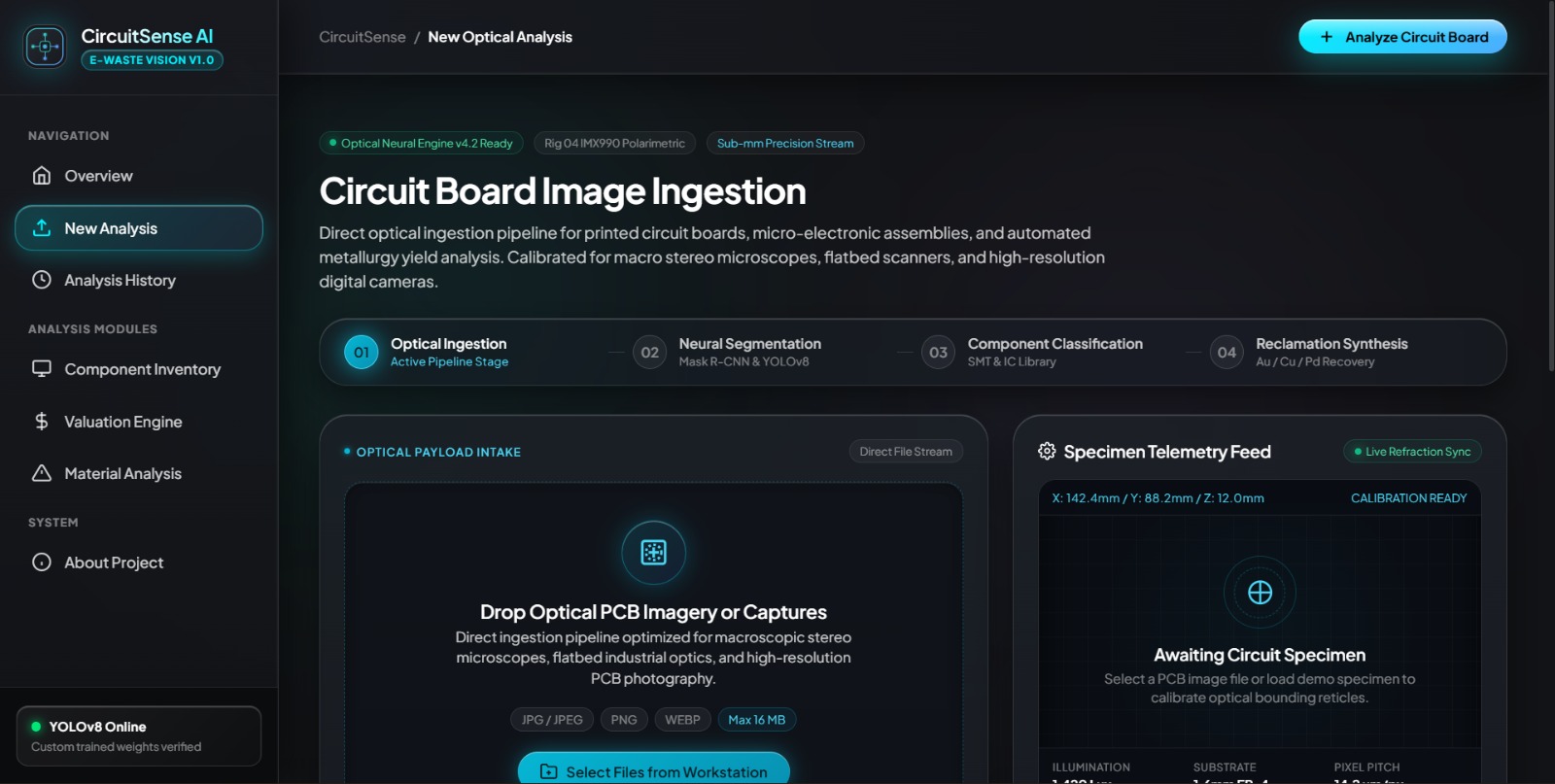
Specimen Telemetry Feed
-
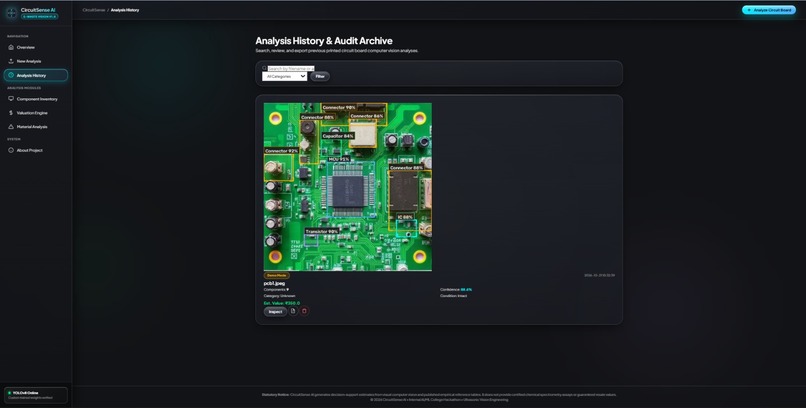
Analysis History
-
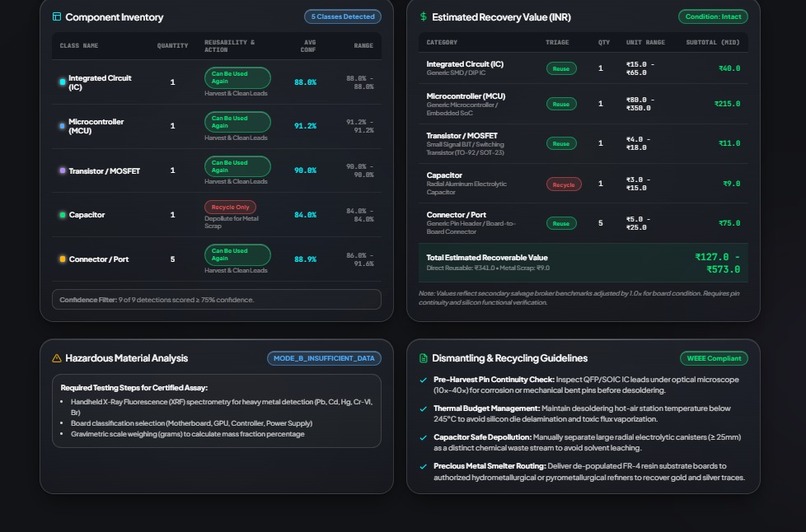
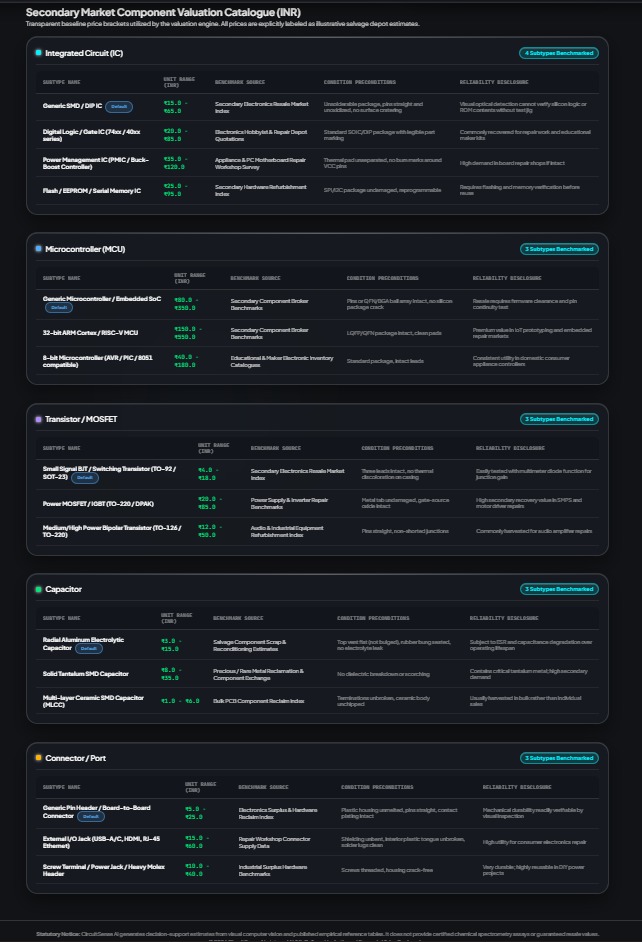
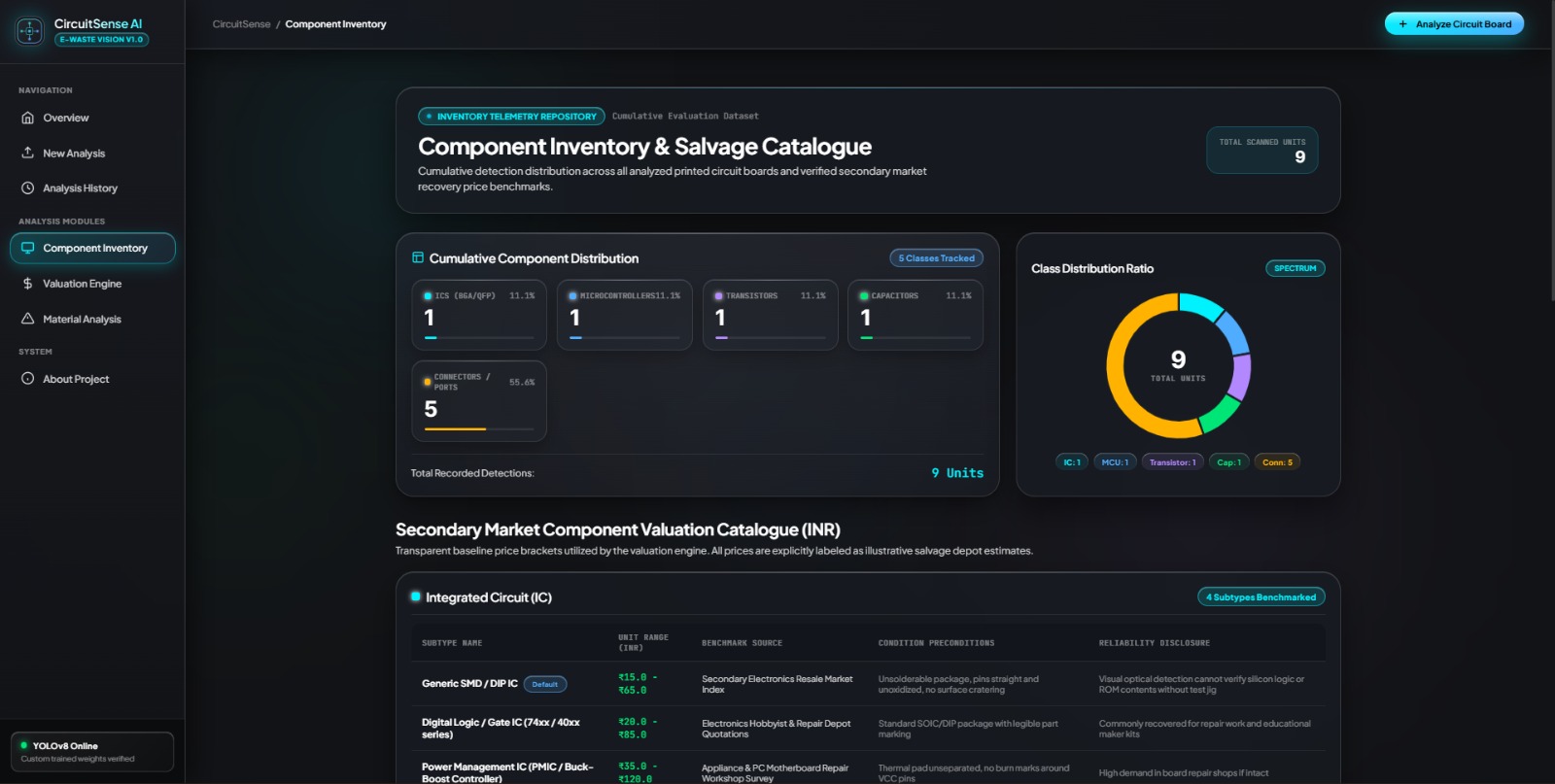
Valuation Of Usable Components
-
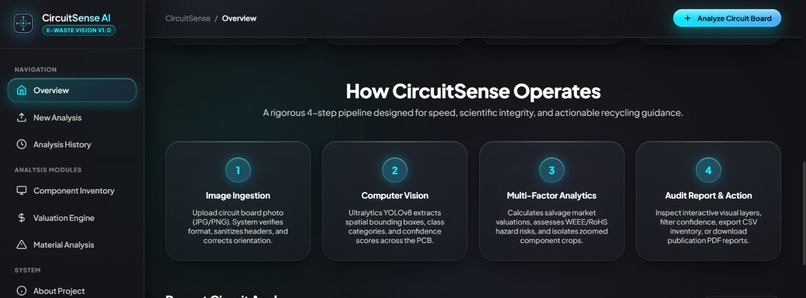
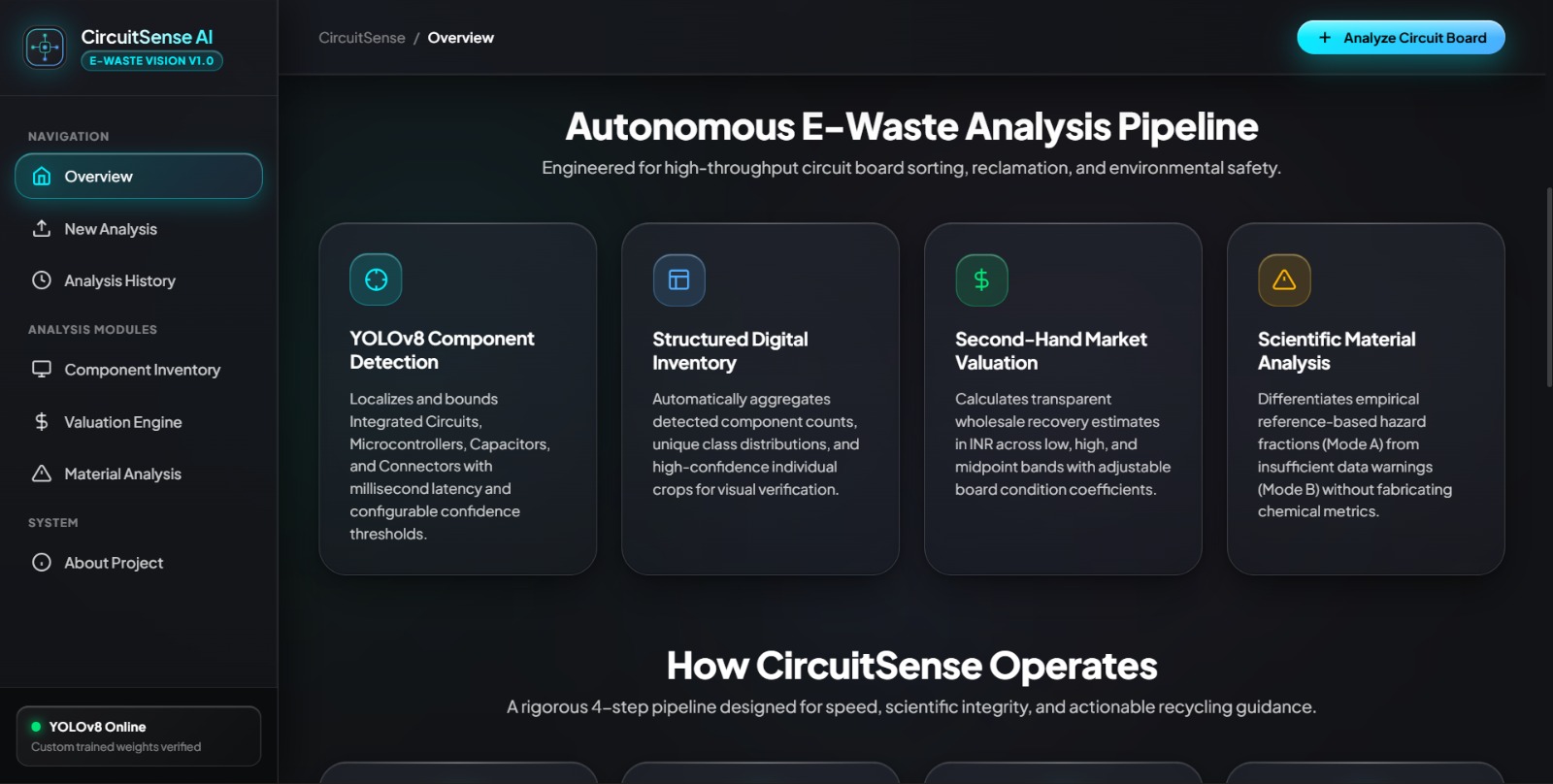
Operation
-
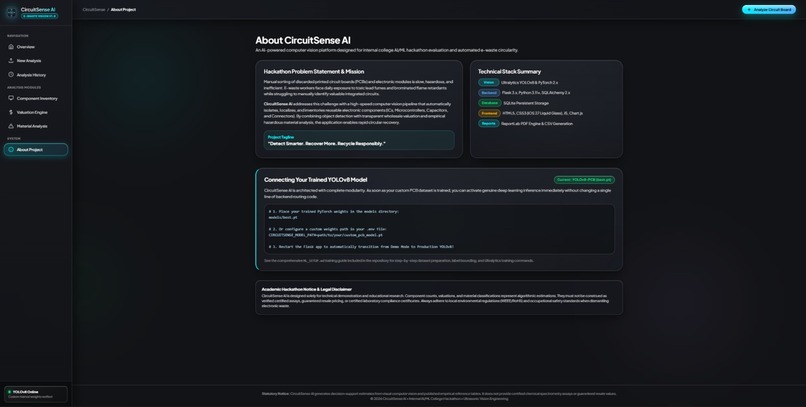
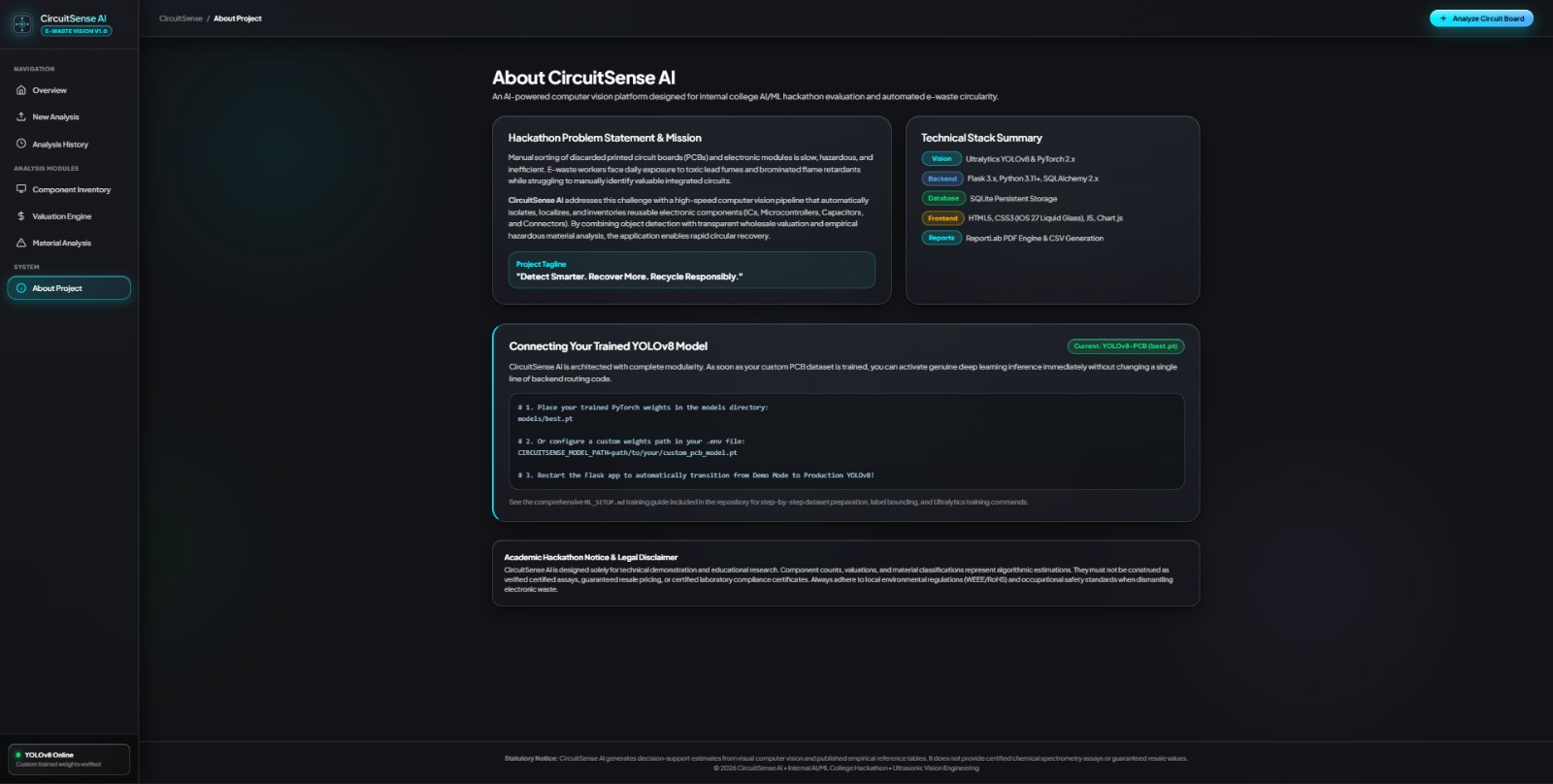
About CircuitSense AI
-
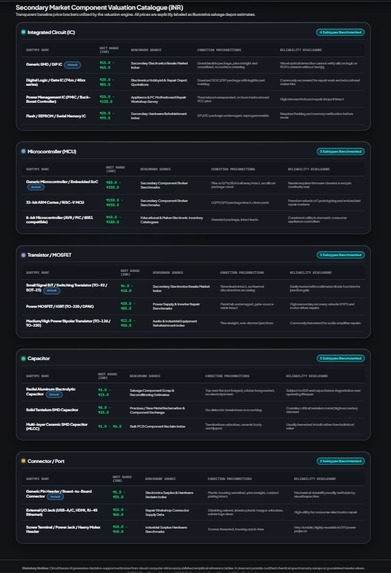
Valuation Catalouge
-
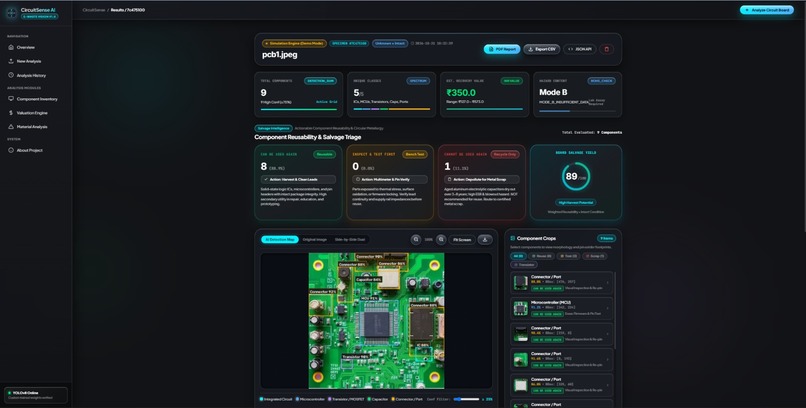
Overall
-
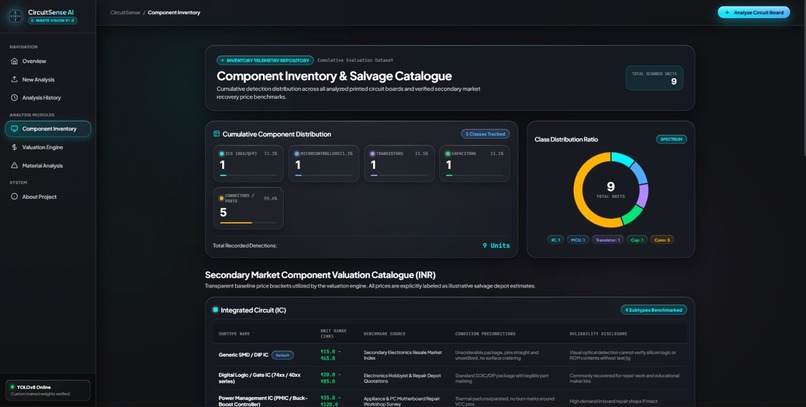
Component inventory
-
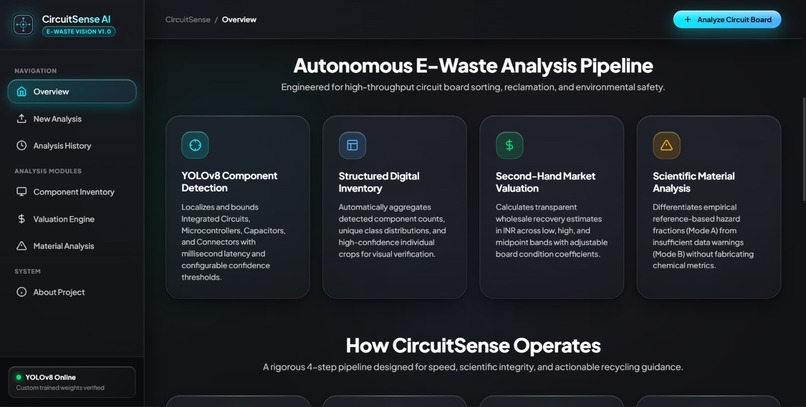
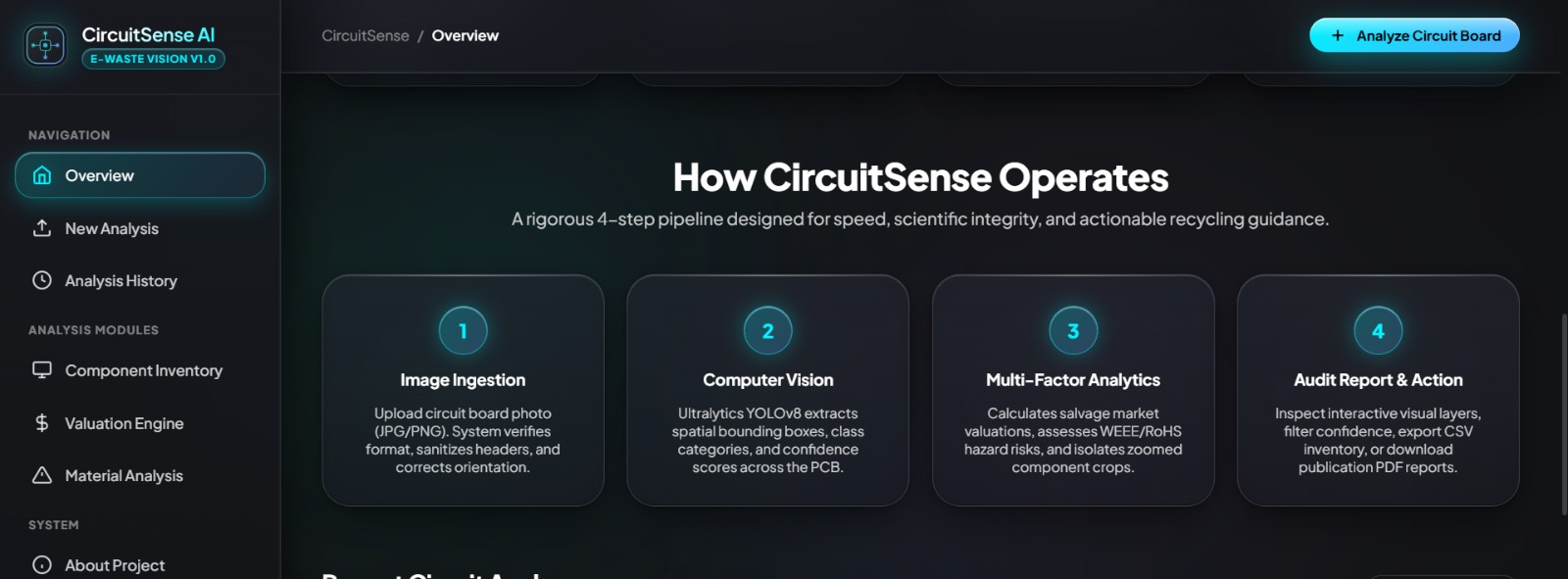
E-Waste Analysis Pipeline
-
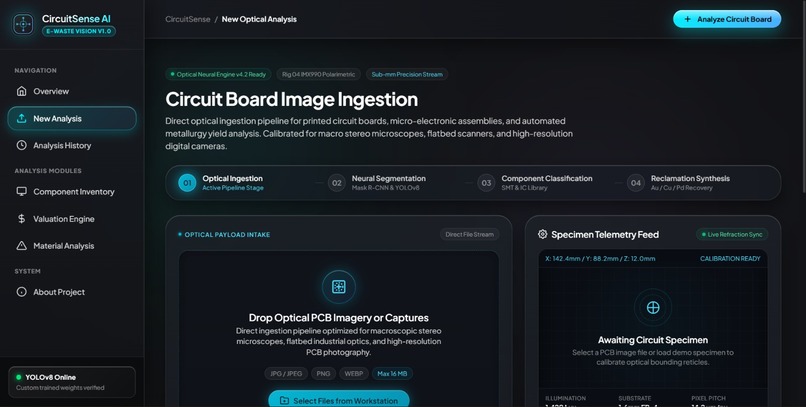
Circuit Board Image Ingestion
-
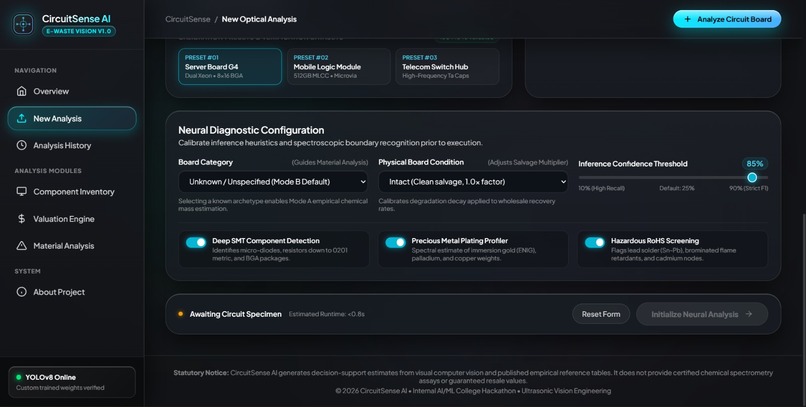
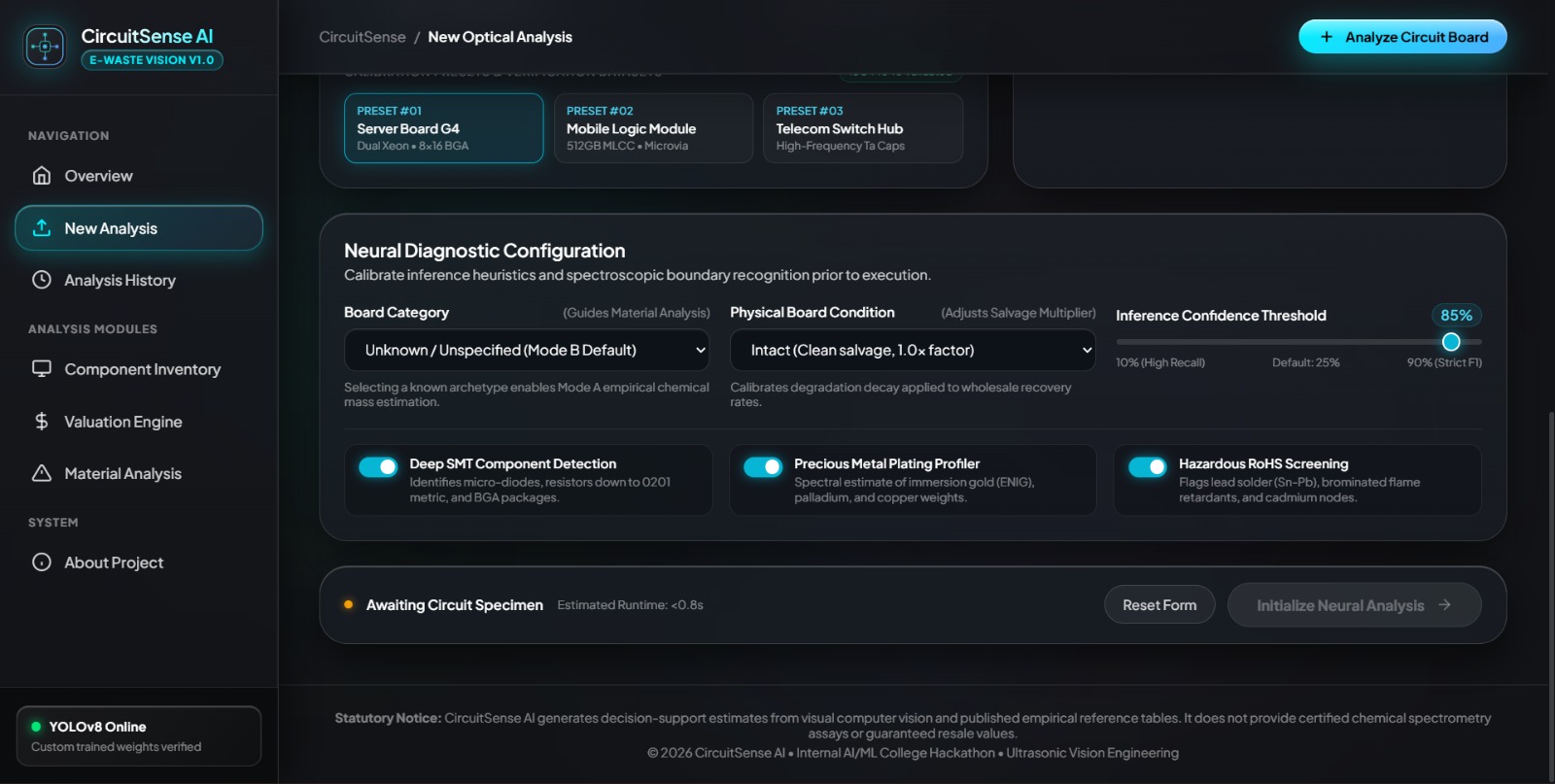
New Analysis
-
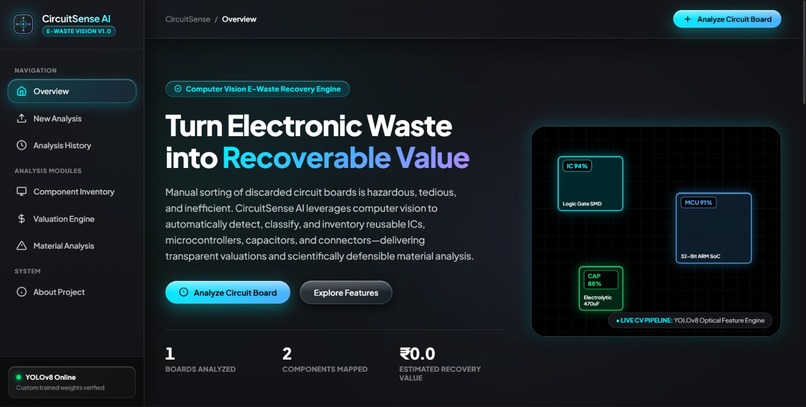
Overview
-
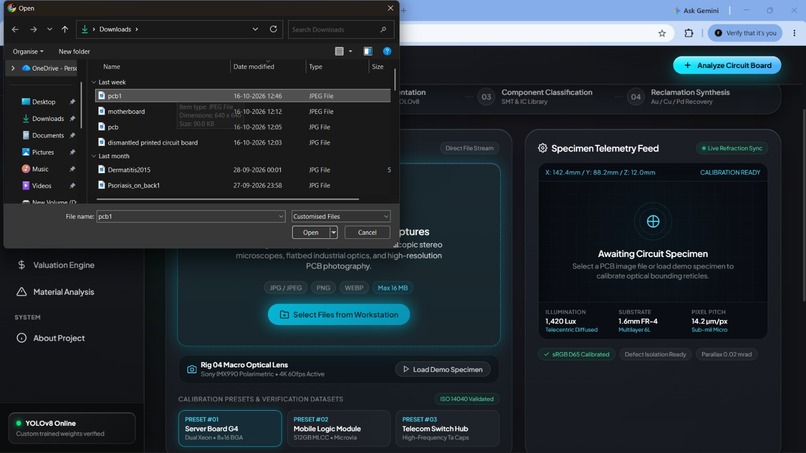
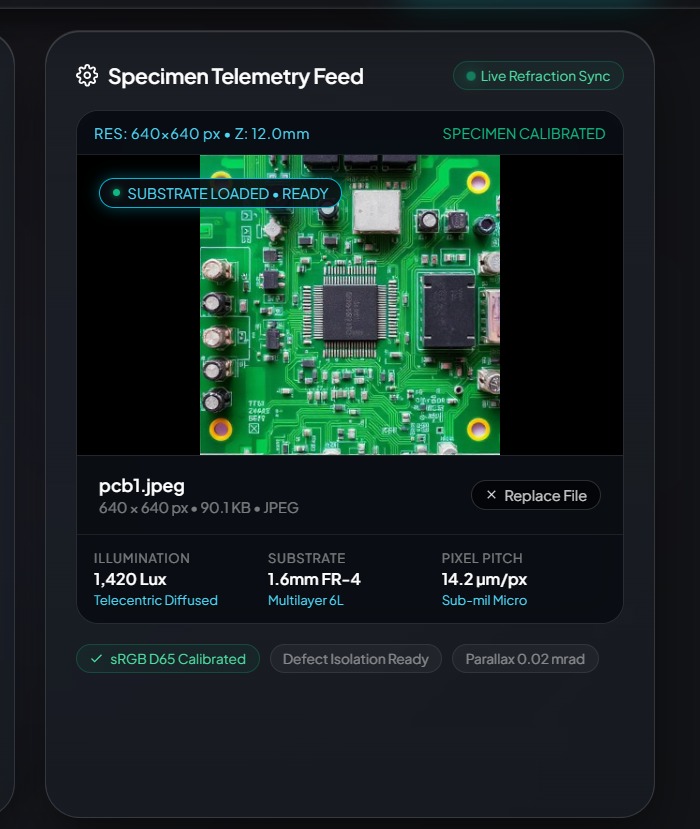
Uploading Circuit images
Inspiration
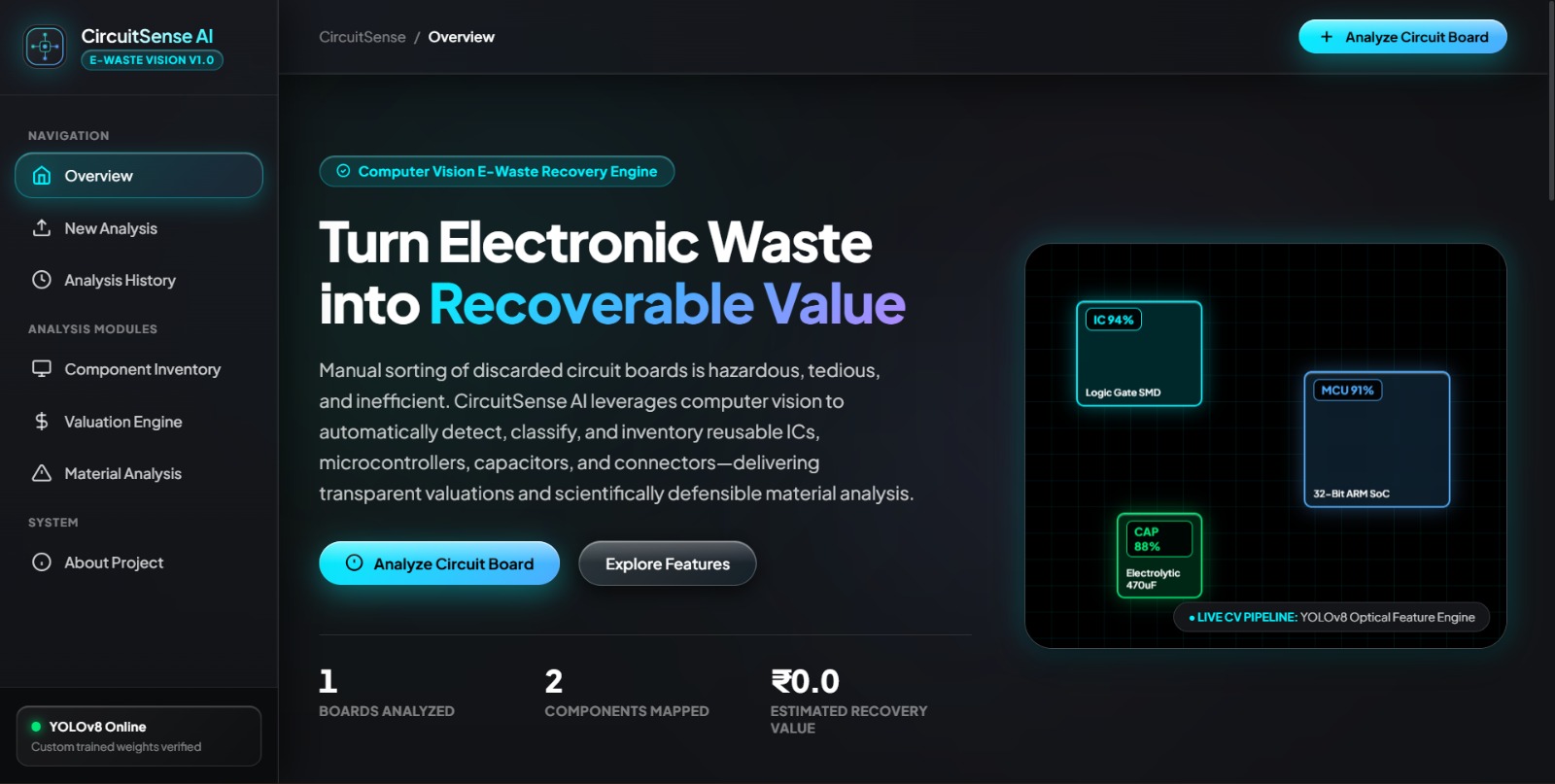
Electronic waste contains valuable electronic components that may still have reuse or recovery potential. However, identifying, sorting, and estimating the value of components on discarded printed circuit boards (PCBs) can require considerable manual effort and electronics expertise.
We were inspired to explore how Artificial Intelligence and computer vision could make this process faster, more systematic, and more sustainable. This led us to develop "CircuitSense AI", a platform that helps analyze discarded circuit boards and supports smarter electronic component recovery.
Our vision is simple: "turn electronic waste into an opportunity for resource recovery and a circular economy."
What It Does
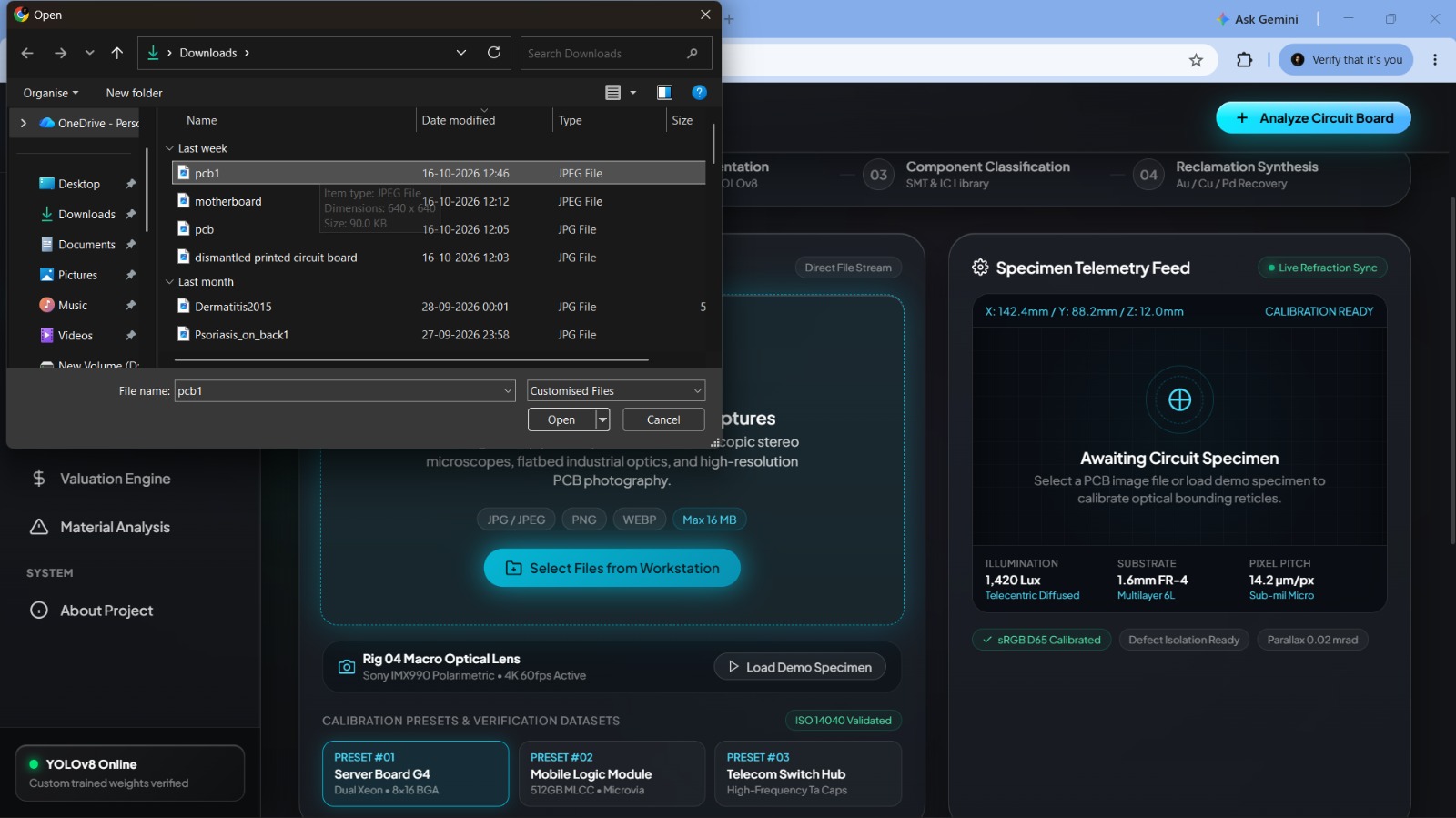
CircuitSense AI is an AI-powered electronic component classification and e-waste analysis platform. Users can upload a circuit-board image for analysis through a web interface.
The system is designed to:
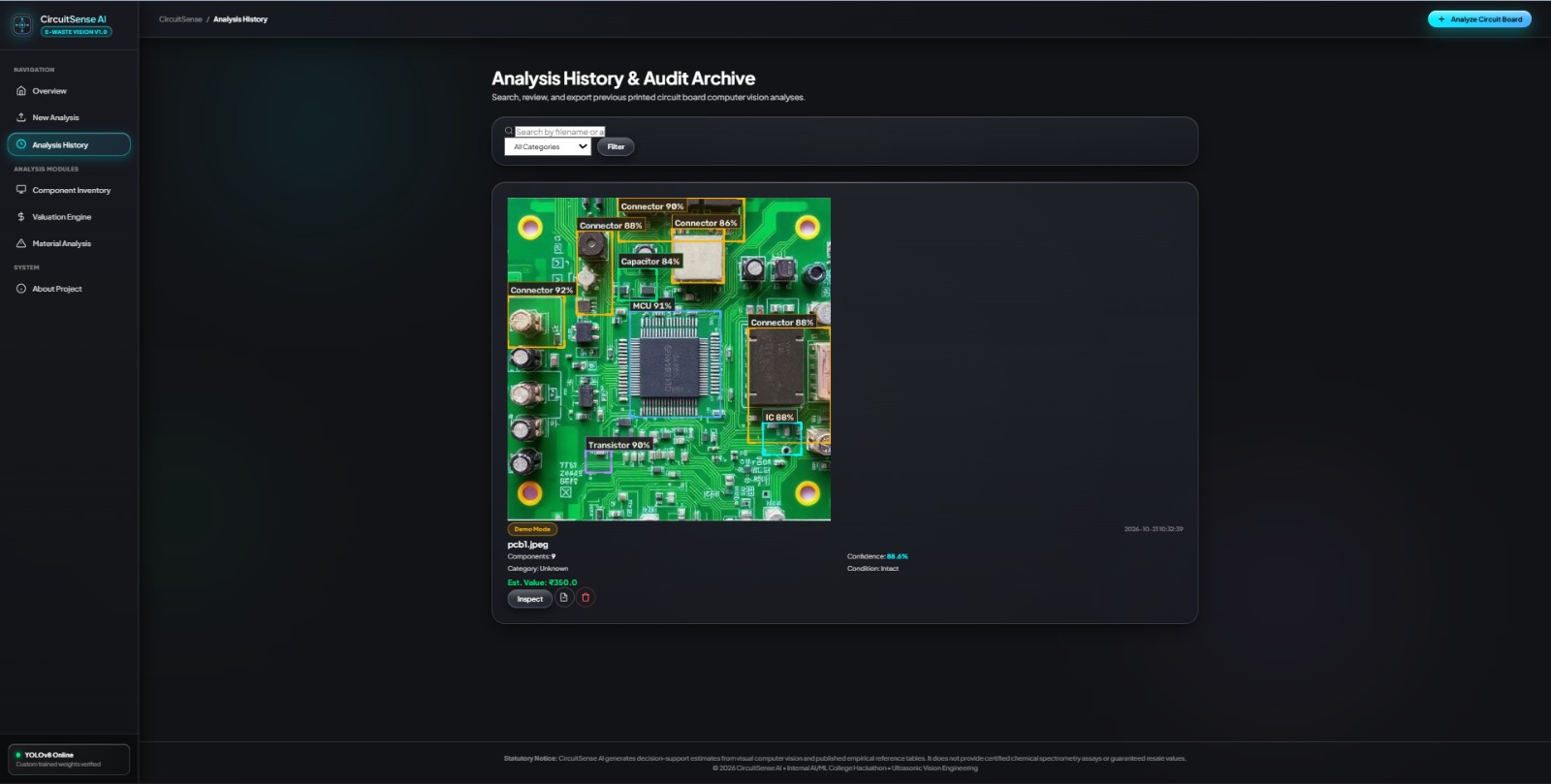
- Detect components: Use computer vision and a YOLOv8-based model to locate and classify supported electronic components.
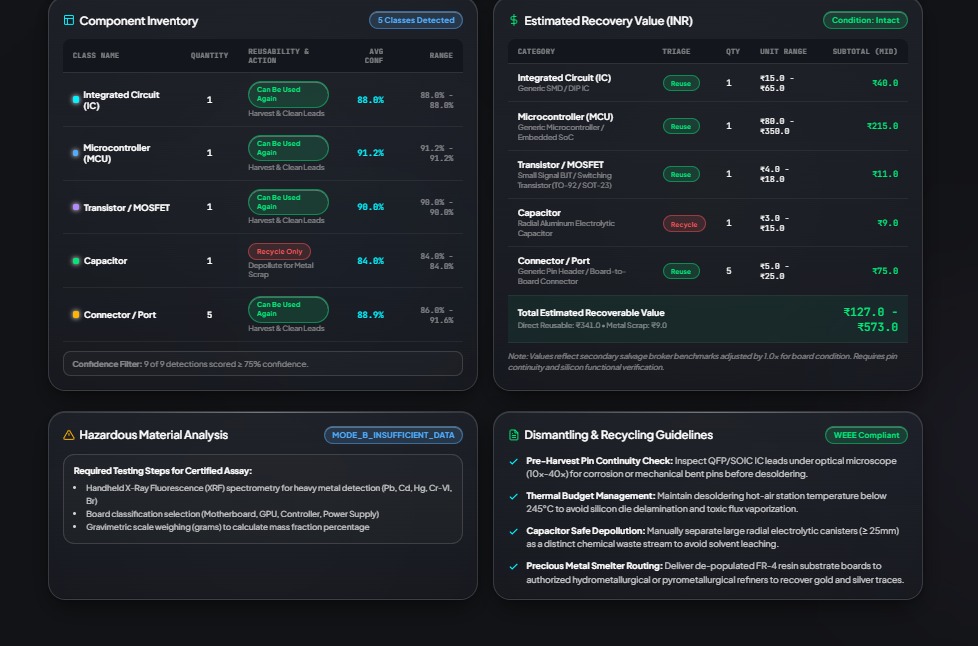
- Assess recovery potential: Categorize components into potential reuse, inspection and testing, or recycling pathways.
- Estimate secondary value: Calculate indicative recovery-value ranges in Indian rupees based on component categories and board condition.
- Analyze material risks: Provide reference-based screening estimates and identify cases where laboratory testing is necessary.
- Generate reports:"Support downloadable analysis reports and structured inventory data.
- Maintain analysis history: Store analysis records to support review and inventory tracking.
These features aim to help students, electronics technicians, and recycling teams make more informed decisions about discarded circuit boards.
How We Built It
We built CircuitSense AI using Python and Flask for the web application, with HTML, CSS, and JavaScript for the user interface.
The component-detection pipeline uses Ultralytics YOLOv8 and OpenCV for image analysis. Supporting modules handle image preprocessing, component inventory, recovery assessment, valuation, material screening, and report generation.
SQLite provides persistent storage for analysis records, while interactive dashboards help users review component distributions and analysis results.
Our workflow follows these stages:
- Upload and validate a circuit-board image.
- Process the image and detect supported electronic components.
- Display detected components and their confidence scores.
- Assess potential recovery pathways and calculate indicative value estimates.
- Store the analysis and present results through the dashboard.
- Export reports for further review.
Challenges We Faced
One of the key challenges was designing a workflow that could handle circuit-board images with different component sizes, orientations, and visual conditions.
Another challenge was distinguishing between what an image can reveal and what requires additional testing. A component that looks intact is not necessarily functional, and its exact specifications may not be identifiable from appearance alone.
Estimating resale value was also challenging because prices depend on component identity, condition, demand, and market availability. Similarly, optical images alone cannot reliably establish the precise chemical composition of a circuit board.
These challenges shaped our focus on transparent estimates, inspection recommendations, and responsible material screening rather than presenting every prediction as a confirmed fact.
What We Learned
Through this project, we explored computer vision, object detection, Python web development, database integration, and the design of modular AI applications.
We also learned that a useful AI solution requires more than a prediction model. Image validation, understandable results, data persistence, reporting, and clear communication of uncertainty are important parts of building a practical system.
Most importantly, we learned how AI can support sustainable technology practices by helping identify opportunities for electronic component reuse and recovery.
What's Next
Our future plans include improving detection accuracy with larger and more diverse PCB image datasets, incorporating component-marking recognition, integrating verified market-price sources, and adding functional-testing workflows.
We also aim to improve recovery recommendations and provide better estimates of environmental benefits using validated data.
"CircuitSense AI — Detect Smarter. Recover More. Recycle Responsibly."
Built With
- artificial-intelligence
- chart.js
- circular-economy
- computer-vision
- css
- electronic-waste
- flask
- html
- javascript
- machine-learning
- opencv
- python
- pytorch
- sqlite
- sustainability
- ultralytics
- yolov8

Log in or sign up for Devpost to join the conversation.