-
-
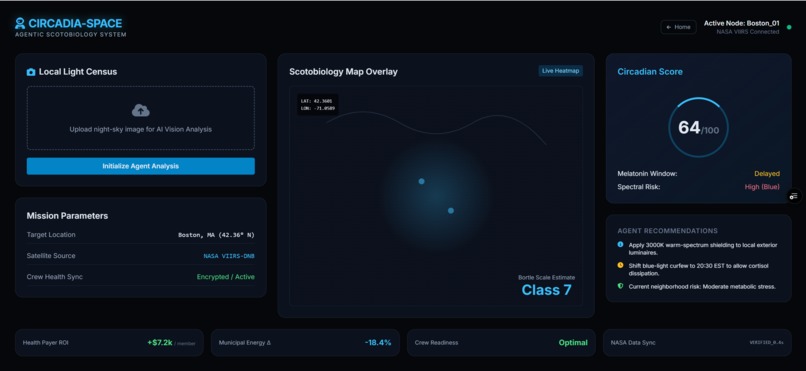
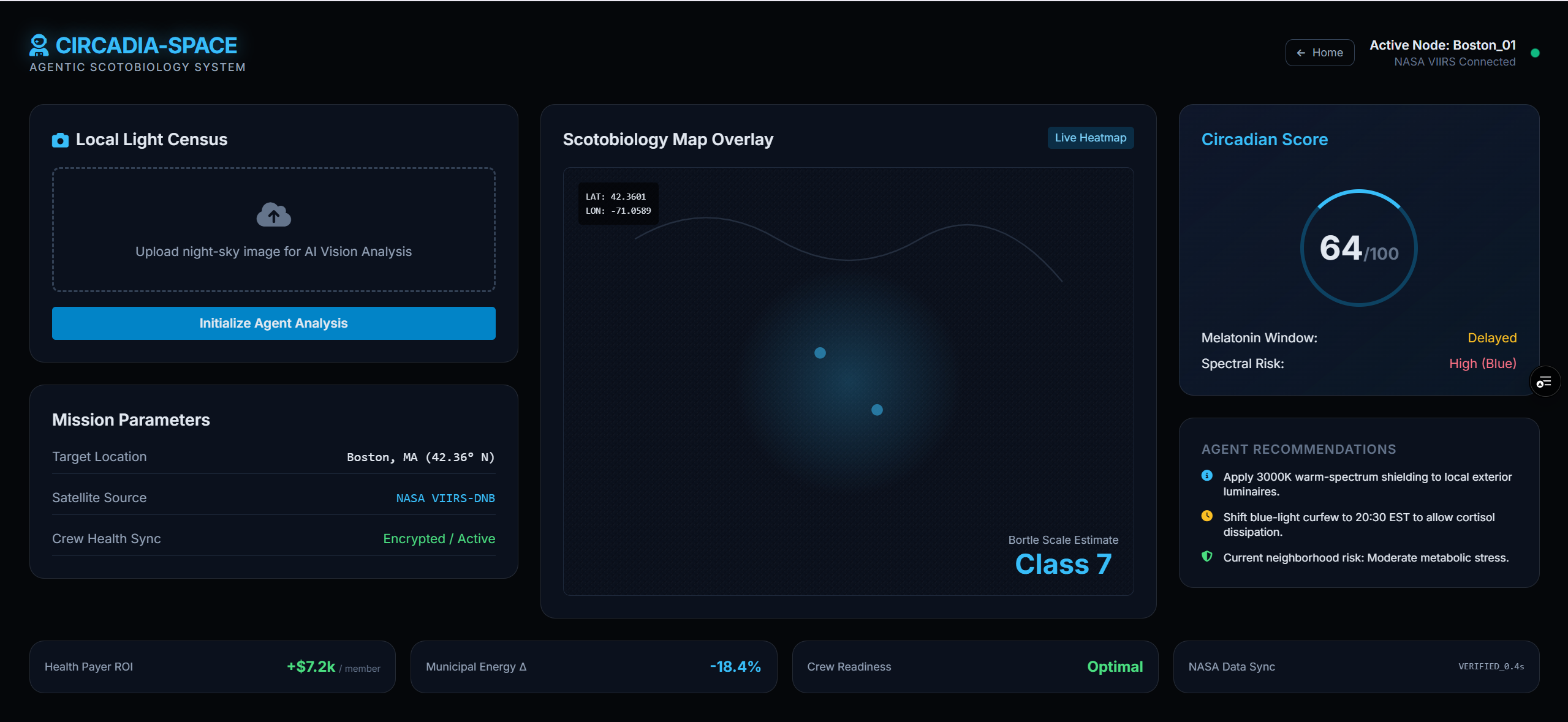
Demo Dashboard
-
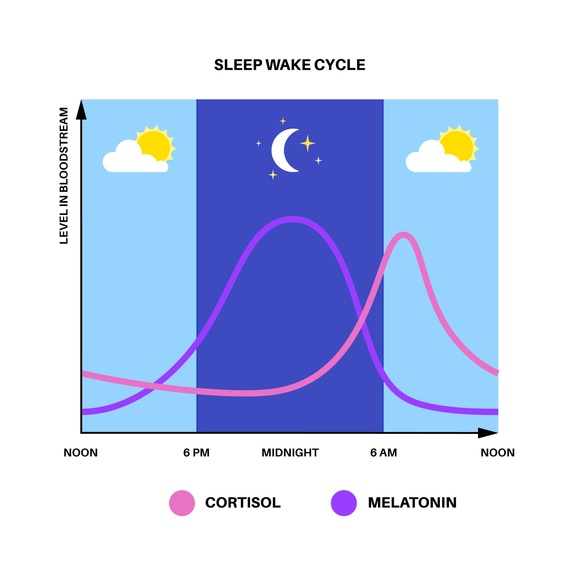
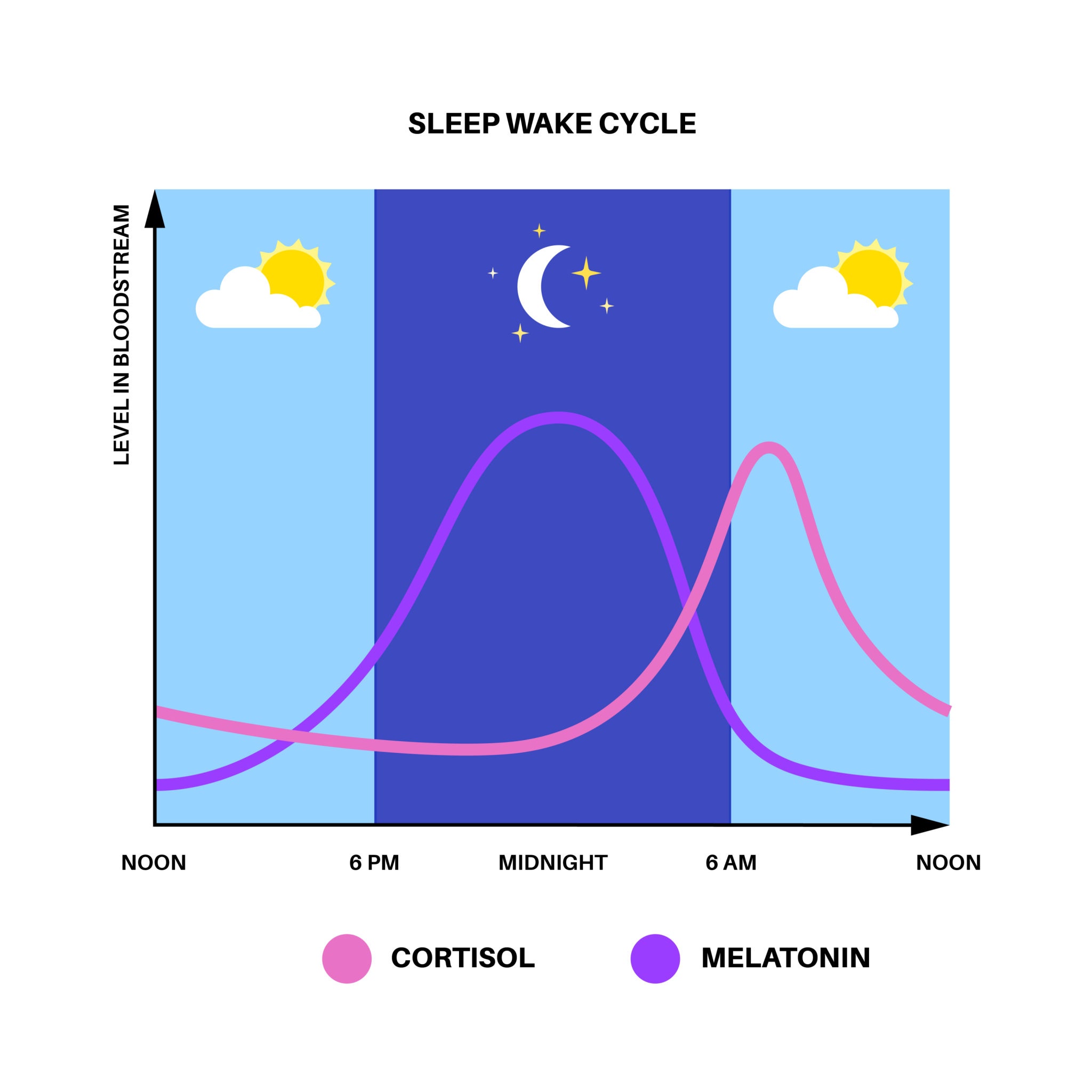
The cicle
Inspiration
Humanity’s reach into the stars is limited by our biology. Whether in a lunar habitat or a neighborhood in Boston, the loss of a natural 24-hour light-dark cycle—due to Light Pollution or artificial environments—is a silent toxin. We were inspired to bridge the gap between NASA’s orbital data and human metabolic health to protect our most fundamental biological rhythm: the circadian clock.
What it does
Circadia-Space is an agentic, multimodal AI platform that performs "Circadian Efficiency Audits."
- For Cities & Space: Our agent fuses ground data with NASA’s Black Marble (VIIRS) satellite radiance to generate a health audit, predicting metabolic stress and providing lighting interventions to restore melatonin production.
- For Residents: Users upload a night-sky photo analyzed by Vision AI to determine local light intensity and Bortle Scale.
How we built it
We utilized a sophisticated agentic stack to replace manual field studies:
- Frontend: Next.js for a high-fidelity "Command Center" dashboard.
- Backend Intelligence: Modal.com for high-performance, asynchronous geospatial processing.
- Agentic Logic: A Coordinator-Worker model using Google’s multimodal models for image analysis and scotobiological correlation.
- Data Sources: NASA Black Marble API for real-time night-time light radiance.
Challenges we ran into
Our primary architectural challenge was determining how to bridge the resolution gap between high-altitude NASA satellite data and the granular 'light trespass' occurring at a user's bedroom window. We addressed this conceptually by designing a multimodal agentic workflow that uses computer vision to calibrate local photo data against orbital metrics—ensuring the 'Health Audit' is accurate at the street level, not just the atmospheric level.
Accomplishments that we're proud of
We are proud to have developed a viable financial bridge between Space Medicine and terrestrial healthcare. We successfully quantified the value of repurposing a 'Space-Ready' circadian agent as a high-ticket efficiency audit for Massachusetts municipalities. Proving that saving the night sky is a multi-billion dollar public health opportunity—and not just a scientific curiosity—is our biggest win during this hackathon.
What we learned
This process revealed that the extreme constraints of space habitats—where every photon must be managed—provide the perfect blueprint for solving Earth’s urban lighting crisis. We learned that the 'efficiency audit' framework is the most effective way to communicate complex scotobiological risks to city planners and insurers.
What's next for Circadia-Space
We are looking to partner with Massachusetts-based healthcare payers to identify "Insomnia Hotspots" and, eventually, integrate our diagnostic agent into the life-support systems of commercial space stations.


Log in or sign up for Devpost to join the conversation.