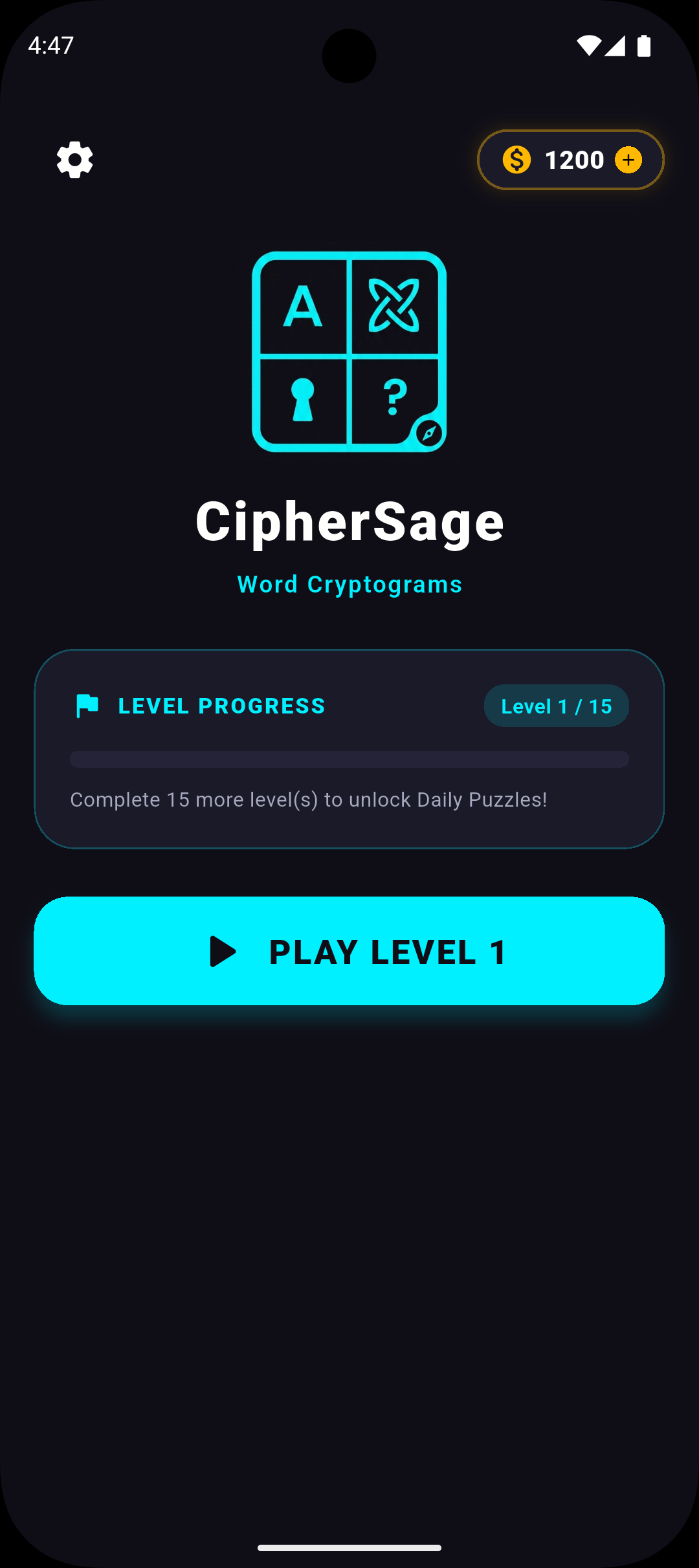
CipherSage: Word Cryptograms
Inspiration
Traditional cryptograms are timeless exercises in logic and pattern recognition, but on mobile, they often fall into one of two extremes: clunky digital copies of pen-and-paper grids, or brute-force guessing games where a player gets permanently stuck on low-frequency letters.
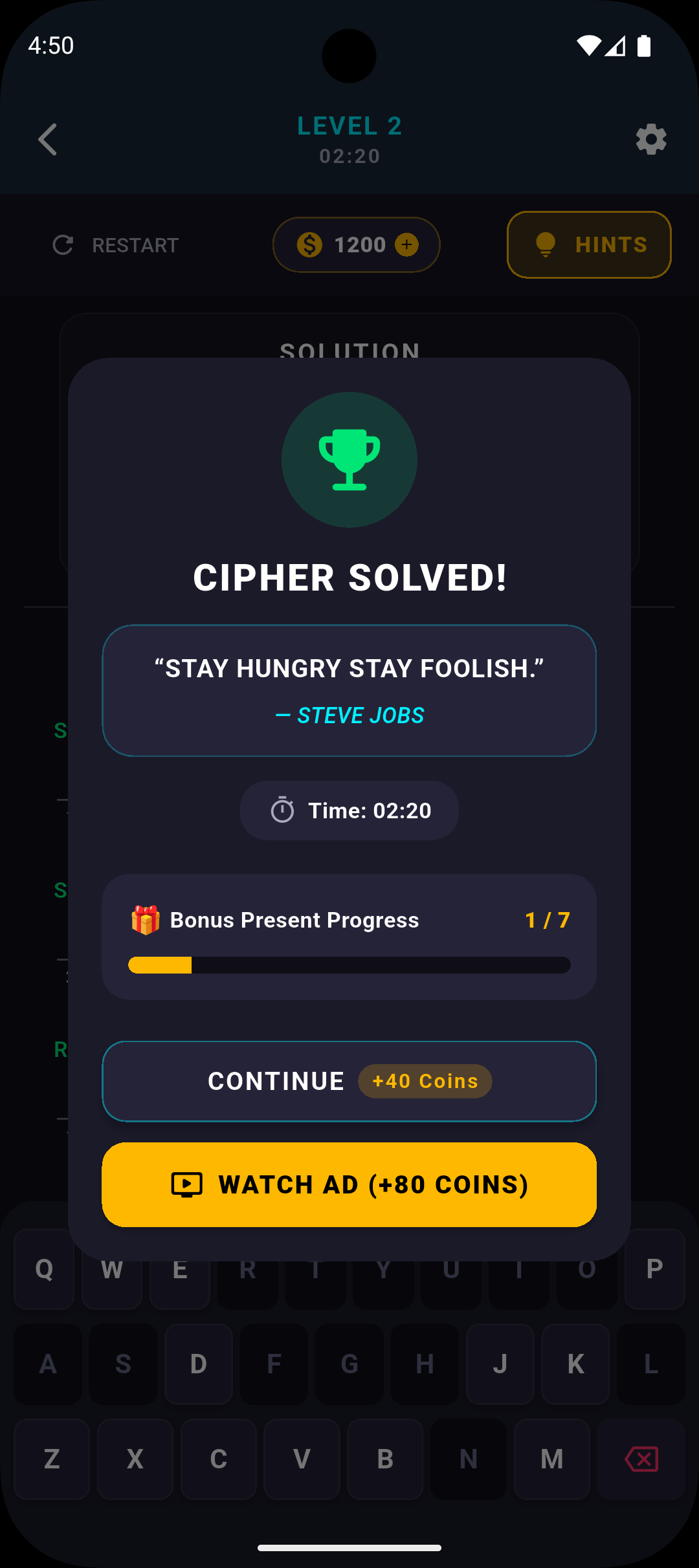
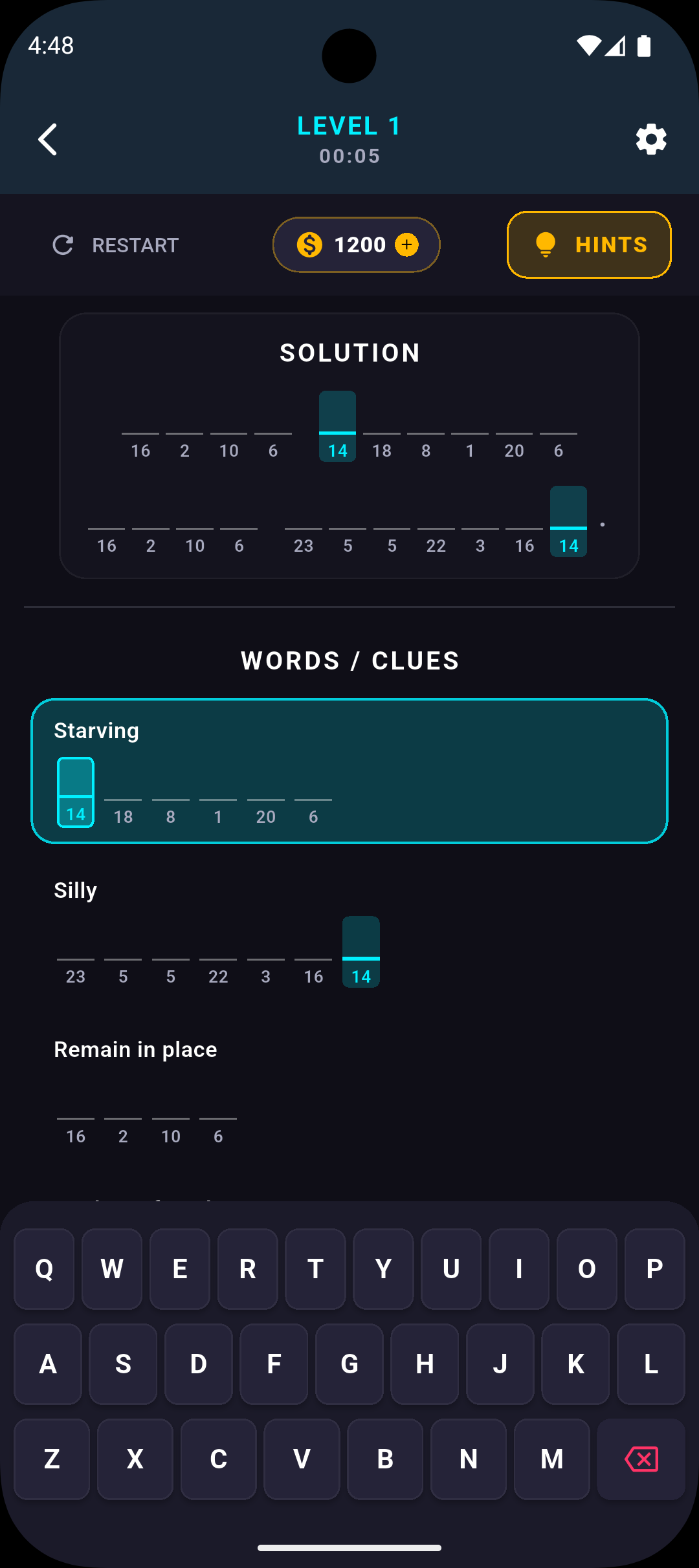
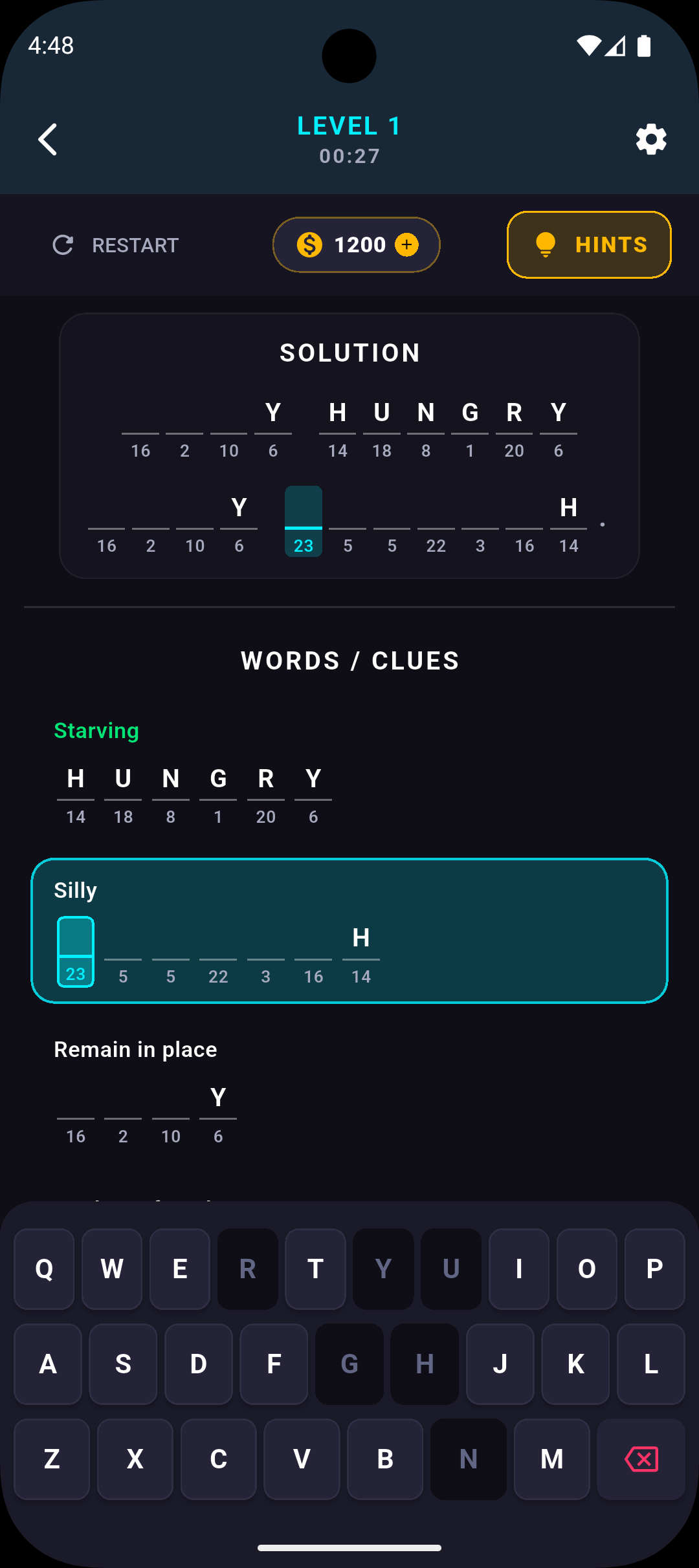
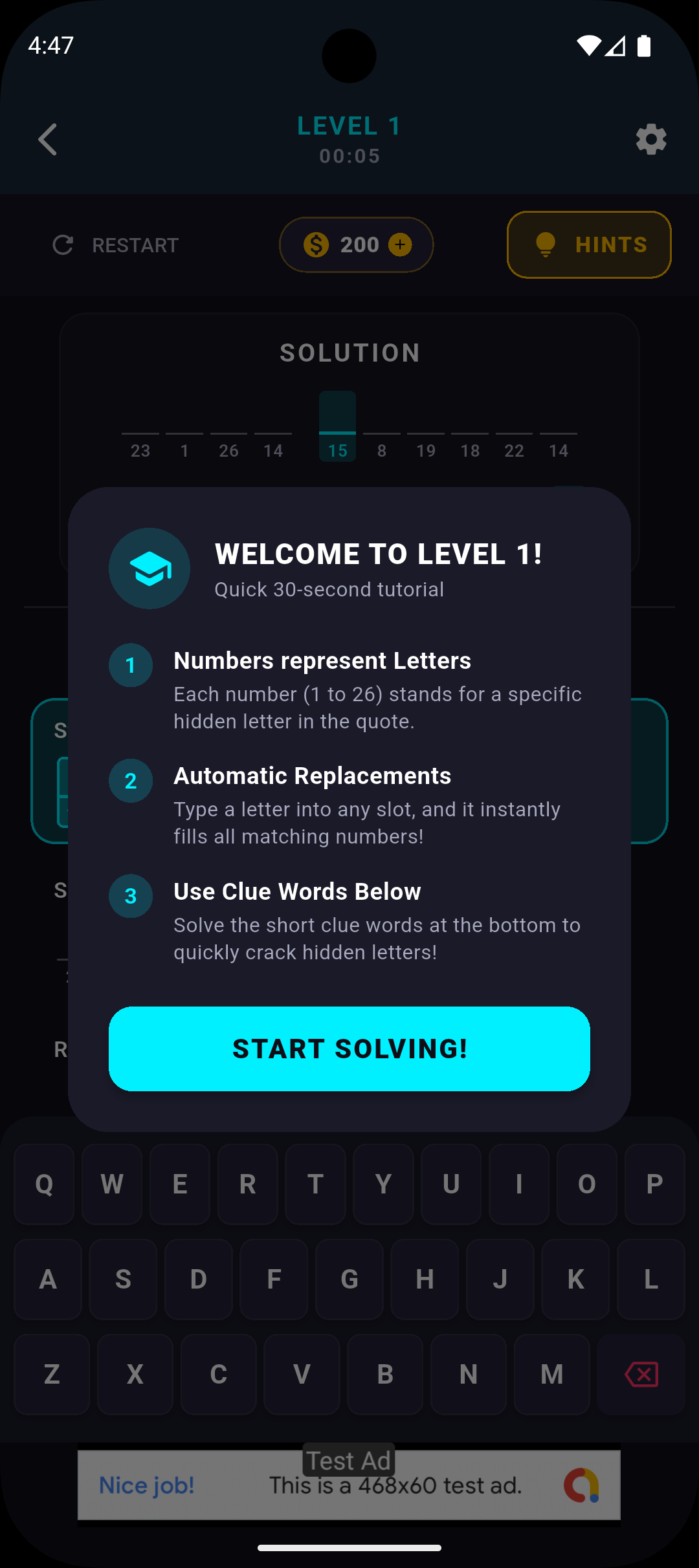
We wanted to bridge the gap between pure cryptanalysis and associative word deduction. By introducing crossword-style clue words that directly feed into the master cipher, we created a dynamic feedback loop. Instead of grinding through letter frequencies alone, solving a clever mini-clue unlocks targeted letters in the quote—sparking an immediate cascade of deductions and delivering that sought-after "aha!" moment.
How We Built It
CipherSage was architected for rapid cross-platform deployment, responsive touch performance, and seamless offline/online state synchronization:
- AI-Accelerated Workflow: We leveraged Gemini within the Antigravity IDE throughout both the design and development phases. Gemini served as an active co-pilot for architectural design, rapid UI prototyping, algorithmic logic refinement for clue-letter intersections, and drafting production-ready boilerplate.
- Engine & Client UI: Built with Flutter/Dart to ensure consistent $60\text{ fps}$ animations, smooth keyboard interactions, and instant responsive layouts across varying phone and tablet aspect ratios.
- Cipher & Clue Generation Engine: An algorithmic pipeline parses curated quotes, maps unique substitution ciphers, and cross-references vocabulary banks to generate solvable, balanced clue words that intersect meaningfully with the master puzzle.
- Monetization & Store Architecture: Integrated RevenueCat for clean, reliable in-app purchase validation, hint-economy management, and store-compliant flows across mobile ecosystems.
- Local State & Persistence: Built on lightweight reactive local stores to keep solve progress, hints used, and streak data instantaneous and battery-efficient without requiring unnecessary round-trip server latency.
Technical & Design Challenges
1. Dual-Layer State Mapping & Cascading Solves
The core mechanic requires two synchronized puzzle grids: the Clue Words ($W$) and the Master Cryptogram ($M$).
Ensuring bidirectional updates (editing a letter directly in the cryptogram vs. unlocking it via a clue word) while handling conflict resolution, dynamic cursor jumps, and soft keyboard focus without UI lag required a robust reactive state model.
2. Production Polish & App Lifecycle
Transforming a puzzle concept into a shipped commercial product meant handling edge cases that prototypes skip: handling interruptions during active solves, frictionless onboarding, seamless offline play, and store-compliant monetization flows.
What We Learned
- AI-Driven Tooling Multiplies Velocity: Integrating Gemini directly into our Antigravity IDE workflow streamlined the bridge between conceptual puzzle math and actual production code, letting us iterate rapidly on game balance and UX edge cases.
- Hybrid Mechanics Breathe New Life into Classics: Blending crosswords with cryptograms fundamentally changes player pacing, smoothing the difficulty curve while keeping the deductive reward intact.
- Tactile UX is Everything in Word Games: Every millisecond counts. Responsive letter deletion, automatic cursor advancement, and distinct auditory/haptic feedback transform a puzzle game from functional to delightful.
- Designing for Shipping from Day One: Structuring the build system, store assets, privacy infrastructure, and IAP backend early dramatically reduces launch friction and paves the way for rapid post-hackathon growth.


Log in or sign up for Devpost to join the conversation.