-
-
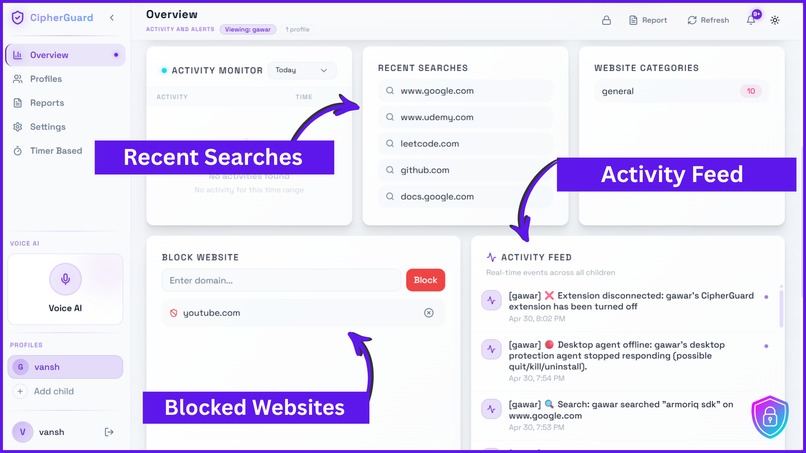
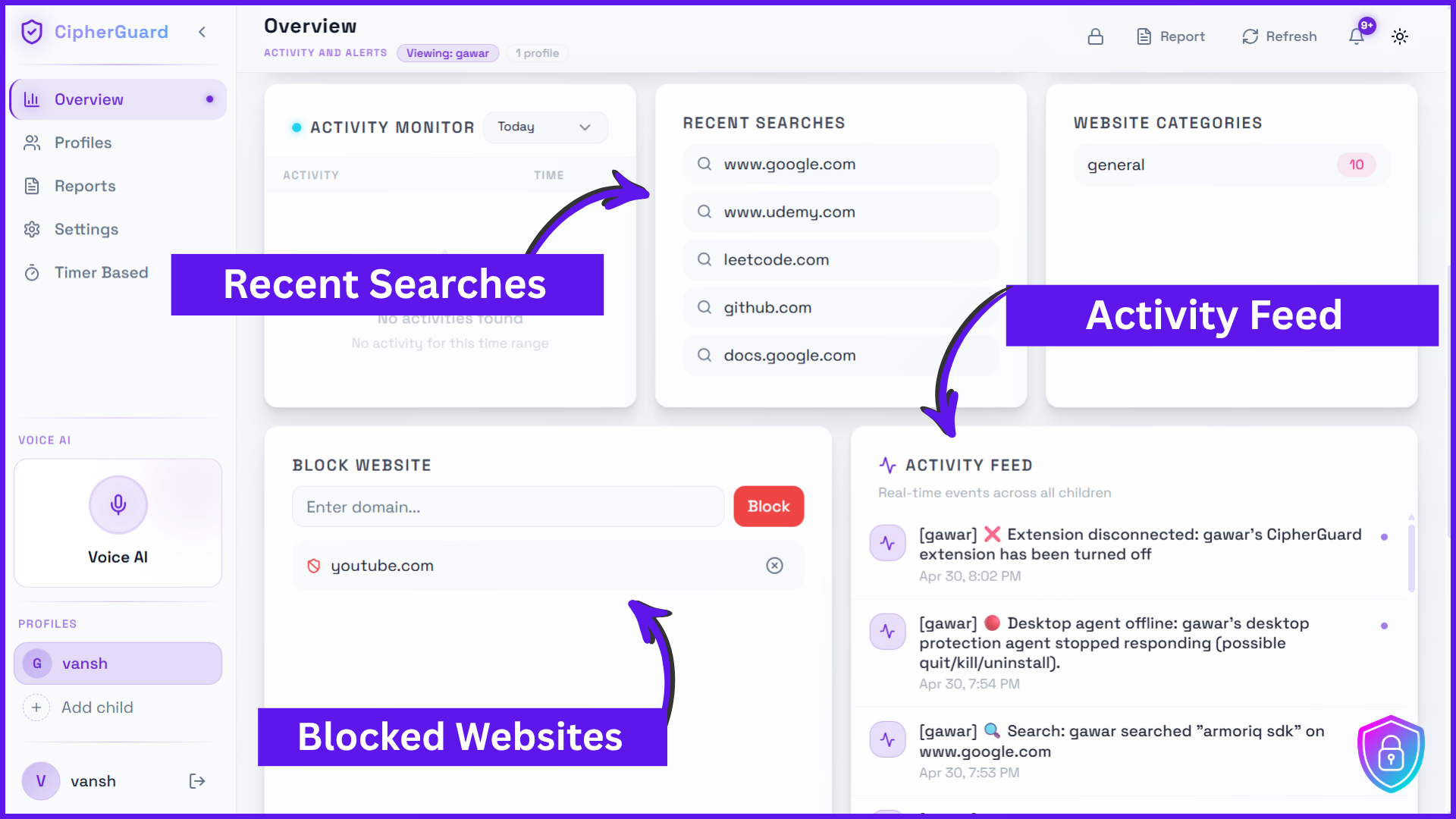
Parental Dashboard Overview
-
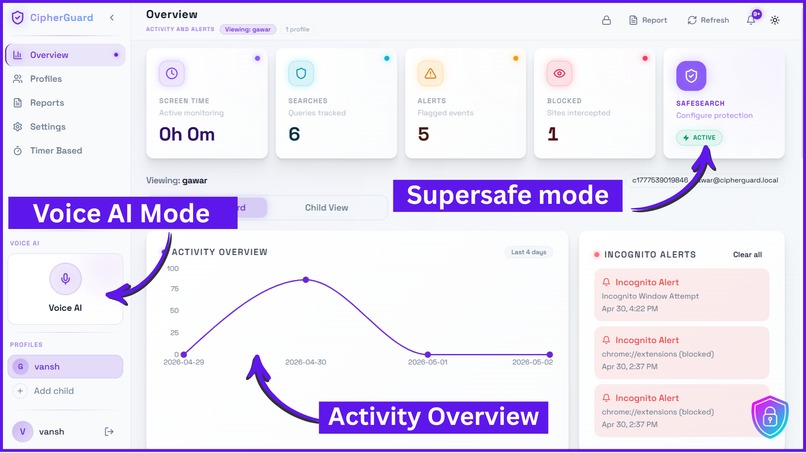
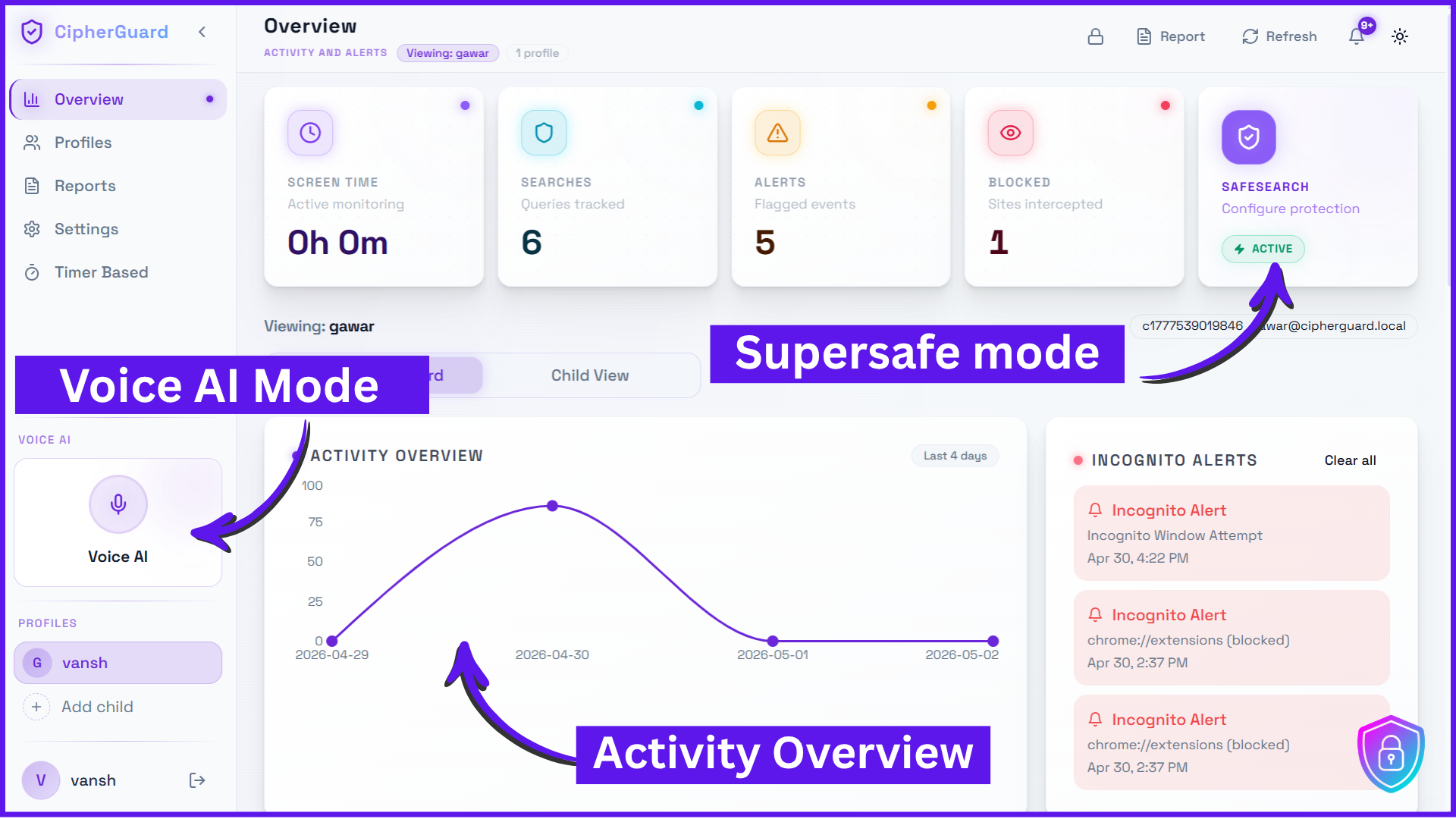
Overview - Dashboard with Voice Mode
-
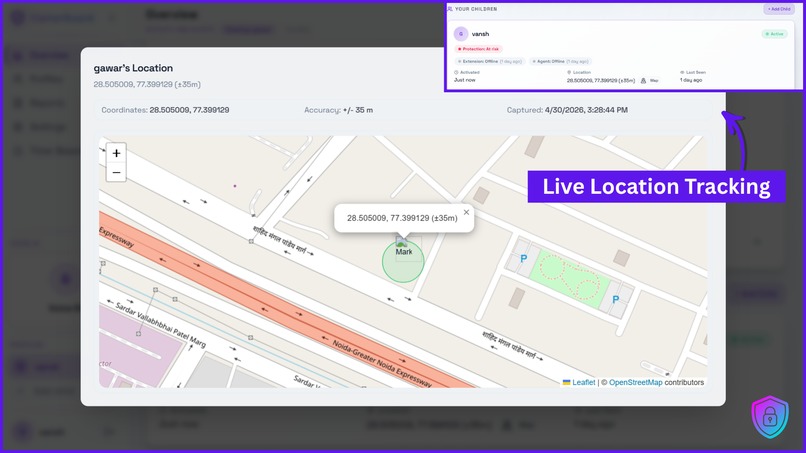
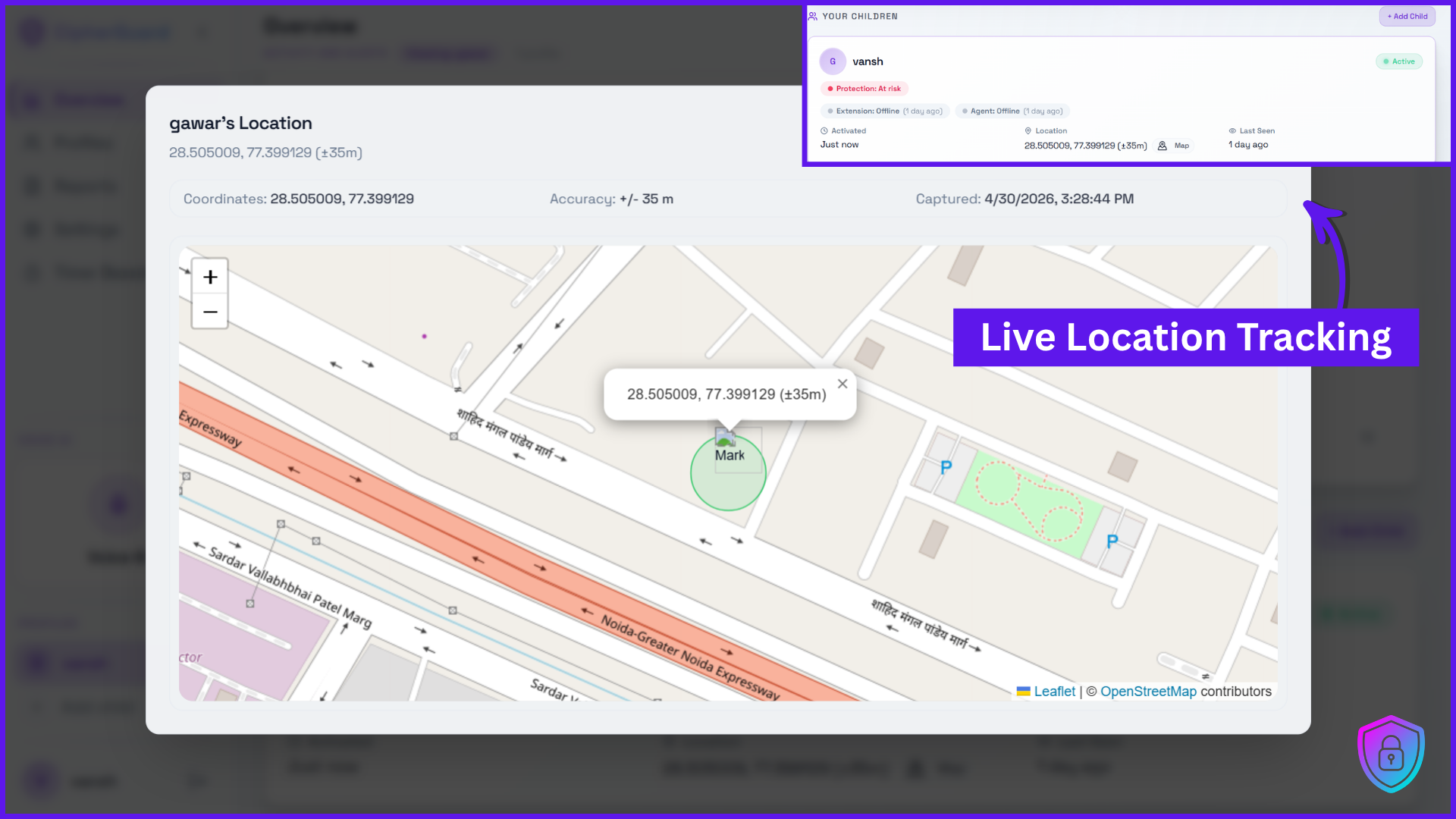
Location Access
-
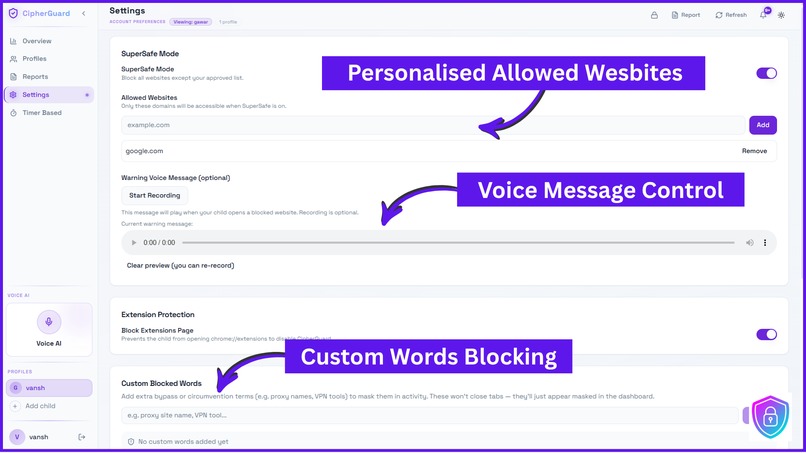
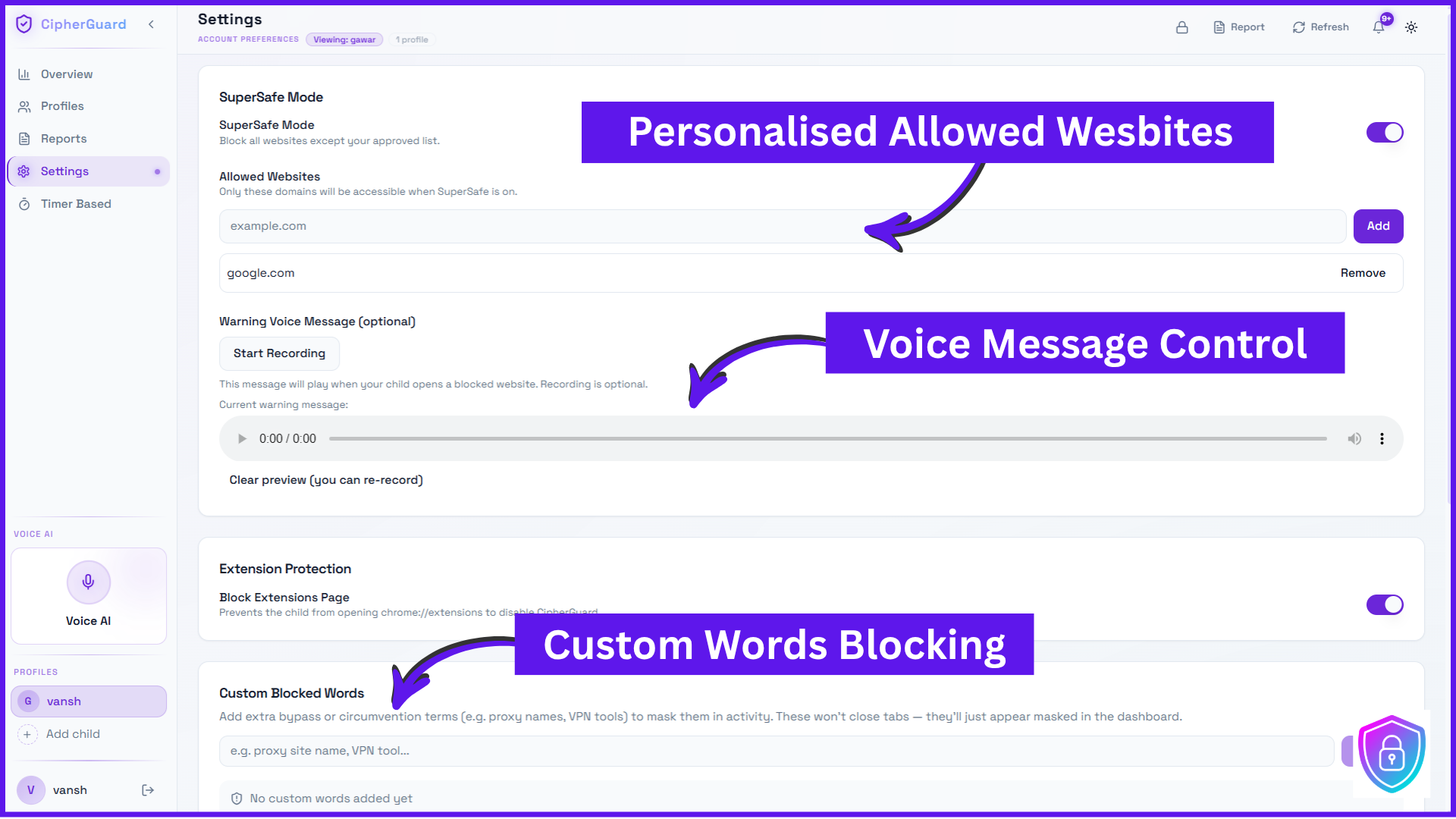
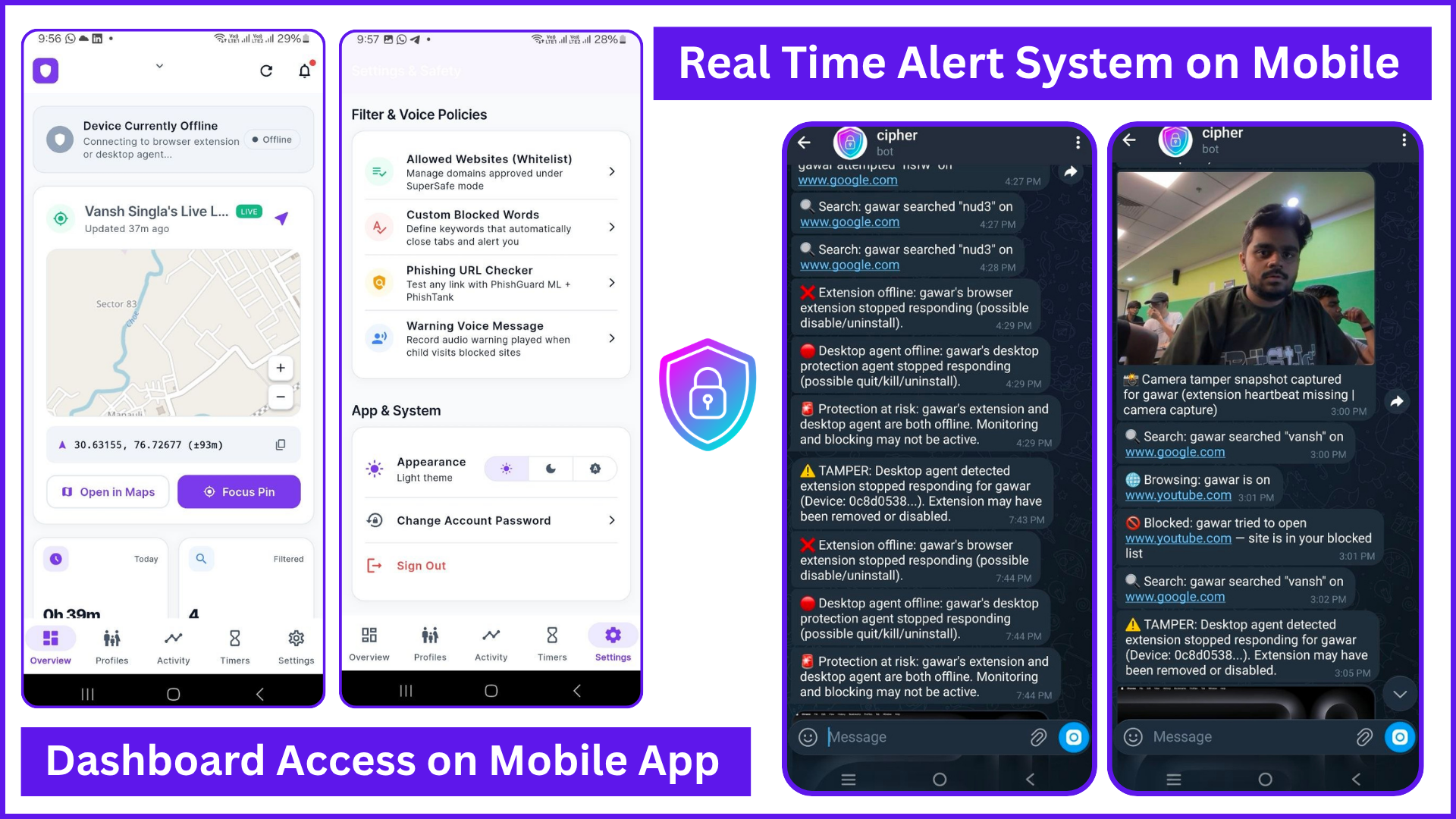
Settings & Supersafe Mode
-
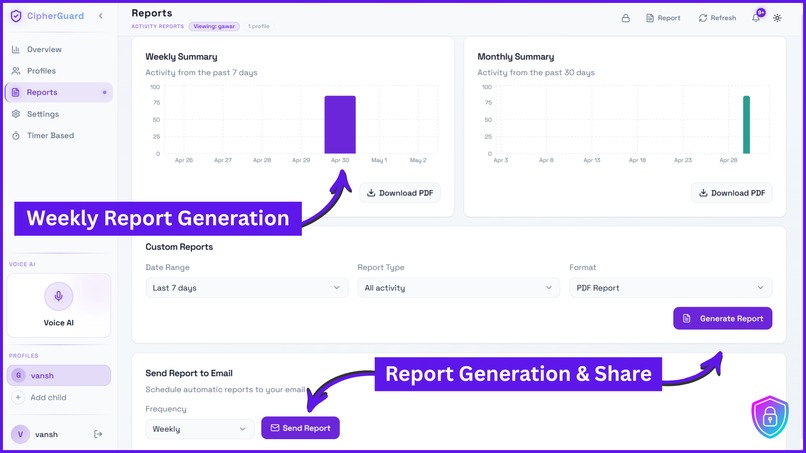
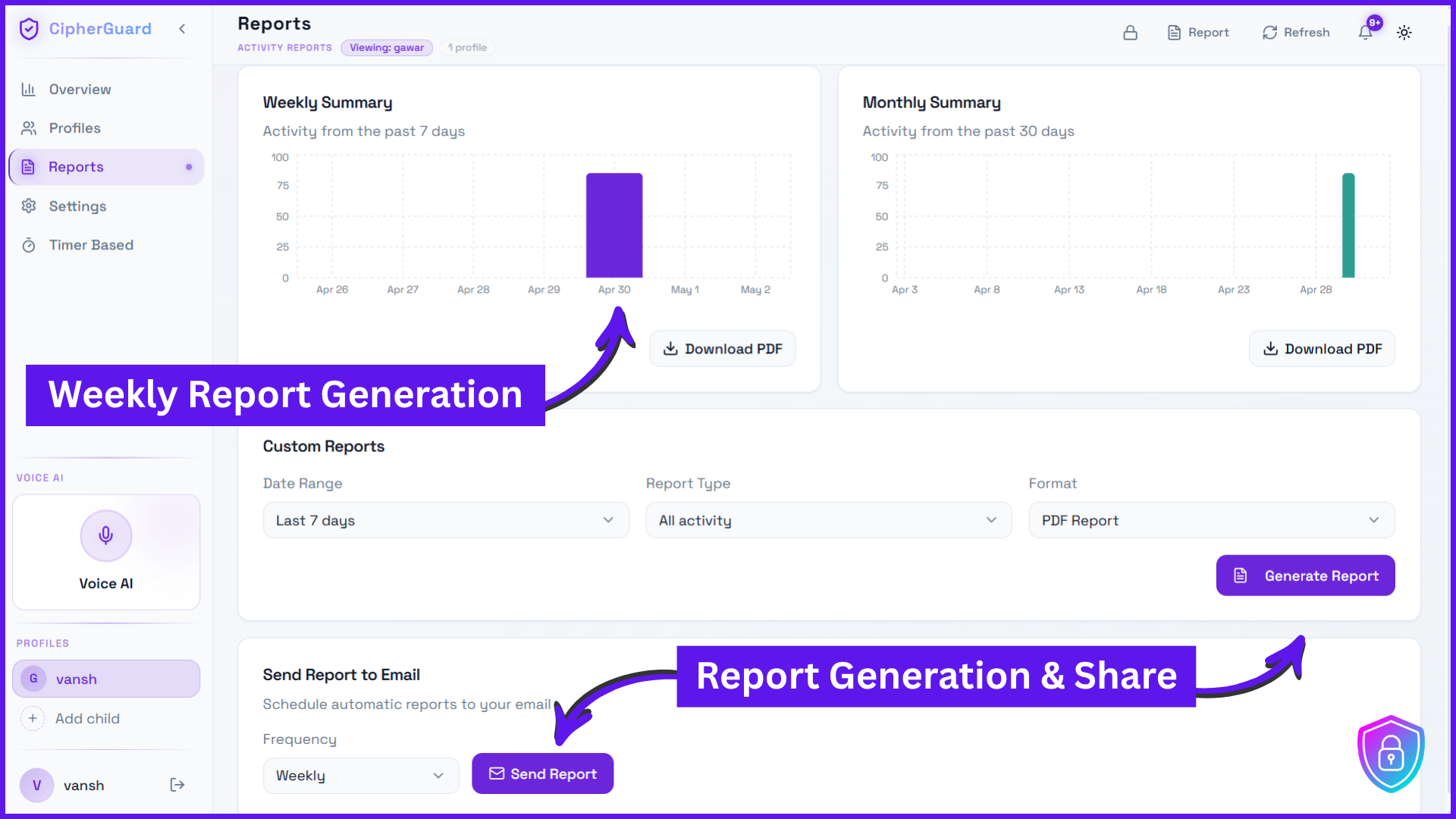
Report Generation - Customized
-
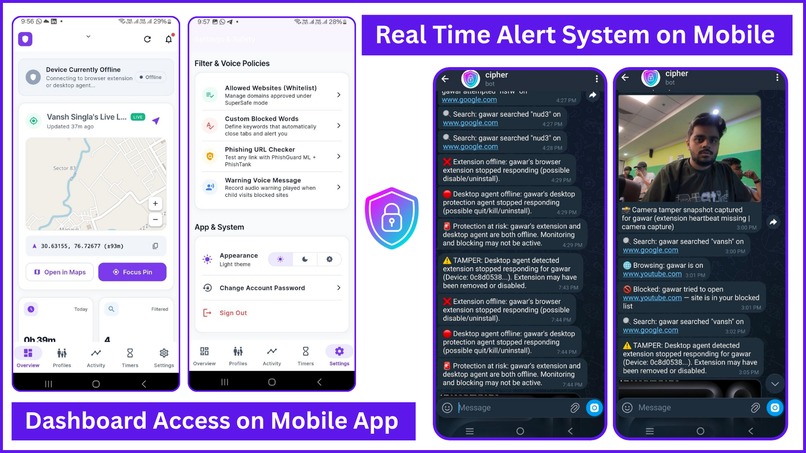
Mobile + Telegram Bot Live Working
-
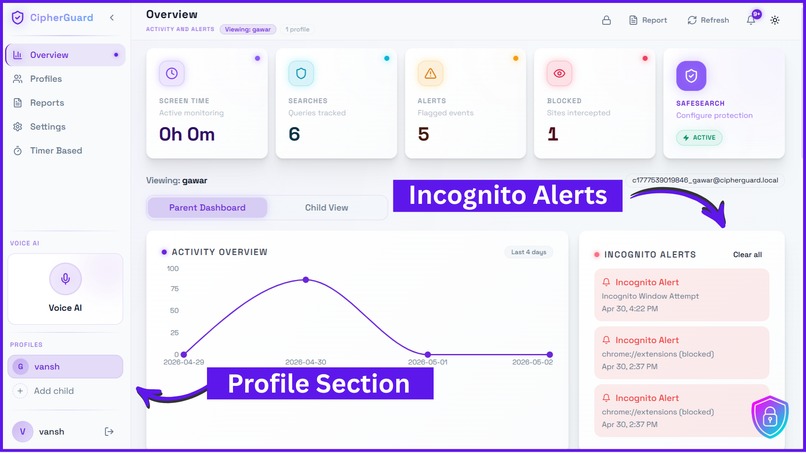
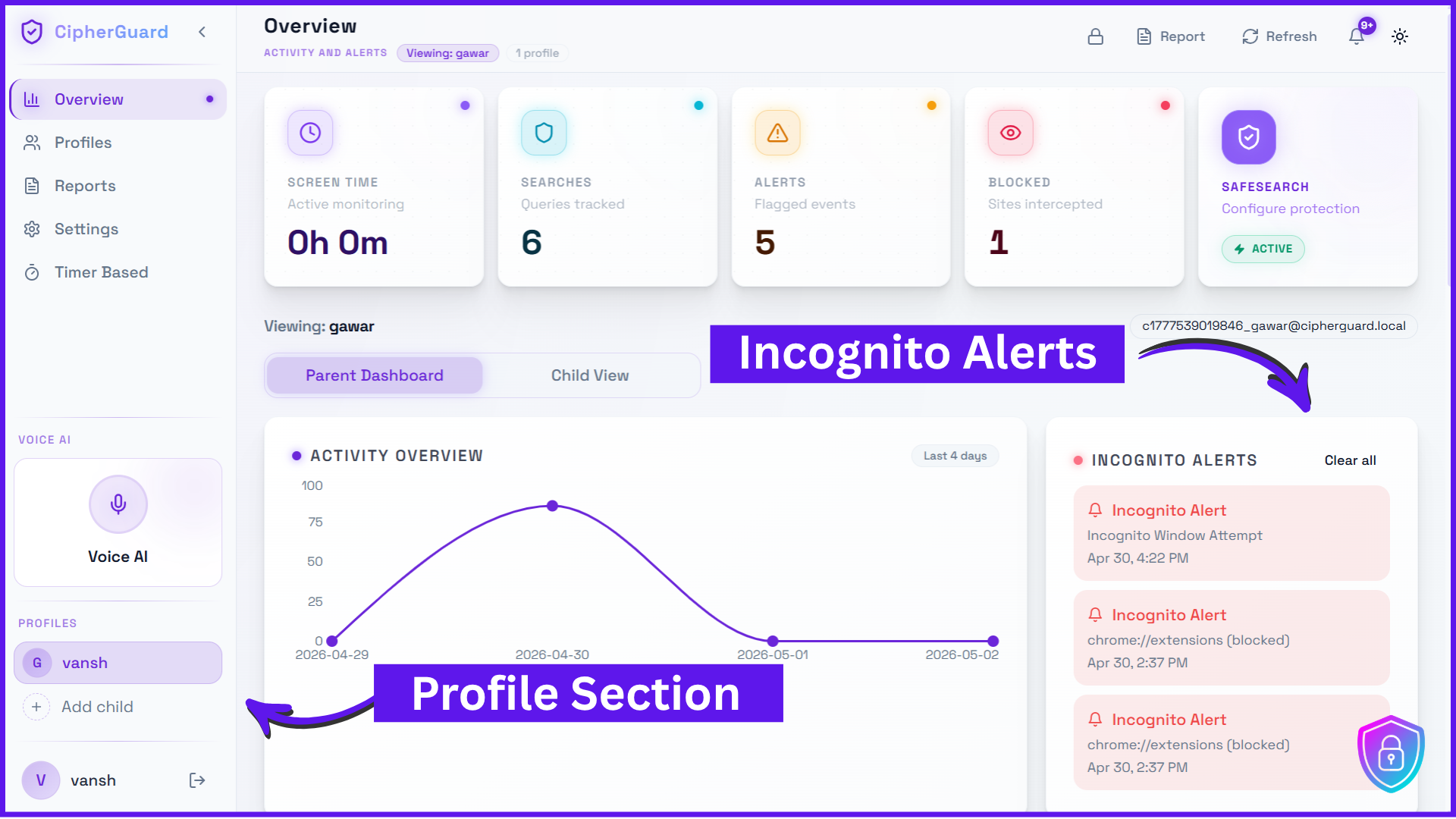
Incognito Alerts + Profile Section
-
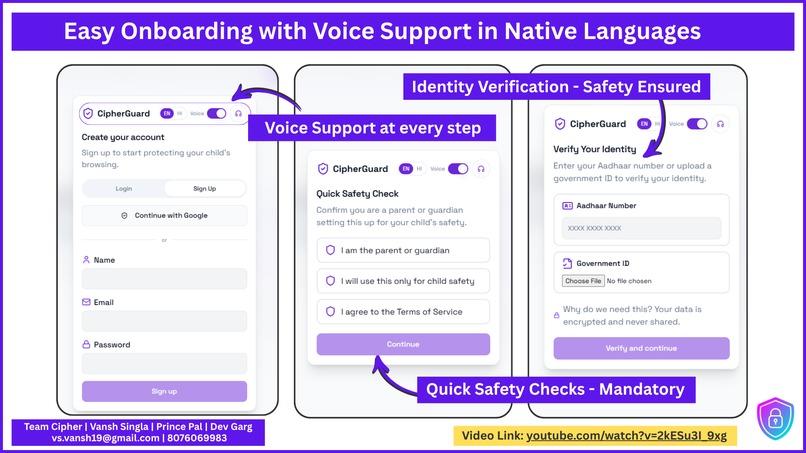
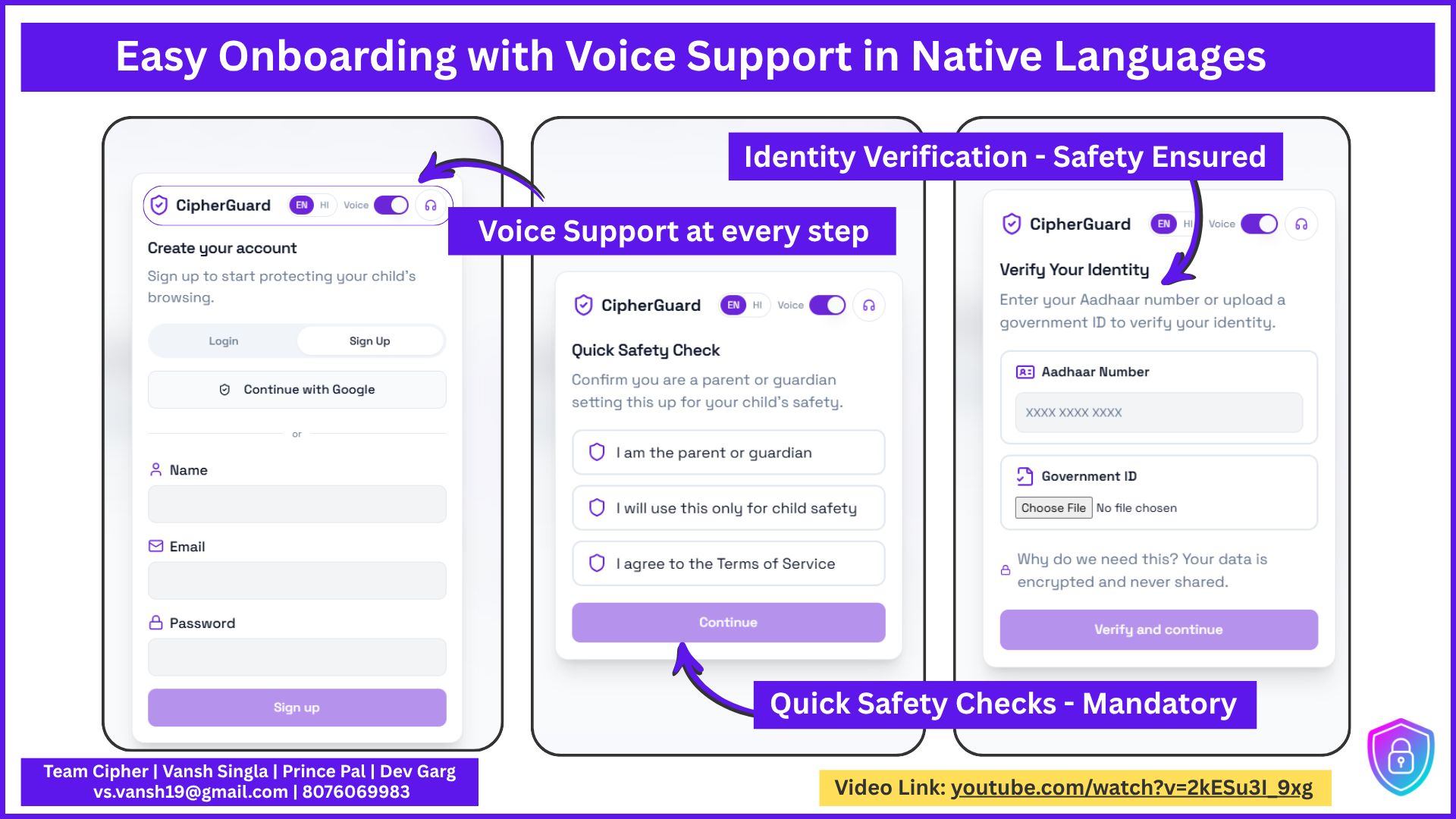
Easy Onboarding with Voice Support
Inspiration
A few of my friends and I were working on a project at home. My younger brother was sitting right next to me, watching a YouTube lecture. Educational, harmless, exactly what any parent would want him doing.
Then a pop-up appeared, and in one second he was looking at explicit content he was never supposed to see. I was two feet away and still couldn't stop it.
I looked for tools that would have prevented it and found two kinds. Some block whole websites, so a "safe" site like YouTube lets harmful content straight through. Others spy on everything a child does, which destroys trust and puts their data at risk. Nothing protected what actually appears on the page without turning into a spy.
So we built it.
What it does
CipherGuard is an AI-powered ecosystem (dashboard, app, bot, agent) that protects children across five platforms while respecting their privacy.
- Live content filtering: blurs NSFW and violent images and video before the child sees them
- DNS-level blocking: stops unsafe domains (adult, gambling, phishing, malware, ad and pop-up sources) before they load, in every browser and app
- Text analysis: flags bullying, profanity and grooming language, so parents get the signal without reading private chats
- Incognito detection: alerts parents when private browsing is used to bypass monitoring
- Search tracking and site classification: shows what a child searches for and sorts sites into education, gaming, social media and more
- Time limits: screen-time caps per site category or specific domain
- SuperSafe Mode: strict blocking, voice warnings and incognito lock, toggled from the dashboard
- Instant alerts: parents are notified on WhatsApp, Telegram, the dashboard and the mobile app, where they already are
- Privacy by design: no keylogging and no conversation recording, and the child can see what is monitored
How we built it
CipherGuard has four layers that share one backend:
- Child's devices: a Chrome extension (TypeScript, JavaScript, React) and a desktop agent
- Protection layer: our own DNS resolver plus AI models for images and text
- Cloud backend: Node.js/Express and FastAPI services for profiles, rules, events and alerts
- Parent surfaces: WhatsApp bot, Telegram bot, live dashboard and mobile app
AI/ML: TensorFlow computer vision detects NSFW and violent images and video, and the Perspective API plus toxic-text datasets (Jigsaw, Davidson, Wikipedia Detox) detect harmful language. Image models draw on open datasets such as Yahoo Open NSFW, NudeNet and LAION NSFW subsets, and URL classification draws on DMOZ, Common Crawl and OpenPhish.
DNS resolver (Go): we wrote a resolver that answers UDP and TCP queries. Each query is normalized, checked against an allowlist and a blocklist (each supporting whole-domain and subdomain-only rules), and either refused with NXDOMAIN or answered from a TTL cache. Cache misses race two upstream resolvers, 1.1.1.1 and 8.8.8.8, and the fastest answer wins. The allowlist always takes priority, so a blocklist mistake can never lock out a trusted site:
$$ \text{blocked}(d) = \neg\,\text{allow}(d) \;\wedge\; \text{block}(d) $$
device -> CipherGuard DNS -> allowlist? -> blocklist? -> real IP | NXDOMAIN
A script refreshes the blocklist without any code change, and the resolver's behavior is configured through environment variables.
Challenges we ran into
- Protection versus privacy: most tools get safety by recording everything. We had to design detection that alerts on flagged events only, without logging keystrokes or conversations.
- DNS can't see inside a page: HTTPS hides page content, so DNS can stop a bad domain but can't blur an image on an allowed site. That is why we layered DNS with the extension.
- False positives: blocking too aggressively breaks legitimate sites, so we built an allowlist that always wins and an educational-site exception.
- Keeping five surfaces consistent: the extension, agent, app and two bots all needed the same rules and events, so everything runs through one backend.
- Kids find workarounds: incognito mode, other browsers and changed settings all needed detection, not just blocking.
Accomplishments that we're proud of
- A working ecosystem across five surfaces (Chrome extension, desktop agent, mobile app, WhatsApp bot and Telegram bot) with a live parent dashboard
- Our own DNS resolver with allowlist-wins matching, a TTL cache and upstream racing
- A privacy-first design that protects children without spying on them
- Alerts that reach parents on WhatsApp and Telegram, instead of yet another dashboard to check
- Turning a personal moment into a complete, layered product during a hackathon
What we learned
- Layered defense beats any single control, because DNS, the extension and the agent each cover what the others can't
- Trust is a safety feature: children accept protection they can understand
- Parents respond to alerts that arrive in the apps they already use
- Small design choices, such as allowlist priority and pre-sized lookup maps, make a resolver both safer and faster
- Privacy and protection are not a trade-off if you decide early what you refuse to collect
What's next for CipherGuard by Team Phoenix
- Per-child DNS profiles with encrypted DNS (DoH and DoT) and private profile tokens
- DNS block events flowing into the alert engine, dashboard and bots
- Hindi and Hinglish detection for bullying and grooming language
- Grooming escalation: tracking repeated signals over time instead of single messages
- Tamper protection and anti-bypass checks for VPNs, changed DNS and removed agents
- Weekly well-being reports delivered on WhatsApp
- A school and NGO dashboard with anonymized, class-level trends
- Real-world pilots with parents and schools to measure accuracy and false positives
Built by Team Phoenix: Vansh Singla (strategy and go-to-market), Dev Garg (AI/ML and backend) and Prince Pal (product and frontend).

Log in or sign up for Devpost to join the conversation.