-
-
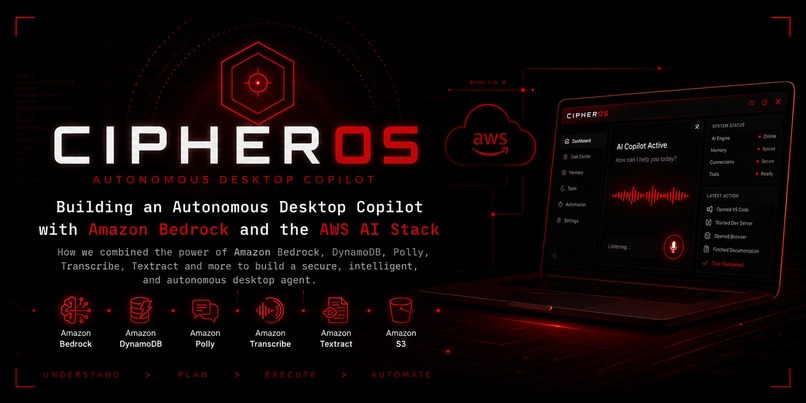
Banner
-
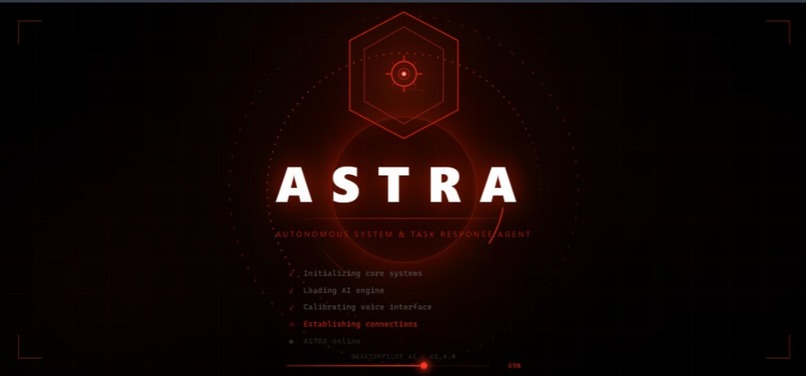
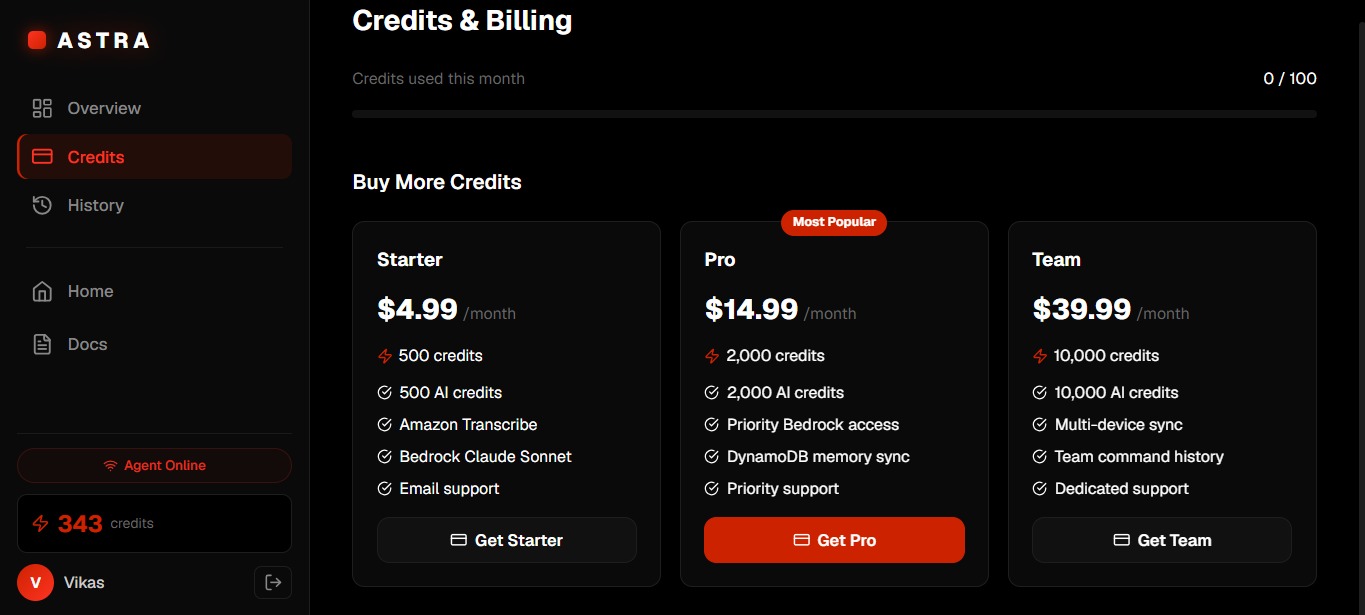
Home
-
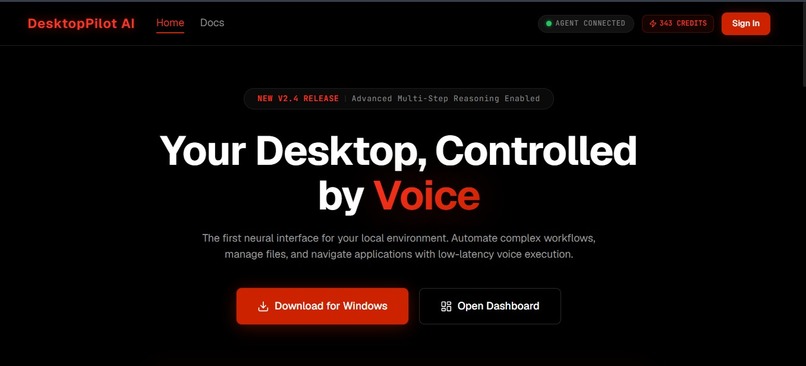
Info
-
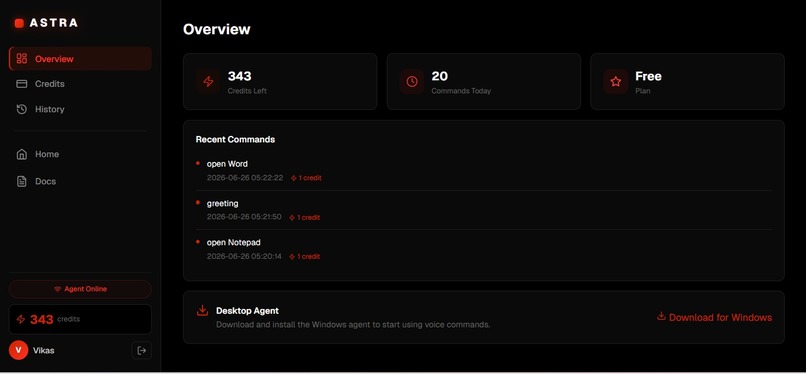
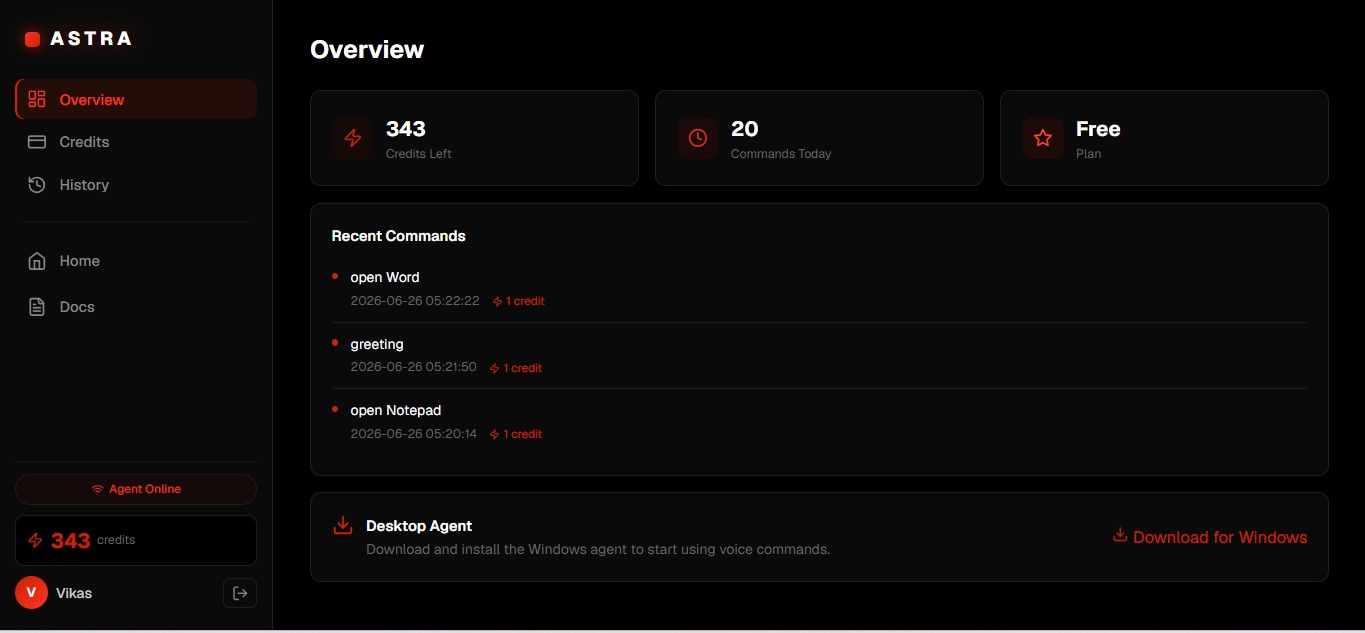
Dashboard
-
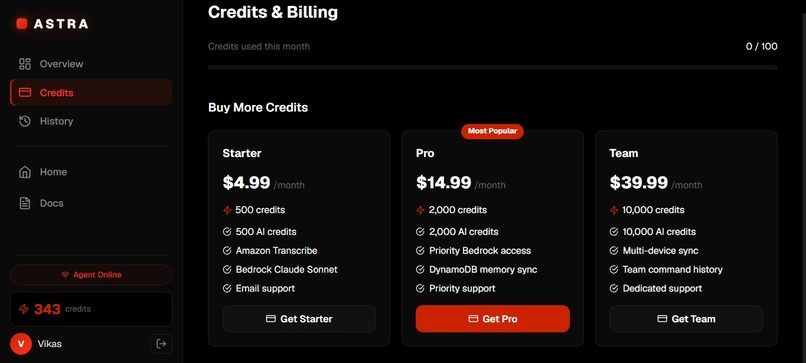
Subscriptions
-
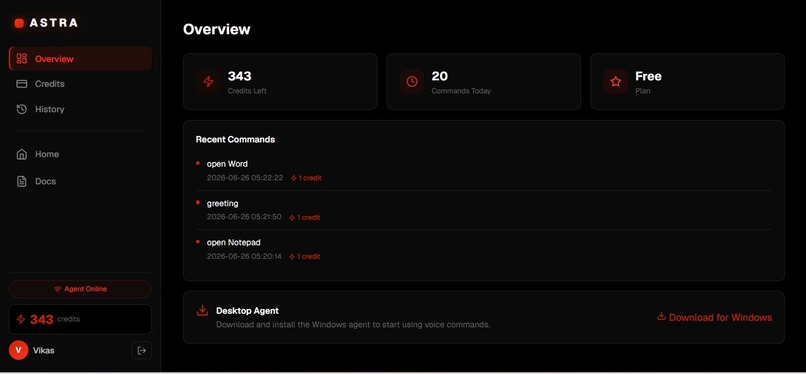
Usage
-
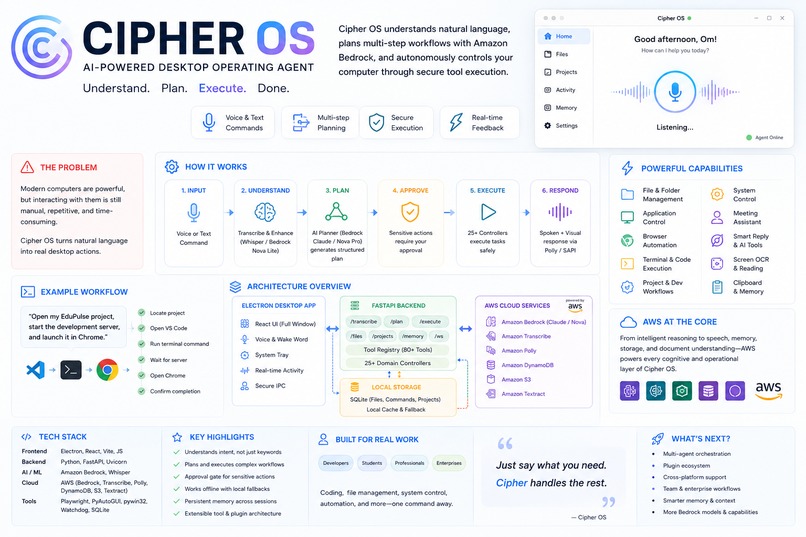
Landscape_Poster
-
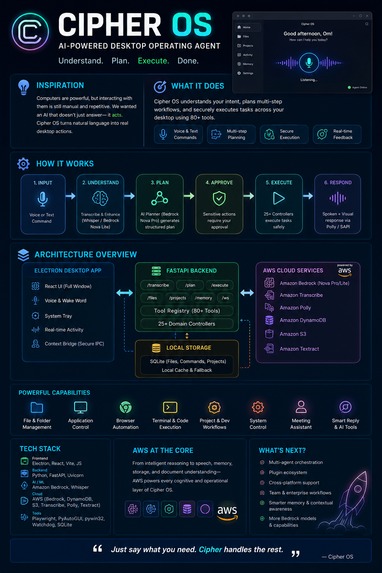
Potrait_Poster
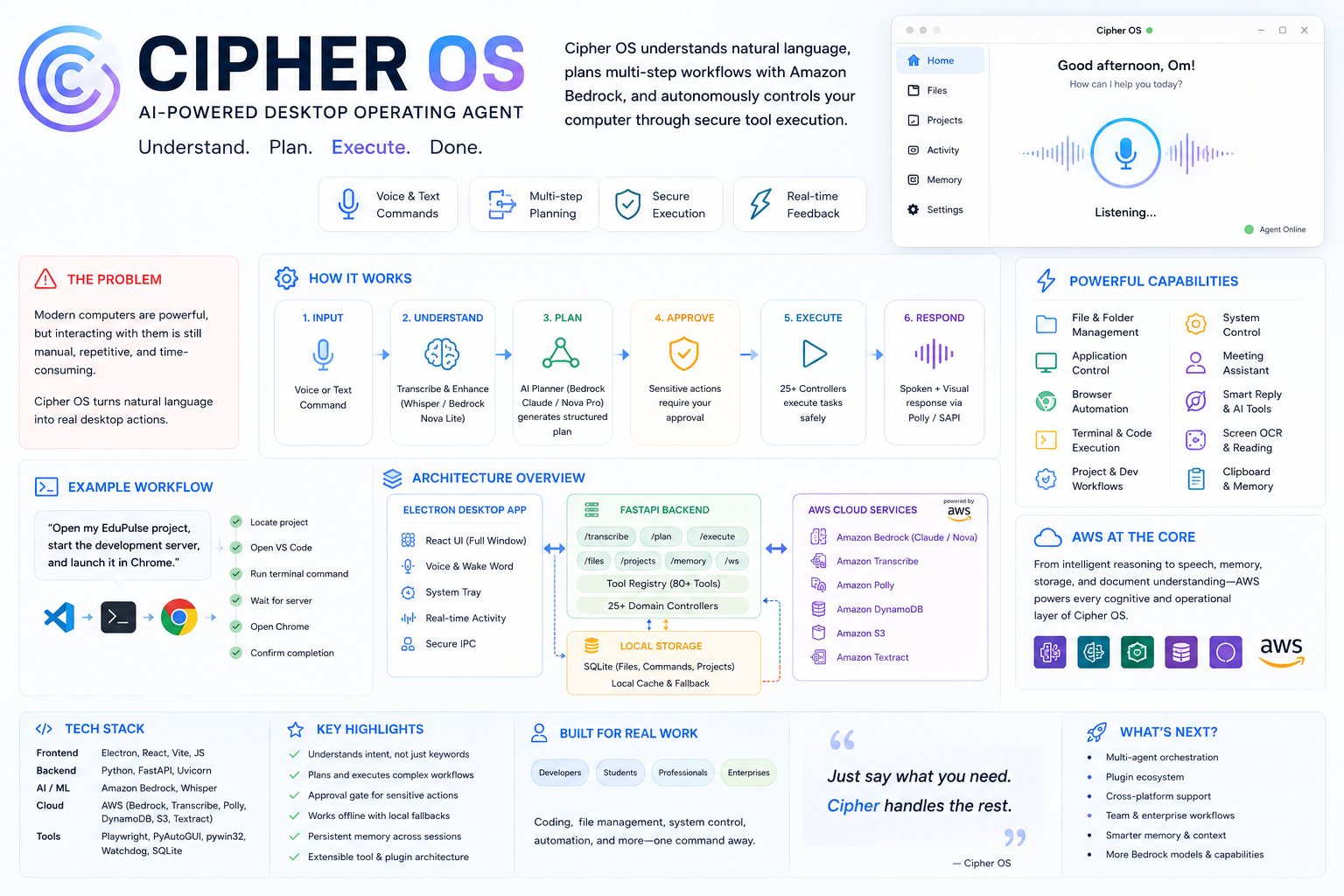
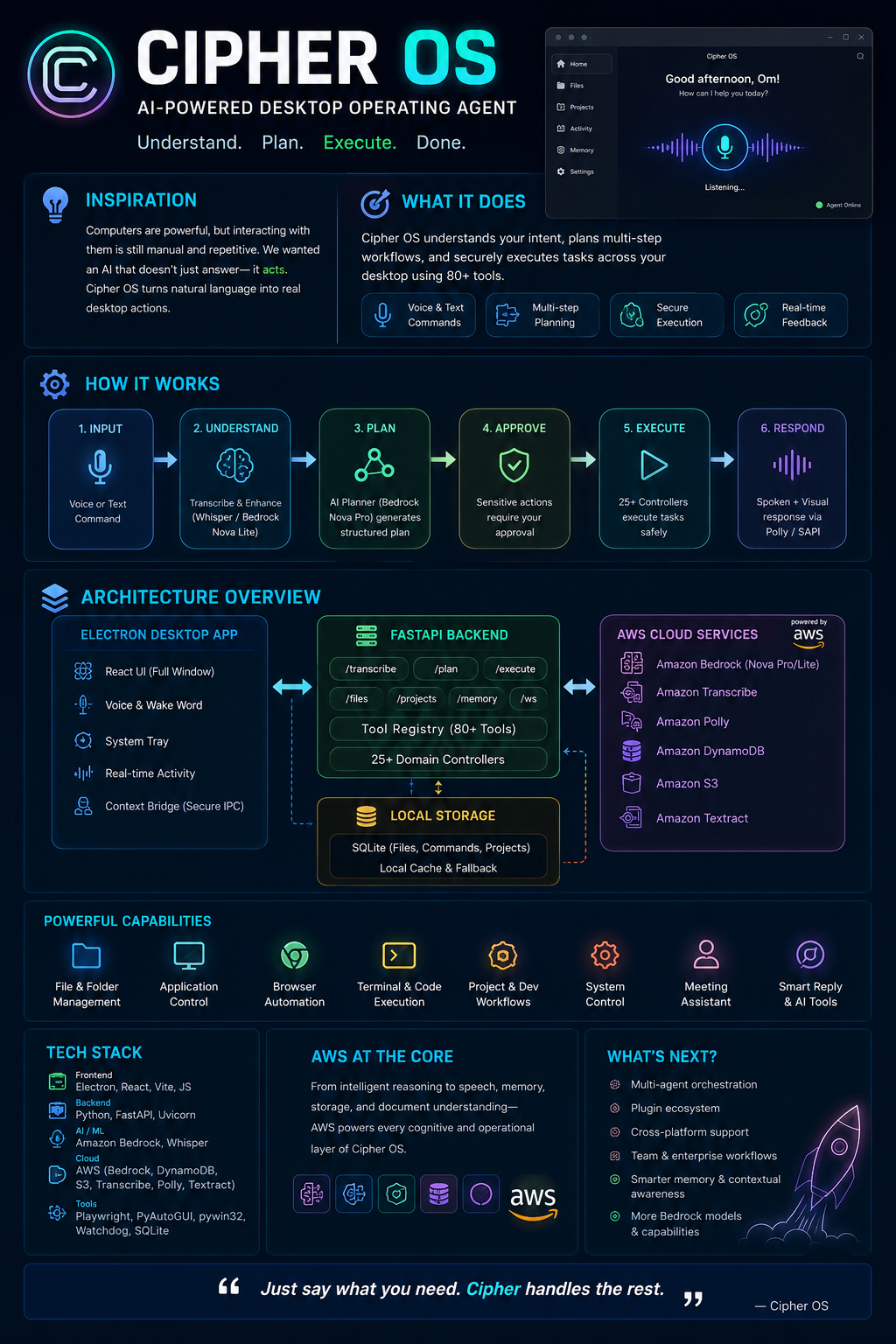
🚀 Cipher OS
Building an Autonomous Desktop Operating Layer with Amazon Bedrock
Computers execute instructions. Humans communicate intentions. Cipher OS bridges the gap between them.
The Last Mile of AI
Artificial Intelligence has transformed how humans interact with computers.
For decades, software required people to adapt to machines. We memorized keyboard shortcuts, navigated complex menus, searched endless directories, and learned application-specific workflows simply to accomplish everyday tasks.
Large Language Models changed that relationship. Instead of learning the computer's language, computers finally began understanding ours. Asking an AI to write code, summarize documents, debug applications, or explain complex concepts feels completely natural.
Yet after every impressive response, something surprisingly familiar happens.
The user takes over.
The AI understands the request. The human still performs the work — opening applications, searching files, launching development environments, executing terminal commands, switching windows, restoring yesterday's workspace.
The interface changed. The workflow didn't.
This observation became the foundation of Cipher OS — answering a fundamentally different engineering question:
What happens after the AI understands the user's intent?
Defining the Execution Gap
Understanding a request is only the beginning. Completing the objective is an entirely different problem.
Consider a developer arriving at work. Their intention is simple:
"Continue working on Cipher OS."
To another developer, this immediately communicates an objective. To a computer, it communicates almost nothing.
The operating system doesn't know which repository to open, which IDE to launch, which services to start, which frontend to compile, which browser tabs belong to the project, which documentation to restore, which terminals were active yesterday, or which workspace to recreate.
The user manually converts one objective into dozens of operations:
HUMAN THINKING                    COMPUTER EXECUTION
"Continue working on Cipher OS"   Open VS Code → Open Repo → Open Terminal →
         │                        Install Deps → Start Backend → Wait Ready →
    One Objective                  Start Frontend → Launch Browser → Open Docs →
         │                        Resume Development
    Goal Accomplished             (10+ manual steps)
Nothing in this workflow requires creativity or human reasoning. Every step is deterministic, yet these repetitive operations remain the user's responsibility.
We refer to this disconnect as the Execution Gap — the distance between understanding what a user wants and actually accomplishing it.
Bridging this gap became the primary design objective behind Cipher OS.
Beyond Conversational Computing
Most modern AI systems follow a remarkably similar architecture:
Traditional AI: User Request → Understand → Generate Text → Human Performs Work
Cipher OS introduces a fundamentally different interaction model. Instead of optimizing for responses, it optimizes for outcomes:
Cipher OS: User Objective → Understand Intent → Reconstruct Context → Build Plan → Validate → Execute → Verify → Objective Achieved
The distinction appears subtle. Architecturally, it changes everything.
Conversation is no longer the destination. Conversation becomes the interface. Execution becomes the product.
Rethinking Desktop Automation
Desktop automation has existed for years — macro recorders, shell scripts, task schedulers, Power Automate, AutoHotkey.
While these tools automate repetitive tasks effectively, they all rely on one assumption:
The workflow is already known.
A traditional automation script executes predefined instructions. If the workflow changes, the script must change.
Traditional: IF Event A → Execute Step B → Execute Step C → Done
People don't think in predefined workflows — they think in outcomes. Instead of specifying twenty individual operations, they communicate the objective.
Cipher OS transforms objectives into executable workflows dynamically, reasoning about the desired outcome before deciding how to achieve it.
Engineering Principles
Intelligence should reason — not execute. LLMs interpret language. Operating systems require deterministic execution. These responsibilities stay separate.
Planning is first-class. Every request becomes a structured execution plan before any OS interaction occurs.
Context is infrastructure. Cipher OS remembers projects, workflows, preferences, and execution history — not just conversations.
Every capability is modular. Each capability exists as an independent execution domain, keeping the system extensible.
Cloud intelligence. Local execution. Amazon Bedrock provides reasoning. The local desktop provides low-latency, secure execution.
High-Level Architecture
USER → REASONING → ORCHESTRATION → EXECUTION

┌──────────┐    ┌──────────────┐    ┌──────────────┐    ┌───────────────────┐
│ Objective├───►│   Bedrock    ├───►│ Action Graph ├───►│ Validation Engine │
└──────────┘    └──────────────┘    └──────┬───────┘    └─────────┬─────────┘
                                           │                      │
                                           ▼                      ▼
                                    ┌─────────────────────────────────────┐
                                    │           Tool Registry             │
                                    └──┬──────┬──────┬──────┬──────┬─────┘
                                       ▼      ▼      ▼      ▼      ▼
                                     File  Browser Terminal WinAPI Clipboard
                                                      │
                                                      ▼
                                           Windows Operating System
Cipher OS is not a chatbot with desktop access. It's an operating layer transforming human intent into structured, validated, deterministic desktop workflows.
🏗 Designing the Autonomous Operating Layer
Most AI-powered desktop assistants follow a straightforward architecture: send prompt → LLM returns text → parse into commands.
Although simple, this creates three major problems as the project scales:
- The planner becomes tightly coupled to the operating system.
- Every new capability requires modifying the reasoning layer.
- AI responses become increasingly difficult to validate before execution.
Rather than expanding this architecture, we redesigned it completely. Instead of treating the language model as the application, we treated it as one service inside a larger autonomous runtime.
Separating Intelligence from Execution
One of the earliest architectural decisions was establishing a strict boundary between reasoning and execution.
Large Language Models are probabilistic systems. Operating systems are deterministic systems. These responsibilities should never be combined.
HUMAN → AI → SYSTEM → OS

Objective ──► Amazon Bedrock ──► Action Graph Generator ──► Validation Engine
                                        │                        │
                                        ▼                        ▼
                                  Tool Registry ────────► Desktop Runtime
                                                               │
                                                               ▼
                                                    Windows Operating System
Instead of producing executable commands, Amazon Bedrock produces an intermediate representation describing what should happen, not how it should happen. The responsibility for execution belongs entirely to Cipher OS.
This separation introduces an explicit trust boundary between AI reasoning and operating system control.
Why Amazon Bedrock
Selecting the reasoning engine was more than choosing a language model — it was an architectural decision.
Early in design, we evaluated integrating provider-specific APIs directly. This introduced long-term challenges: vendor lock-in, multiple authentication mechanisms, independent SDKs, inconsistent monitoring, and complex model migration.
Amazon Bedrock addressed these by acting as a unified reasoning platform:
Cipher OS → Amazon Bedrock Runtime → [Intent Reasoning | Task Planning | Structured Output] → Action Graph
The reasoning engine stays independent from all other subsystems. Future models can be introduced with minimal architectural changes while preserving a consistent execution pipeline.
The Action Graph
One of the most important concepts inside Cipher OS. Traditional assistants generate responses. Cipher OS generates execution plans.
Every request is decomposed into a structured graph describing dependencies, ordering, required tools, and expected outcomes.
"Prepare my development environment."
Becomes:
Locate Project ─┬─ Launch IDE ─┬─ Restore Context ─┬─ Open Terminal
                └──────────────┴────────────────────┘
                                    │
                    Install Packages → Start Backend → Wait Ready → Launch Frontend → Open Browser → Verify
Representing workflows as graphs rather than sequential commands enables dependency reasoning, concurrent execution of independent branches, individual node retries, and dynamic plan modification without regenerating the entire workflow.
The Action Graph becomes the central planning artifact of Cipher OS.
Tool Registry
As capabilities grew, another challenge emerged: should the planner directly call desktop functions?
Initially reasonable, but every additional capability increased coupling. Instead, Cipher OS introduced an abstract Tool Registry:
Action Graph → Tool Resolution Engine → [File | Browser | Terminal | Windows | Clipboard]
                                              │        │         │         │          │
                                           NTFS  Playwright   Shell    Win32 API   OS API
This follows the Open/Closed Principle: the planner remains closed for modification. New capabilities are introduced simply by registering additional tools — no prompt modifications, no planner rewrites, no architectural changes.
Memory as Infrastructure
Most AI assistants remember conversations. Cipher OS remembers work.
Conversation history answers: "What did the user say?" Operational memory answers: "What was the user doing?"
That distinction led us to treat memory as infrastructure rather than application state. Persisted context includes: active projects, frequently used applications, workspace layouts, execution history, preferred workflows, and user-specific automation patterns.
User Request → Context Retrieval → DynamoDB [Projects | Preferences | History | Workspace | Workflows] → Context Injection → Bedrock Planner
By reconstructing operational context before reasoning begins, the assistant no longer asks where the project is. It already knows.
⚙️ From Architecture to Reality
Designing an autonomous operating layer is only half the challenge. The harder problem is transforming those concepts into a system that reliably interacts with a real desktop operating system.
Unlike traditional AI applications that terminate after producing text, Cipher OS must coordinate multiple software components, maintain execution state, communicate with cloud services, interact with native APIs, recover from failures, and verify successful completion.
This required designing Cipher OS as a distributed system — independent services coordinating through defined interfaces.
                              USER (Voice • Text • Shortcuts)
                                          │
                    ┌─────────────────────────────────────────────┐
                    │         ELECTRON DESKTOP APPLICATION        │
                    │ Chat│Dashboard│Activity│Projects│Voice│Settings│
                    └─────────────────────┬───────────────────────┘
                                    Secure IPC
                                          │
                    ┌─────────────────────────────────────────────┐
                    │         FASTAPI ORCHESTRATION ENGINE        │
                    │ Intent│Context│Planner│Validator│Executor│Logger│
                    └──┬──────────┬──────────────┬──────────┬────┘
                       ▼          ▼              ▼          ▼
                  Bedrock     DynamoDB    Desktop Runtime  Local Cache
                       │                       │
                       ▼                       ▼
                Structured Plan    File • Browser • Terminal • Windows
Every component has exactly one responsibility. No component performs reasoning and execution simultaneously or depends on another layer's internals.
Why Electron
Desktop automation requires capabilities that simply do not exist inside modern web browsers. A browser cannot launch native apps, access unrestricted filesystems, control windows, execute processes, or maintain background services.
Electron provides native desktop access while staying intentionally lightweight — it owns only the UI, never performs AI reasoning or desktop automation. Its responsibility is presenting information and securely forwarding requests to the orchestration engine.
Why FastAPI
We selected FastAPI for its Python AI ecosystem and native async support — essential when multiple independent operations execute simultaneously (waiting for servers, monitoring browsers, streaming Bedrock responses, executing OCR — all without blocking).
Request → Intent Parser → Context Manager → Planner → Validation → Scheduler → Tool Registry → Desktop Controllers
FastAPI acts as the operating system runtime coordinating every component inside Cipher OS.
Desktop Controllers
Desktop automation becomes difficult when one component manages every OS feature. Cipher OS follows a controller-based architecture where every execution domain owns one controller:
Execution Engine → [Files | Browser | Terminal | Windows | Clipboard | Search]
                      │        │         │          │          │         │
                    NTFS  Playwright    Shell    Win32 API    OS API   Indexing
Isolation: A failure inside browser automation cannot affect terminal execution. Scalability: New domains can be added without modifying existing controllers. Testing: Each controller can be tested independently. Security: Controllers expose only approved operations — never unrestricted OS access.
The planner remains completely unaware of implementation details. It requests capabilities. Controllers perform execution.
Browser Automation
Many real-world workflows extend beyond local applications. Developers interact with GitHub, students access LMS portals, professionals manage dashboards, researchers search academic databases.
Rather than treating browsers as external applications, Cipher OS considers them first-class execution environments via Playwright's deterministic APIs:
User Goal → Action Graph → Browser Controller → Playwright → Browser Session → Verification → Complete
This enables: portal logins, dashboard management, form filling, documentation navigation, resource downloads — all part of the same execution pipeline.
Voice Pipeline
Rather than treating voice as an optional feature, Cipher OS treats it as another interface into the planning engine. The execution pipeline remains unchanged — only the input modality differs:
Voice → Speech Recognition → Intent Understanding → Bedrock → Action Graph → Execution → Polly → Spoken Response
Whether the user speaks or types, the planner receives exactly the same structured request. This keeps the reasoning engine independent from input devices.
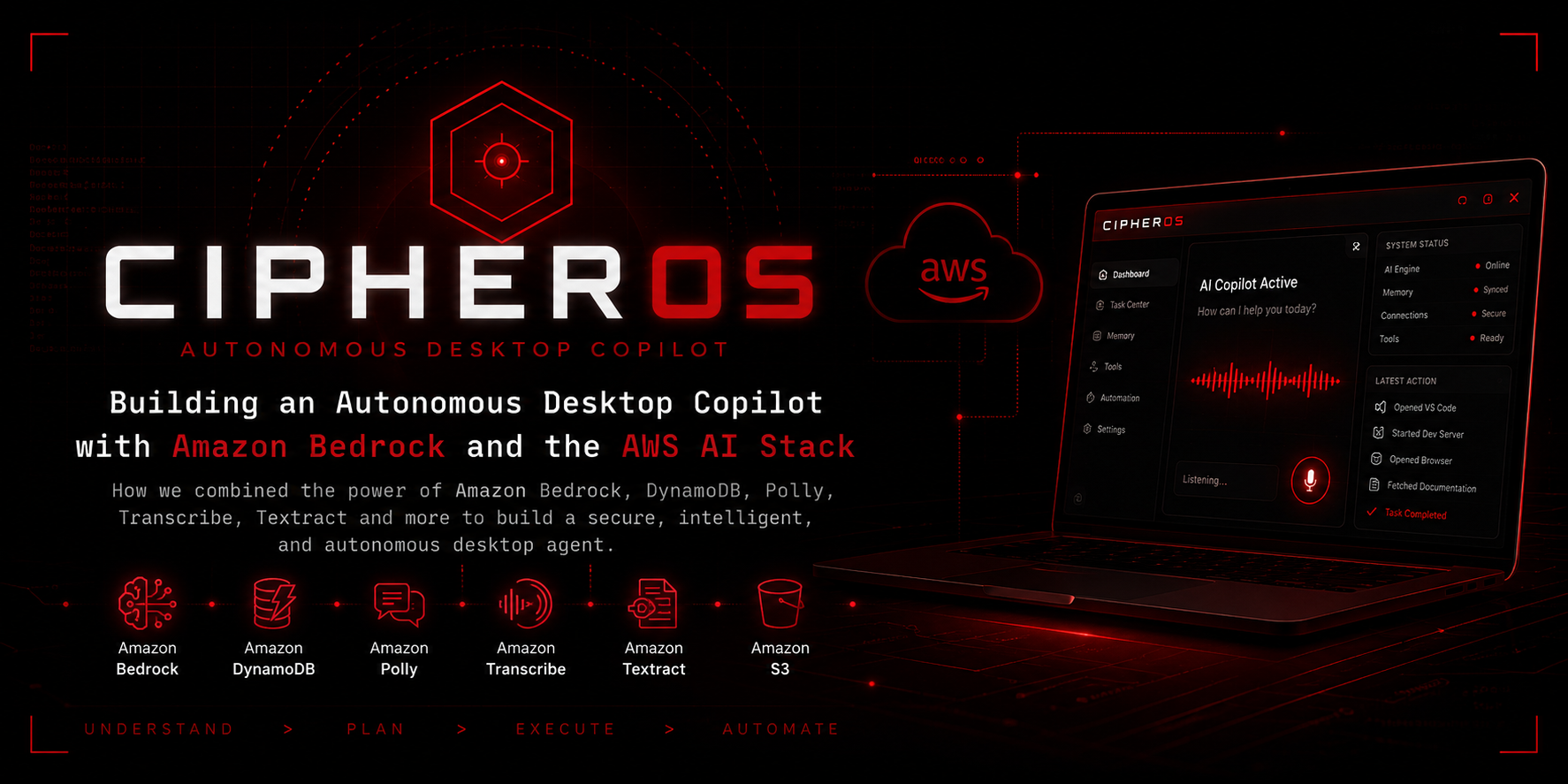
AWS Services Working Together
Rather than using AWS services independently, Cipher OS treats them as one coordinated intelligence platform. Each service solves one architectural problem:
| Service | Responsibility |
|---|---|
| Amazon Bedrock | Intent understanding, reasoning, workflow planning |
| Amazon DynamoDB | Persistent operational memory |
| Amazon Polly | Natural voice synthesis |
| Amazon Transcribe | Speech recognition |
| Amazon Textract | OCR and document understanding |
| Amazon S3 | File storage, generated assets, logs, exported workflows |
Cipher OS → [Bedrock | DynamoDB | Textract | Polly | Transcribe | S3] → Unified AI Runtime
No single service attempts to solve every problem. Each contributes one specialized capability to the overall architecture.
🛡 Engineering for Trust
Designing an autonomous system isn't primarily an AI problem — it's a trust problem.
Once software gains the ability to interact with the operating system, every action carries consequences. A hallucinated command is no longer just an incorrect answer — it can become an incorrect system action: deleting a file, closing an application, running an unintended terminal command, opening the wrong browser session.
Our primary design objective was maximum trust, not maximum autonomy. Every generated workflow must be verified before execution. This philosophy influenced every layer of the runtime.
Trust Boundary
A common misconception is that AI agents should directly control the operating system:
Naïve approach: User → AI Model → Windows APIs ❌ (single hallucination = direct system action)
Cipher OS introduces multiple layers between reasoning and execution:
User → Bedrock (Plan) → Action Graph → Permission Engine → Tool Registry → Controllers → Windows APIs
The language model never executes commands directly. It proposes. Cipher OS verifies. Only then does execution begin.
Permission Engine
Not every desktop operation carries the same level of risk. Opening a text file and permanently deleting a directory should never be treated equally.
SAFE: Read File, Open App, Search, Open Browser, Copy Clipboard
CAUTION: Rename/Move File, Terminal Command, Form Submission
RESTRICTED: Delete Files, System Config, Registry, Process Kill, Credentials
Rather than trusting the planner blindly, the Permission Engine evaluates every requested operation. Depending on classification, a workflow may: execute immediately, require user confirmation, need elevated permissions, or be rejected entirely.
This creates predictable, transparent behaviour regardless of request complexity.
Action Validation Pipeline
Planning and execution are intentionally separated by a validation phase:
Action Graph → Schema Validation → Tool Availability → Permission Check → Dependency Analysis → Conflict Detection → Execution Scheduler
This stage answers critical questions: Does every tool exist? Are parameters present? Can it execute safely? Any workflow conflicts? Dependencies to wait on? Operations requiring confirmation?
Only after all validation succeeds does execution begin.
Failure Recovery
Real systems rarely operate under ideal conditions. Applications crash. Network requests fail. Files disappear. Processes terminate unexpectedly.
Rather than treating failures as exceptions, Cipher OS treats them as expected execution states:
Execute Step → Success? → [Yes: Continue] / [No: Classify Error → Retry Possible? → [Yes: Retry] / [No: Rollback → Notify User → Log]]
The runtime maintains execution state throughout the entire workflow. If failure occurs mid-process, the scheduler knows which operations completed, which failed, which are pending, and whether to retry, rollback, or terminate.
This significantly improves reliability compared to simple sequential automation scripts.
Observability
Autonomous software should never behave like a black box. Every workflow produces structured telemetry: original objective, generated Action Graph, validation outcome, tool invocations, execution duration, errors encountered, recovery attempts, and final status.
This information is invaluable for debugging, future optimization, and user transparency.
Local-First Execution
Although Cipher OS relies on cloud intelligence, execution remains fundamentally local:
Cloud (AWS): Intent understanding, planning, context reasoning, speech intelligence Local: File operations, application control, browser automation, terminal execution, window management, clipboard, runtime scheduling
Keeping execution on the user's machine minimizes latency while avoiding unnecessary exposure of local resources. Only reasoning requires cloud inference. The desktop itself remains under local control.
Extensibility
One of our long-term goals was ensuring Cipher OS could evolve without architectural redesign:
New Capability → Implement Controller → Register Tool → Expose Metadata → Planner Discovers → Available Automatically
This plugin-oriented design keeps the core runtime stable. Future integrations — database tools, IDE support, enterprise applications, cloud providers, or robotics interfaces — can all be introduced without modifying the reasoning engine.
Engineering Trade-offs
Every architectural decision introduces advantages and compromises:
| Decision | Benefit | Trade-off |
|---|---|---|
| Electron | Native desktop integration + mature ecosystem | Larger application footprint |
| FastAPI | Excellent Python AI ecosystem + async execution | Requires local Python runtime |
| Amazon Bedrock | Managed foundation models + unified AWS integration | Cloud dependency for reasoning |
| Tool Registry | Highly extensible architecture | Slight orchestration overhead |
| Validation Layer | Improved safety + auditability | Additional execution latency |
| Local Execution | Low latency + privacy | Platform-specific implementations |
Every compromise was intentional — building an architecture that scales from hackathon prototype to production-grade autonomous desktop platform.
🚀 Real-World Autonomous Workflows
Architectures are best understood through execution.
Every workflow follows the same lifecycle: user expresses an objective → Cipher OS understands intent → Amazon Bedrock generates a strategy → runtime validates → controllers execute → workflow completes. Whether the task requires three operations or three hundred, the pipeline remains identical.
Scenario 1 — Preparing a Development Workspace
Every developer performs the same routine before writing a single line of code. These tasks are repetitive, deterministic, and rarely require human reasoning.
Instead of manually performing each step, the user simply says:
"Continue working on Cipher OS."
Bedrock (Intent + Context) → Locate Repo → Launch VSCode → Open Terminal → Install Packages → Start Backend → Wait Ready → Launch Frontend → Open Browser → Health Check → Development Ready
No predefined macro exists. Cipher OS dynamically constructs the execution graph from current context, remembered workspace state, available tools, and project configuration. The same objective can produce different plans depending on the environment.
Scenario 2 — Research Assistant
Researchers frequently collect dozens of papers and documents before analysis — manually opening, extracting text, summarizing findings, and organizing notes. Cipher OS converts this into a single objective:
"Summarize the papers in my Research folder and generate structured notes."
Research Folder → Document Discovery → Textract (OCR) → Text Extraction → Bedrock (Semantic Analysis) → Structured Summary → Markdown Notes → Open VS Code
The workflow produces reusable documentation while preserving the original research pipeline.
Scenario 3 — Intelligent File Management
Traditional file systems organize data through folders. But people rarely remember exact paths — they remember context:
"The presentation I edited last week." / "The invoice from Amazon." / "The architecture diagram."
Natural Language → Intent Understanding → Memory Context → File Search → Result Ranking → Open Correct File
Cipher OS bridges this difference using semantic retrieval combined with operational memory. Users describe what they're looking for instead of navigating directory structures.
Scenario 4 — Cross-Application Browser Automation
Many professional workflows span multiple cloud applications — GitHub, AWS Console, Jira, Slack, documentation portals.
"Open today's GitHub PRs, summarize changes, then open related Jira tickets."
Objective → Browser Controller → Playwright → GitHub (Collect Data) → Bedrock (Summarize) → Open Jira → Related Issues → Complete
The browser becomes another execution environment rather than a separate workflow.
Scenario 5 — Voice-First Computing
Natural language should not be limited to keyboards. Cipher OS treats voice as another OS interface:
Voice → Speech Recognition → Intent → Bedrock → Action Graph → Execution → Desktop Controllers → Polly → Voice Response
Whether from text, voice, or shortcuts, every request becomes the same structured execution graph.
Same pipeline as text. Only the input modality differs.
Measuring Impact
One way to evaluate autonomous systems is by measuring how many manual interactions disappear:
| Traditional | Cipher OS | |
|---|---|---|
| Actions | 18+ manual | 1 natural language request |
| Applications | 7 | Automatic |
| Terminal Commands | 4 | Automatic |
| Time | ~90 seconds | ~10–15 seconds |
The objective is allowing users to remain focused on work that actually requires human creativity.
Beyond Individual Tasks
Cipher OS orchestrates complete workflows rather than isolated commands. Execution doesn't terminate after completing a workflow — the resulting state becomes new operational context. Every completed workflow improves the assistant's understanding of future requests.
Future Directions
- Multi-agent collaboration
- Enterprise workflow automation
- IDE-native programming assistants
- Intelligent DevOps orchestration
- Cross-device execution
- Plugin marketplace
- Enterprise policy enforcement
- Cloud-to-desktop synchronization
The architecture was designed so new execution domains can be introduced without redesigning the reasoning engine.
Closing Thoughts
Cipher OS began with a simple question:
If AI can understand what we want, why should humans still perform the work?
Answering this required far more than integrating a language model. It required designing a runtime capable of planning, validating, executing, monitoring, and learning from real desktop workflows.
Amazon Bedrock became the reasoning layer. AWS services became the cognitive infrastructure. Electron became the user interface. FastAPI became the orchestration engine. Desktop controllers became deterministic execution domains.
Together, these components form an autonomous operating layer that moves beyond conversational AI toward operational AI.
Rather than asking computers to execute commands one instruction at a time, Cipher OS allows users to communicate in the language they already think in — objectives.
The computer handles the rest.
Built With
- amazon-bedrock-(claude-/-nova)
- amazon-dynamodb
- amazon-polly
- amazon-polly-cloud:-amazon-dynamodb
- amazon-textract
- amazon-textract-database:-sqlite-automation:-playwright
- amazon-transcribe
- amazon-web-services
- boto3
- electron
- electron-ipc
- fastapi
- faster-whisper
- git
- javascript
- javascript-backend:-python
- playwright
- pyautogui
- python
- pywin32
- react
- rest-api
- sqlite
- uvicorn
- uvicorn-ai-&-voice:-amazon-bedrock-(claude-/-nova)
- vite
- watchdog
- watchdog-communication:-rest-api
- websockets
- windows-api

Log in or sign up for Devpost to join the conversation.